Plaid Wool Coat Checked: 9 Warm Ways to Wear a Checked Plaid Wool Coat on Cold Days
I reached for my plaid wool coat on the first truly cold morning last winter, when my plain black coat felt tired and my knit alone was not enough. I pulled the checked coat on over a cream sweater, belted it loosely, and the outfit looked finished before I had even chosen shoes. That is the quiet strength of a good checked coat. It brings pattern, warmth and shape in one piece.
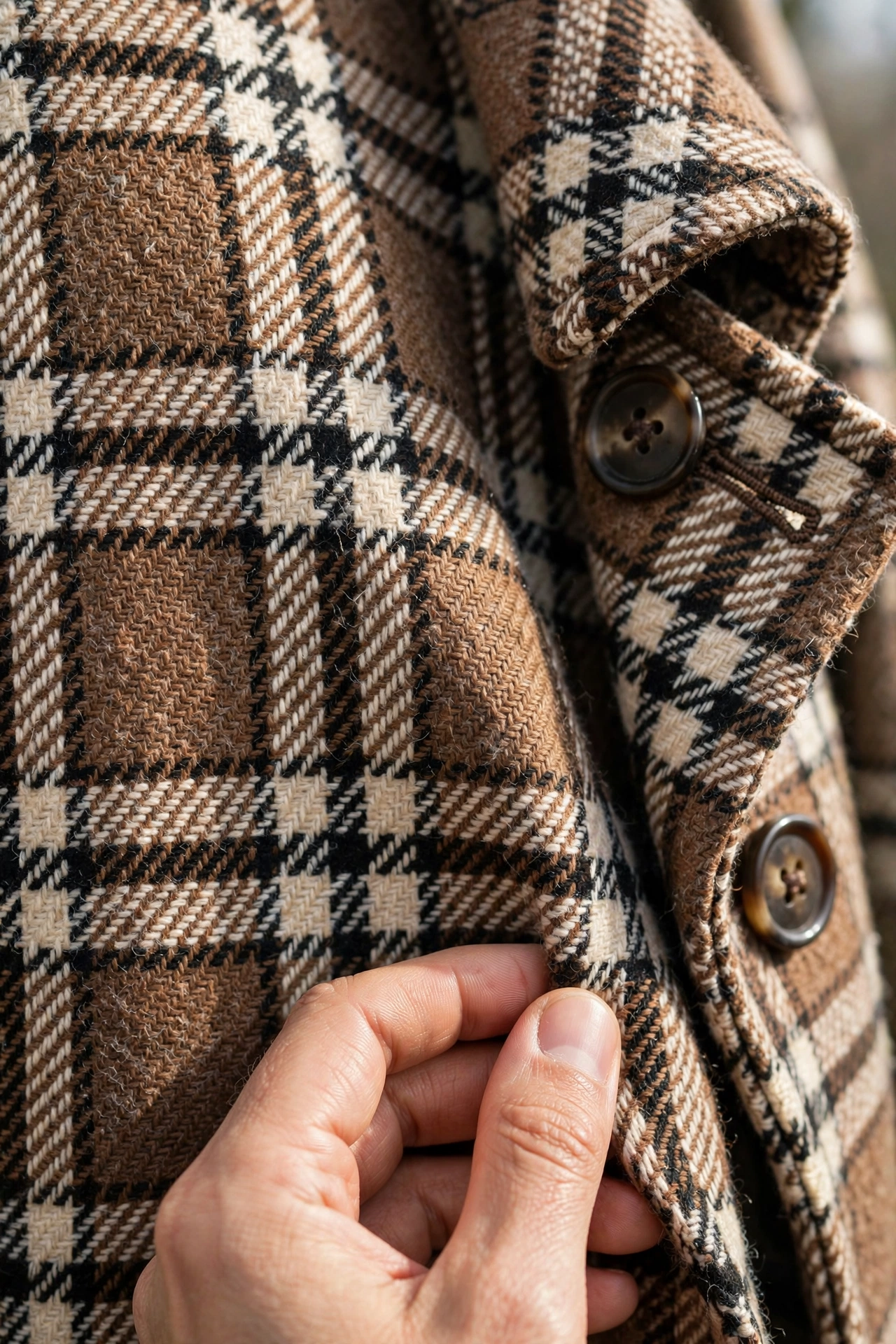
A plaid wool coat checked in brown, cream and rust, or in soft grey and black, does work that three separate layers often try to do. The wool holds heat, the check breaks up dark winter clothes, and a long line keeps you covered from collar to calf on windy streets. It also forgives simple dressing underneath, which matters on busy mornings.
Below are nine warm ways I wear mine, a step-by-step for choosing and styling it, honest notes on fit, fabric and budget, the mistakes that make plaid look messy, and the care that keeps wool looking good for years.
Everyday Warmth With Knits and Trousers
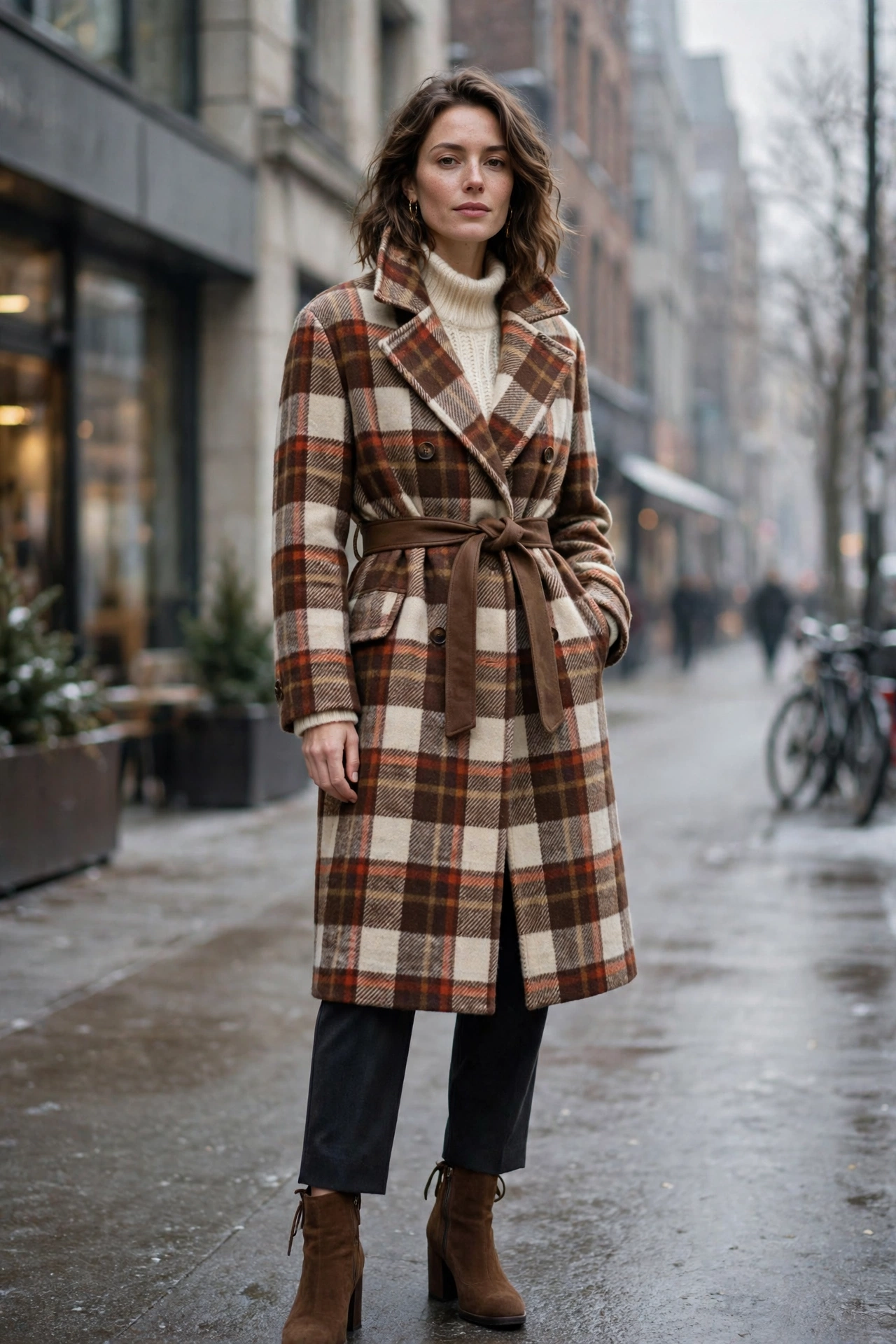
1. Belted Over a Cream Knit and Dark Trousers
This is the outfit I trust most. A cream knit under a brown and rust plaid lets the lightest colour in the check breathe, while dark trousers ground the look. Belt the coat at your natural waist, not too tight, so the wool drapes rather than pulls. Add brown ankle boots that pick up a warm tone in the plaid, and you have a complete cold-day uniform for work, errands and lunch.
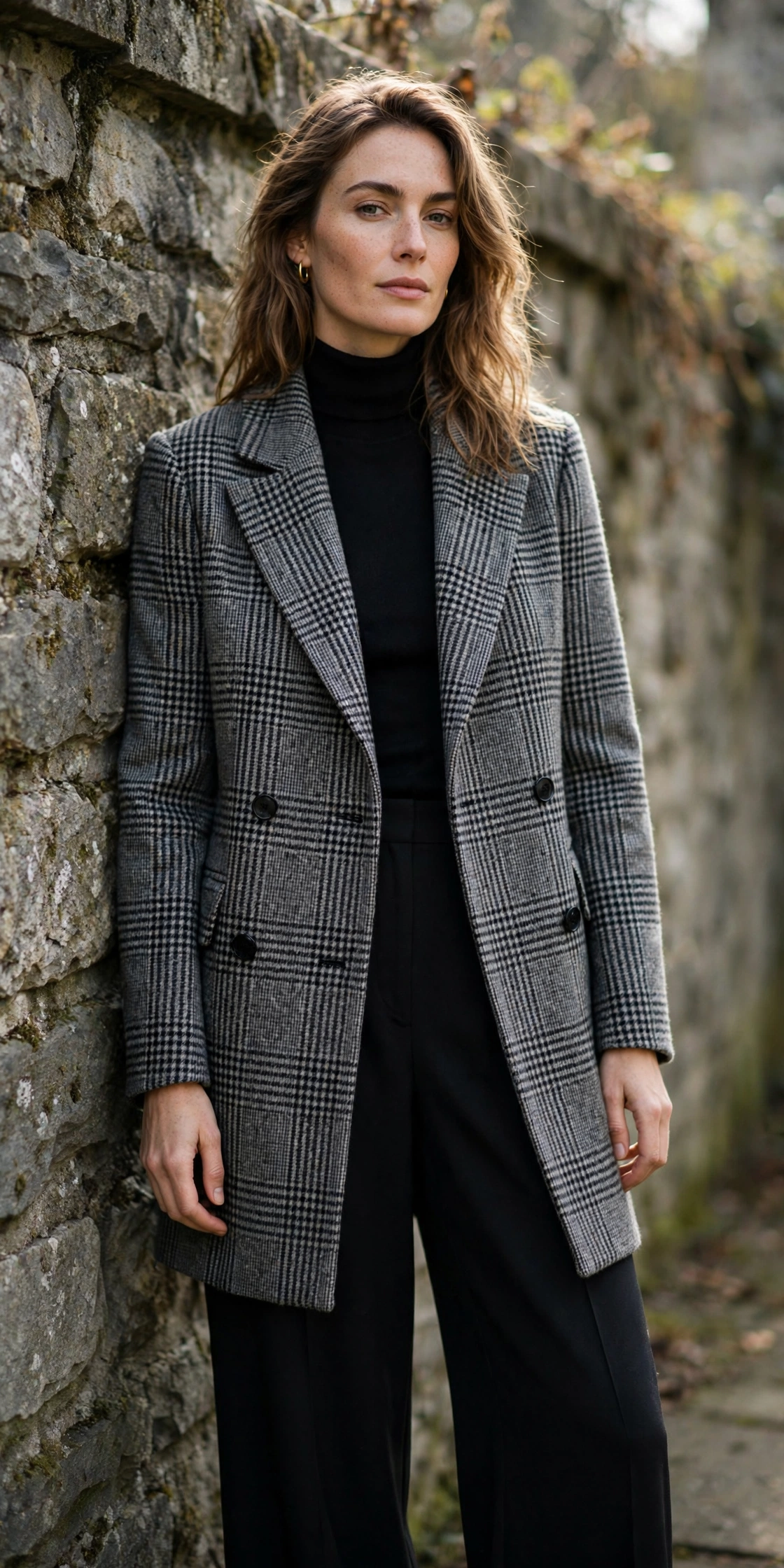
2. With a Black Turtleneck and Wide-Leg Trousers
When the plaid is grey and black, a black turtleneck is the calmest partner. It creates a clean column underneath and lets the check stay the only pattern. Wide-leg trousers in black or charcoal continue that line and give the coat room to move. Keep shoes simple and skip a scarf here, because the high neck already fills the space the collar frames.
3. Over Jeans With a Chunky Scarf
For weekends, I wear the coat open over straight jeans, a plain top and boots, then add one chunky scarf in cream or camel. The scarf should be a solid colour taken from the coat, never another check or stripe, or the patterns will argue. This version suits markets, bookshops and long walks, warm enough for standing around and relaxed enough for a quick bread run turned into coffee.
Dresses, Colour and Dressier Days
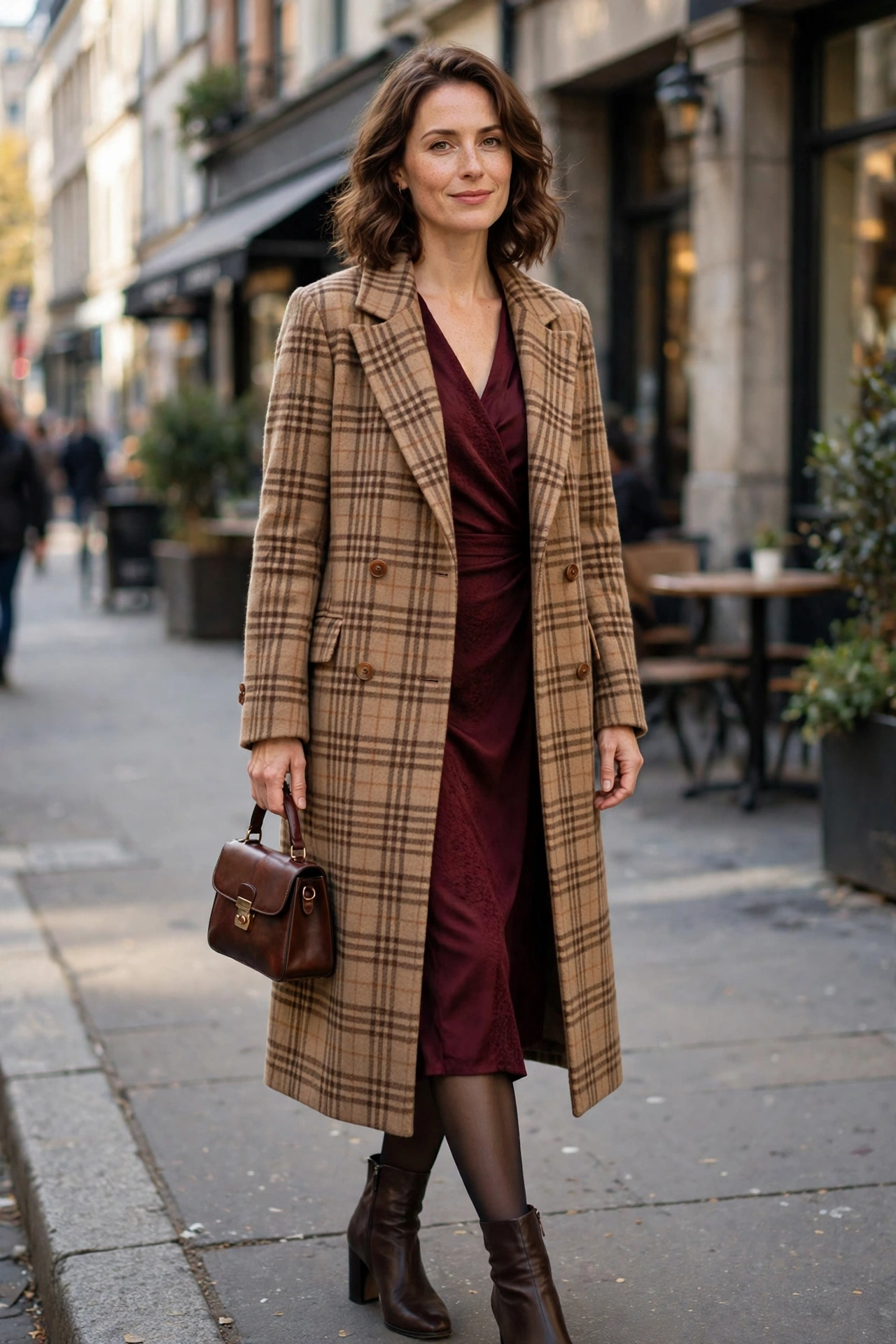
4. Over a Burgundy Dress With Heeled Boots
A checked coat over a dress is where plaid earns its keep beyond daytime. A camel and brown plaid over a burgundy wrap dress picks up the warmth in both pieces, and the structured coat against the softer dress feels considered rather than matched. Add tights for the cold, heeled boots for length, and a small brown leather bag. I choose this for dinners and family gatherings when I want to arrive warm and put together at once.
5. Toned Down With All Cream Underneath
If a bold check feels like a lot at first, quiet it with cream underneath. A cream knit, pale trousers and light boots make the coat the single strong piece, and the outfit reads soft rather than busy. This works well with a brown-based plaid, because the cream repeats the lightest square in the pattern. It also brightens your face in photos on grey days.
6. Open Over a Midi Skirt and Knee Boots
A long plaid coat worn open over a plain midi skirt gives you movement that a closed coat hides. Choose a skirt in one solid colour from the check, black, brown or deep green, and let the coat frame it as you walk. Knee boots close the gap between hem and skirt so no cold air sneaks in, and a simple knit tucked in at the front keeps your waist visible.

Cold Snaps, Layers and Slow Days
7. Fully Layered for the Coldest Days
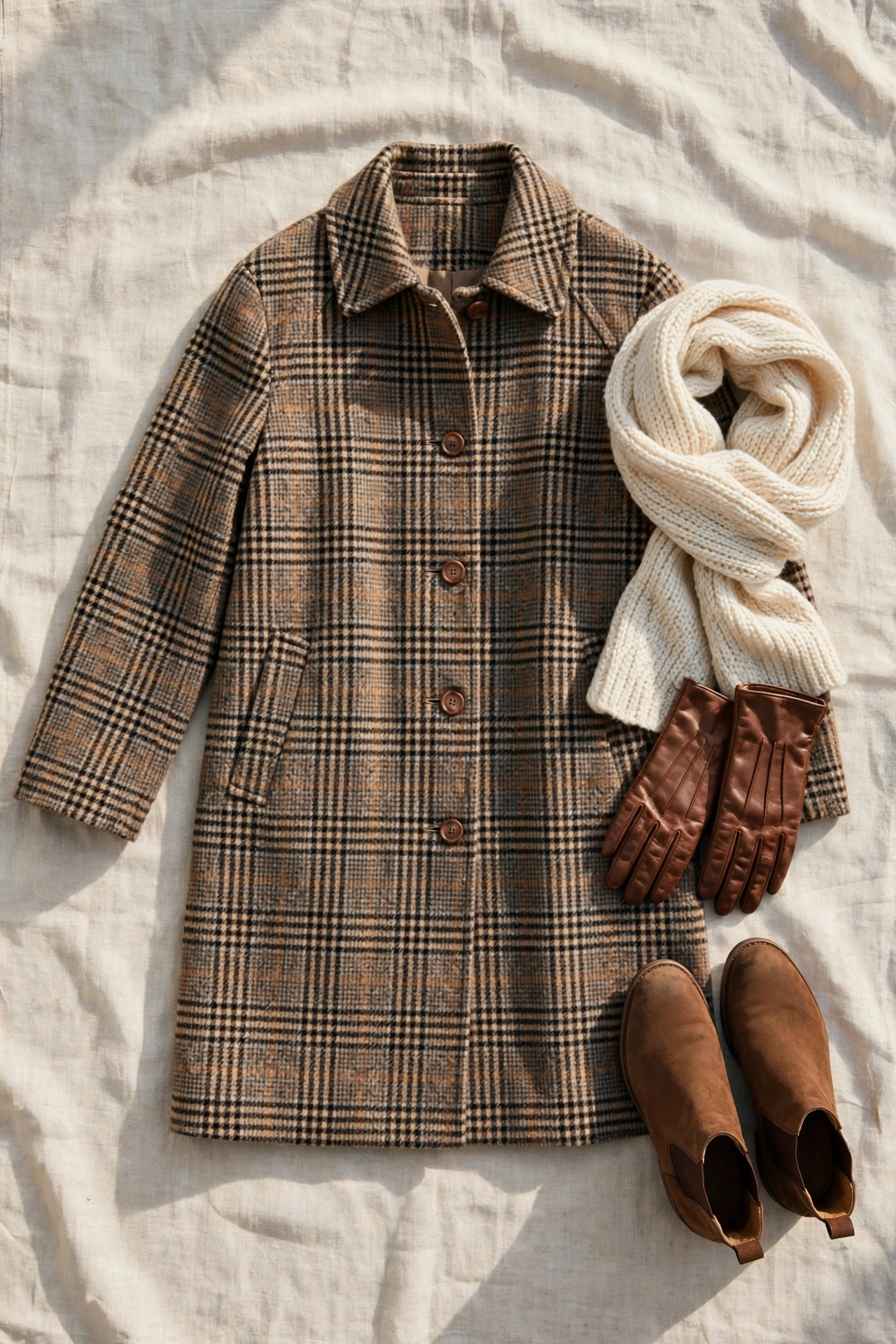
When the temperature drops properly, treat the plaid coat as the outer shell of a planned system. Start with a thin thermal or fine merino top, add a warm knit, then the coat buttoned to the top. Add a wool scarf looped once, leather gloves and a hat in a solid tone from the check. The flat lay test helps: lay coat, scarf, gloves and boots together the night before and you will see at once whether the colours agree.
8. At a Cafe or Market, Worn Relaxed
Some coats look best when you stop styling them. At a cafe table, coat still on against the chill, a warm drink in hand, plaid looks lived-in in the best way. Choose a green and brown check if you have it, or your brown plaid with a cream scarf, and let the outfit be about comfort. You can sit for an hour and still look like you chose your clothes on purpose, which a puffer rarely manages.
9. With Tailored Trousers for Work
For work, button the coat, keep everything underneath plain, and let the tailoring do the talking. Grey plaid over charcoal trousers and a fine black or navy knit reads professional without being plain, and the check adds interest that still suits a formal setting. Carry a structured bag, keep jewellery small, and let the hem fall below the knee if your trousers are wide, so the proportions stay long and calm.
How to Choose and Style Your Plaid Coat, Step by Step
Step 1: Read the fabric label first. Look for a high wool content, ideally over sixty percent, with a sturdy blend for shape. Pure wool is warmest, but a little synthetic fibre can help the coat hold its line and resist creasing.
Step 2: Check the check at the seams. On a well-made coat the plaid lines up at the front closure, pockets and centre back seam. Misaligned checks are the fastest sign of a rushed coat, and you will notice them every time you wear it.
Step 3: Try it on over your thickest knit. A coat bought over a thin top will pull across the shoulders by January. Button it fully, lift your arms and sit down. If it strains anywhere, size up.
Step 4: Pick your base colours from the plaid. Note the three main colours in the check and make sure you already own knits, trousers and boots in at least two of them. That single check saves you owning a beautiful coat that goes with nothing.
Step 5: Decide belted or straight, then commit. Belted suits softer, longer coats and gives shape over dresses. Straight and buttoned suits tailored grey plaids. Choose the line that suits your wardrobe and wear it that way most days.
Buying Advice: Fit, Fabric and Budget
Fit matters more with plaid than with a plain coat, because the pattern shows every pull and twist. The shoulder seam should sit at your shoulder, the front should hang straight without the checks slanting, and the hem should clear the ground with winter boots on. On fabric, denser wool with a tight weave blocks wind better and pills less; avoid anything thin or shiny when you hold it to the light. For budget, one good plaid coat in brown or grey, in a classic check not tied to a single season, will outlast two cheap coats. Spend on wool and make, save on novelty buttons or extra belts you will never use. If you buy second-hand, check under the collar and inside the cuffs for wear, and budget for a proper clean before the first wear.
Common Mistakes and Wool Coat Care
The most common mistake is mixing another strong pattern underneath, a striped top or floral scarf fighting the check for attention. Keep everything under a plaid coat solid and let the coat be the pattern. The second mistake is buying too short for real cold; a cropped plaid looks neat in the shop but leaves you cold by midwinter, so choose knee length or longer. A third mistake is hanging heavy wool on a thin wire hanger, which stretches the shoulders in weeks. Use a wide wooden hanger, brush the coat after wear with a soft brush, and rest it a day between wears so the fibres recover. Store it clean in a breathable garment bag, since moths love wool that still carries perfume or food marks.
Frequently Asked Questions
Is a plaid wool coat warm enough for very cold days?
Yes, if the wool content is high and the coat is long and fully lined. Layer a fine thermal and a warm knit underneath on the coldest days and close the coat fully with a scarf at the neck. The length does much of the work, keeping wind off your legs.
What colours go best with a brown plaid coat?
Cream, camel, burgundy, deep green and dark brown all sit comfortably with a brown and rust check, because they repeat tones already in the pattern. Black works too for trousers and boots. Avoid bright white and cold blue-grey, which can make warm brown plaid look muddy.
Can I wear a checked coat to work or formal places?
You can, especially in a smaller grey or muted check worn buttoned over tailored trousers and plain knits. Keep everything else quiet and well fitted. For very formal evenings a plain dark coat is safer, but for most offices and smart lunches plaid looks entirely appropriate.
How do I stop wool from pilling?
Rest the coat between wears, brush it gently, and remove small pills early with a fabric comb rather than pulling them. Denser weaves pill slower, which is another reason to choose good wool. Avoid rough bag straps rubbing one spot by switching shoulders on longer walks.
Should my first plaid coat be brown or grey?
Choose brown if your wardrobe leans warm, with cream knits, tan boots and burgundy or green. Choose grey if you wear more black, navy and charcoal. Look at your boots and your most worn knit, and let those decide, because the coat has to live with them daily.
A Coat That Carries the Whole Winter
A plaid wool coat is not a spare coat or a novelty for one season. Bought in a check you love, in wool that feels dense in your hand, and worn over plain knits and trousers you already own, it carries you from the first cold morning to the last grey afternoon without looking repeated. Start with the belted cream knit version, notice how much work the pattern does for you, and it will become the coat you reach for without thinking.