There is a rose quartz crystal on my desk that I keep picking up during calls, and one afternoon, halfway through a very long meeting, I looked from the stone to my plain pink manicure and thought: that is the nail design. The soft blush base, the milky white veins drifting through it, the way the colour deepens in some spots and nearly disappears in others — rose quartz marble nails copy all of it, and they do it in the most forgiving way possible. Marble is the rare nail art that looks better slightly imperfect, because real stone never repeats itself.
Here are nine ways to wear the look, from the sheerest wash of pink to a deeper rose version with foil, the exact method I use at home, and the small choices — base shade, vein colour, finish — that decide whether your nails read as quartz or as a pink that went wrong.
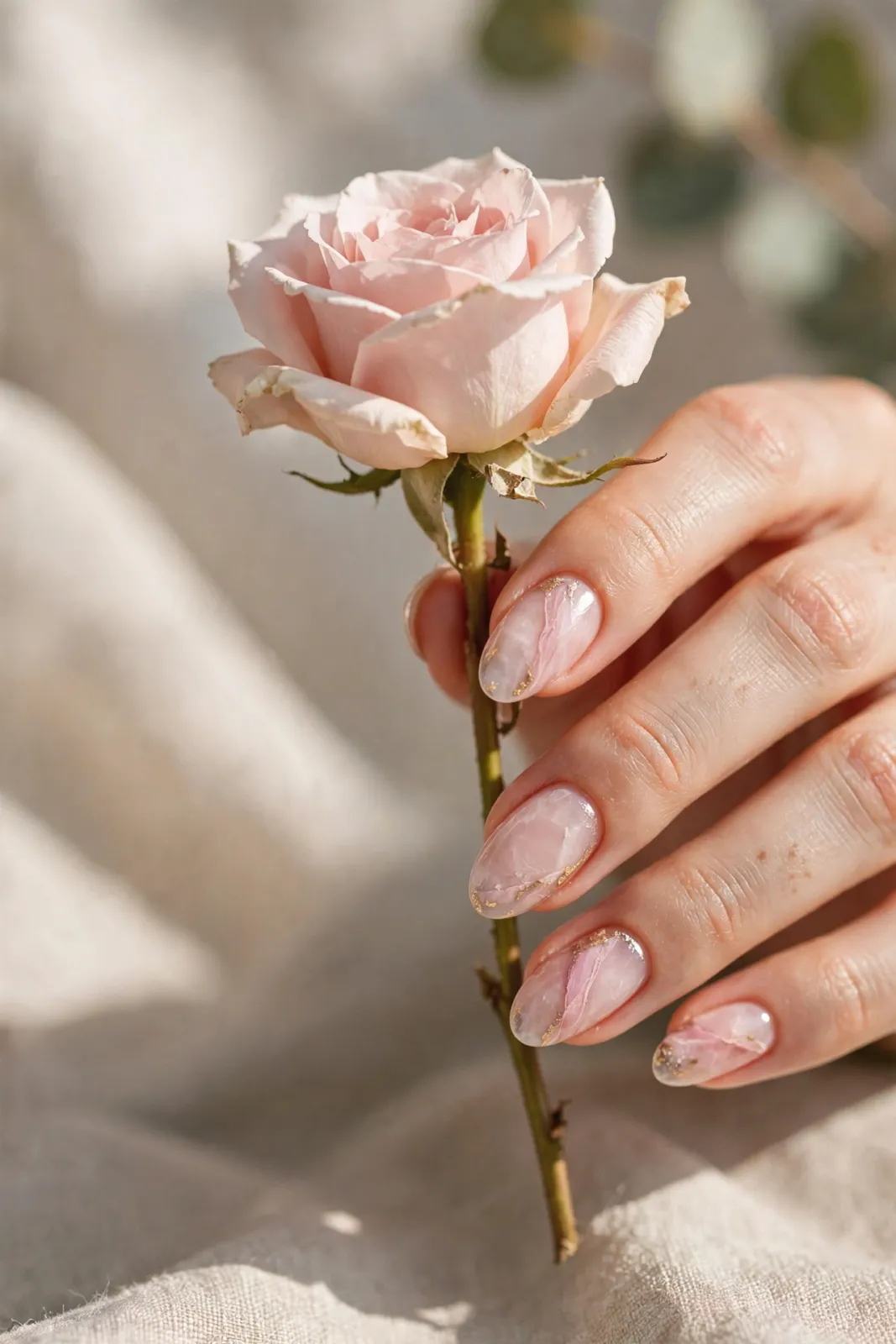
1. The Classic Sheer Quartz on Almond Nails
The reference version is a translucent blush base with soft white veining on a medium almond shape. Almond flatters the design because the tapered tip mimics a polished stone point, and the sheer base keeps the whole thing light enough for work, weddings and everything between. Keep the veins sparse — two or three drifting lines per nail, never a net. The emptiness is what makes it look like stone rather than pattern, and it is the version nail technicians get asked for most once spring dresses come out.
2. Deeper Rose Marble With Foil Flecks
When you want the design to hold its own against evening clothes or a stronger lip, deepen the base toward a true rose pink and press tiny flecks of gold or silver foil along one vein per nail. The foil should follow the marble, not scatter over it — think of it as the glint inside the stone. On a cream knit or a black dress this version glows, and because the colour is richer it hides regrowth at the cuticle better than the sheer version, buying you an extra few days before a refresh.
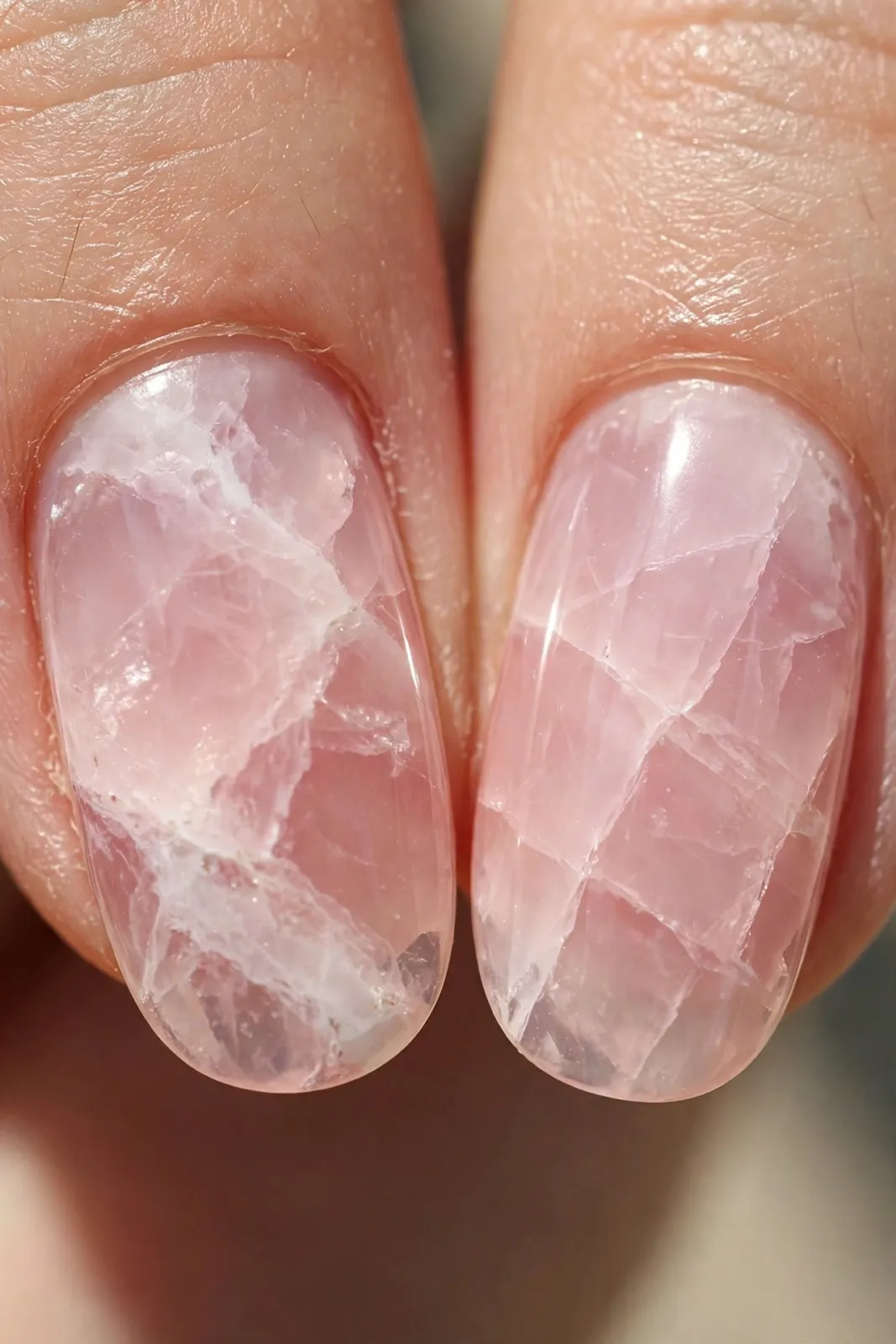
3. How to Paint Quartz Marble at Home, Step by Step
Step 1: Build the cloudy base
Start with a ridge-filling base coat, then one thin coat of a sheer milky pink. While it is still slightly tacky, dab a second, uneven layer in patches with a nearly dry brush. Stone is cloudy, not flat — those soft clouds of colour underneath are what the veins will float over. Cure or dry fully before moving on; veins painted into a wet base bloom into blobs.
Step 2: Draw the veins
With the finest liner brush you own and white gel paint thinned with a touch of top coat, draw two or three wandering lines per nail. Let your hand shake slightly on purpose. Real quartz veins wobble, branch and fade — a confident straight line is the one thing that looks fake. Feather the edge of each vein with a clean, damp brush so it melts into the base.
Step 3: Add depth with a shadow vein
Beside one main vein on each nail, lay a whisper of grey-pink or diluted taupe. This shadow is the professional secret: it gives the white line a sense of sitting inside the stone instead of on top of it. Keep it subtle; you should notice the effect, not the colour.
Step 4: Seal with gloss
Quartz is polished stone, so this design wants a high-gloss top coat, not matte. Float the top coat on without pressing, so you do not drag your veins, and cap the free edge. If you used foil, press it in before the final coat so the gloss smooths it flat like something embedded in the stone.

4. Pairing Quartz Nails With Jewellery and Bags
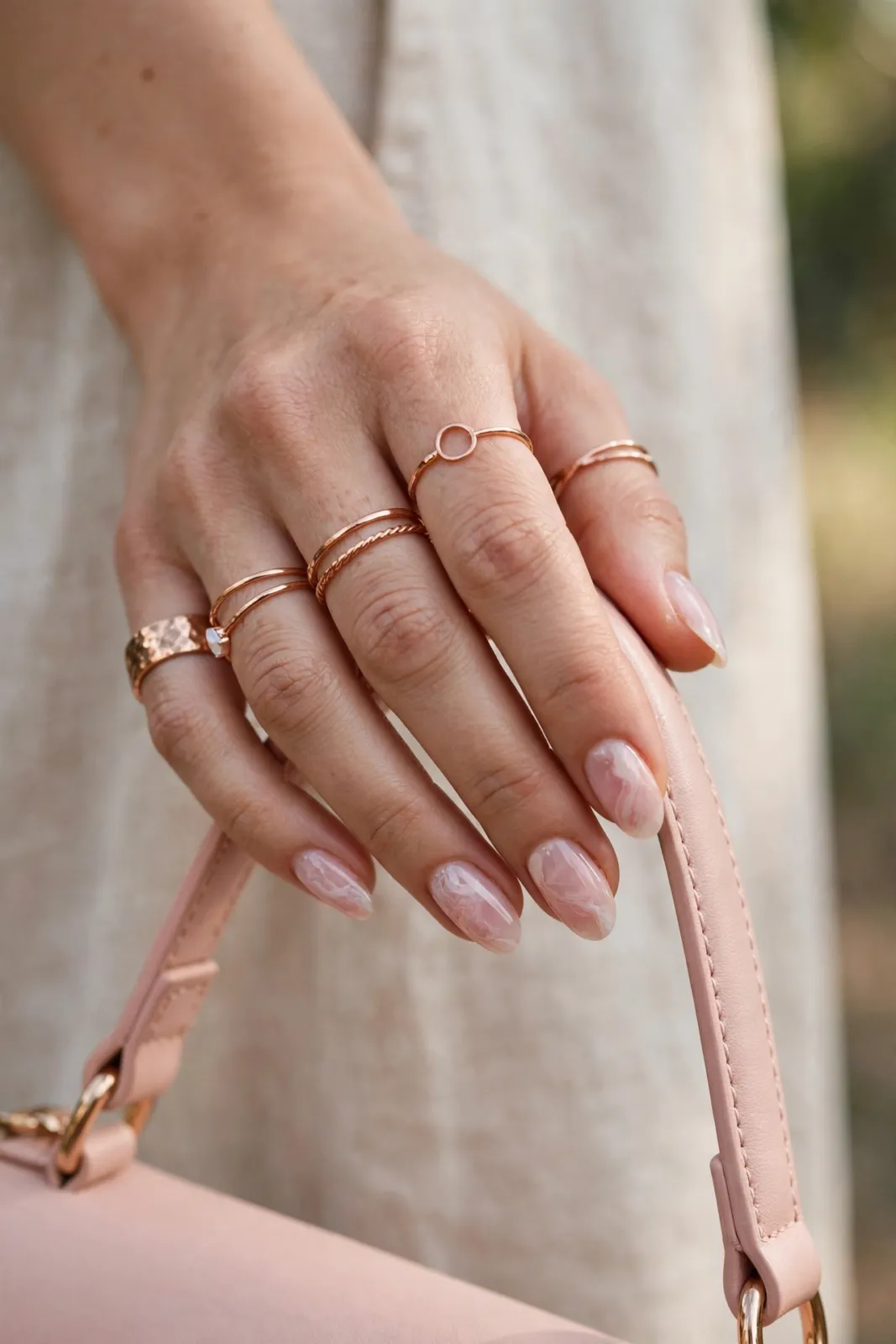
Rose gold was made for this manicure. The warm metal sits inside the same colour family as the blush base, so rose gold rings and a blush or nude bag make the pink deepen by comparison. Yellow gold works too, especially with the foil version. Silver cools the design down and looks crisp against white and grey outfits. The one pairing I avoid is a busy patterned ring stack on every finger — the nails are already art, and calm hands show them best. One or two fine rings, then let the marble speak.
5. Short Nail and Office-Friendly Versions
Marble scales down gracefully. On short, squoval nails, use the sheerest base, keep veins to one or two per nail, and concentrate them toward one corner rather than across the whole nail. The result reads as clean, groomed nails with a secret — most people will notice something pretty before they notice nail art. If your workplace is conservative, ask for the veins in a tone barely lighter than the base. Tone-on-tone marble is almost invisible in a boardroom and quietly lovely at your desk.

6. Buying Advice: Polish, Gel and Salon Talk
For home attempts, a sheer jelly pink polish does the base better than an opaque cream, because translucency is the whole effect. If you are buying one tool, make it a true liner brush with long, fine bristles — veins drawn with a toothpick look like it. At a salon, show a photo of real rose quartz stone, not just finished nails; a good technician will match the veining density you actually want instead of their house style. Ask for the design on gel if your nails are weak, since the gel’s slight thickness deepens the stone illusion, and budget for a three-week wear rather than two — this design grows out kindly because the base is close to a natural nail colour.
Common Mistakes to Avoid
Too many veins is the number one error — the nail turns zebra and the stone effect dies. The second is an opaque, bubblegum base: quartz is translucent, so if light cannot seem to pass through your polish, the illusion fails before the veins start. Third, matching every nail exactly. Stone is random; identical veining on all ten nails is what gives the game away. Fourth, skipping the shadow vein and then wondering why the design looks flat and sticker-like. And finally, a matte top coat over pale marble — it reads chalky within two days. Gloss is not a preference here, it is the material.

Frequently Asked Questions
How long do rose quartz marble nails last?
In gel, expect a solid three weeks, helped by the pale, natural-toned base that hides regrowth. In regular polish, plan on five to seven days with a top coat refresh at day three. The design fades gracefully rather than chipping dramatically at the tips.
Can I get the quartz effect with regular polish?
Yes. The technique was born with regular polish — thin layers, a fine brush and patience between coats. Work one nail at a time for the veins, since thinned polish dries fast, and give the finished set a full hour before doing anything with your hands.
What colours suit the marble besides pink?
The same method makes lovely white quartz with grey veins, a smoky taupe stone, or a soft lilac marble. Pink rose quartz stays the most requested because it flatters the widest range of skin tones and reads as a neutral at a glance.
Does marble nail art suit short nails?
It suits them very well. Use fewer, finer veins and a sheerer base so the design does not crowd the small surface. A short almond or squoval shape keeps the stone feel; very square tips make the veining look busier.
How much extra does marble art cost at a salon?
Most salons price it as mid-level nail art — a modest add-on per set rather than per nail, since the technique is quick once learned. Ask whether accent-only marble, on two nails per hand, costs less; it is a pretty way to try the look first.
Final Thoughts
Rose quartz marble nails are the rare design that asks for restraint and rewards it: a sheer base, a few wandering veins, a shadow whisper and plenty of gloss. They go with rose gold and candlelight as happily as with a laptop and a Tuesday. Try the classic sheer version first, keep your veins sparse, and let each nail be a slightly different stone — because that is exactly what the crystal on my desk would want.