Olive Green Cargo Trousers: 9 Relaxed Ways to Style Olive Cargo Trousers Without Looking Rugged
Cargo trousers have a public relations problem. Say the words and many people picture baggy pockets, camping trips and outfits that look ready to change a tyre. But olive green cargo trousers, in a modern cut and soft fabric, are quietly one of the most useful things in my wardrobe — the colour goes with half of what I own, the pockets are genuinely practical, and styled softly they read relaxed and polished rather than rugged.
The trick is contrast. Cargo trousers bring the utility; everything else in the outfit should bring the softness — a fine knit, a silk-look blouse, a clean trainer or a heeled sandal. Here are nine relaxed ways to style olive green cargo trousers without looking rugged, how to choose the right cut for your shape, what to check when you buy, and the styling habits that keep them looking intentional.
Why Olive Is the Easiest Utility Colour
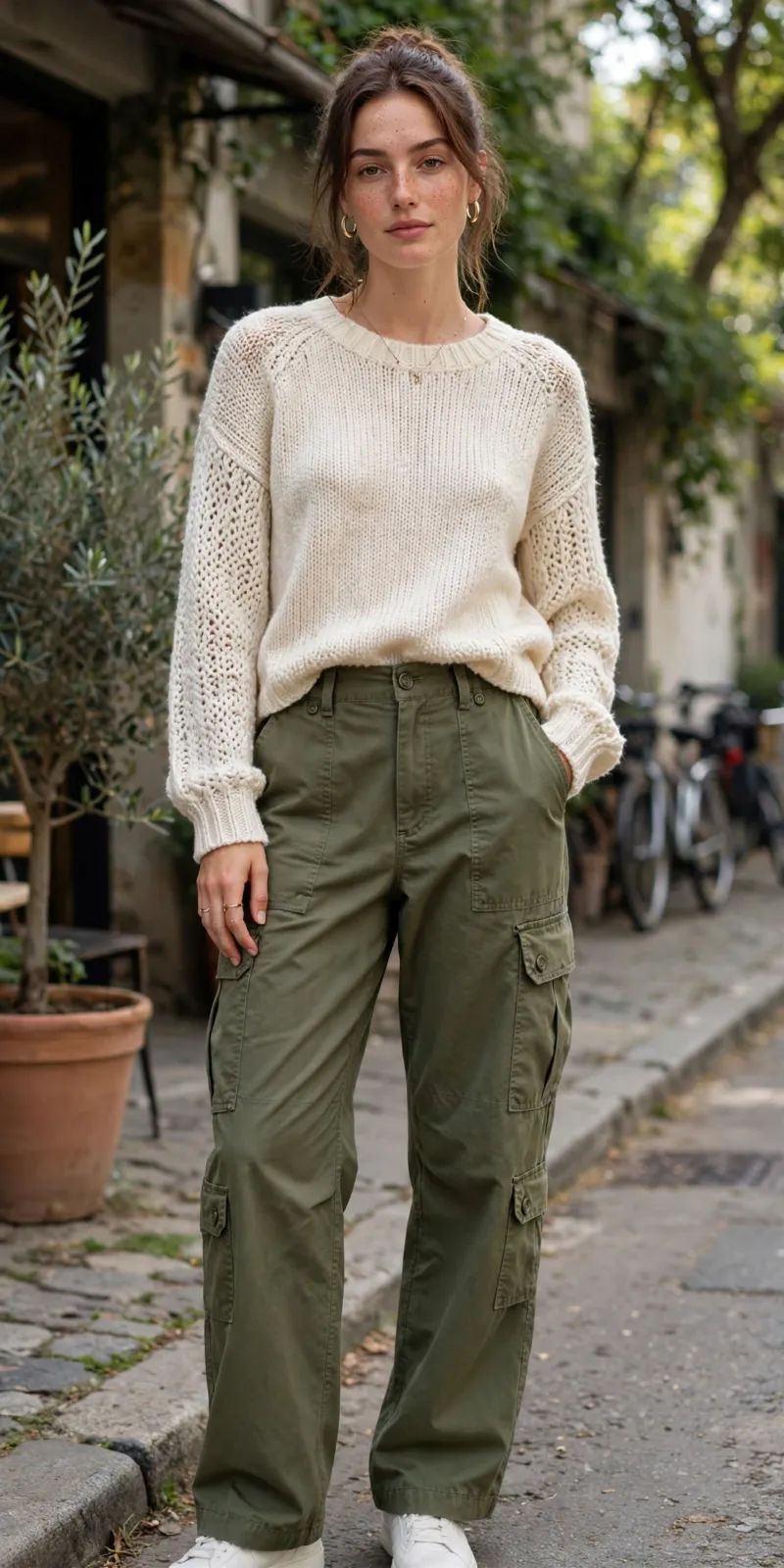
Olive sits in a sweet spot: it is a colour, so outfits feel considered, but a muted, earthy one, so it behaves almost like a neutral. It pairs with white, cream, black, tan, denim blue, blush and even soft mustard without arguing, and it flatters most skin tones because it carries both warmth and depth.
Compared with black cargos, which can look stark and workwear-heavy, or khaki, which slides toward safari, olive reads modern and calm. It also hides the small marks of a real day far better than pale trousers, which is quietly appropriate for a garment designed to be useful in the first place.
9 Relaxed Ways to Style Olive Green Cargo Trousers
Keep the top half fitted or softly tucked — volume on volume is what tips cargos into rugged.
1. With a cream fitted knit and white trainers. The softest full outfit: cream calms the olive, the neat knit balances the trouser volume, and clean trainers keep it fresh.
2. With a white shirt, half-tucked. A crisp shirt instantly smartens cargos. Roll the sleeves, tuck the front, leave the back loose, and add simple loafers or heeled mules.
3. With a black fitted tee and gold jewellery. Black and olive is an evening-leaning pair. A slim tee, layered gold necklaces and heeled sandals take cargos to dinner without a dress in sight.
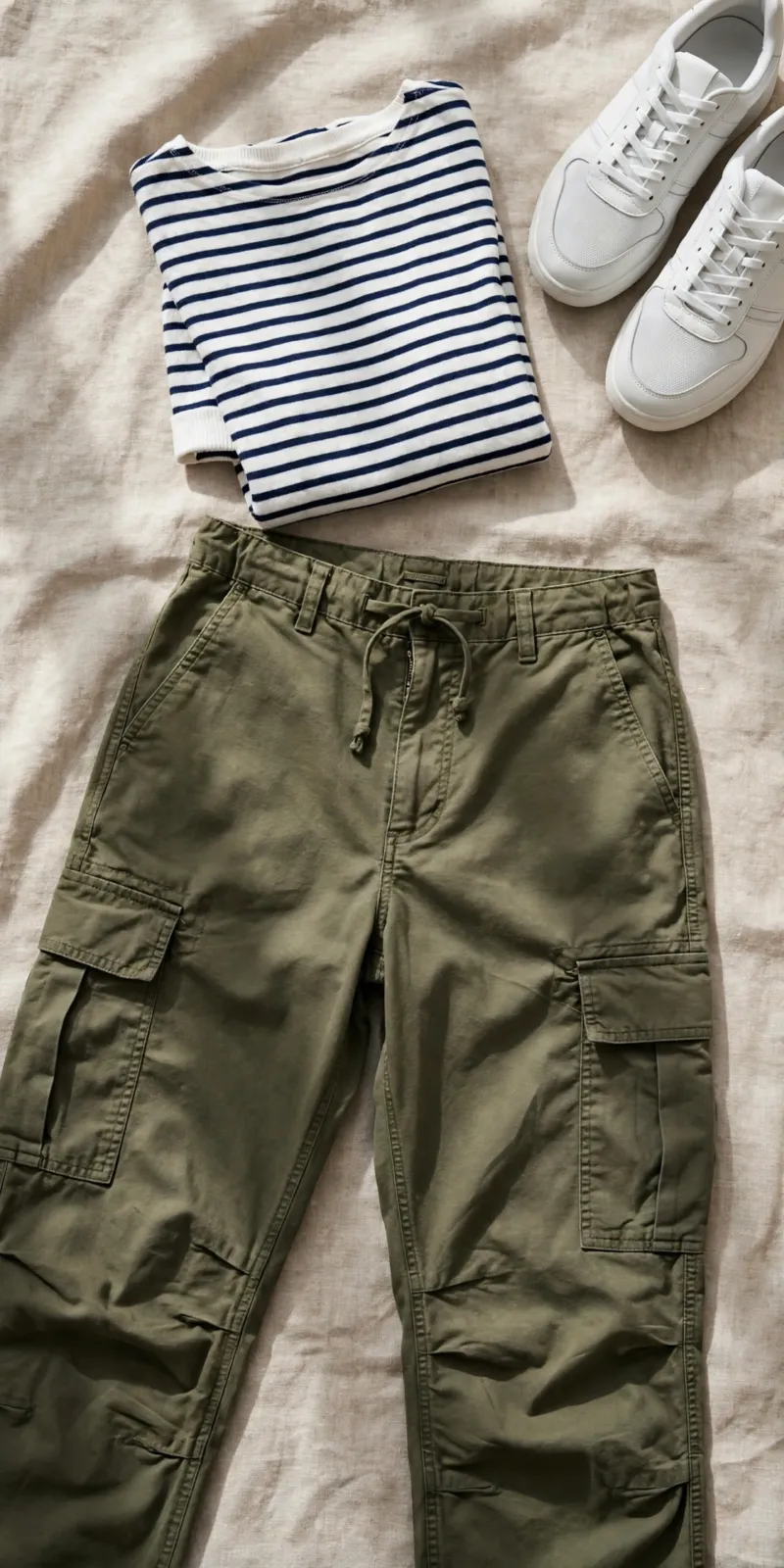
4. With a Breton stripe top. Stripes bring a French, off-duty neatness that counters the utility pockets. Finish with white canvas shoes or ballet flats.
5. With a silky camisole and a long cardigan. Texture contrast does the work: matte utility cotton below, soft sheen above, and a fine cardigan to pull it together on cooler days.

6. With a denim jacket and a plain tee. Denim blue and olive are old friends. Keep the tee white or cream and the shoes light so the outfit stays bright rather than workwear-dark.
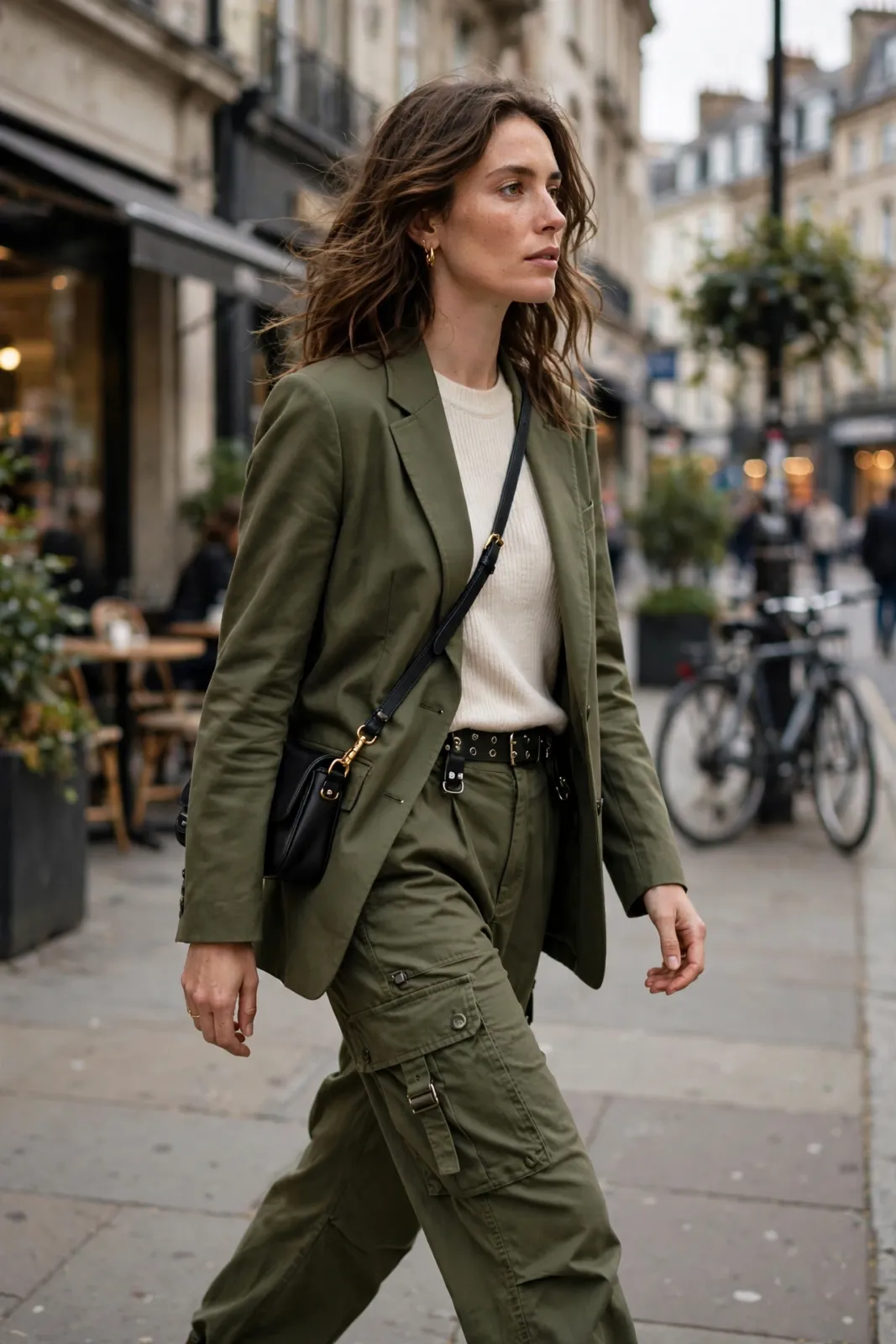
7. With a blazer for smart-casual days. A relaxed, unstructured blazer in cream, tan or navy over a tee makes cargos office-plausible in creative workplaces. The blazer must be soft, not corporate.
8. With a pastel knit in spring. Blush, lilac or powder blue against olive is an unexpectedly pretty combination that removes every trace of ruggedness.
9. Monochrome olive, different textures. An olive knit or shirt with the trousers, in a slightly different shade, looks deliberate and elongating — break it with a tan belt and bag so it does not read as a uniform.
Choosing the Right Cut, Step by Step
First, decide the leg shape by your proportions. Slim or tapered cargos, narrowing toward the ankle, are the easiest to keep polished and suit most people; wide-leg versions look fashionable but need a fitted top and a little heel or platform to balance. Second, check the rise: a high or mid-high rise that sits at the waist lets you tuck tops neatly and avoids the low-slung look that drags the style back to rugged.
Third, examine the pockets — the detail that decides everything. Flat bellows pockets that lie close to the leg look neat; bulky, stuffed-looking pockets add width and workwear energy. Fourth, try them sitting down and walking: cargo cotton has little stretch in many cuts, so the waist and knee must feel easy in motion, not just in the mirror. Fifth, check the hem: it should end at or just above the ankle bone for trainers and flats, or adjust with the drawstring or cuff many modern pairs include, so one pair serves several shoes.
Buying Advice: Fabric, Colour and Details
Choose cotton twill with a touch of elastane — one or two percent is enough for comfort without the trousers bagging at the knee by afternoon. A smooth, finely woven twill reads smarter than a rough, slubby canvas. Lighter-weight fabric also drapes instead of standing away from the leg, which is half the difference between relaxed and rugged.
On colour, true olive has a grey-green depth; very yellow greens are harder to pair and date faster. Hold the trousers against cream and black in the shop — a good olive flatters both. Finally, audit the details: minimal visible branding, tidy stitching in a matching thread, a clean waistband with belt loops plus a drawstring if you like options, and hardware in a matte finish. Shiny zips and oversized logos pull the look straight back to utility wear.
Care So the Colour and Shape Last
Wash cargos inside out on a cool gentle cycle to protect the olive dye, which fades unevenly in hot water and strong sun. Wash them with other mid-tone colours, never with white shirts — new olive dye can transfer in the first washes. Skip heavy fabric softener if your pair has elastane, since it coats the stretch fibres and shortens their life.
Dry them flat or on a hanger away from direct sunlight, smooth the pocket flaps while damp so they dry lying flat, and give the legs a light press or steam if you want the smarter finish. Store them folded rather than hanging by the waistband for weeks, which can stretch a drawstring waist. Treated this way the colour stays deep and the pockets stay flat, and the trousers keep looking chosen rather than survived in.
Common Mistakes to Avoid
The most common mistake is pairing cargos with other rugged pieces head to toe — chunky boots, a utility jacket and a backpack — which commits fully to the workwear look this article is avoiding. Second is stuffing the pockets: the pockets are for a tissue, a card, a lip balm, not a phone, keys and a water bottle, which distort the line and the fabric. Third is an untucked, oversized top over wide cargos, volume on volume with no waist anywhere. Fourth, wearing them too long so the hems pool over shoes; crop or cuff to the ankle. Finally, do not treat olive as invisible: check the whole outfit in daylight, because a faded, washed-out pair against a fresh top looks accidental rather than relaxed.
Frequently Asked Questions
What colours go with olive green trousers?
Cream, white, black, tan, denim blue, navy, blush and soft pastels all work. Cream and white keep the look soft, black makes it evening-ready, and tan accessories warm the whole outfit up.
Can cargo trousers be worn to work?
In most smart-casual and creative workplaces, yes — choose a tapered cut in smooth twill, keep pockets flat and empty, and pair with a shirt, blazer or fine knit rather than a tee.
What shoes work best with cargo trousers?
Clean white trainers, loafers, ballet flats and heeled sandals or mules all keep cargos polished. Reserve chunky boots for days when you actually want the stronger, rugged look.
Should cargo trousers be tight or loose?
Neither extreme. A relaxed fit through the thigh that tapers to the ankle, with room to pinch an inch of fabric at the thigh, gives comfort without the baggy silhouette that reads rugged.
How do I stop the pockets looking bulky?
Choose flat bellows pockets, keep them empty or nearly so, and smooth the flaps flat after washing. Pockets sewn with the opening at the top rather than the side also lie noticeably neater.

Utility, Softened
Olive green cargo trousers earn their place when you style them against their nature: soft knits, clean shirts, pretty colours and neat shoes around a practical, comfortable trouser. Buy a tapered pair in smooth twill, keep the pockets flat and the hems at the ankle, and the rugged reputation quietly disappears — leaving the usefulness, which was the good part all along.