Woven Basket Picnic Bag: 9 Pretty Ways to Carry a Basket Bag on Picnic Days
Some bags are purely practical, and some bags change how an afternoon feels. A woven basket picnic bag is firmly in the second group. The moment you pick one up, an ordinary sandwich in the park turns into an occasion — there is something about wicker, a checked blanket and a baguette that makes even a Tuesday lunch feel like a small celebration. I started carrying one for actual picnics, and then, slightly to my own surprise, I started carrying it everywhere else too.
That is the real charm of this style: it is a picnic basket that behaves like a handbag. The structured woven body holds its shape, the handles are made for carrying, and the size swallows a blanket, a bottle and lunch for two without looking like luggage. Here are nine pretty ways to carry one, how to pack it properly step by step, what to look for when you buy, and how to keep the weave looking good for years.

Why a Basket Bag Works Harder Than a Picnic Hamper
A traditional hamper is lovely, but it is heavy, rigid and designed for a car boot, not for a walk across a park. A basket bag is lighter, softer in shape and far easier to carry on your arm or in your hand for any distance. The woven walls flex a little around odd-shaped contents — a round loaf, a jar, a paperback — where a hard hamper simply refuses to close.
It also earns its keep between picnics. Because it reads as a summer handbag rather than camping equipment, the same bag goes to the farmers market, the beach and lunch in a friend’s garden. Cost per use drops quickly when one bag does four jobs, which is more than can be said for a hamper that comes out twice a year.
9 Pretty Ways to Carry a Woven Basket Picnic Bag
1. The classic park picnic. Floral dress, flat sandals, basket on your arm with a linen cloth tucked over the top. This is the look the bag was born for, and it never fails in photographs.
2. Market morning. In a darker honey tone, the basket becomes a market tote. Jeans, a white shirt and the basket over your forearm — it holds flowers, bread and fruit, and unlike a canvas tote it never sags or spills.
3. Beach day carry. A smaller basket bag fits a towel corner, sunscreen, sunglasses and a novel, and sand brushes straight off the weave. Keep it on the blanket rather than the sand and it stays clean.
4. Garden lunch with friends. Carry it as the centrepiece: set it on the table or blanket unopened for a moment, because honestly, it is part of the decoration. A gingham lining showing at the edge completes the scene.
5. Bike-basket style. If your basket has a flat back and sturdy handles, loop the handles over the handlebars for a slow ride to the park. Walk any busy stretch — a full basket changes the steering more than you expect.
6. Café-to-park mornings. Croissant run first, picnic second. The basket keeps pastries upright and uncrushed in a way no paper bag does, and it looks far prettier on the café table.
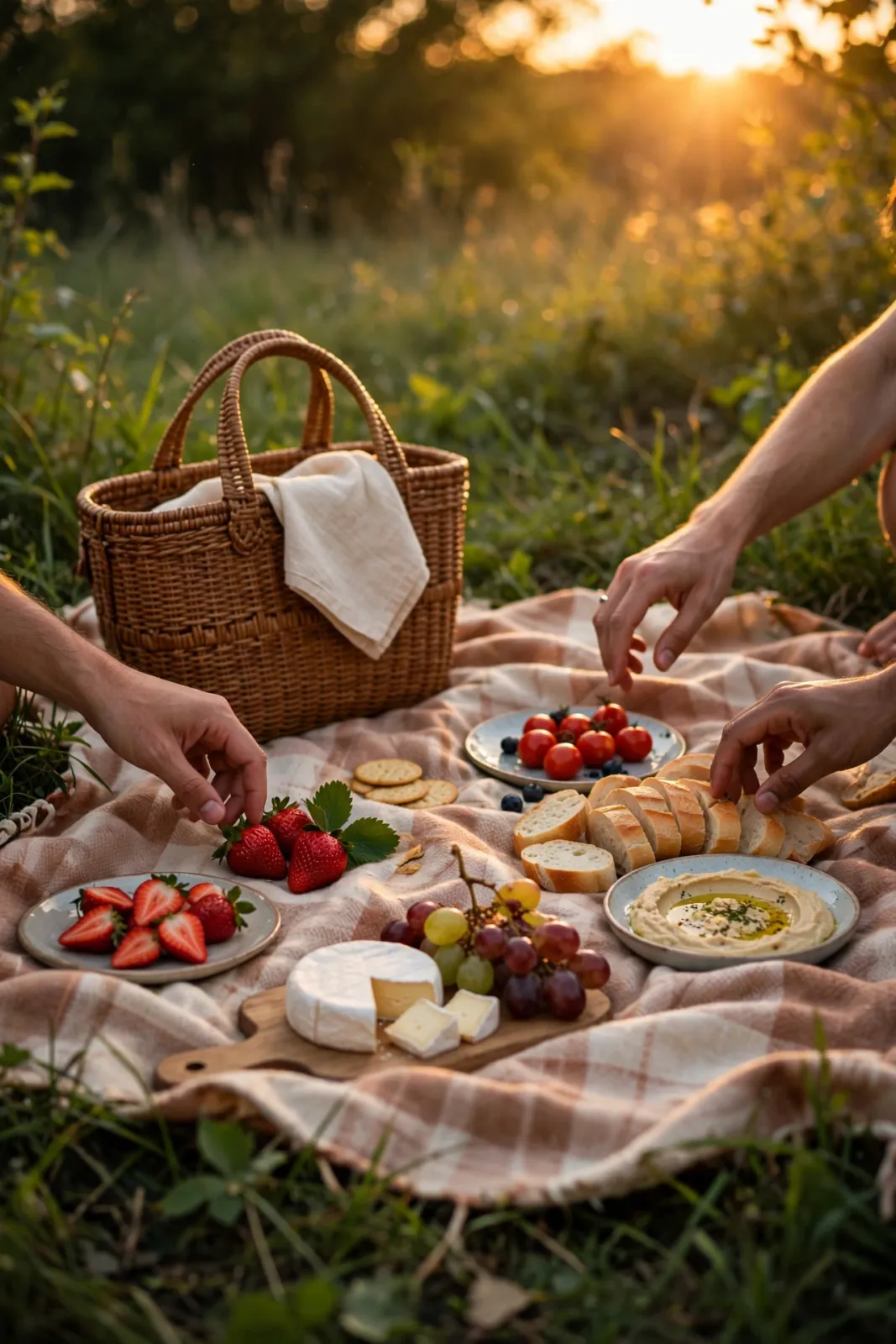
7. Sunset picnic. Golden hour is this bag’s best light. Pack cheese, fruit and something sparkling, tie a scarf around one handle, and let the bag sit in the frame of every photo.
8. Book-and-blanket solo picnic. One of life’s underrated pleasures. A smaller basket with lunch for one and a good book, carried to a quiet corner of the park, is a complete plan for a slow afternoon.
9. As a home storage basket. Between outings, mine holds rolled linen napkins in the kitchen. A pretty basket should not hide in a cupboard for fifty weeks a year.
How to Pack a Basket Picnic Bag: Step by Step
Packing order decides whether lunch arrives perfect or as a warm, crushed lesson. Step 1: Line the base with the picnic blanket or a folded cloth — this cushions everything and comes out first at the park. Step 2: Heaviest items go in next: bottles standing upright in one corner, jars and tins beside them. Step 3: Add boxed and sturdy food — cheese, sandwiches in a firm container, whole fruit. Step 4: Delicate items go on top: pastries, berries, leafy salads. Nothing heavy ever sits on a strawberry. Step 5: Tuck cutlery, napkins and a small knife into the side gaps where they cannot slide under everything. Step 6: Fold the lining cloth or a tea towel over the top before closing — it stops lids rattling, shades the food from the sun, and gives that finished look when you carry it.
One habit worth forming: chilled items travel in a small insulated pouch inside the basket rather than loose against the weave. Condensation from cold bottles dampens wicker over time, and a pouch keeps the picnic cold and the basket dry at once.

Buying Advice: Size, Weave and Handles
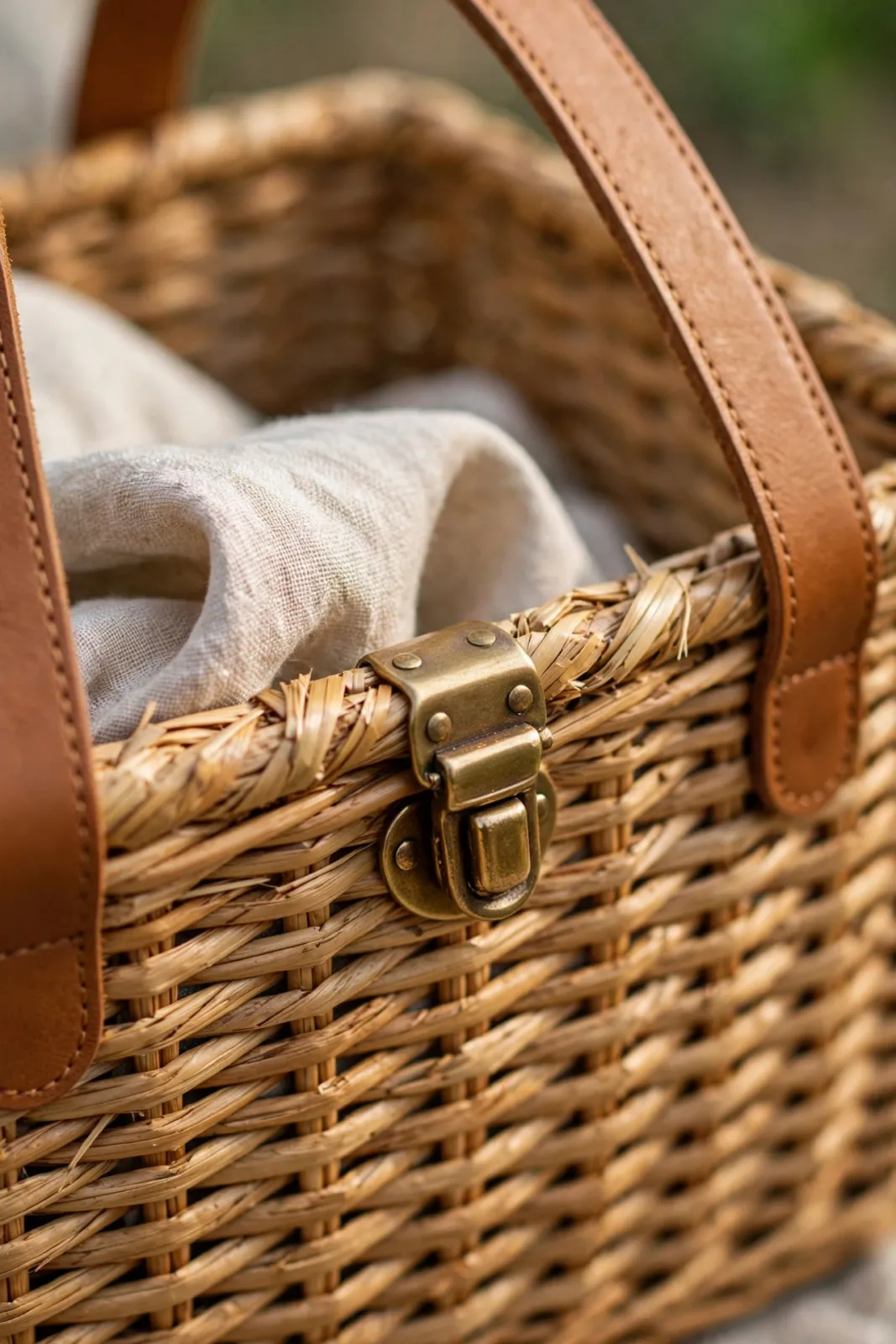
Size first. A medium basket, roughly the width of a standard tote, suits picnics for two and daily carrying. Go larger only if you regularly feed four or more — a big basket fully loaded is heavy, and the charm fades fast when your arm aches. Check the weave by holding it up to the light: an even, tight weave with no gaps or snapping strands will last; loose, irregular weaving at the base is where baskets fail.
Handles deserve a close look. Leather or leather-wrapped handles are the most comfortable and the longest lasting, because bare wicker handles dig into the hand under weight. The handle attachments should be woven or stitched through the basket wall, not glued. Finally, a fabric lining that ties or buttons in — and can be removed and washed — makes the difference between a bag you use weekly and one you quietly avoid after the first jam incident.

Care Tips for Woven Baskets
Wicker and straw are tougher than they look, but they dislike two things: soaking water and being stored damp. After a picnic, empty the bag fully, shake out crumbs over the garden, and wipe the lining or remove and wash it if anything leaked. Let the basket air with the lid open for a few hours before putting it away, especially after carrying chilled bottles.
For the weave itself, a soft dry brush removes dust from the crevices. Stubborn marks usually lift with a cloth barely dampened in warm water with a drop of mild soap — then dry promptly in moving air, never on a radiator. Store the basket somewhere dry with a cloth or its blanket inside to help it hold shape, and keep it out of long direct sunlight, which fades and brittles natural fibres over a season.
Common Mistakes to Avoid
Overloading is mistake number one. A basket rated by your eyes as “roomy” still has a base seam that gives way if you pack for six. Mistake two is carrying open liquids — an unsealed bottle of dressing will find the weave, every time; jars with tight lids only. Third, do not leave the bag sitting on wet grass for hours: prop it on the blanket or a coat so the base stays dry.
Finally, resist the all-white picnic aesthetic if your basket is pale natural straw and the menu involves red wine and tomato salad. Choose the darker honey basket for messy menus, or pack those items in sealed boxes at the bottom. A little planning keeps both the lunch and the bag looking their best.
Frequently Asked Questions
How much can a woven basket picnic bag hold? A medium bag comfortably carries a blanket, a bottle, and lunch for two — sandwiches, cheese, fruit and pastries. If you regularly picnic for four, choose the large size or carry a second small bag for drinks.
Can I carry a basket bag as an everyday handbag? Yes — that is half its appeal. The medium and small sizes work as summer totes for markets, cafés and garden visits. A removable lining keeps daily items from catching on the weave.
How do I clean the lining? If it is removable, untie or unbutton it and hand or machine wash it gently, then dry it fully before refitting. Fixed linings can be spot-cleaned with a damp cloth and left to air with the lid open.
Will the weave snag delicate clothes? A well-finished basket has smooth, sealed ends and should not snag. Run your palm inside before buying; any sharp sticking-out strand is a reason to choose a different one.
How should I store it in winter? Empty, clean and fully dry, with a cloth inside to hold its shape, in a dry cupboard away from direct heat. Never store it damp or sealed in plastic — natural fibres need air.
The Bag That Makes Lunch an Occasion
A woven basket picnic bag is a small purchase that changes the texture of a summer. It turns lunch into a picnic, a market trip into an outing, and a blanket in the park into the best table in town. Choose a tight weave, kind handles and a washable lining, pack it in the right order, keep it dry — and then use it far beyond picnic days. The best bags are the ones that keep finding new jobs, and this one finds them everywhere.