There is a reason curtain layers keep trending: they give long hair movement, softness and a face frame, all without sacrificing length. Add a honey blonde colour — warm, golden, somewhere between caramel and sunlight — and the cut comes alive, because the layers catch the light at different lengths and the colour looks brighter everywhere it falls shorter.
I have worn versions of this cut through summers and winters, with straight styling and with waves, and it remains the most forgiving long hairstyle I know. Below are nine soft ways to wear honey blonde curtain layers, a step-by-step blow-dry routine, honest advice on colour upkeep, and the mistakes that turn this dreamy cut into a daily struggle.

What Curtain Layers Actually Are
Curtain layers start with a centre or near-centre parting and shorter pieces that begin around the cheekbones, sweeping outwards like curtains being drawn open. Longer layers continue through the back and sides, removing weight so long hair swings instead of hanging. The result frames the face on both sides and looks styled even when you have done almost nothing.
Honey blonde suits this cut especially well because the colour is applied with dimension — deeper golden roots, brighter ends — and each layer shows a different tone. Flat, one-colour blonde can look heavy at long lengths; honey tones in layers never do.
1. The Classic Blow-Out
The signature look: hair dried smooth with the front pieces flicked away from the face, ends curled under just slightly. It is polished without being stiff, and it shows off both the layers and the colour gradient. This is the hero photo version — save it for days when you want the cut to do the talking.
2. Soft Loose Waves
Loose waves are the most forgiving way to wear curtain layers, because the wave pattern hides any piece that grew out unevenly. Wrap large sections around a wide tong, always winding the front pieces away from the face, then brush through once cooled. The denim-jacket photo below shows this version in golden-hour light.

3. Sleek and Straight
Worn straight, the layers become graphic: you can see each length step and the colour bands clearly, as in the side close-up above. Use a heat protectant, straighten in small sections, and finish with a drop of oil only on the last third of the hair. Keep the parting dead centre for the full curtain effect.
4. The Half-Up Sweep
Gather the top back section into a small clip or elastic and let the curtain pieces stay loose around your face. You get the practicality of hair off your neck with the softness the cut is famous for. This is the version I choose for work days, cooking and travel.
5. Brunch Hair: Air-Dried Texture
The lifestyle photo later in this post — laughing at a brunch table, hair moving in the breeze — is air-dried curtain layers at their best. Scrunch a light mousse into damp hair, twist two front sections away from the face while it dries, then shake out. The layers give the texture shape so it never looks like you simply skipped styling.
6. Low Ponytail With Face Frame
Pull the lengths into a low ponytail at the nape and deliberately leave the curtain pieces out. The short front sections soften the severity of a ponytail and make it feel like a style rather than a fallback. A silk scrunchie keeps the honey colour from snagging and adds a small luxury note.
7. Claw-Clip Twist
Twist the back hair up into a claw clip, leaving the front layers and a few wispy ends free. It takes twenty seconds, shows off the layered lengths against the neck, and works from the school run to evening drinks. Bigger clips in tortoiseshell or gold suit honey tones beautifully.
8. Deep Side Sweep for Evening
Although the cut is built around a centre part, flipping most of the hair to one side for an evening changes its mood completely: more volume at the root, more drama in the frame. Set the sweep with a light spray while it is warm from styling, and let the shorter layers fall where they like.

9. Second-Day Refresh
On day two, do not restyle everything. Mist only the front sections and the top layer with water, re-wrap those pieces around a round brush with warm air for thirty seconds each, and add dry shampoo at the roots if needed. The curtain frame is what people see; refreshing it refreshes the whole style.
How to Blow-Dry Curtain Layers, Step by Step
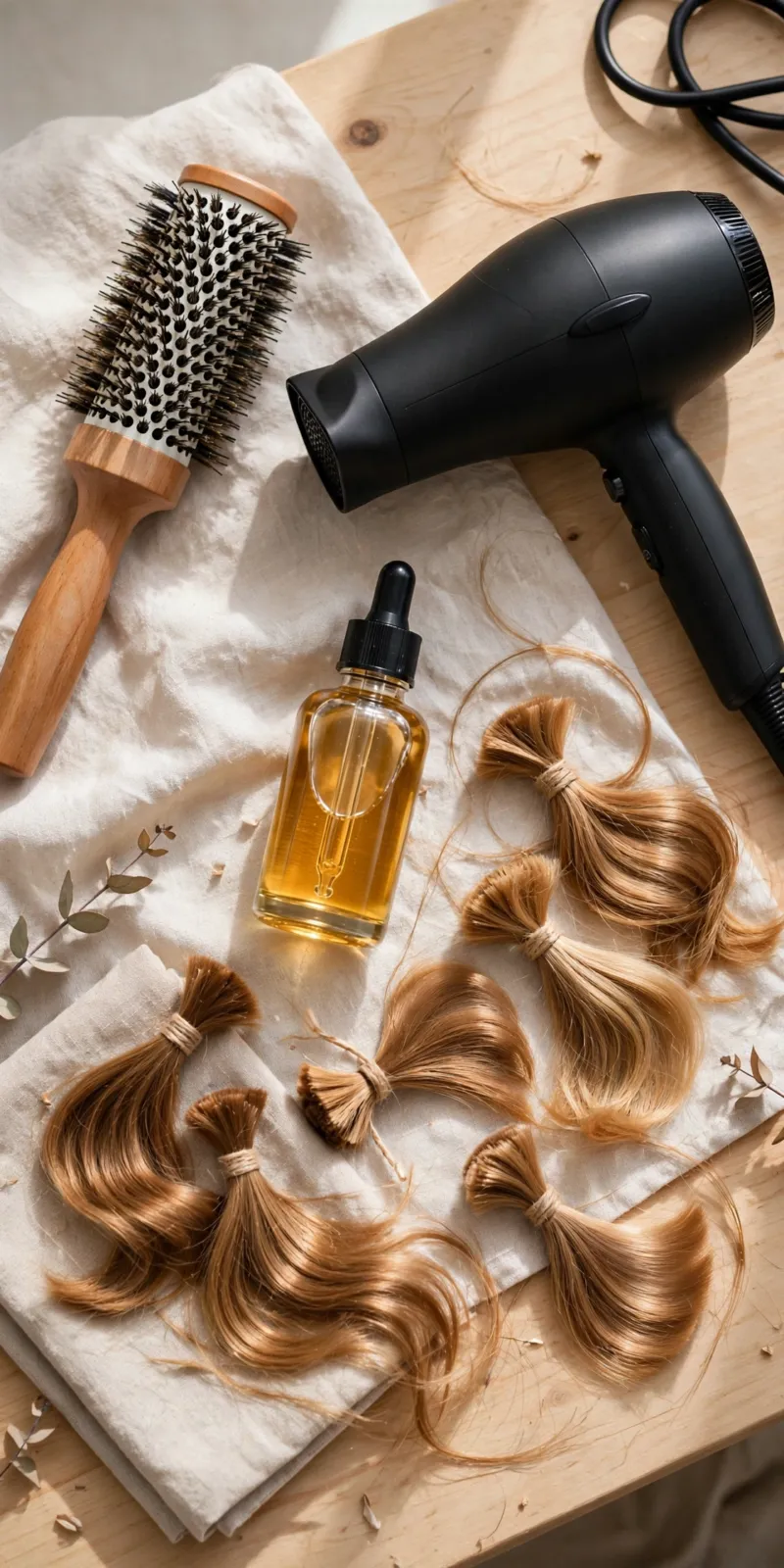
Step one: apply heat protectant and rough-dry until hair is eighty percent dry, lifting roots with your fingers. Step two: clip the back lengths up and dry the front curtain pieces first, rolling a round brush away from the face so they cool into that outward sweep. Step three: drop the back sections and dry them in large chunks, rolling ends under. Step four: blast everything with cool air for twenty seconds to set the shape. Step five: separate the layers with your fingers — never a fine brush — and add one drop of oil through the ends only.
Colour and Care Advice
Honey blonde needs warmth management. Use a sulphate-free shampoo, wash two to three times a week, and use a golden or beige toning gloss every few weeks rather than a strong purple shampoo, which can make honey tones look dull and grey-green. A deep conditioning mask once a week keeps layered ends — which are older hair — from looking wispy.
Book a layer trim every eight to ten weeks. Curtain pieces grow past the cheekbone quickly, and once the shortest layer passes the chin the frame effect is lost. Colour can usually stretch longer: ask for a root shadow or smudge at the salon so regrowth melts into the honey instead of showing a line.

Mistakes to Avoid
The biggest mistake is cutting the front layers too short: curtain pieces should start at or below the cheekbone, because shorter pieces spring up and refuse to sweep. Second, avoid piling oils and serums at the roots — layered hair needs lightness to move. Third, do not judge the colour indoors at the salon alone; honey blonde changes dramatically in daylight, so check it at a window before you leave. Finally, resist daily high-heat straightening, which frays layered ends faster than any other style.
Frequently Asked Questions
Do curtain layers suit every face shape?
Nearly, because the starting point of the layers can be adjusted. Cheekbone length softens square faces, chin-length pieces balance longer faces, and round faces suit a slightly longer start that creates vertical lines. A good stylist will tailor the first layer to you.
How often does honey blonde need salon visits?
Plan on a gloss or partial refresh every eight to twelve weeks, with full colour less often if you keep a soft root shadow. The layered trim is the more frequent appointment, roughly every two months, to keep the frame at the right length.
Are curtain layers high maintenance at home?
No — that is their appeal. The front pieces take two minutes to refresh, and the cut is designed to fall well unstyled. It asks for regular trims and gentle colour care rather than daily effort.
Can I get curtain layers on fine hair?
Yes, with lighter layering. Fine hair needs fewer, longer layers so the ends do not look thin. Tell your stylist you want the frame and movement but must keep density through the last few inches.
What products do I actually need?
Four things cover it: heat protectant, a light mousse for air-dried days, a dry shampoo for roots, and a small bottle of hair oil for ends. Anything beyond that is optional for this cut.
Long Hair, Softly Framed
Honey blonde curtain layers ask very little and give a great deal: length with movement, colour with dimension, and a face frame that makes even a ponytail look considered. Keep the trims regular, the heat moderate and the front pieces refreshed, and this cut will carry you gracefully through every season.