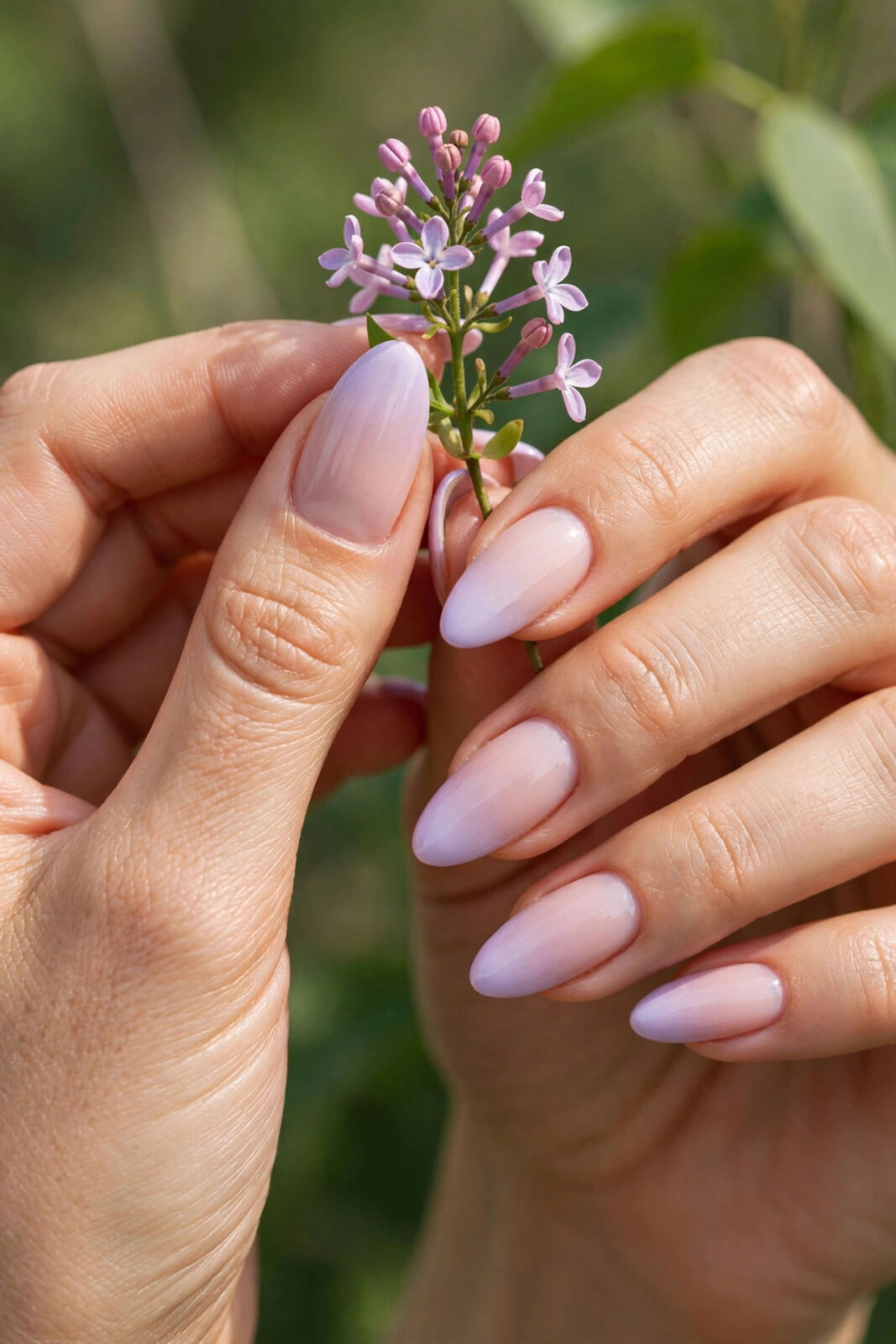
A classic French manicure is clean, but it can feel a little expected. The French fade — often called baby boomer nails — softens the hard white tip into a gentle gradient, and done in pastel lilac it becomes something dreamier altogether: a sheer milky base that melts into a soft purple-white tip, like lilac petals dipped in cream. It is polished enough for a wedding, soft enough for everyday, and kind to nails of every length.
If stark white tips have always felt too sharp for you, this is the manicure to try. Below are nine ways to wear the pastel lilac French fade — different shapes, finishes and small accents that keep it personal — plus how a good fade is actually built, step by step, and the habits that stop pastel shades chipping and staining, which is where most people go wrong.
Why the Lilac Fade Flatters Hands So Well
The fade works because it imitates how nails naturally look at their best: pink and healthy at the base, lighter towards the free edge, with no hard line anywhere. Blurring the boundary does two favours at once — it makes the nail bed look longer, which lengthens the fingers visually, and it hides regrowth far better than a solid colour, because the base is sheer and close to your natural nail tone. A lilac tint adds the personality: cool, calm, and surprisingly neutral.
Pastel lilac also sits in a sweet spot among colours. It is softer than a fashion purple, more interesting than pink, and it complements both gold and silver jewellery, which not every nail colour manages. On deeper skin tones the milky gradient glows; on fair skin it reads delicate and fresh. And because the whole design is low-contrast, small imperfections — a tiny chip, a slightly uneven tip — barely show, which makes it one of the most forgiving manicures you can choose.
1. The Classic Almond Fade
Almond is the shape this design was born for. The tapered sides and rounded tip give the gradient room to travel, so the lilac melts over a long, elegant curve. Keep the fade low — colour concentrated in the last third of the nail — for the most natural effect. This is the wedding and special-occasion version, and the one most likely to be photographed against a bouquet or a coffee cup.
2. Short and Squoval for Everyday
Short nails wear the fade beautifully and more practically. On a squoval shape the gradient is compressed, so ask for the lilac to start a little higher to keep the effect visible. The result looks clean and groomed rather than ‘done’, which suits office dress codes and hands that actually type, cook and garden. Short fades also chip less, simply because there is less free edge to catch.
3. Coffin and Tapered Square
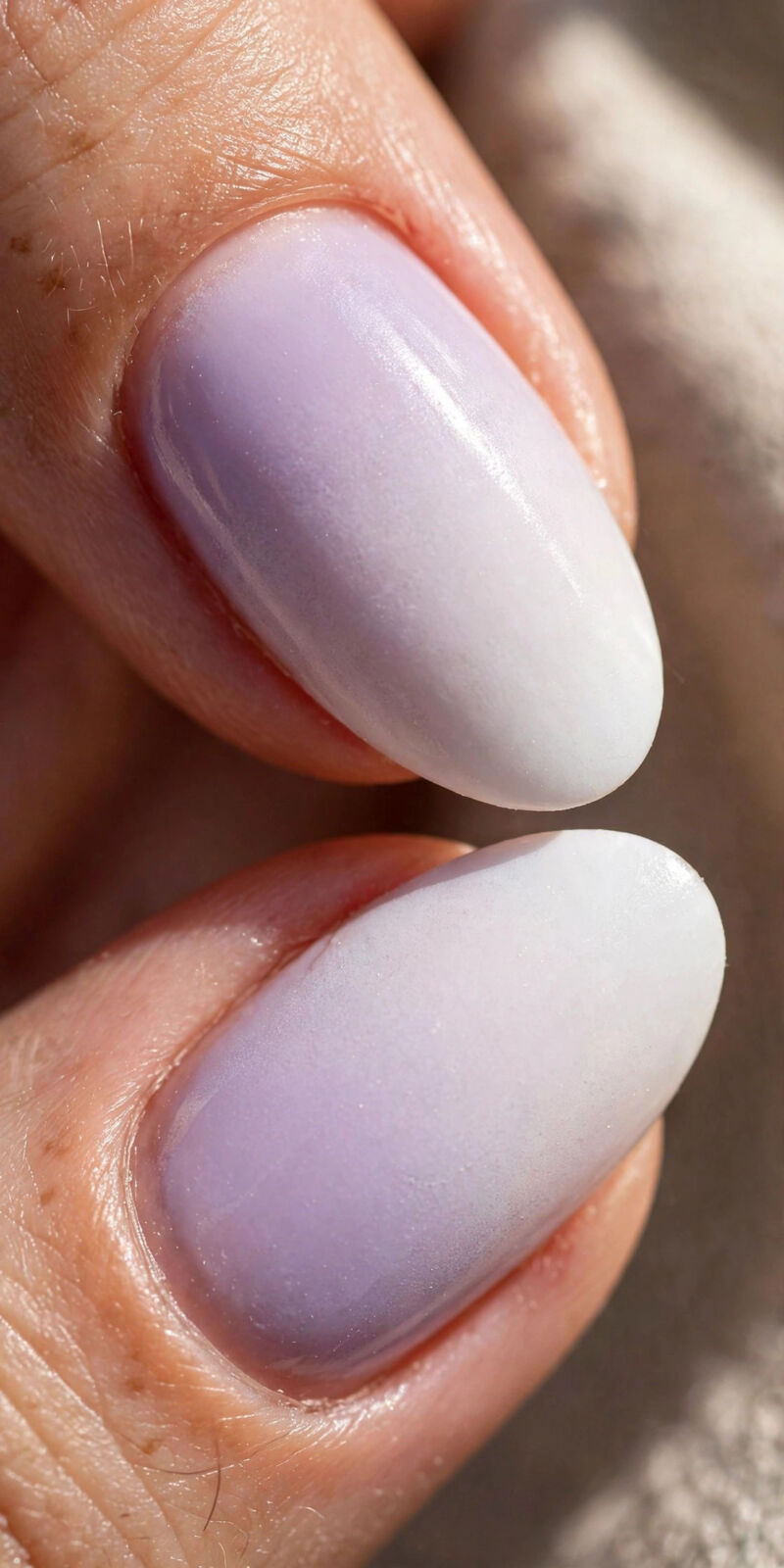
Longer, tapered shapes turn the soft fade into a fashion statement. The extra length lets you stretch the gradient — sheer base, lilac middle, almost white tip — for a true ombre read. Because the colour is pastel, even dramatic length stays elegant rather than loud. This shape needs commitment to maintenance, but for events and holidays it is the most striking way to wear the design.
4. With a Fine Chrome or Pearl Finish
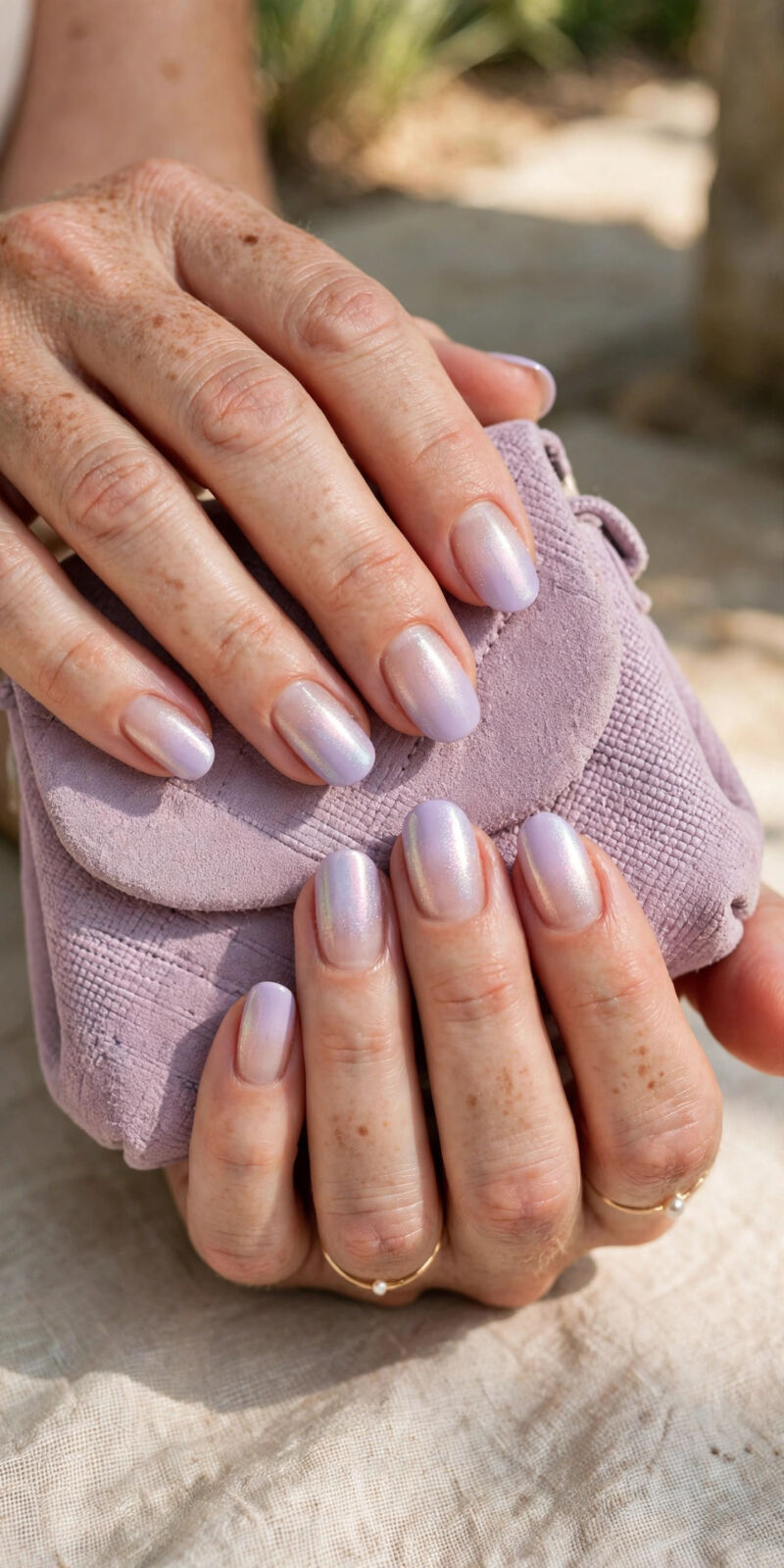
A whisper of chrome powder over the finished fade — the glazed effect — adds a pearly light that moves as your hands do. It suits the lilac base especially well because both are cool-toned and soft. Ask for the finest chrome your salon has and a glossy top coat over it; heavy glitter chrome will bury the gentle gradient you paid for. The finish also buys durability, sealing the fade under an extra hard layer.
5. Tiny Floral or Dot Accents
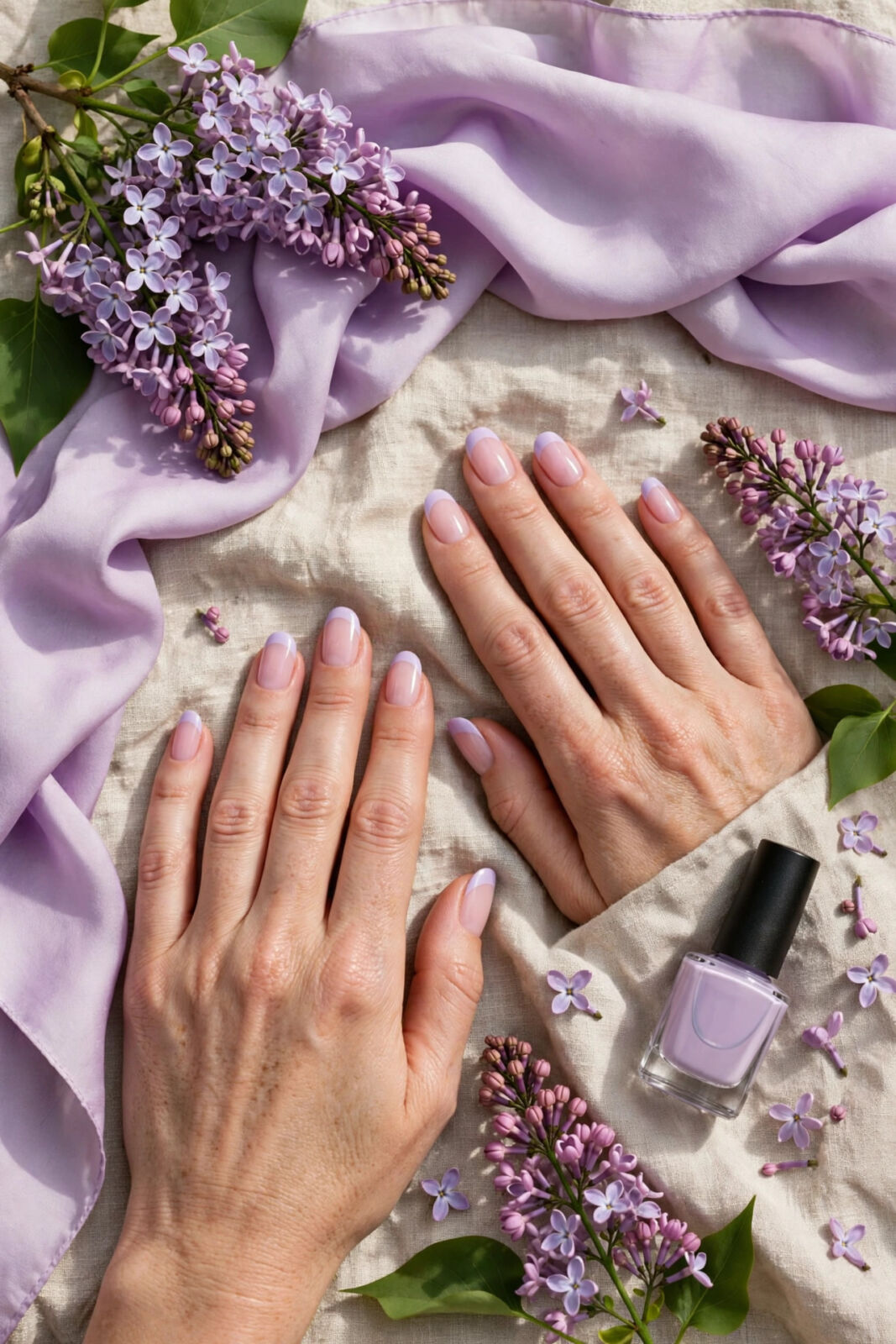
One accent nail keeps the design playful without overwhelming it. A tiny hand-painted lilac flower, a row of micro dots along one tip, or a single small pearl at the base of the ring finger all sit happily on the fade’s soft background. Keep accents to one or two nails per hand and in the same lilac-white family — the charm of this manicure is its restraint, and accents should whisper too.
6. French Fade with a Coloured Smile Line
For a subtle twist, your technician can deepen the very edge of the tip with a slightly stronger lilac line blended into the fade — a ghost of the classic French outline inside the gradient. From a distance the nails read as a soft fade; up close there is a deliberate design detail. It is a good middle step for anyone who loves the classic French but wants it modernised rather than abandoned.
7. Matte Velvet Finish
Swapping the glossy top coat for matte transforms the same fade into something soft-focus and modern, like suede or sea glass. Matte shows the gradient more honestly because there is no shine competing with it, and it pairs beautifully with knitwear and autumn outfits. Be warned that matte top coats wear faster and pick up marks more easily — carry cuticle oil and expect a slightly shorter life from the manicure.
8. Bridal Pearl and Lilac Combination
For brides and bridesmaids, layering tiny pearl accents at the base of each nail over a lilac fade creates a romantic, jewellery-like finish that photographs wonderfully against white and ivory. Keep the pearls genuinely small and flat-sealed under top coat so they survive the day. The lilac tint can even serve as a discreet ‘something blue’ — close enough in spirit, and far prettier on the hands.

9. The Grown-Out Friendly Sheer Version
If long wear is your priority, ask for the sheerest version: a barely-there lilac wash through the tips with the fade beginning high and soft. As your nails grow, there is almost no visible line, so this manicure can stretch to three or even four weeks gracefully. It is the travellers’ and busy people’s version — less drama on day one, far more dignity on day twenty.
How a Good French Fade Is Built: Step by Step
Step 1: Prep decides everything. The nails are shaped, cuticles pushed back and tidied, and the surface gently buffed and dehydrated. A fade is sheer, so it hides nothing: any ridge, stain or rough edge will show through. Time spent here is what separates a salon fade from a smudged home attempt.
Step 2: Lay the sheer base. A milky pink or nude sheer layer goes over the whole nail first. This becomes the healthy-looking bed of the nail and the canvas for the gradient. On gel systems this is often a soft builder layer that also adds the strength pastel colours need.
Step 3: Sponge or brush the lilac tip. The lilac-white colour is applied at the tip and blended downwards with a sponge, an ombre brush, or an airbrush, in two or three thin passes. Thin layers are the secret — one thick layer cannot be blurred, it can only be wiped around.
Step 4: Check the blend against the light. A good technician turns your hand under the light and looks for banding — any horizontal stripe where a layer ended. Extra blending happens now, before curing or sealing, because after the top coat the gradient is fixed forever.
Step 5: Seal and shape-check. Top coat goes on, the edges are sealed (‘capping’ the free edge), and the shape is refined one last time. Sealed edges are not a detail — they are the difference between a fade that lasts a fortnight and one that lifts by the weekend.
Care, Cost and Keeping Pastels Pretty
Pastel shades show wear honestly, so small habits matter. Apply cuticle oil daily — it keeps the skin around sheer nails looking groomed, which is half the manicure’s effect, and it flexes the nail plate so tips chip less. Wear gloves for washing up and cleaning; detergents dull pastel gel and lift polish faster than anything else in a normal week. If you use standard polish rather than gel, refresh the top coat every two or three days to keep the shine and protect the free edge. One lilac-specific warning: pastel purples can pick up stains from new dark denim and hair dye, so be careful in the first 48 hours while the surface is at its softest, and keep a gentle nail brush by the sink. On cost, expect a fade to run a little above a plain colour at most salons — the blending takes time — and budget for removal done properly rather than peeling gel off, which takes layers of your own nail with it.
Common Mistakes to Avoid
The most common mistake is asking for the fade too opaque: a solid lilac tip with a blurred edge is just an untidy French, not a fade — sheerness is the whole design. Second, choosing a shape too short for a low fade, which leaves almost no gradient visible; on short nails, start the colour higher. Third, skipping the sealed edge and then blaming the polish for early chips. And finally, trying to stretch a grown-out gel fade by filing the tips yourself at home, which breaks the seal and invites lifting and water damage underneath.
Frequently Asked Questions
How long does a pastel lilac French fade last?
In gel, expect two to three weeks of good wear, longer for the sheer version because regrowth hides well. In regular polish, five to seven days is realistic with top-coat refreshes. Lifestyle matters more than product: hands in water daily will shorten any manicure.
Does the lilac fade suit short nails?
Yes — it is one of the best designs for short nails because the sheer base and lengthened nail-bed illusion make short nails look longer. Ask for the fade to begin a little higher on the nail so the gradient is clearly visible in the smaller space.
Can I do a French fade at home?
A soft version is possible with a makeup sponge: paint the lilac tip colour onto the sponge, dab and roll it over the tip in thin layers, then clean the skin and finish with top coat. It takes practice to avoid banding, but the pastel palette is forgiving, and mistakes are subtle rather than glaring.
Will lilac nails clash with my clothes?
Rarely. Pastel lilac behaves almost like a neutral — it sits well with white, grey, navy, black, denim, and other pastels, and it complements both gold and silver jewellery. It only fights with strong warm oranges and mustard yellows, and even then the softness of the fade keeps the clash gentle.
Is the French fade appropriate for a wedding or formal event?
It is one of the most requested bridal manicures precisely because it is formal without being stark. The pearl-accent version was designed for weddings, but even the plain classic fade looks elegant against a dress and never competes with the outfit or the ring.
The Takeaway
The pastel lilac French fade earns its popularity honestly: it lengthens the look of the nail, hides regrowth, flatters every skin tone, and softens the classic French into something modern. Keep it sheer, seal the edges, oil your cuticles, and choose the shape that fits your life rather than a photograph. Worn that way, it is the rare manicure that looks just as right on a Monday as it does at a wedding.