There is a particular kind of cold that waits on a station platform at half past seven in the morning. It finds the gap between your coat collar and your chin, however well you thought you dressed. For years I bought thin fashion scarves that looked fine in the shop and did almost nothing in real weather. Then I borrowed my sister’s tartan wool muffler scarf for one frosty commute, and by the time my train arrived I understood the difference. It was heavier, softer, and properly warm, and its red and green check made my plain navy coat look planned.
A good tartan wool muffler scarf is not a finishing touch you add if you remember. On cold days it does the most work: it seals in warmth, shields your neck and chest from wind, and gives simple winter clothes colour and pattern. Below are the ways I wear mine, how to choose a colourway, what to look for in the wool, and how to care for it so it lasts many winters.
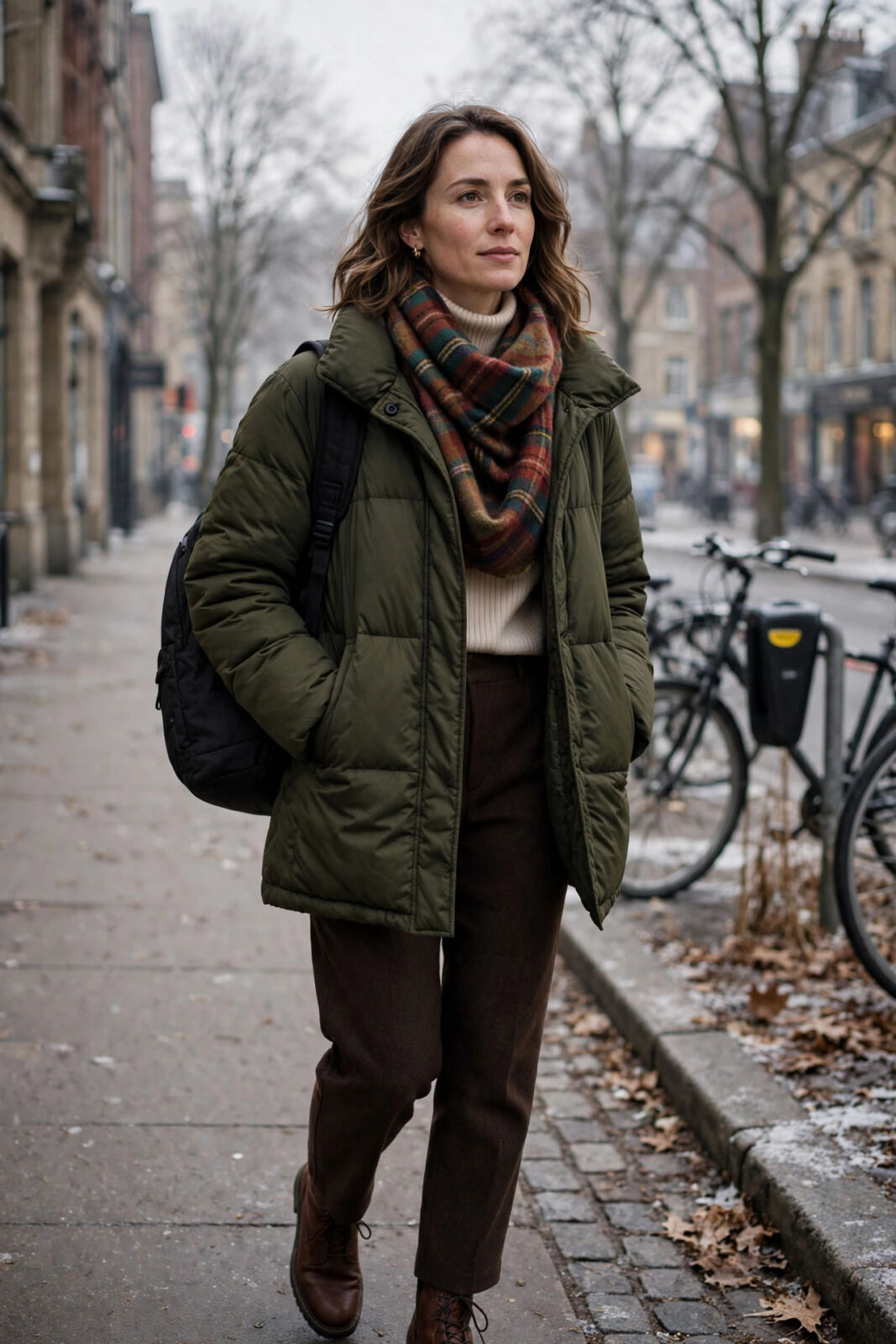
Nine Cosy Ways to Wear a Tartan Wool Muffler Scarf
You do not need nine scarves for variety. One generous muffler, tied differently, covers workdays, school runs, and slow Sunday walks.
- 1. The simple loop. Fold it in half, drape it round your neck, and pull the ends through the fold. Flat under a coat, and it stays put on windy platforms.
- 2. The once-round wrap. Wrap once fully round your neck and let both ends hang at the front. This shows the tartan off best over a plain jumper.
- 3. The high cosy tuck. Wrap twice, tuck the ends in, and pull the front up over your chin. My coldest-morning option, for frost and waiting buses.
- 4. The long drape. Hang it round your neck, ends falling long over an open coat. Suits milder days when you want the look without too much heat.
- 5. The shoulder throw. Drape one end over the opposite shoulder, like a small blanket. Lovely over a dress coat, and easy to rearrange indoors.
- 6. The belted layer. Wear it long at the front over a coat, then belt over both. Tidy, stops the ends flapping, and makes a basic coat feel styled.
- 7. The workday neat knot. Fold it narrower, knot once low at the front, and tuck the ends into your coat. Smart with tailored coats, and it will not catch on a bag strap.
- 8. The weekend shawl. Open it wide across your shoulders over a chunky knit. Perfect for markets, cafés, and watching football in the cold.
- 9. The head-and-neck cover. Bring one side up over your hair and ears, then wrap the rest round your neck. Not the most polished look, but on bitter days warmth wins.
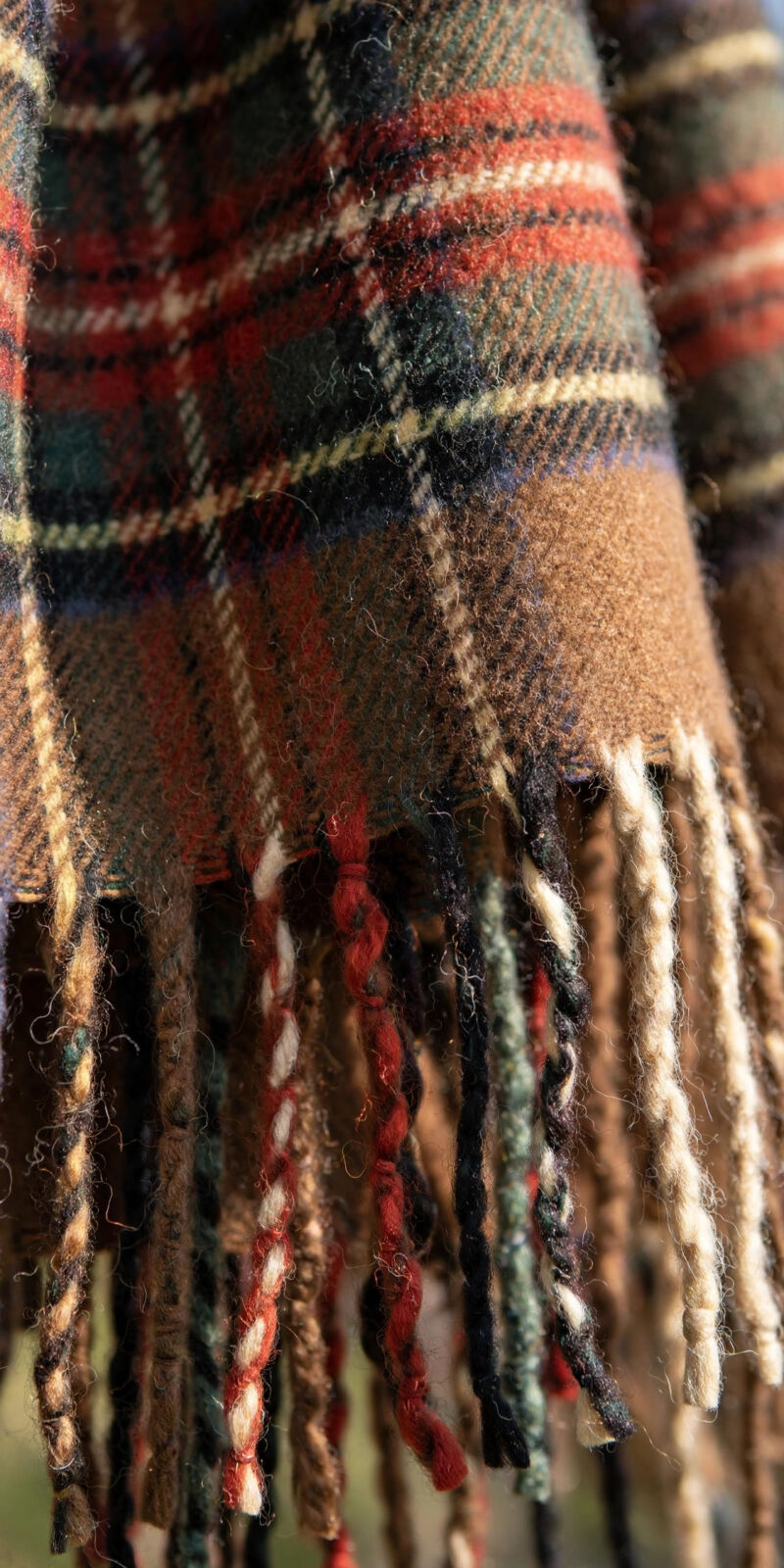
Tartan Colourways and How to Match Them to Your Coats
Most classic tartans are easier to wear than they look, because each check holds several colours you can pick up elsewhere. A traditional red-based tartan, with green, navy, and a fine cream line, pairs well with navy, charcoal, and camel coats, and brightens black without clashing. A green and navy tartan is quieter, and looks especially good with brown boots, tan coats, and cream knitwear. Softer colourways in grey, blush, and pale blue suit light grey and stone coats, and feel gentler if strong checks seem like a lot near your face.
My rule is to match the scarf to the coat you wear most, not the one you wear once a year. Hold the tartan against that coat in daylight before buying. One colour in the check should echo something you own already, like your boots or favourite jumper. If it works with your everyday coat and gloves, you will reach for it constantly.
Wool Quality, Warmth, and Why It Matters on a Commute
Wool keeps you warm in a way thin acrylic scarves do not. Its fibres trap air, and that trapped air holds heat close to your skin. Wool also copes better with damp air and light drizzle, and smells fresher for longer between washes. For a muffler worn daily, look for a high wool content on the label, ideally pure wool or a wool-rich blend. A mostly synthetic scarf usually feels thinner and less warm.
Check the weave as well. Hold the fabric to the light: a good muffler has a close, even weave with no thin patches. Rub it against the inside of your wrist, which is sensitive like your neck. If it scratches in the shop, it will scratch at the bus stop in February. Lambswool is often softer, and brushed finishes feel extra cosy, though they may pill a little more at first. Length and width matter too: a longer, wider muffler wraps twice, covers your chest, and can double as a small shawl.
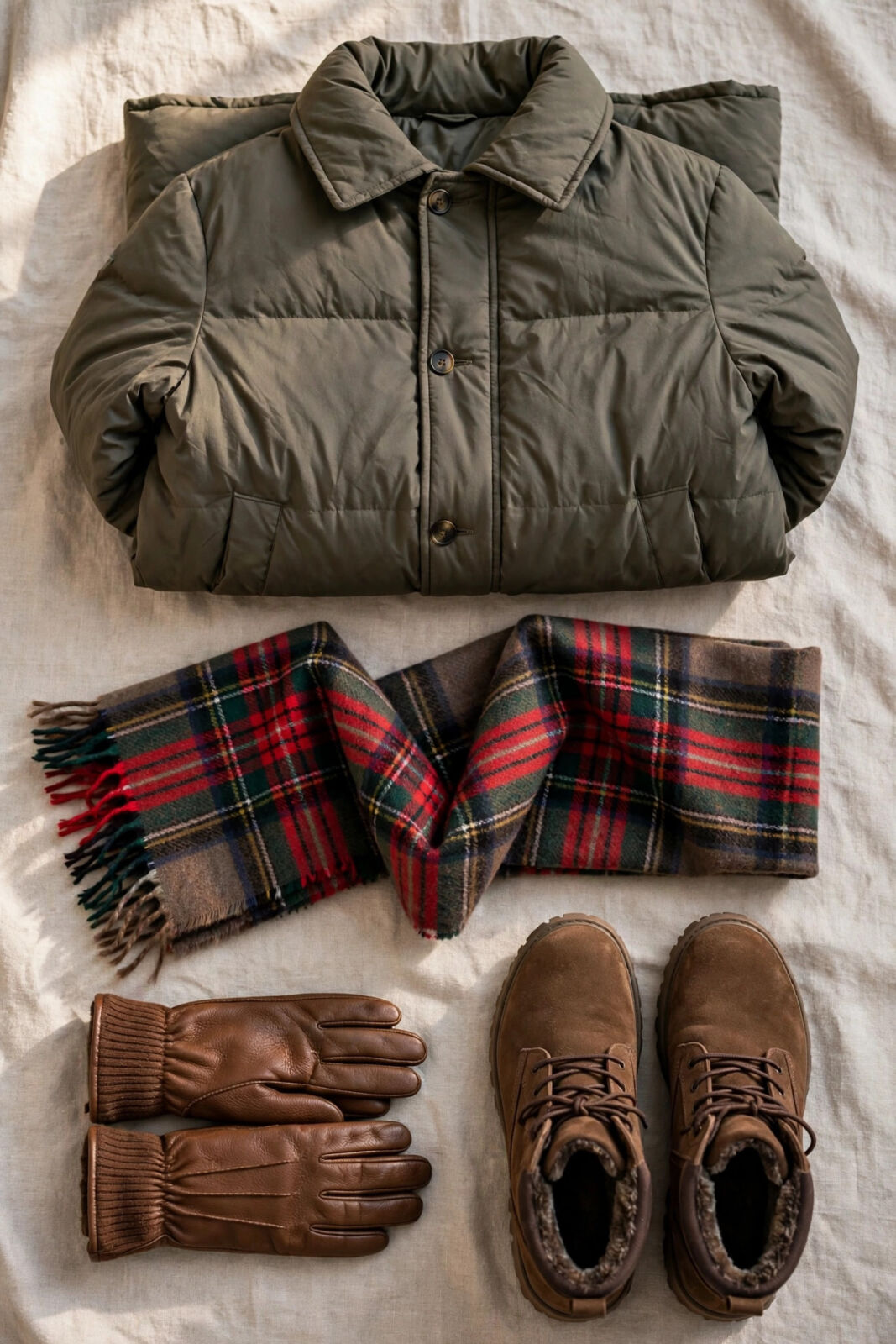
Step by Step: Three Classic Knots and a Cold-Day Outfit
The Parisian loop, step by step
Fold the scarf in half lengthways, fold in one hand, ends in the other. Place the fold at the front of your neck, bring the ends round behind you, then pull them through the loop. Slide it up gently until it sits snugly, not tightly, at your throat.
The once-round wrap, step by step
Start with one end short, hanging at your collarbone. Wrap the long end once fully round your neck and back to the front. Let both ends hang, check the wrap covers the gap at your collar, and fluff the tartan out so the pattern shows.
The neat low knot, step by step
Drape the scarf round your neck with ends level. Tie one loose knot at chest height, without pulling it tight, then tuck knot and ends just inside your open coat. The front stays tidy for work, and the ends stop swinging as you walk.
Building the outfit around it
Start with a warm base layer, add a plain jumper in a colour taken from the tartan, then your longest coat. Wrap the scarf in the Parisian loop, add gloves, and finish with sturdy boots. Keeping the rest plain lets the check do the talking, and every layer has a job.
Care, Buying, and Budget Advice
Wool does not need washing after every wear. Hang your muffler over a chair back after each outing so air can circulate, and wash it only when it is marked or no longer smells fresh. Use cool water and a gentle wool wash, never wring it, roll it in a clean towel to press out water, and dry it flat away from radiators, since direct heat can shrink and roughen the fibres. Store it clean and folded loosely, ideally with a cedar block or lavender bag nearby, because moths are drawn to wool carrying traces of food or perfume.
Pilling, the small bobbles where the scarf rubs against a coat or bag strap, is normal with soft wool. Lay it flat and lift bobbles off with a fabric comb or battery pilling shaver, working gently in one direction. Never pull them off by hand, as that loosens more fibres. Five careful minutes once or twice a season keeps a muffler looking smart.
On price, expect to pay more for pure wool than for a thin synthetic scarf, and for daily wear it is usually money well spent. A sensible mid-range muffler often gives the best balance of warmth, softness, and finish. Check that the fringe is secure and the edges are even. One good scarf in a colourway you love, rather than three cheap ones you tolerate, works out cheaper over a few winters, and warmer every day.

Common Mistakes to Avoid
- Choosing by colour alone. A pretty tartan in scratchy, thin fabric will stay in the drawer. Feel the weight and softness first.
- Buying too short. A short scarf cannot wrap twice or cover your chest, which is where a muffler earns its keep.
- Wrapping too tightly. A strangled knot looks fussy and feels uncomfortable within an hour. Snug, not tight, is the aim.
- Washing too often, too hot. Hot water and rough handling are the fastest way to shrink and felt a wool scarf.
- Storing it damp or dirty. That invites odours and moths. Always put wool away clean and fully dry.
- Hiding the pattern. Burying the whole scarf under a zipped coat wastes its best feature. Let a panel of tartan show.

Frequently Asked Questions
Is a wool tartan muffler warm enough for very cold mornings?
Yes, if it is wool-rich, closely woven, and long enough to wrap twice. The double wrap covers your neck and upper chest, where most heat escapes on a commute. On the coldest days, add a hat and gloves as well.
Will a tartan scarf suit a plain work wardrobe?
Very well, because the pattern does the styling for you. A classic red or green tartan lifts a navy, black, or grey coat instantly. Keep the knot neat and low, and the look stays smart rather than casual.
How do I stop my wool scarf feeling itchy?
Choose lambswool or a softer brushed weave, and test it on your inner wrist before buying. A fine roll-neck layer underneath also keeps wool off bare skin. Good mufflers often soften slightly with wear, too.
Can I wear the same tartan scarf every day?
You can, and many people do all winter. Air it overnight between wears and vary how you tie it. Regular airing matters far more than frequent washing for keeping wool fresh.
What is a fair price for a good tartan wool muffler scarf?
It depends on wool content and finish, but a solid wool-rich muffler usually costs noticeably more than a basic acrylic scarf. Pay for softness, a close weave, and secure fringe rather than a famous label. Bought well, one scarf serves several winters.
A tartan wool muffler scarf is one of those rare purchases that is practical every day and still makes you feel properly dressed. Choose a colourway that loves your favourite coat, tie it the way the weather demands, and look after the wool kindly. Those cold platform mornings will feel a good deal more bearable, and rather more cheerful, too.