Some coats are just weather protection. A damson velvet opera coat is an entrance. Damson — that deep, dusky plum between burgundy and purple — has the richness of a jewel tone without shouting, and velvet gives it a surface that drinks the light and glows in patches as you move. The first time I wore mine over a plain black dress, three people asked about the coat and nobody mentioned the dress at all. That is the job of an opera coat: it is the outfit, everything under it is support.
If you have been saving yours for a theatre night that rarely comes, this guide will change that. An opera coat is far more wearable than its grand name suggests. Below are nine honest ways to wear a damson velvet coat, from full evening drama to sharpened daytime looks, a step-by-step way to build an outfit around it so the proportions stay elegant, and the velvet care habits that keep the pile deep and unmarked for years.
Why Damson Velvet Works So Hard
Damson sits in a rare sweet spot. It is deep enough to behave almost like a neutral beside black, navy, charcoal and cream, yet it is unmistakably a colour — nobody mistakes it for playing safe. On most skin tones it reads warm and expensive, and in photographs it holds its depth instead of washing out the way brighter purples can.
Velvet does the rest. A long opera coat in velvet moves with a slow, liquid drape that lighter fabrics cannot copy, and the pile catches light differently on every fold, so a very simple cut looks rich. Because the fabric and colour already carry so much presence, the coat needs almost no help: plain pieces underneath, one piece of jewellery, and you are done.
1. Over a Black Column Dress
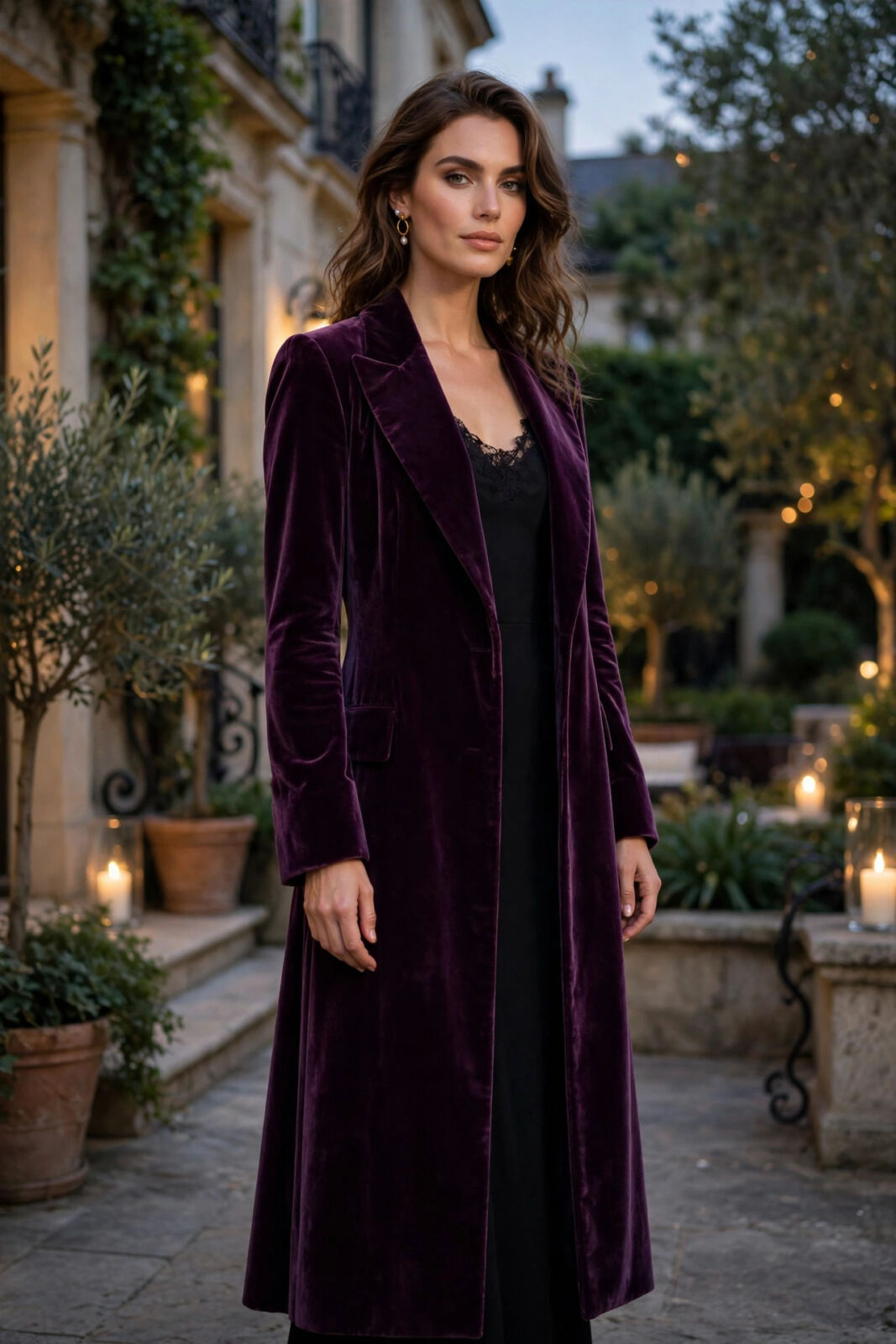
The classic pairing, and still the best. A long black dress — slip, column or simple sheath — disappears into a dark base and lets the damson coat be the entire colour story. Wear the coat open so a vertical line of black runs down the centre; it lengthens the body and makes the plum frame the look like a picture border. Add black heels and one gold piece at the throat or ear.
2. With Gold for a Festive Evening
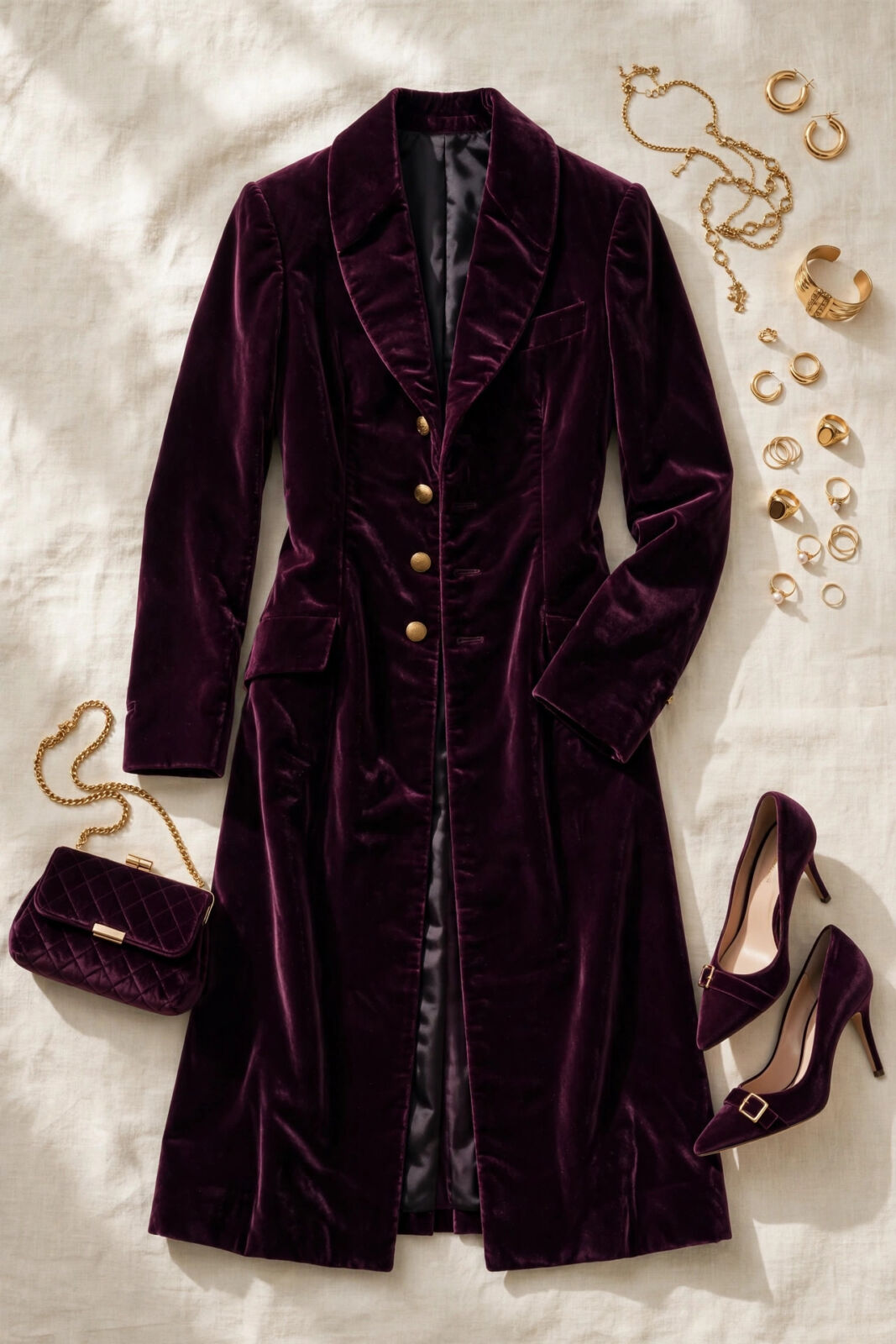
Damson and antique gold are made for each other. A gold clutch, gold heeled sandals and simple gold hoops warm the plum and push the outfit towards celebration without a single sequin. This is my version for winter weddings and holiday parties: the coat stays on for arrival drinks, comes off for dinner, and the gold details carry the theme through both halves of the evening.
3. Over Cream and Ivory Tones
For a softer, almost romantic reading, layer the coat over cream knit trousers and an ivory silk top. The pale base makes the damson look deeper by contrast, and the whole outfit feels like winter luxury rather than evening drama. Keep shoes pale too — a nude or cream heel — so the coat remains the single dark note. This combination photographs beautifully in daylight.
4. With Straight Jeans and Boots
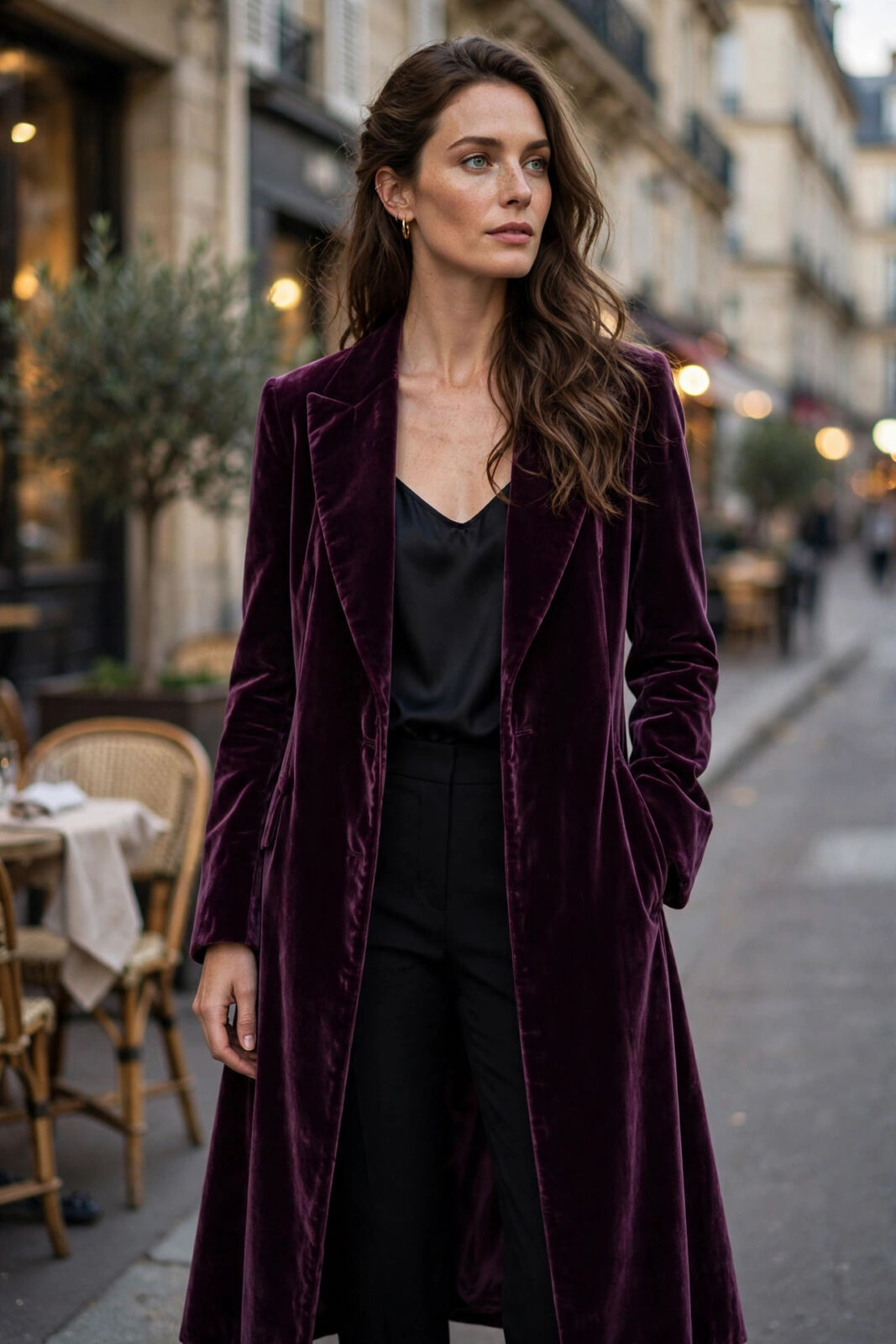
An opera coat over jeans sounds like a contradiction until you try it. Straight-leg dark jeans, a plain black or charcoal fine knit, ankle boots, and the long velvet coat over everything: the coat upgrades the jeans, the jeans stop the coat feeling precious. It is the version I wear most — to dinners, galleries and any evening that starts casual and might not stay that way.
5. Belted Over a Midi Dress
Many opera coats are worn open, but belting one changes its whole character. Over a simple midi dress, add a slim leather belt at the natural waist, over the closed coat, and it becomes a coat-dress: structured, deliberate, very polished. Choose a black or deep oxblood belt so it tones rather than contrasts, and let the skirt of the coat fall in clean folds below it.
6. With a Monochrome Plum Look
Wearing damson over other purples — a plum knit, aubergine trousers, a wine-toned scarf — creates a tonal outfit with real depth. The rule is to vary texture, not just shade: matte knit against glowing velvet against smooth leather boots. Tonal dressing looks expensive because it is restrained, and the coat’s sheen stops the single-colour idea from ever looking flat.
7. Over Tailoring for Smart Evenings
A long velvet coat over a black trouser suit or a charcoal tailored jumpsuit is a power move for evening work events. The tailoring keeps it serious, the velvet keeps it memorable. Wear the coat on the shoulders, cape-style, for arrival, and keep jewellery to a single strong piece. People remember the silhouette long after they forget what was said.
8. With a Slip Skirt and Fine Knit
For dinners where a full dress feels like too much, pair the coat with a black or deep green satin slip skirt and a fine, fitted knit tucked in. The coat bridges the two textures — soft knit above, liquid satin below, velvet over all — and the outfit lands exactly at smart, warm and comfortable. Heeled boots finish it better than sandals in cold weather.
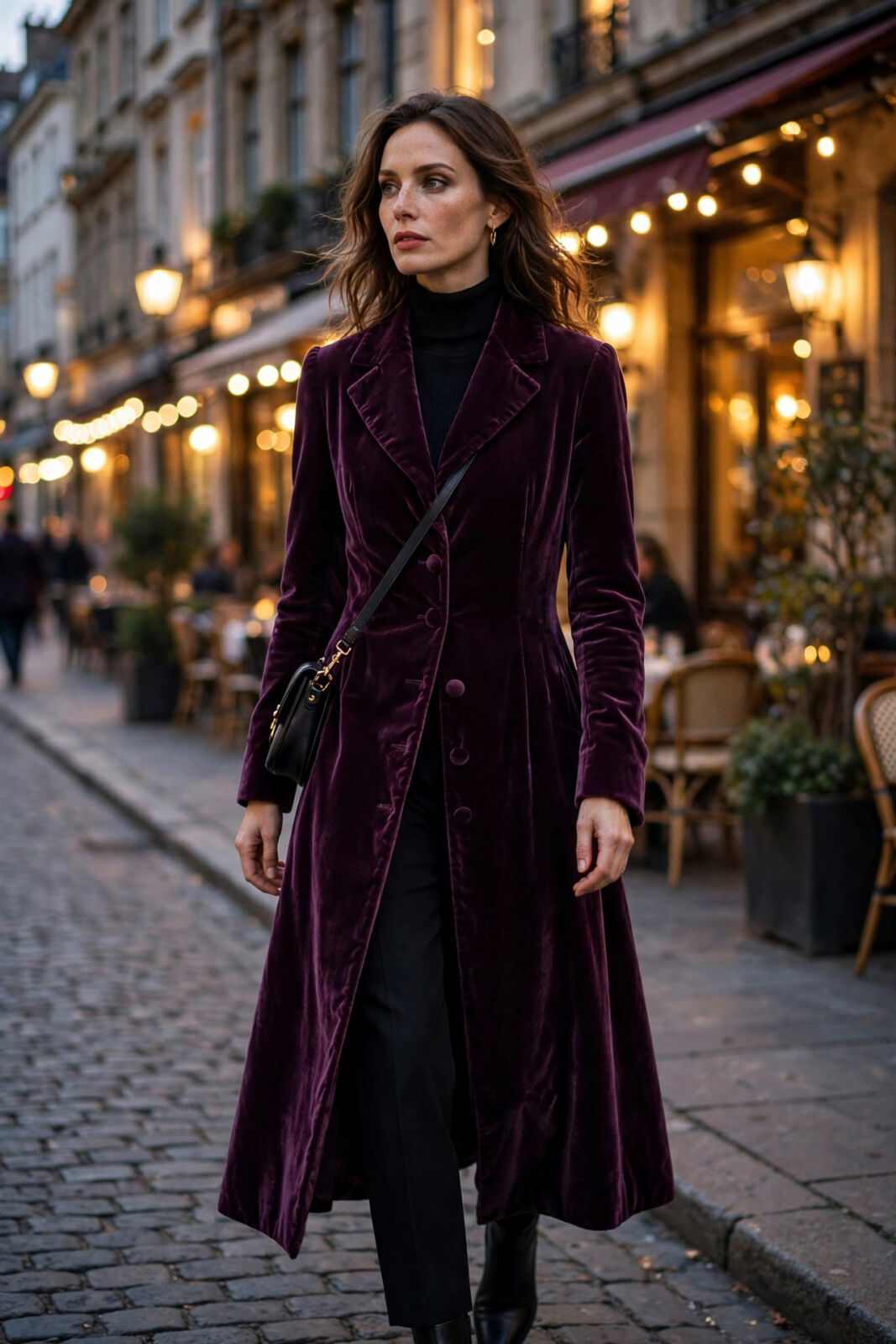
9. As the Whole Outfit, Buttoned Up
On the coldest nights, close the coat, button it fully, and wear it as a dress in its own right with opaque tights and heeled boots. Opera coats are cut generously, so check the closed silhouette in a mirror — it should skim, not cling. A brooch or a silk scarf at the neck fills the plain front, and you get the warmest possible version of looking dressed up.
Building an Outfit Around the Coat: Step by Step
Step 1: Choose the base silhouette first. The coat is long and full, so the layer beneath should be slim or straight. Wide trousers plus a wide coat loses your shape entirely; a column dress, straight jeans or tailored trousers keep one clean line under the drama.
Step 2: Limit the palette to three colours. Damson counts as one, loudly. Add a base colour (black, cream, charcoal) and one metallic or accent at most. A fourth colour is where rich outfits tip into busy ones.
Step 3: Decide open or closed before you leave. Open needs a finished outfit underneath; closed needs the coat itself to fit like a garment, with a scarf or brooch planned for the front. Deciding at the door leads to the half-ready look this coat never deserves.
Step 4: Match the shoe weight to the coat. Velvet opera coats need a shoe with presence — a heeled boot, a pointed pump, a substantial loafer. Very fine strappy sandals can look lost under all that fabric except in true evening dress.
Step 5: Do the sit-down test. Velvet marks where it is crushed. Sit in the coat for a minute at home; if the pile flattens in shiny patches behind you, plan to slip it off and drape it over your chair at the event rather than sitting on it all evening.
Choosing and Caring for Velvet
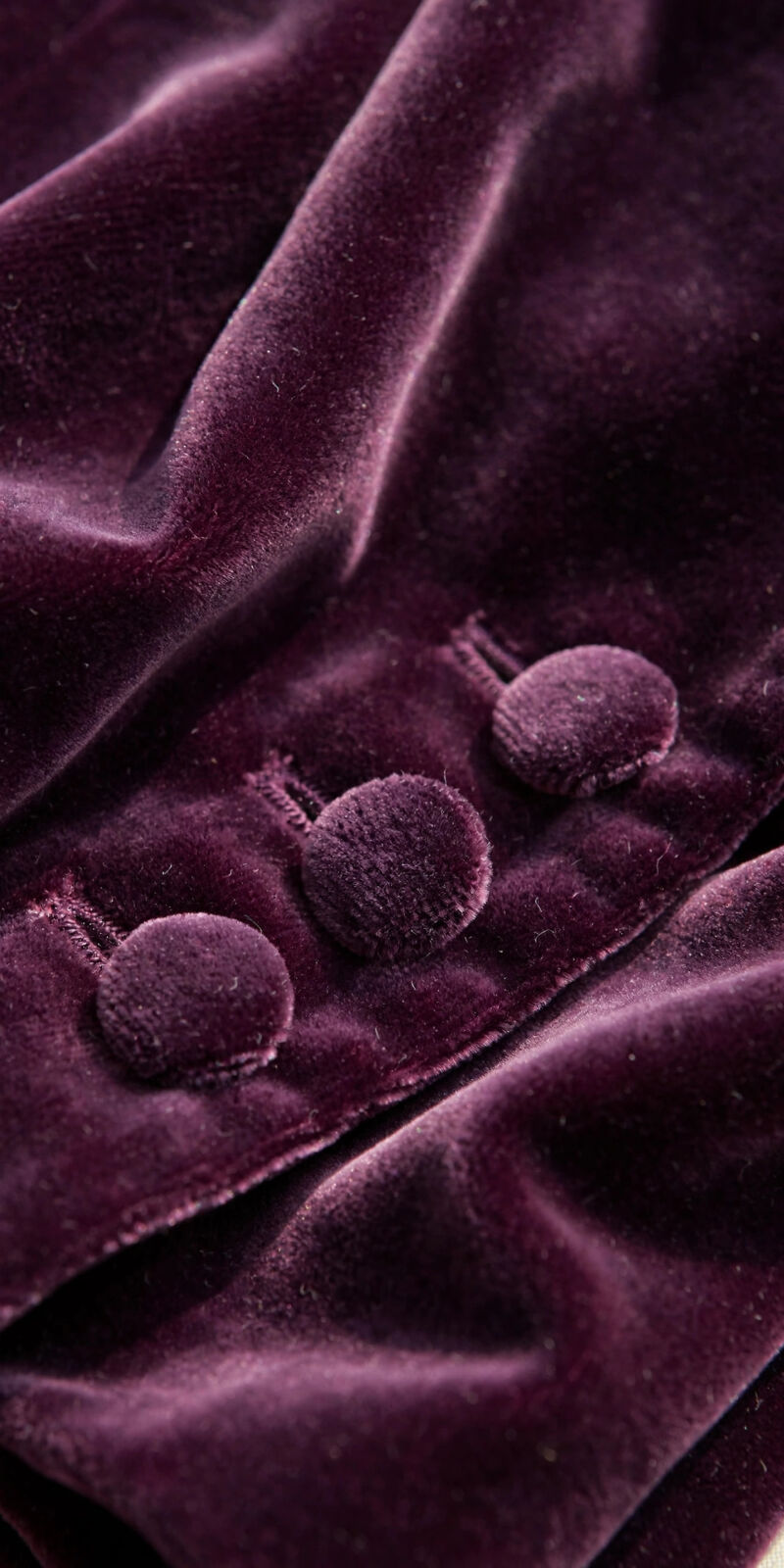
When buying, run your hand over the pile in both directions: good velvet changes shade clearly as the pile direction changes, which is what gives it life. Check the colour in daylight as well as shop light, because damson can lean purple under one and brown under the other. Cotton or silk-blend velvets drape more luxuriously than stiff synthetics, though modern viscose velvet is a good middle ground. For care, hang the coat on a wide padded hanger in a breathable cover, never folded. Brush the pile gently with a soft clothes brush after wear, steam — never press — creases out by hanging it in a steamy bathroom, and keep it away from rain where possible; spots of water dry as marks on velvet. Store it away from direct light, as deep colours fade first at the shoulders.
Common Mistakes to Avoid
The commonest mistake is fighting the coat with a complicated outfit underneath — prints, ruffles and statement jewellery all competing with the velvet. Let everything else be quiet. Second, wearing it too small: an opera coat should close comfortably over a knit; a straining button ruins the line and crushes the pile. Third, crushing it in a packed wardrobe, which leaves permanent shiny pressure marks. And finally, saving it only for grand occasions. Velvet this beautiful earns its keep across a whole winter of ordinary evenings, not one night a year.
Frequently Asked Questions
Is damson a difficult colour to match?
Less than people expect. It behaves almost like a dark neutral with black, navy, charcoal, cream and grey, and it pairs richly with gold, deep green and burgundy. The combinations to avoid are bright pastels and neon shades, which fight its depth. When in doubt, black underneath and gold at the edges never fails.
Can I wear a velvet opera coat during the day?
Yes, if you dress the rest down. Over straight jeans, a plain knit and boots, the coat reads as a dramatic daytime layer rather than evening wear, especially in natural light where damson looks softer. Keep the coat open and the jewellery minimal, and it works for lunches, shopping and daytime events.
How do I get creases out of velvet?
Never iron velvet directly — heat and pressure crush the pile permanently. Hang the coat in a bathroom while a hot shower runs and let the steam relax the creases, or use a garment steamer held a few centimetres away, brushing the pile gently upwards afterwards as it dries.
Does velvet suit all body shapes?
A long, straight opera coat is one of the most forgiving shapes there is, because it creates one unbroken vertical line. If you are petite, choose a length that ends below the knee but above the ankle and keep the under-layer slim; if you are tall, the full opera length was practically designed for you.
What jewellery works best with a damson coat?
Gold is the natural partner — it warms the plum and suits evening light. Antique and brushed gold look richer than very shiny yellow gold. Pearls also work for a softer, classic feel. Silver can look cold against damson unless the rest of the outfit is black, in which case it reads modern and sharp.
A Last Word Before You Wear It
A damson velvet opera coat is not a special-occasion prisoner; it is a finishing piece waiting for ordinary evenings to rescue. Keep the base slim, the palette tight and the jewellery to one warm note of gold, and let the coat do what it was made to do. Wear it often and store it kindly.