Fishtail Braid Tutorial: 9 Beautiful Ways to Wear a Fishtail Braid, Step by Step
The first time I tried a fishtail braid, I gave up halfway down and tied it off in a messy ponytail instead. It looked so neat on everyone else, with that woven, herringbone pattern, and mine just looked tangled. A week later a friend showed me the trick I had been missing: you only ever work with two sections, and you only ever move tiny pieces. That was it. Once I slowed down and kept my pieces small, the pattern appeared on its own, and I have worn some version of this braid almost every week since.
If you have long hair, the fishtail is one of the most useful braids you can learn. It holds better than a loose plait on windy days, looks far more detailed than the time it takes, and softens nicely as the day goes on. This guide walks you through the basic braid, then shows nine ways to wear it, from a simple side braid to a crown and an evening version. You only need a brush, a small elastic, and about ten quiet minutes the first time.

Why the Fishtail Works So Well for Long Hair
Long hair has weight, and that weight helps here. A basic fishtail starts wherever you gather your hair, so there is less pulling near the scalp and fewer headaches by afternoon. The pattern also spreads the hold along the whole length, so fewer strands slip out at the nape.
It Looks Detailed Without Being Difficult
People assume the chevron pattern is complicated. In reality you repeat one movement: take a thin strand from the outside of one section and cross it to the other side. Because the pieces are thin, the weave looks intricate, even though the movement is simple.
It Suits Almost Every Hair Texture
Straight hair shows the pattern most clearly, wavy hair gives it a soft feel, and curly hair makes a thicker braid. If your hair is silky and slides out of styles, a little texture spray before you start makes a real difference.
The Basic Fishtail Braid, Step by Step
Learn this version first and the other eight are just changes in placement and finish. Sit in front of a mirror for the first few crosses, then trust your hands.
Steps 1 to 4: Set Up and Start the Weave
Step 1: Brush your hair thoroughly so there are no knots, especially underneath. Decide where your braid will sit and gather all your hair there, for example over your left shoulder for a side braid, or at the nape for a centred one.
Step 2: Split the gathered hair into two equal sections, left and right. Hold one in each hand and keep them separate with your fingers so they do not merge back together.
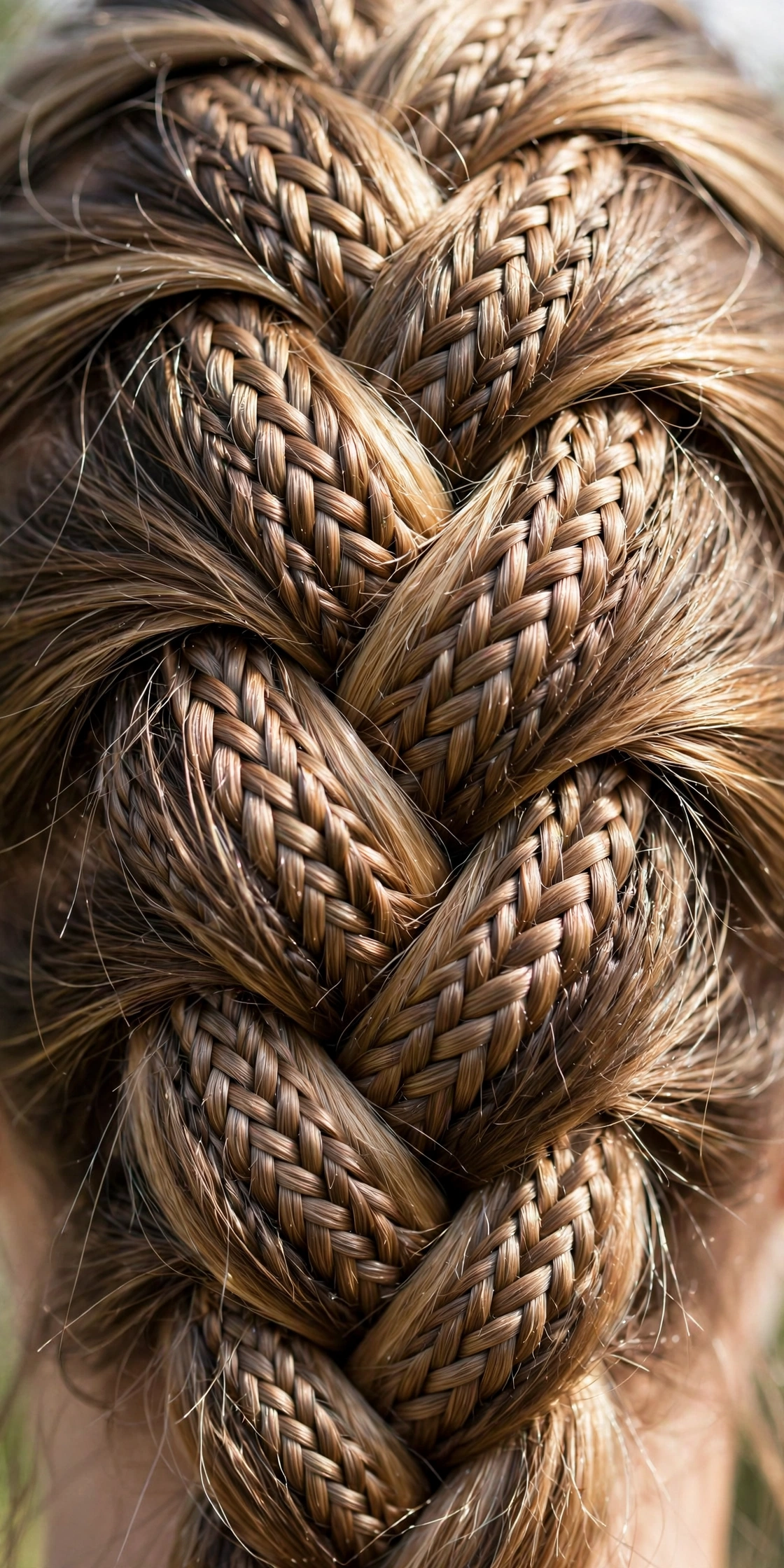
Step 3: With your right index finger, pick up a thin strand, about the width of a pencil, from the outer edge of the right section. Cross it over the top and add it to the left section.
Step 4: Now do the mirror image on the other side. Pick up a thin strand from the outer edge of the left section, cross it over, and add it to the right section. That is one full round, and you will already see the V shapes forming.
Steps 5 to 8: Keep Going and Finish Neatly
Step 5: Repeat, alternating sides, always taking from the outside edge and always keeping the strands thin and even. Pull gently snug after every two or three crosses, but do not yank. Even tension matters more than tight tension.
Step 7: Braid until you have about two inches of hair left, then secure with a small clear elastic or a fabric tie that matches your hair colour.
Step 8: For a fuller finish, use your thumbs and forefingers to gently tug the outer edges of each loop outward, working from the bottom up. This is called pancaking, and it can make a braid look twice as thick. Do it lightly, a little at a time.

9 Beautiful Ways to Wear a Fishtail Braid
Once the basic movement feels familiar, usually after two or three tries, these variations come easily. They run from everyday to dressy.
1. Classic Side Fishtail and 2. Messy Boho Fishtail
The classic side braid is the one in the first photo: hair over one shoulder, woven neatly and left smooth. It works with sweaters, kurtis, and off-shoulder tops, keeping hair off your face while showing its length. For the messy boho version, pancake much more, pull out a few face-framing pieces, and let texture show. It pairs beautifully with flowy dresses and forgives uneven sections.
3. Double Fishtails and 4. Fishtail Crown
Double fishtails are playful and practical. Part your hair down the middle and braid each side separately; they keep hair contained for sports or a long day out. The crown takes more patience: start behind one ear, braid along your hairline adding small pieces like a French braid, go around the head, and pin the tail underneath where it began. Lovely for weddings, and it keeps hair off your neck in heat.

5. Half-Up Fishtail and 6. Fishtail Ponytail
For a half-up version, braid only the top third of your hair from the crown and let the rest fall loose in waves. The fishtail ponytail is my go-to for busy days: tie a ponytail first, then fishtail the tail itself. Starting secured is easier on your arms.
7. Dutch Fishtail, 8. Fishtail Bun, and 9. Dressy Pulled-Apart Fishtail
A Dutch fishtail crosses the thin strands underneath instead of over the top, so the braid sits raised and shows more definition in photos. A fishtail bun is a finished braid coiled at the nape and pinned, neat for office or formal events. The dressy pulled-apart version is a low side braid, pancaked generously, with the crown smoothed, pearl pins or flowers added, and a light hairspray finish. With a good outfit, it looks like salon work.

Hair Prep, Products, and Sensible Budget Advice
Good prep saves more braids than good technique. Start with dry or barely damp hair, never soaking wet, because wet hair stretches and loosens as it dries. Brush from the ends upward. If freshly washed hair feels slippery, work a little mousse or texture spray through the lengths. Day-two hair often braids best because natural oils give it grip.
You do not need an expensive kit. Essentials are a detangling brush, small clear elastics, bobby pins, and one light-hold hairspray, all cheap at any drugstore and lasting for months. Optional extras are dry shampoo for root grip, shine serum only on the ends after braiding, and ribbon or clips for occasions. The same basics cover all nine styles.
Care Tips and Common Mistakes to Avoid
Do not braid tightly in the same place every day, as repeated tension can cause breakage near the hairline. Change your part and braid position through the week. At night, take the braid out and brush gently, and always use a soft fabric elastic instead of a snagging rubber band.
The most common mistake is taking strands that are too thick; thick pieces hide the pattern, so if in doubt, go thinner. Uneven tension makes the braid curve and twist, and letting the two main sections merge muddles the middle. Finally, do not pancake before securing the elastic, or the braid can slide apart. Secure first, then loosen gently.

Frequently Asked Questions
How long does a fishtail braid take once I know how?
For long hair, most people need five to eight minutes for a basic side fishtail once the movement feels natural. Your first two or three attempts may take fifteen minutes, and that is completely normal. Speed comes from keeping thin, even strands without thinking about it.
Can I do a fishtail braid on layered or medium-length hair?
Yes, though shorter layers may poke out along the braid, especially near the top. A little styling cream on the ends of layers helps them tuck in, and a messy or half-up version hides shorter pieces best. Hair that reaches at least past the shoulders gives the neatest result.
Why does my fishtail keep twisting to one side?
Twisting usually means you are pulling tighter, or taking bigger pieces, on one side than the other. Slow down for a few crosses and check that both outside strands are about the same thickness. Keeping your two main sections at the same height in your hands also helps the braid hang straight.
How can I make my braid look thicker?
Pancaking is the easiest answer: after securing the elastic, gently pull the outer edges of each loop outward, a little at a time. Starting with wavy or lightly curled hair also adds volume. Avoid pulling one loop too far, as the braid can look uneven instead of full.
Will a fishtail braid damage my hair if I wear it often?
Worn loosely and with soft elastics, it is one of the gentler styles because it reduces tangling and friction during the day. Damage comes from very tight braiding, rough elastics, and sleeping in the same tight braid night after night. Vary the position, keep it comfortable, and your hair should be fine.
A Style Worth the Ten Minutes It Takes to Learn
The fishtail gives you the most in return for the least effort of any braid. One simple movement turns into a pretty pattern, and from there you have nine looks for workdays, weekends, and evenings out. Try the classic side braid twice this week, even if the first is uneven, and notice how much easier the second feels. Save the crown for a day with time to practise, add a ribbon when you feel playful, and make it your own.