A home with a dog or cat does not have to choose between beautiful and practical — it has to choose fabrics, finishes and layouts that forgive fur, claws and the occasional muddy sprint. Thoughtful pet friendly home styling choices start from how animals actually live: they nap on the best seat, drink messily, shed on dark colours and consider every rug a territory. This guide covers washable textiles, floor and furniture choices that survive claws, a feeding and sleeping zone that looks intentional, the step-by-step room audit, and the mistakes that make pet homes feel like kennels instead of homes.
The aim is a house that photographs well at noon and forgives a wet dog at six — both, on the same day. That is the promise of good pet friendly home styling choices.
Table of Contents
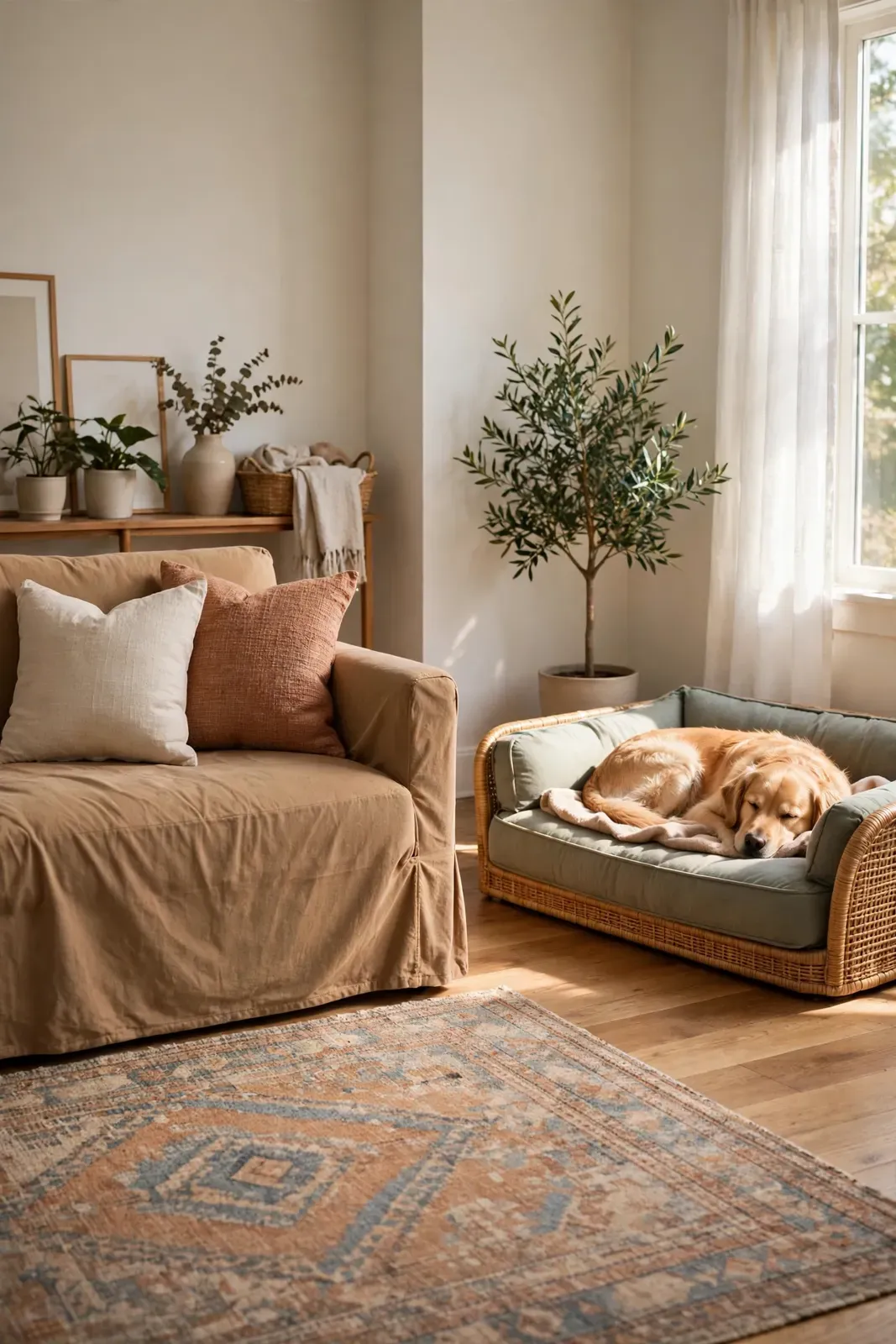
Pet Friendly Home Styling Choices Begin With Fabric Honesty
Fabric decides how a pet home ages. Tightly woven textiles beat loose weaves every time: claws snag loops, and fur weaves itself into nubby textures permanently. Microfibre, canvas, outdoor fabrics and good faux leather shrug off hair with a damp cloth and release stains instead of drinking them. Velvet is the surprise winner for cat owners — hair sits on top and lifts off, and there are no loops to pull. The animals themselves, of course, have opinions: most pets claim the softest seat in the room, so plan for the claiming instead of fighting it. That honesty is where pet friendly home styling choices begin.
Colour is your camouflage. A mid-tone fabric close to your pet’s coat colour hides a week of shedding; white sofas and black cats are a lifestyle choice, not a styling one. Patterns forgive even more — a small, busy print hides fur, paw prints and the odd stain between washes in a way no solid can. Pattern is another quiet tool in pet friendly home styling choices.
Slipcovers, Throws and the Washable Layer Strategy
The smartest pet homes are styled in layers: good furniture underneath, washable beauty on top. A fitted slipcover in a calm colour makes a sofa machine-washable as a whole; where covers do not fit, throws placed exactly where the animal sleeps — not draped decoratively everywhere — take the fur and the washing. Keep two of each so wash day never leaves the seat bare. Layering is the core trick behind pet friendly home styling choices that stay washable.
Rugs follow the same rule. Low-pile, washable rugs in patterned mid-tones survive muddy seasons; deep shag traps everything a pet brings in and never fully lets it go. The textile choices in a pet home are working textiles first and decoration second — which is precisely why, chosen well, they look calm rather than compromised. Seen this way, pet friendly home styling choices are working choices first.
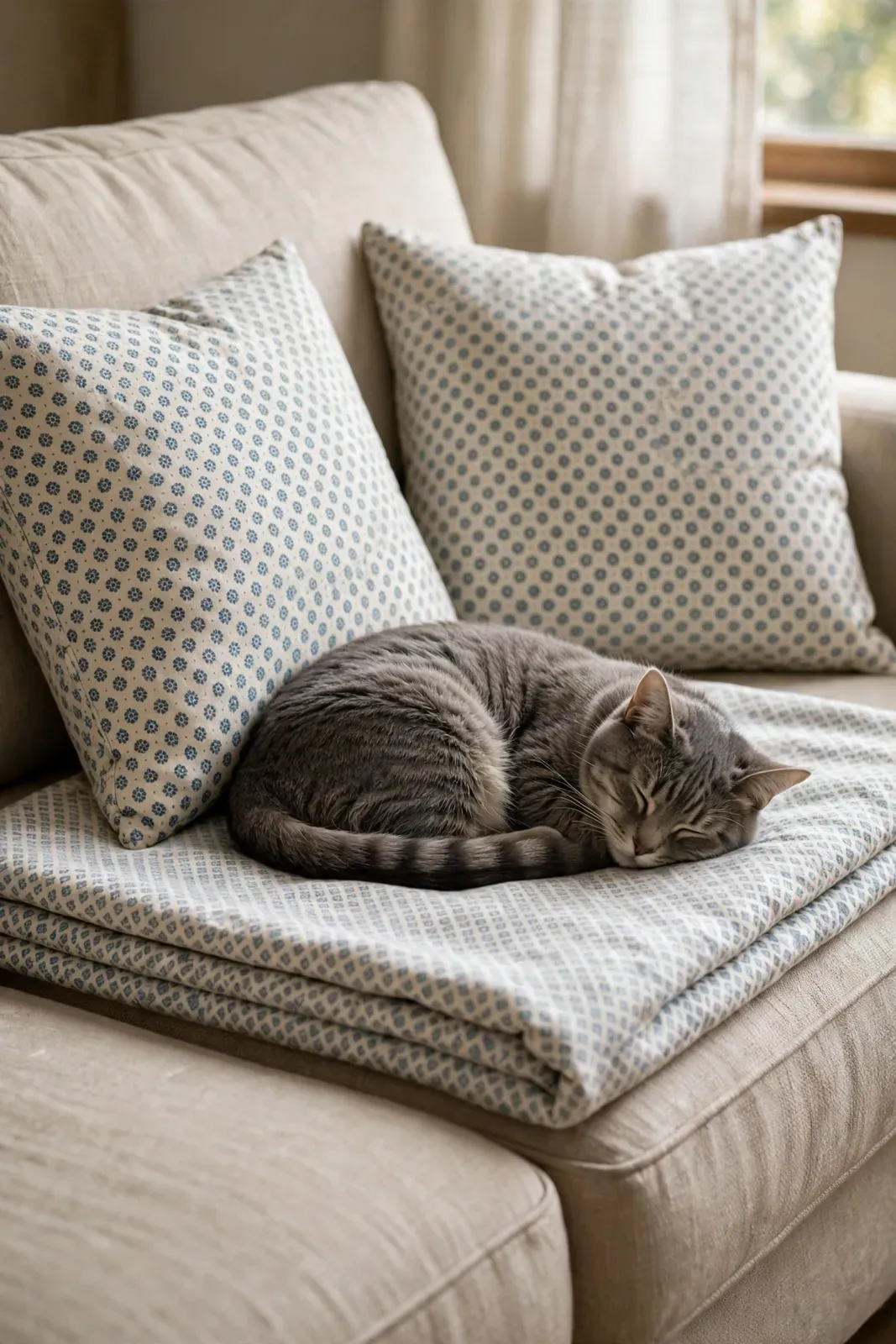
Floors, Walls and Furniture That Survive Claws
Hard floors win in pet homes: tile, sealed stone, laminate and good vinyl wipe clean and do not hold odours, while wall-to-wall carpet records every accident forever. If carpet must stay, carpet tiles in the pet zones let you replace one square instead of a room. Walls in washable satin or eggshell paint wipe down at dog height; matte paint holds every scuff and splash near the water bowl. Hard surfaces are therefore a foundation of pet friendly home styling choices.
Furniture legs and bases take the chewing and scratching years hardest — metal and solid wood survive; delicate turned legs and woven rattan invite exactly the wrong attention. Give cats a sanctioned target: a tall, stable scratching post beside the sofa they favour, rubbed once with catnip, saves more upholstery than any deterrent spray. A tall post like that shows pet friendly home styling choices in action.
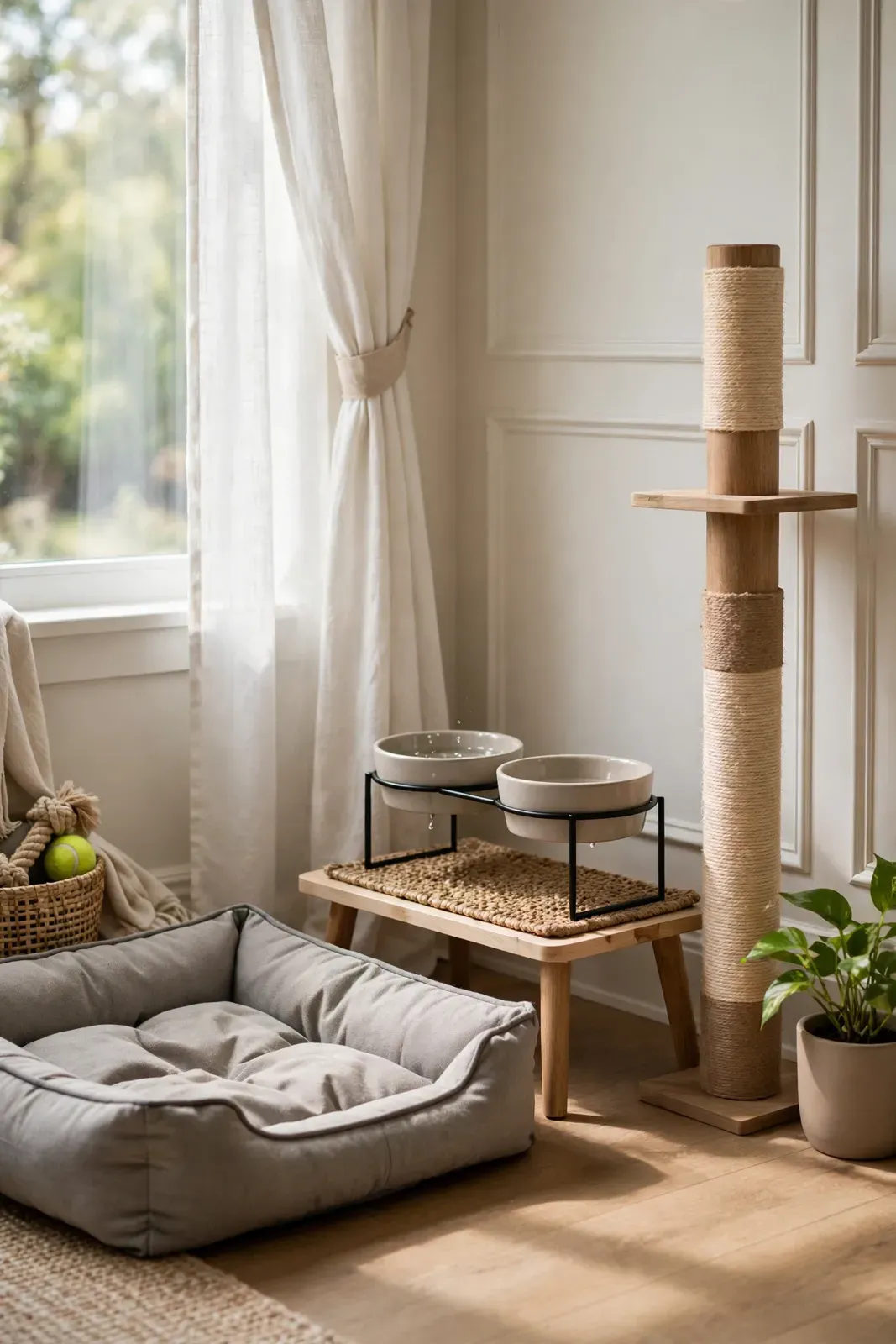
Step by Step: Auditing One Room for Pet Life
Start at the door the animal actually uses. Trace the muddy route: entry, water, favourite seat, sleeping spot. Put a washable runner on that route, a mat that catches litter or drips under bowls, and storage for towels and wipes at the entry itself — systems placed where the mess happens get used; systems in a distant cupboard do not. That route map is how pet friendly home styling choices start in any room.
Next, sit at pet height and look for hazards and temptations: trailing cables, low ornaments, the plant on the floor. Raise or secure what matters, then deliberately place the pet’s own things — bed, post, toys — in the room’s good spots, near light and family, not exiled to a corridor. A bed in the sunny corner gets used; a bed in the laundry gets ignored, and the sofa wins by default. Finish by checking the washable layer: every textile the animal touches daily should survive your machine. Placement, not banishment, defines pet friendly home styling choices here.
Feeding and Sleeping Zones That Look Intentional
The difference between a pet corner and pet clutter is intention. A feeding station on a washable mat, bowls raised on a simple stand, and food stored in a closed canister that matches the kitchen reads as design. A sleeping zone with a proper bed — washable cover, sized generously, in the room’s palette — reads as furniture. When a pet’s things look chosen, visitors read the whole room as chosen. Intention is what turns pet friendly home styling choices into design.
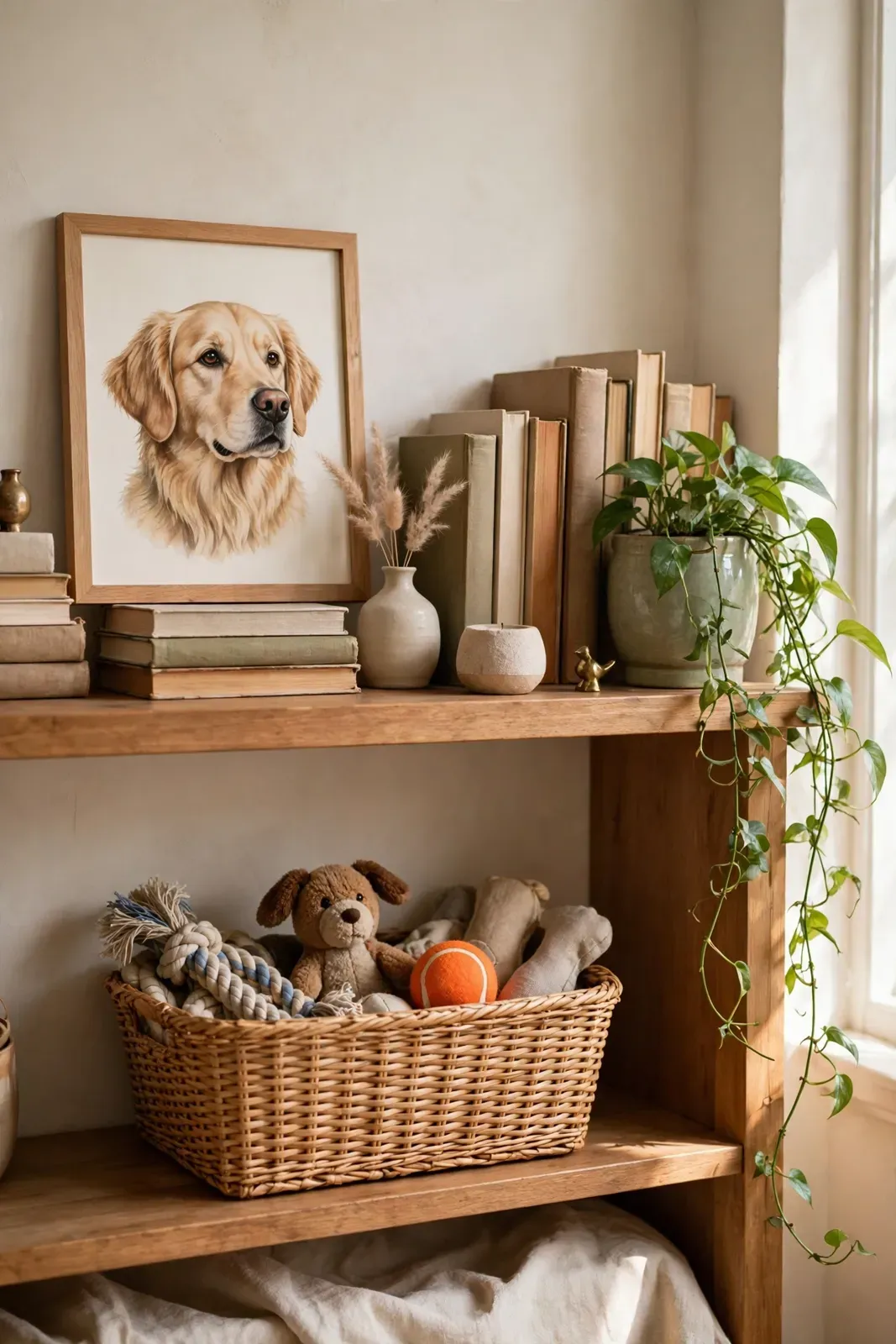
Keep one small basket for toys in the main room and rotate its contents like children’s toys; a floor permanently scattered with fifteen toys reads messy at any budget. Litter trays and crates follow the same rule: screened by a plant, a curtain or a furniture arrangement, ventilated, and cleaned on schedule — concealment is styling, but freshness is hygiene, and the order matters. Concealment plus freshness keeps pet friendly home styling choices feeling like home.
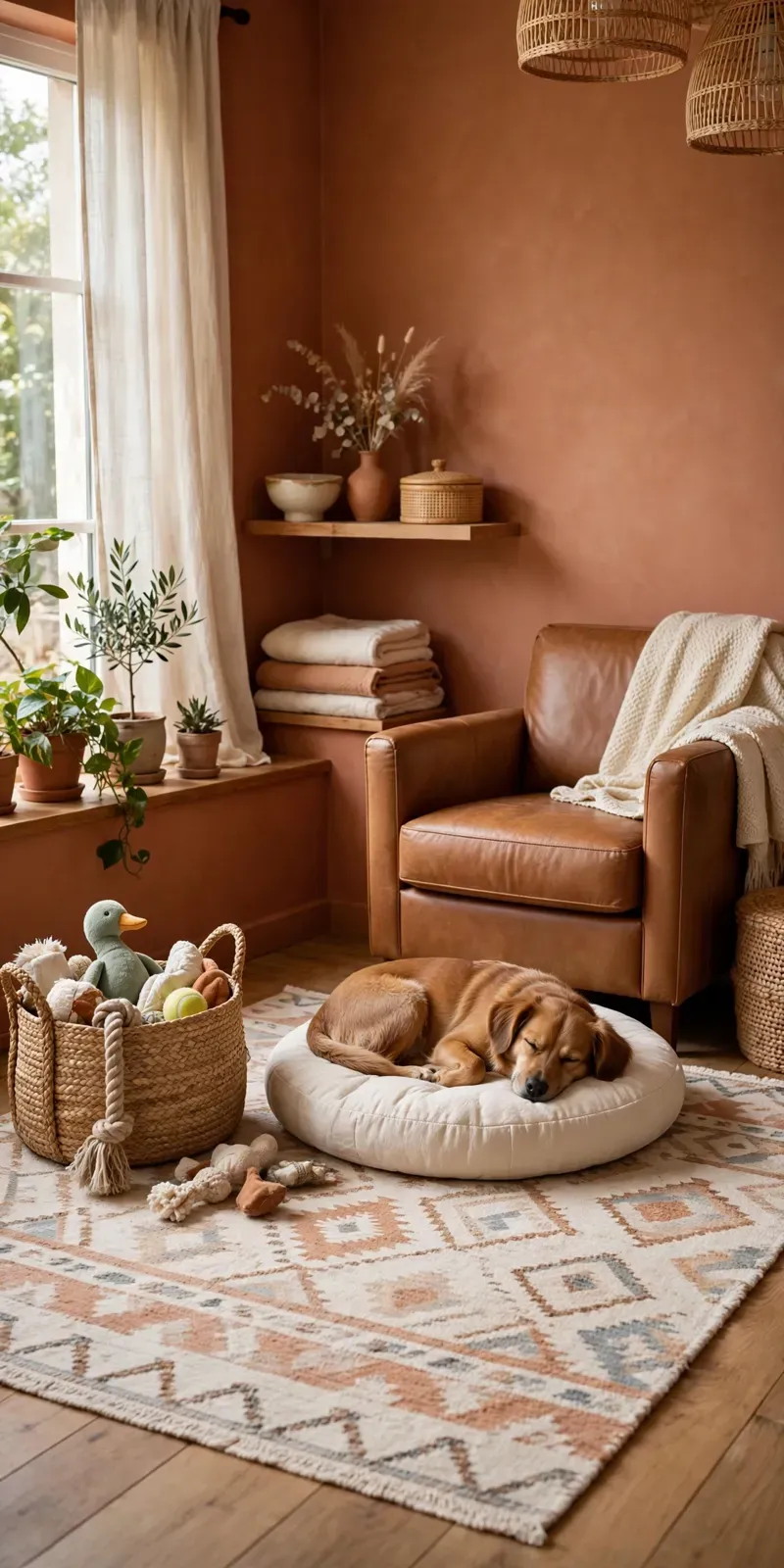
Budget Choices and Smart Splurges
Most pet-friendly upgrades are cheap: washable throws, a patterned runner, a decent mat, picture ledges that lift ornaments out of tail range. Second-hand solid-wood furniture often beats new flat-pack for claw survival at the same price. Spend real money on the two things that take daily punishment — the main rug in the pet’s route and the sofa’s washable cover — and on a genuinely good vacuum designed for hair, which is styling equipment in a pet home whether it looks like it or not. Smart spending is part of pet friendly home styling choices, too.
Mistakes That Make Pet Homes Feel Like Kennels
The first is banishing all beauty — plastic everywhere, furniture under sheets, ornaments in exile — which makes the home feel like it is waiting for the pet to leave. The second is the opposite: buying the white boucle chair and spending a year defending it. Both come from refusing to design for the animal you have. Third, scent cover-ups instead of washing: candles over unwashed blankets fool nobody, least of all guests. Avoiding both extremes is the balance pet friendly home styling choices aim for.
Fourth, no sanctioned scratching, chewing or sleeping spot in the good rooms, which does not reduce pet behaviour — it just assigns it to your favourite furniture. Fifth, forgetting the vertical world for cats: a cat with a shelf route and a high perch scratches less, sheds its energy up high, and leaves the sofa arms alone. Vertical space completes pet friendly home styling choices for cats.
For more layout ideas that give every household member a place, see our small living room layout ideas guide.
Frequently Asked Questions
What is the best sofa fabric with dogs and cats?
Tightly woven fabrics — microfibre, canvas, outdoor weaves — and quality faux leather perform best: hair releases easily, claws find nothing to snag, and spills wipe instead of soaking. Velvet is a strong cat option because fur sits on the surface.
How do I stop my home smelling like pets?
Wash the washable layers on schedule — throws, covers, pet bedding weekly — ventilate daily, and clean feeding and litter zones little and often. Freshness comes from laundry and air, not from scented products layered on top.
Are white and light interiors possible with pets?
Yes, with washable everything, patterned or textured light fabrics that forgive between washes, and hard floors. The labour is real but the look is achievable; choose it knowingly rather than accidentally.
Where should a dog bed go in a living room?
In a warm, draught-free corner the family actually uses, ideally with a view of the room and some sunlight. Beds placed with people get slept in; beds placed in exile push the dog back onto the sofa.
How do I protect wooden floors from claws?
Keep nails trimmed, put washable runners on the main routes, and accept a satin rather than high-gloss finish, which hides fine marks. Most damage comes from grit under paws, so a good entry mat matters more than any coating.
A pet-friendly home is not a compromised home — it is a home honest about who lives in it. Choose forgiving fabrics, give the animal beautiful things of its own in the good spots, keep everything washable, and the styling will hold through muddy paws and shedding season alike. Those are pet friendly home styling choices that last.