Old things carry what new things cannot: patina, odd proportions, hand-made irregularity, and the quiet confidence of objects that have already survived decades of taste. The skill is not collecting them — it is mixing them so a room feels layered rather than second-hand. Good vintage finds styling modern homes depends on ratio, contrast and restraint: a few genuinely old pieces given air inside a clean modern shell, colours bridged on purpose, and everything working for its place. This guide covers sourcing honestly, the styling rules that keep vintage fresh, a step-by-step room integration, budget buying, and the mistakes that tip characterful into cluttered.
One rule leads all the others: the modern room must stay in charge. Vintage is the guest with the best stories, not the new landlord.
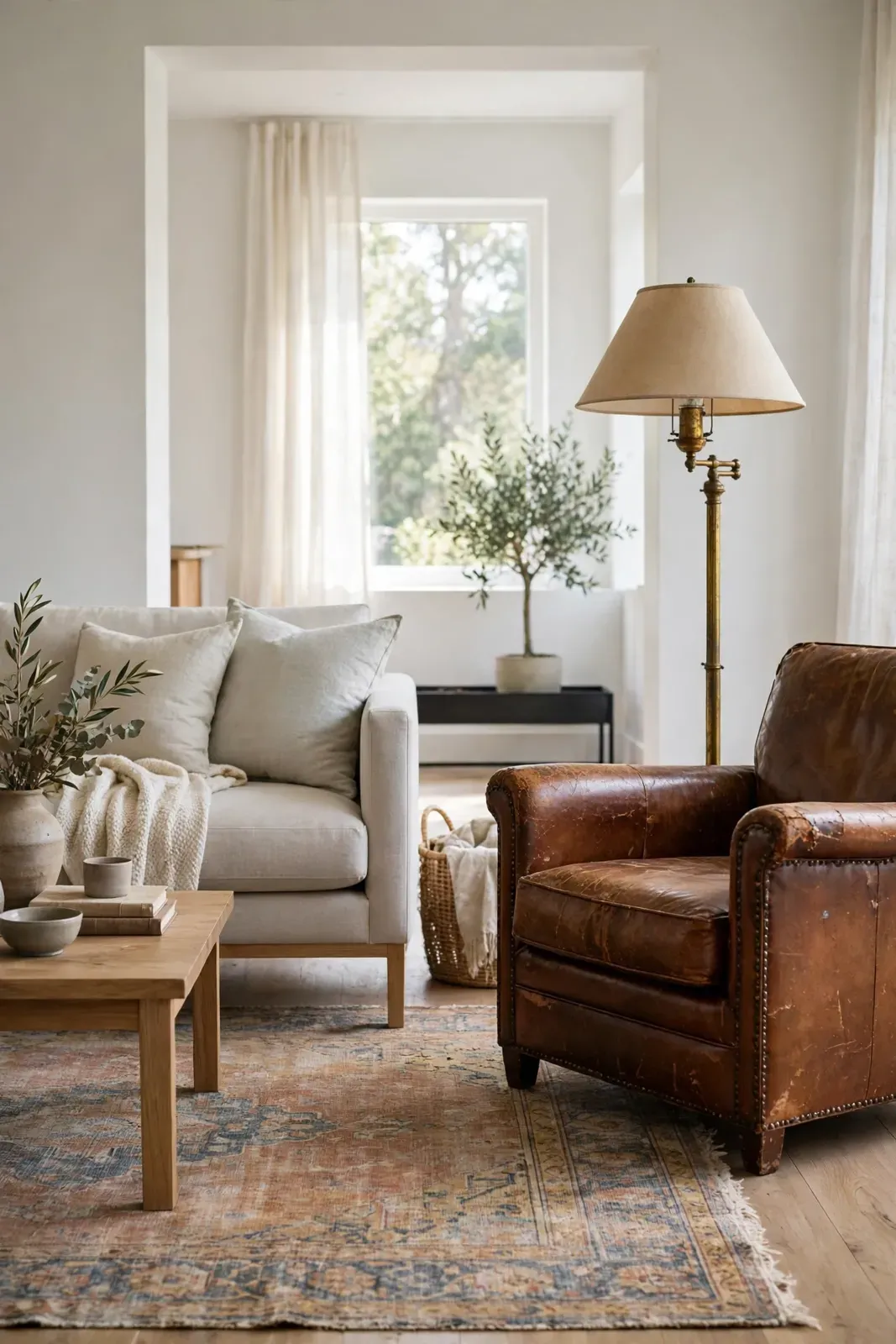
Table of Contents
Vintage Finds Styling Modern Homes: The Ratio That Works
The rooms that succeed run roughly seventy percent modern to thirty percent vintage — or the reverse in period houses with modern accents. At fifty-fifty with no neutral ground, styles argue instead of conversing. Modern pieces supply the calm background: clean-lined sofa, plain rug, simple curtains. Vintage pieces then do what they do best — a carved side table, brass lamps with real weight, an antique mirror with foxed glass, a rug whose colours no factory would dare repeat.
Contrast is the mechanism. A worn leather chair gains drama beside a crisp new sofa; a sleek modern lamp makes an old wooden desk look intentional rather than inherited-by-accident. When everything is old, nothing reads as chosen. When one or two old pieces punctuate a new room, each one becomes a focal point with a past. At its best, vintage finds styling modern homes feels collected rather than costume-like.
Where to Source and What to Check Before Buying
The best hunting grounds are layered: charity and thrift stores for small pieces and frames, flea markets for lamps and brass, estate sales for furniture with provenance, and online marketplaces for specific searches. Go with measurements of your gaps — the doorway a cabinet must pass, the wall a mirror must fill — because vintage has no returns queue and no flat-pack second chances.
Check before you fall in love: woodworm holes with fresh dust, drawer runners, joint wobble, lamp wiring age, mirror plate condition, and smells, which upholstery keeps honestly. Structural honesty matters more than surface beauty — scratches and patina are the point, but a chair that rocks on three legs is a project, and projects should be priced as projects. Buy the best example you can afford of fewer things rather than a roomful of almost-right pieces. That discipline keeps vintage finds styling modern homes honest instead of hopeful.
Bridging Colours and Materials So Old Meets New Calmly
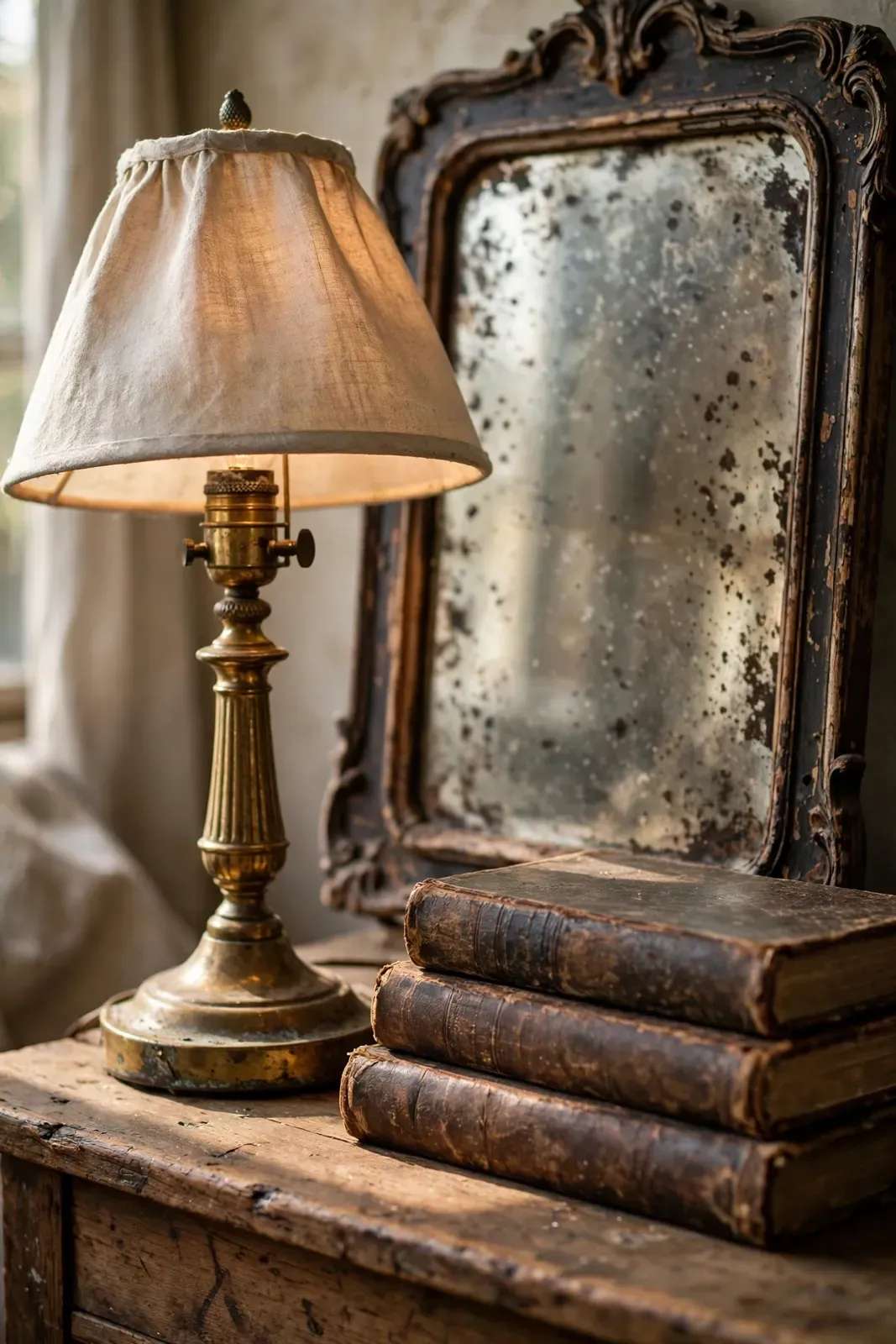
Colour is the translator between eras. Pull one or two colours from your vintage hero — the faded rust in an old rug, the green in a painting — and repeat them in small modern pieces: cushions, a throw, new ceramics. The eye then reads the old piece as the source of the room’s palette rather than an interruption of it. Wood tones bridge the same way: a modern pale-oak floor forgives almost any old timber if each piece gets space around it; crowding three dark antiques together builds a brown corner no light survives. Used this way, colour makes vintage finds styling modern homes feel calm and deliberate.
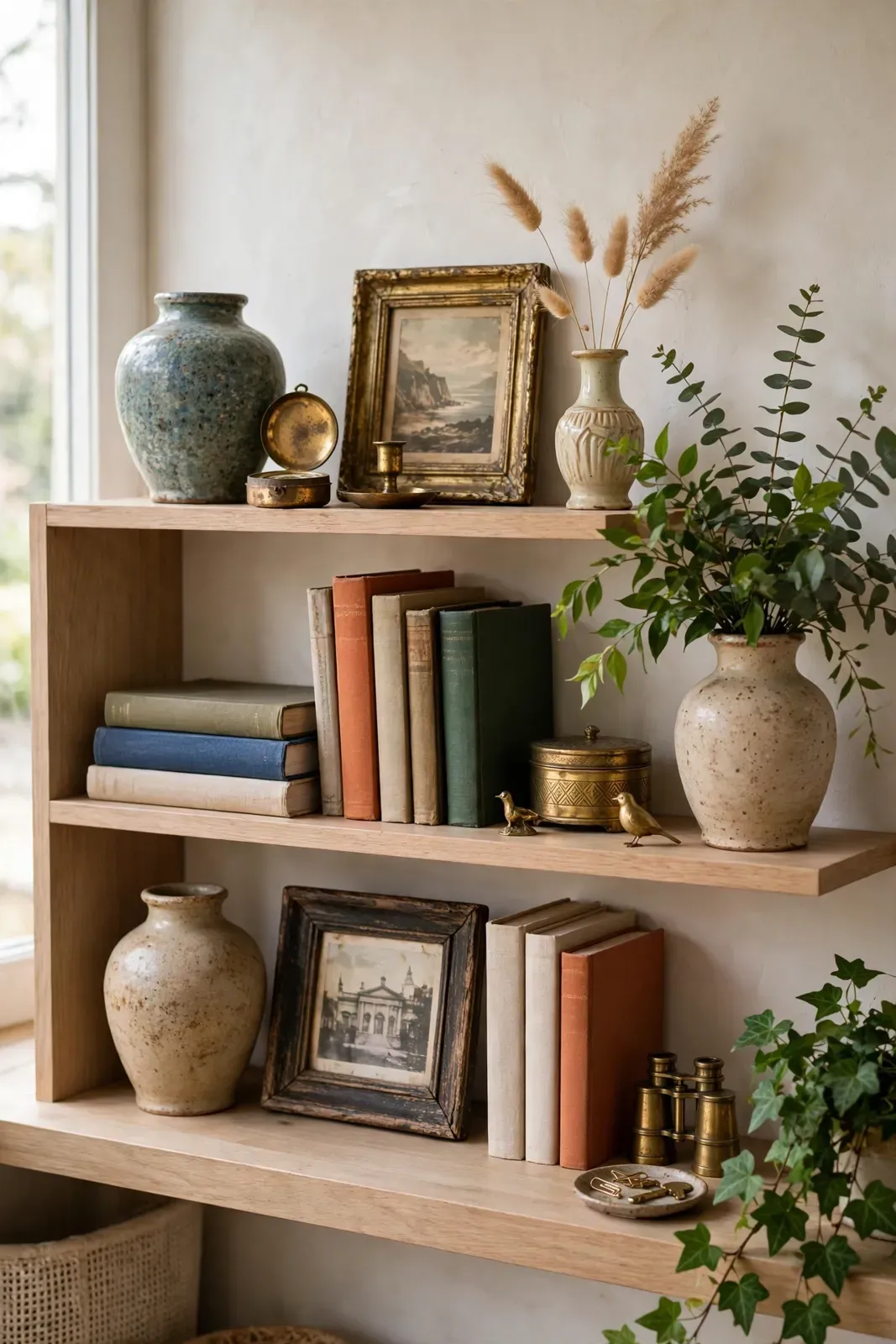
Materials want one modern counterpoint per grouping. Old brass beside matte black, worn leather beside fresh linen, foxed mirror beside flat new paint. And give every vintage piece modern company within arm’s reach — a stack of current books on the old table, a new plant in the old pot — so nothing sits in a museum bubble. Small pairings like these are where vintage finds styling modern homes quietly succeeds.
Step by Step: Integrating One Vintage Piece Into a Room
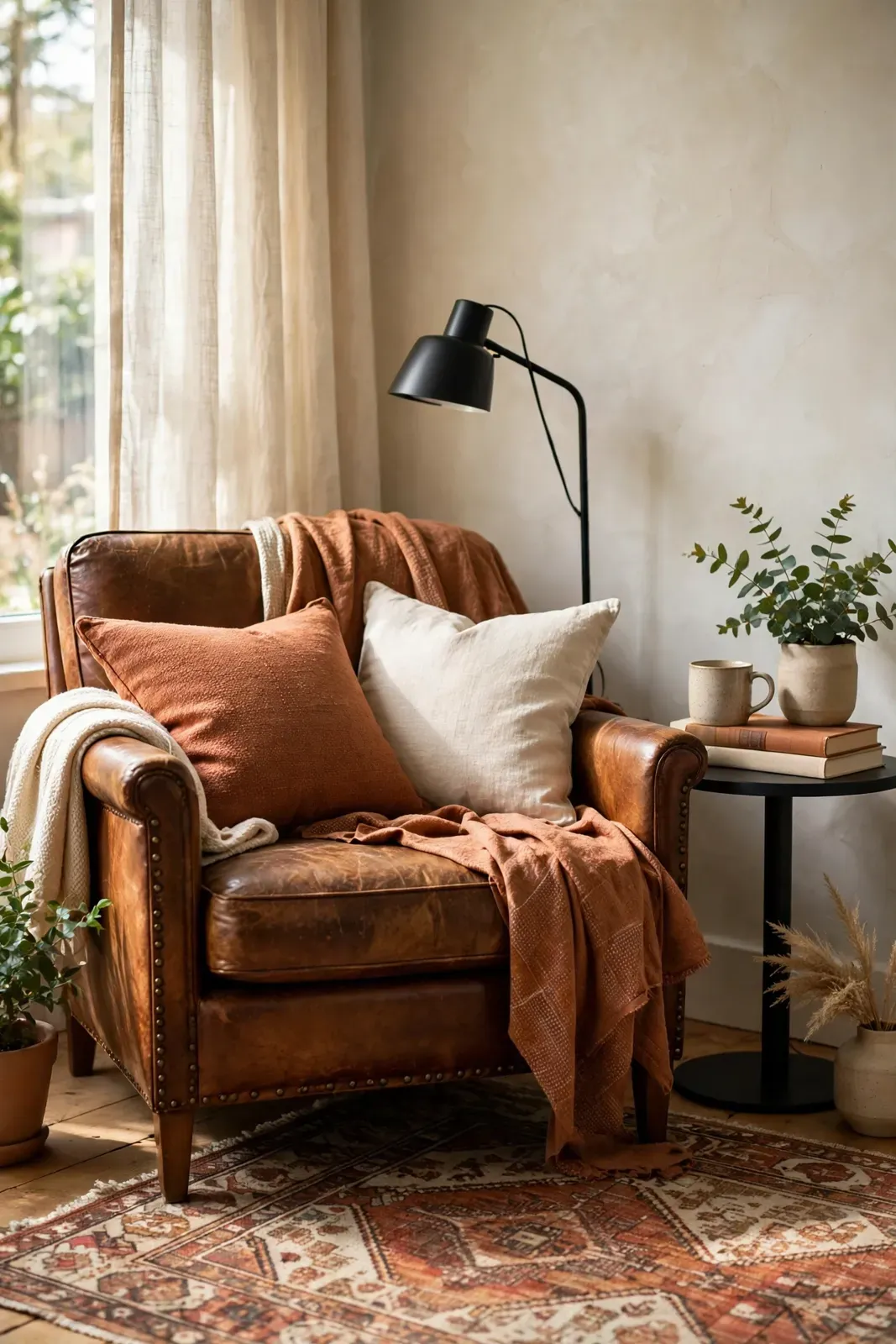
Start with the piece placed alone in its intended spot, everything else in the zone cleared away. Live with its position for a day — vintage proportions surprise, and the right wall for a tall cabinet is rarely the first wall tried. Then rebuild the zone around it: modern anchor piece first, the bridge colours second, lighting last, with the lamp aimed to give the old piece the evening glow museums use for a reason.
Finish with the honesty test from the doorway: does the piece read as a deliberate focal point, or as storage that happens to be old? If deliberate, stop — the most common styling error is continuing. If it reads as storage, it needs either more air around it, a stronger modern counterpoint beside it, or a different room where its scale works. Pass that test and vintage finds styling modern homes looks intentional from the doorway.
Budget Buying and Where Value Hides
Vintage rewards patience over budget. Small solid things — brass, mirrors, frames, wooden boxes, lamps — are underpriced nearly everywhere and transform shelves and tables for very little. Furniture value hides in unfashionable decades: solid mid-century sideboards and 1970s leather often cost less than new veneer equivalents while outlasting them comfortably. Spend on re-wiring lamps and re-upholstering one good chair rather than spreading the same money over five fragile pieces. This is where vintage finds styling modern homes finds value others walk past.
Factor the real costs before buying: transport for heavy pieces, professional cleaning for old rugs, and time — the true currency of vintage — for hunting. A piece that needs three weekends of repair is not cheap at any price unless you love the work itself. Counting those costs keeps vintage finds styling modern homes cheap in the right way.
Mistakes That Tip Vintage Into Clutter or Theme
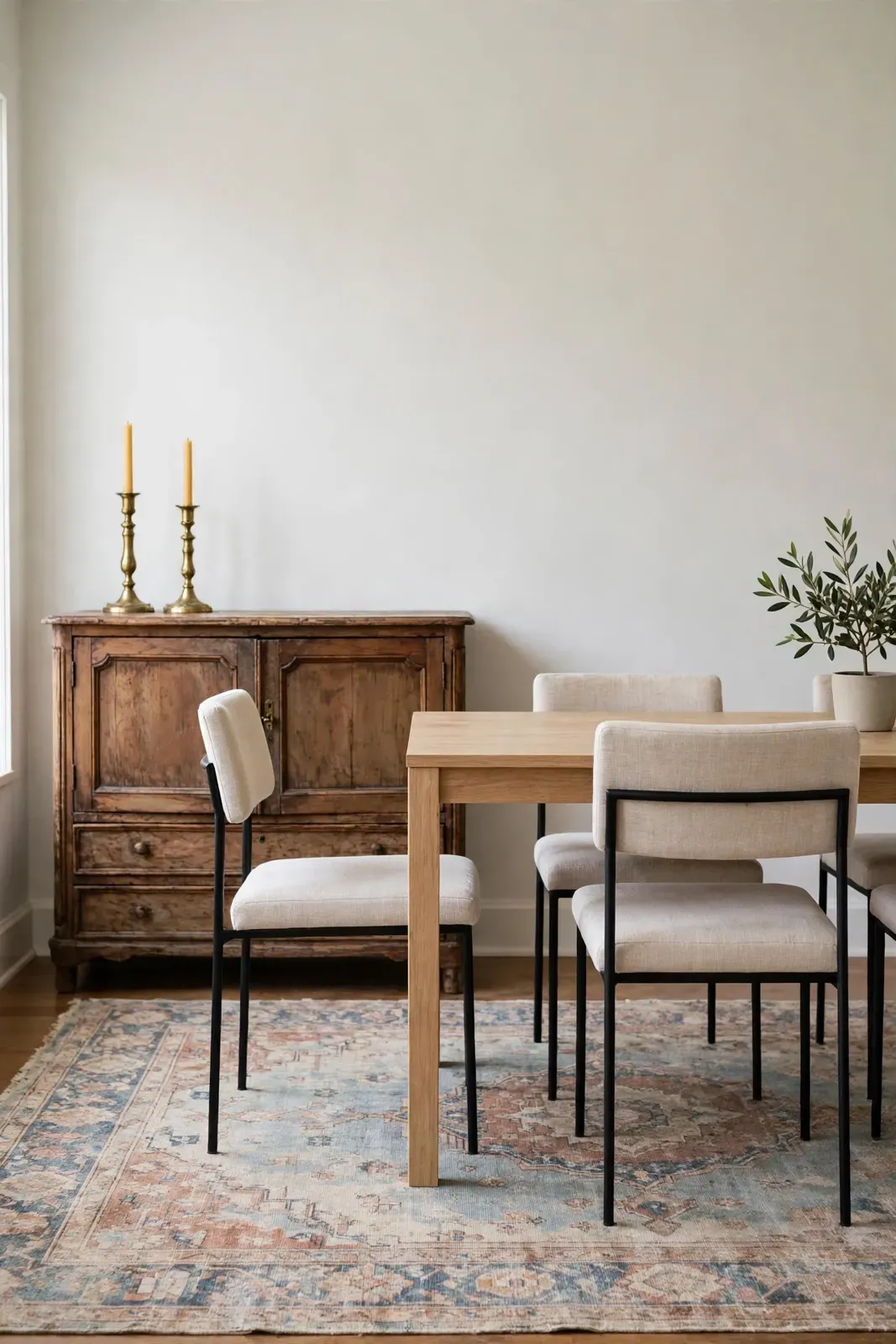
The theme trap is first: one era, slavishly complete — a room that looks like a 1960s set stops being a home and starts being an exhibit, and nobody relaxes in an exhibit. Second, matched sets: vintage bought as suites looks inherited, while vintage bought piece by piece looks collected, and collected is the whole charm. Third, condition denial — flaking paint on a kitchen piece, a musty rug under a dining table — patina belongs on display surfaces, not where food and bodies press daily. Avoid the exhibit effect and vintage finds styling modern homes stays liveable.
Fourth, scale blindness: old furniture was built for different rooms, and an oversized armoire in a small flat is not character, it is a wall that stores things. Fifth, buying the tenth small ornament when the room needed one strong piece six ornaments ago. Edit smalls ruthlessly; heroes need an audience of air. Respect scale and vintage finds styling modern homes gains character without crowding.
For the modern layouts that give vintage pieces their stage, see our small living room layout ideas guide. Those layouts are the stage vintage finds styling modern homes deserves.
Frequently Asked Questions
How much vintage is too much in a modern room?
When pieces start competing instead of conversing — usually beyond a third of the room’s visual weight, or the moment a second hero piece enters the same sightline. One focal vintage piece per view is the reliable ceiling. That ceiling keeps vintage finds styling modern homes balanced.
Can vintage furniture work in a small flat?
Yes, if scale is honest: small-footprint pieces like side tables, mirrors, lamps and one compact chair give character without the bulk. Avoid large storage antiques unless they replace, not add to, existing storage. Handled this way, vintage finds styling modern homes works even in compact spaces.
How do I clean and care for old pieces safely?
Dust with a dry cloth, use the gentlest soap solution for grime, feed dry wood with appropriate wax or oil, and have lamps re-wired by an electrician. Aggressive stripping destroys both patina and value — clean, never erase.
What vintage pieces give the most effect for the least money?
Mirrors, brass lamps, picture frames, wooden side tables and old rugs in good condition. Each changes light, reflection or texture — the three things rooms are actually made of — for thrift-store prices. For first-time buyers, these are the safest entry points into vintage finds styling modern homes.
How can I tell if a piece is genuinely old?
Look for hand-made irregularities: dovetail joints, uneven glass, solid rather than veneered backs, hardware with real wear in the right places, and construction that predates flat-pack logic. Genuine age shows in how a piece was made and repaired, not just how it looks.
A modern home with vintage finds has something a showroom never will: a past it chose for itself. Buy slowly, give each piece air and modern company, bridge its colours into the room, and your home will read as collected over years — because increasingly, it will have been. That is the heart of vintage finds styling modern homes: old pieces, fresh rooms, chosen slowly.