Most people who try minimalism end up with the same complaint: the room is tidy, but nobody wants to sit in it. The sofa is bare, the walls are bare, and the whole place feels like a hotel corridor.
A minimalist home without feeling empty is possible — it just asks for a different question. Instead of asking what else you can remove, ask what warmth the room is missing. Texture, soft light and a few well-chosen natural materials do that job without bringing the clutter back.
This guide walks through warm minimalism step by step: how to layer fabrics and wood, how to pick colours that feel calm rather than cold, and how to arrange a minimalist home without feeling empty in the rooms you actually live in.
Table of Contents
Why a Minimalist Home Without Feeling Empty Starts With Warmth
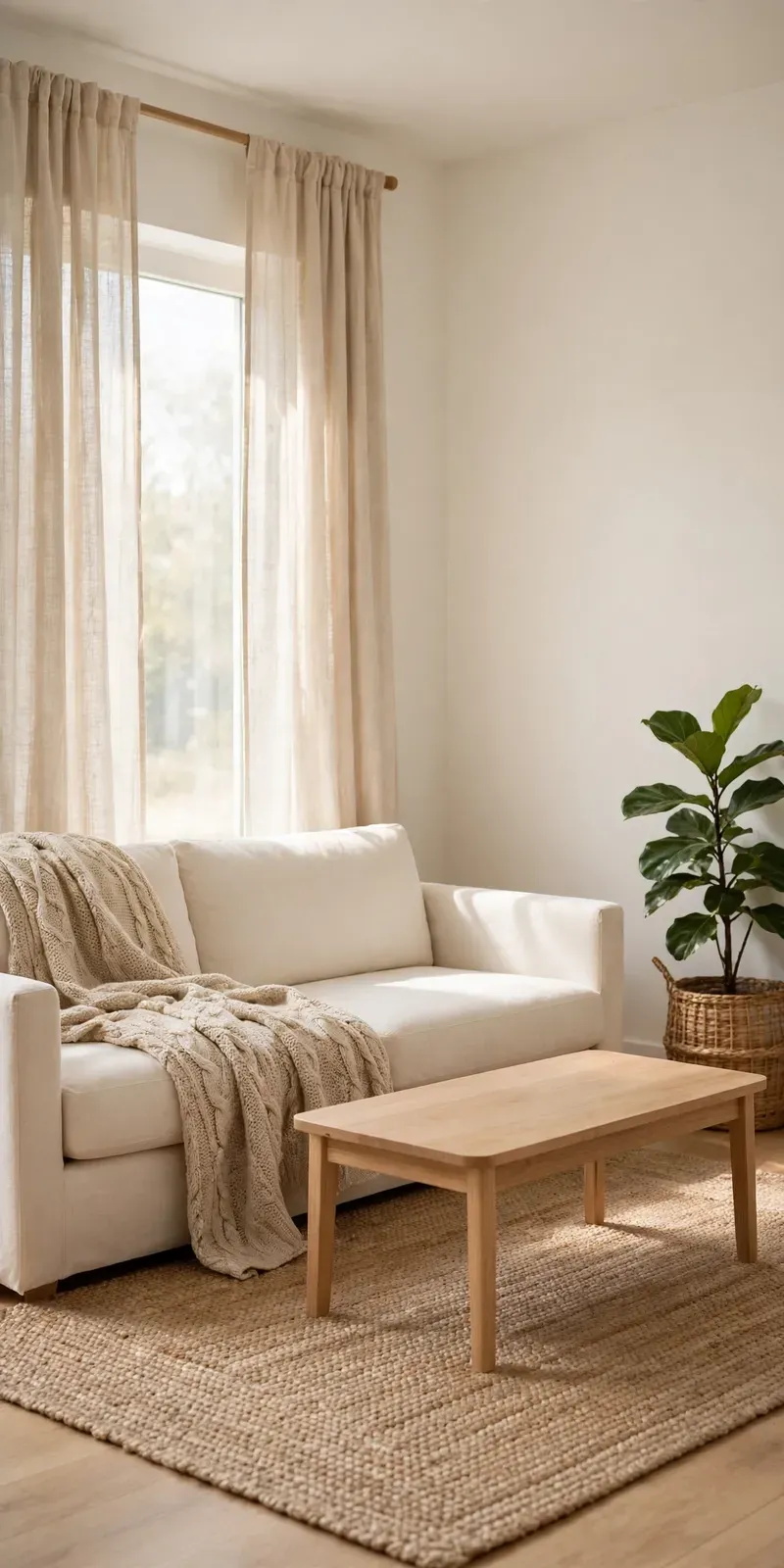
Minimalism was never meant to mean bare. At its core, minimalism is about keeping only what earns its place — it says nothing about rooms having to feel cold. The empty feeling usually comes from sameness: flat white walls, flat white furniture, smooth surfaces everywhere and nothing for the eye or hand to rest on. When every surface is hard and shiny, a room reads as unfinished, no matter how expensive the pieces are. That sameness, not spareness, is what a minimalist home without feeling empty has to avoid.
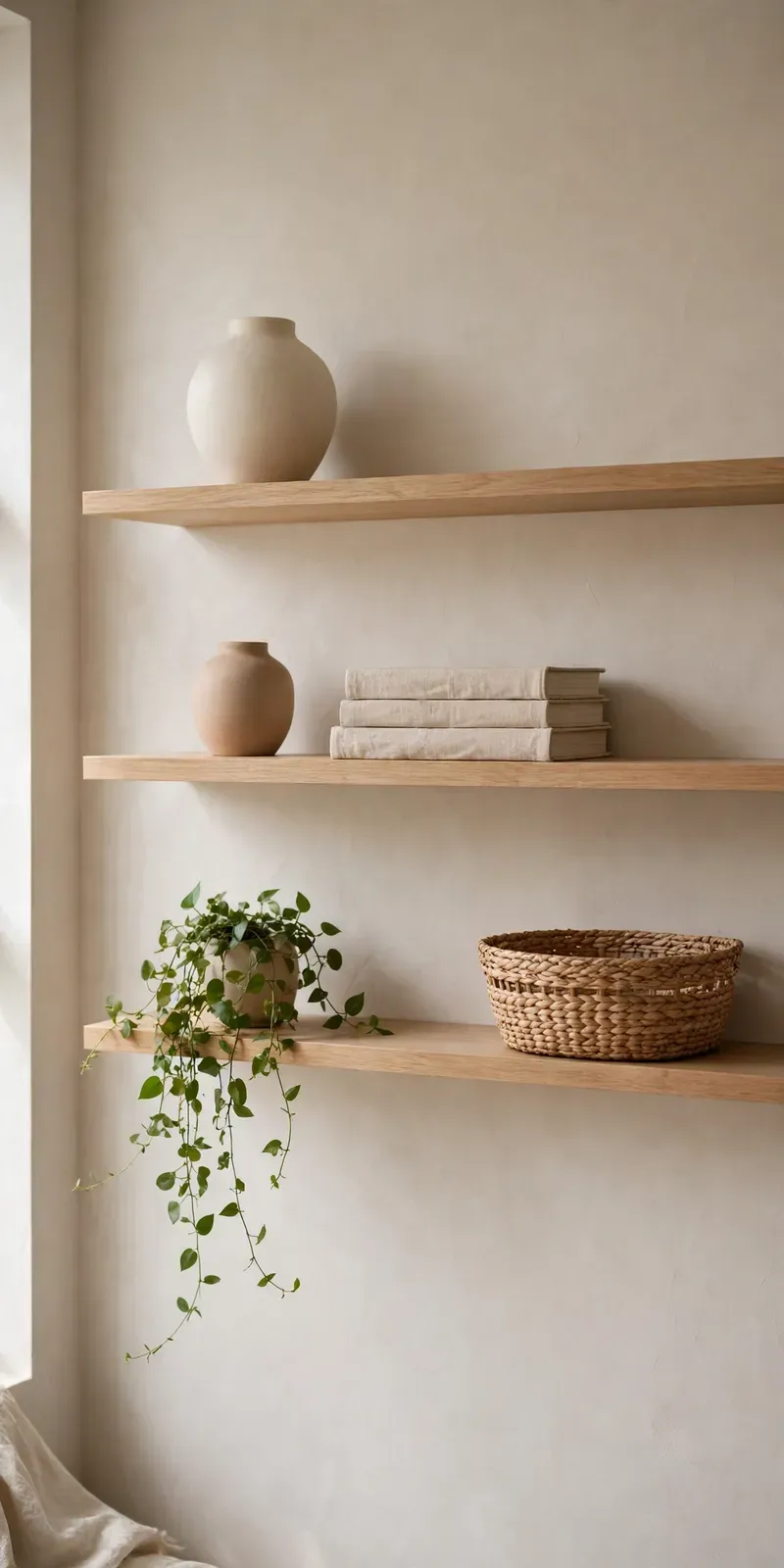
Warmth comes from contrast at a small scale. A rough jute rug under a smooth wooden table. A crumpled linen cushion against a neat sofa. One handmade ceramic vase instead of five matching ornaments. Each room only needs two or three of these tactile moments.
Layer Texture So a Minimalist Home Never Feels Empty
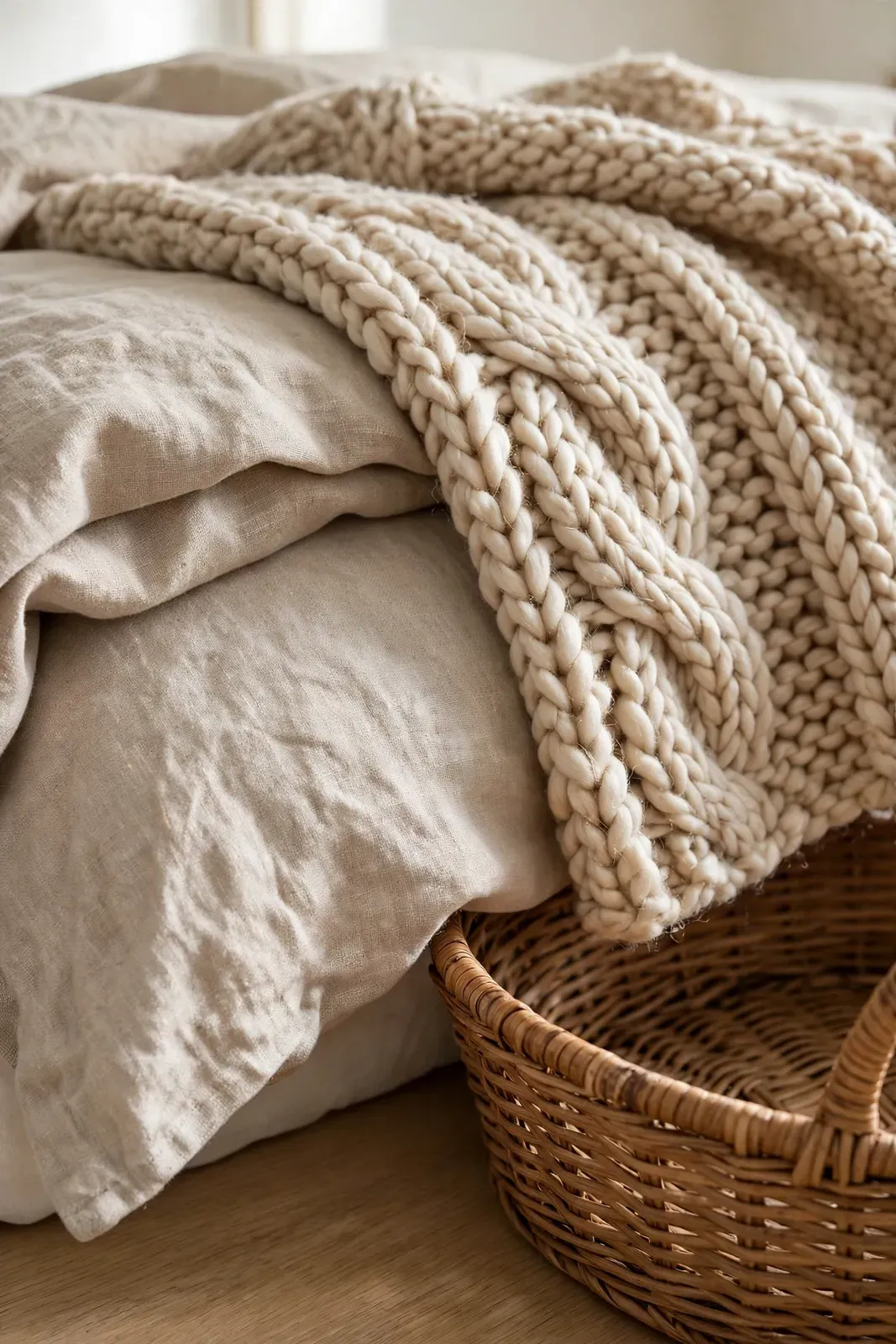
Texture is the cheapest warmth there is, and it adds no visual clutter when you keep the colours close. Work in layers, from the floor up. Start with a rug with a visible weave — jute, wool or a flat cotton kilim — sized large enough that the front legs of the sofa and chairs sit on it. Then add one throw with a loose knit or a woven stripe, draped over a sofa arm rather than folded into a perfect square.
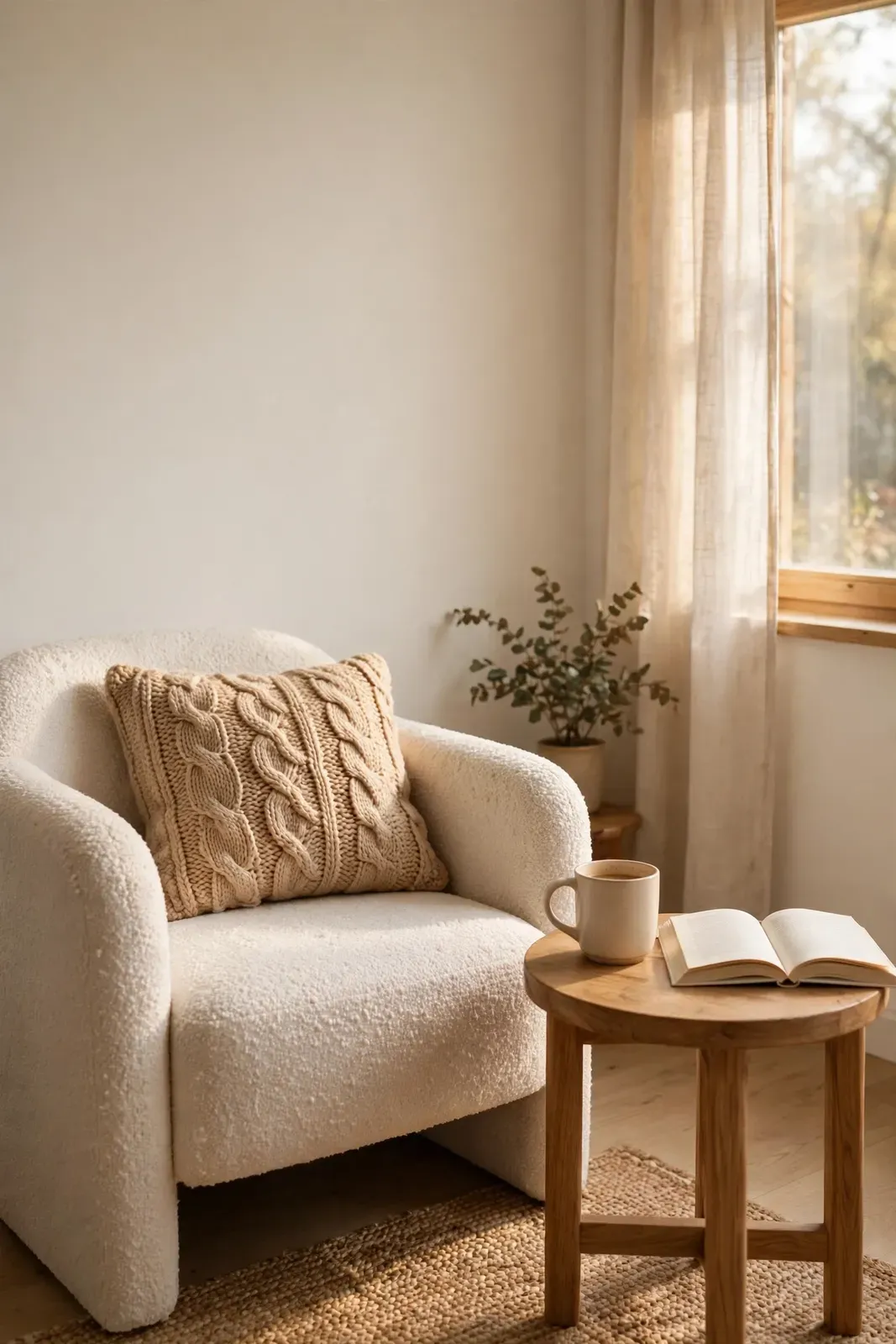
Next, mix your cushion fabrics instead of matching them: one linen, one wool or bouclé, one simple cotton, all within two shades of each other. Carry the same idea to the windows. Sheer linen curtains soften daylight and make plain walls look intentional, and they move slightly with the air, which quietly makes a still room feel alive. In the bedroom, swap a flat polyester bedcover for washed cotton or linen bedding; the natural creases are the decoration. Small comforts like these keep a minimalist home without feeling empty day after day.
Choose a Warm Palette Instead of Stark White
Pure brilliant white is the main reason spare rooms feel chilly. Test two or three on the wall and watch them morning and evening before you commit. A warm base colour is the quiet foundation of a minimalist home without feeling empty.
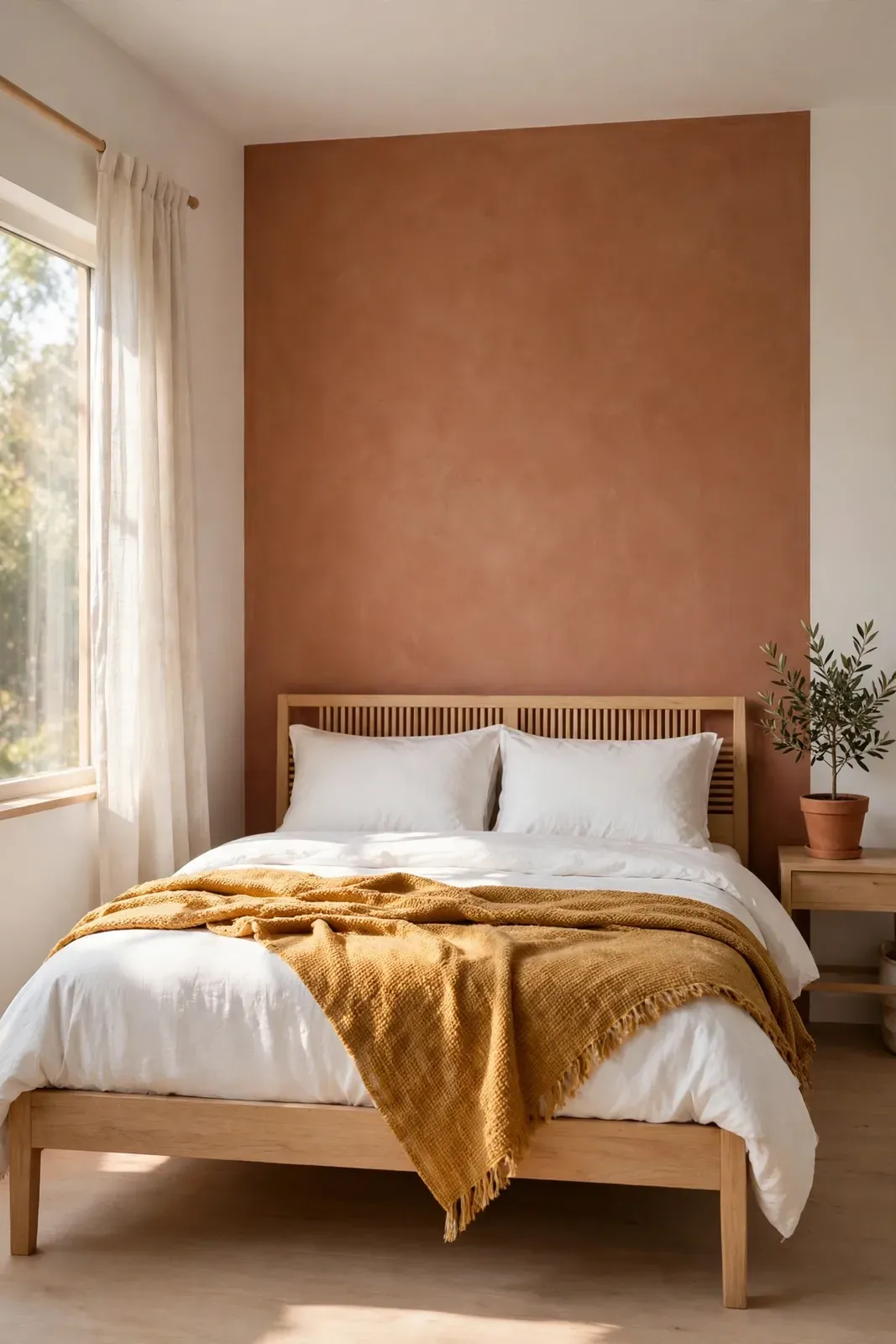
Build the rest of the palette from things that are already warm by nature: light oak or sheesham wood, terracotta, sand, oatmeal, olive and muted mustard. You do not need all of them. Pick one wood tone and one accent colour, then repeat them in small doses in each room — a cushion here, a plant pot there, the same wood in a picture frame down the hall. That repetition is what makes a home feel pulled together, and it costs far less than buying matching sets. Repetition, used this way, helps a minimalist home without feeling empty feel personal too.
How to Create a Minimalist Home Without Feeling Empty, Room by Room
Step one: clear one room properly. Take everything movable out, clean the empty shell, then bring back only the furniture the room genuinely needs. This is where honest decluttering matters — pieces you keep out of guilt will crowd out the warmth you are trying to add.
Step two: fix the base. Choose the warm wall colour and the rug first, because everything else sits on those two decisions.
Step three: place the large furniture with breathing room around it. Pull the sofa a few centimetres off the wall and leave clear walking paths; space around furniture is what reads as calm, not emptiness. If the room is tight, our guide to small living room layout ideas that make space feel bigger shows how to plan the layout first.
Step four: add texture in the order above — rug, throw, cushions, curtains. Step five: add one piece of life per room, meaning a plant, a stack of real books you are reading, or a bowl of fruit in the kitchen.
Step six: finish with light. Put one lamp at seated eye level wherever people sit in the evening, and live with the room for a week before buying anything else.
Light, Wood and Greenery: The Quiet Warmth Trio
If you change nothing else, change the bulbs. Cold blue-white bulbs make even a furnished room feel like an office. Warm bulbs in the 2700K range, on lamps rather than only overhead, pool light where people gather and leave soft shadow in the corners — and shadow, in small amounts, is cosy rather than gloomy. Warm light alone can stop a minimalist home without feeling empty from feeling flat.
Wood and plants do the rest. One real wood surface in every room — a stool, a tray, a chopping board left out on the counter — stops a pale scheme from feeling sterile. Plants add shape and movement that no ornament matches; start with forgiving ones like pothos, snake plant or a small olive-style tree in the sunniest corner. Wood grain and leaves give a minimalist home without feeling empty its softest edges.
Budget and Buying Advice for a Warm Minimalist Home
Spend on the things you touch every day: the rug, the throw, the bedding and the main lamp. Save on the decorative layer. Second-hand ceramic, brass and solid wood turn up constantly in thrift shops and local markets, and one characterful old piece warms a room faster than three new ones. Spend this way, and a minimalist home without feeling empty need not cost much.
In Pakistan, a local carpenter can make a simple oak-finish side table or floating shelves for less than imported flat-pack, and woven throws, khaddar cushions and Multani-style pottery bring exactly the handmade texture this look needs at very fair prices. Whatever you buy, follow the one-in rule: a new piece earns its place by replacing something, not by joining the pile. And measure before you buy a rug — too-small rugs are the most common wasted purchase in spare rooms. Measured, local buying keeps a minimalist home without feeling empty within budget.
Common Mistakes That Make Minimalist Rooms Feel Cold
The first mistake is removing everything personal. Family photos, travel pieces and handmade things are not clutter by default; two or three on display give a spare room its story.
The second is choosing only smooth, glossy finishes — glass, chrome and polished stone bounce light around and feel hard, so balance them with matte and woven surfaces. The third is pushing all the furniture against the walls, which leaves a dead space in the middle and makes the room feel like a waiting area.
Two quieter mistakes matter too. Matching everything in one shade of beige can go flat just as white does; keep at least one darker anchor, like a walnut stool or a deep green plant, in each room. Warm minimalism settles over a few weeks as you notice where you actually sit, read and gather — then you add the lamp, the side table or the cushion exactly there, and not before. Patience is what finally makes a minimalist home without feeling empty feel settled.
Frequently Asked Questions
How do I make a minimalist home feel cosy, not empty?
Layer texture, use warm lighting and repeat one or two natural materials. A woven rug, a knitted throw, linen curtains and warm lamp light change how a room feels without adding a single unnecessary object. That balance defines a minimalist home without feeling empty more than any single purchase.
What colours suit a minimalist home without feeling empty?
Start with a warm white or soft greige on the walls, then add sand, clay, terracotta and olive in small doses. Keep one wood tone running through the rooms so the palette feels connected rather than random.
How many decorative objects should a minimalist room have?
There is no magic number, but grouping helps: one small cluster of two or three related pieces per surface, with the rest of the surface left clear. If a shelf or table is full edge to edge, it will read as clutter however nice the pieces are. Grouping like this protects a minimalist home without feeling empty from tipping into clutter.
Can warm minimalism work in a small rented home?
Yes, because most of it is portable. Rugs, throws, cushions, lamps and plants ask for no permission and move with you. If you cannot paint, hang a large piece of woven fabric or a light tapestry on the main wall for the same softening effect.
Where should I start if my home already feels empty?
Start with the room you sit in every evening. Add the rug and one lamp first, then a throw and cushions in natural fabrics. Live with those four changes for a week; most people find the room already feels different before anything else is bought. Start there, and a minimalist home without feeling empty grows one calm room at a time.
A Calm Home That Still Feels Like Yours
A minimalist home without feeling empty is not a compromise between tidy and cosy — it is what minimalism looks like when it is done with care. Keep the clear surfaces and the breathing room, then warm them with texture, honest materials, soft light and the few personal things that tell your story. Start with one room this week, add warmth layer by layer, and let the calm stay.