Every winter I used to stand in front of my wardrobe feeling cold just looking at it. I owned plenty of clothes, but somehow none of them added up to winter outfits for women that were both warm and worth wearing. The jumpers were thin, the coats were pretty but useless in real wind, and my boots leaked at the first puddle. It took me a few honest winters to learn what actually works, and this guide is everything I wish someone had told me then.
The good news is that warm winter outfits for women are not about buying a whole new wardrobe. They are about a small system: a base layer that holds heat, a middle layer that insulates, and a coat that blocks the weather, built around colours that all mix together. Once that system is in place, getting dressed on a dark January morning takes five minutes, and you stay comfortable from the school run to the evening walk home.
The Layering System Behind Warm Winter Outfits for Women
Layering is the whole secret, and it works in a simple order. Your base layer sits against the skin and should be close-fitting: a thermal top, a fine merino long-sleeve, or a plain cotton-wool blend tee. Its job is to trap a thin layer of warm air and move moisture away, so you do not feel clammy when you walk fast or step onto a warm bus. This simple order is the backbone of all good winter outfits for women.
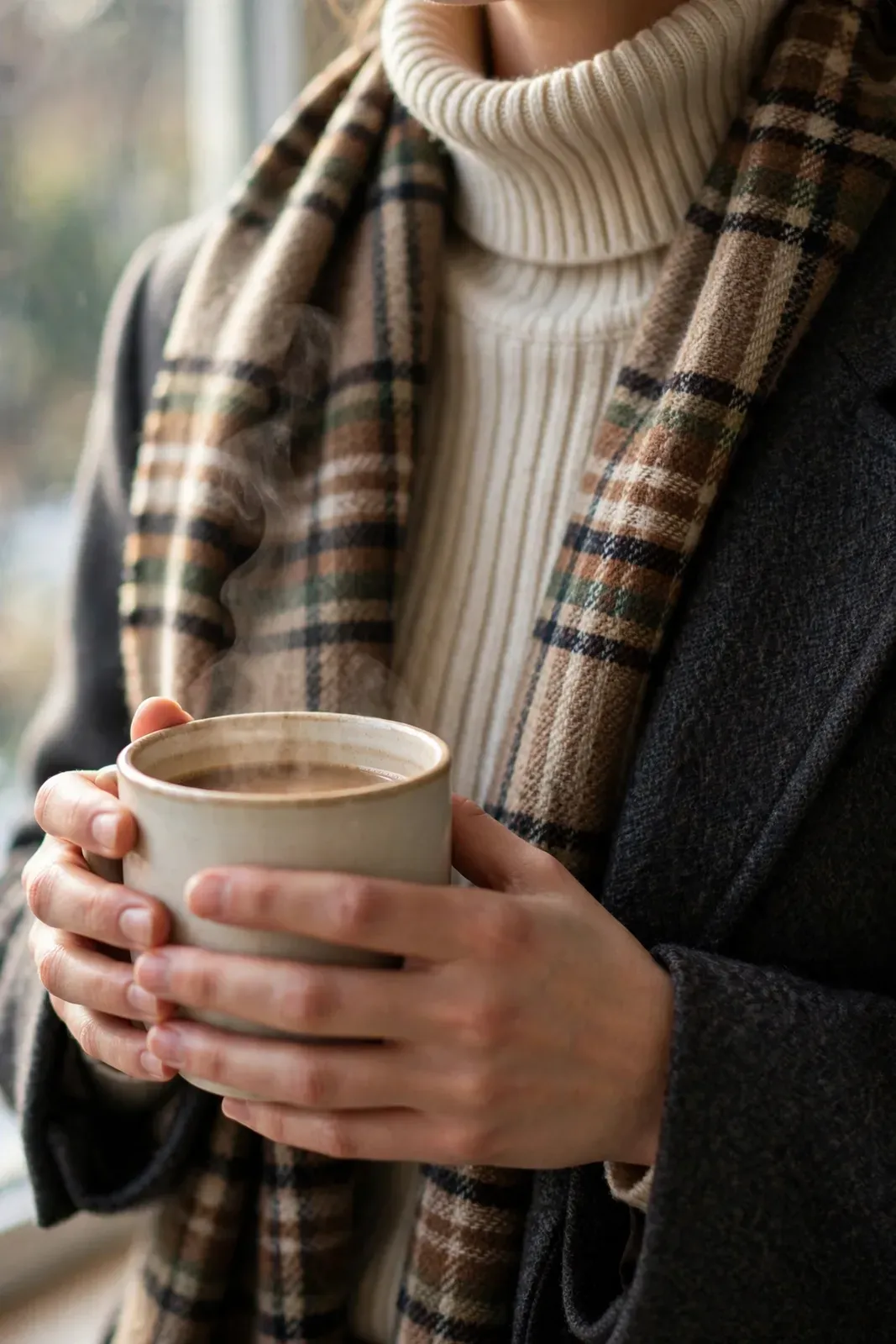
The middle layer is your insulation. This is where jumpers, cardigans and fleece earn their place. Natural fibres do this job beautifully because wool traps heat in its crimped fibres while staying breathable, which is why one good wool jumper often feels warmer than two thin acrylic ones. If you run cold, choose a chunky knit; if you overheat indoors, choose a finer knit you can keep on all day. Get this layer right and winter outfits for women feel cosy instead of clammy.
The outer layer blocks wind and rain. A coat that ends at or below the knee protects far more of you than a short jacket, and a closer fit at the cuffs and neck stops cold air sneaking in. This approach to dressing in layers is old and proven – it is the same principle behind traditional layered clothing in cold climates around the world, adapted here for everyday city life. Nail the outer layer and most winter outfits for women can handle real January weather.
9 Winter Outfits for Women That Stay Warm Without Bulk
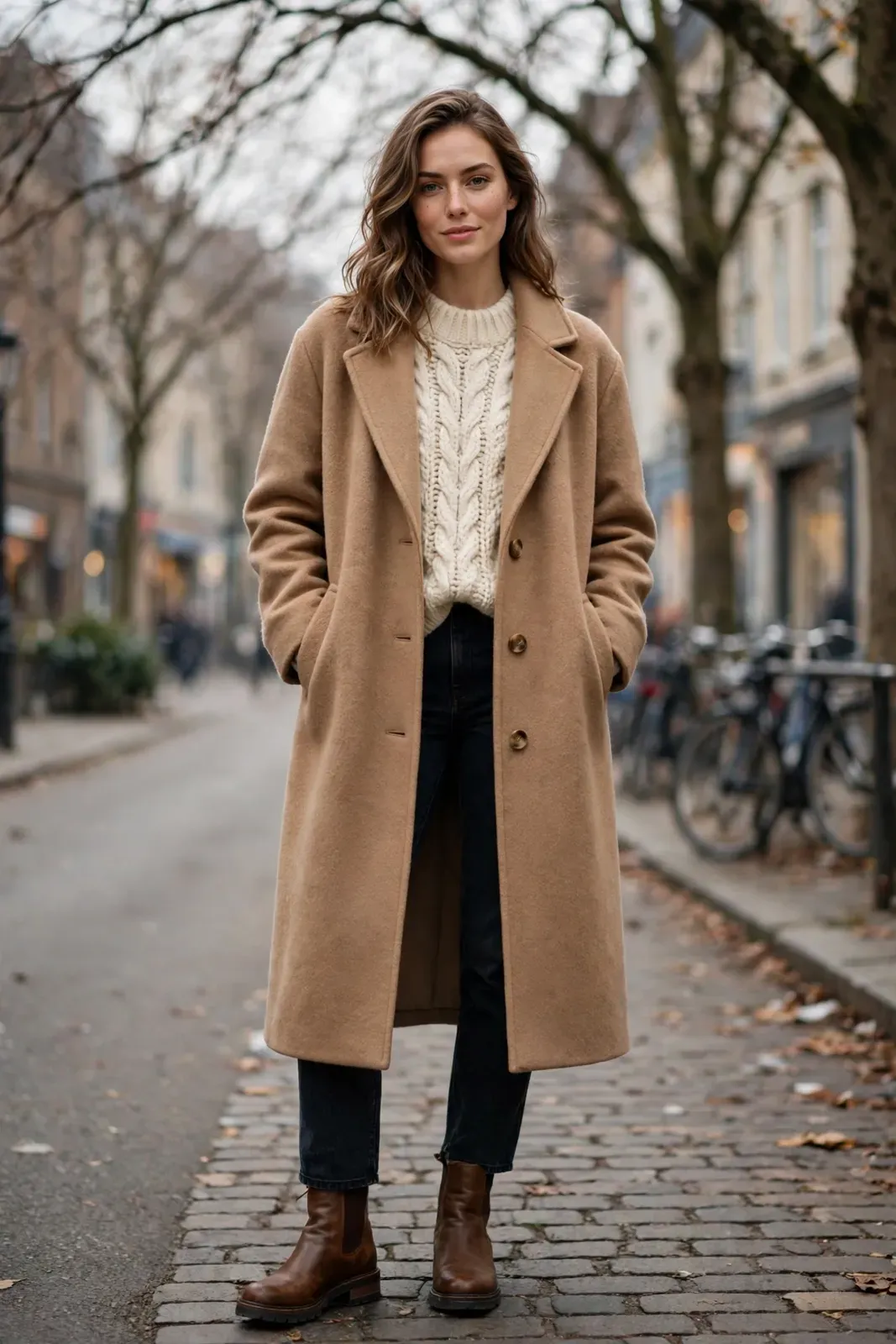
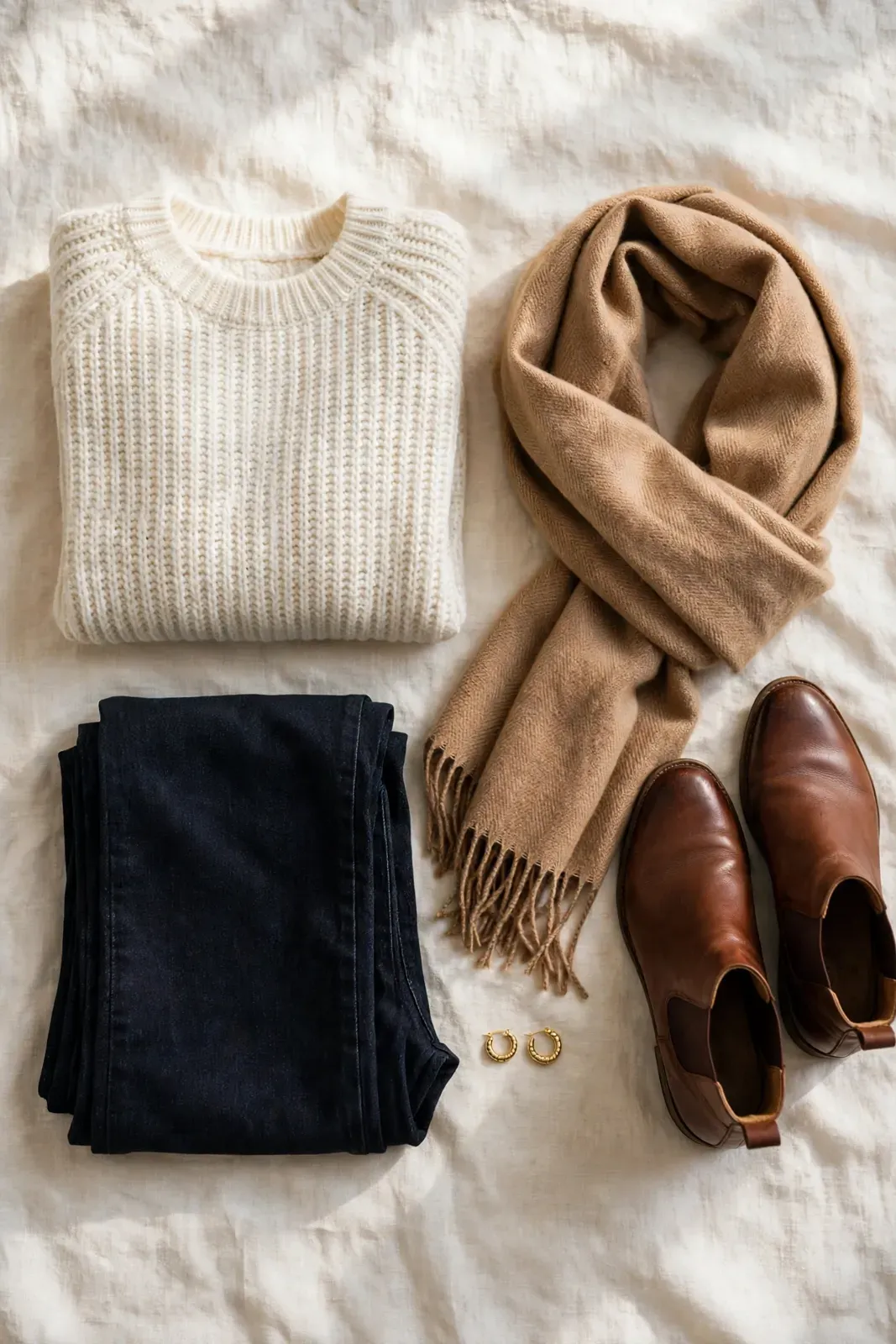
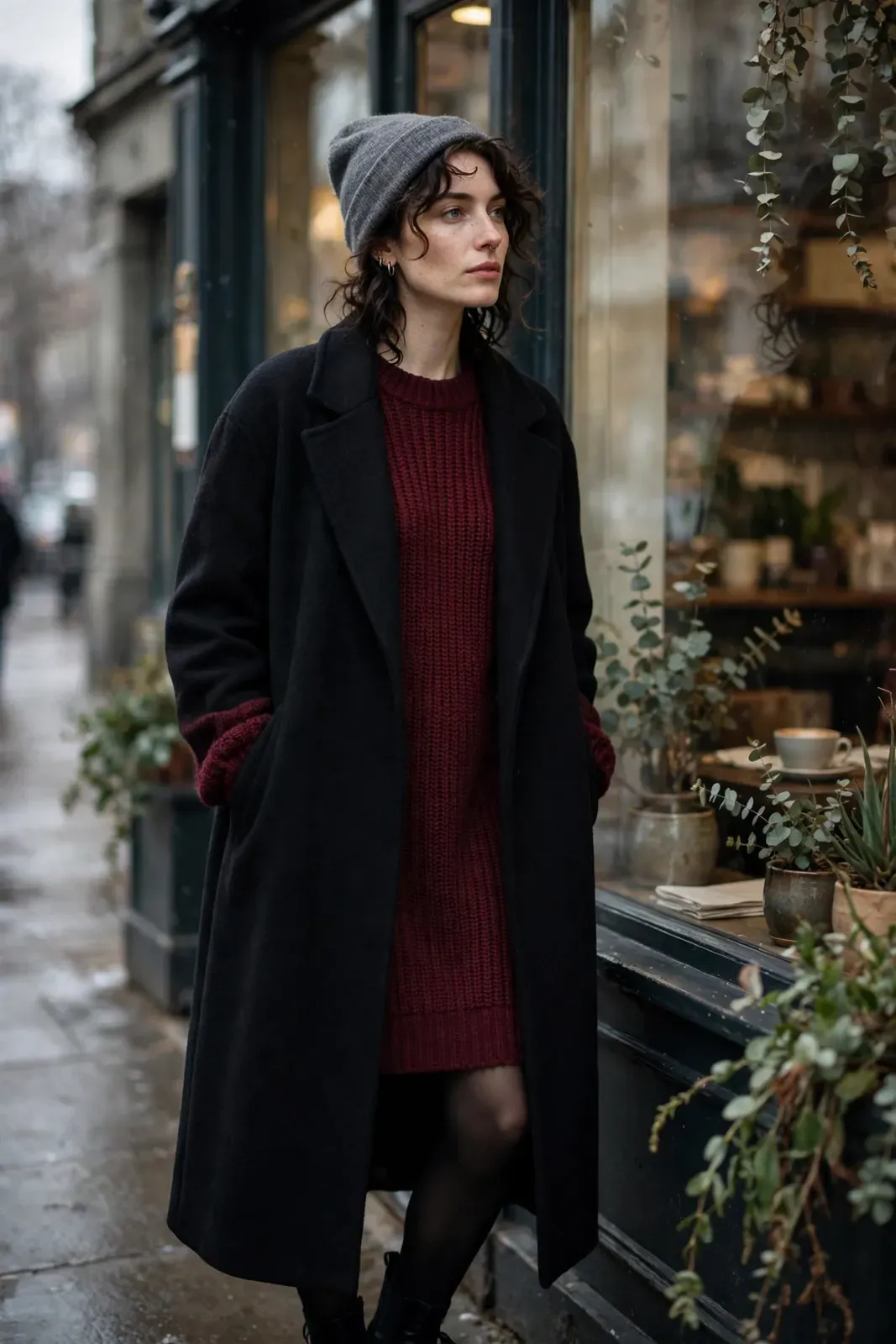
Here are the combinations I rotate all season. First, the camel coat outfit in the hero photo: cream cable knit, dark straight jeans, brown ankle boots. It works for work, lunch and weekends because every piece is plain and the proportions are balanced. Second, a burgundy knit dress with black tights, a long black coat and a grey beanie for days when you want one piece to do the work. Third, wide-leg trousers with a fitted turtleneck and a belted coat, which looks polished enough for meetings.
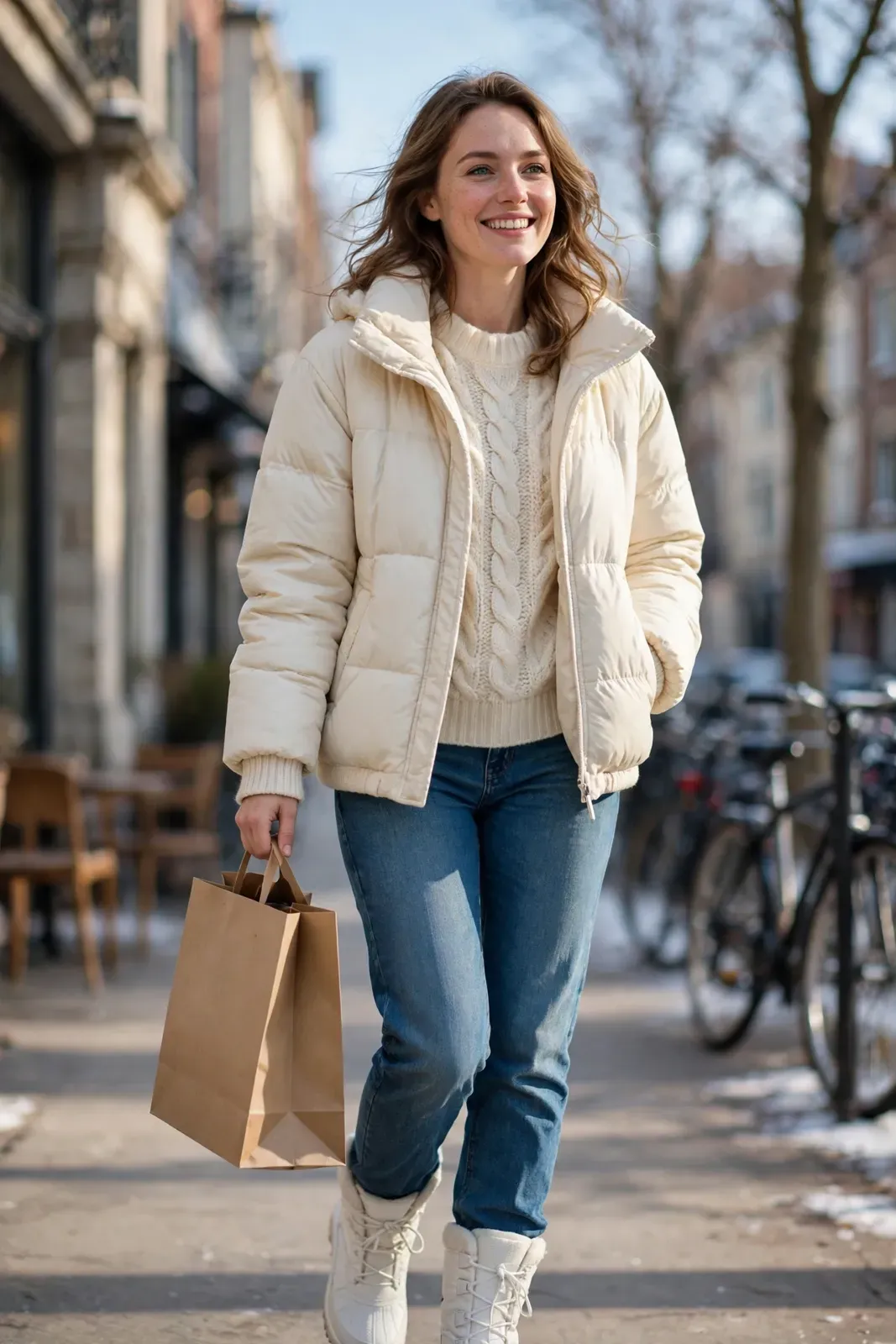
Fourth, a cream puffer jacket over a hoodie and jeans with winter boots, for the coldest errand days. Fifth, a plaid skirt with a tucked-in knit, thick tights and knee boots. Sixth, an all-black outfit – black knit, black jeans, black coat – lifted with a coloured scarf. Seventh, a long cardigan worn open over a thermal top and leggings-boots for cosy home days that still look dressed. Eighth, a sweater dress with a longline blazer-coat and loafers with socks.
Ninth, denim on denim softened by a big scarf and a knit beanie, which is far warmer than it sounds once the base layer is right. The pattern is simple once you see it: the best winter outfits for women are repeatable formulas, not one-off looks.
Notice what these winter outfits for women share: no exposed ankles, no thin fabrics on their own, and one warm accessory doing real work. A scarf, hat or pair of gloves is not decoration in January – each one covers skin that would otherwise leak heat.
Step by Step: Building a Winter Outfit in Five Minutes
Step one: check the actual temperature and whether you will be outside walking or mostly indoors. Step two: put on your base layer. Step three: choose the bottom half first – jeans, trousers, a skirt with tights, or a knit dress – because it decides your shoes. Step four: add the middle knit that matches the bottom half in colour or tone. Step five: choose the coat; if the outfit underneath is plain, the coat can carry the colour, and if the knit is bold, keep the coat neutral. Five unhurried minutes really is enough when winter outfits for women always follow the same order.
Step six: add boots that suit the ground – dry cold days take ankle boots, wet or snowy days need a waterproof sole with grip. Step seven: finish with scarf, hat and gloves that live together by your door so you never skip them in a rush. Step eight: look in the mirror once, checking that nothing is twisted, half-tucked by accident, or showing a gap at the waist when you lift your arms. That last check sounds small, but a two-centimetre gap at the back is exactly where the cold gets in. Boots and accessories are the anchors of winter outfits for women, so they deserve that last careful check.
Buying Smart: Where to Spend and Where to Save
Spend first on the coat and the boots, because you wear them daily and they decide your comfort. A coat with a high wool content keeps its shape and warmth for years; check the label rather than the price tag. Boots should be bought in the afternoon, when feet are slightly swollen, with the socks you actually plan to wear. Spending in this order is what keeps winter outfits for women affordable season after season.
Save on trend pieces and mid-layers you rotate often. High-street knits in wool blends, second-hand cashmere, and thermal tops in multipacks all do their job without drama. One rule saves me the most money: buy winter clothes in winter colours you already own. If your wardrobe core is camel, cream, black and burgundy, a new piece in one of those shades will slot into ten outfits; a random bright colour will fit into one. If you love those warm neutrals, my caramel outfits for women guide with warm layering looks shows the same system in a softer palette.
Care matters as much as buying. Air knits out after wearing instead of washing them every time, use a fabric shaver on pilling, and store coats on wide hangers so the shoulders keep their shape. Brush rain off boots and let them dry away from radiators, which crack leather. Looked after this way, the core of your winter wardrobe easily lasts five seasons. Good care stretches winter outfits for women across years, not just one winter.
Common Mistakes That Make Winter Outfits Feel Cold or Bulky
The biggest mistake is choosing one thick layer instead of three thinner ones. A single chunky jumper under a short jacket leaves your legs, neck and wrists exposed, and you end up both cold and bulky. The second mistake is cotton next to the skin on very cold days: once cotton gets damp from sweat it stays cold, while wool and thermal fabrics keep their warmth. Almost every chilly outfit traces back to one of these mistakes, and winter outfits for women are no exception.
People also forget proportions. A wide coat over wide trousers and a wide scarf swallows your shape; balance one relaxed piece with two neater ones. And the quietest mistake of all is leaving the house without covering your neck. A scarf tucked properly into your coat collar changes how warm the whole outfit feels, more than a thicker jumper would. Cover the neck, balance the shapes, and winter outfits for women suddenly feel twice as warm.
Frequently Asked Questions
How many coats do I actually need for winter?
Two is enough for most people: one long, warm everyday coat and one smarter tailored coat for work or evenings. A waterproof option matters more than a third fashion coat, so if you live somewhere rainy, make the everyday coat water-resistant. Two good coats quietly cover almost all winter outfits for women.
Can I wear dresses in winter without freezing?
Yes. Choose knit or heavier fabric dresses, wear thermal or fleece-lined tights underneath, and add knee boots so there is no bare leg between hem and shoe. A long coat over the top keeps the whole line warm. With those layers underneath, dresses earn a full place in winter outfits for women.
What is the warmest thing to wear under jeans?
A pair of thermal leggings or merino long johns in a thin weight. They add almost no bulk, stop the denim feeling cold against your skin, and make ordinary jeans work well below freezing.
How do I stop winter outfits looking frumpy?
Keep one part of the outfit defined: tuck the front of your knit, belt a coat, or choose a neater boot. Fit and one deliberate detail, like a good scarf fold, do more for polish than adding jewellery. That one defined point is what separates polished winter outfits for women from frumpy ones.
Are puffer jackets suitable for formal settings?
For most offices and dinners, a tailored wool coat reads better. Keep the puffer for travel, errands and the coldest days, and choose longer, matte styles in black or navy if you want it to look as smart as possible.
Warmth is a system, not a shopping spree.
If you take one thing from this guide, let it be the order: base, knit, coat, boots, scarf. Build winter outfits for women in that order and even your oldest clothes start working harder. Start with the camel-coat combination, wear it on your next cold morning, and adjust one layer at a time until the system fits your life. That is how a winter wardrobe quietly becomes the easiest one you own. That is the whole secret behind winter outfits for women that actually keep you warm.