Table of Contents
There is a particular kind of evening light that makes a home feel generous. It is low, warm and dotted everywhere at once — a flame on the doorstep, a string of tiny bulbs along a shelf, a lantern glowing in a corner that is usually forgotten. Festive diwali style lights at home are built from exactly those small sources, layered room by room until the whole house seems to be celebrating. You do not need a big budget or a decorator. You need a plan for where the light goes, a mix of real flame and safe electric light, and the discipline to keep every source at the same warm temperature.
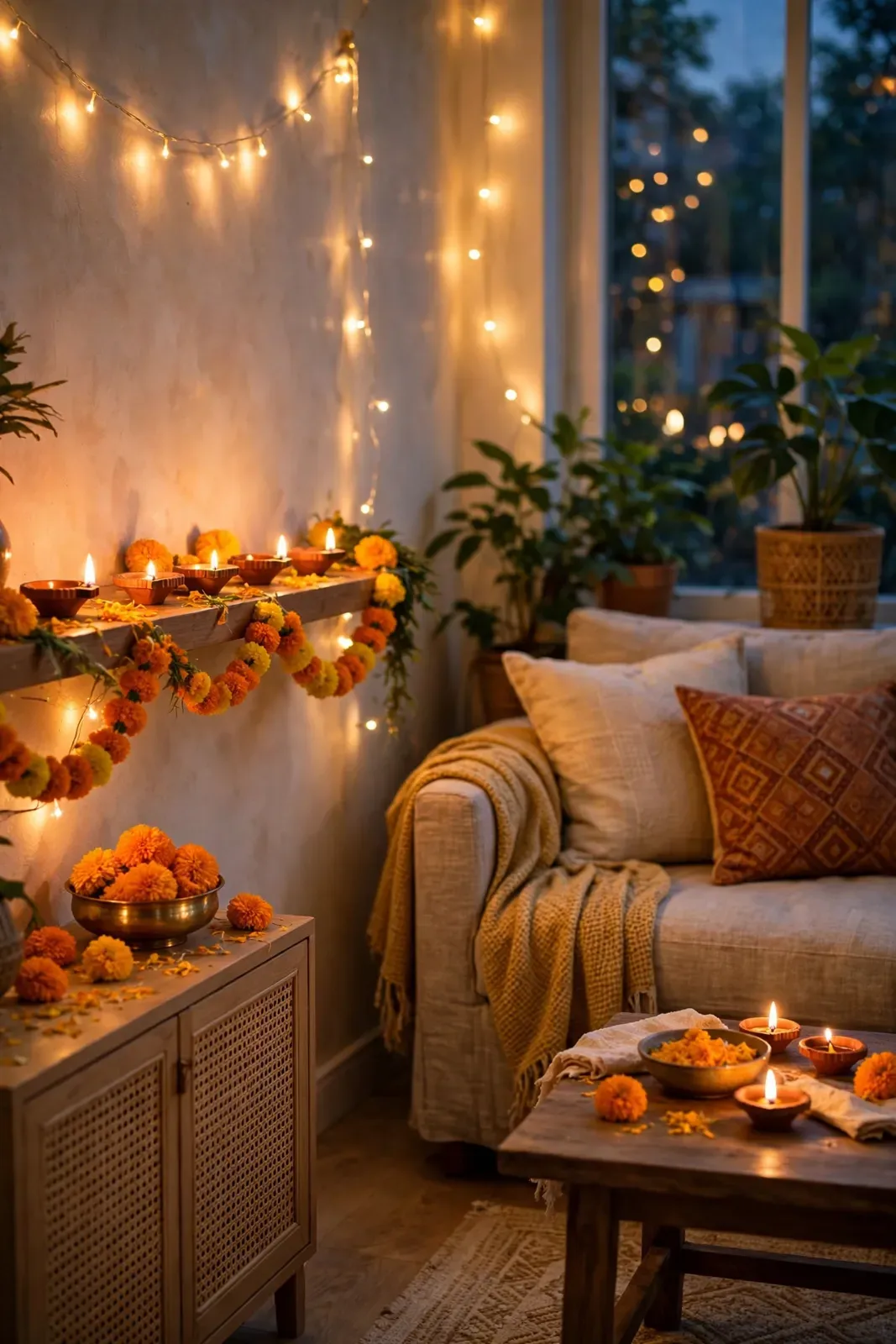
What Makes Festive Diwali Style Lights at Home Feel Right
The heart of the look is the diya: a small clay lamp holding oil and a cotton wick. During Diwali, the festival of lights, rows of diyas are lit at doors, windows and courtyards to welcome light over darkness, and that symbolism is why the lamps sit low and at the edges of rooms rather than in the centre. Fairy lights play the supporting role modern homes need: they give the same scattered sparkle in places where open flame is not safe — near curtains, on stairs, around children’s rooms. Good festive diwali style lights at home always start with that low, real flame.
Keep every bulb warm white, around the colour of candlelight. One cool white string among warm lights breaks the whole effect, because the eye reads it as office lighting. Buy all your strings in one order if you can, test them the week before, and keep one spare string; the night itself is the wrong time to discover a dead section. That single warm tone is what makes festive diwali style lights at home feel calm instead of cluttered.
Start at the Entrance: The Welcome Layer
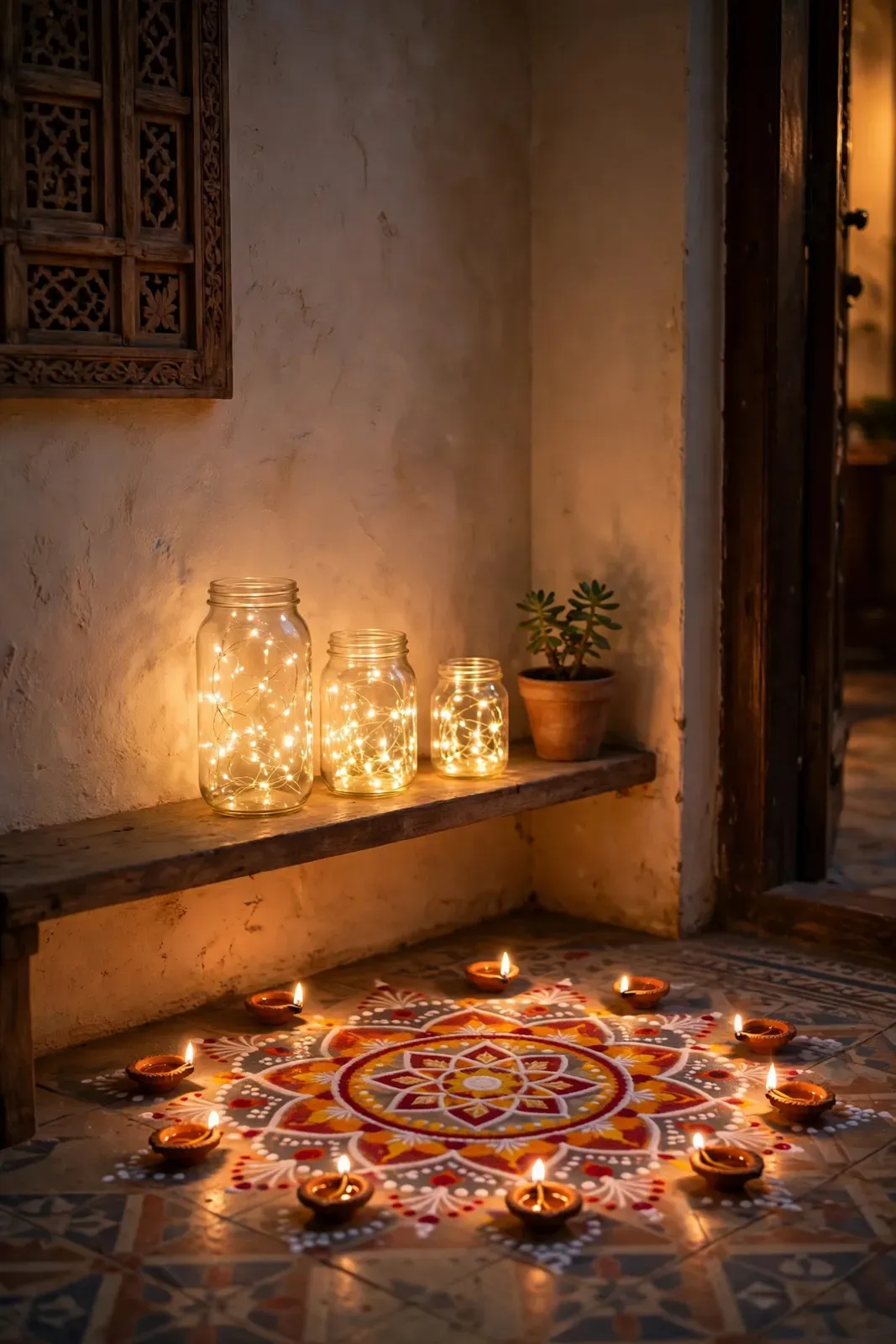
Guests should meet the celebration at the door. Place diyas in pairs flanking the entrance, raised on a small tray or a brass plate so the flames sit above floor level and away from passing feet. A diya lamp, traditionally made of baked clay, is cheap enough to use in numbers: a row of five along a windowsill or a cluster of seven on the entryway console gives the scattered, handmade rhythm that one big lamp cannot. At the door, festive diwali style lights at home set the tone for every room beyond it.
Add a string of fairy lights around the door frame or along the handrail, fixed with removable clips rather than tape on paint. Fresh marigold or rose petals scattered near the lamps finish the entrance, and a small rangoli or a simple petal circle on the floor gives the diyas a setting. Keep a lighter and spare wicks in a drawer by the door so relighting through the evening takes seconds. A welcoming entrance is the first test of festive diwali style lights at home.
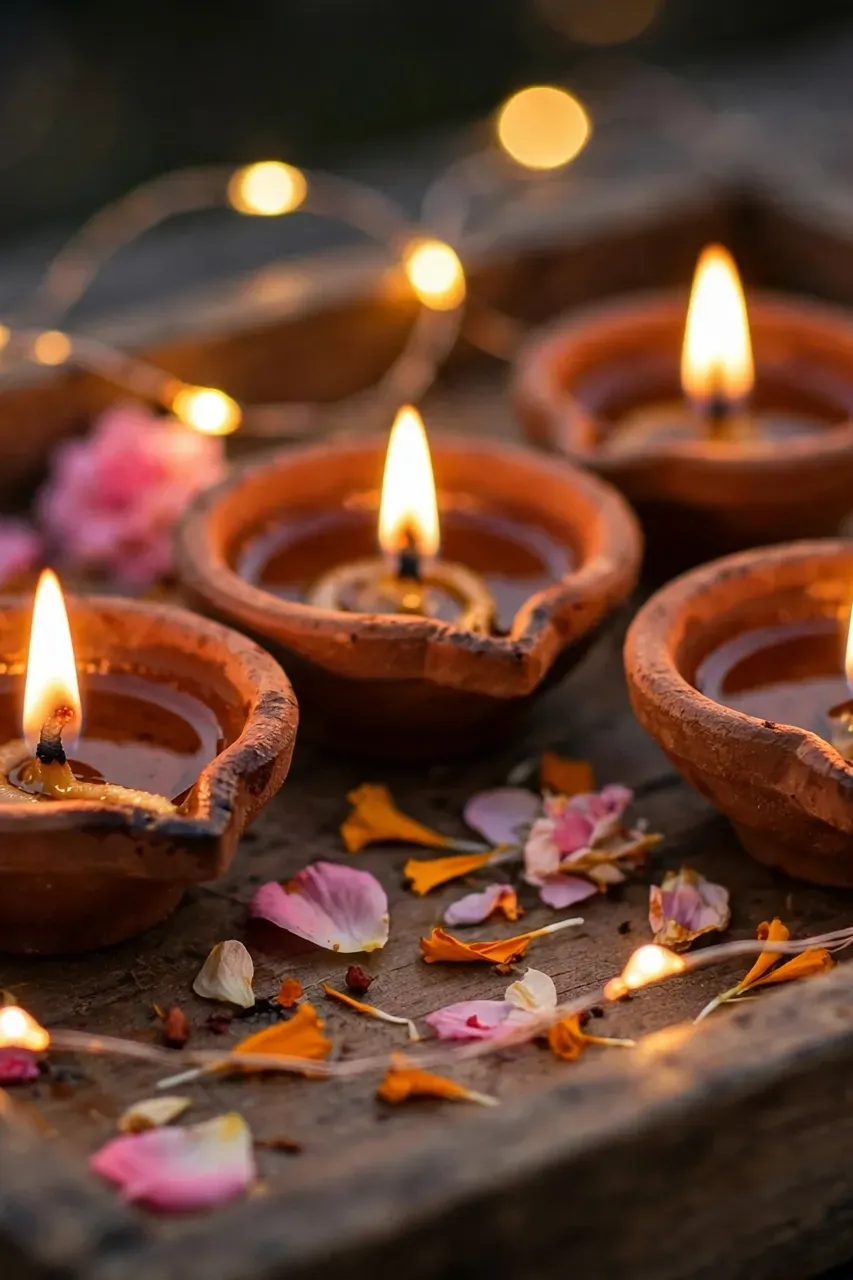
The Living Room: Layers at Three Heights
Work in three heights. Low: diyas and tea lights along the floor line, on the hearth, or in a shallow tray of water with floating petals on the coffee table. Middle: lanterns and jar lights on side tables, shelves and the TV console, where their glow reflects off nearby surfaces. High: fairy lights draped along curtain rods, bookcases and the top of a cabinet, outlining the room’s edges. Layering at three heights is the core technique behind festive diwali style lights at home.
Turn the main ceiling light off once the layers are lit and judge the room honestly. If you are squinting to read faces, add one soft shaded lamp in a corner rather than more strings. If corners still look black, that is where the next cluster goes. Our guide to small living room layout ideas can help you place the furniture so these lights sit in sight lines rather than behind sofas. Judged this way, festive diwali style lights at home look planned, not random.
Table, Kitchen and the Food Side of the Evening
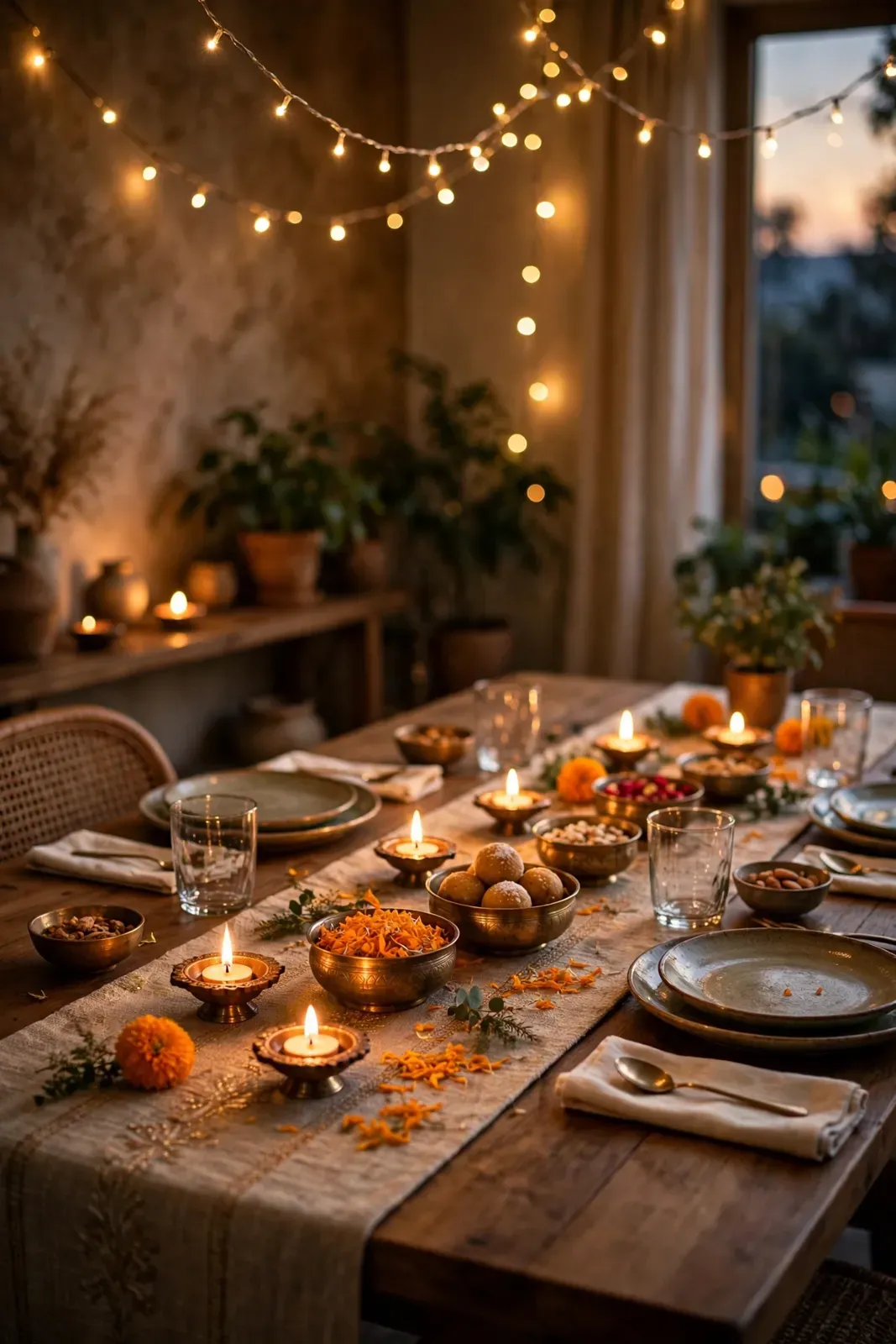
On the dining table, keep flames low and contained: tea lights in glass holders, a central tray of diyas on a heatproof plate, and nothing dangling over serving dishes. Fairy lights can run down the centre of the table inside a clear jar arrangement or along the edge of a sideboard, well away from steam and serving spoons. On the table, festive diwali style lights at home should glow, never compete with the food.
In the kitchen, skip open flame entirely and use battery fairy lights in jars on open shelves. Cooking produces enough heat and movement; the kitchen’s job on a festival night is to look warm through the doorway, not to host candles beside the stove. Even there, festive diwali style lights at home can glow safely through glass and jars.
Balcony, Windows and Stairs: The Outline Layer
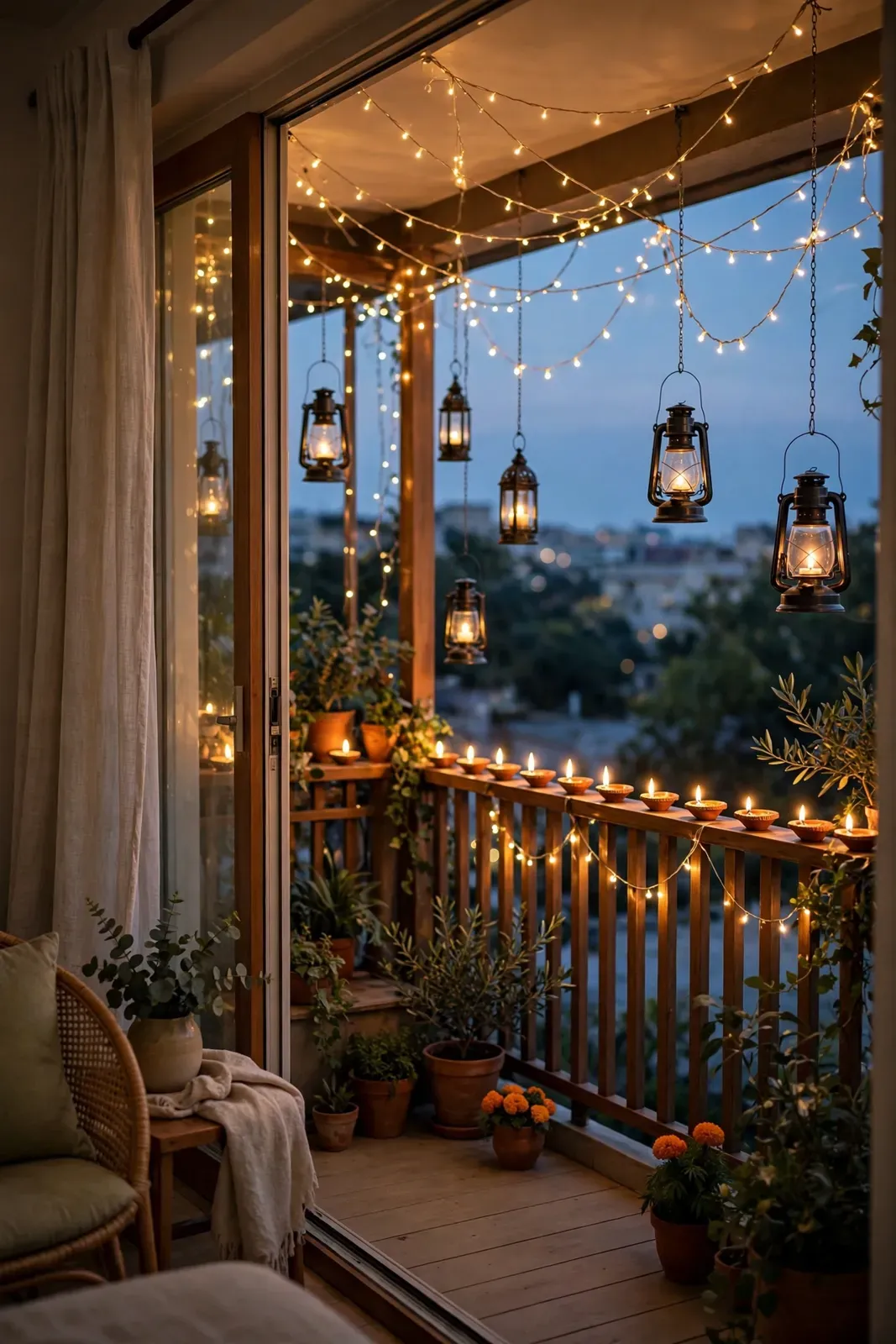
The outline layer is what neighbours see and what makes the home feel festive from the street. Run fairy lights along the balcony railing in loose swags rather than a tight straight line, and hang two or three lanterns at different heights in one corner instead of spacing singles evenly. Windows get a frame of lights or a sill of battery tea lights; stairs get a jar light on every third step, fixed so nothing can be kicked. Outside, festive diwali style lights at home become part of the street’s celebration too.
For outdoor strings, check the rating on the box. Indoor-only strings should stay inside the glass; balcony lights need an outdoor rating and a socket that is sheltered from rain. Bring clay diyas in at night rather than leaving oil lamps out in dew. Safe outdoor choices keep festive diwali style lights at home shining in any weather.
Your Setup Day: Step by Step
Step 1 — Test and untangle. Plug in every string, replace dead sections, charge or fit batteries in the jar lights, and soak diya wicks in oil so they light cleanly and burn steadily.
Step 2 — Hang the high layer first. Curtain rods, shelves and balcony rails are hardest to reach once furniture is dressed. Clip strings up while the room is still in daylight order.
Step 3 — Place the middle and low layers. Lanterns on tables, trays of diyas at the entrance and living room edges, jars on the stairs. Fill diyas but do not light them yet.
Step 4 — Light in order at dusk. Entrance first, then living room, then table. Photograph the rooms on your phone: a camera shows hot spots and dark gaps your eye forgives, and you can adjust before guests arrive. Work in that order and festive diwali style lights at home come together without a last-minute rush.
Budget Advice: Spend on Warmth, Not Quantity
Clay diyas are among the cheapest decorations in existence, and they carry the whole theme. Spend your real money on two or three good warm-white fairy strings with a steady, non-flashing setting — cheap strings flicker at a frequency some guests find tiring — and on glass holders that make tea lights safe anywhere. Petals, jars from the kitchen cupboard and brass plates you already own do the rest. Spent this way, festive diwali style lights at home cost less than most people expect.
Buy once, store well. Coil strings around a piece of cardboard, keep diyas wrapped in newspaper in one labelled box, and everything survives to next year. A festival box that takes ten minutes to unpack is the difference between decorating gladly and not bothering.
Safety and Common Mistakes
Open flame deserves plain rules. Never leave lit diyas unattended, keep them away from curtains, paper decorations and loose fabric, and set every lamp on a heatproof surface. Keep a small bowl of water or sand in rooms with many flames, and agree which adult checks the lamps before bed. Battery lights are the right choice for children’s rooms, stairs and anywhere near bedding. With those rules, festive diwali style lights at home stay beautiful and safe all evening.
The common decorating mistakes are easier: mixing cool and warm bulbs, using only one height of light so rooms look flat, overloading one socket with chained strings, and placing every light in the living room while the entrance and hallway stay dark. Spread the glow; the route through the home should feel as festive as the destination.
Frequently Asked Questions
How many diyas do I actually need?
For an average apartment, twenty to thirty diyas cover the entrance, living room edges and table with a few spares. Buy a handful extra: clay lamps are fragile, and one or two always crack in storage. Plan numbers early and festive diwali style lights at home will not run short on the night.
Can I get the look without any real flame?
Yes. Battery tea lights with a warm flicker setting, placed inside real clay diyas and glass holders, read as flame from a few steps away. Many families with toddlers or pets use this version for every room except a supervised entrance tray.
What colour fairy lights look best?
Warm white, every time. It matches candlelight and flatters skin, food and fabric. Coloured strings can work on a balcony for a playful note, but keep the indoor rooms warm and consistent. Consistency is why festive diwali style lights at home photograph so well.
How do I stop fairy lights looking messy?
Give them a line to follow — a rod, a shelf edge, a railing — and fix them at even intervals with clips. Loose swags are fine on a balcony; indoors, a defined line reads as decoration rather than clutter.
When should I set everything up?
Hang strings and place lamps the day before, then light and switch on at dusk on the day. Fresh petals go out last, an hour before guests, so they still look alive at dinner.
A festival home is not measured in how much light you bought, but in how evenly it glows. A flame at the door, sparkle along the shelves, jars on the stairs and a table lit low and warm — that is the whole recipe, and it works in a studio flat as happily as in a house. That even glow is the whole point of festive diwali style lights at home.