Table of Contents
Every home has one spot where the day gets dumped: shoes kicked off in a line, coats over the banister, bags on the floor, keys somewhere nobody can find at 8 a.m. Mudroom drop zone essentials are how you turn that dumping ground into a system — a small, deliberate landing strip at the door where everything you carry has a home, so the rest of the house stays calm. You do not need a purpose-built mudroom. One wall, one corner, even the stretch behind the front door can do the job if it is planned around how your household actually comes and goes.
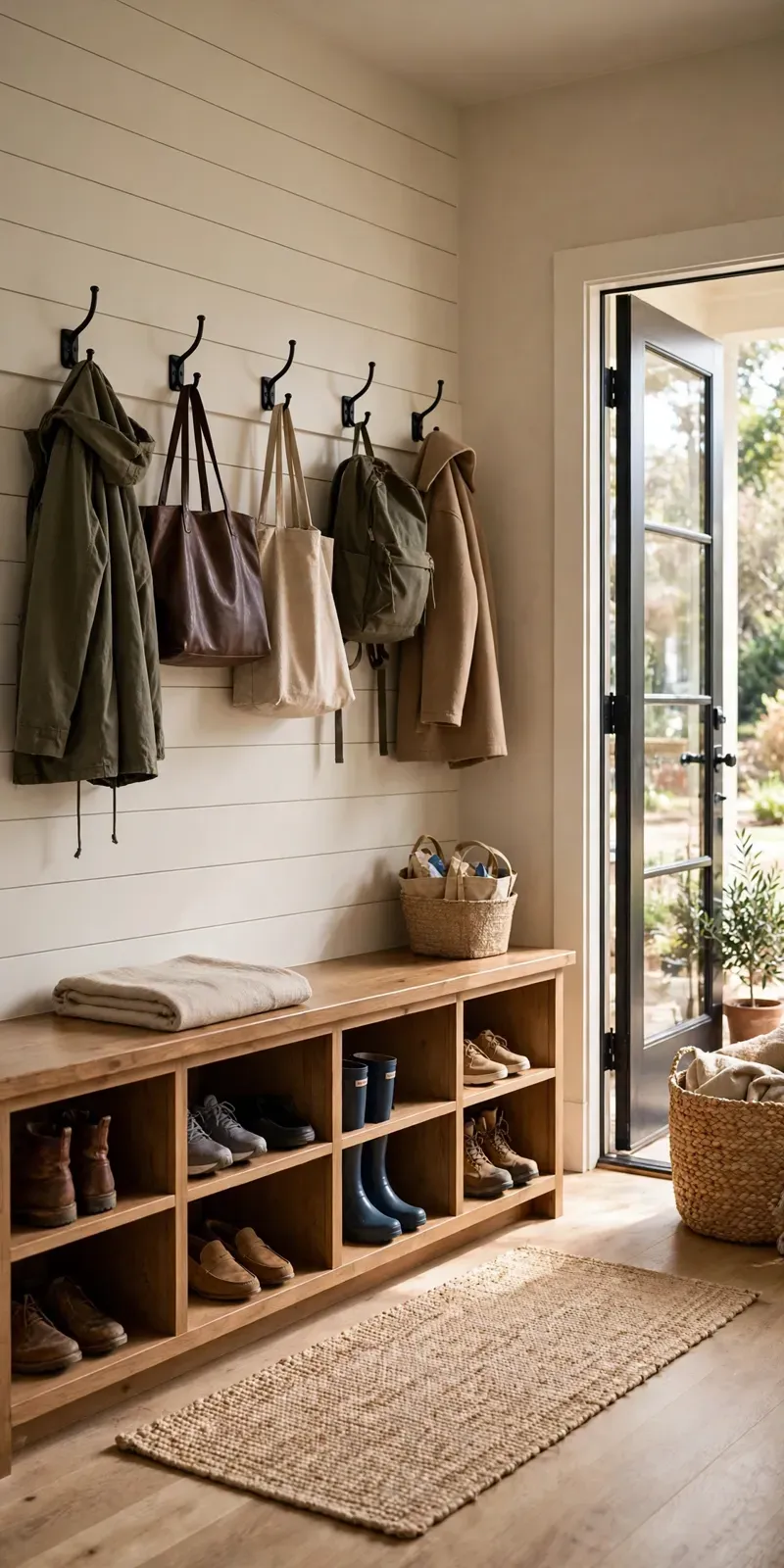
Mudroom Drop Zone Essentials: Start With the Traffic, Not the Furniture
Before buying anything, stand at your main door at the busiest moment of the day and watch what lands there. School bags, work boots, a dog lead, post, parcels, wet umbrellas — your list will be specific to your household, and it is the only list that matters. A drop zone designed for a generic family fails a real one: the cyclist needs a helmet hook at head height, the dog walker needs the lead and towels within arm’s reach of the door, and small children need everything at a height they can reach without climbing. That watching brief shapes every choice of mudroom drop zone essentials that follows.
Architecturally, this space is a mudroom or entryway, the transition zone between outdoors and indoors — and treating it as a transition explains its rules. Things should pause here, be sorted here, and mostly live here, rather than migrating room to room. Measure your wall honestly, note where the door swings, and leave a clear walking path of at least a metre; a beautiful drop zone that blocks the door is a daily irritation.
A Bench You Can Actually Sit On
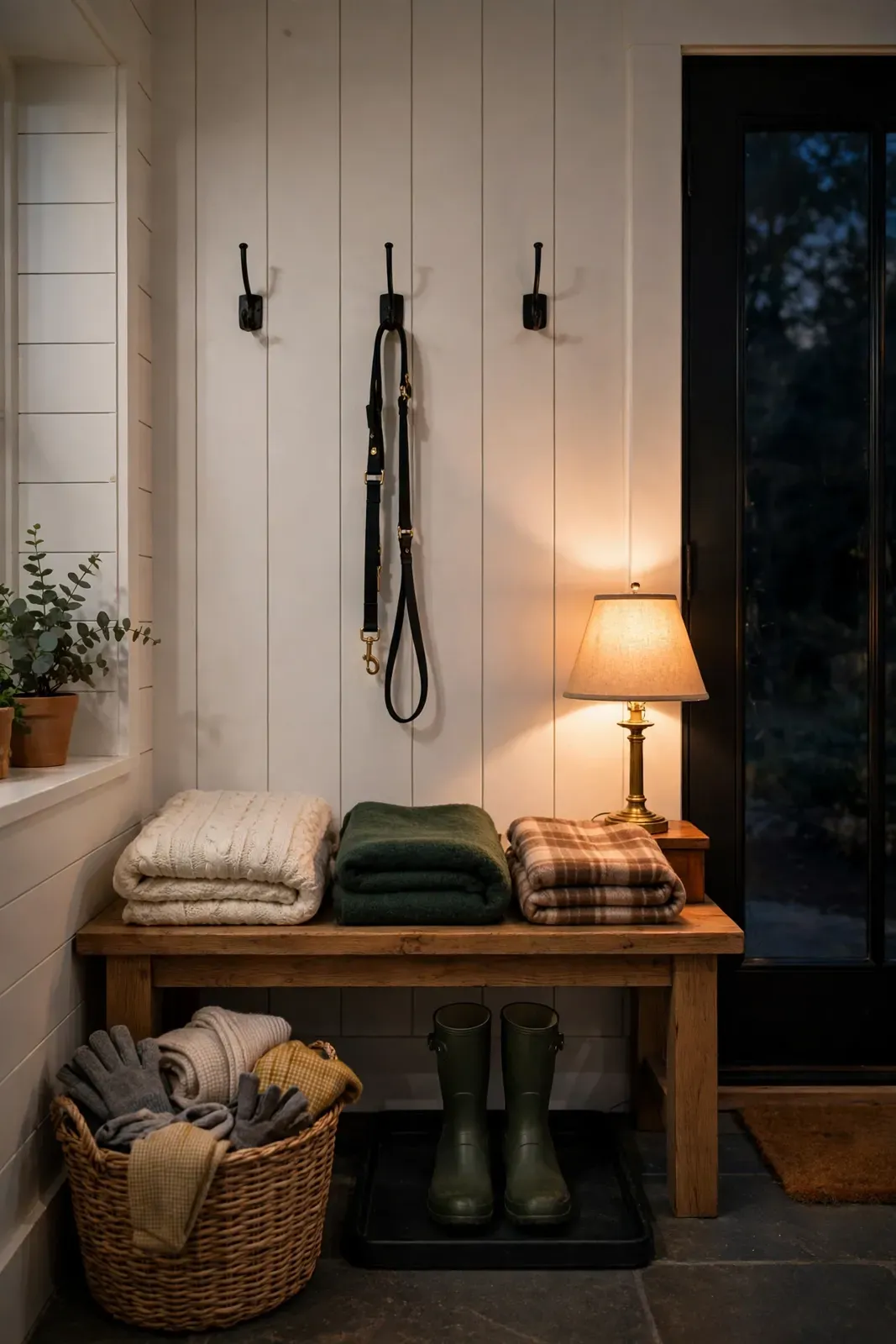
Of all the mudroom drop zone essentials, the bench is the anchor piece. Sitting down to pull boots on and off is what stops shoes travelling into the kitchen, and a bench with cubbies or a shelf underneath doubles as the shoe store. Aim for a seat height around 45 centimetres — comfortable for adults, manageable for children — and a depth that fits your biggest boots below. If space is tight, a sturdy wall-mounted folding seat or even a single solid stool gives the same function in a third of the floor area.
On top, keep the bench clear by default. One cushion or folded throw is plenty; the moment the bench becomes a surface for post and parcels, nobody can sit on it and the system collapses. A small tray at one end — and only there — is the permitted landing spot for things in transit. A clear bench is the sign that your mudroom drop zone essentials are working.
Hooks at Two Heights Beat a Coat Cupboard
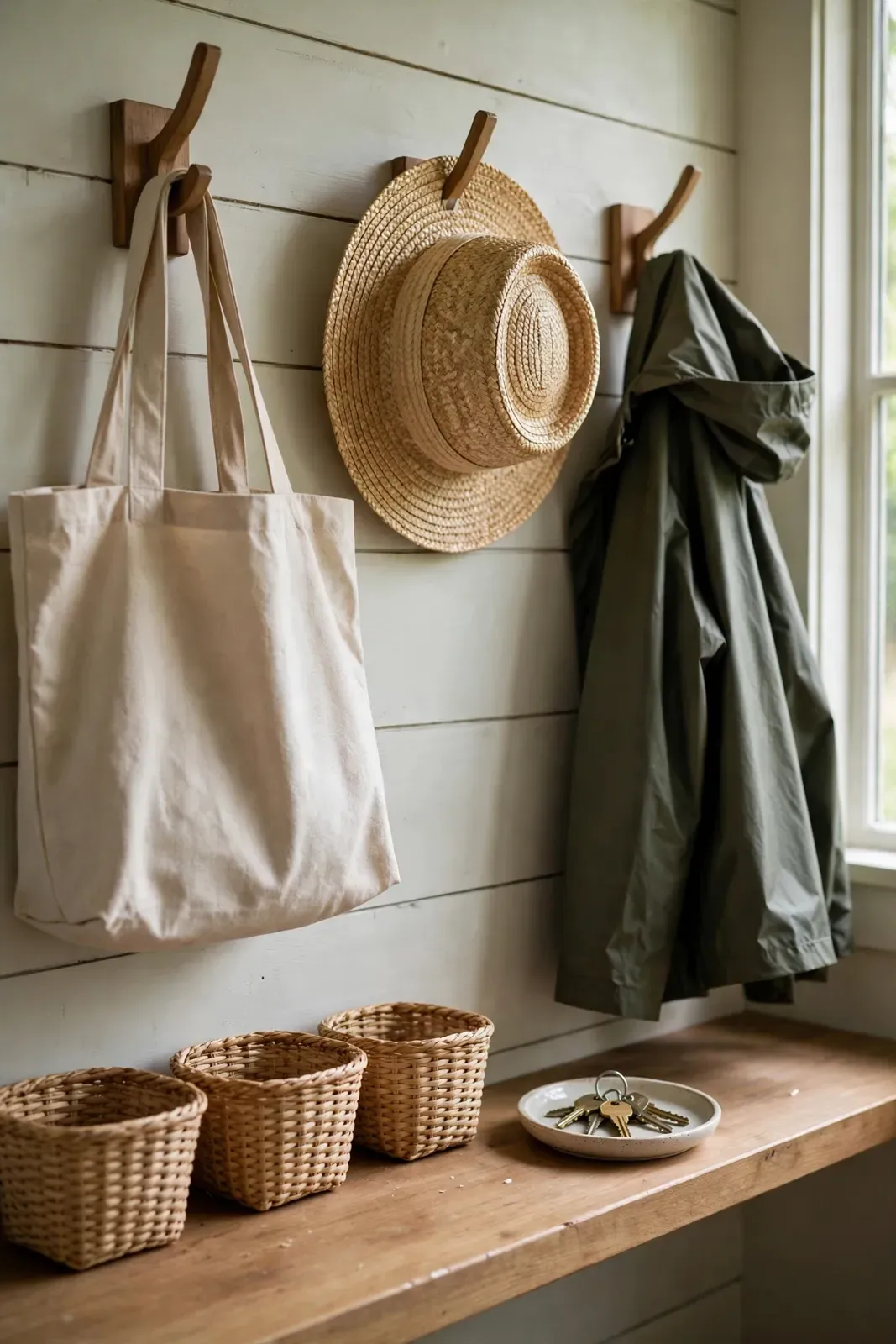
Among mudroom drop zone essentials, coats and bags are the volume problem, and hooks solve it better than a cupboard in most homes because a hook takes two seconds to use and a cupboard door takes just long enough to skip. Fit a row of sturdy double hooks at adult shoulder height for coats and bags, and a second, lower row for children, dog leads and the reusable shopping bags that otherwise live on the kitchen counter.
Space hooks generously — around 20 centimetres apart — so bulky winter coats are not crushed into a single heap. Give each person their own hook or pair, ideally in the same order every day; the routine, not the hardware, is what keeps a drop zone tidy. If you rent and cannot drill, a freestanding hall tree or an over-door rack gives the same two-height logic without a single hole, a point most mudroom design guides make for small and rented homes alike. That same order is what makes mudroom drop zone essentials hold together day after day.
Shoes: Contain Them Where They Come Off
With mudroom drop zone essentials, shoes should be stored at the exact point they are removed, or they will be stored everywhere. Cubbies under the bench suit families — one cubby per person, sized for their tallest boots — while a slim two-tier rack suits a narrow hall. A washable boot tray underneath catches the wet, muddy pairs that should never go straight onto a shelf, and in rainy months it is the single hardest-working item in the zone.
Keep only the current rotation here: two or three pairs per person, with the rest in bedroom storage. A drop zone that tries to hold every shoe the family owns becomes a shoe shop, and finding the right pair at school-run speed becomes impossible. That limit is central to mudroom drop zone essentials.
The Small Things: Keys, Post and the Daily Carry
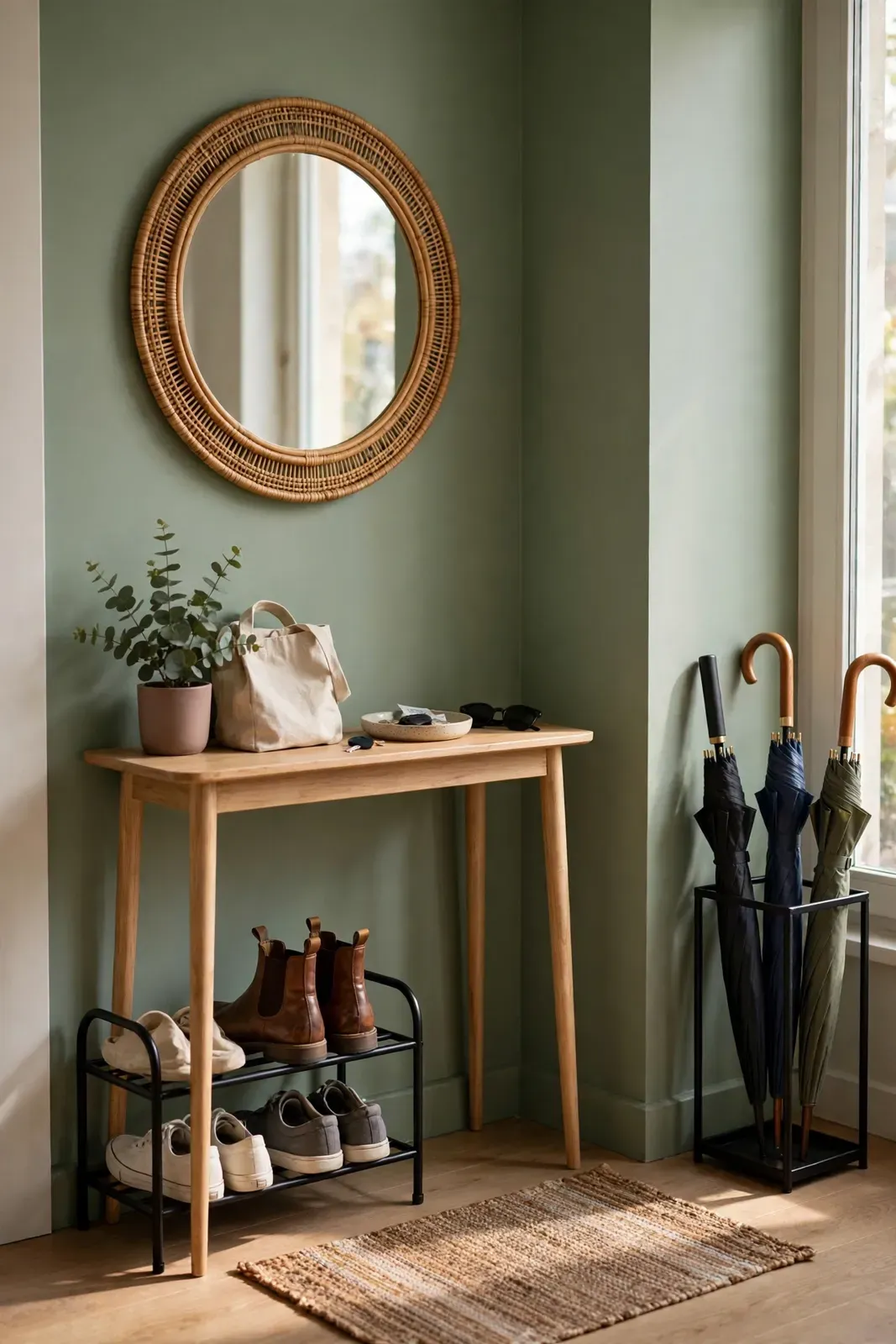
More morning stress comes from small lost things than from coats. Small things are where mudroom drop zone essentials earn their keep. Fix one — and only one — home for keys: a small dish, a magnetic strip, or a row of tiny hooks beside the door at adult height. Sunglasses, wallets and transit cards belong in the same small station, in a lidded basket or a drawer of the console if you have one, so the surface stays visually calm.
Post needs a vertical solution: a wall-mounted letter holder or a slim file box, emptied weekly. Flat surfaces collect paper horizontally and permanently; vertical holders force a sort. Add a tiny recycling pot or bag right there for envelopes and flyers, so half the post never enters the house at all. Post control belongs on every list of mudroom drop zone essentials.
Setting Up Your Drop Zone: Step by Step
Step 1 — Clear and clean. Remove everything from the entry area, clean the floor and wall, and only let things back in on purpose.
Step 2 — Zone the wall. Mark three bands: hooks high, bench or console in the middle, shoes low. This vertical order is what makes a small area hold so many mudroom drop zone essentials.
Step 3 — Install the anchors. Bench first, then hooks at two heights, then shoe storage under or beside the bench.
Step 4 — Assign places. One hook and one cubby per person, the key station, the post holder, the boot tray. Tell everyone the system the same day — unlabelled systems drift.
Step 5 — Live with it for a week, then adjust. Move the lead hook, add a basket, raise a shelf. A drop zone is finished when nobody thinks about it.
Budget Advice: Spend on Hooks and the Bench, Save on Baskets
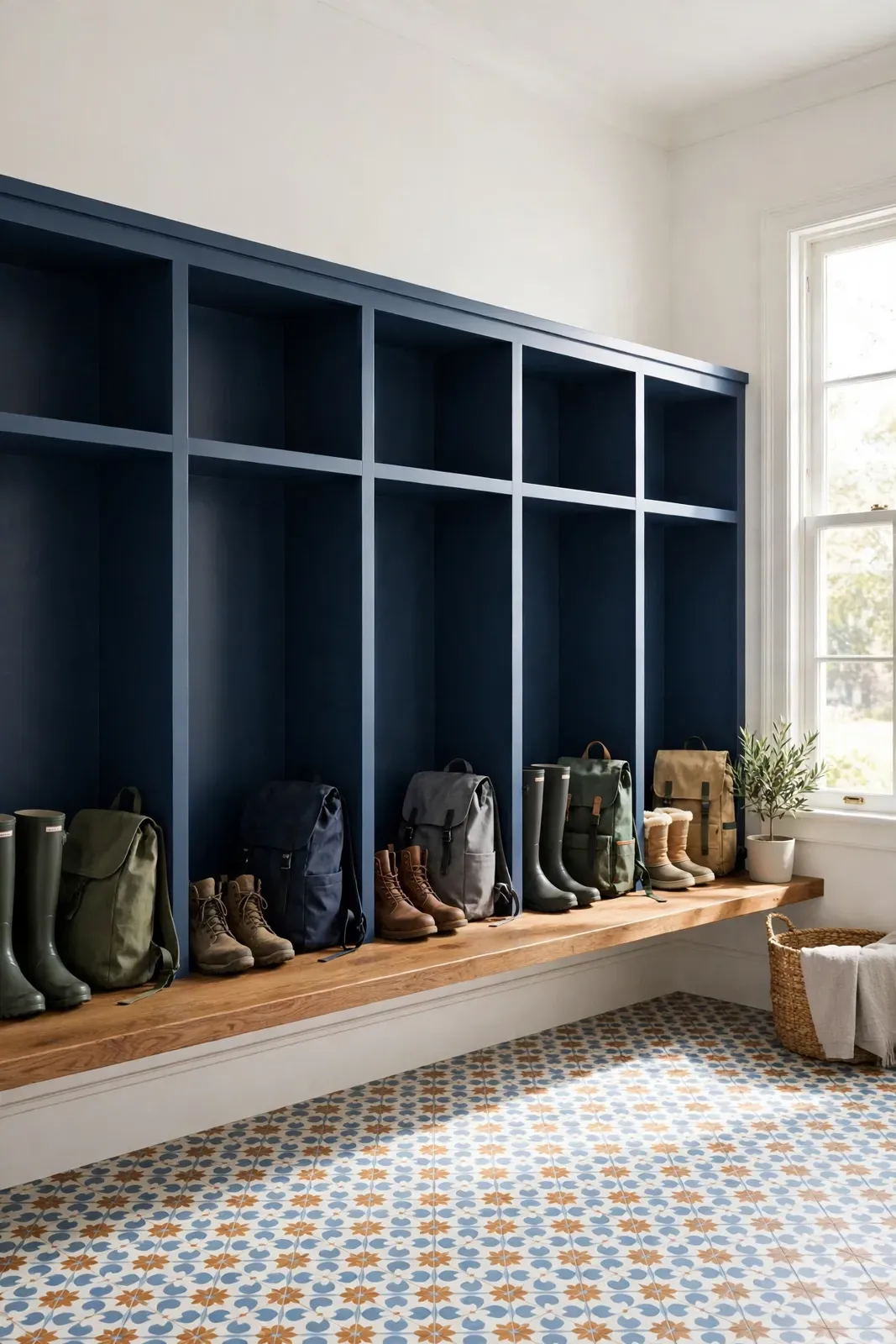
The money hierarchy is clear: strong hooks that will not pull out under a wet coat, and a bench solid enough to sit on daily, are worth buying well. Baskets, trays and dishes can come from charity shops and market stalls — they only need to match each other roughly and fit their shelf. A washable runner rug in a dark pattern is a smart mid-price buy; it hides a week of footprints and saves the floor beneath. The same spend-on-the-anchor logic shapes our guide to small living room layout ideas, where the seating is the anchor piece. In short, spend first on the mudroom drop zone essentials you touch every day.
For a first setup in a small flat, a realistic budget covers a second-hand bench, a row of hooks, a boot tray and two baskets. Add the mirror, lamp and nicer pieces later, once the traffic pattern has proved itself. Those extras sit outside the core mudroom drop zone essentials.
Common Drop Zone Mistakes to Avoid
The common failures of mudroom drop zone essentials are easy to spot. First, building for guests instead of for your own daily route — the drop zone belongs at the door you actually use, which is often the back or side door. Second, hooks placed too high for children, guaranteeing coats on the floor. Third, no wet-weather plan: without a boot tray and a mat, the first rainy week undoes the whole system. Fourth, letting the zone creep — sports kit, parcel returns and seasonal clutter need their own homes elsewhere, or the landing strip becomes a storage unit with a door in it.
Frequently Asked Questions
How do I make a drop zone without a mudroom?
Use one wall of your entryway or the corner nearest the door: a slim bench or stool, a row of hooks, a two-tier shoe rack and a key dish. With mudroom drop zone essentials, the system matters more than the room — even a metre of wall can hold a full daily routine.
How many hooks does a family drop zone need?
Plan on two hooks per person — one for a coat, one for a bag — plus two spare hooks for guests and seasonal items. A lower second row for children roughly doubles how much of the system they can use themselves.
What floor protection works best in a drop zone?
A washable runner or mat inside the door, plus a boot tray for wet footwear. Choose dark, patterned, low-pile materials that hide dirt between washes and can be shaken or hosed down outside.
How do I keep a drop zone from looking messy?
Limit what lives there to the current daily rotation, give every item a fixed place, and use matching baskets to hide the small visual noise. A five-minute reset once a week — back to the assigned places — keeps it working.
Can renters build a drop zone without drilling?
Yes: a freestanding hall tree, an over-door hook rack, a bench with cubbies and heavy-duty removable strips for light items like key hooks and post holders give a complete system that leaves no marks.
A good drop zone is invisible when it works: you walk in, everything lands in its place almost without thought, and the rest of the home stays clear. Start with these mudroom drop zone essentials — the bench, the hooks and the shoe tray — assign each person their spot, and the busiest metre of your house becomes the calmest.