Table of Contents
If you sew at home, you know the problem. A few pretty cottons become a pile, the pile becomes a cupboard you dread opening, and the fabric you bought for a dress ends up forgotten under three other projects. Good sewing corner fabric storage fixes that in a simple way: every material stays visible, so you remember what you own, but it is folded, sorted and contained, so the corner still looks calm. You do not need a separate craft room. A table by a window, one wall of shelves and a clear system are enough.
The aim is not a showroom. It is a working corner where you can scan your shelves in ten seconds and pull out exactly the cloth you need. When fabric is hidden in opaque bags, you buy duplicates and waste time digging. When it is left out with no order, it fades, gathers dust and makes the room feel messy. The middle path — visible but tidy — is what this guide shows you, step by step.

Why sewing corner fabric storage works best when you can see it
Sewing is a hands-on craft where the material itself sparks the idea. You see a soft green floral and picture a summer top. You feel a heavy linen and think of curtains or a tote. If those pieces are buried, the ideas never happen. Visible storage keeps your stash working for you. Open shelves, clear boxes and shallow baskets let colour and pattern do the reminding, which helps if you sew in short bursts between work and family life.
Visibility also protects your money. Most home sewers have bought the same plain white cotton twice because the first cut was hidden at the bottom of a bin. A quick visual check before you shop prevents that. It helps with care too: you can spot a stack that is leaning, a piece that is creasing badly, or fabric sitting in harsh sun before real damage is done. That quick check is at the heart of sewing corner fabric storage: see it, sort it, and put it back in its place.
Choosing the right sewing corner fabric storage for your space
Start with what you have: how much fabric, in what sizes, and how much wall you can use. Large cuts for dresses, shalwar kameez and furnishings need deep shelves or wide cubbies where they can lie flat. Fat quarters, remnants and quilting cottons are happier in shallow trays, clear boxes or upright file-style holders. Bulky wadding, interfacing rolls and patterns need a tall basket or a top shelf where light pieces will not crush good cloth below. Matching the container to the cut is the first rule of sewing corner fabric storage that actually works day to day.
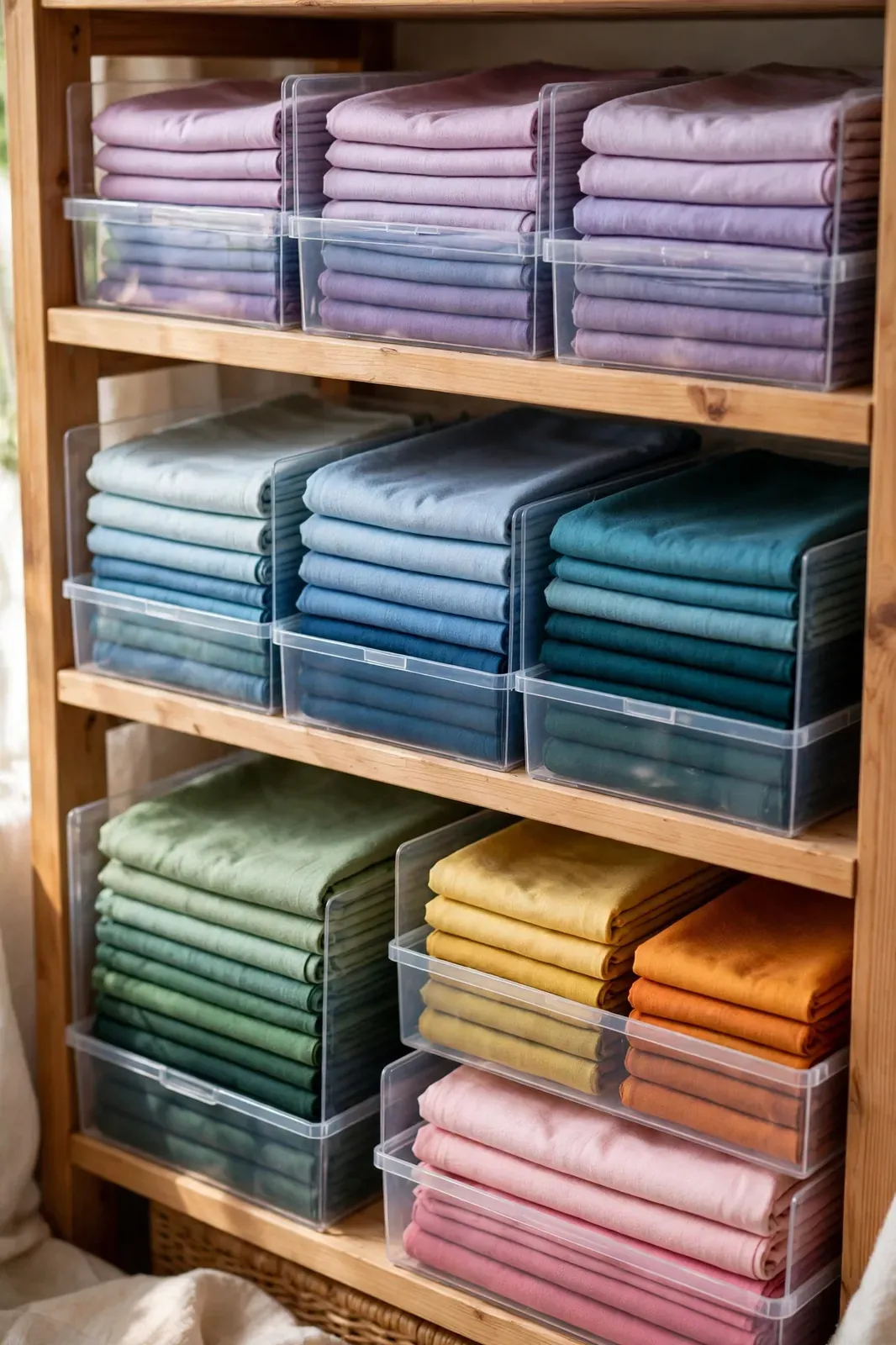
Open shelving is the backbone for most corners because nothing hides behind a door. Two or three wooden shelves above or beside your table hold a surprising amount if every stack is folded to the same width. Clear lidded boxes suit smaller pieces and dusty homes — you still see the colour, but the fabric stays clean. Woven baskets soften the look in a living room corner, though they work best for rolled fabric and project kits where you already know what is inside. If the corner is part of your sitting room, our guide to small living room layout ideas shows how to zone a shared room so a work corner feels planned, not added on.
Measure before you buy or build. A shelf 30 to 35 centimetres deep suits most folded fabric. Leave height for a stack of six to eight pieces; more than that and the bottom pieces are hard to pull out. If you rent, a small bookcase, a rolling trolley and a tension rod for larger cuts can do the same job. The best sewing corner fabric storage is not the most expensive system. It is the one that fits your wall, your stash and the way you reach for things.
Sort by colour, type and project — a system that sticks
Sorting is where visible becomes tidy. Pick one main order and stick to it. Colour is easiest for most people because you think in colour when you plan a garment: whites and creams together, blues together, florals together, warm rusts and mustards together. Within each colour, keep types apart — light cottons should not be squashed under heavy denim. If you sew by project, add one shallow tray per current project holding the main fabric, lining, thread and pattern together. When sewing corner fabric storage is sorted this way, you can find a colour in seconds instead of unfolding half the shelf.
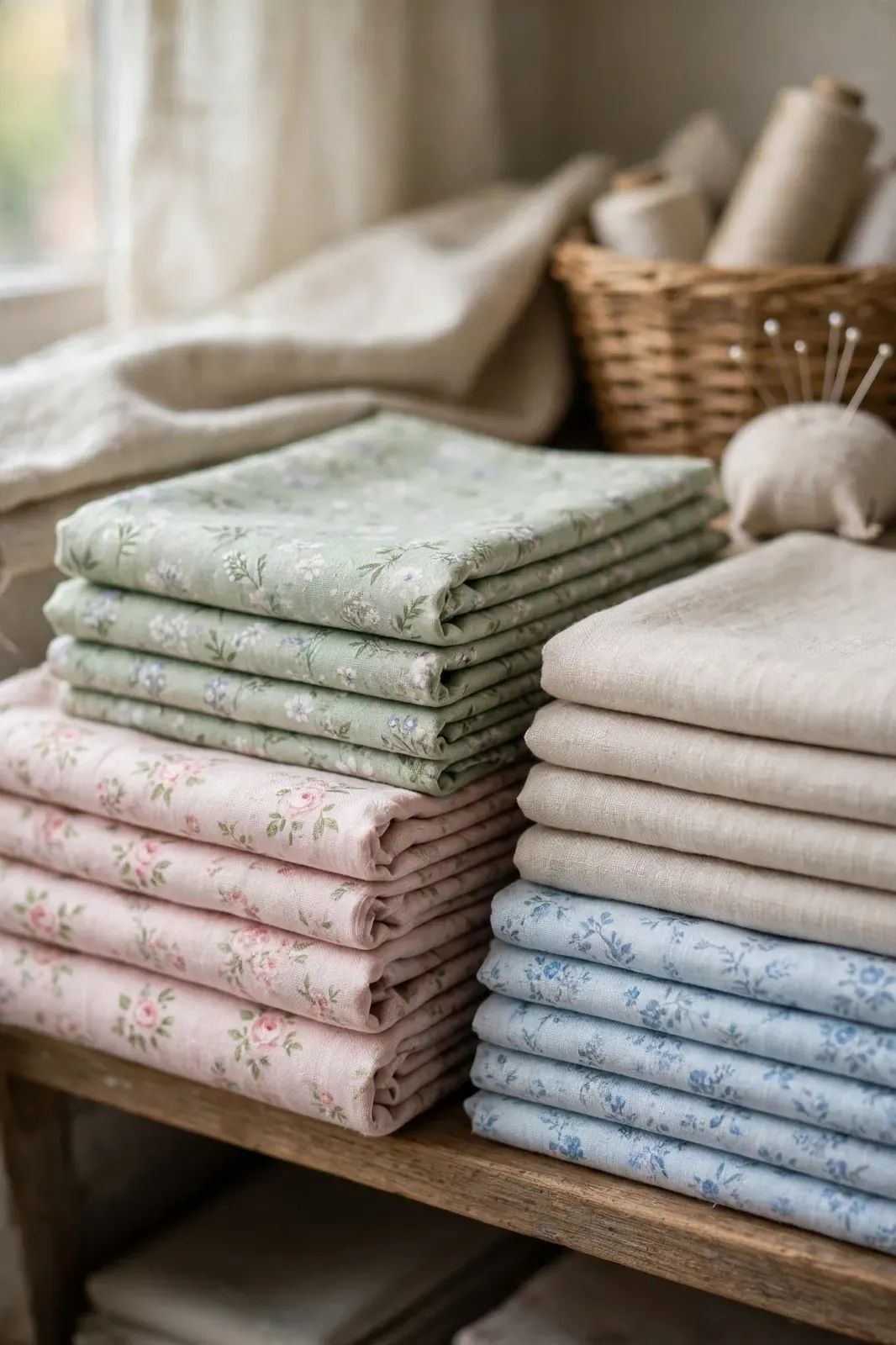
Folding matters more than people expect. Fold every piece to the same width as your shelf or box, with the folded edge facing out. That gives you clean, book-like rows, and pulling one piece out does not drag three others with it. Roll very small cuts and stand them upright in a basket so the ends show. Understanding different textile types and how fabrics behave also helps, because you naturally start grouping by weight and care needs.
Step-by-step: set up your sewing corner fabric storage in one afternoon
You can reset a messy corner in one afternoon if you work in order. This one-afternoon reset works for almost any sewing corner fabric storage setup, large or small:
- Empty everything. Take all fabric off the shelves and out of bags, and wipe the shelves down. Seeing the full stash in one place is the only honest way to sort it.
- Make four piles. Use soon, keep for later, small scraps worth saving, and let go. Stained, tiny or unloved pieces can go to a friend, a school or a charity craft group.
- Sort the keepers. Group by colour first, then by type inside each colour. Fold everything to one consistent width and roll the small pieces.
- Set up the shelves. Everyday fabrics go at hand level, heavy or rarely used pieces go low, and light bulky items go high. Leave one small space empty for the next project.
- Add project trays and tools. Give your current one or two projects a tray each near the machine. Keep scissors, pins and threads in a small caddy on the table, not mixed with fabric.
- Check the light. Your sewing machine needs good light, but stored fabric does not need direct sun. Add a light curtain or move delicate colours if a shelf bakes all day.
- Do a final scan. Can you see every colour group? Can you pull a piece out with one hand? Is the table clear enough to cut on? If yes, you are done.

Budget sewing corner fabric storage ideas and what is worth buying first
You do not need to spend much, and spending in the wrong order is common. Start free: reuse a bookcase, use clean shoe boxes for small cuts, and use jars for buttons and threads. Cardboard magazine files cost very little and are perfect for fat quarters and patterns. A second-hand rolling kitchen trolley makes excellent mobile storage for a corner that must pack away at night. Free and low-cost sewing corner fabric storage often works better than a rushed big spend, because you learn what you really need first.
If you buy one thing, buy consistent clear boxes for the fabrics you use most, sized to fit your shelf exactly. Matching boxes stack without wasted gaps and keep everything visible. The second worthwhile buy is sturdy shelving — even simple brackets and boards — because fabric is heavy and sagging shelves make stacks slide. Buy pretty baskets last, once the main system works. That order keeps sewing corner fabric storage useful from day one, not just pretty in a photo.
Common mistakes to avoid
The biggest mistake is storing fabric in black bags, suitcases or deep opaque bins “for now”. Out of sight becomes out of mind, and fabric left tight in plastic in a warm room can come out smelling stale. Stacking too high is next: a tower of fifteen pieces looks tidy in a photo and collapses the first time you need the third one down. Keep stacks modest and leave breathing room. Good sewing corner fabric storage should never hide fabric away where you forget it.
Mixing clean fabric with unwashed new fabric, loose scraps and finished clothes creates another mess. Give scraps their own small basket and be honest about them — if a piece is smaller than your hand and you have kept it for a year, it will probably not be used. Avoid direct sunlight as well. It is wonderful for sewing and hard on colour; deep blues, reds and prints fade unevenly where the fold catches the light.
Finally, do not choose a complicated system you will not maintain. If putting a piece back takes more than a few seconds, it will end up on the table. Simple colour groups, consistent folding and one project tray will survive busy weeks. A perfect system that collapses is worse than a simple one that lasts. Keep sewing corner fabric storage simple enough to reset in minutes, and it will stay tidy even in busy weeks.

Keeping your sewing corner fabric storage tidy week after week
A tidy corner is maintained in small moments, not big clean-ups. When you finish cutting, fold the leftover piece straight away and return it to its colour group. When a project ends, empty its tray completely. Once a month, spend ten minutes refolding any leaning stack and moving fabric you have not touched in a year on to someone who will use it. And if your shelves are full, let a new fabric coming in mean an old one is used, gifted or moved on. That gentle one-in, one-out habit stops any system from being overwhelmed. Ten quiet minutes spent on sewing corner fabric storage once a month is enough to stop clutter building up again.
Frequently asked questions
How do I store fabric if I have no spare room?
Use one wall or alcove. A narrow bookcase, two shelves above a folding table, or a trolley that rolls into a cupboard can hold a useful stash. The same rules apply: visible, folded to one width, sorted by colour, with the table kept clear for work. Small-space sewing corner fabric storage follows the same visible-but-tidy rules, just on a smaller scale.
Should fabric be stored in plastic boxes?
Clear boxes are fine for most cottons and synthetics, especially where dust or damp is a problem, as long as fabric goes in clean and dry. For delicate or old fabrics, a breathable cotton bag or an open shelf in a dry room is safer.
How can I stop fabric fading on open shelves?
Keep shelves out of direct all-day sun, turn stacks occasionally, and put deep colours and favourite prints on the shadier side. A light curtain across a sunny window protects fabric while still giving you good sewing light. That simple habit keeps sewing corner fabric storage looking good without hiding fabric behind doors.
What should I do with small scraps?
Keep one small basket only. Save scraps big enough for pockets, linings, patchwork or children’s clothes, and let the rest go regularly. If the basket overflows, make a scrap project or pass them on — do not buy a second basket.
How often should I reorganise my sewing corner?
A light tidy after each project and a ten-minute refold once a month is enough for most people. Do a full re-sort once or twice a year, or if your sewing changes from dressmaking to quilting, but keep the daily system the same.
A good sewing corner does not ask for more space or more stuff. It asks for a clear view of what you already have and a place for every piece to go back to. Set up your shelves so the colour greets you, keep the stacks low and even, and let the table stay ready for work. You will spend less time searching, less money on duplicates, and more of your sewing time actually sewing — which is the whole point of keeping the fabric where you can see it. That is the promise of sewing corner fabric storage done well: visible, tidy and ready to use.