Table of Contents
Every game-loving home knows the same small chaos. One box lives on top of the wardrobe, two are wedged behind the sofa, and the game everyone wants is at the bottom of a leaning pile, its lid slowly bending under the weight. A good board game storage cupboard ends that hunt. It gives every box a fixed home, keeps lids flat and corners intact, and turns choosing a game into a two-minute pleasure instead of a ten-minute dig, all behind closed doors so the room still looks calm when guests arrive.
The trick is not simply buying a cupboard and filling it. Boxes come in awkward sizes, some games are played weekly and others twice a year, and children need to reach their favourites safely. This guide shows a system that works in real homes: measure first, sort honestly, stack with intention, and label so anyone can find a game on a busy Friday night. A board game storage cupboard planned this way becomes part of the room, not a problem in it.
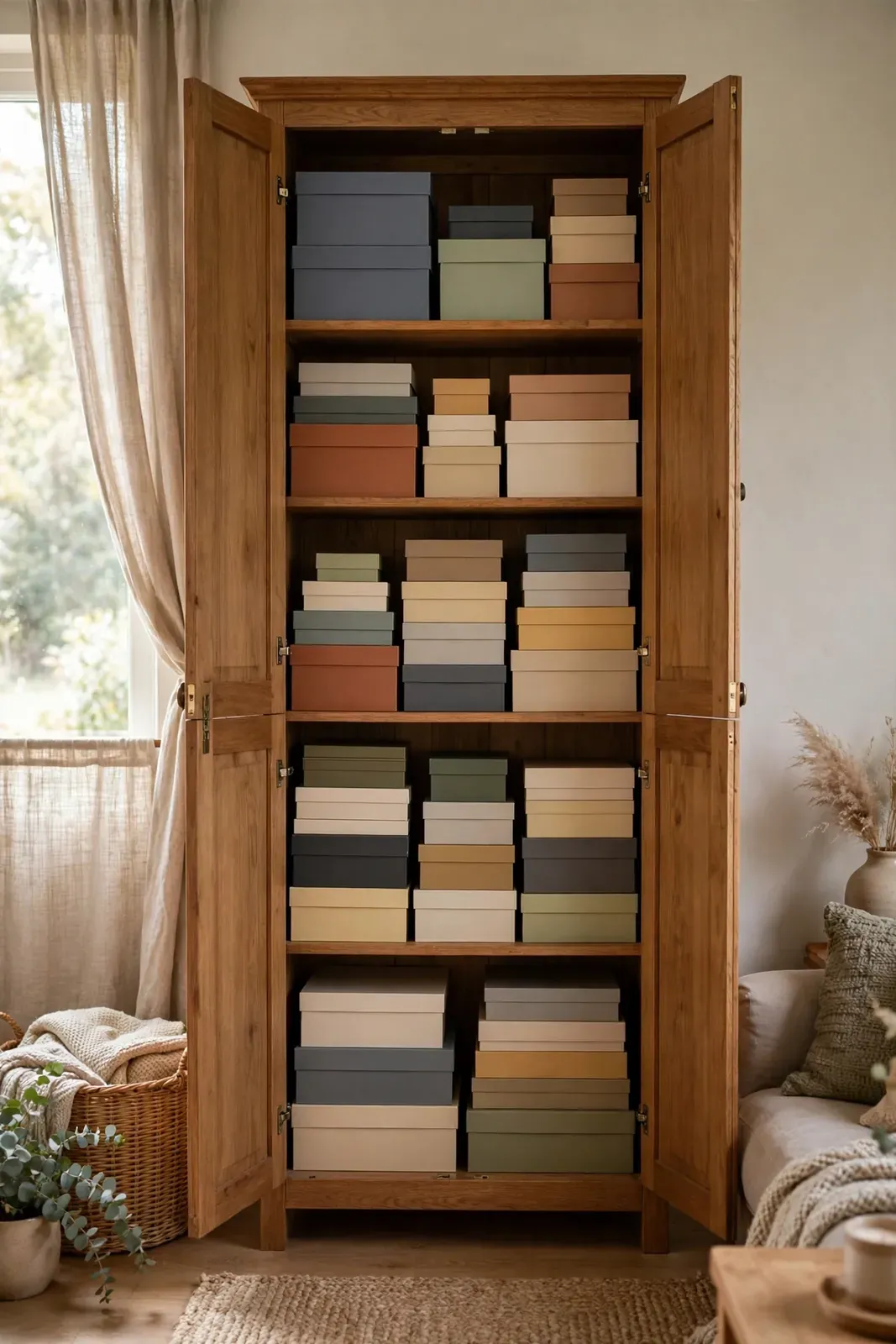
Why a board game storage cupboard works better than open shelves
Open shelves look lovely in photographs, but game boxes fade in sunlight, gather dust, and quickly look untidy because no two publishers use the same box size or colour. A cupboard solves all three problems at once. Doors block light and dust, hide the visual jumble, and let you use every inch of depth without worrying how the collection looks from the sofa. That is why a board game storage cupboard earns its floor space in a busy home. A well-chosen board game storage cupboard also keeps the room looking calm between games.
There is history on your side. The way the humble cupboard evolved from an open display table into enclosed household storage is exactly the journey game collections need: from showing things off to keeping them safe, ordered and close at hand.
Enclosed storage also protects boxes from toddlers, pets and spilled drinks in a way an open bookcase never will. And when there is one obvious place for games, they stop migrating around the house. After a game, the box goes back to its shelf, keeping pieces, boards and rulebooks together.
Choosing the right board game storage cupboard for your space
Start with your biggest boxes, not the furniture. Measure the two or three largest games you own and write the numbers down. Many family games are roughly square and surprisingly deep, so look for shelves at least 32 to 35 centimetres deep if you can. Adjustable shelves matter more than fancy finishes, because one shelf needs room for tall stacks while the next may only hold slim card games. Measure first, and the board game storage cupboard you choose will fit the collection you actually own.
Think about where it will live. A hallway cupboard suits homes where games are played at the dining table, while a living room piece keeps everything beside the players. Check that doors can open fully without hitting a sofa or radiator, and leave floor space in front so someone can kneel and slide a box out comfortably. In small flats, a narrow, tall cupboard uses vertical space well; in a family room, a low, wide one can double as a sideboard.
Choose solid wood or good plywood if you can, since a full shelf of games weighs far more than a shelf of paperbacks, and respect shelf weight limits on flat-pack pieces. If the cupboard will live in the sitting room, these small living room layout ideas help the rest of the room work around it beautifully.
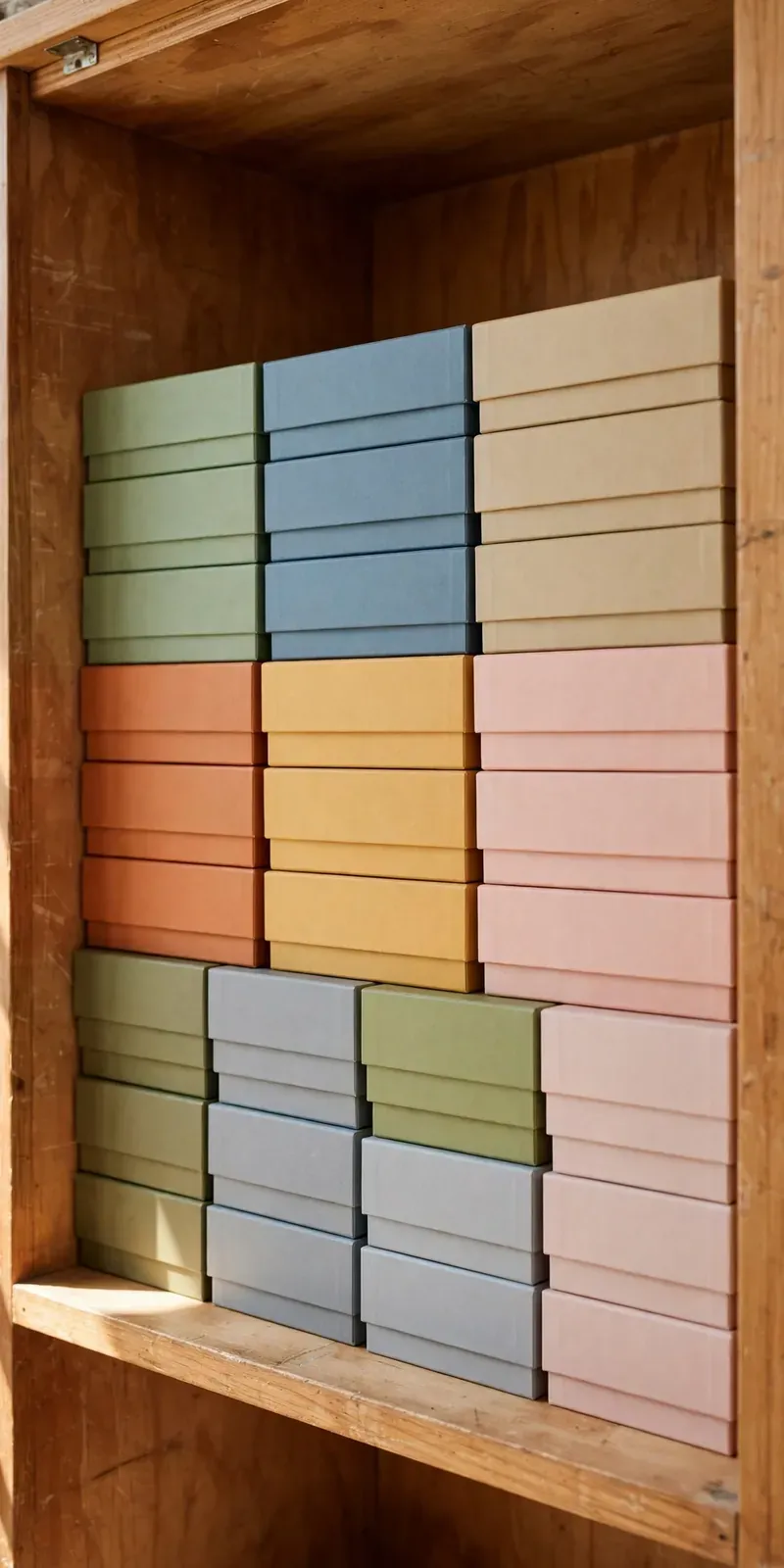
Step by step: sorting and filling your cupboard
Set aside about an hour and work through these steps in order. This is where a board game storage cupboard starts to earn its keep.
- Empty everything out. Gather every game onto one table. You cannot sort what you cannot see, and most families find duplicates and forgotten games.
- Check each box. Confirm the board, pieces and rules are inside, secure loose parts in a small resealable bag, and repair torn corners with clear tape.
- Sort into honest groups. Make piles for family favourites, two-player games, party games, children’s games, long strategy games and puzzles, based on how often each is really played.
- Decide what leaves. Games nobody has touched in two years can be donated, gifted or sold. A cupboard only 80 percent full is far easier to use than one crammed to the doors.
- Assign shelf zones. Most-played games go at waist to eye level, children’s games low where small hands can reach, and heavy, rarely used games on the bottom shelf.
- Stack, label and leave breathing room. Fill each zone using the rules below, add labels, and stop before shelves feel tight, so a lid can lift without disturbing its neighbours.
The long history and huge variety of board games explains why collections are so mixed, from tiny card boxes to wide boards. Sorting by how a game is used, rather than forcing every box into one rigid grid, respects that variety instead of fighting it. Sorted this way, a board game storage cupboard works as a system, not just a store.
Stacking boxes so they stay stacked and findable
Flat stacking is the safest default. Stack largest at the bottom and smallest on top, keep edges aligned, and limit each pile to four or five boxes so the bottom lid is not carrying more than it should. Aligned edges are not just neatness: overhanging boxes put pressure on corners and lids, and crushed corners make a much-loved game look tired long before its time. A tidy board game storage cupboard makes every pile quick to scan.
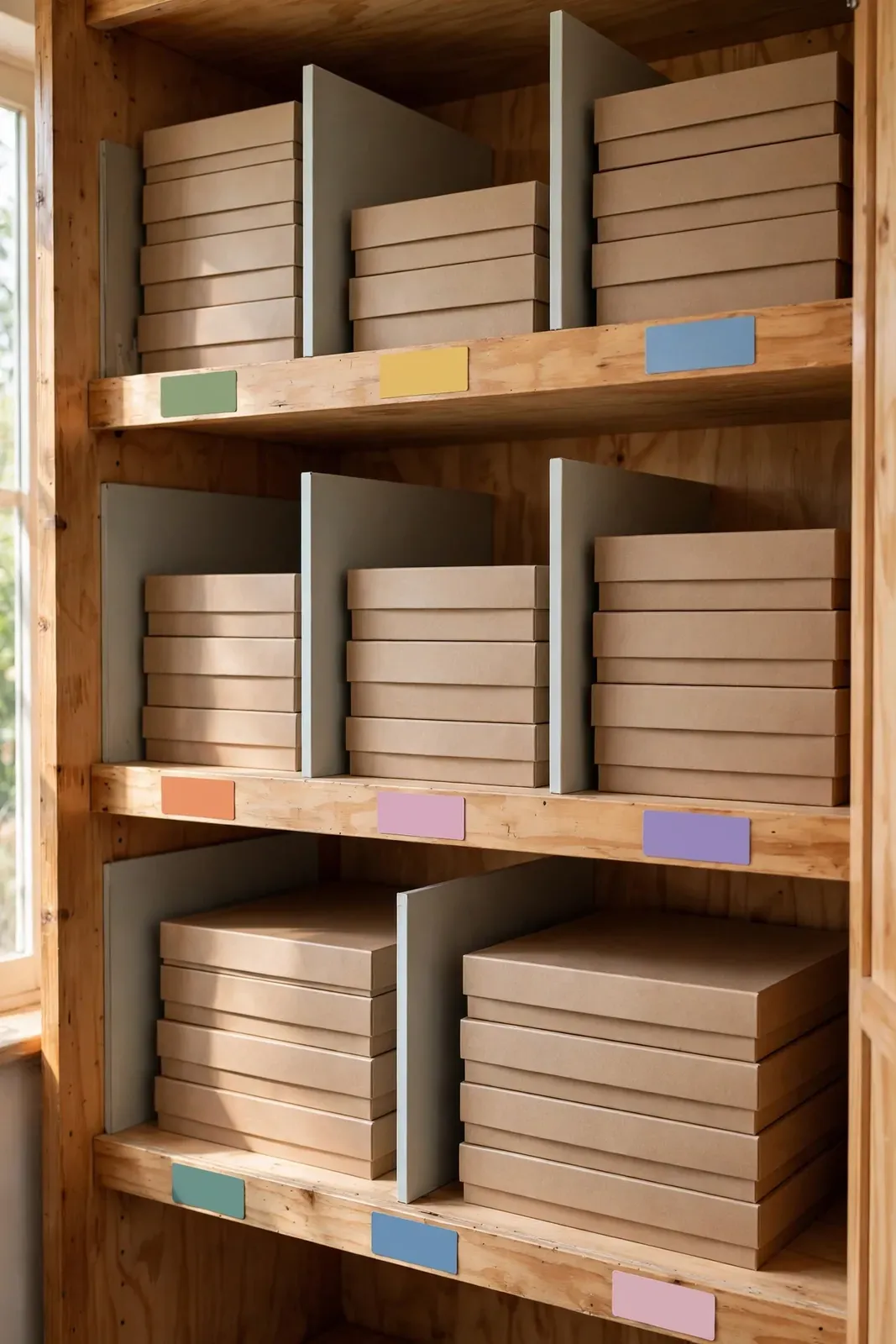
For slim and card games, vertical storage works beautifully. Stand them upright like books, held snugly between dividers, and they are easy to flick through and pull out one at a time. The rule is snug, not loose, because boxes left leaning in a half-empty gap will warp.
Labels turn stacking into finding. Coloured dot stickers, one colour per group, plus a short label on the shelf edge, is enough for most homes. Children read colours faster than words, guests can tidy up without instructions, and anyone can see that blue-dot party games do not belong on the red-dot strategy shelf. Label the shelf, not each box, so the system survives when games come and go. A clearly labelled board game storage cupboard means nobody has to guess where a game belongs.
Budget and buying advice: what to spend, what to skip
You do not need to spend a lot. A sturdy second-hand cupboard often costs less than a flimsy new one, and solid older pieces handle heavy stacks with ease. Check charity shops and local selling groups, where plain cupboards go cheaply because they are unfashionable, then improve yours with a clean, new handles and shelf pegs. Take a tape measure with you: guessing is how a bargain becomes a burden.
If buying new, spend on shelf strength and adjustability rather than decoration. One extra adjustable shelf is worth more than ornate doors, because it lets the cupboard change as your collection changes. Fix flat-pack units to the wall, keep heavy stacks low, and stay within the stated shelf load.
Small extras give good value: felt pads stop scuffing, clear tubs keep tiny pieces safe, and dot stickers cost almost nothing. Spend on strength, and a board game storage cupboard will serve the family for years.
Skip expensive custom inserts until you have lived with a simple system for a few months. Most families find zones, labels and sensible stacks solve the whole problem. The wider family of tabletop games, from dice and card games to role-playing sets, all store happily in the same zones, so one honest cupboard can serve the whole hobby.
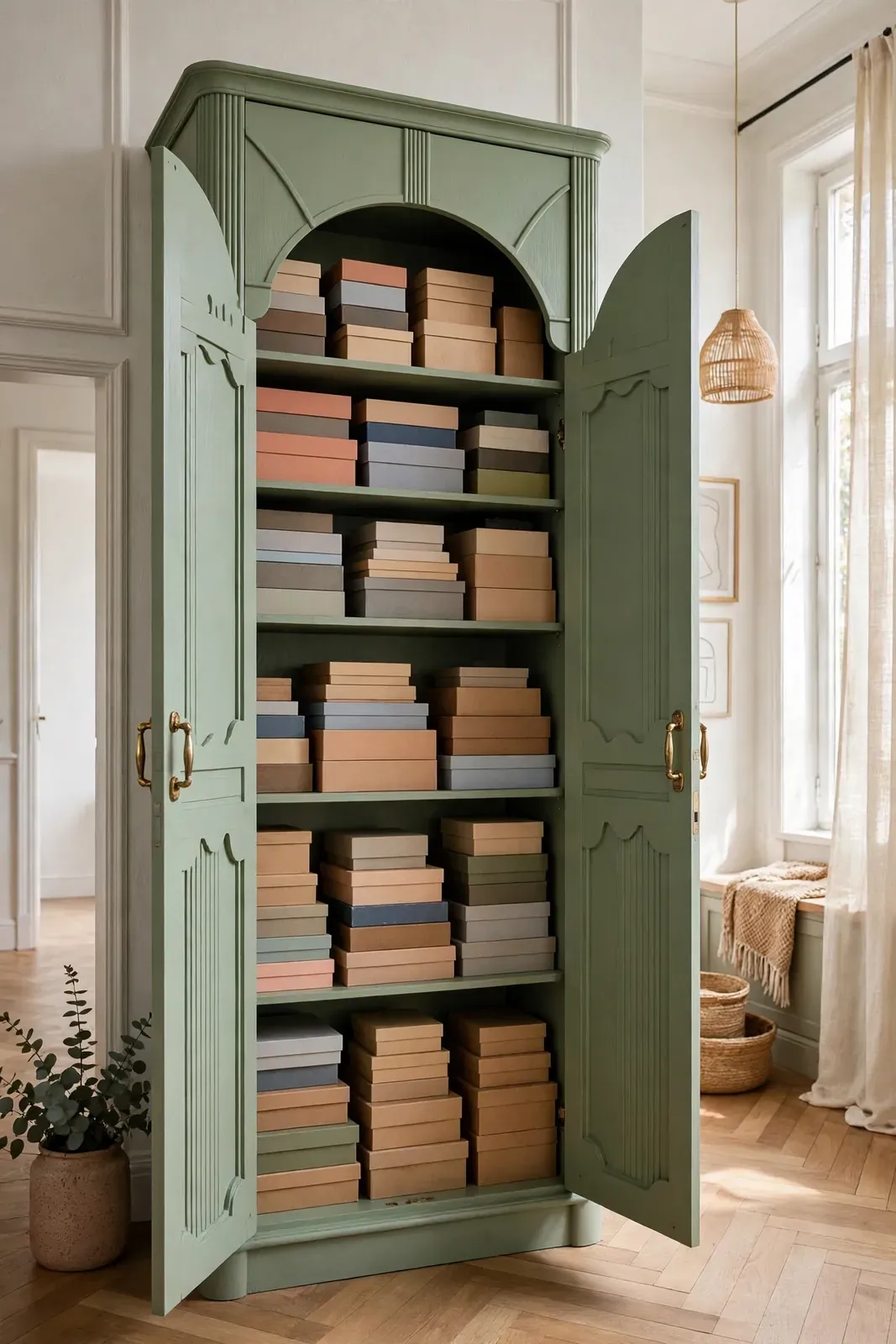
Common mistakes that make games hard to find
The most common mistake is storing by box size alone. A perfectly tessellated cupboard looks satisfying for one day, then fails, because the game the family wants sits in the middle of a size-matched stack nobody plays. Store by use first, size second.
The second mistake is stacking too high: a pile of eight boxes guarantees the bottom one is never played, and its lid pays the price. Most board game storage cupboard problems come from habits, not from the furniture itself.
Other traps are simple. Keeping expansions separate from the base game means two hunts instead of one, so store them together. Filling every shelf leaves no room for a new game, so the next purchase lands on top of the cupboard and the chaos restarts. Heavy games on the top shelf are awkward and unsafe. And do not let the cupboard become general storage: once torches and wrapping paper creep in, games get buried again.
Frequently asked questions
How deep should a board game storage cupboard be? Shelves around 32 to 35 centimetres deep suit most large family boxes without wasting room. Measure your two biggest games first, because very deep cupboards can hide boxes behind boxes.
Is it better to stack games flat or stand them upright? Both work in the right place. Flat stacks of four or five suit large, sturdy boxes, while slim games are easier to browse upright between dividers.
How do I stop box lids getting crushed? Keep stacks short and put the largest, heaviest boxes at the bottom with edges aligned. Bagging small parts inside the box also stops a bulging lid forcing the stack above out of line.
Where should children’s games go? On the lowest shelf, in their own clearly marked zone with a colour label children recognise. That lets them choose and tidy away their own games safely.
What if our collection keeps growing? Leave one zone partly empty as a buffer and review the collection once or twice a year. A quick board game storage cupboard review shows which zone is overflowing and why. Passing on a rarely played game is far cheaper than buying a second cupboard.
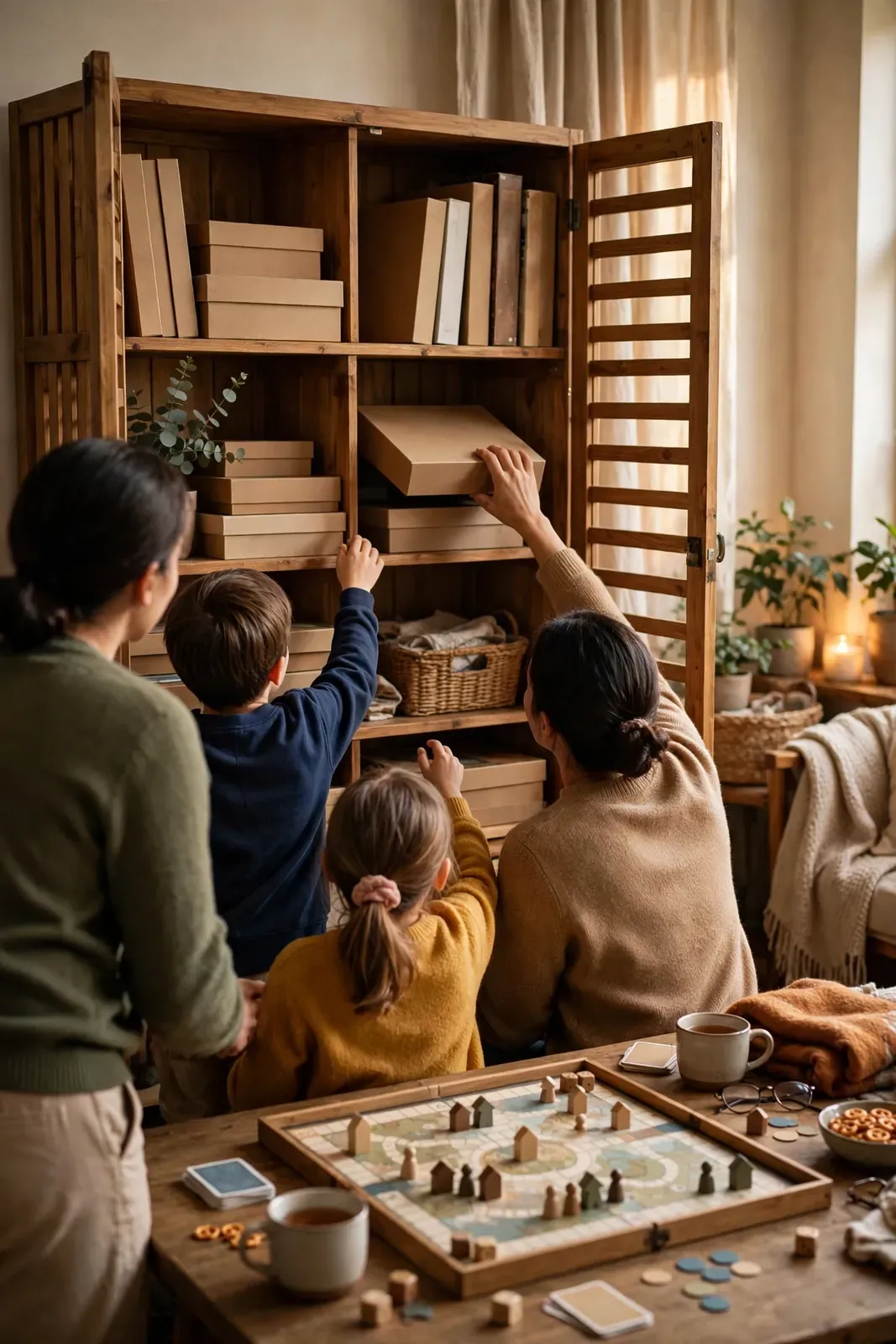
None of this needs a heroic weekend. Measure your biggest boxes, choose a cupboard that fits your real life, and give an hour to sorting and zoning. Your board game storage cupboard will repay that hour every single game night.
After that the system mostly runs itself: open the doors, see everything at a glance, pick a game, and play. Less time hunting and tidying means more time around the table with the people you bought the games for.