Table of Contents
Every home has a corner that does nothing. It collects a chair nobody sits on, a stack of post, a plant that is quietly giving up. That same corner, given an hour of thought, can become the calmest spot in the house. A prayer corner is not a renovation and it is not a display. It is a small, deliberate place where the day slows down five times, or once, or whenever you need it to. This guide walks through prayer corner respectful styling in a way that works for a studio flat, a family home, and everything in between — with honest attention to what makes the space feel reverent rather than decorative.
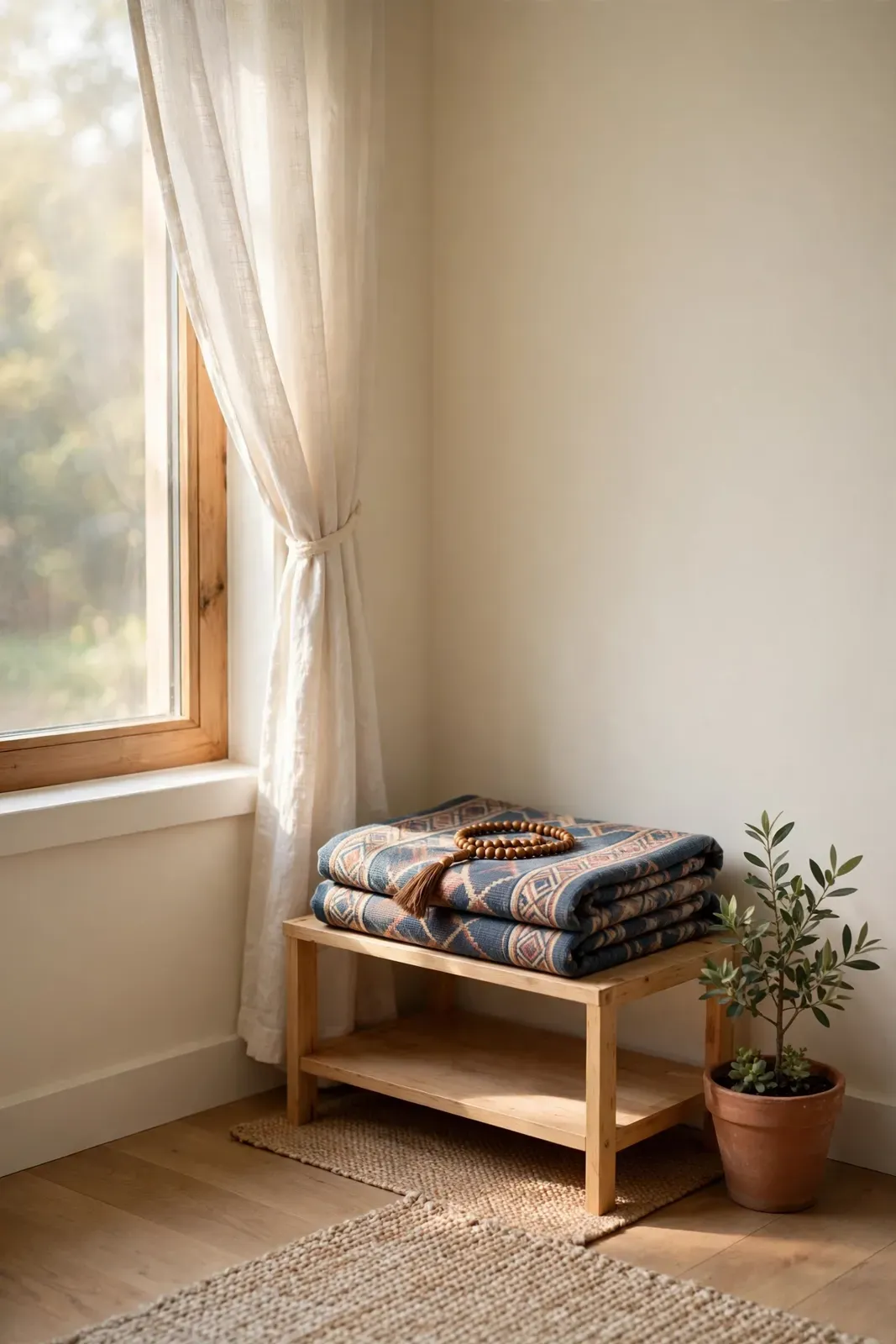
What Prayer Corner Respectful Styling Really Means
Respectful styling starts with a simple test: everything in the corner should earn its place by helping someone pray, not by looking impressive in a photograph. A folded rug, a set of beads, a book on a stand, a cushion for an older knee — these are working objects, and the corner is arranged around how they are actually used. The moment an item is there only for show, the space starts to feel like a stage set, and people stop relaxing in it.
It also means thinking about what the corner faces and what it sits next to. Most families choose a wall that stays quiet through the day, away from the television and the front door’s traffic. If the prayer direction matters in your tradition, settle that first and let everything else follow it. A prayer rug with its woven niche exists precisely to mark that direction, and the whole corner reads more calmly when the rug’s orientation is decided once and not renegotiated daily.
Finally, respectful means restrained. One plant, one light source, one small shelf. A corner that holds six framed pieces, three lamps and a scented diffuser is asking for attention; a corner that holds what is needed and nothing else gives attention back.
Choosing the Spot for Prayer Corner Respectful Styling: Light, Quiet and Floor Space
Walk your home at the times you actually pray. The corner that looks perfect at noon may sit in a corridor of school bags and shoes at seven in the morning. Dawn and evening light matter too — a west-facing window can throw hard glare across a rug at exactly the wrong hour, while a soft north or east light flatters everything and asks nothing of you.
Measure the floor honestly. A standard rug needs roughly 120 by 70 centimetres of clear floor, plus a little breathing room so nobody feels they are praying inside a cupboard. In a small living room layout, the honest answer is often a rug that rolls away: the corner exists when it is unrolled, and a basket or a low shelf marks its place the rest of the day. That is not a lesser version of a prayer corner. For many city homes it is the only version that survives contact with real life.
Check what is above and behind the spot as well. A wall covered in busy photographs competes for the eye; a plain wall, or one calm framed piece with geometric pattern rather than figures, lets the mind settle. Homes in many traditions keep a dedicated devotional spot in this way — the icon corners kept in Eastern Christian homes follow the same instinct: one quiet wall, a few meaningful objects, nothing competing.

Setting Up Your Prayer Corner Respectful Styling Step by Step
Step 1 — Clear and clean. Empty the corner completely, wash the floor and the skirting, and let it sit bare for a day if you can. Starting from genuinely empty stops the slow creep of unrelated objects back into the space.
Step 2 — Lay the foundation. Put down a thin woven under-mat if your floors are cold or slippery, then the rug itself, aligned to your chosen direction. Stand back and check it from the doorway; small misalignments are oddly distracting once you notice them every day.
Step 3 — Place storage within arm’s reach. A low shelf, a lidded basket or a single drawer unit should hold the folded spare rug, beads, and any books. Everything you need should be reachable without standing up mid-routine, and everything should go back in under a minute.
Step 4 — Add one seat support. A firm cushion, a low stool, or a chair kept nearby for whoever needs it. Comfort for elders is not a luxury in a prayer space; it is the difference between a corner that gets used for decades and one that gets quietly avoided.
Step 5 — Set the light. One warm lamp or a window’s daylight is enough. If you add a lantern, keep it unlit decor or use an LED candle; open flames near rugs and cushions are a risk no atmosphere is worth.
Step 6 — Live with it for a week, then edit. The honest test of prayer corner respectful styling is use, not looks. After a week you will know exactly which object never gets touched. Remove it. The corner will feel better immediately.
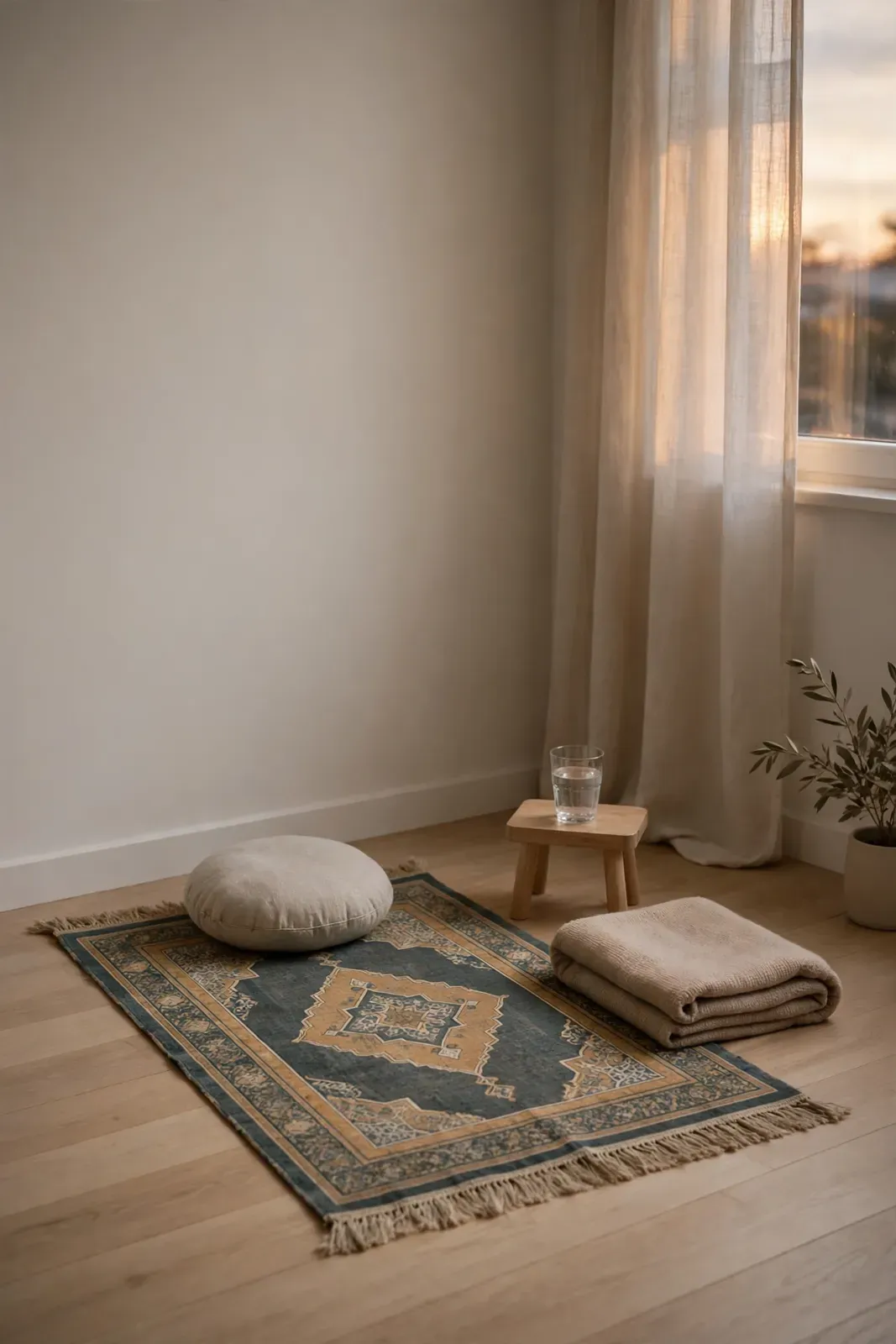
Prayer Corner Respectful Styling: Furniture and Storage That Keep the Corner Tidy
The best storage for a prayer corner is boring: a low wooden shelf with room for exactly what the corner owns. Open shelves look lovely and gather dust on books; if your home is dusty, choose a lidded basket or a cabinet with a door and accept the extra two seconds. A wooden reading stand keeps a book open at a kind angle and signals, to children especially, that the book is handled with care.
In shared rooms, a folding screen is the hardest-working piece you can buy. It marks the corner as separate without a wall, folds flat when guests come, and gives a visual hush that genuinely changes how the space feels. Choose a plain fabric or cane screen rather than a printed scene; the corner should be the quietest-looking thing in the room, not the loudest.
For renters, everything above can be free-standing. Nothing in a prayer corner needs to be fixed to a wall, and a corner built from a rug, a basket and a screen can move house in one box — which, for many families, it eventually does.
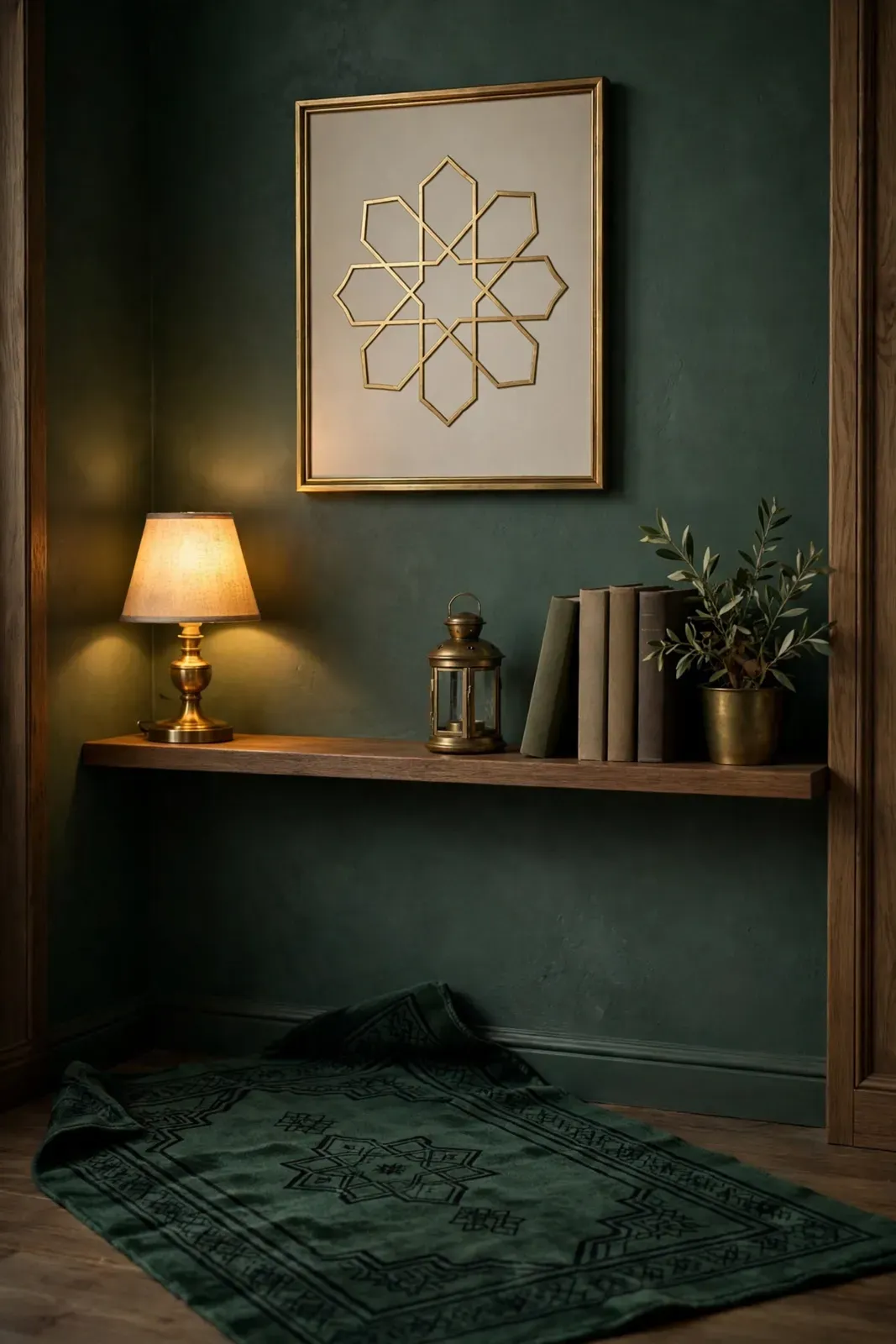
Budget and Buying Advice for Prayer Corner Respectful Styling
A complete prayer corner can cost almost nothing or a great deal, and the difference is mostly patience. The rug is the one item worth spending on: a dense, well-made rug feels better underfoot, lies flat instead of curling, and will outlast three cheap ones. Expect to pay the bulk of your budget here. Everything else — basket, cushion, stand, screen — is available second-hand in good condition, because none of it wears hard.
Buy in the wrong order and the budget leaks. The common mistake is starting with accessories: a lantern, a framed print, a set of cushions, bought before the rug and storage exist. Start with the floor, then storage, then light, and only then one or two finishing pieces. If money is tight, a clean rug on a clean floor with beads on a saucer is already a complete, dignified corner; add pieces over months as you find the right ones.
Pakistani and desi homes often already own the most expensive ingredient — a good janamaz with family history. Using an inherited rug is not a compromise; it is usually the most meaningful choice available, and building the corner around its colours will give you a calmer result than matching a catalogue photo.
Common Mistakes to Avoid in Prayer Corner Respectful Styling
The first mistake is styling for visitors. If the corner is arranged to be admired, it will slowly stop being used, because nobody wants to disturb a display. The second is overload: too many objects, too many colours, a shelf of everything vaguely spiritual the household owns. The third is neglecting the clean routine — a dusty rug undoes the whole feeling in seconds, so shake it out weekly and wash or vacuum it on the same rhythm as the room itself.
Placement mistakes are just as common. A corner squeezed beside a television, under a speaker, or in the draught of the front door will lose every day to the room around it. And a final one: strong artificial fragrance. Scented sprays and heavy incense near the rug cling to fabric and can make the space unpleasant for anyone sensitive; a briefly opened window does the job better.
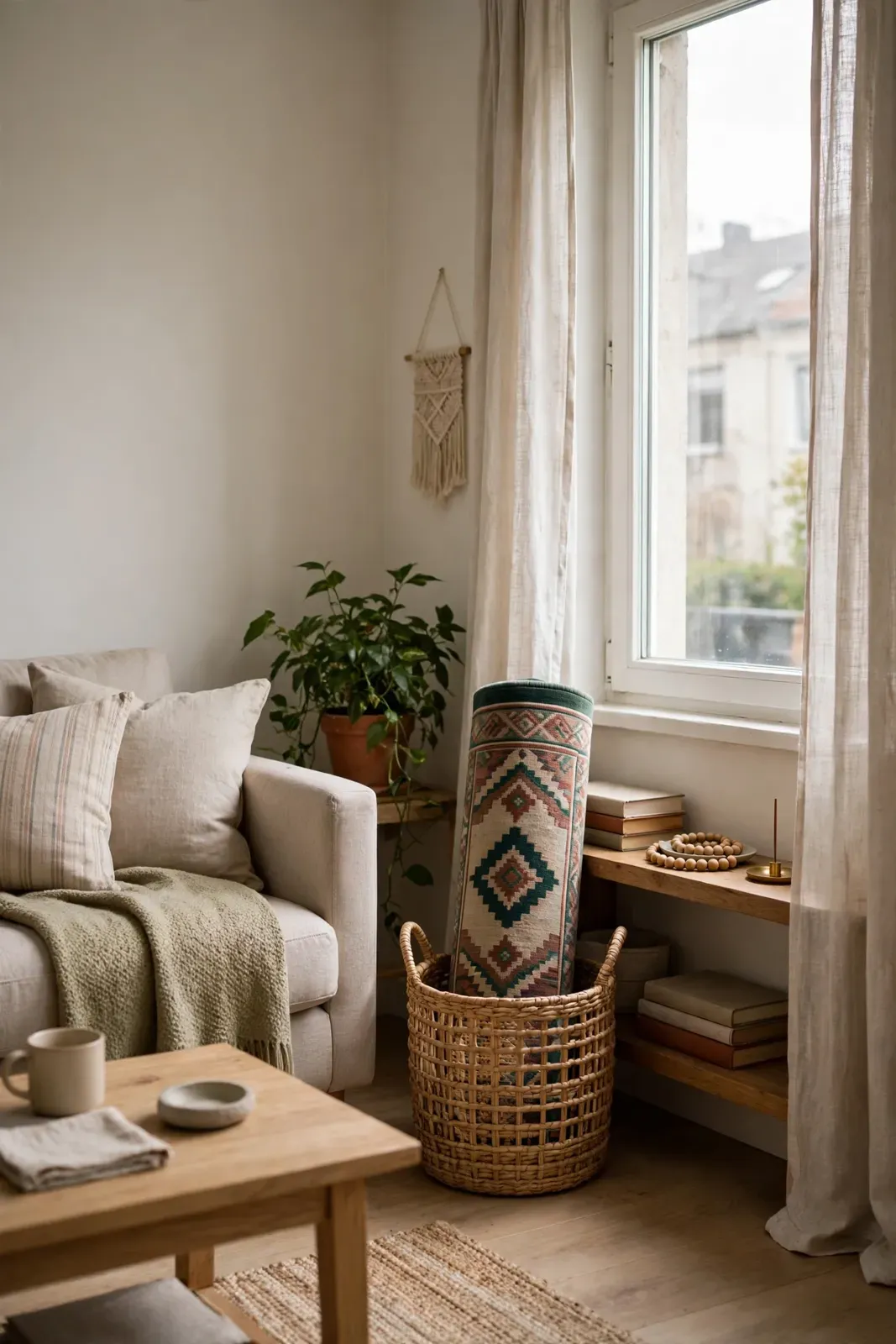
Prayer Corner Respectful Styling: Frequently Asked Questions
How much space do I actually need for a prayer corner?
About 120 by 80 centimetres of clear floor is comfortable for one person, including room to place a cushion and a stand. In a very small flat, a roll-away rug with a storage basket works in half that footprint when stored, and the full footprint only while in use.
Can a prayer corner share a room with everyday living?
Yes, and most do. A screen, a rug that marks its own boundary, and storage that closes are usually enough to keep the corner feeling separate inside a living room or bedroom. The key is that everyday objects do not migrate into it.
What should I do if elders or children use the corner differently?
Plan for the least flexible user first. A chair or firm cushion kept nearby, books at a reachable height, and a rug that does not slip will serve everyone. Children copy what they see; a tidy, calm corner teaches its own etiquette quickly.
How do I keep the corner clean without much effort?
Shake the rug out once a week, vacuum the floor beneath it when you do the room, and keep a small hand brush in the storage basket for crumbs and dust. Books stay cleaner on a stand or in a lidded box than on an open shelf.
Is it fine to use an inherited rug or second-hand furniture?
It is more than fine — it is often the best choice. An inherited rug carries meaning a new one cannot, and second-hand solid wood furniture is usually better made than new budget pieces. Clean everything well, and the corner is ready.
Prayer Corner Respectful Styling: A Corner That Gives Back
A prayer corner asks for about a square metre and a little discipline, and in return it gives the whole home a centre of gravity. Rooms feel calmer when one spot in them is deliberately quiet. Start with the rug and the direction, keep the objects few and useful, and let the corner grow slowly into the family’s habits. Prayer corner respectful styling is not a project you finish; it is a small place you keep — and keeping it is the point.