Table of Contents
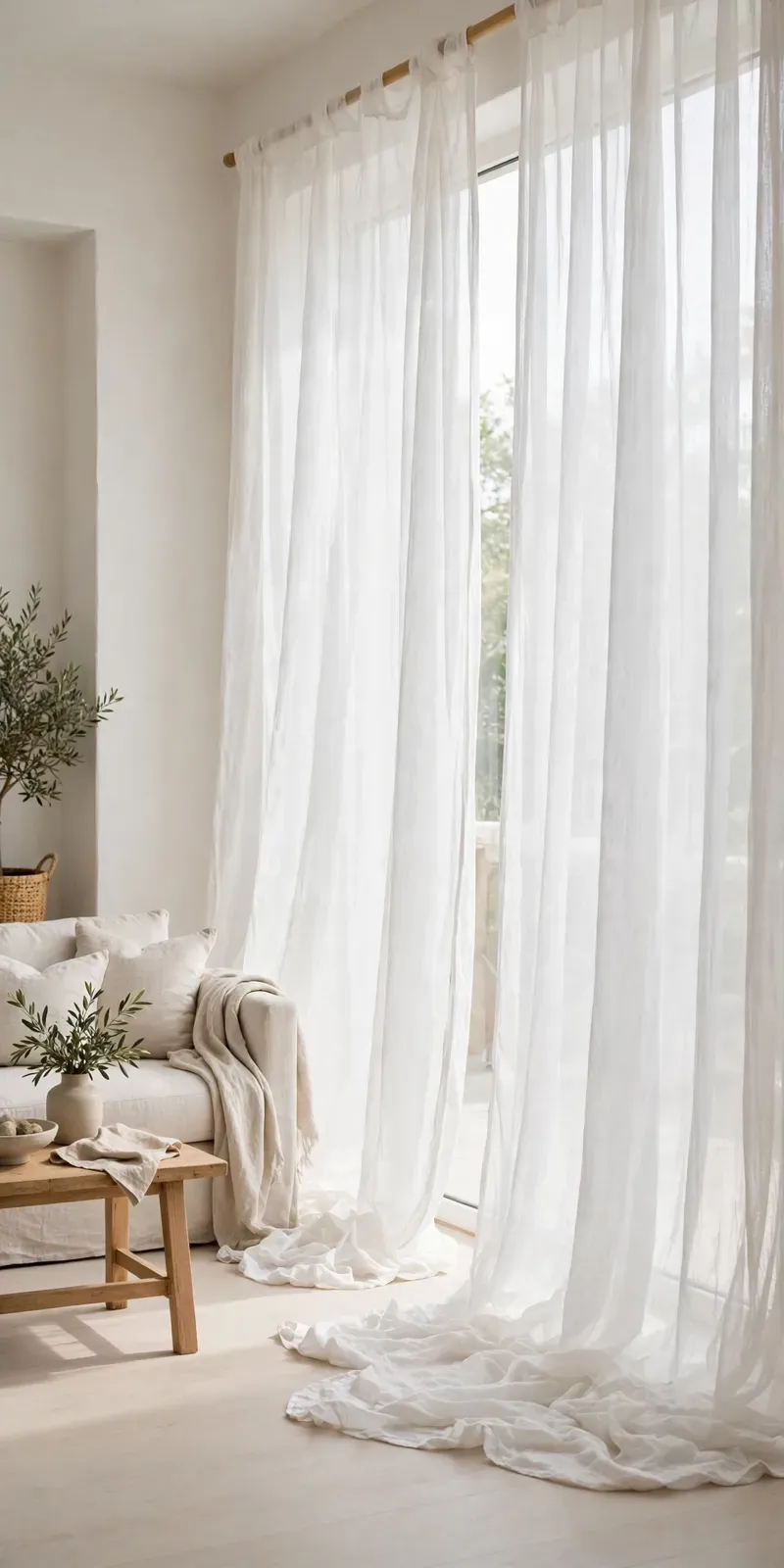
Most curtains are taught to stop politely at the floor, but the softest rooms do something braver: they let the fabric keep going. That is the whole appeal of curtain pooling length drama — curtains made a few inches longer than the drop, so they settle into a gentle puddle on the floor instead of ending in a hard line. Corners look softer, tall windows look taller, and a plain room gains a calm, finished mood.
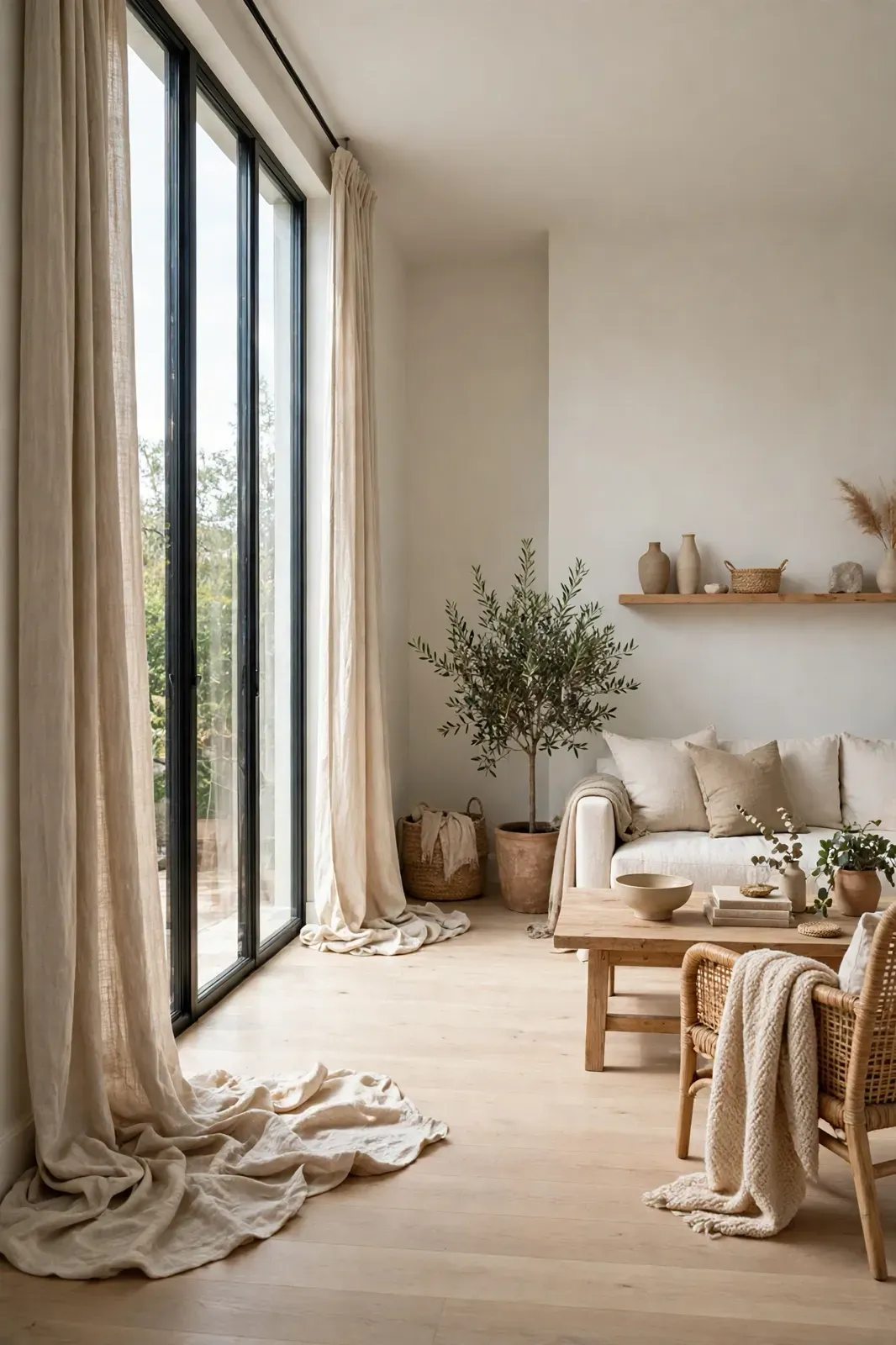
Pooling is not about showing off expensive cloth. The extra length forgives uneven floors, hides a slightly crooked hem, and lets you raise or lower the rod later without the curtains suddenly looking too short. This guide to curtain pooling length drama explains how much length to add, how to measure and hem for a clean puddle, which fabrics pool well, what the extra cloth costs, and the honest downsides — dust, pets and trip hazards — so you can choose where pooling belongs in your home.
Why Curtain Pooling Length Drama Works in Real Rooms
With curtain pooling length drama, a curtain ending exactly at the floor can look sharp in a showroom and unfinished at home, because real floors are rarely level: one end grazes, the other hovers. A puddle removes that uneven line. In soft folds, small differences in floor height disappear and the wall looks settled.
Long curtains draw the eye upward, and a puddle anchors them, so the wall reads as one tall, calm sweep. Bedrooms feel more sheltered, and low ceilings feel less abrupt. Generous cloth at windows has long signalled comfort, as the overview of curtain styles, fabrics and uses through history shows, and pooling still carries that sense of plenty. It also closes the gap where draughts and early light slip under a hem.
Choosing How Much Puddle for Curtain Pooling Length Drama: Break, Soft Pool or Full Drama
Choosing your depth first saves re-hemming. The lightest option is the break: about one extra inch, so the curtain touches the floor and folds once, like a trouser hem on a shoe. It is safest for busy family rooms, with little to trip over and little fabric in dust.
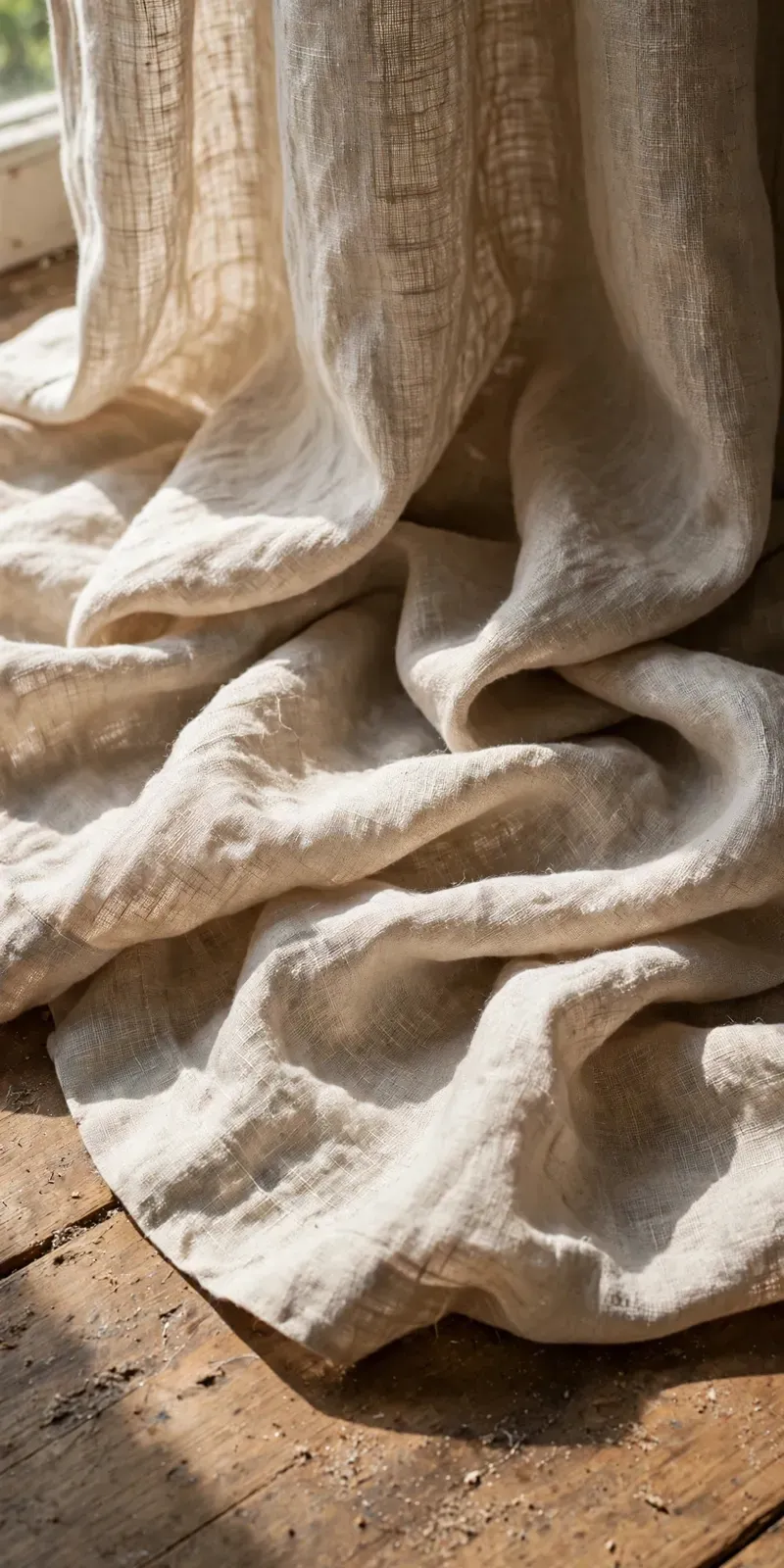
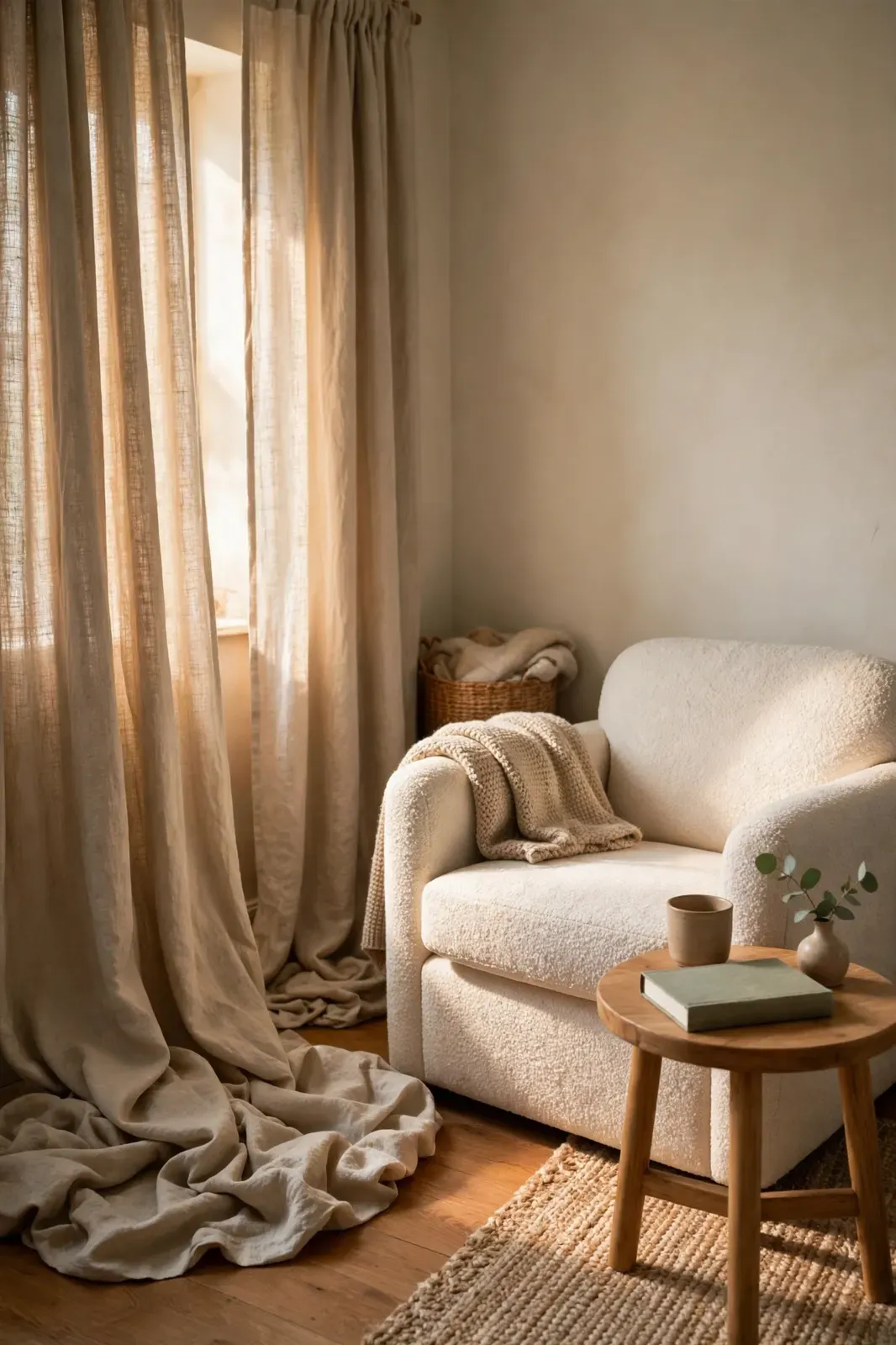
A soft pool uses two to five extra inches. The fabric spreads into the relaxed folds most people picture as pooling. This is the sweet spot for living rooms and main bedrooms: intentional, easy to lift for cleaning, and forgiving on a slightly taller window later.
Full drama means six inches or more. Cloth gathers in deep folds and the room takes on a dressed, evening mood. Save it for rooms where curtains stay put, because dragging that much fabric daily wears the hem. When in doubt, start soft; a hem can be let down, but length cannot be added back.
Before you choose a puddle depth, it helps to think about planning a room around its windows so the curtains, furniture and walkways all work together.
How to Measure, Hem and Arrange Curtain Pooling Length Drama Step by Step
Good curtain pooling length drama is measured, not guessed. Work through these steps in order and the puddle will look deliberate instead of accidental.
- Fit the rod first, then measure. Hang the rod in its final position, with rings or eyelets in place, because every centimetre of hardware changes the drop. Measure from the bottom of the ring, or the top of the rod for eyelets, straight down to the floor.
- Measure in three places. Take the drop at the left, centre and right of the window. Floors slope more often than people expect. Use the longest measurement as your base so no section ends up hovering.
- Add your puddle allowance. Add one inch for a break, two to five inches for a soft pool, or six plus inches for full drama. Write the finished length down for each panel; do not rely on memory at the fabric shop.
- Add hem and heading allowances. Allow about three inches for a double bottom hem and whatever your heading tape or eyelets need at the top. A deep hem adds a little weight, which helps the fabric fall in even folds.
- Wash or steam before hemming. Natural fibres can shrink. If you plan to wash the curtains at home, wash the fabric first, or at least steam it well, so the puddle you hem today is still a puddle after the first wash.
- Hem with a soft finish. Press a double fold and stitch close to the inner edge, avoiding stiff interfacing in the bottom hem. A soft hem puddles; a stiff hem kicks out and refuses to settle.
- Hang, then train the folds. Arrange the vertical folds by hand, working from the heading down, so each fold continues into the puddle instead of twisting at the floor.
- Arrange the puddle last. Kneel down and dress the fabric: fan the hem slightly toward the room, make two or three broad folds, and tuck excess at the sides back toward the wall. Check the shape from the doorway, where people actually see it.
Best Rooms and Windows for Curtain Pooling Length Drama
Bedrooms are the natural home of curtain pooling length drama: curtains open once or twice a day, and the softness suits the room. Keep a puddle beside the bed clear of the path to the door. Guest bedrooms are even better, because the puddle stays arranged for days.
Living rooms suit a break or soft pool, especially behind a sofa or beside an armchair, where furniture keeps feet away. Tall, narrow windows gain most. Patio doors are hardest: pool only the fixed side panels and keep door panels at a break. In desi homes, a soft pool in medium-weight fabric works well on marble or tile in the drawing room.
Budget and Buying Advice for Curtain Pooling Length Drama: Fabrics That Pool Well and What Extra Length Costs
Curtain pooling length drama costs less than it looks: you pay for extra length only, not width. Adding four inches usually means one ready-made length size up, or a fraction of a metre more cloth per stitched panel — a modest sum, not a new set. Cost only climbs with very wide windows and premium cloth.
Washed linen is the relaxed favourite: it lands in loose folds, hides light creasing, and the background on linen fibre, strength and care explains why it softens with washing. Cotton-linen blends pool almost as well, crease less, and cost less — a sensible first experiment.
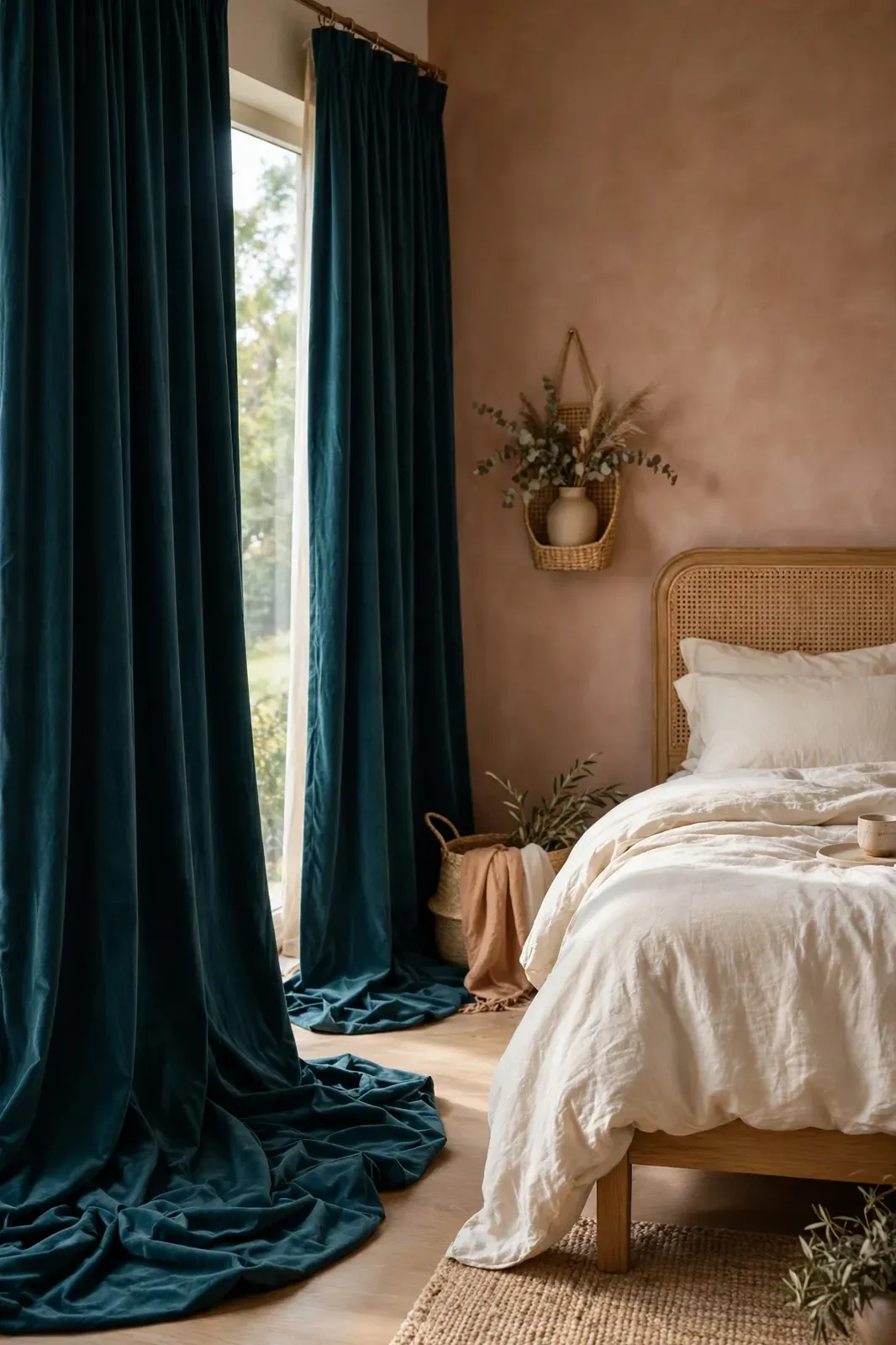
Velvet is the classic drama fabric: its pile catches light in the folds, and the reference on velvet fabric, pile and types shows its long use for hangings. Choose cotton or viscose velvet with a soft backing; stiff polyester velvet stands in points instead of pooling. Sheers suit only a light break.
Buy smart: one ready-made size up is the cheapest route. If stitching, ask for hem offcuts back for tiebacks. Avoid cheap, thin, shiny fabric — on the floor it reads as a mistake, not a decision.
Common Mistakes to Avoid With Curtain Pooling Length Drama
First, never pool in a walkway. Fabric where people carry tea, children run, or elders walk at night is a real trip hazard. Keep puddles at window sides, behind furniture, and never across a door swing or the bed-to-bathroom path. If anyone is unsteady on their feet, choose a break.
Dust is the second cost of curtain pooling length drama. Floor folds collect dust and crumbs fast. Lift and shake the puddle weekly, vacuum beneath it, and wash curtains a little more often. Pale linen shows a grey line at the fold if this slips, so be realistic before choosing white.
Pets come third. Cats treat a puddle as a bed, hair clings to velvet, and claws snag loose weaves. Pool only in rooms pets rarely enter, or pick smooth, tightly woven cotton. Radiators are the fourth trap: never rest pooled fabric on a heater. It blocks heat and can be a fire risk — shorten or tie back that panel.
Frequently Asked Questions
How many extra inches do I need for curtains to pool?
For curtain pooling length drama, add about one inch for a gentle break, two to five inches for a soft, relaxed pool, and six inches or more for a full dramatic puddle. Measure to the longest point of your floor first, then add the allowance. When you are between two depths, choose the smaller one for busy rooms and the larger one for quiet bedrooms.
Do pooling curtains work in small rooms?
Yes, curtain pooling length drama can help. A soft pool on a tall window draws the eye upward and makes the wall feel higher, which suits small bedrooms and compact living rooms. Keep the puddle modest, around two to three inches, choose a light or medium fabric, and make sure furniture placement keeps the fabric out of the walking path.
How do I keep the puddle looking neat instead of messy?
Train the folds when you first hang the curtains, then reset the puddle after cleaning with two or three broad folds fanned toward the room. A weekly lift and shake stops dust settling into the folds. Heavier hems and fabrics with real drape, like linen blends and cotton velvet, hold their shape far better than thin, springy cloth.
Can I pool ready-made curtains, or must they be custom?
Ready-made curtains work perfectly well for curtain pooling length drama if you buy one length longer than your floor drop, and this is usually the cheapest route. Custom stitching gives an exact allowance and a deep weighted hem, which suits very tall windows or a deep velvet puddle, but it is a choice, not a requirement.
Are pooling curtains a bad idea with children?
Curtain pooling length drama needs thought rather than a flat no. Toddlers pull fabric and can tangle in a deep puddle, so in young children’s rooms a break length is safer. In adult bedrooms and formal rooms that children pass through calmly, a soft pool kept clear of walkways is a reasonable, good-looking option.
Curtains that puddle softly ask for a little honesty — about your floors, your pets and how often you really clean — and in return they give a room its softest finishing touch. Start with a modest pool in the bedroom, live with it for a month, and adjust from there. Once you have watched evening light settle into those folds, a curtain that stops dead at the floor may never look quite finished again.