Table of Contents
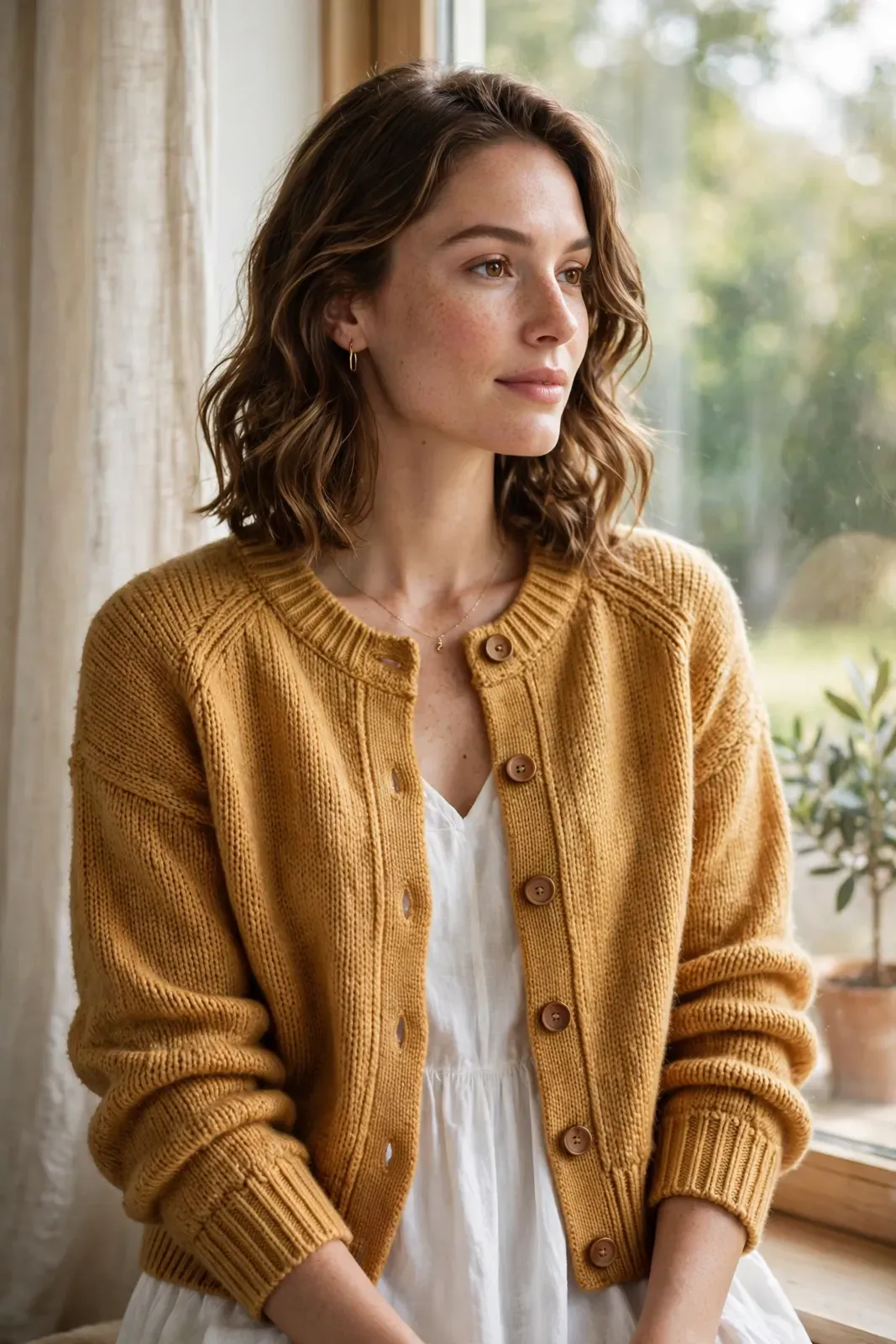
Every wardrobe has a hardest-working layer, and in mine it is a buckwheat knit honey cardigan. The colour is the warmth of late-afternoon light — a golden honey tone with the soft, grainy depth you might associate with buckwheat honey — and it seems to make every plain outfit underneath it look kinder. White dresses glow next to it, jeans stop looking basic, and even a simple striped tee becomes a considered outfit.
A cardigan like this earns its keep because it solves the most common dressing problem there is: the outfit that is almost right but needs one more thing. Too bare, too plain, too cold in the evening — the cardigan answers all three. In this guide I will show you nine ways I wear mine, how to choose the right knit and fit, and the washing habits that stop a good cardigan from going baggy and sad. A buckwheat knit honey cardigan does exactly that, season after season.
Why a Buckwheat Knit Honey Cardigan Lifts Plain Outfits
Colour first. Honey sits between yellow and caramel, which makes it warmer than beige but softer than mustard, and it flatters a wide range of skin tones precisely because it borrows its glow from neither extreme. It pairs with white, cream, denim blue, olive and burgundy, which between them cover most of a normal wardrobe. The name nods to buckwheat, whose dark honey is famous for exactly this rich, amber depth. That warm depth is what makes a buckwheat knit honey cardigan look rich rather than flat in daylight.
Then there is the knit itself. A cardigan is an open-front knitted layer — the brief history of the cardigan traces it from military waistcoats to a women’s wardrobe staple — and that open front is its superpower: it frames whatever is underneath instead of hiding it, so a pretty dress or a good neckline still shows while your arms stay warm. In a buckwheat knit honey cardigan, that framing effect is the whole point.
9 Easy Ways to Wear a Buckwheat Knit Honey Cardigan
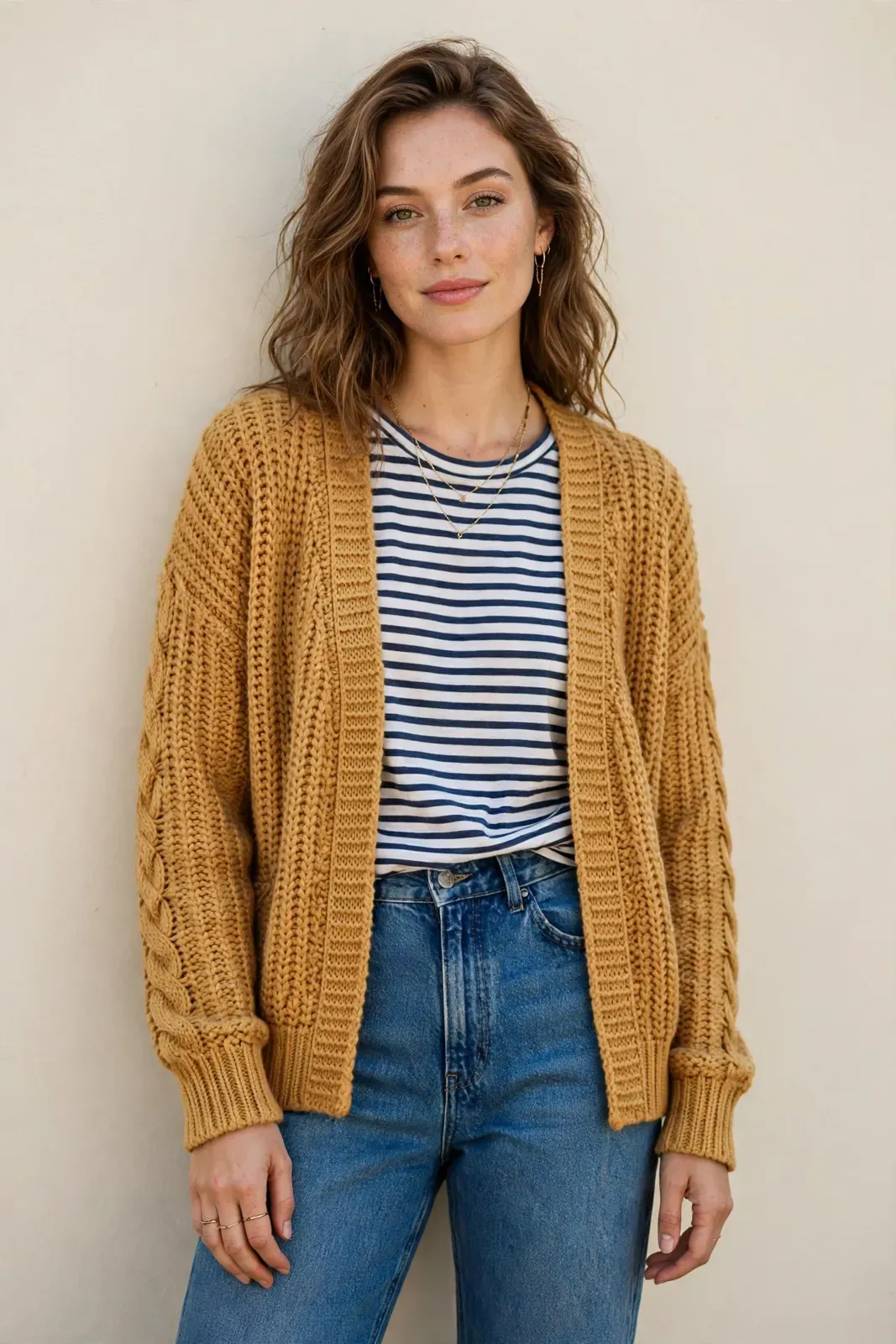
1. Over a white dress. Buttoned or open, the honey tone warms white beautifully and turns a summer dress into an autumn outfit. 2. With jeans and a striped tee. The classic weekend combination; push the sleeves to the forearm for shape. 3. Belted over a slip dress. A slim belt over the buttoned cardigan makes an evening layer that looks tailored. Each look starts with the same buckwheat knit honey cardigan, simply styled a different way.
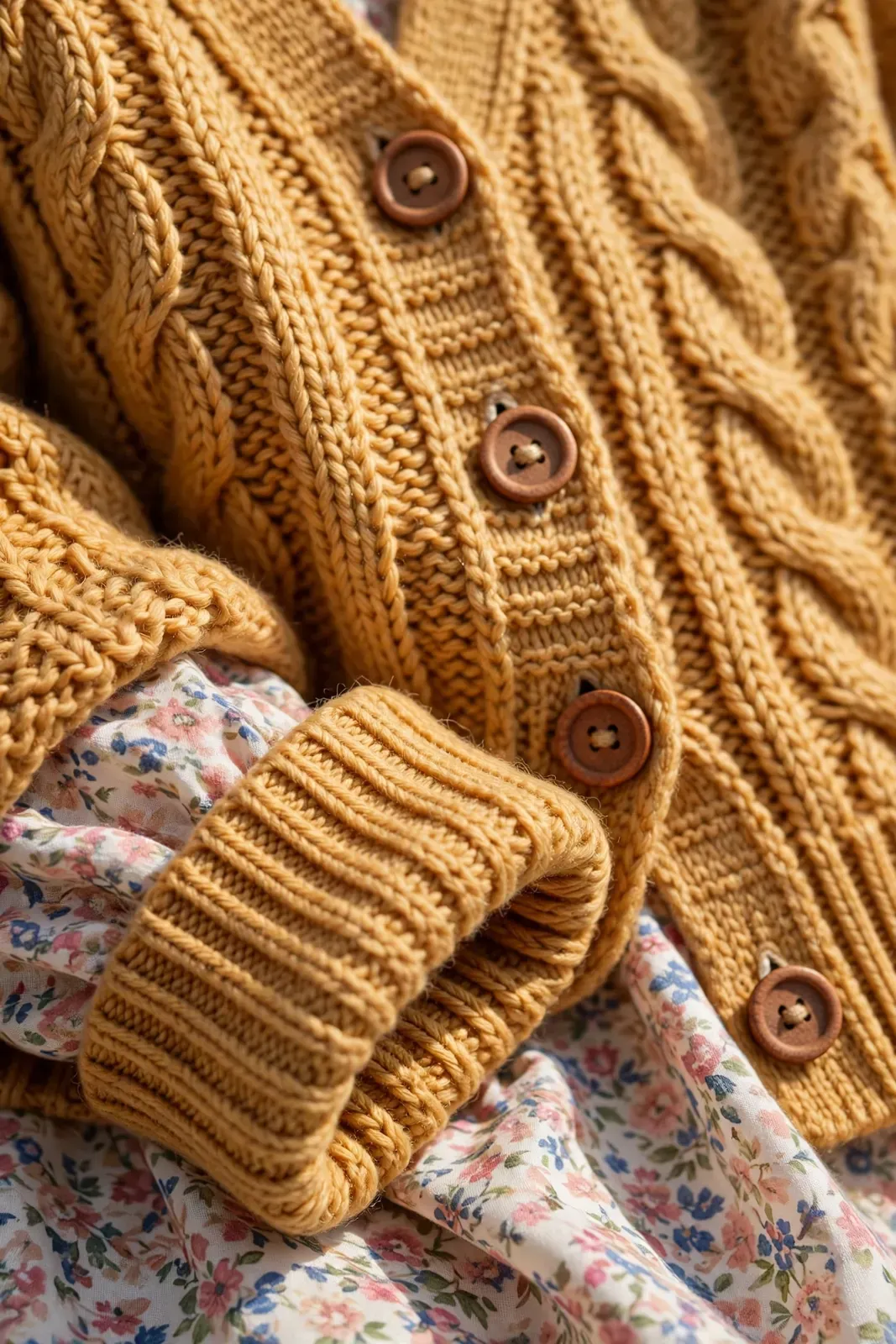
4. With a floral blouse. Honey picks out the warm notes in autumn florals and calms busy prints. 5. Over a polo neck and trousers. A fine black or cream polo neck underneath makes the cardigan office-ready. 6. Draped over the shoulders. On in-between days, wear it cape-style over a tee or dress — practical and photograph-friendly. 7. With a denim skirt. Blue denim and honey knit are natural partners; add tan boots to finish.
8. As a light jacket in spring. A chunkier knit works as outerwear over a camisole when a coat is too much. 9. With soft lounge trousers at home. The cardigan that goes out also makes staying in feel dressed — one less thing to change when someone knocks.
How to Choose the Right Knit, Fit and Buttons, Step by Step
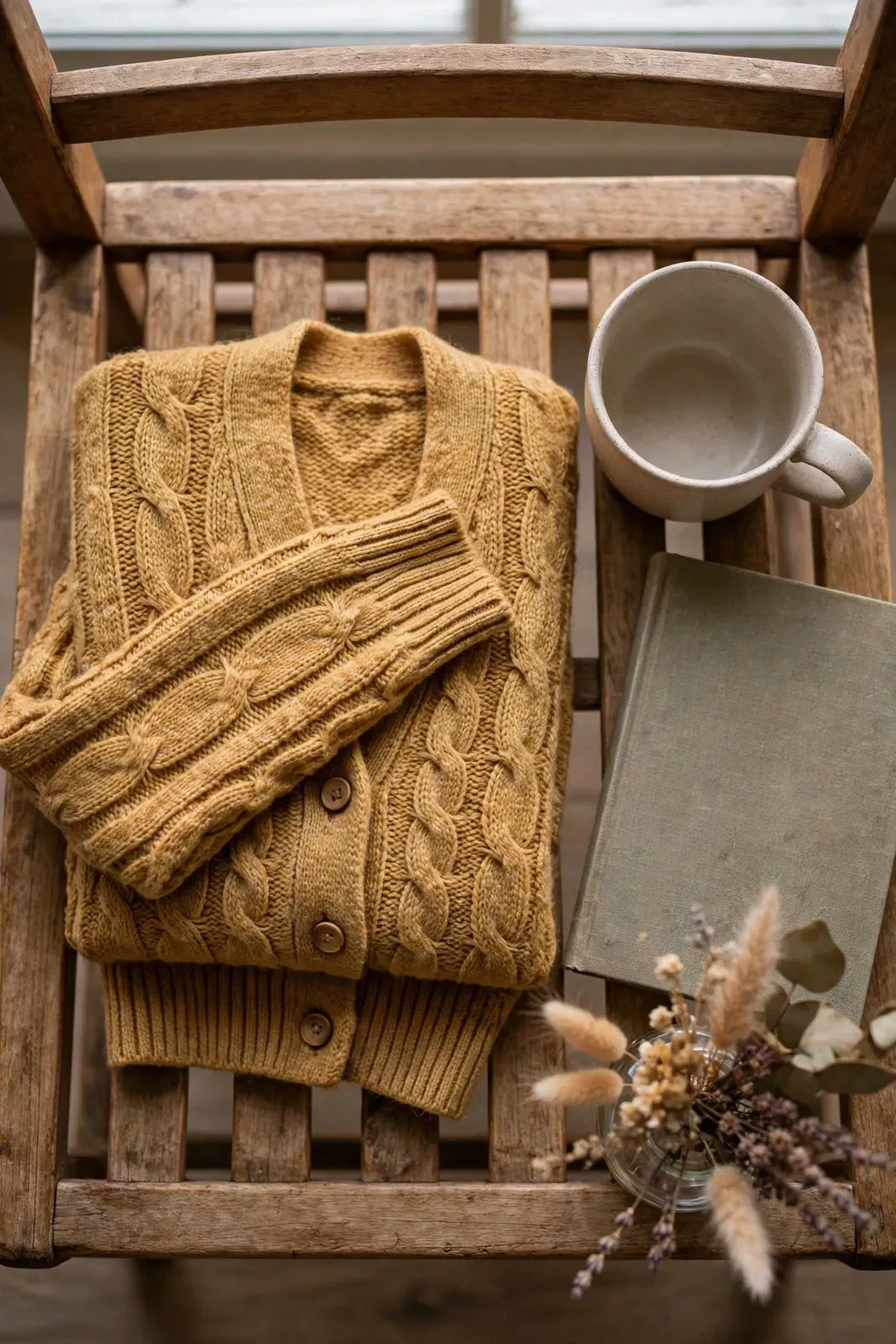
Start with the yarn. A wool blend gives warmth and bounce, cotton gives a cooler, heavier drape for spring, and pure acrylic is lightest on budget but can pill fastest. Hold the knit to the light: a good cardigan shows even stitches with no thin patches. Next, decide the fit by how you will layer it — if it must go over dresses and blouses, you want ease across the back without the shoulders slipping off; the shoulder seam should sit at or just past your own shoulder point.
Then the buttons. Wooden and tortoiseshell buttons suit the honey tone and look crafted; covered fabric buttons read softer and dressier. Check that the buttonholes are firmly stitched and that a spare button is sewn inside — a small detail that separates a cardigan made to last from one made to sell. Finally, check the cuffs and hem ribbing by stretching them gently: they should spring back. Ribbing that stays stretched in the shop will only get looser at home.
Buying Advice: Weight, Length and Budget
Length changes the mood. A cropped cardigan ending at the waist is the partner for dresses and high-waist skirts; a hip-length one is the everyday layer for jeans; a long, knee-length knit works almost as a coat. Buy the length that matches the bottoms you wear most, not the one that looks best on the model. On weight, a medium knit is the hardest working — warm enough for autumn evenings, light enough for spring mornings. Spend on the yarn quality before the label: a cardigan is touched, buttoned and washed constantly, and cheap yarn shows it within a season. A medium-weight buckwheat knit honey cardigan is usually the one that gets worn most.
Care: Washing a Knit Cardigan Without Stretching It
Knits suffer more from washing technique than from washing itself. Turn the cardigan inside out, button it up so it keeps its shape, and use cool water with a gentle detergent — hand-washing is kindest, a mesh bag on a wool cycle is the practical alternative. Never wring a knit; press the water out in a towel instead. Dry it flat on a rack, reshaping it with your hands, because a wet cardigan on a hanger will stretch under its own weight. Fold it for storage rather than hanging it, and keep a folded cedar block or lavender sachet in the drawer to discourage moths. Follow that routine and a buckwheat knit honey cardigan will keep its shape far longer.

Common Mistakes to Avoid With a Knit Cardigan
The classic mistake is hanging a knit cardigan in the wardrobe, where gravity quietly pulls it longer and narrower over the season. Second, washing it unbuttoned and inside-outwards tangles the sleeves and twists the fronts. Third, wearing the same cardigan three days running without a rest day — knits recover their shape between wears, and rotation doubles their life. And finally, ignoring the first pill: a fabric comb used early, gently, keeps the surface smooth, while pills left to grow pull neighbouring fibres with them. For another knit to rotate with it, try our cashmere crew neck sweater styling ideas — a buckwheat knit honey cardigan rests best when it is not worn every day.
Frequently Asked Questions About the Buckwheat Knit Honey Cardigan
What colours go with a honey cardigan?
White, cream, denim blue, olive, burgundy and soft grey all sit happily with honey. It is a warm neutral, so it prefers warm companions, but a black polo neck underneath gives it a sharper, more modern edge when you want one. With a buckwheat knit honey cardigan, those pairings cover work, weekends and evenings.
Can I wear a cardigan as a top on its own?
Yes — a buttoned cardigan worn alone, perhaps with just the top two buttons open, is a neat, slightly vintage look with skirts and high-waist trousers. Choose a finer knit for this so it sits smoothly.
How do I stop my cardigan from pilling?
Rest it between wears, wash it inside out in a mesh bag, and avoid rubbing straps — bag and seatbelt straps are the usual culprits at the shoulder. A fabric comb used little and often keeps the surface fresh. A buckwheat knit honey cardigan treated this way stays smooth at the shoulders.
Should a cardigan be tight or loose?
Neither extreme. You want it to close without strain and skim rather than grip when worn over a light top, with sleeves that reach the wrist without pulling. If you layer over thicker pieces, size for that.
Is honey a good colour for all skin tones?
It suits most, because it is mid-depth and warm. If your skin is very cool-toned, wear it over a white or soft blue top so a cooler colour sits nearest your face and the honey works as the accent.
A buckwheat knit honey cardigan is not an exciting purchase, and that is exactly its value: week after week, it is the layer that quietly makes the rest of your wardrobe work harder. Choose the yarn and fit with care, wash it kindly, and it will return the favour for years.