I keep a tortoiseshell claw clip in three places at once: one on my dressing table, one in my handbag, and one that somehow always ends up in my coat pocket. It started as a practical thing, a way to get my hair off my neck while I was cooking or working, but it quickly became the piece I reach for when I want to look put together without spending twenty minutes in front of the mirror. No hot tools, no handful of pins sliding out by lunchtime, just a twist, a squeeze, and I am done.
What I love most about the tortoiseshell pattern is how forgiving it is. The warm mix of amber, honey and dark brown suits almost every hair colour, from deep brunette to lighter ends, and works as easily with a plain white shirt as with a smarter dress. Here are the nine ways I wear mine most often, plus what I have learned about choosing one that actually holds.
Three Full Updos That Take Less Than a Minute
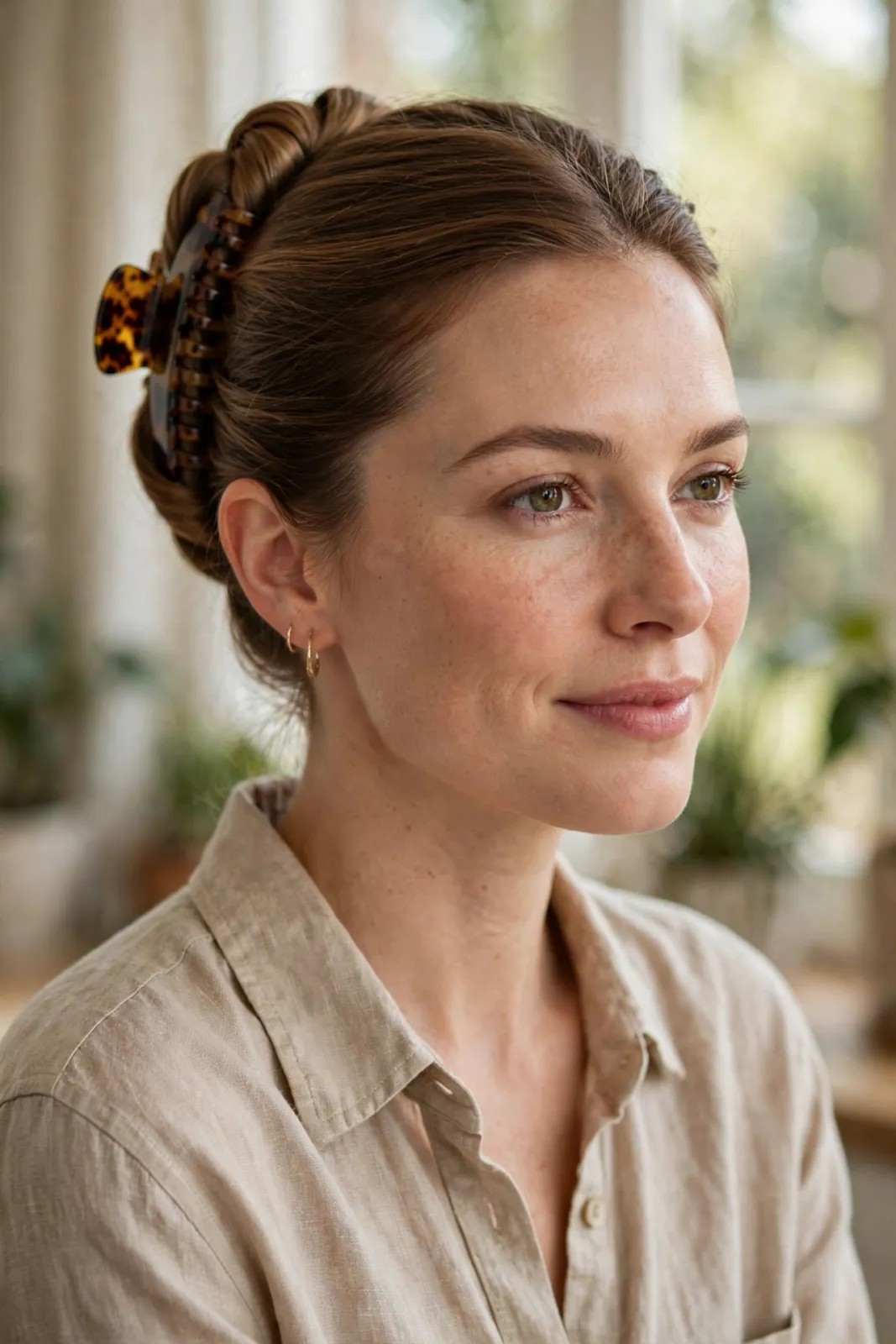
The first way, and the one I use for work most, is the classic French twist. I gather my hair low at the nape, twist it upward so the ends point toward the ceiling, fold those ends down, and clip vertically along the twist. It looks far more complicated than it is, and stays secure through a whole morning. Leave two soft strands loose at the front if you want it relaxed rather than severe.
Second is the simple twisted bun, my answer to second-day hair. I twist my hair into a loose rope, wrap it into a bun, and clip straight through the middle so both sides are held. A few wisps escaping make it look better. Third is the folded ponytail: I make a low ponytail, fold the length up in half, and clip over the fold. The ends fan out above the clip, giving you the fullness of an updo with almost no effort.
Three Half-Up Styles for Softer, Easier Days
On days when I want my hair down but away from my face, I use a smaller clip for a half-up style, the fourth way. I take the top section from just above my ears, give it one gentle twist at the back, and clip it horizontally. My lengths stay loose underneath, but my hair stops falling forward every time I lean over my desk.
Fifth is the half-up twist with a little lift at the crown. Before clipping, I push the top section up slightly to create soft volume, then secure it. That tiny bit of height makes a real difference in photos. Sixth is the side sweep: I part my hair deeply to one side, pull the smaller side back above my ear, and fix it with a mini clip at an angle. It keeps one side tidy while the rest falls over the opposite shoulder.
Three Relaxed Styles for Errands, Work and Evenings
The seventh way is the relaxed messy bun. I scoop my hair up high, twist it once, let it loop over on itself, and clip it without worrying about stray ends. It is deliberately undone, and the tortoiseshell pattern stops it looking scruffy. Eighth is the clipped ponytail lift: I gather a normal ponytail, open the clip underneath it, and let the ponytail rest on the clip so it sits higher and fuller.
Ninth, and my favourite for evenings, is the low twisted chignon. I make a low ponytail, twist the length tightly, coil it flat, and clip horizontally across the coil. With simple gold hoops and a nicer top, it reads as an evening style, even though it once took me about forty seconds in a restaurant bathroom. These nine looks share the same simple moves, so once you know two or three, the rest come naturally.
How to Put In a Claw Clip, Step by Step
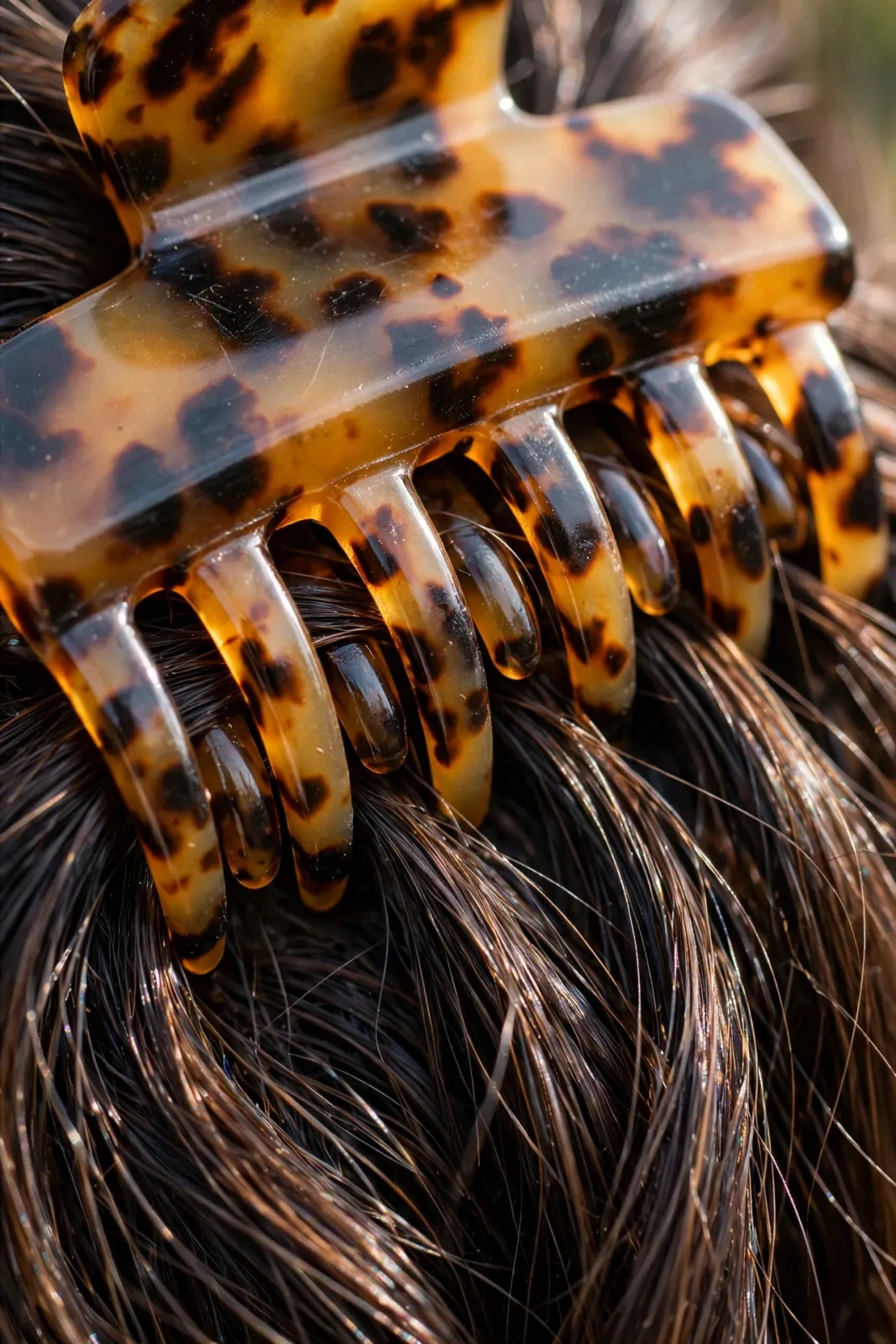
If your clip keeps sliding out, the problem is usually placement, not your hair. Brush your hair smooth and gather it where you want the style to sit. Hold the twist firmly against your head with one hand. With the other, open the clip wide, slide the lower teeth close to your scalp, then let the clip close over the twist. You should feel it anchor rather than perch.
Give it a gentle shake test. If it moves, take it out, twist your hair one extra turn for more tension, and clip a fraction lower, where your head curves in. That curve is your friend. For fine hair, a pinch of dry shampoo beforehand adds grip. For very thick hair, clip the lower layer first, then fold the rest over and clip again with a larger clip.

How to Choose the Right Size, Shape and Grip
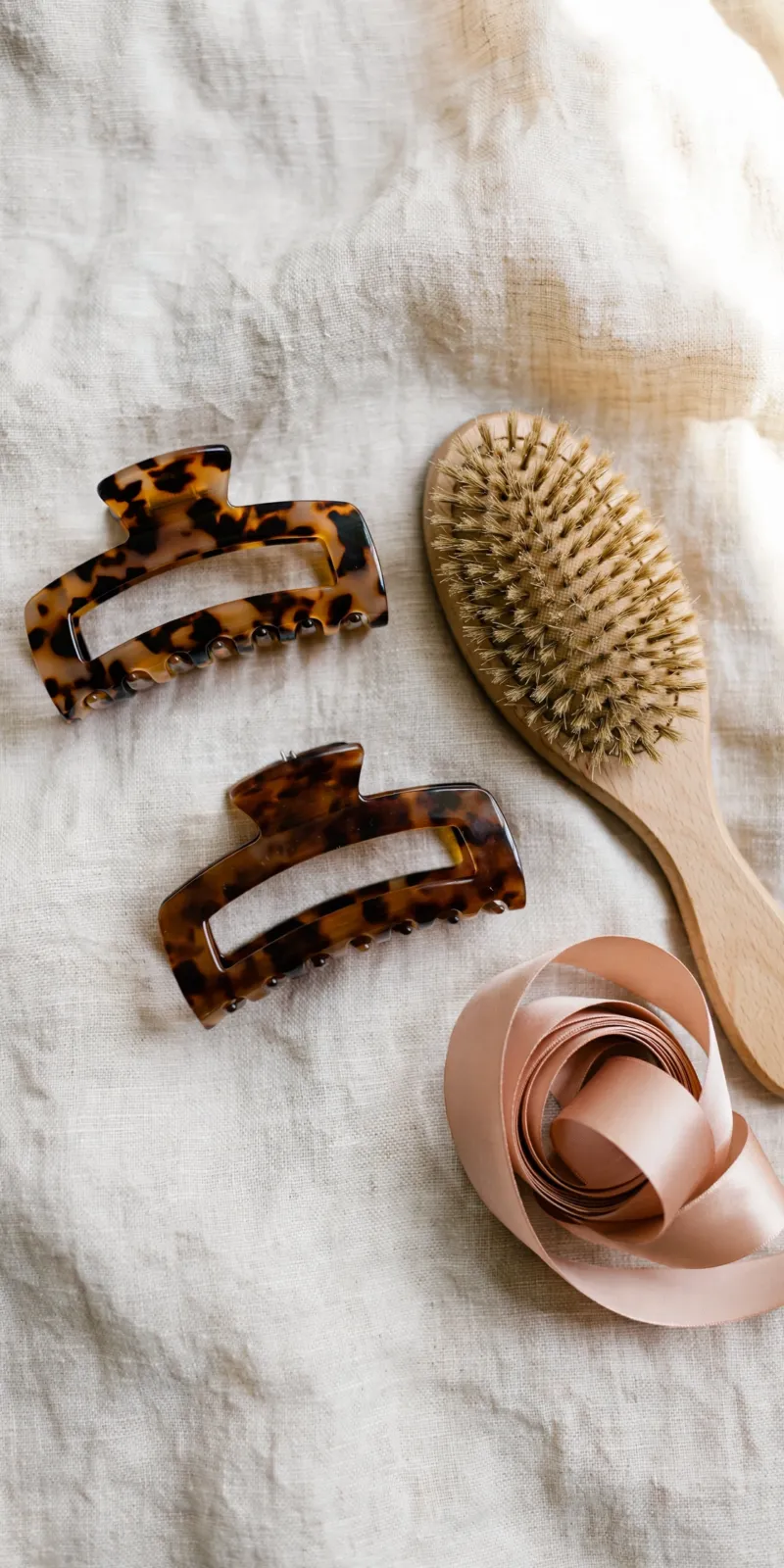
Size matters most. From my own trial and error, a small clip around five centimetres suits half-up styles and fine hair, a medium clip around eight to nine centimetres handles most full updos for medium hair, and a large clip of eleven centimetres or more suits thick, curly or very long hair. If a clip cannot close without forcing it, it is too small, and forcing it is how springs strain and teeth snap.
Next, look at the teeth. Longer, closely spaced teeth hold fine hair far better than short, wide ones. Run your thumb along them: they should feel smooth and rounded, never sharp, because rough edges snag hair. Check the spring by opening and closing the clip a few times. It should snap shut with firm, even pressure. Finally, a slightly curved clip follows the shape of your head and sits flatter than a straight one, especially if you lean back against a chair during the day.
Common Mistakes That Make a Claw Clip Slip or Break
The mistake I made for years was clipping wet hair straight from the shower. Wet hair is heavier and more slippery, so the clip slides, and it is more fragile too. Pat your hair mostly dry first. Another common slip is placing the clip too high on a twist, where there is nothing to anchor it. A little lower almost always holds better.
Overloading a small clip is the fastest way to break one, and leaving clips loose in a bag is the second fastest, because teeth chip against keys and coins. I keep mine in a small pouch now. Avoid sleeping in a claw clip too: you will roll onto it, and the pressure can bend the teeth. If a clip feels loose after months of use, check for hair wrapped around the spring before throwing it away. Wipe it with a damp cloth, and store it closed and dry.

Frequently Asked Questions
Will a tortoiseshell claw clip hold thick or curly hair?
Yes, as long as you choose a large clip with long teeth and a strong spring. Twist your hair firmly before clipping so the clip holds a compact shape rather than loose volume. If one clip still feels strained, use two medium clips, one above the other, for a secure and pretty finish.
Does a claw clip damage hair less than an elastic?
For most people, yes. A good clip spreads pressure across a wider area instead of pulling on one tight band, and smooth, rounded teeth are less likely to cause the breakage you get from repeatedly tying hair in the same spot. Just avoid forcing a clip that is too small, and take it out before bed.
How do I stop my claw clip slipping out of fine hair?
Add texture before you clip. Dry shampoo, a light texturising spray, or simply styling hair that is not freshly washed will give the teeth something to grip. Twist your hair an extra turn, clip low where your head curves in, and choose a smaller clip with closely spaced teeth.
Can I wear a claw clip for a formal occasion?
Absolutely. A neat French twist or low chignon in a glossy tortoiseshell clip looks polished and intentional, especially paired with simple earrings. Smooth any flyaways with a little water on your palms, keep the front sections tidy, and let the warm pattern do the decorative work.
How long should a good claw clip last?
A well-made clip used daily should last well over a year. The spring is usually the first thing to tire, so store your clip closed, keep it out of steamy bathrooms when you can, and clear trapped hairs from the hinge every few weeks to keep the grip strong.
A Small Clip That Solves a Lot of Mornings
I do not enjoy spending a long time on my hair, and I suspect many of you feel the same. That is why this clip has earned its place in my bag and my morning routine. Pick one in the right size, practise the French twist twice, and you will have nine easy styles ready for workdays, weekends and everything in between.