Table of Contents
Floating shelves promise the airy, open look of a magazine kitchen or a calm living room wall — and threaten, in real life, to become a visible junk drawer at eye level. This floating shelves styling guide closes that gap. Open shelves look good when they follow the same rules as any display: grouped objects, repeated colours, varied heights, and deliberate empty space.
Below are nine styling ways that work in kitchens, living rooms, bathrooms and hallways, a step-by-step routine for styling a shelf from empty, honest advice on shelf depth, brackets and weight, and the mistakes that turn open shelving into open clutter. The aim is shelves you can live with on a busy Tuesday, not only photograph on a quiet Sunday.
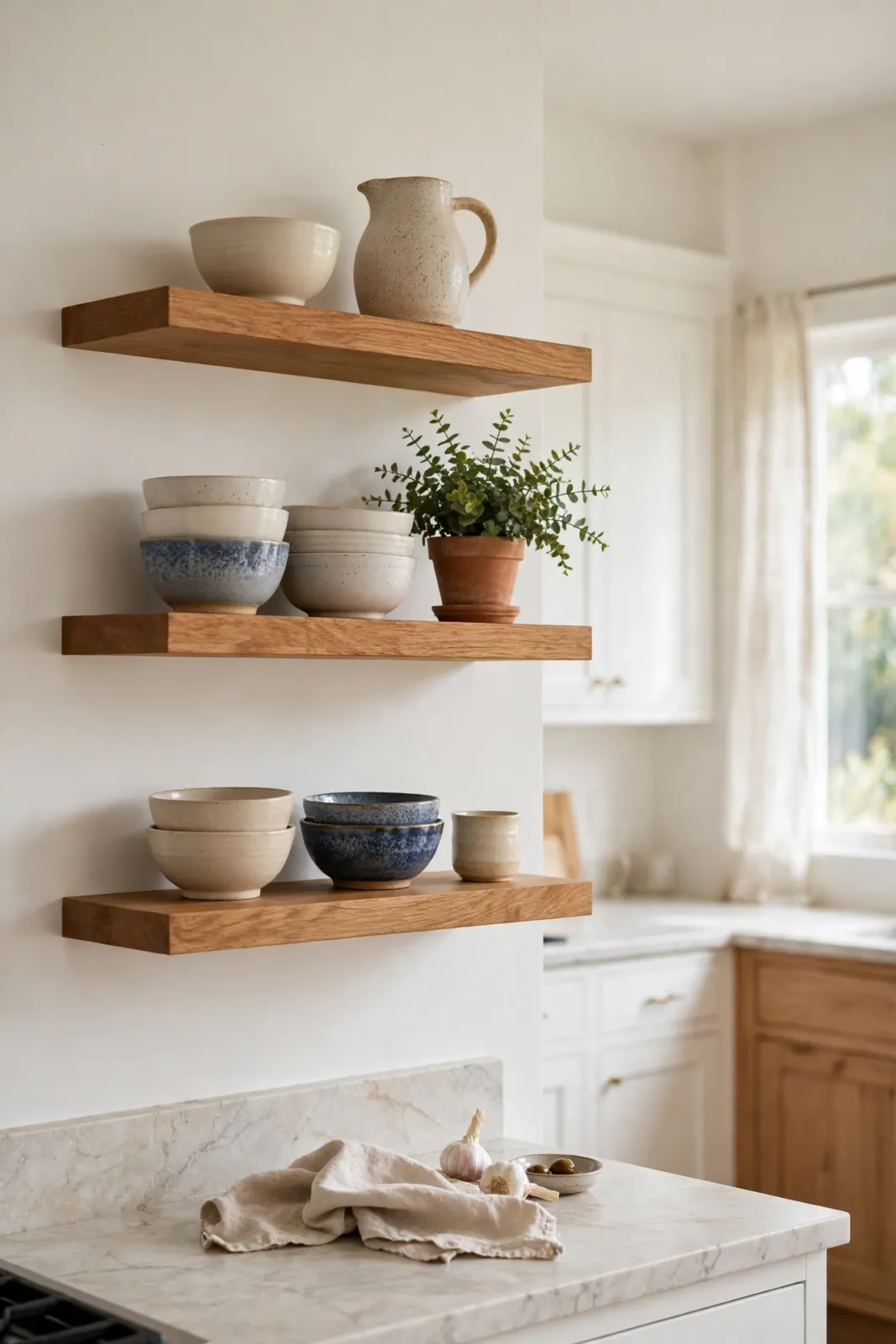
Why Floating Shelves Styling Guide Deserves a Little Planning
A shelf displays everything on it whether you style it or not — that is the whole bargain of open storage. Treating each shelf as a small composition, with a beginning, a middle and breathing room, is what makes stored things read as decor instead of inventory.
The second principle is restraint in interior design terms: negative space. The empty third of a shelf is not wasted storage; it is the frame that lets the used two-thirds look chosen. Kitchens especially need this discipline, because every item there also has a job to do.
Ways 1 to 3: Floating Shelves Styling Guide Basics
Group in threes, then stop
Arrange objects in small groups of three — a stack of bowls, a jug, a plant — with space between groups. Odd groups look natural, and the gaps keep the shelf readable. One shelf usually holds two or three groups, never a continuous row of single items.
Vary height on every shelf
A tall jug beside low stacked bowls, a leaning print behind short jars. Flat, even rows look like a shop stockroom. Aim for a gentle skyline on each shelf: one tall item, one medium, one low in every group.
Repeat one colour across all shelves
Pick the shelf colour story — say white ceramics, warm wood and one green plant repeated — and let it run through every shelf. Repetition is what makes separate shelves read as one calm wall instead of several unrelated displays.

Ways 4 to 6: Floating Shelves Styling Guide by Room
In the kitchen, style the working shelf honestly
Everyday plates, glasses and jars you truly use daily belong on the lowest, easiest shelf, grouped tightly and kept ruthlessly edited. Pretty but rarely used pieces go higher. A kitchen shelf that fights your cooking routine will be cluttered within a week.
In the living room, mix books with objects
Alternate small horizontal book stacks with vertical runs, and break them with one object — a vase, a framed photo, a small sculpture. Books laid flat make natural plinths that raise small objects to a better height.
In the bathroom, corral with trays and jars
Decant cotton wool, bath salts and spare soaps into matching jars and stand bottles on a small tray. Open bathroom shelves stay calm only when loose small items are contained; the tray and jars become the decor while the contents stay practical.

Ways 7 to 9: Keeping a Floating Shelves Styling Guide Working Daily
Leave the breathing space on purpose
When a shelf looks almost right but slightly busy, remove one item rather than adding anything. Stylists edit shelves by subtraction. Photograph the shelf on your phone — the camera is merciless and shows clutter your eye excuses.
Use baskets and boxes on the lowest shelf
The least photogenic necessities — chargers, medicines, spare batteries, pet bits — belong in matching baskets or lidded boxes on the lowest shelf. Closed storage at the bottom, open display above: that order keeps the whole wall feeling tidy.
Refresh one shelf per season, not the whole wall
Swap the plant, change the print, bring in seasonal colour on a single shelf. Small rotations keep open shelves feeling alive and stop the slow accumulation that happens when nothing is ever consciously changed.

How to Do It, Step by Step: Floating Shelves Styling Guide
Style each shelf from empty, in this order, and the composition builds itself — the same routine works for a first styling and a full reset.
- Take everything off the shelves and clean them, then sort the contents into keep-here, store-elsewhere and let-go piles without mercy.
- Return the largest anchor pieces first — stacks of plates, the biggest vase, book runs — spaced evenly across the shelves.
- Add medium pieces next, forming groups of three around the anchors and checking the height varies on every shelf.
- Place plants and the colour accents last, repeating them diagonally across shelves so the eye travels the whole wall.
- Step back to doorway distance, photograph the result, remove one item from any shelf that looks crowded, and live with it a day before final tweaks.
Buying Advice That Saves Money and Regret: Floating Shelves Styling Guide
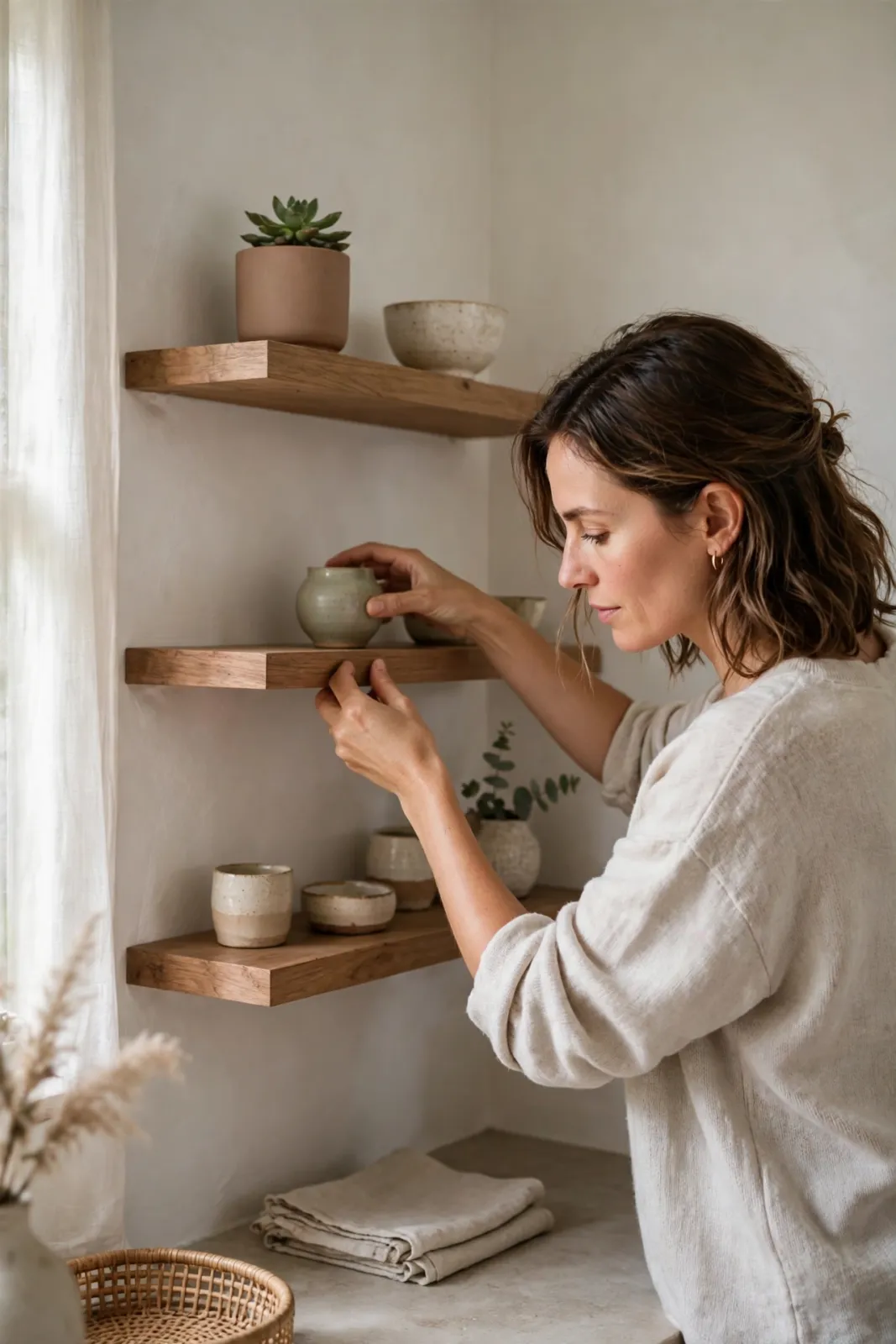
Shelf depth decides what a shelf can hold gracefully: 20 to 25 centimetres suits books, jars and most ceramics; dinner plates need 28 to 30. In kitchens, shallower shelves keep everyday items reachable and visible in one layer — deep open shelves hide things behind things, which is cupboard behaviour in the open. Solid wood or good board on hidden floating brackets looks cleanest, but the bracket rating is the real specification: check the weight limit per pair and stay well under it, especially for stoneware and books.
Fixings matter more with floating shelves than any other kind, because the leverage is unforgiving. Drill into studs or masonry where possible, use proper wall plugs matched to your wall type, and never float a shelf above a child’s bed or a sofa’s head zone if there is any doubt about the fixing. Buy one shelf first and live with it for a month before committing a whole wall — open storage is a habit as much as a look. If you love the display idea but not the dust, our gallery wall arrangement ideas on this site give a similar effect behind glass.
If you prefer your display behind glass, our gallery wall arrangement ideas give a similar effect on the wall.
Common Mistakes to Avoid in a Floating Shelves Styling Guide
- Filling every centimetre of shelf so nothing has visual room to breathe — the single most common open-shelf failure.
- Lining up dozens of unmatched mugs, bottles and jars in one long row, which reads as storage, never styling.
- Putting daily-use items on the highest shelf and display pieces at hand height, the exact reverse of a workable routine.
- Ignoring dust: open shelves in a kitchen collect grease and dust together, so items you never use become visibly grimy.
- Overloading floating brackets with the heaviest books and stoneware at the shelf’s front edge.
Frequently Asked Questions About This Floating Shelves Styling Guide
How do I style floating shelves without them looking cluttered?
Use fewer, larger groups instead of many single items, repeat one colour story across all the shelves, vary the heights inside each group, and protect empty space — a shelf that is two-thirds full looks styled, a full shelf looks stored. Editing by removal, one item at a time, is the fastest route to calm.
What should go on open kitchen shelves?
The things you use every day: plates, bowls, glasses, cooking jars and one or two beloved pieces like a good jug or a plant. Everyday use is also the dust solution — items handled daily never sit long enough to collect grime. Rarely used serving ware belongs in a closed cupboard where it stays clean.
How high should floating shelves be spaced?
Between 35 and 45 centimetres apart suits most uses — tall enough for bottles, jugs and vertical books without wasting wall. In kitchens, place the lowest shelf about 50 centimetres above the worktop so you can work under it comfortably. Measure your tallest regular item and add a few centimetres before fixing anything.
How much weight can floating shelves hold?
It depends entirely on the bracket rating and the wall. Typical concealed brackets are rated per pair and assume solid fixings into studs or masonry; plasterboard alone holds far less. Keep heavy books and stoneware on lower shelves over the strongest fixings, and always stay comfortably below the manufacturer’s stated limit.
How often do open shelves need cleaning?
In living rooms, a fortnightly dust keeps them fresh. In kitchens, wipe shelves monthly and wash displayed items that sit near cooking — grease travels further than people expect. The honest test: if you would not eat off a displayed plate without rinsing it, the shelf is due a clean.
A Warm Final Word on This Floating Shelves Styling Guide
Open shelves reward the household that edits little and often. Start with one shelf styled by these rules, live with it through a normal busy week, and only then decide how much of your storage deserves to be on show.
Pingback: Air Cooler Corner Summer Styling: 7 Ways to Hide the Box, Stay Cool