I bought my first navy striped mariniere jumper on a damp weekend in a small coastal town, mostly because I was cold and it was folded on a table by the door. I put it on over the shirt I was already wearing, looked in the mirror, and understood in about five seconds why this knit has lasted so long. It made my jeans look intentional. I wore it for the rest of the weekend, and then for most of the following month.
That is the quiet strength of a mariniere. Navy and white stripes, a wide boat neckline, a straight unfussy shape — none of it shouts, and all of it works. If yours only ever gets worn one way, or you are thinking of buying one, this guide walks through nine easy ways to wear it with jeans and skirts, plus honest advice on fit, fabric, and the mistakes that make it look tired instead of classic.

Why the Mariniere Never Really Leaves
The mariniere started as a French naval uniform in the 1800s, with a boat neck that was practical at sea. Designers borrowed it, film stars wore it with cropped trousers and ballet flats, and it settled into that rare category of clothes that belong to no one decade. It looks right in photographs from the 1950s, the 1990s, and last spring.
Part of the reason is the stripe itself. Navy and white is high contrast without being harsh, so it brightens the face the way a white shirt does, but with more character. The stripes also give a plain outfit a clear focal point, so everything else you wear can stay simple. The mariniere does the pattern work for the whole look — no printed scarves or busy bags needed.
With Jeans: The Pairing That Always Works
Jeans are the natural home of this jumper, and three versions of the pairing cover most days of the week.
1. Straight blue jeans and white trainers
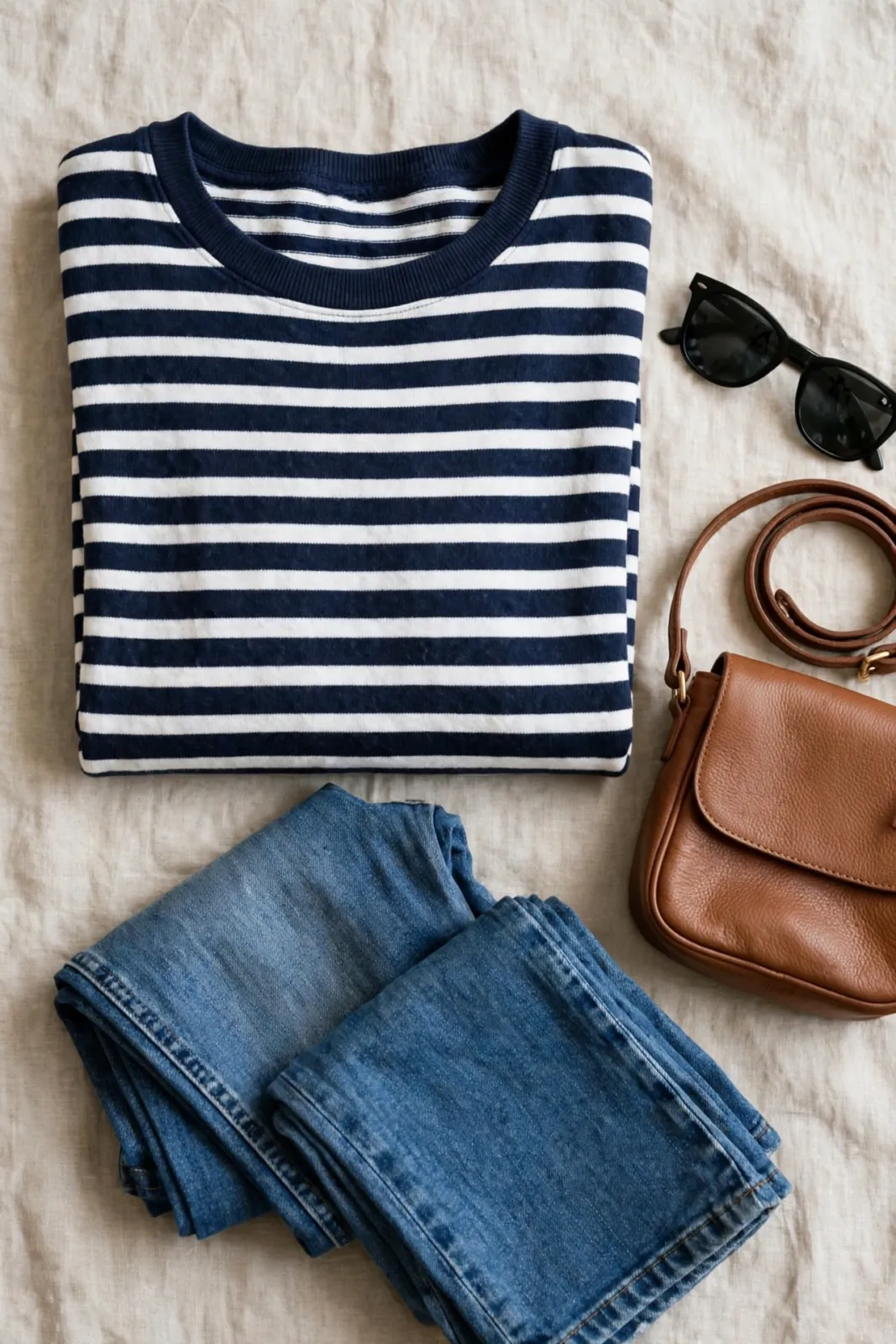
This is still the version I wear most. Choose mid-blue straight jeans, do a small front tuck or let the jumper sit loose, and finish with clean white trainers or loafers. The blue-on-blue works because the denim is softer and lighter than the navy stripe, so the two blues sit together comfortably instead of matching exactly. Add a tan belt if you want one warm note.
2. White jeans for a brighter, cleaner look
White or ecru jeans change the mood completely. The white in the stripe meets the white denim and the outfit looks fresh and deliberate — lovely for spring lunches or travel days. Keep shoes light too: white trainers, nude flats, or tan sandals. Avoid a heavy black boot here; it cuts the leg line and makes the outfit feel top-heavy.
3. Dark jeans and a blazer for smarter days
For a casual office or a dinner where jeans are fine but a jumper alone feels too relaxed, wear dark indigo or black jeans and throw a navy or camel blazer over the top. The stripes peek out at the neckline and cuffs, the blazer adds structure, and loafers or ankle boots finish it. This is also the easiest way to wear the jumper in colder months without hiding it under a coat.
With Skirts: Softer, Dressier, Still Simple
Skirts are where this jumper surprises people. The straight, slightly boxy knit balances a skirt’s movement, so the outfit reads calm rather than fussy.
4. White A-line midi skirt and ballet flats
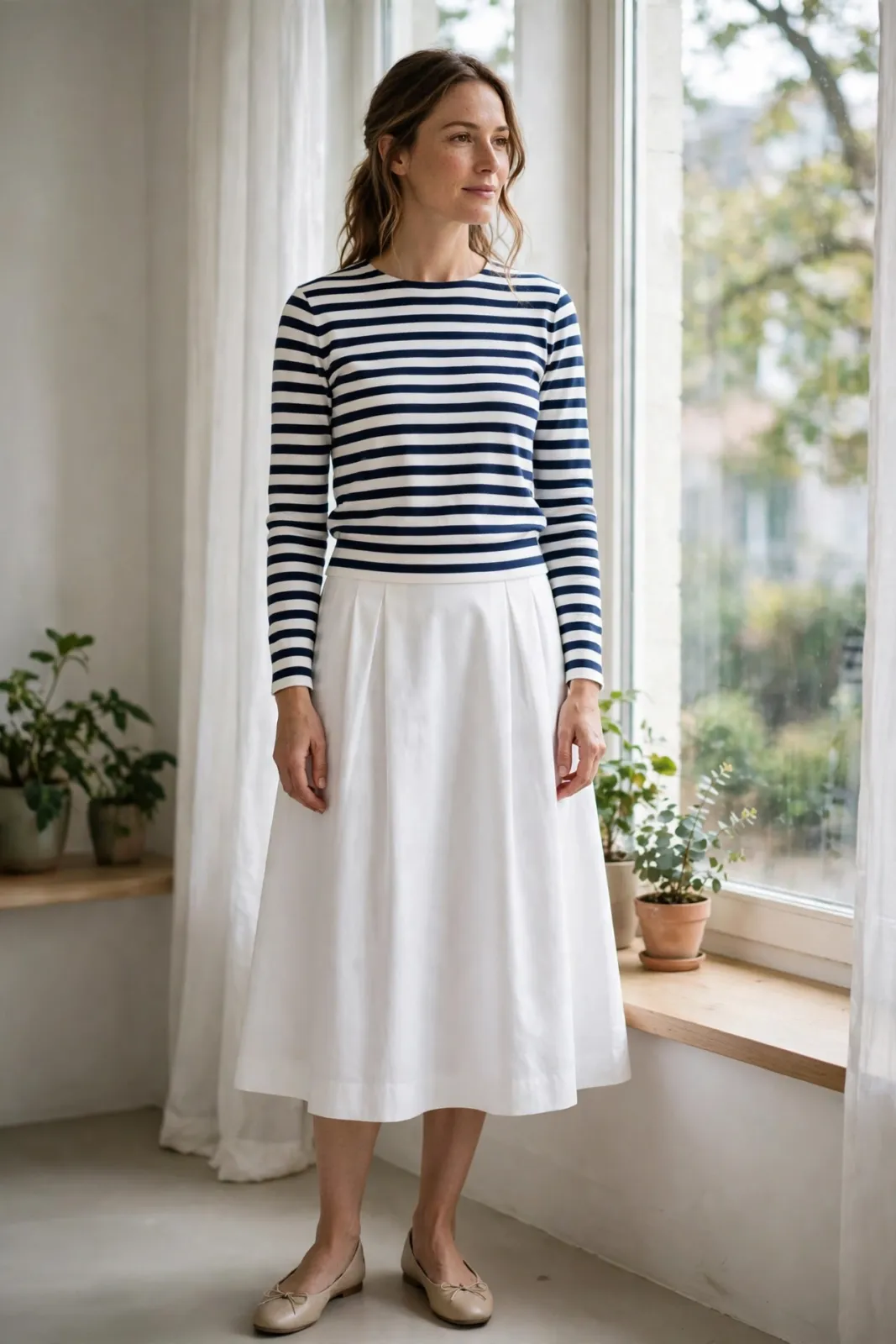
A white or cream A-line midi with the jumper tucked in fully is the prettiest version I know. The tucked waist gives shape, the skirt does the swishing, and ballet flats keep it comfortable. It works for garden parties and long lunches — anywhere you want to look dressed up without wearing a dress. Keep jewellery small, and let your hair stay loose or in a low ponytail.
5. Denim skirt for an easy weekend swap
If jeans feel too expected, a denim midi skirt gives you the same easy blue base with a different silhouette. Tuck the jumper in, add a belt, and wear trainers for daytime or a low block heel for the evening. A midi length looks more current than a very short skirt with this knit, and suits the classic feel of the stripes.
6. Satin or pleated skirt for evening
A navy, cream, or soft gold satin midi turns the mariniere into an evening outfit in about a minute. The matte knit against the sheen of satin is a lovely contrast, and it is a comfortable way to dress for dinner — no tight waistbands, no fiddly straps. Tuck it in neatly, add heeled sandals, a small clutch, and one piece of jewellery you love. Pleated skirts work the same way; just choose a jumper fine enough to tuck without bulking.
Layers, Coats, and Finishing Touches
The last three ways are about what goes over and around the jumper. Seventh, wear it under a trench coat — the stripe at the open neckline stops a beige trench looking flat, and the knit sits smoothly underneath. Eighth, tie it over your shoulders on warmer days, over a white tee or a simple dress; it is practical as well as pretty, giving you a light layer for the evening. Ninth, add one red or tan accent — a red lip, a tan bag, red flats. Navy, white, and a single warm accent never let anyone down.
Keep other patterns quiet, too. Plain denim, plain skirts, and solid coats let the mariniere be the single pattern in the outfit. Two strong patterns plus stripes usually looks busy rather than interesting.
How to Style It, Step by Step: A Five-Minute Routine
When I am half awake and need to get dressed quickly, I follow the same short routine:
Step 1: Pick the bottom half first. Jeans for busy, practical days; a skirt when you want the outfit to feel a little more considered. Decide this before you touch anything else.
Step 2: Choose your tuck. Full tuck with skirts and high-waisted jeans, a small front tuck with straight jeans, no tuck only if the jumper ends right at the hip bone — longer than that, worn loose, it looks sloppy.
Step 3: Check the neckline sits wide and flat, with no strap or collar peeking out. A plain white tee underneath on very cold days is fine, as long as it stays hidden.
Step 4: Choose shoes by length. Trainers and loafers with jeans, ballet flats or low heels with skirts, ankle boots when it is cold. Then add one bag and stop.
Step 5: Do the mirror check for proportions: waist visible, sleeves at the wrist bone, stripes sitting straight across the body rather than pulling. Adjust the tuck once, then leave it alone.
Fit, Fabric, and Budget: Buying One That Lasts
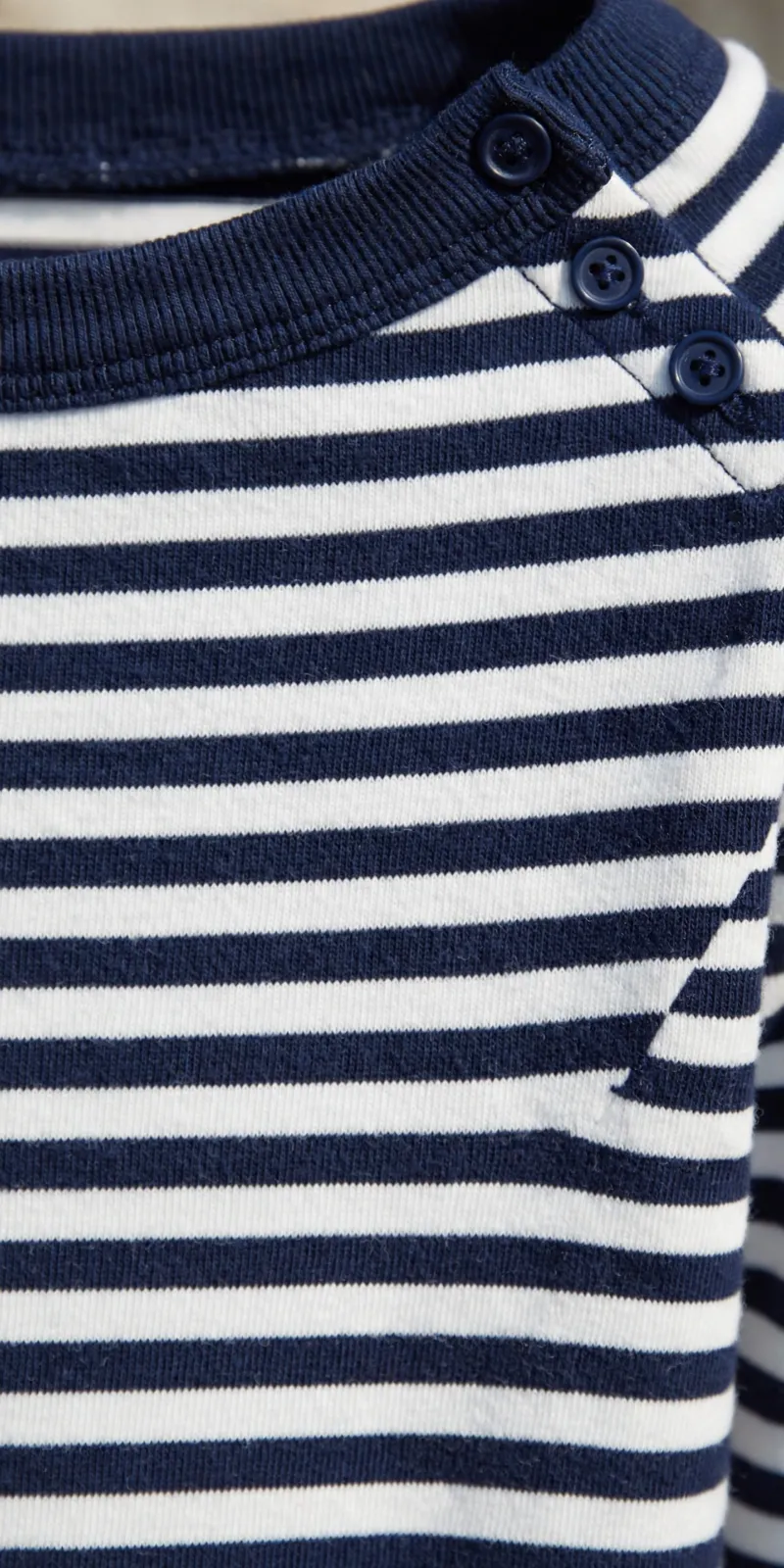
Fit matters more than brand here. A good mariniere sits relaxed through the body without clinging, and ends around the hip bone so it tucks and untucks easily. If you are between sizes, size up — slightly loose looks intentional, while tight loses the easy shape that makes it charming. The boat neck should feel wide but secure; if it slips off one shoulder constantly, you will stop wearing it.
For fabric, cotton and cotton-rich knits are the classic choice: breathable, easy to wash, and crisp. A cotton-wool blend adds winter warmth and holds its shape well. Very thin, stretchy versions are cheaper but often twist at the seams and fade unevenly, which ruins the clean stripe. On budget, one well-made jumper will outlast three flimsy ones. Check that stripes line up at the side seams and the neckline is ribbed so it will not sag, and store it folded, not hung.
Common Mistakes to Avoid
Wearing it too tight: the mariniere is meant to skim. Clinging stripes pull across the body and the whole classic effect disappears.
Adding too many nautical extras: an anchor necklace, a sailor hat, and rope-detail shoes on top of stripes turns an outfit into a costume. The jumper is the theme; everything else should be ordinary.
Ignoring the tuck: a long, loose hem over a skirt or jeans with no tuck and no shape is the main reason people decide this jumper does not suit them. Nine times out of ten, a tuck fixes it.
Pairing it with clashing blues: bright royal blue or turquoise bottoms fight the navy stripe. Stick to denim blues, white, cream, black, tan, and red accents.
Hanging it to dry: knitwear stretches on a hanger. Wash cold, reshape gently, and dry flat or fold it in a drawer.

Frequently Asked Questions
Can I wear a navy striped mariniere jumper to work?
In most smart-casual workplaces, yes. Pair it with dark jeans or tailored trousers, a blazer, and loafers, and it reads neat and professional. In a formal office, save it for dress-down days.
Do horizontal stripes suit everyone?
They suit far more people than the old warnings suggest. The trick is scale and fit: medium-width stripes on a relaxed jumper look good on most bodies. If you are petite, choose narrower stripes; if you are tall, the classic wider stripe is made for you.
What colours go best with a navy and white mariniere?
Denim blue, white, cream, tan, camel, black, and grey are the safe bases, and a single red accent is the classic finishing touch. Khaki and soft gold also work well. Avoid bright royal blue and neon shades, which clash with the calm navy.
How do I stop the white stripes from going grey in the wash?
Wash it inside out on a cold, gentle cycle with similar colours, and skip harsh detergents meant for pure whites, which can fade the navy. Dry it flat away from direct sun. Worn and washed this way, a cotton mariniere keeps its contrast for years.
Can I wear it in summer, or is it only a winter knit?
A cotton mariniere is a genuine summer piece, especially in the evening or by the sea when the air cools. Wear it with white jeans, a denim skirt, or tied over your shoulders above a dress. Save the wool-blend versions for autumn and winter layering.
A mariniere will not transform your wardrobe overnight, and it does not try to. What it does is quieter and more useful: it gives you a reliable answer on mornings when nothing seems to go together, with the jeans and skirts you already own. Buy one good one, learn your tuck, and let it earn its place. Mine is still the jumper I pack first and reach for without thinking — I suspect yours will be too.