Paint a wall green and you have a coloured room. Add the right plants and you have a place that feels grown rather than decorated — softer, calmer, and oddly more finished than rooms that cost far more. Green walls and plant pairing works because wall and leaf are the same colour family at different depths: the wall is the still background, the plants are the living foreground, and together they blur the line between indoors and garden. Done carelessly, though, the same pairing can turn flat or swampy. The difference is choosing the green for your light, then matching plant shapes to it.
This guide covers the greens that behave in real homes, the plants that flatter each one, and the pots, fabrics and woods that keep the combination breathing.
Table of Contents
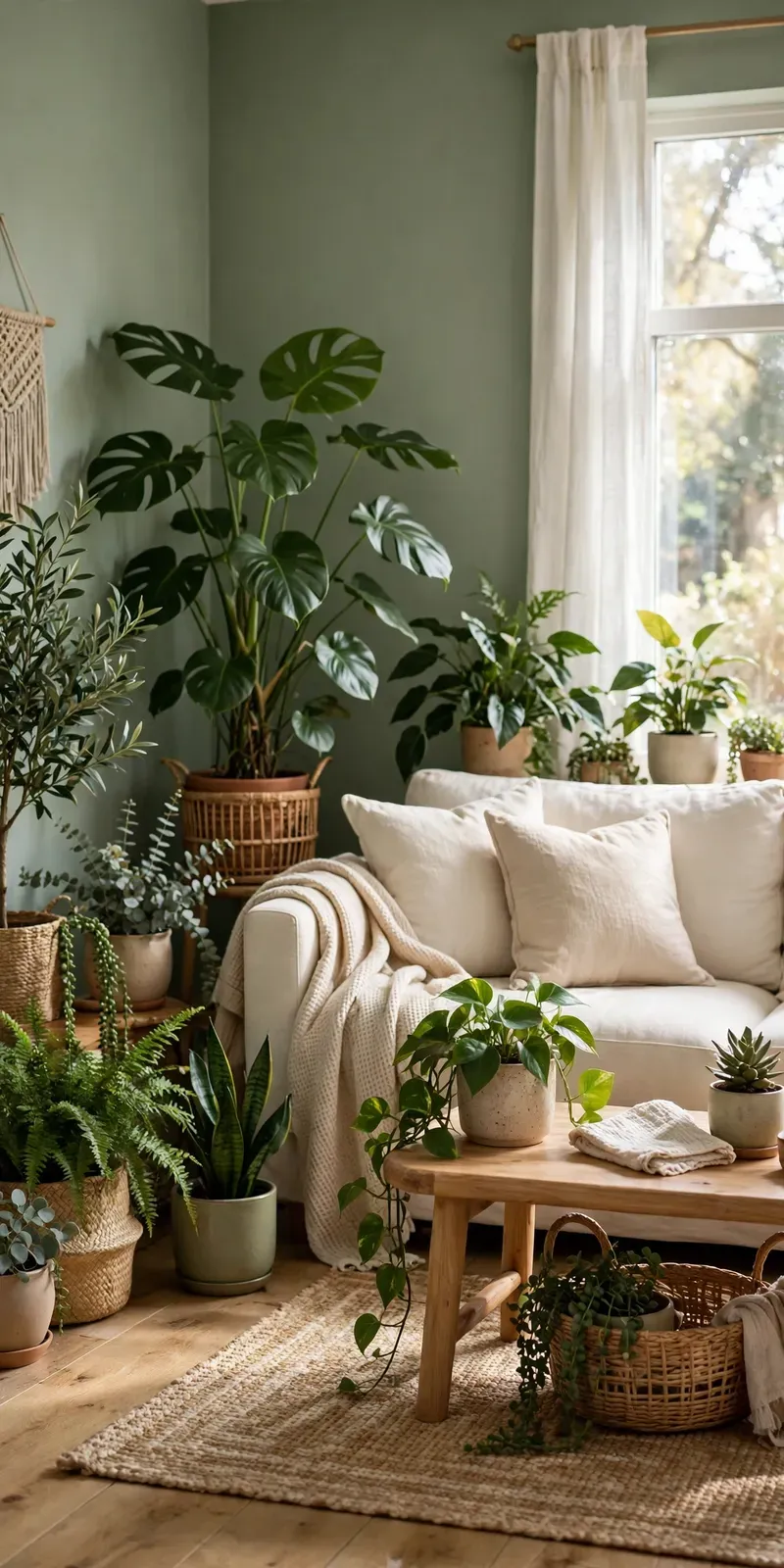
Choosing the Green: Sage, Olive, Forest and Emerald
Start with light, not with the paint chart. North-facing and shaded rooms turn green paint cooler and darker, so warm, yellow-leaning greens — sage, olive, soft moss — keep them friendly. Bright, sun-filled rooms can carry the blue-leaning and deeper greens: forest, emerald and bottle green will look rich at noon and jewel-like by lamplight. The commonest disappointment with green walls is a colour that was perfect on a bright shop wall and funereal at home, which is why a large test patch, watched morning and evening, is non-negotiable. Every later choice in green walls and plant pairing gets easier once the light is read honestly.
Depth is the second decision. Pale sage behaves almost like a neutral and suits whole rooms, rentals and the nervous. Mid greens — olive, eucalyptus, fern — are the workhorses for one or two walls. Deep greens are best kept to a single wall, a bedroom, or a room with strong light, where they read as cocooning rather than heavy. Whichever depth you choose, keep the finish matte or eggshell; shine makes green look like plastic, while a flat finish lets it absorb light the way foliage does. That balance of light and depth is the foundation of good green walls and plant pairing.
Green Walls and Plant Pairing: Matching Leaf to Wall
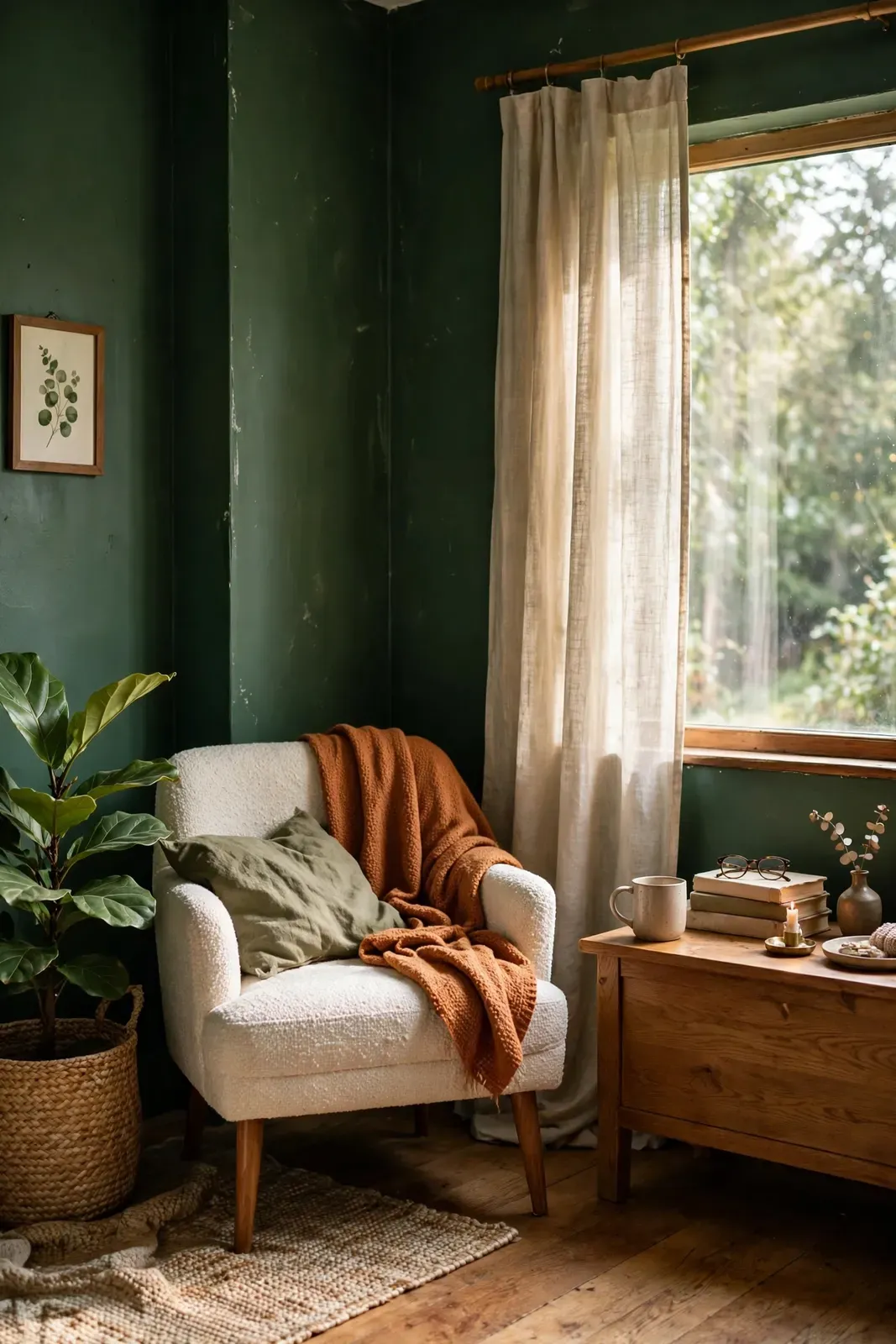
The pairing rule is contrast within the family. Against a pale sage wall, choose deep, glossy leaves — monstera, rubber plant, fiddle-leaf fig — so the plants stand forward as the darker note. Against a deep forest wall, do the opposite: pale, silvery or fine-textured plants, such as eucalyptus stems, maidenhair fern and pale-variegated pothos, which catch light and lift the wall behind them. When wall and leaf are exactly the same mid-tone, both disappear into a green blur; one of them must always be clearly lighter or darker. Hold to that one rule and green walls and plant pairing almost arranges itself.
Shape matters as much as shade. Big architectural leaves suit big calm walls; trailing plants suit shelves, corners and the tops of cupboards where their lines can fall; upright, spiky plants — snake plant, dracaena — hold their own in corners and beside furniture. The classic houseplant collection mixes all three habits, and a green room is simply that collection given a backdrop in its own colour. The monstera, with its split, sculptural leaves, remains the anchor plant most people start with, and against green paint its leaf shadows do half the decorating for you.
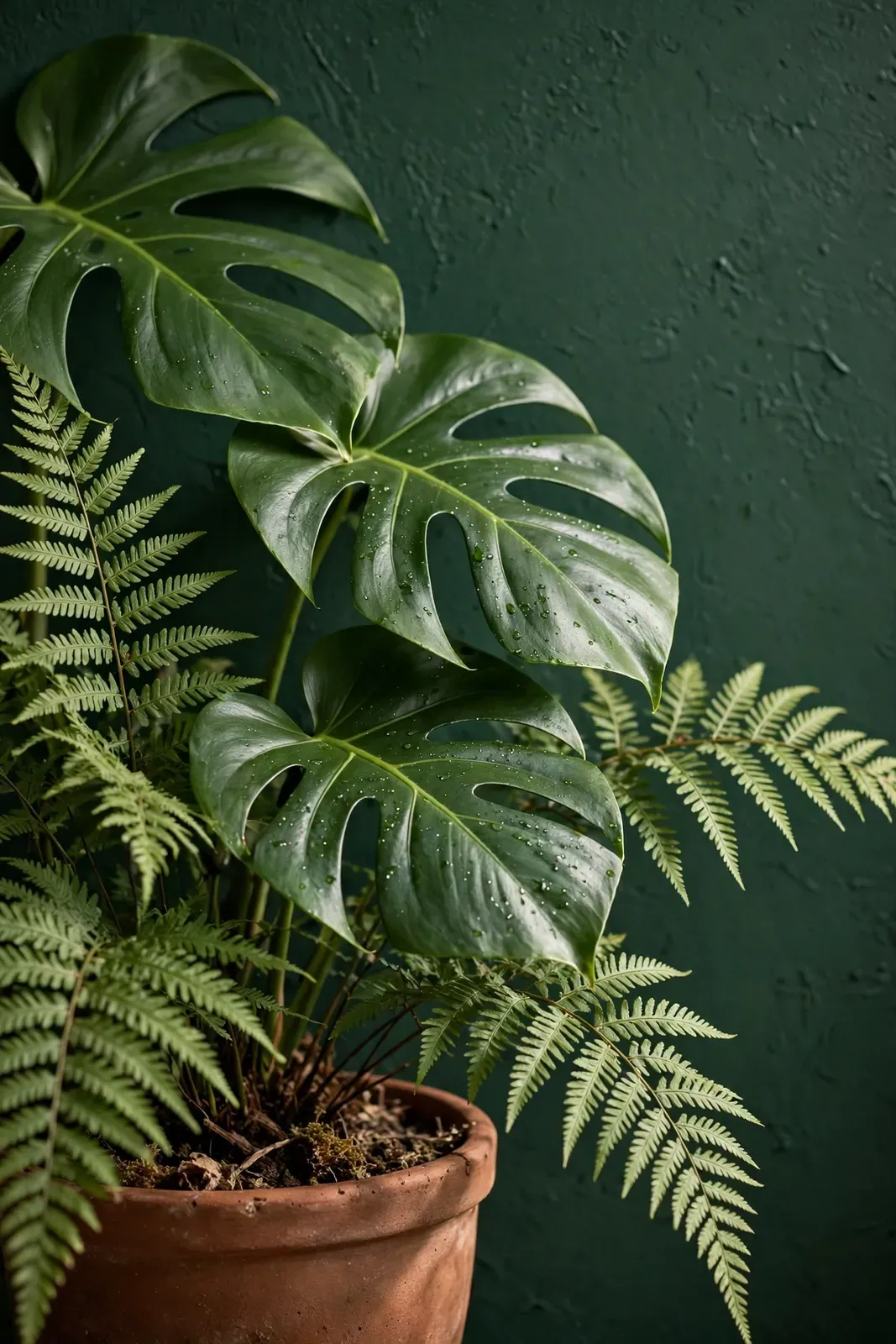
Pots and Planters Against Green Walls
Pots are where green rooms are won or lost. Terracotta is the safest partner: its warm orange-brown is green’s natural complement, it suits every depth of green paint, and a weathered pot looks better with age. Cream and stone pots give a lighter, calmer register and work beautifully against deep walls. Black pots ground pale green walls and repeat nicely if the room has black frames or hardware.
What to avoid: pots in the same green as the wall, which vanish, and busy patterned pots in several colours, which fight the foliage. Group plants in clusters of three with varied heights — one tall, one medium, one trailing — rather than lining them up singly along a wall. A cluster reads as a small landscape; a row reads as a shop shelf. Baskets make kind outer pots for large floor plants and add the woven texture green rooms need. In green walls and plant pairing, that woven, natural texture does the softening work.
How to Build Green Walls and Plant Pairing, Step by Step
Step one: test the paint as a large patch and live with it for two days of changing light. Step two: paint, then wait — decorate only after the colour has settled and you have seen it at night. Step three: place the anchor plant, the largest one, where it will be seen from the doorway; this is the pairing’s headline. Step four: add one cluster of three smaller plants at a different height, on a stand, shelf or table. Those first four moves set the bones of green walls and plant pairing.
Step five: dress the wall between the plants sparingly — a pale-framed print, a mirror, or nothing at all; green walls need less art than white ones because the plants are already pictures. Step six: bring in the counterweights — cream textiles, warm wood, one brass or black note — so the room is green-led, not green-only. Step seven: review after a month. Plants grow, light shifts with seasons, and the pairing usually wants one plant moved rather than more plants bought.
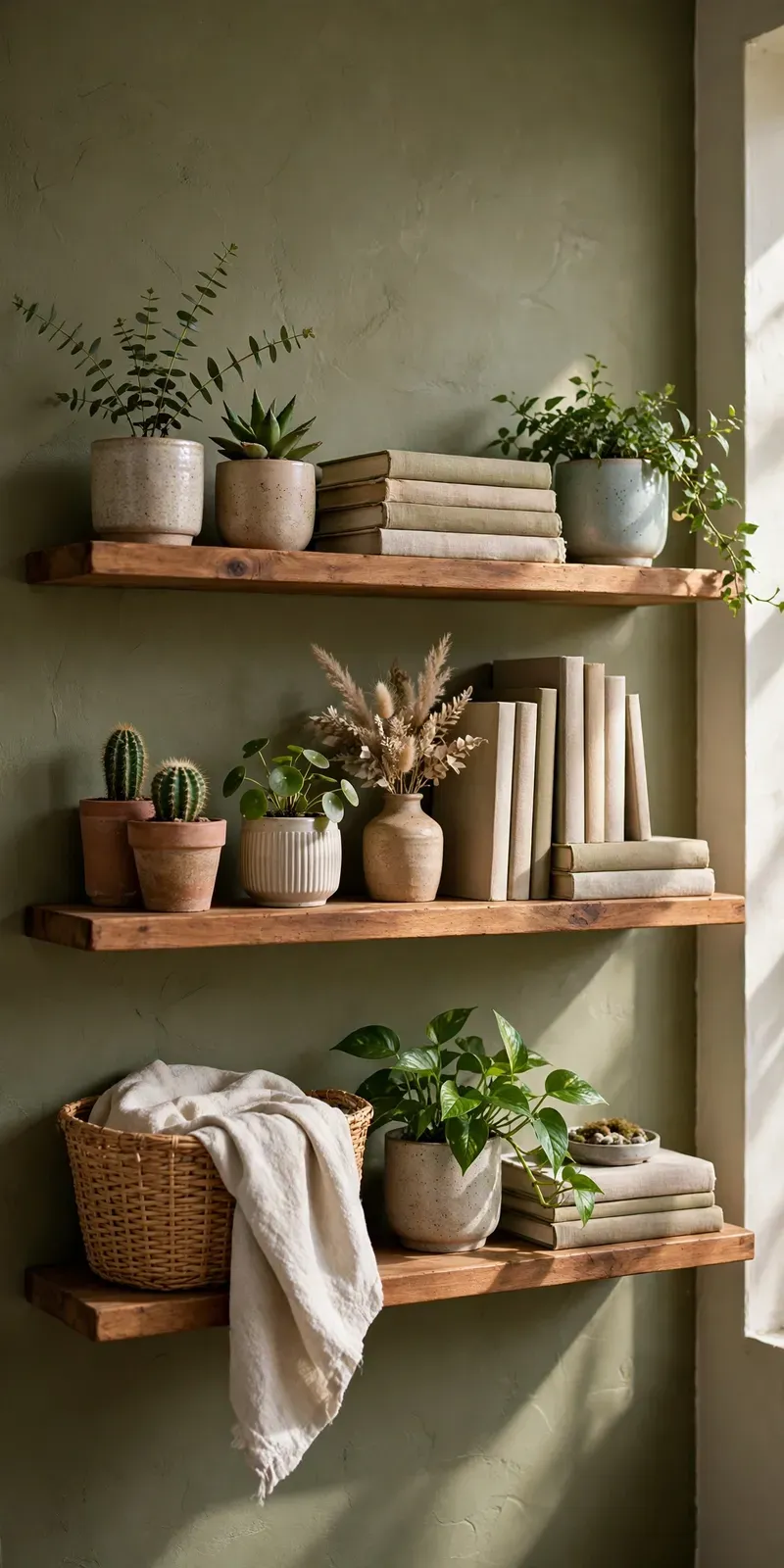
Fabrics, Wood and Metal That Keep Green Breathing
Green rooms stay fresh when the textiles go quiet. Cream, oatmeal and warm white linen or cotton give the eye rest between wall and leaf, and they are why the classic green room photograph always seems to contain an unbleached sofa. If you want pattern, let it be botanical only in the loosest sense — a stripe, a small check — and keep it in the same cream family. In green walls and plant pairing, quiet textiles are the breathing space, not a compromise.
Wood should lean warm: honey oak, walnut and teak tones sit inside green’s natural palette of bark and earth. Very pale, grey-washed wood can look chilly against deep green, though it works with sage. For metal, brass is green’s oldest ally and warms evening light; black is the modern option and sharpens pale greens. Chrome and bright silver are the hardest to place here — their cold shine belongs to a different family of rooms. The rule through all green walls and plant pairing is warmth first, cold shine last.
Budget and Buying Advice for a Green Room
Paint is the cheapest large change in decorating, and a single feature wall needs only a small tin — this whole look can start for the price of paint plus one good plant. Spend on the anchor plant: a healthy, bushy specimen from a nursery, sized for its corner, will out-perform three small cheap ones within a year because it already has the shape you are paying for. Save on the supporting cast: pothos, spider plants and ferns are inexpensive, fast-growing, and freely propagated from cuttings — ask friends before buying. That is the quiet economy of green walls and plant pairing: the big effect costs very little.
Pots are the other place to economise. Terracotta is cheap new and cheaper second-hand, and uniform terracotta across different plants looks deliberate, not poor. Plant stands can be stools, upturned crates and stacks of books while you decide what the room really needs. One honest warning: budget for the plant’s future, not its present — check the mature size before buying, because the monstera that fits a shelf today will want a floor corner within two seasons. Plan that growth into your green walls and plant pairing from the start and nothing needs rescuing later.
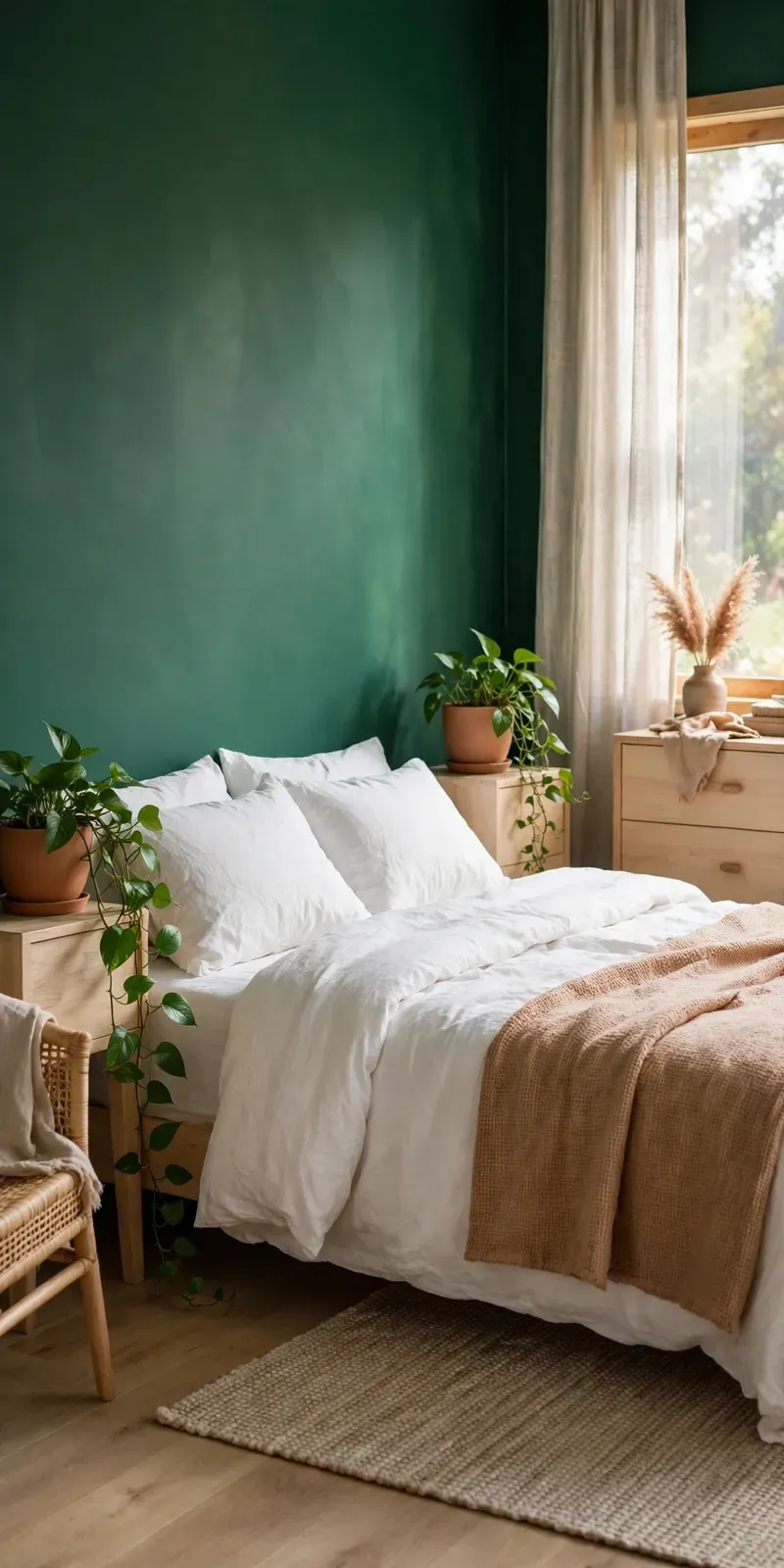
Common Mistakes With Green Walls and Plants
Mistake one is matching too exactly: wall, cushions and pots all in the same green, so the room becomes a single flat note. Keep the wall one shade, the plants clearly lighter and darker, and the textiles cream. Mistake two is ignoring the light direction and painting a dark green in a dim room, then blaming the colour; deep green needs either daylight or generous lamplight to stay jewel-like instead of muddy. Most green walls and plant pairing mistakes are really sameness and light mistakes.
Mistake three is plant neglect disguised as styling — dusty leaves, a dying fern in the corner, pots with no drainage quietly damaging furniture. A green room advertises its plants, so their health is part of the decor; choose species your light can actually support rather than the ones in the photograph. Finally, avoid scattering single small plants evenly around the room. Clusters look like landscapes; lonely pots look like leftovers. In green walls and plant pairing, healthy leaves are part of the design, not an afterthought.
Frequently Asked Questions
Which green is safest for a first try?
Sage. It behaves like a warm neutral, suits most light, pairs with cream, wood and terracotta without argument, and is easy to live with at whole-room scale. Paint one wall first if you are unsure; sage rarely needs retreating from. It is the easiest doorway into green walls and plant pairing.
Do green walls make a room look smaller?
Deep green can draw a wall visually closer, which in a bedroom feels cocooning rather than cramped. In small rooms, keep deep green to one wall, use pale greens elsewhere or cream on the remaining walls, and let mirrors and light textiles do the spacing work.
Which plants are hardest to kill against green walls?
Pothos, snake plant, spider plant and ZZ plant tolerate missed waterings and middling light while still giving you three different leaf shapes. Start with these, cluster them well, and add fussier plants only once the routine is habit.
Can green walls work in a rental?
Often yes with permission for one wall, and sage is the easiest colour to paint back. Without permission, fake the pairing: a large green-leaf tapestry or curtain behind a real plant cluster gives much of the effect and leaves with you. Either way, green walls and plant pairing adapts to the lease you have.
What colour sofa works best with green walls?
Cream and oatmeal are the reliable choices, followed by warm tan leather and soft grey in bright rooms. They rest the eye between wall and foliage and let cushions in rust, mustard or deep green carry any extra colour. Answer that first and the rest of green walls and plant pairing falls into place around it.
Let the Room Grow Into Itself
Green walls and plant pairing is the rare scheme that improves with time, because half of it is alive and changing. Choose the green your light deserves, contrast leaf against wall, cluster in threes, and keep the textiles quiet. Start with one wall and one handsome plant this month; by next season the corner will have begun decorating itself.