Table of Contents
A mirror is the hardest-working decoration you can hang: it returns light to dark corners, doubles the view of a window or a favourite picture, and makes a modest room feel noticeably larger — all for less than most lamps. Wall mirror placement ideas matter because a mirror only gives back what it faces; placed carelessly it reflects a cluttered shelf or a bare ceiling and earns its keep for nobody.
This guide shares nine placements that reliably work, the height and angle rules behind them, a simple routine for testing a position before you drill, buying advice on size and frames, and the mistakes that waste a good mirror. Whether your home is a compact flat or a family house with one dark hallway, at least two of these will fit.

Why Wall Mirror Placement Ideas Deserves a Little Planning
A mirror brightens a room by redirecting daylight rather than creating it, so its first job is always about what sits opposite. Facing a window, it effectively becomes a second window; facing a lamp or a pale wall, it spreads a softer, smaller glow.
Size works the same way in interior design as it does in a photograph: a large mirror changes how big a room feels, while a small mirror is read as an ornament. If the goal is light and space, buy the largest mirror the wall and budget honestly allow.
Ways 1 to 3: Wall Mirror Placement Ideas for Maximum Light
Directly opposite a window
The classic placement and still the best. The mirror catches the full view and sky light and throws both back across the room. In living rooms this works above the sofa facing the window wall; in bedrooms, on the wall the window faces as you enter.
On the wall beside a window
If opposite is impossible, the adjacent wall is the next best. The mirror catches light at an angle and bounces it into the room’s darker side. This placement also suits rooms where the opposite wall is the television wall.
Behind a light source
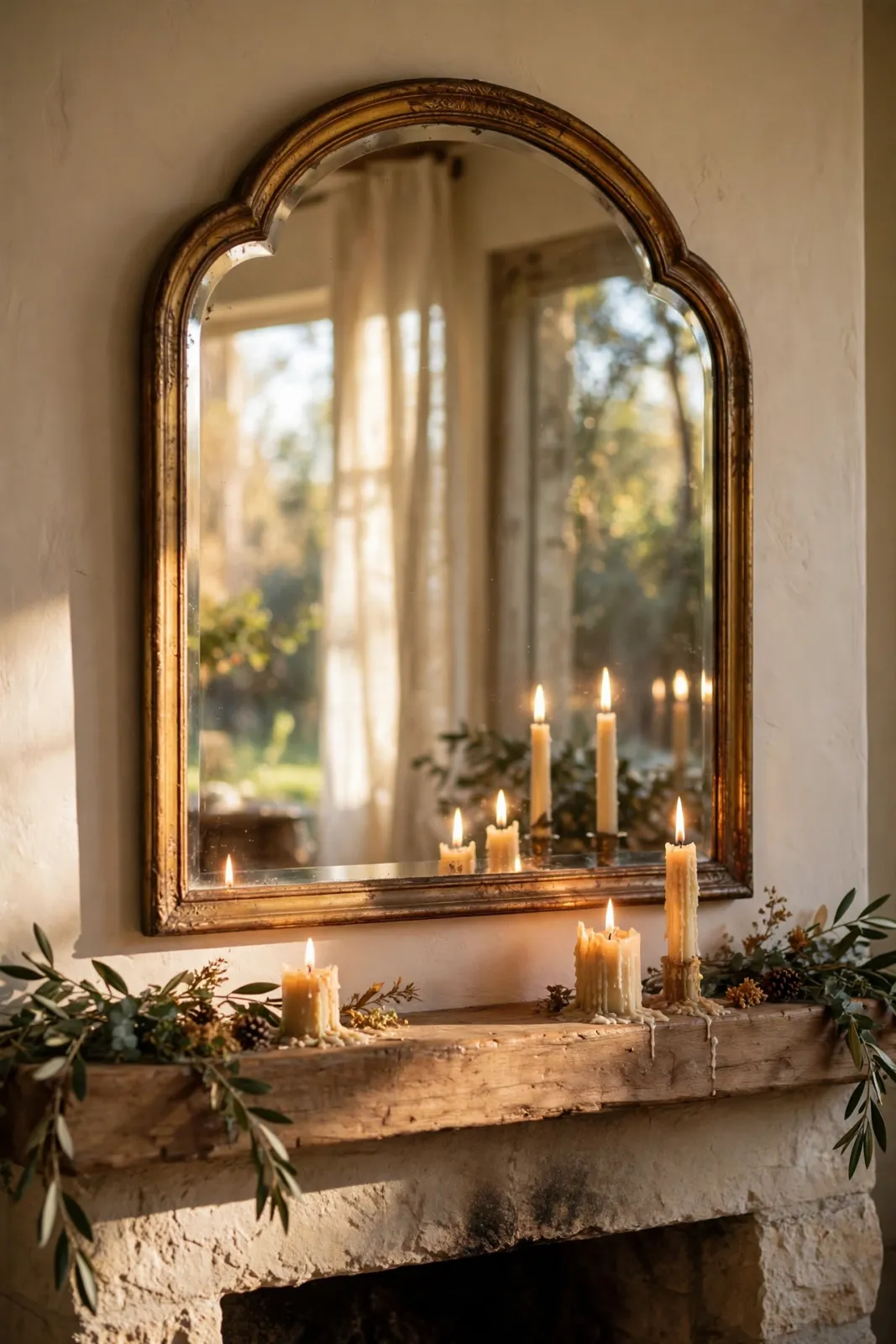
Hang a mirror behind a table lamp, a pair of candles on a mantel, or opposite a pendant light and the glow visibly doubles. Dining rooms benefit most — a mirror reflecting candlelight or a warm pendant makes ordinary dinners feel like occasions.
Ways 4 to 6: Wall Mirror Placement Ideas Above Furniture
Above a console in the entryway
The entryway mirror earns its place twice: it gives the hall light and depth, and it is the last-check mirror everyone actually uses. Round mirrors soften narrow halls; keep the centre at eye level and leave room on the console for keys and a small tray.
Above a mantel or low cabinet
A mirror centred above a mantel, low sideboard or dresser anchors the furniture and reflects the best part of the room. Leave 10 to 15 centimetres between the furniture top and the mirror’s lower edge so objects on the surface can sit in front of it.
Above the sofa, sized to the sofa
A mirror above a sofa should span about two-thirds of the sofa’s width, like a gallery arrangement, and hang low enough to belong to the seating group. Arched and round shapes soften the long horizontal line of a sofa back.

Ways 7 to 9: Wall Mirror Placement Ideas for Small and Dark Spaces
A full-length mirror in a bedroom corner
Leaning or hung, a tall mirror in the bedroom corner near the wardrobe makes dressing practical and pulls morning light into the room’s darkest angle. Angle it very slightly and it reflects the window without reflecting the unmade bed at dawn.
A pair of mirrors for symmetry
Two matching tall mirrors flanking a window, a fireplace or a bed create the calm, ordered feeling of a much more expensive room. Pairs work because the eye reads them as architecture. Keep frames identical and spacing exact.
A mirror at the end of a hallway
The end wall of a dark hallway is prime mirror territory: it borrows light from the rooms off the hall and removes the tunnel feeling. Choose a size that nearly fills the end wall’s width, and hang it so it reflects a doorway’s light rather than a blank side wall.

How to Do It, Step by Step
Testing before drilling takes ten minutes and saves every mirror mistake. Do it in daylight and again in the evening, because a mirror has two different jobs across the day.
- Stand where you will most often sit or stand in the room and note what you actually want to see reflected — a window, a picture, a plant — not just where the blank wall is.
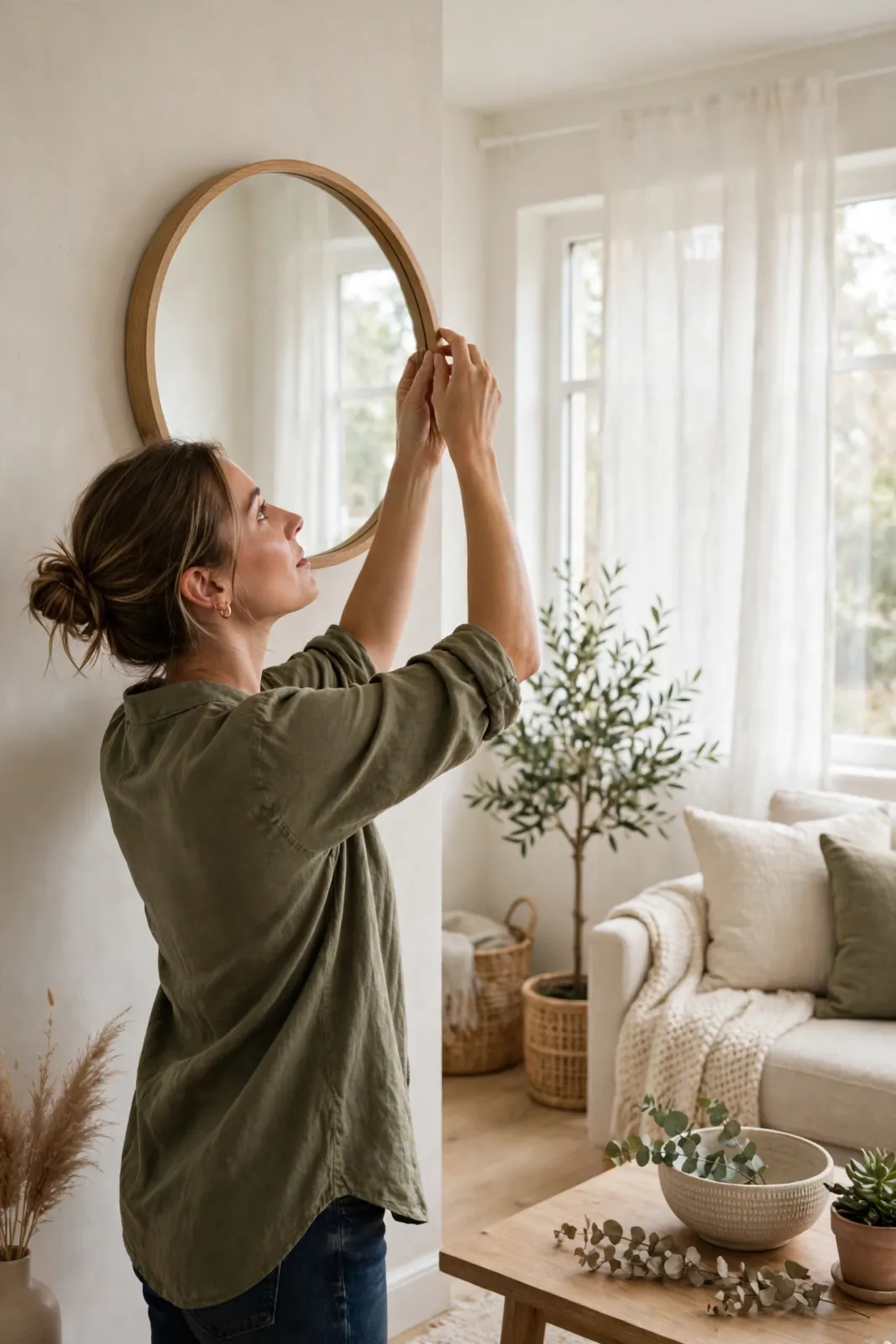
- Have a helper hold the mirror (or tape its outline in painter’s tape with a sheet of foil or a large photo inside it) at the candidate position.
- Check from the doorway, from the main seat, and from standing height: the reflection should hold something pleasant at every angle.
- Confirm the height: the mirror’s centre near eye level, about 145 centimetres, adjusted so tall and short household members both catch themselves in entryway mirrors.
- Mark the fixing points, check the wall type, and use fixings rated well above the mirror’s weight before hanging.
Buying Advice That Saves Money and Regret
Buy size first and frame second. For light and space, a plain large mirror outperforms a small ornate one every time. Thin frames in black, warm wood or brass suit most rooms and let the reflection be the decoration; a chunky vintage frame is a statement piece and should be the room’s one star, not one of several.
Check the glass quality in the shop by looking at a straight edge reflected at an angle — cheap mirrors distort noticeably. For bathrooms and steamy rooms choose a mirror rated for damp conditions, and anywhere children play, prefer safety-backed or acrylic mirrors. A leaning floor mirror still needs a wall strap at the top; a beautiful mirror is never worth a falling risk. For more light tricks, our bedroom lighting guide on this site pairs mirrors with warm lamps. For the walls around your mirrors, our gallery wall arrangement ideas show how to group frames and mirrors together.
Common Mistakes to Avoid
- Hanging a mirror opposite clutter, a bare ceiling or the television’s black screen, then wondering why it adds nothing.
- Choosing a mirror far too small for the wall, so it reads as a stray object instead of a window-like feature.
- Hanging it too high, reflecting only ceiling and light fittings — pretty to nobody sitting down.
- Forgetting to check the evening view: a mirror that reflects a harsh bare bulb at night glares all evening.
- Using one small screw or an adhesive strip for a heavy mirror. Mirrors need fixings rated for their real weight.
Frequently Asked Questions
Where is the best place to hang a mirror in a living room?
Opposite or beside the main window, above the sofa or mantel, so it reflects daylight and the best view in the room. If the sofa faces the window, a mirror above the sofa is ideal; if not, the wall adjacent to the window usually gives the strongest light return for the seating area.
How big should a mirror above a sofa or console be?
About two-thirds the width of the furniture below it is the reliable proportion. It should never be wider than the furniture itself. For a console in a hall, a round mirror slightly narrower than the console, centred at eye level, is almost impossible to get wrong.
Do mirrors really make a small room look bigger?
Yes, when they reflect light and a view rather than a blank wall. A large mirror opposite a window visually extends the room because the eye reads the reflection as more space. The effect is strongest with large, simply framed mirrors hung at eye level, and weakest with small decorative mirrors hung high.
Should a mirror face the front door?
Opinions differ by tradition, but practically: a mirror in the entryway is useful and welcoming, angled so it reflects light and the hall rather than staring straight back at the entering person. A slight offset — on a side wall or above a console — gives the benefit without the startling head-on reflection.
How high should a wall mirror be hung?
Centre the mirror at about 145 centimetres from the floor for a standalone mirror. Above furniture, hang it 10 to 20 centimetres above the surface so it groups with the piece below. In dining rooms, hang it a little lower so seated diners catch the reflection of the table and lights, not the ceiling.
A Warm Final Word
Before you buy anything else for a dark or small room, try moving a mirror. One honest hour of testing positions costs nothing, and the right wall can give you the feeling of an extra window you never had to build. Start with the wall mirror placement ideas that borrow the most daylight, then try the wall mirror placement ideas that sit above furniture, and keep the wall mirror placement ideas that feel calmest from where you sit. The best wall mirror placement ideas are always the ones that give light back to the people in the room.
Pingback: Gold Accents Without Overdoing: 7 Essential Warm Metal Tips