Gold is the most tempting accent in home decor and the easiest to ruin. One brushed-brass lamp can make a plain room feel warm and finished; twelve shiny gold objects can make the same room feel like a wedding hall storeroom. Gold accents without overdoing them are a question of dose, tone and placement, and the good news is that restraint is cheaper than excess. This guide walks through where gold earns its place, which finish to choose, and how much is enough.
The working principle is simple: gold should behave like jewellery on an outfit. It picks out a few chosen points, catches light there, and lets everything else stay calm. When you can count a room’s gold pieces on one hand and each one has a job, you are in the right territory. Everything that follows is about gold accents without overdoing them, step by step and room by room.
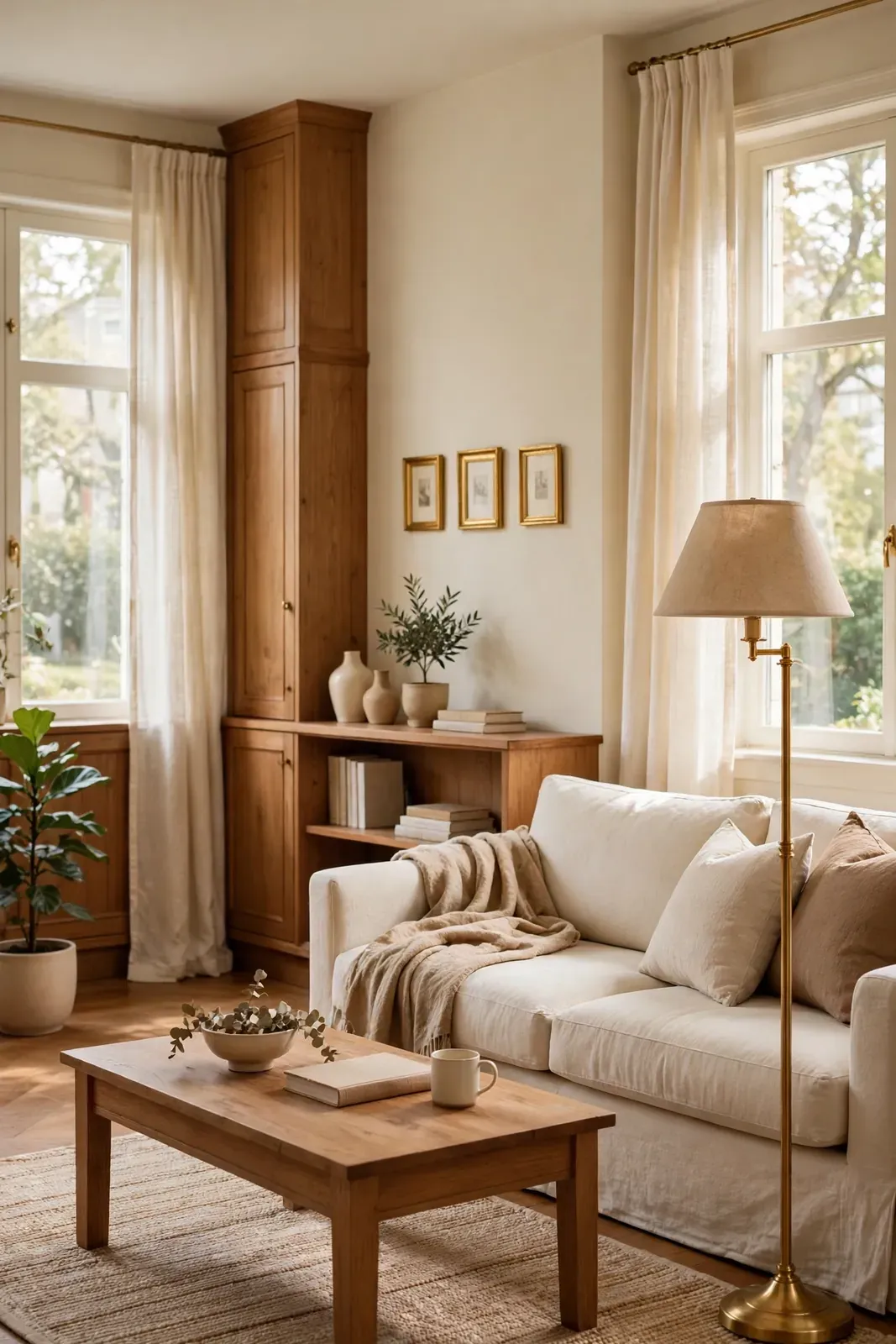
Why Gold Accents Without Overdoing Them Work So Well
Gold tones are warm, and warmth is what most modern rooms lack. Grey floors, white walls and black screens can leave a space feeling efficient but cold; a small amount of warm metal shifts the emotional temperature without changing a single large item. Gold also reflects light in a soft, flattering way, which is why candlelight and lamplight beside brass feel instantly generous. That softness is exactly why gold accents without overdoing them suit so many different styles.
There is a long craft history behind the effect. Gilding — applying a whisper of gold over wood, metal or plaster — existed precisely because a thin layer gives the full visual reward of gold at a fraction of the cost. Modern brass and gold-finish accents are the same bargain: the eye reads the warm surface, not the price tag, provided the finish is soft rather than mirror-bright.
Choose Your Gold: Finish and Tone Come First
Before buying anything, pick one gold and stay loyal to it. Brushed or satin brass is the most forgiving: warm, muted, and happy beside wood, linen and stone. Antique brass runs deeper and slightly browner, suiting traditional rooms and dark colours. Polished gold and rose gold are the hardest to dose — polished finishes reflect everything and shout, while rose gold fights with many paint colours. Mixing two golds is possible, but mixing three turns a scheme into a shop display. Getting gold accents without overdoing them starts with that one loyal finish.
Most home gold is actually brass, an alloy of copper and zinc, and that is a strength: unlacquered brass ages into a soft patina, lacquered brass stays evenly warm, and both look more convincing than sprayed plastic “gold”. When shopping, weight is your friend. A lamp or handle with some heft reads as the real thing from across the room. Choose pieces with that kind of weight and gold accents without overdoing them read as quality, not costume.

The Best Places for Gold: Mirrors, Light and Hardware
Gold works hardest where it meets light or touch. A round mirror in a thin brushed-gold frame is the classic: it doubles lamplight, softens a hard wall, and delivers the room’s whole gold allowance in one elegant piece. If you are choosing where that mirror should hang, these wall mirror placement ideas show how to catch the light without crowding the wall. Lighting is the second natural home — a floor lamp, a pair of wall lights, or a pendant with a warm metal stem — because gold around a bulb glows rather than merely shines.
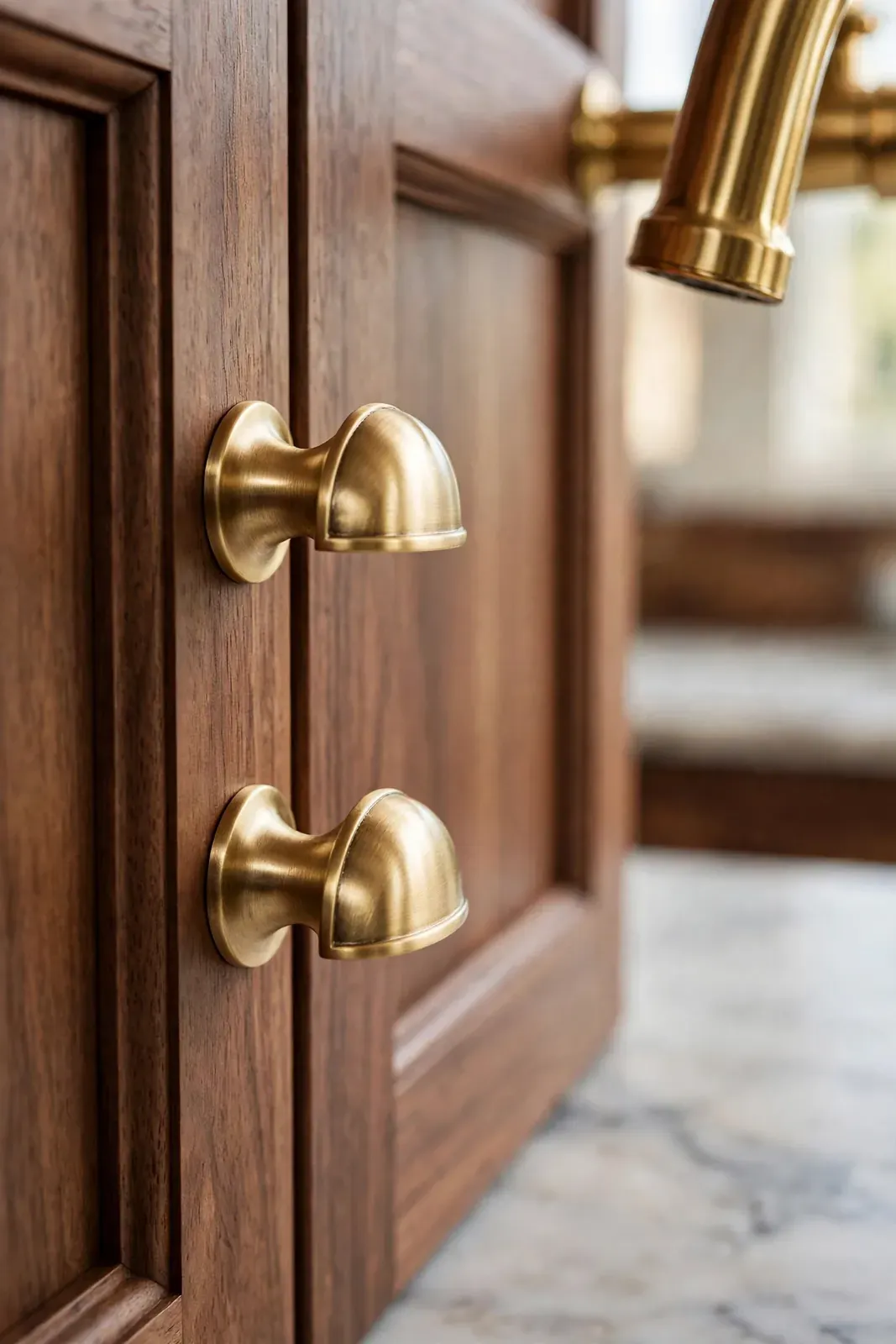
Third is hardware: cabinet knobs, drawer pulls, door handles and taps. These are seen at close range and touched daily, so their quality is actually noticed, and they repeat the metal in small, even beats through a kitchen or bathroom. Fourth, and last, come small objects — a frame, a tray, a candlestick — and these should be rationed hardest, because they are where overdoing usually begins. Kept in that order, gold accents without overdoing them look deliberate rather than decorated.
How to Place Gold Accents Without Overdoing Them, Step by Step
Step one: remove every gold object from the room and clean the space. Step two: return exactly one anchor piece — the mirror, the main lamp or the hardware set — and live with it for a day. Step three: add a second piece at a different height and distance, so the eye travels between two warm points instead of landing on a cluster. Step four: add a third, smaller piece only if the room still feels cold: a frame, a tray, a single candlestick.
Step five: check the room in daylight and in lamplight. Gold that behaves at noon can blaze at night under warm bulbs; swap one piece out if the evening view feels busy. Step six: match metals elsewhere. If chrome taps or silver frames are staying, keep them in a separate zone rather than sprinkling silver and gold alternately through the same view. Step seven: stop. The discipline of stopping is the entire skill. Follow the steps in order and gold accents without overdoing them stop feeling like a gamble.
Pairing Gold With Colour, Wood and Fabric
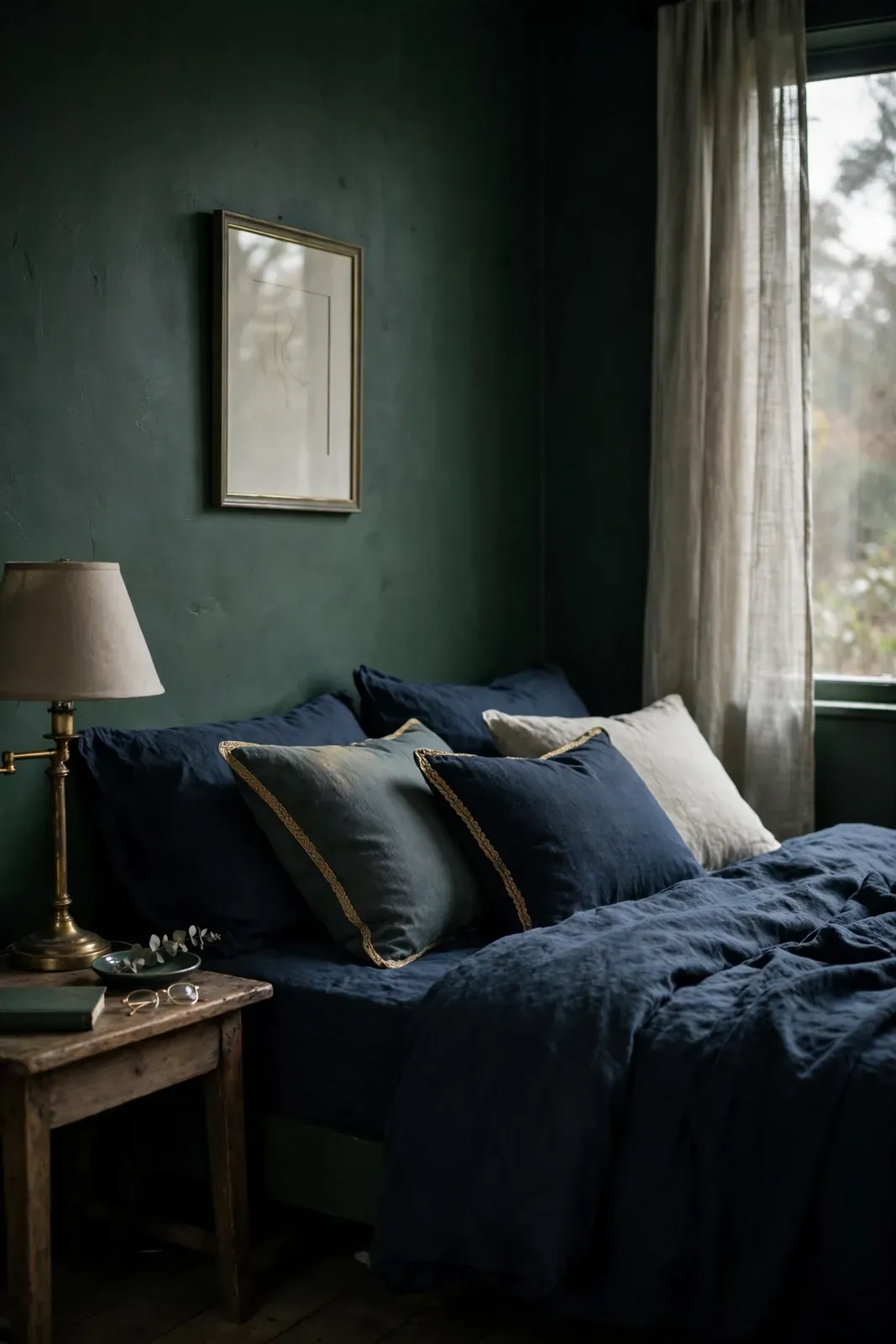
Gold is happiest against depth. Deep green, navy, burgundy and charcoal give it something to glow against, which is why a brass lamp in a dark bedroom looks twice as rich as the same lamp in a white box. Against pale rooms — cream, stone, soft white — gold still works, but keep it brushed and pair it with warm wood so it reads as warmth rather than bling.
Wood tone matters. Honey and walnut tones sit naturally with brass; very orange wood competes, and grey-washed wood can make brass look dirty, so test one piece before committing to a set. For fabrics, linen, wool and velvet absorb gold’s shine and balance it, while shiny satin cushions beside shiny gold double the glare. One more pairing to trust: marble and stone. Their cool, matte surfaces are gold’s oldest partners and still its best. Lean on those pairings whenever gold accents without overdoing them feel hard to judge.
Budget and Buying Advice for Gold Pieces
Spend on the anchor and the touch points: the mirror, the main lamp, the hardware you handle daily. These are the pieces whose weight and finish are examined up close. Save on the small objects: second-hand shops and Sunday bazaars are full of solid brass candlesticks, trays and frames for very little, and a polish with a soft cloth restores the warm glow in minutes. That is how gold accents without overdoing them stay affordable.
Buy hardware as a complete set in one order so the finish matches exactly; gold tones vary between batches more than any other metal. For taps and shower fittings, choose the best PVD or lacquered finish you can afford, since water and cleaning punish cheap gold coatings first. And keep a simple rule for new purchases: a gold object must replace one, not join the crowd — bring it home only if something else leaves the room. One in, one out keeps gold accents without overdoing them honest.
Common Mistakes That Tip Gold Into Gaudy
Mistake one is the matched set trap: gold cushions, gold curtains, gold ornaments and a gold clock bought together. Matching everything announces that the gold was the theme, not an accent. Mistake two is mixing finishes at random — polished, brushed, rose and antique in one room, each fighting the others. Mistake three is gold in cold light: under blue-white bulbs even beautiful brass turns brassy and harsh, so warm bulbs are part of the gold budget.
Also watch scale and spacing. Many tiny gold objects scattered on every shelf create visual noise; fewer, larger pieces look calmer and more expensive. And avoid gold on gold backgrounds — a brass ornament on a gold-ochre wall or a gilt frame on yellow paint disappears into a blur. Gold needs a quieter surface behind it to do its work. Avoid those traps and gold accents without overdoing them almost take care of themselves.
Frequently Asked Questions
How many gold pieces should one room have?
Three to five, including hardware as one group, suits most rooms: one anchor, one mid-size piece, and one or two small ones. Bedrooms and bathrooms usually need fewer than living rooms because their surfaces are smaller. Treat that count as the budget for gold accents without overdoing them in any room.
Can I mix gold with silver or chrome?
Yes, if each metal has its own zone and one clearly leads. Gold lighting with existing chrome taps is fine; alternate gold and silver small objects on the same shelf is not. Keep the ratio uneven, roughly three gold pieces to one of the other metal.
Which gold finish is safest for beginners?
Brushed or satin brass. It is warm without glare, hides fingerprints, matches most wood tones, and is the easiest finish to find consistently across lamps, hardware and frames from different shops. Start there, and gold accents without overdoing them become hard to get wrong.
Does gold work in a small room?
It works especially well, because a single gold-framed mirror and one warm lamp can lift a small room without taking any floor space. Just keep the pieces slim and the count low so the room stays calm.
How do I clean brass accents?
Dust with a dry cloth weekly and polish occasionally with a brass cloth or a paste of lemon and salt for unlacquered pieces, rinsed and dried well. Lacquered brass needs only a damp cloth; abrasive cleaners strip the lacquer and cause patchy tarnish. Gentle care like that keeps gold accents without overdoing them looking rich for years.

Less Gold, More Glow
Gold accents without overdoing them come down to loyalty and restraint: one finish, a handful of pieces, each placed where light or hands meet it, against colours deep or calm enough to let it glow. Audit your brightest room this week, remove half its gold, and watch what remains look twice as expensive. The metal was never the problem — the dose was.