Some jewellery whispers. Thread bangles in saffron and marigold do the opposite — they walk into the room first, warm and bright as a bowl of marigolds on a festival morning. They are made by wrapping silk or cotton thread tightly around a plain base bangle, which gives them that soft matte glow metal never has, and they are light enough that a whole stack feels like nothing on the wrist. I bought my first set on a whim at a craft market, wore them with a plain cream top, and got asked about them three times before lunch.
If you own a set and only ever wear the whole stack the same way, this guide is for you. Nine honest ways to wear saffron marigold thread bangles — one or two alone, a full joyful stack, mixed with metal, dressed up for evenings — plus a step-by-step stacking routine that stops them tangling, buying advice on sizing and thread quality, and the simple care habits that keep the colours from fading.
Why Thread Bangles Look So Good in Warm Colours
Thread changes how colour behaves. On metal, orange and yellow reflect light back hard and can look brassy; wrapped in matte thread, saffron deepens and marigold softens, so the two shades sit together like petals instead of competing. That is why a stack of eight or ten thread bangles reads as rich rather than loud — the texture absorbs the glare and leaves only the warmth.
They are also the friendliest bangles to actually live in. A full stack weighs almost nothing, makes no clinking noise in meetings or at dinner, and will not scratch a laptop, a baby or a good table. The base size is fixed, so a well-chosen set stays where you put it instead of sliding to the elbow. For colour this strong, that comfort matters: you will only wear a bold stack often if it never annoys you.
1. A Full Stack With a Plain Cream Top
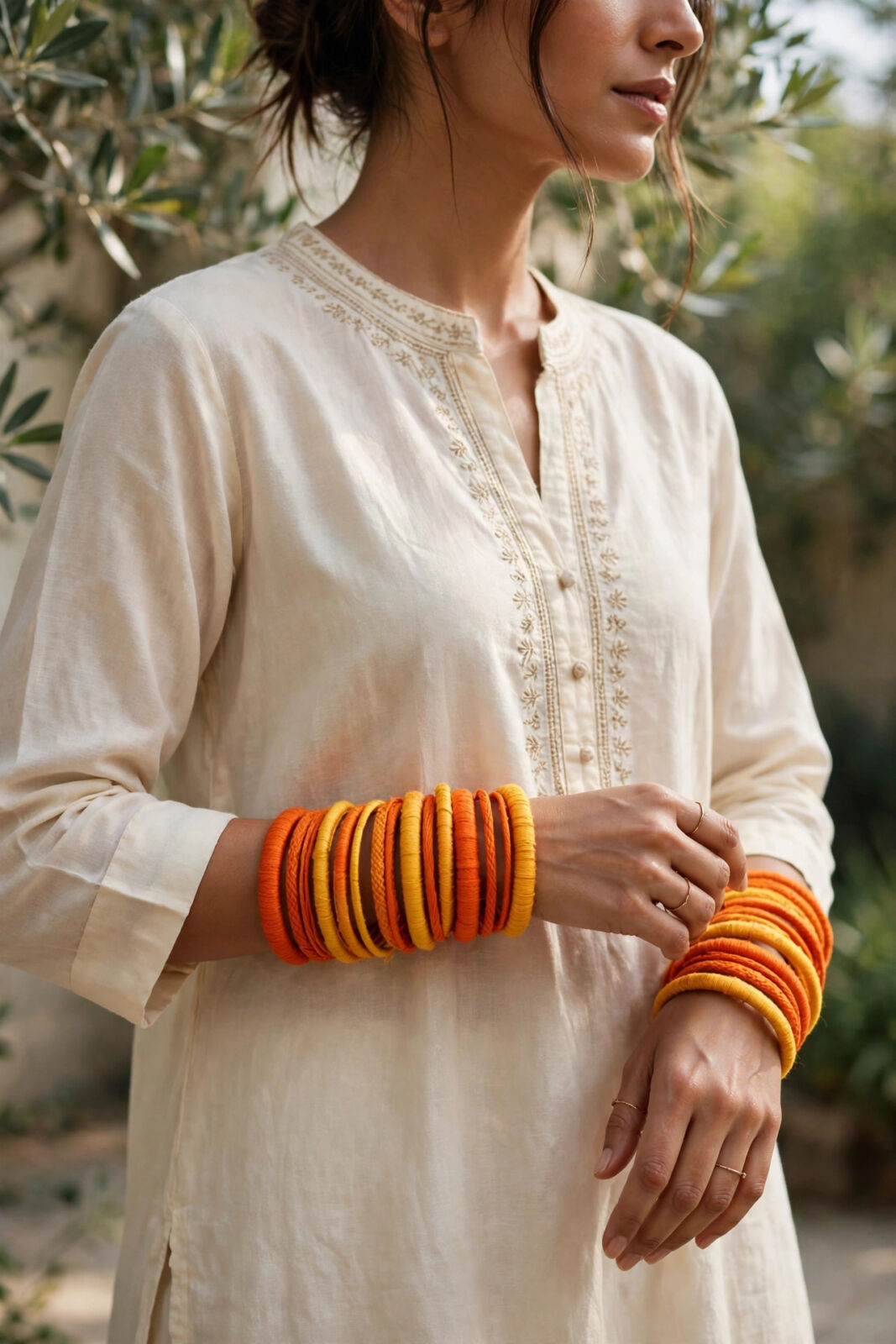
The classic way, and still the strongest. Eight to twelve bangles, saffron and marigold alternating in loose groups, worn on one wrist with a plain cream or ivory top that gives the colour a quiet background. This is the look in the first photo: nothing else in the outfit is competing, so the bangles carry the whole outfit. Keep other jewellery tiny — small studs, one thin ring — and let the wrist do the talking.
2. Just Two, One on Each Wrist
On days when a full stack feels like too much, wear a single bangle on each wrist. Choose the deeper saffron on both sides rather than mixing colours — matching singles read as a considered detail, while two different singles can look like leftovers.
3. Mixed With Thin Gold Bangles
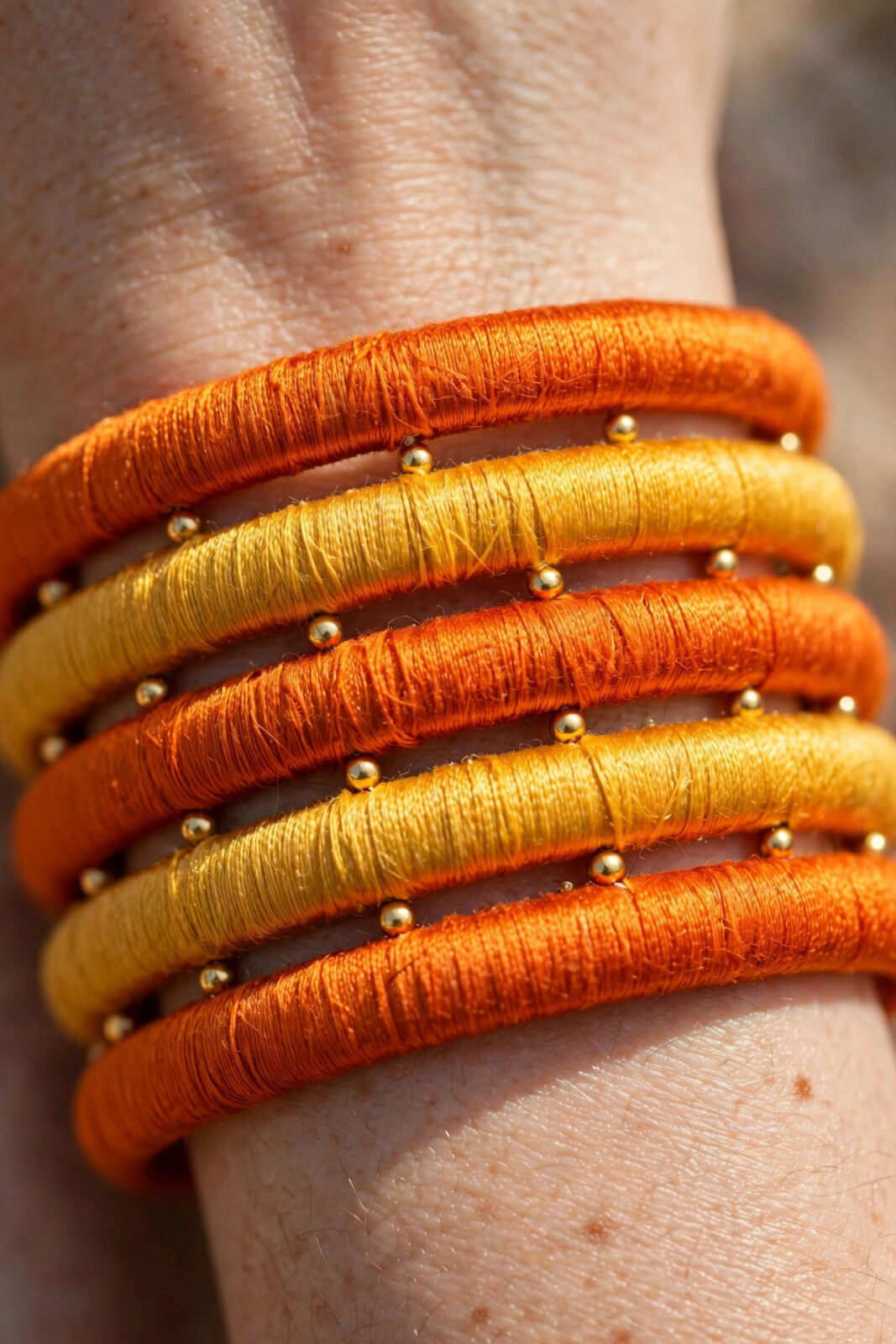
Thread and metal love each other when the proportions are right. Build a stack of five or six thread bangles and thread two or three slim gold bangles through them — one near the hand, one in the middle, one at the top. The gold catches light the thread cannot, and the thread stops the gold looking cold. This is the evening version in the fourth photo, worn with deep green, and it is the easiest way to take a daytime set out at night.
4. Split Stacks on Both Wrists
Instead of one heavy stack, divide the set: six bangles on one wrist, four on the other. The balance feels festive without the full ceremonial weight, and it photographs beautifully because both hands carry colour when you hold a drink, a clutch or a plate. Split by shade for extra order — mostly saffron on one wrist, mostly marigold on the other.
5. With White for the Freshest Contrast
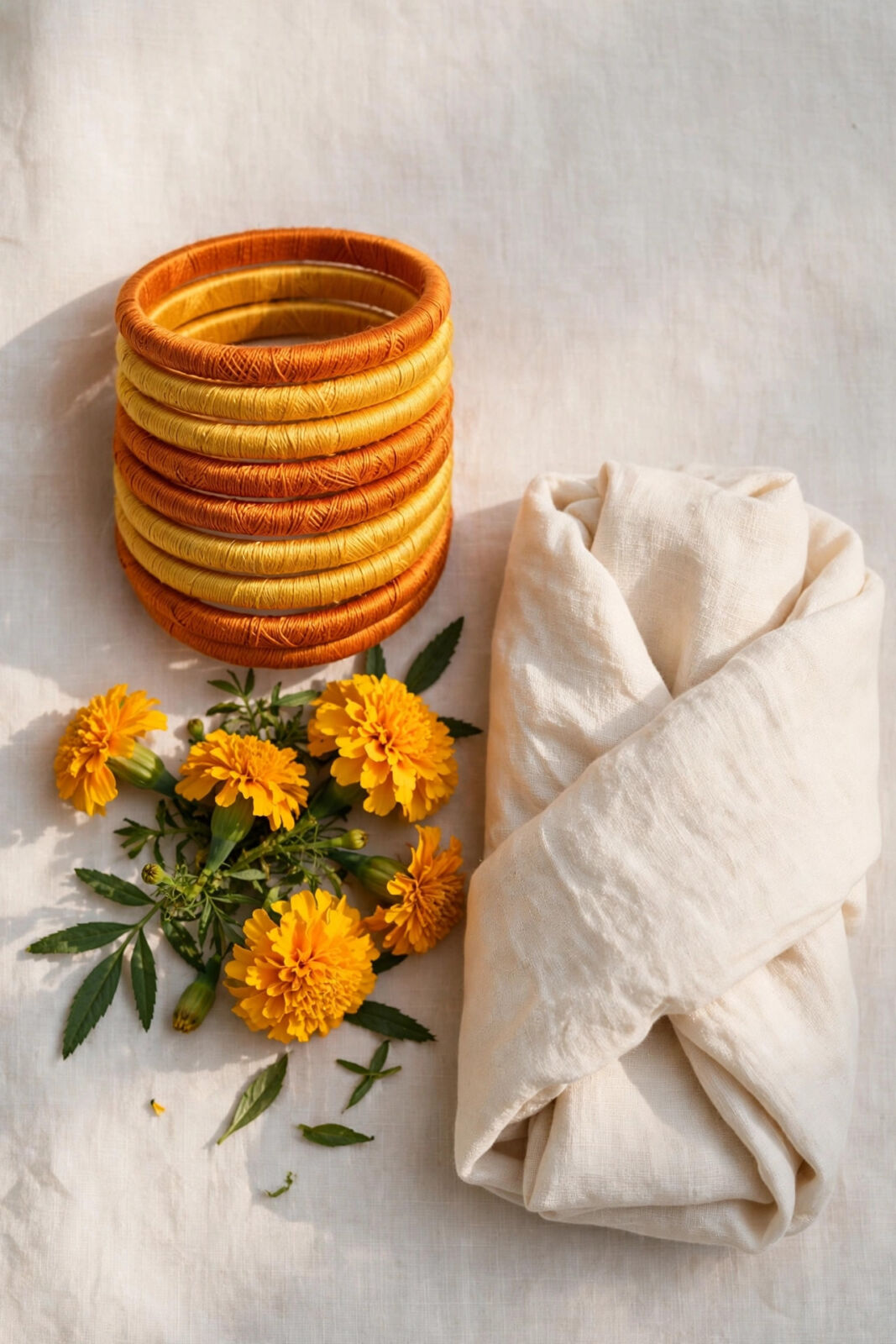
White is saffron’s best friend. A white dress, white shirt or white summer top makes the warm shades look even warmer and cleaner, the way marigolds look brightest against a white wall. This is the festival look in the last photo. Wear the full stack here — against white, more is genuinely more, and a shy stack of two can disappear.
6. Over a Fitted Sleeve
In cooler weather, slide a slim stack over the cuff of a fitted knit or a long-sleeved top in a deep shade — bottle green, plum, charcoal. The bangles sit on the fabric instead of the skin, stay perfectly in place, and turn a plain jumper into something dressed. Choose bangles one size up for this trick so they pass over the fabric without stretching the threads.

7. With Denim for a Relaxed Weekend
A stack of warm thread bangles against blue denim is a colour pairing that never misses — orange and blue sit opposite each other and make both look richer. Wear five or six with jeans and a white tee or a denim shirt.
8. Paired With a Simple Watch
Yes, bangles and a watch can share a wrist. Put the watch on first, closest to the hand, then add three or four thread bangles above it — never a full stack, which will swallow the watch face and scratch against it all day.

9. One Colour at a Time
The set gives you two monochrome options for free. An all-saffron stack is deep and autumnal, lovely with olive, rust and brown. Wearing one shade at a time is also the fastest way to make an old set feel new again without buying anything.
How to Build a Stack That Stays Put, Step by Step
Step 1: Measure your hand, not your wrist. Bangles pass over the hand, so size is decided by your knuckles. Squeeze your thumb across your palm as if putting a bangle on, and measure around the widest point of the hand. Buy the standard bangle size just above that measurement — thread bangles have no clasp and no give, so a size too small simply will not go on.
Step 2: Sort the set before you start. Lay the bangles out and group them by shade and width. A stack looks best built in loose groups — two or three of one shade, a thin spacer, then the next group — rather than strict one-by-one alternation, which can look like a barcode. Decide your pattern on the table, not halfway up your arm.
Step 3: Put the widest bangle on first. The bangle nearest your hand should be the widest or firmest one; it acts as the anchor the rest of the stack rests against. Then build upward toward the elbow in your groups. If you wear a metal spacer bangle, place it between thread groups, where it protects the threads from rubbing each other.
Step 4: Tuck a soft pouch over your hand. For a tight set, pull a thin silk scarf or a soft plastic pouch over your hand first and slide the bangles over it — the fabric reduces friction and protects both your knuckles and the threads. This one trick saves more chipped bangles and sore hands than any other.
Step 5: Check the stack against your sleeve. Before you leave, push your sleeves up and down once. If the stack catches or rolls the cuff, move two bangles to the other wrist. A stack that survives getting dressed without rearranging itself is a stack you will actually wear all day.
Buying Advice and Thread Care
When buying, look at the wrapping first: the thread should be wound tightly and evenly with no gaps showing the base underneath, and the join — where the wrapping starts and ends — should be tucked flat, not a raised knot that will catch on clothing. Check the base is smooth plastic or alloy, never rough wood, which snags the wrapping from inside. For care, keep thread bangles dry: water dulls the colours and loosens the wrap over time, so slip them off before washing up, swimming or applying lotion, and put them on last, after perfume. Store them stacked on a bangle stand or rolled in a soft cloth in a drawer, out of direct sunlight — saffron and marigold are dye-rich shades and strong sun will fade one side of a stored stack.
Common Mistakes to Avoid
The most common mistake is wearing thread bangles in water. One swim or a week of showering in them and the wrap goes limp, the colours bleed into each other and the set is ruined — they are fabric, treat them like fabric. Second is forcing on a size too small: the base can crack invisibly and then snaps weeks later. Third is stacking thread bangles tightly against chunky metal bangles with rough edges, which saw through the wrap; always place a smooth slim bangle as a buffer. And finally, storing them loose in a handbag, where keys and coins shred the threads — a small pouch takes two seconds and saves the set.
Frequently Asked Questions
How many thread bangles should be in a stack?
For everyday wear, six to ten on one wrist looks full without feeling heavy. For festivals and weddings, twelve or more is traditional and looks wonderful against plain outfits. If you are new to them, start with six — a stack can always grow, and thread bangles are sold in matching sets precisely so you can add more later.
Do thread bangles suit Western outfits or only traditional dress?
Both, genuinely. The colour and texture are what matter, not the outfit’s origin. They look at home with a cream kurta, but the same stack lifts a white summer dress, warms up denim and softens a plain black top. If a full stack feels too festive for your day, the two-singles or watch pairing in this guide keeps it subtle.
How do I stop thread bangles from fading?
Keep them dry, keep them out of direct sunlight when stored, and apply perfume and lotion before you put them on, never after. Store them in a cloth pouch or covered box rather than on an open stand by a window. Silk-thread sets fade a little faster than cotton, so save your best silk set for occasions and let a cotton set take the daily wear.
What size thread bangles should I buy?
Measure around the widest part of your squeezed hand and choose the next standard size up. Thread bangles cannot be resized and have no stretch, so if you are between sizes, go up — a slightly loose bangle is comfortable, a slightly tight one stays in the drawer. If you plan to wear them over sleeves, size up once more for that set.
Can I mix thread bangles with other colours?
Saffron and marigold pair beautifully with deep green, turquoise, plum and plain gold. Add just one guest colour to the stack rather than building a rainbow — a single group of three green bangles inside a warm stack looks rich, while five colours at once reads as clutter. Let the warm shades stay the majority.
A Last Word Before You Wear It
Saffron marigold thread bangles ask for very little — keep them dry, stack them in loose groups, give them a plain outfit to shine against — and they return a lot: warmth, colour and that small lift every time you catch sight of your own wrist. Start with the full stack on cream, notice how many people mention them, and then have fun splitting, mixing and quietening them down for ordinary days.