Table of Contents
There is a moment in almost every dress outfit when the plan meets the weather. The dress is right, the shoes are right, and then the evening turns cool, or the restaurant air conditioning is fierce, or bare shoulders suddenly feel like too much. That is the moment my buttercup ivory knit bolero earns its place in my wardrobe. It is a tiny cropped cardigan in the softest ivory knit, and it fixes all three problems without hiding the dress.
A bolero is a cropped jacket that ends at or above the waist, originally inspired by the short jackets of Spanish bullfighters and softened over the years into knits like this one. The buttercup name comes from its warm, pale-yellow-cream tone — lighter than camel, warmer than pure white. This guide walks through nine ways I wear mine, a step-by-step for styling it over different dress shapes, what to look for when buying knit boleros, and how to wash and store fine knits so they keep their shape.

Why a Buttercup Ivory Knit Bolero Works Over Almost Every Dress
The proportions are the secret. A cropped layer that ends at the waist shows off the narrowest part of the body and leaves the skirt of a dress completely visible, so you get warmth and coverage without losing the shape you chose the dress for. A full-length cardigan, by contrast, cuts most dresses in half and reads as an afterthought. If you prefer a longer layer, see how an argyle knit cardigan layers over everyday basics in my other guide.
The colour helps too. Ivory with a buttercup warmth sits happily over blush, sage, powder blue, floral prints and even black, where a stark white knit can look harsh. And because it is knitted rather than tailored, it travels well: the knitted loops give it natural stretch and recovery, so it comes out of a tote bag without creases. The bolero jacket shape itself has been in and out of fashion for over a century, which is usually a sign a piece is a classic rather than a trend.
9 Cosy Ways to Wear a Buttercup Ivory Knit Bolero
1. Over a blush slip dress
The look in the first photo and the one I reach for most. Satin plus soft knit is a texture contrast that always looks considered.
2. Over a floral summer dress on cool evenings
Garden dinners run cold after sunset. The bolero keeps shoulders warm while the print still does the talking.

3. With high-waisted jeans and a camisole
The pairing photo below. The cropped hem lands exactly at the jean waistband, which keeps the outfit neat instead of layered and bulky.
4. Over a black evening dress
Ivory over black is a gentle version of the classic black-and-white look, and the knit softens what can otherwise feel stark.
5. Over a wedding-guest dress
Many venues and ceremonies ask for covered shoulders. A knit bolero does it politely and photographs far better than a borrowed suit jacket.
6. With a white shirt and a midi skirt
Worn open over a tucked shirt, the bolero acts like a soft waistcoat layer and makes a simple office outfit feel finished.
7. Over a strappy beach dress at sunset
Holiday evenings again: one light knit layer in your bag covers the walk back from the beach restaurant.
8. With a satin skirt and a fine vest top
Matching the bolero’s softness to one other soft texture — satin, silk, fine cotton — keeps the outfit calm and layered rather than mixed.
9. Over a fitted long-sleeve dress in winter
Sleeve over sleeve sounds odd but works when the bolero is worn open as a colour-block layer in a heated room.

How to Style a Buttercup Ivory Knit Bolero Over Any Dress: Step by Step
Step 1: Check the hem line first. The bolero should end at or just above your natural waist. If it lands mid-hip over a dress, it will cut the silhouette in the wrong place — choose a different layer.
Step 2: Decide open or closed. Worn open, it frames the dress; fastened with its single button or a small brooch, it becomes part of the dress itself. For slip dresses I wear it open; for plain dresses, closed looks smarter.
Step 3: Push the sleeves to the forearm. Knit bolero sleeves look best slightly pushed up, which also shows a bracelet and stops the outfit feeling covered up.
Step 4: Match one accessory to the knit tone — ivory shoes, a cream bag, pearl earrings — so the layer looks chosen, not grabbed.
Step 5: If the dress has a defined waist or belt, keep the bolero hem above it. Covering a belt with a cropped layer always looks like a mistake.
Buying Advice for a Buttercup Ivory Knit Bolero: Yarn, Fit and Stitching
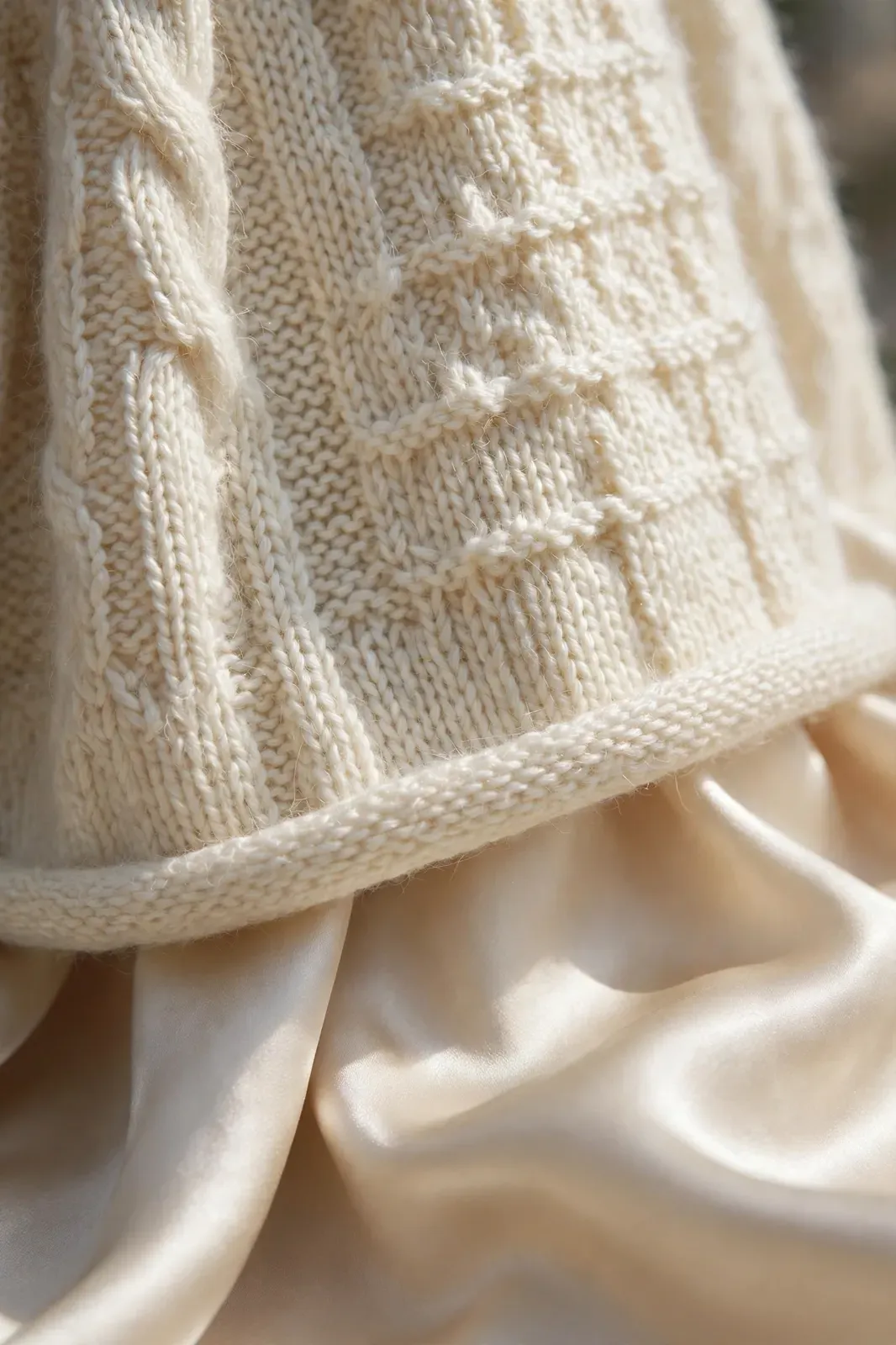
Read the yarn label on any buttercup ivory knit bolero before the price tag. Cotton and cotton-blend boleros hold their cropped shape best and wash easily; pure acrylic can pill at the underarm within a season; wool blends are warmest but need gentler washing.
Check the shoulder seam and the edge stitching — a bolero’s edges are on full display, so loose or wavy edging shows immediately. On fit, the bolero should meet at the front without pulling, and the sleeves should reach the wrist bone. Size up rather than down if you plan to wear it over long-sleeved dresses. Finally, hold the knit up to the light: a good fine knit is even, with no thin patches at the elbows.
Buttercup Ivory Knit Bolero Care Tips and Common Mistakes to Avoid
Never hang a buttercup ivory knit bolero on a hanger for storage — its own weight will pull the shoulders into points. Fold it, ideally with tissue in the folds, and store it flat. Wash cool and gentle, reshape while damp, and dry flat.
The most common styling mistake is wearing a bolero that is too long: once it passes the waist it stops being a bolero and starts fighting the dress. The second mistake is choosing bright white instead of warm ivory and then wondering why it clashes with cream and blush dresses. And do not fasten every button if yours has several — a bolero is meant to sit open or meet at one point, not button up like a cardigan.

Buttercup Ivory Knit Bolero: Frequently Asked Questions
What is the difference between a bolero and a shrug?
They are close cousins. A bolero is a cropped jacket shape, often with a little structure at the shoulder and an opening that meets at one point. A shrug is softer and simpler — essentially sleeves joined across the back. A knit bolero sits between the two, which is why it works over both casual and dressy outfits.
Can I wear a buttercup ivory knit bolero to a wedding?
Yes — it is one of the most useful wedding-guest layers there is. It covers shoulders for ceremonies, keeps you warm in marquees and evening gardens, and because ivory knit is textured rather than bridal satin, it does not compete with the wedding dress. Just avoid wearing it over a white dress.
What colours pair best with a buttercup ivory knit bolero?
Blush, sage, powder blue, dusty rose, navy and black all sit beautifully under warm ivory. It also works over most floral prints, since almost every floral contains a cream or pale yellow thread the knit can pick up. Be careful only with optic-white dresses, where ivory can look slightly yellow by comparison.
How do I stop my buttercup ivory knit bolero from stretching out?
Fold it instead of hanging it, rest it between wears rather than wearing it daily, and never carry a heavy bag on one shoulder over the knit, which drags one side longer. If the cuffs stretch, a cool wash and flat dry usually lets the loops recover.
Is a buttercup ivory knit bolero warm enough for winter?
On its own it is a light layer, best for cool rooms and in-between seasons. In winter, wear it as the top layer over a fitted long-sleeve dress indoors, or under a coat outdoors — it adds a surprising amount of warmth around the shoulders and upper back, which is where we feel the cold first.
Buttercup Ivory Knit Bolero: The Small Layer That Saves the Dress
I own longer cardigans and smarter jackets, but this little cropped knit is the layer that actually gets worn, because it respects the outfit underneath it. If your dresses keep meeting cold evenings unprepared, a buttercup ivory knit bolero is the quiet fix.