Table of Contents
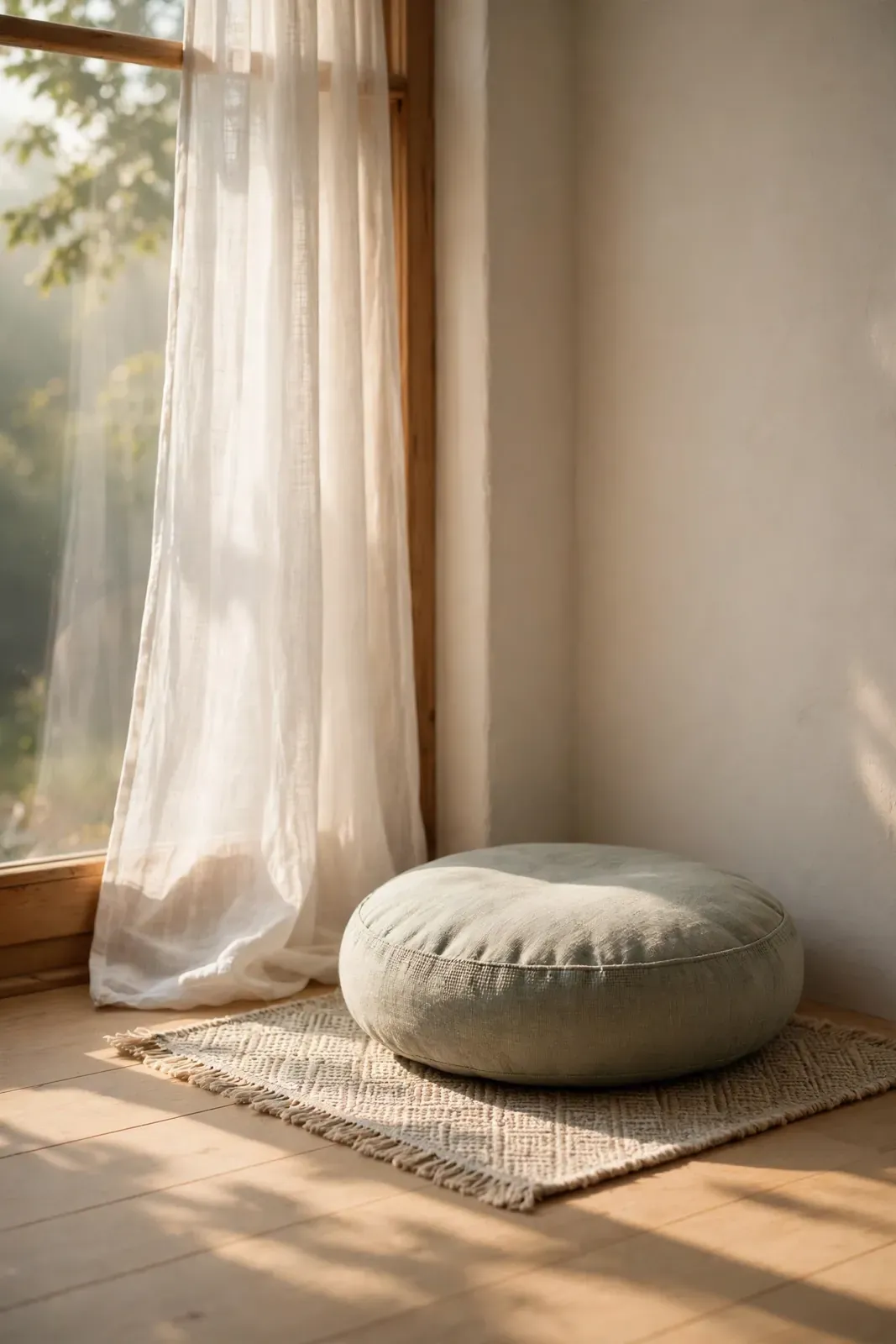
You do not need a spare room or a garden studio to sit quietly for ten minutes. You need one square metre that nobody else claims, and a meditation cushion quiet corner built inside it. Take the least-used corner of a bedroom or living room, give it a cushion, a rug, and a clear purpose, and it can become the calmest patch of floor in your home.
A defined corner works because it removes the daily decision. There is no dragging a cushion out of a cupboard, no clearing space on the sofa. Your meditation cushion quiet corner is simply ready, and readiness is most of a habit. Here is how to choose the spot, pick the right cushion, and set everything up in under an hour.
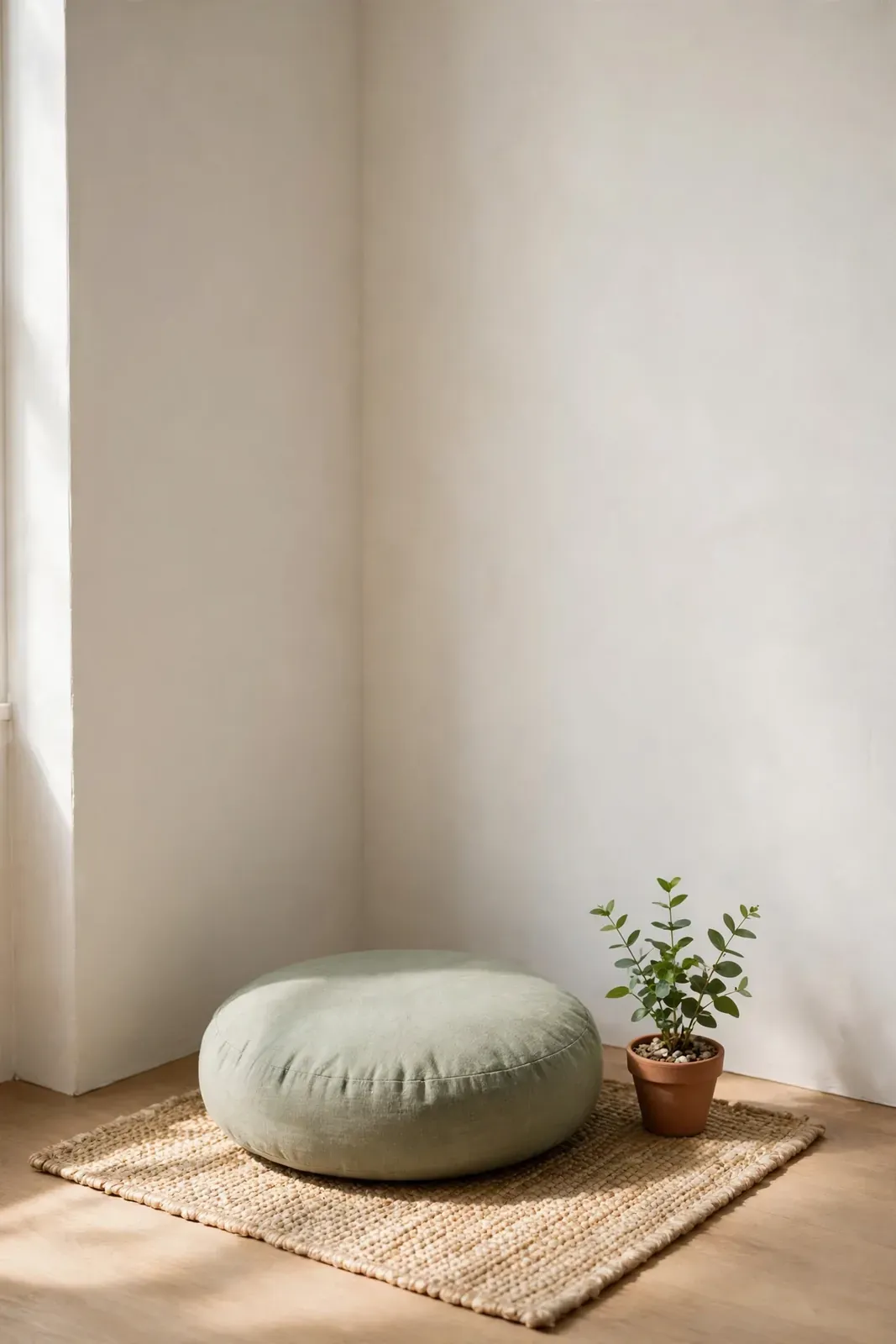
Why a Meditation Cushion Quiet Corner Works in One Square Metre
A square metre sounds tiny until you measure it. It is roughly the footprint of a small rug, and it is more than enough for one person sitting cross-legged with their knees resting comfortably. Most people who give up on sitting practice do not quit because the practice is hard; they quit because the setup is annoying. A permanent meditation cushion quiet corner removes that friction completely.
There is also a quiet psychological effect. When the same small place is used for the same calm purpose every day, your mind starts to settle as soon as you sit down, the way it feels sleepy when you get into bed. A meditation cushion quiet corner builds that same helpful association, one quiet sit at a time. If you want the background first, this overview of what meditation practice actually involves explains the main approaches, from breath focus to open awareness, in plain terms.
Pick your square metre with three things in mind. Light: near a window is lovely in the morning, but avoid harsh afternoon sun landing on your face. Traffic: the corner should sit outside the walking path between doors, so nobody steps around you. Noise: no corner is silent, but the one furthest from the television and the front door will always win. If your corner sits in the living room, these small living room layout ideas can help you place it without crowding the rest of the room.
Choosing the Right Cushion for Your Meditation Cushion Quiet Corner
The cushion is the one real purchase in this project, so it deserves ten minutes of thought. The classic shape is the traditional round zafu cushion, a firm, pleated disc designed to lift your hips above your knees. That lift is the whole point. When your hips sit higher than your knees, your back stays straight without effort, and your legs stop falling asleep five minutes in. Get that lift right, and the rest of your meditation cushion quiet corner falls into place.
Height matters more than colour. Most adults do well with a cushion around 13 to 18 centimetres high once compressed. If you are tall or have tight hips, go higher or add a folded blanket underneath. If you are naturally flexible, a lower cushion is fine. Sit on a stack of books at home, measure the height at which your back feels easy, and buy close to that. Measure first, and your meditation cushion quiet corner will feel supportive from day one.
Filling is the second decision. Buckwheat hulls are heavy, firm, and mould to your shape; you can open the zip and remove a handful if the cushion feels too high. Kapok is lighter and softer, closer to a firm pillow.
Whichever you choose, look for a removable, washable cover, because a floor cushion collects dust faster than you would expect. It helps to remember that the long history of the humble cushion is mostly a history of making hard floors kinder, which is exactly the job you are asking of it now. A simple cotton or linen cover in a restful colour will serve you better than an ornate one you feel you must keep perfect. A washable, well-filled cushion keeps a meditation cushion quiet corner inviting instead of dusty.
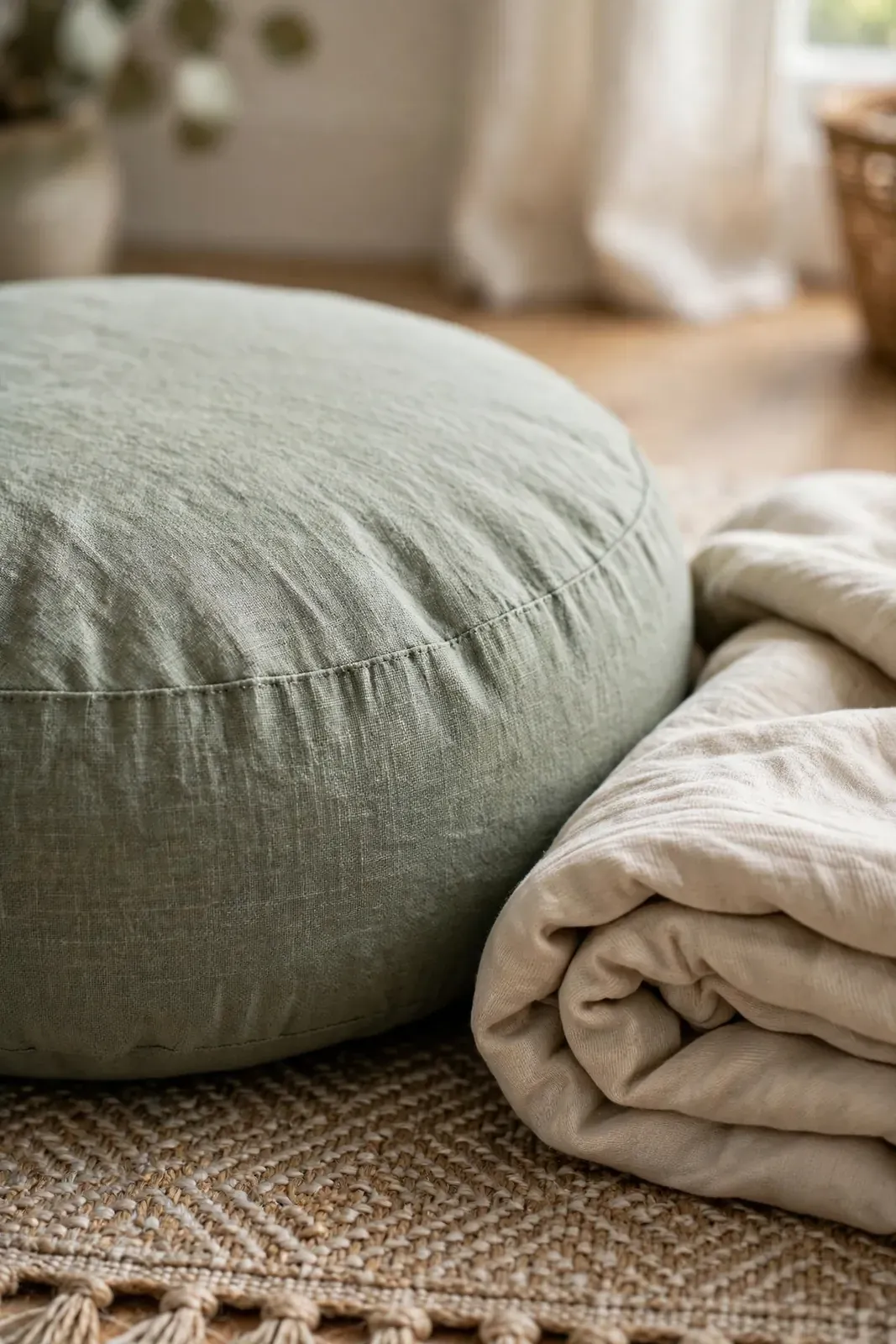
Step by Step: Setting Up Your Corner in Under an Hour
Once the cushion is chosen, the rest of your meditation cushion quiet corner is assembly, not shopping. Work through these steps in order:
- Clear the square metre completely. Take everything out first. Starting from empty stops the corner becoming storage with a cushion on top.
- Lay the rug or mat down first. A flat-weave rug around 90 by 120 centimetres defines the boundary and protects your ankles and knees from a cold or hard floor.
- Place the cushion off-centre. Set it slightly towards the back of the rug, leaving room in front for your legs. Sit down and shuffle it until your back feels naturally upright.
- Add one folded blanket. Keep it beside the cushion for chilly mornings, extra height, or padding under sore knees. One blanket, neatly folded, not a pile.
- Set a small tray at the edge. This holds the few things you allow in: a timer, a candle, a glass of water. If it has no home here, it does not enter the corner.
- Finish with one living thing. A small plant on the floor or a nearby sill gives your eyes somewhere soft to rest when they are open.
Then sit in it once, straight away, even for three minutes. A corner that has been used once already feels like yours. From then on, your meditation cushion quiet corner is a habit, not a project.
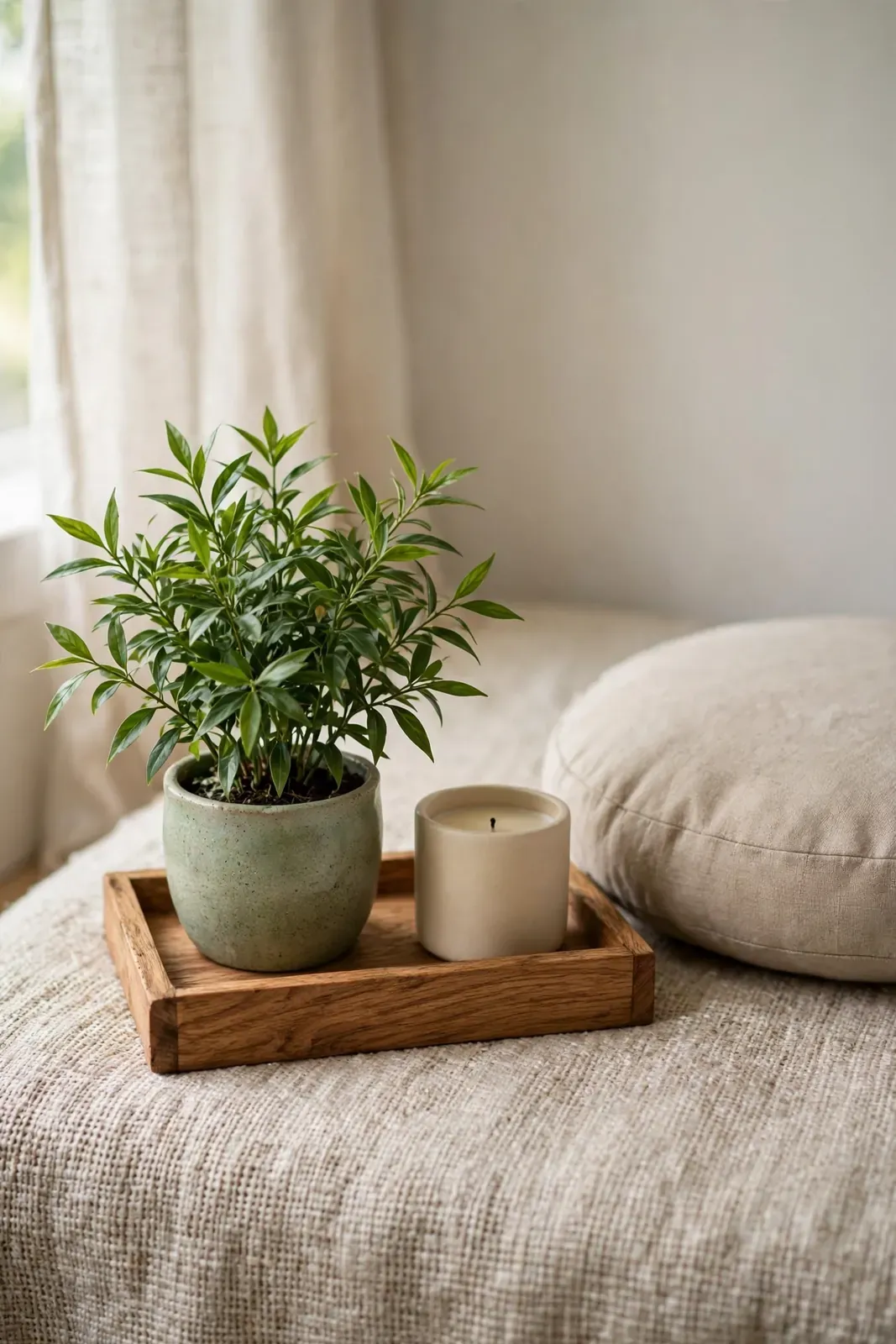
Styling the Corner Without Turning It Into a Display
The styling rule here is one of each, never a collection. One plant, one candle, one blanket, one small object that means something to you. The moment a meditation cushion quiet corner holds twelve decorative items, it stops being a place to sit and becomes a shelf you maintain.
Colour does quiet work. Soft neutrals such as oatmeal, warm grey, clay, and washed sage do not demand attention when you are trying to rest your eyes. Texture matters more than pattern: woven jute, raw cotton, and unpolished wood all read as calm at a glance. Kept soft and simple, the colours in a meditation cushion quiet corner never shout for attention.
About the candle: many people keep one unlit in the corner as a visual anchor, and light it only while sitting, never leaving it burning unattended. With children or pets, an unlit candle still works perfectly well as a focal point. Keep scent light too; a strongly perfumed corner can distract as much as it soothes. A calm scent, or none at all, suits a meditation cushion quiet corner best.
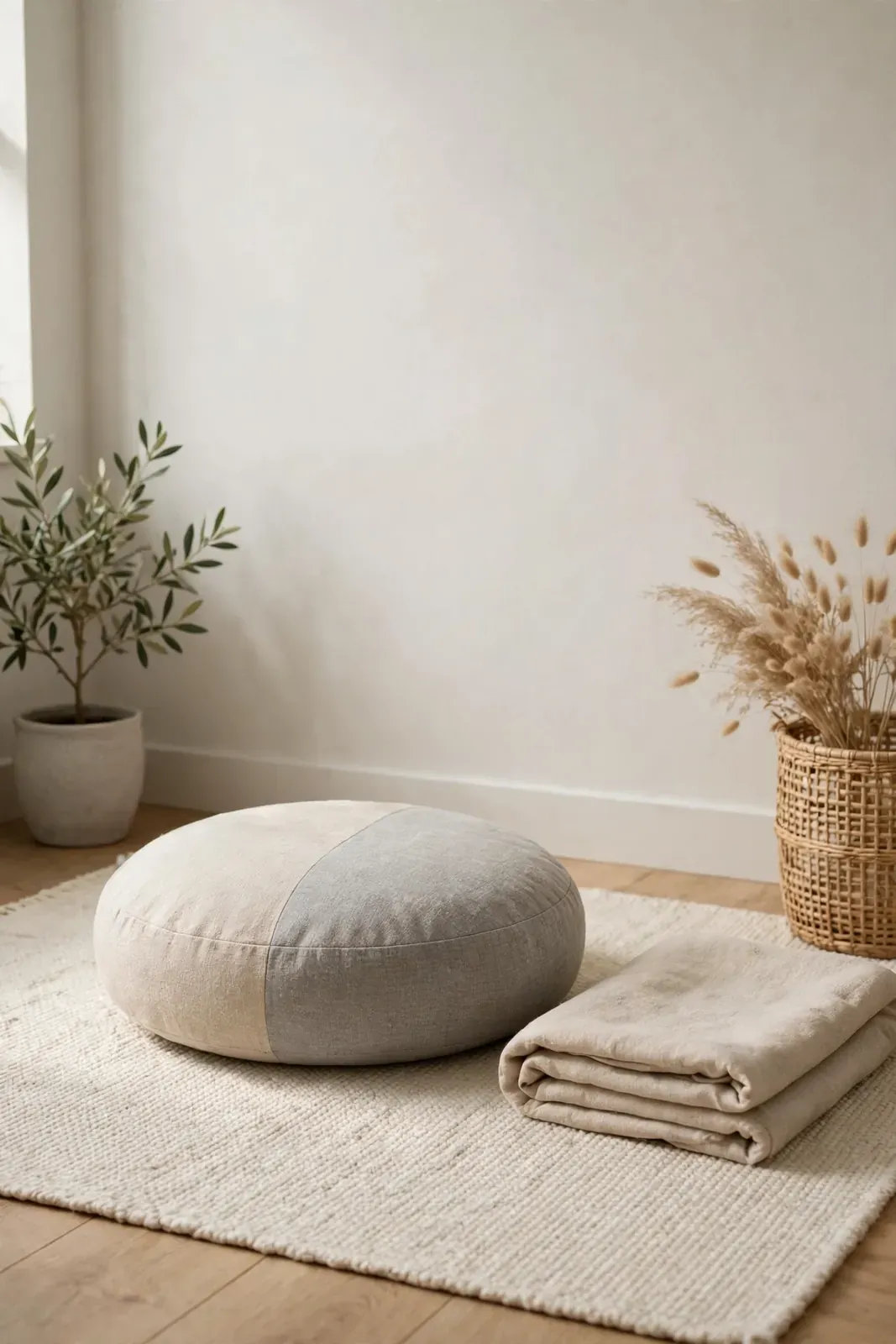
Budget and Buying Advice: Spend Once, Skip the Rest
A good meditation cushion quiet corner can cost very little, and an expensive version is not automatically better. Spend in this order. First, the cushion itself: it is the only item that touches your posture, so buy the best filling and cover you can reasonably afford. Second, the rug, if your floor is hard or cold; a simple flat-weave cotton or jute rug is enough, and second-hand ones wash up well.
Almost everything else can come from what you already own. The blanket can be the one folded at the end of your bed. The tray can be a wooden chopping board until you find one you like. The plant can be a cutting from one you already have, rooted in a jar of water. Check cupboards and shelves first before buying anything new for your meditation cushion quiet corner.
Common Mistakes That Ruin a Quiet Corner
The most common mistake is choosing the prettiest corner instead of the quietest one. A photogenic spot facing the television will lose to an ordinary corner behind a door every single morning. Choose for your ears and your routine, not for the photo. Choose well, and your meditation cushion quiet corner will be the one you actually use.
Second, the cushion is too low. If your knees ache and your back rounds within minutes, the cushion is not doing its job; add height rather than pushing through discomfort and quietly quitting within a week. Third, the corner becomes storage. The day a laundry basket lands on the rug, the habit starts to die. Defend your meditation cushion quiet corner like it is a room, because for ten minutes a day, it is.
Finally, avoid rebuilding the corner every few days. Rearranging feels productive, but the calm comes from the corner staying exactly the same. Set it, use it, and leave it alone for at least a month before judging it. Leave your meditation cushion quiet corner unchanged, and let the calm build.
Frequently Asked Questions
How much space do I really need for a meditation corner?
One square metre is genuinely enough for one person sitting on a cushion. You need room for the rug, your crossed legs, and a small tray. If you can stretch your arms out sideways without hitting furniture, the spot is big enough. That small footprint is all a meditation cushion quiet corner asks for.
What if I cannot sit cross-legged on the floor?
Use the same corner with a higher cushion, sit on the edge of a low bench, or place a chair inside the square metre instead. The corner and the routine matter far more than the posture, and comfort that lets you stay still beats a traditional position you abandon.
Which cushion height should a beginner buy?
Start around 15 centimetres and choose a filling you can adjust, such as buckwheat hulls you can remove by the handful. Sit on stacked books first and measure the height where your hips rest above your knees and your back feels easy.
Can I build this corner in a rented home or a shared room?
Yes, and it is one of the easiest corners to make temporary, because nothing here fixes to a wall. A rug, a cushion, and a tray lift away in a minute, and in a shared room the rug itself quietly signals that the spot is in use.
How do I keep the corner from becoming messy?
Give it a strict guest list: cushion, rug, blanket, tray, plant. Anything else needs a reason to be there. A thirty-second tidy when you stand up keeps it ready for tomorrow. A tidy meditation cushion quiet corner is ready before you even sit down.
Your home probably already contains a corner like this, waiting behind a chair or at the end of a bed. Clear it this week, lay down a rug, and sit for five quiet minutes tomorrow morning before the house wakes up. Small, plain, and used every day will beat large and perfect every time, and your meditation cushion quiet corner will be ready whenever you are.