Some accessories finish an outfit, and a few quietly become the outfit. My gardenia pearl opera scarf is one of the second kind. It is a long, flowing evening scarf in a soft pearl ivory, light enough to float as I walk and formal enough for the theatre steps in the first photo. I bought it for one concert evening and have reached for it at weddings, dinners and garden parties ever since.
The name comes from two things it reminds me of: the creamy white gardenia flower, whose petals have that same warm ivory glow, and the pearl tone of the fabric itself, which catches light the way a strand of pearls does — softly, never with a hard shine. This guide covers nine ways I wear it, a step-by-step routine for draping it so it stays put all evening, what to check when buying one, and how to store a delicate evening scarf so it lasts for years.
Why a Gardenia Pearl Opera Scarf Works So Well
A scarf is one of the oldest and simplest pieces of clothing, but the opera length is its most dramatic form: extra long, worn loose, and allowed to trail. Because the pearl tone is a warm neutral, it sits comfortably over black, navy, burgundy and jewel colours without competing with any of them. It adds movement and softness to a plain gown the way a train does, but you can take it off at the table. In other words, a gardenia pearl opera scarf gives you drama without weight.
The colour helps too. Pure white can look stark in evening light, while pearl ivory has the warmth of a gardenia petal, so it flatters skin instead of washing it out. In photos it reads as a gentle glow around the shoulders and face, which is exactly where you want the light at an evening event, and exactly where a gardenia pearl opera scarf earns its keep.
If you love styling scarves in different ways, my guide to silk headscarf retro styling shows how a smaller silk scarf can change a look just as quickly as a gardenia pearl opera scarf can.
9 Elegant Ways to Wear a Gardenia Pearl Opera Scarf
1. Draped over both shoulders, theatre style
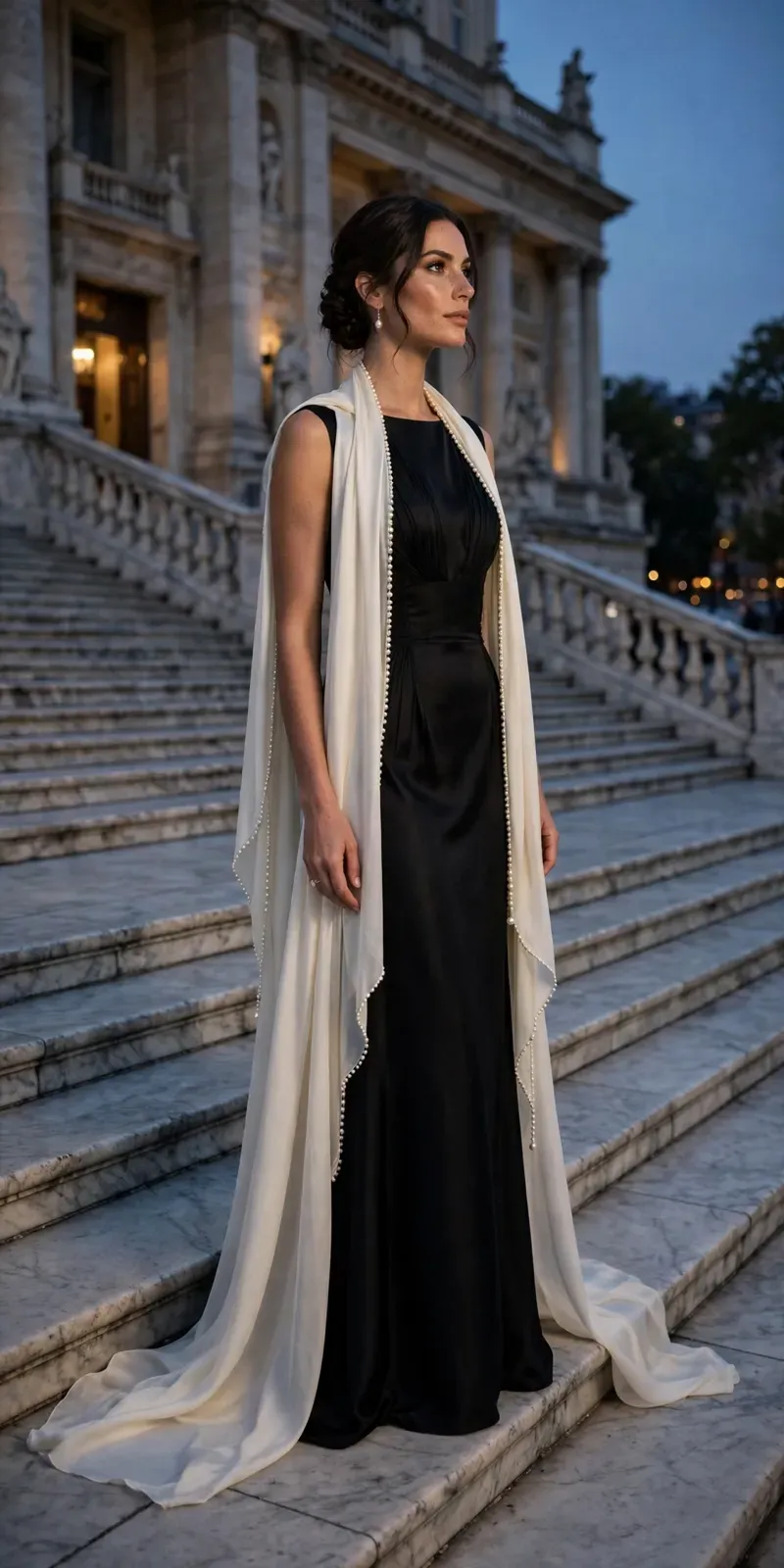
The hero photo shows the gardenia pearl opera scarf at its most formal. Let both ends hang long at the front over a plain gown and allow the ends to trail a little as you walk. This is the most formal version and the one that earns the opera name.
2. Loosely knotted with a burgundy gown
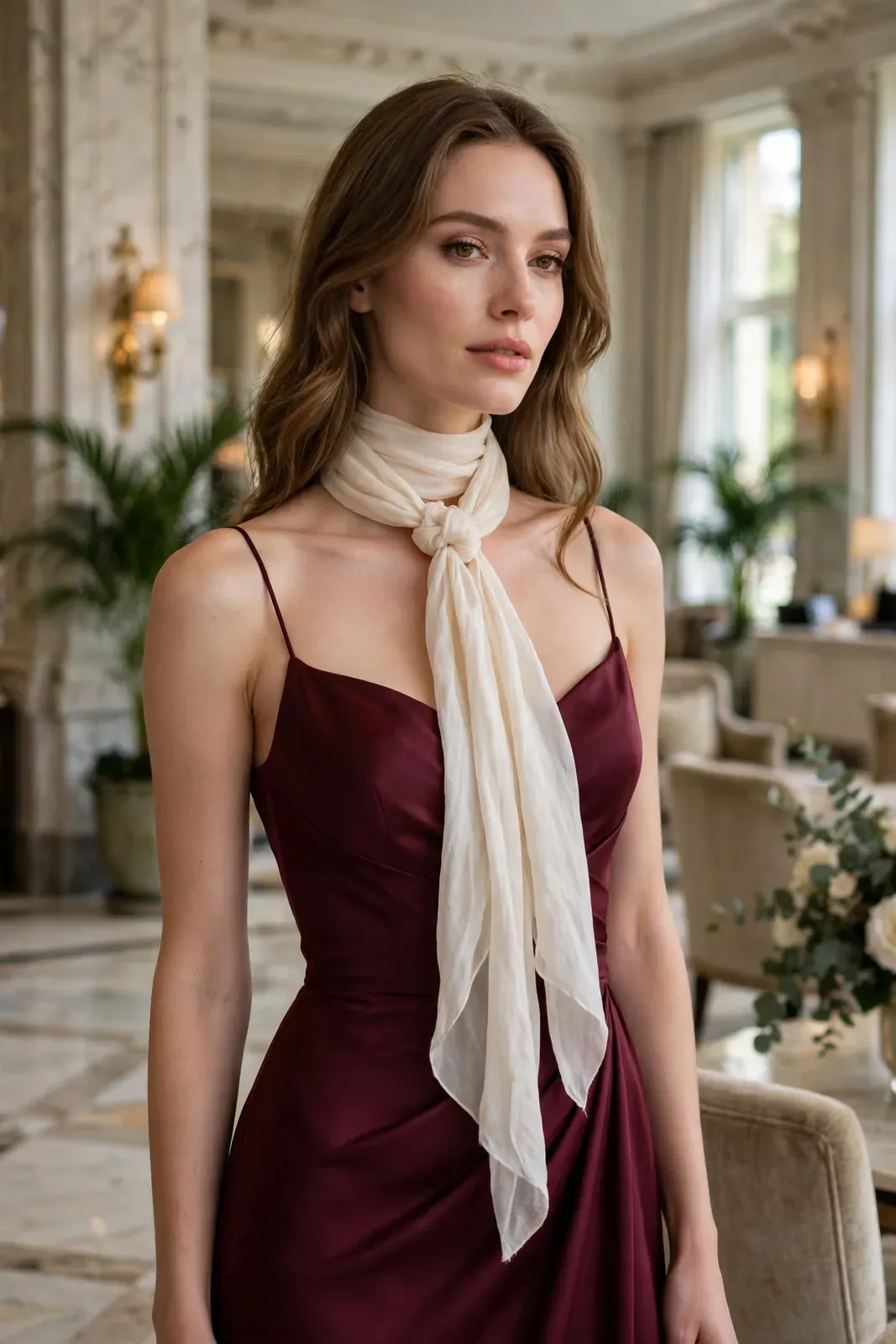
The pairing photo below. One loose knot at the front turns the gardenia pearl opera scarf into a soft necklace line and keeps it secure through dinner. Warm burgundy against pearl ivory is a combination I return to every winter.
3. Over the arms as an evening wrap
Drape the gardenia pearl opera scarf behind your back and rest it over your forearms, shawl style. It covers bare shoulders in air-conditioned rooms and in places of worship without hiding the dress.
4. One end thrown over the opposite shoulder
The classic asymmetric drape for a gardenia pearl opera scarf. It shortens one side, shows the dress on the other, and stays in place better than a balanced drape when you are moving around.
5. Belted over a plain dress
Lay the gardenia pearl opera scarf down the front of a simple dress and belt both together at the waist. You get a layered, panelled effect that looks far more designed than the two minutes it takes.
6. As a soft shawl over a cocktail dress
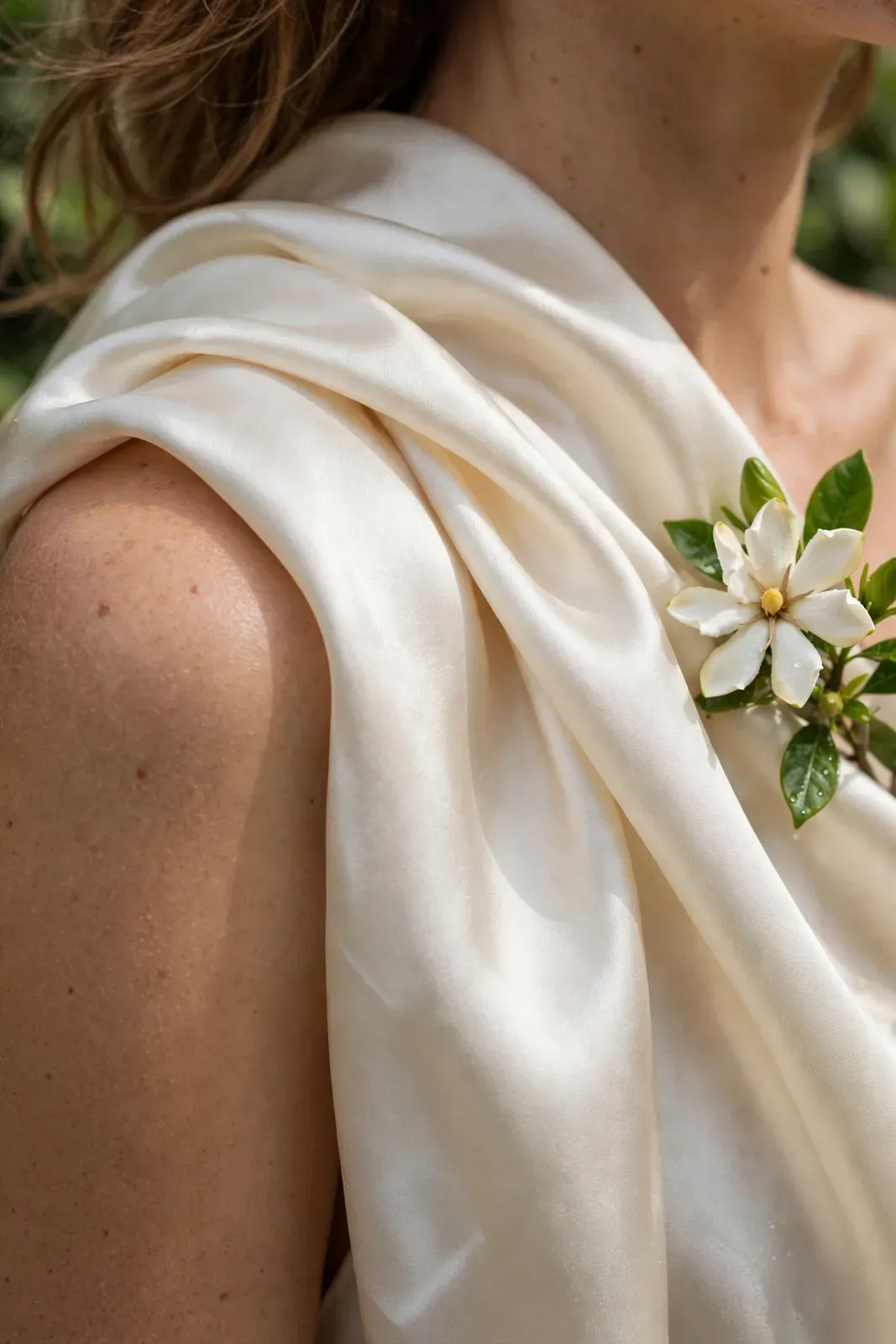
The lifestyle photo shows the gardenia pearl opera scarf at a garden party: gathered loosely over the shoulders of a navy cocktail dress, it softens the neckline and adds that floating layer in every photo.
7. Twisted once at the front, ends at the back
One twist at the throat, ends falling down the back. Beautiful with a low-back dress, because the gardenia pearl opera scarf becomes the detail people see when you turn away.
8. Over a plain black jumpsuit
Evening jumpsuits can look flat in one dark block. A gardenia pearl opera scarf down the front breaks it up and adds the formality a jumpsuit sometimes lacks.
9. Draped over a coat for winter evenings
Worn outside a dark wool coat, the gardenia pearl opera scarf frames the face and lightens a heavy winter outfit on the way to the event, then comes indoors with you.
How to Drape an Opera Scarf So It Stays Put: A Step-by-Step Routine
Long scarves like a gardenia pearl opera scarf have a reputation for sliding off at the worst moment. This is the routine that keeps mine in place through a whole evening.
Step 1: Find the centre of the scarf and place it at the back of your neck first, never at the front. Evening drapes anchored at the neck travel far less.
Step 2: Bring both ends forward and check the lengths in a mirror. Equal lengths look formal; one side longer looks relaxed. Decide on purpose rather than by accident.
Step 3: If your dress has straps or a smooth satin bodice, add one small hidden safety pin or a dot of fashion tape where the scarf crosses the shoulder. Nobody sees it, and the drape survives dancing.
Step 4: For the knotted version, tie the knot loosely and slightly off-centre, then fluff the loops with your fingers. A tight, centred knot reads like a school scarf; a loose one reads as jewellery.
Step 5: Before you sit down, sweep the trailing ends to one side of the chair. Opera lengths and chair legs are natural enemies, and one tug at dinner can undo the whole drape.
Buying Advice: What to Check Before You Pay
Length is the first thing to check: a true opera scarf should reach well past your hips on both sides when draped at the neck, ideally 220 centimetres or more.
Hold the fabric up to the light — a good pearl scarf has an even, soft glow with no shiny streaks, which usually means a silk or high-quality satin weave rather than stiff polyester.
Check the edges: rolled or finely hemmed edges lie flatter and fray less than raw-cut ones. If the scarf has a beaded or pearl-trimmed edge, tug it very gently; trim should be stitched, never glued.
Finally, drape it over your own hand in the shop. The right weight falls in soft folds and lets go without clinging or static.
Care Tips and Common Mistakes to Avoid
Store an opera scarf rolled loosely or folded with tissue between the layers, never crushed in a drawer where the pearl finish can crease permanently.
Keep it away from perfume sprays and hairspray, which dull light fabrics, and never pin brooches through it — one pulled thread can ladder the whole length.
The most common mistake is washing it like a cotton scarf: hot water and wringing will kill the soft glow, so use a cool hand wash or a trusted dry cleaner.
The second mistake is ironing it hot and flat, which leaves shiny patches; a gentle steam held a few centimetres away is all it needs. And keep it away from rough jewellery and bag clasps at events — a single snag on a long scarf is very hard to hide.

Frequently Asked Questions
What is an opera scarf, exactly?
It is an extra-long evening scarf, traditionally worn draped over the shoulders with a gown for formal occasions like the opera or theatre. The length is the point: the ends hang low at the front or trail behind, adding movement and softness that a standard scarf cannot give.
What colours go with a pearl ivory opera scarf?
Black, navy, burgundy, emerald and charcoal are the easiest partners, because pearl ivory glows against deep colours. It also works tone-on-tone over champagne and blush dresses. Avoid pairing it with bright optic white, which can make the pearl tone look dull by comparison.
How do I stop a long scarf slipping off my shoulders?
Anchor it at the back of the neck first, choose the knotted or belted style for active evenings, and use one hidden safety pin or a dot of fashion tape at each shoulder on slippery dresses. Weight helps too — a scarf with a finely beaded edge stays where a feather-light one slides.
Can I wear an opera scarf with a short dress?
Yes — it is one of the best ways to dress up a simple short cocktail dress. Let the ends hang longer than the hem at the front, which lengthens the whole silhouette, or belt the scarf with the dress for a panelled, designed effect.
How should I clean a pearl opera scarf?
Cool hand wash with a gentle detergent, no wringing, and dry it flat away from direct sun. For silk versions or beaded edges, dry cleaning is safer. Steam gently to release creases rather than ironing, and store it rolled with tissue so the finish stays even.
One Long Scarf, a Whole Evening Wardrobe
Few pieces in my wardrobe work as hard as this one scarf. It has been a train, a wrap, a necklace and a belt, sometimes all in the same month. If you attend evening events in plain dresses and want one addition that changes every one of them, a gardenia pearl opera scarf is a very graceful place to start.