If your living room never quite lets you relax, the problem is rarely the size of the room. It is usually the noise: too many colours competing, too many small objects, furniture that feels heavy and restless. Japandi style calm interiors answer that problem in a quiet, practical way. The style blends Japanese restraint with Scandinavian warmth, so a room holds only what it needs, and everything it holds feels good to use and pleasant to look at.
You do not need a full renovation or a designer budget to begin. Japandi grows from small, clear decisions: lower the furniture, choose natural materials, soften the colours, and clear the surfaces. This guide covers the fusion basics that work in real homes, the order to add them in, and the mistakes that quietly undo the calm. Used well, japandi style calm interiors make an ordinary room feel restful without any drama.
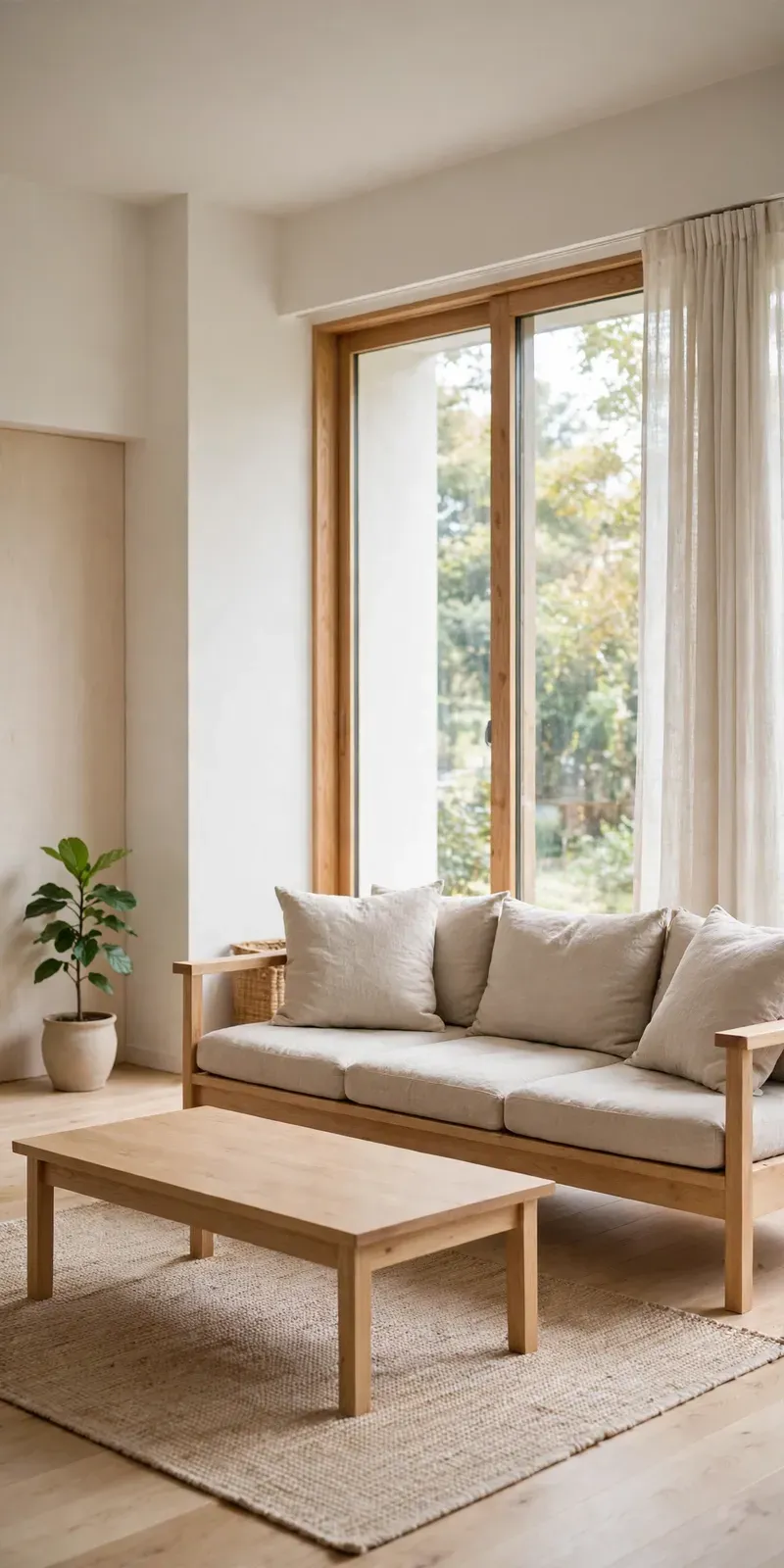
Table of Contents
What Japandi Style Calm Interiors Really Mean
Japandi is a fusion of two traditions that agree on a great deal. From Japanese design it takes low furniture, clear floor space, and respect for handmade things with small, honest imperfections. From Scandinavian design it takes light, warmth, and everyday comfort: pale wood, soft textiles, and rooms that still feel welcoming on a dark winter evening. Together, the result is simple without being cold, and cosy without tipping into clutter. That balance is the heart of japandi style calm interiors.
A helpful idea behind the Japanese side is wabi-sabi, the appreciation of natural and imperfect beauty. A slightly uneven ceramic bowl, a wooden stool with visible grain, or a linen throw that wrinkles softly is not a flaw in this style; it is the point. The Scandinavian side adds the softness — cushions, throws, warm light — that keeps a pared-back room feeling human rather than stark.
For background, the overview of Japandi and how the two styles merged traces the shared roots in craftsmanship and simple living — which is why the style feels settled rather than trendy. Keep that in mind and japandi style calm interiors become far easier to build.
Start Low: Furniture Basics for Japandi Style Calm Interiors
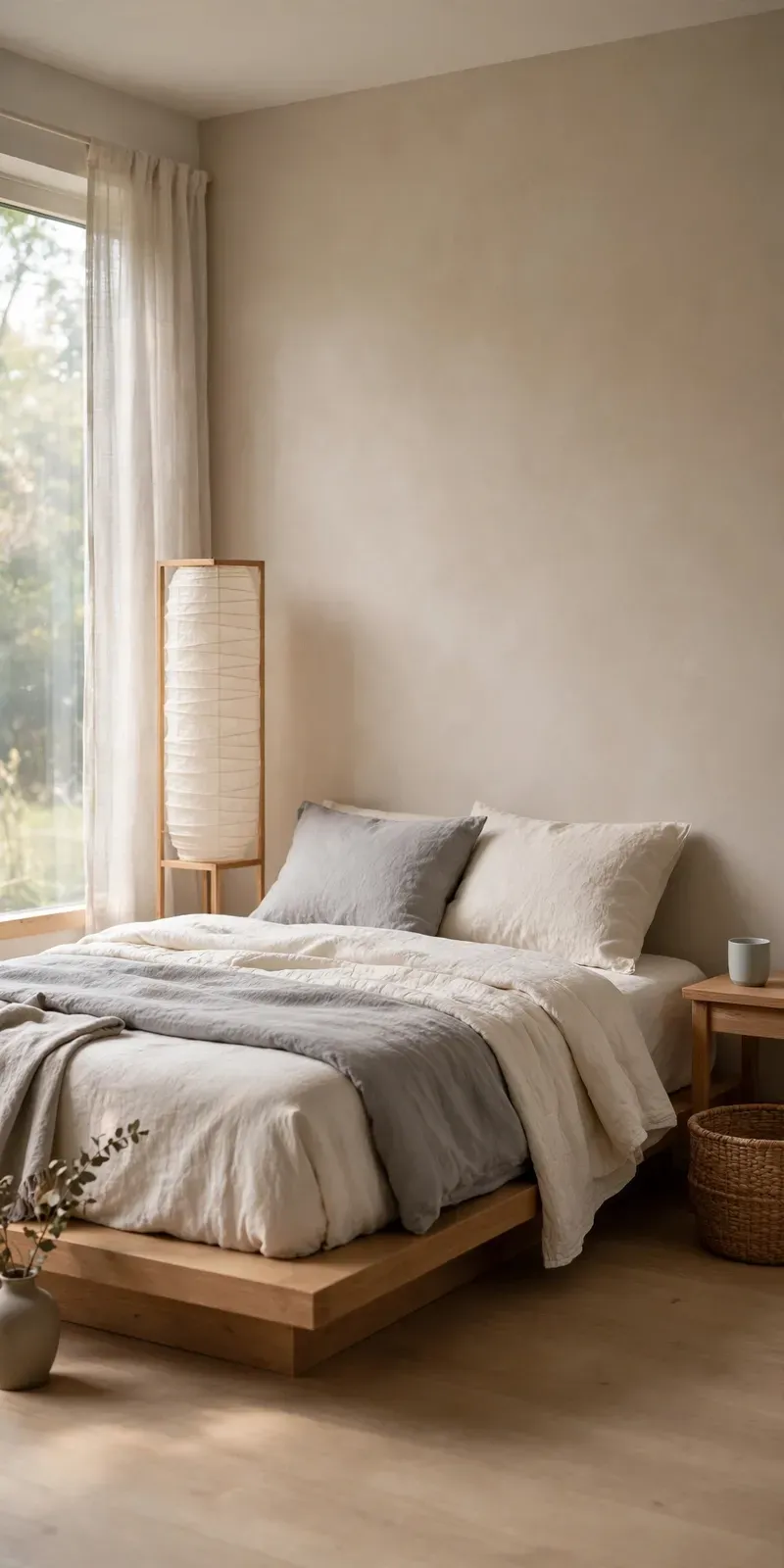
Low furniture is the quickest way to change how a room feels. A low sofa, a platform bed, or a simple wooden bench keeps sightlines open and leaves more empty wall above, which the eye reads as space. Pieces sit closer to the floor, so the room feels grounded and still. Look for clean lines, visible legs, and frames in light oak, ash, or another pale wood — and skip bulky arms, shiny finishes, and ornate details. That low, grounded line is a signature of japandi style calm interiors.
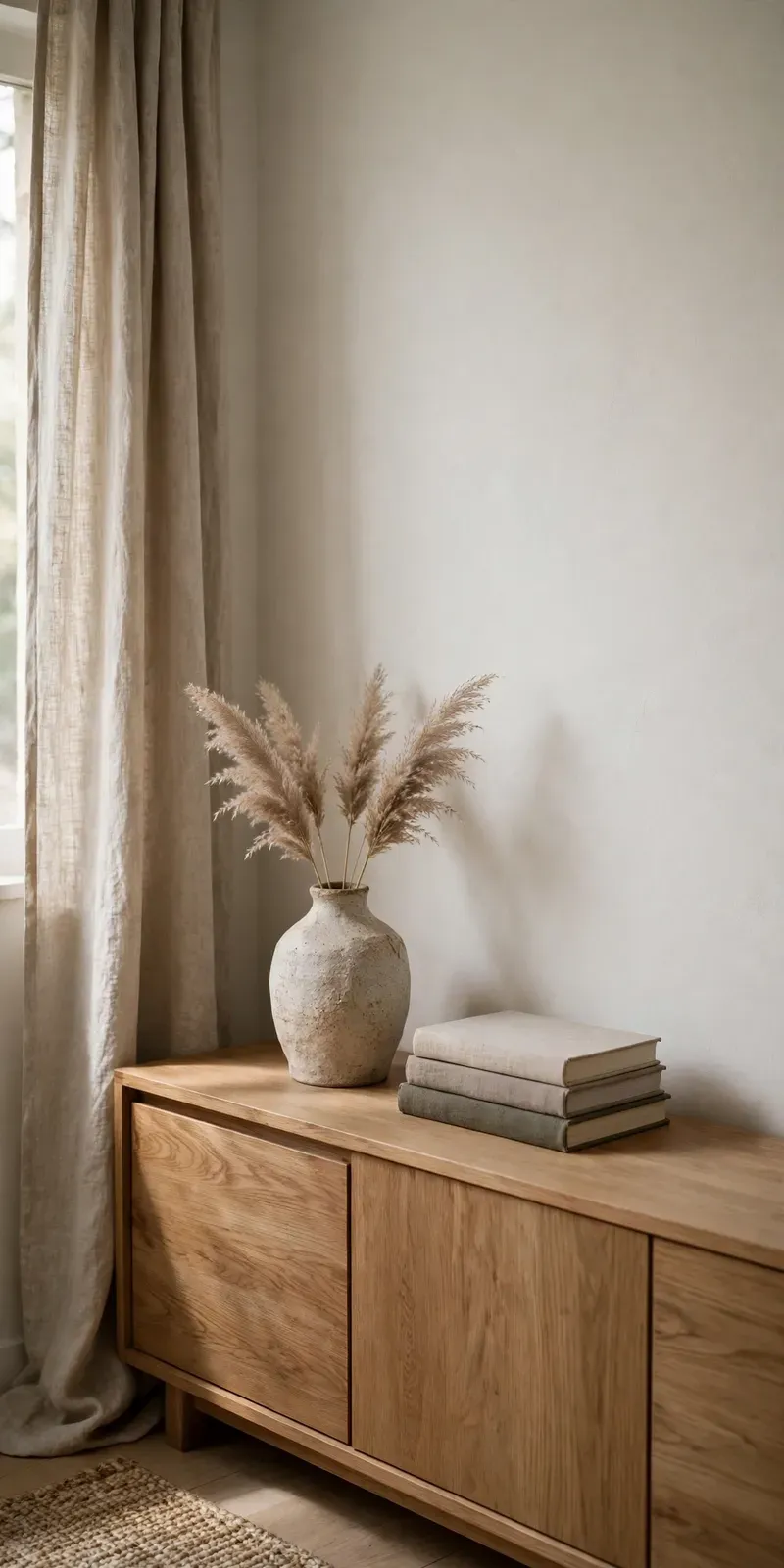
Fewer, better pieces beat a room full of small ones. One solid low sideboard gives you storage, a clear surface, and a place for a single vase or stack of books. Leave breathing room around each piece instead of pushing everything against the walls. If you can walk through the room without sidestepping furniture, the layout is probably right. Japandi style calm interiors depend on that breathing room.
Natural Materials and Honest Texture in Japandi Style Calm Interiors
Material choice does most of the decorating work in Japandi. Wood, linen, cotton, wool, rattan, clay, stone, and paper sit comfortably together because they share a matte, natural finish. A linen sofa cover, a woven rug, ceramic tableware instead of glossy plastic, a paper lamp shade — each swap moves the room the same way, and these materials age gracefully.
Texture replaces pattern and bright colour here. Interest comes from contrast you can feel: smooth wood against rough clay, soft wool over flat-weave cotton, a nubby throw on a plain cushion. Layer two or three textures per surface and stop. If a material imitates another — plastic as wood, polyester as linen — it looks restless up close. One real, simple material is always calmer than a clever copy. Honest texture gives japandi style calm interiors their quiet depth.
Colour and Light for Japandi Style Calm Interiors
Build the palette from warm neutrals: warm white, oatmeal, beige, soft grey, pale clay, and muted sage. They reflect light gently and let wood tones provide most of the warmth. Keep contrast low and repeat the same few colours across the room. Darker notes — charcoal, deep brown, a black lamp base — work in small doses; one dark object per view is usually enough. A soft palette like this is the backdrop of japandi style calm interiors.
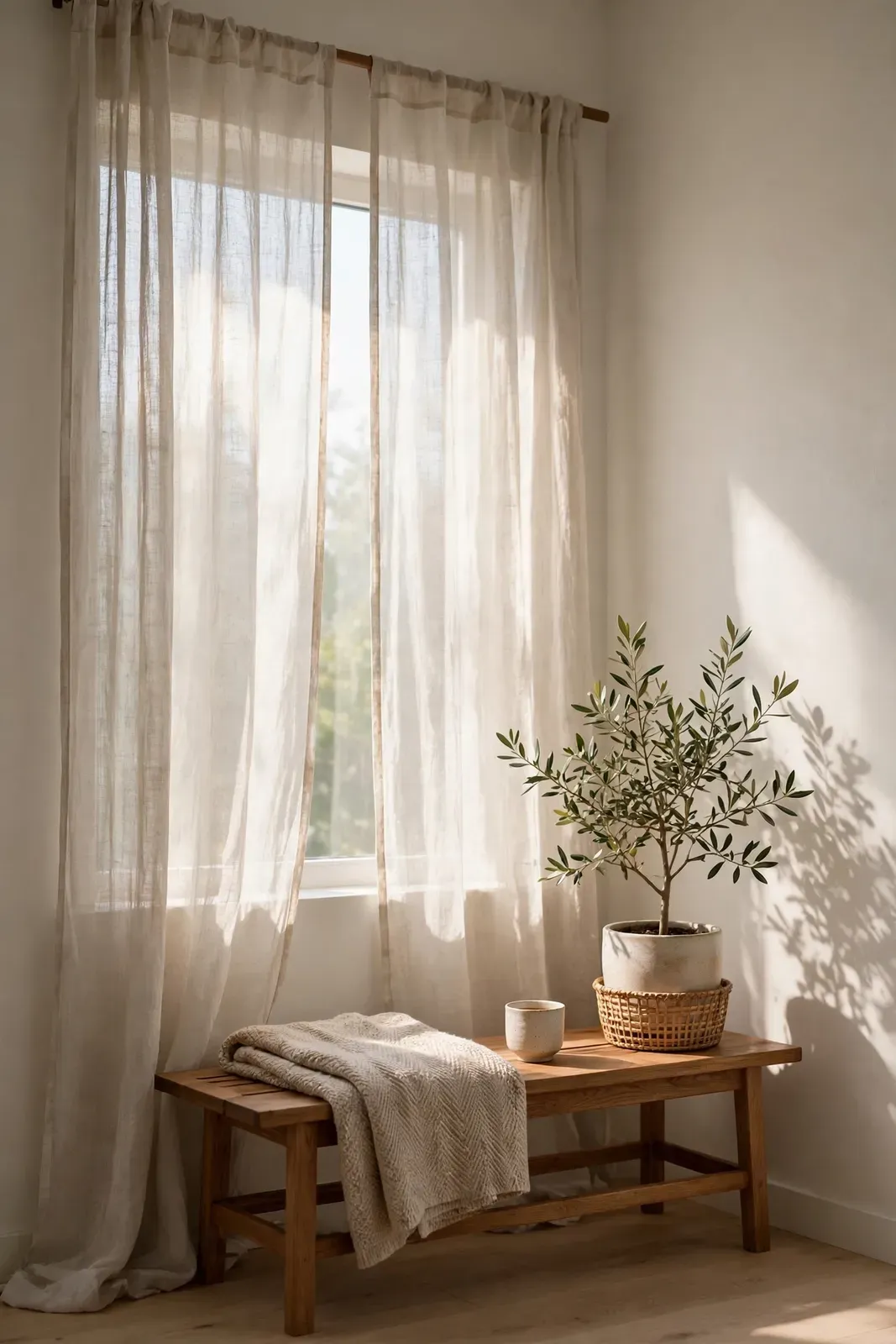
Light matters as much as colour. For another way to lift the light in a quiet room, see our guide to wall mirror placement ideas to brighten any room. Sheer linen curtains soften daylight instead of blocking it. In the evening, swap harsh overhead light for two or three low, warm sources: a paper floor lamp, a small table lamp on the sideboard. Warm bulbs make pale wood glow and keep shadows soft.

How to Create Japandi Style Calm Interiors Step by Step
Step one: empty one room of everything that is not furniture, and only bring back what you use weekly or genuinely enjoy. This step does more than any purchase. Step two: fix the layout — remove tall, wobbly pieces and clear a simple path through the room. Step three: set the palette with what you own; group cushions, throws, and ceramics into one neutral family and store the rest.
Step four: swap two or three key textiles — curtains, cushion covers, a rug — into linen, cotton, or wool. Step five: choose one handmade focal piece per room, such as a ceramic vase with a single branch, and let it stand alone. Step six: set the evening light with warm bulbs and a paper or fabric shade. Spread the steps over a few weekends, and live with each change before the next. Follow that order and japandi style calm interiors come together calmly.
Budget and Buying Advice for Japandi Style Calm Interiors
Spend first where your body meets the room: the sofa, the bed, the chair you read in. Solid wood and natural upholstery cost more upfront but stay comfortable and repair well. Save on decor — a branch in a plain vase or a woven basket from a local market gives the same calm as expensive ornaments. Second-hand solid wood is a smart source: sand it, oil it, and the grain becomes the decoration. In Pakistan, a local carpenter can often make a low platform bed or sideboard for less than imported flat-pack, fitted to your room exactly. That order of spending suits japandi style calm interiors perfectly.
Buy slowly, one piece at a time, and remove something before adding something. Japandi on a budget is mostly editing, not shopping: many homes already own the pale wood, plain ceramics, and neutral bedding the style needs, buried under brighter extras. Sell or donate what you remove, and let that fund the one or two pieces — good linen curtains, a proper paper lamp — that finish the room.
Common Mistakes That Break the Calm
The most common mistake is going all white and cold: without wood warmth and soft textiles, a pared-back room feels like a clinic. The second is buying a complete matching set that looks staged; Japandi rooms are gathered slowly, and variety in wood tone and pottery makes them believable. Third, too many small decor items — ten tiny objects on a shelf read as clutter even when each is pretty. Choose one or two larger pieces. Fourth, harsh overhead lighting that flattens everything. Finally, hiding clutter rather than reducing it: if storage is overflowing, the room drifts back within weeks, so edit first and store what honestly remains. Avoid those traps and japandi style calm interiors stay calm for good.
Frequently Asked Questions
What is the difference between Japandi and plain minimalism?
Minimalism focuses on owning less; Japandi focuses on how the remaining things feel. A Japandi room keeps warmth, texture, and handcrafted character — wool throws, grainy wood, uneven ceramics — where strict minimalism often removes them. In short, japandi style calm interiors keep the soul of a room.
Which colours work best for japandi style calm interiors?
Warm neutrals work best: warm white, oatmeal, beige, soft grey, pale clay, and muted sage. Let light wood supply warmth, and use charcoal or dark brown only in small accents such as a lamp base or picture frame. Low contrast is what keeps the room feeling quiet. Those tones are the safe core of japandi style calm interiors.
Can Japandi work in a small apartment or a rented home?
Yes — low furniture and clear floors make small rooms feel larger. Renters can work entirely with movable pieces: textiles, lamps, a low bench, ceramics, and plants. Nothing in the basic approach requires painting or building. That is why japandi style calm interiors work so well in small homes.
What wood should I choose for Japandi furniture?
Light woods such as oak, ash, pine, and bamboo are the classic choices, left matte rather than glossy. If you already own darker wood, keep it and balance it with paler textiles and walls. Mixed wood tones are fine as long as finishes stay natural and the palette stays soft.
How do I stop a Japandi room feeling empty?
Add warmth through texture, not more objects. A wool throw, a woven rug underfoot, warm lamplight, and one living plant give a room presence without visual noise. If it still feels empty, add one larger piece rather than several small ones.
A Quieter Room, Built One Decision at a Time
Japandi style calm interiors are not a look you buy in a weekend; they are a set of habits — lower, softer, simpler, and warmer — applied one decision at a time. Start by clearing a single room, swap a few textiles, and fix the evening light before you spend anything more. The calm builds quietly, and so does the room — that slow, settled feeling is exactly what the style is for.