When the heat settles in, most of us reach straight for the air conditioner and accept a bigger electricity bill as the price of comfort. But a room can feel several degrees kinder before any machine is switched on, simply because of what is covering the sofa, hanging at the windows and sitting underfoot. That is the thinking behind summer home cooling decor swaps: trade the heavy, heat-holding layers of winter for light fabrics, open airflow styling and paler colours, using mostly things you already own.
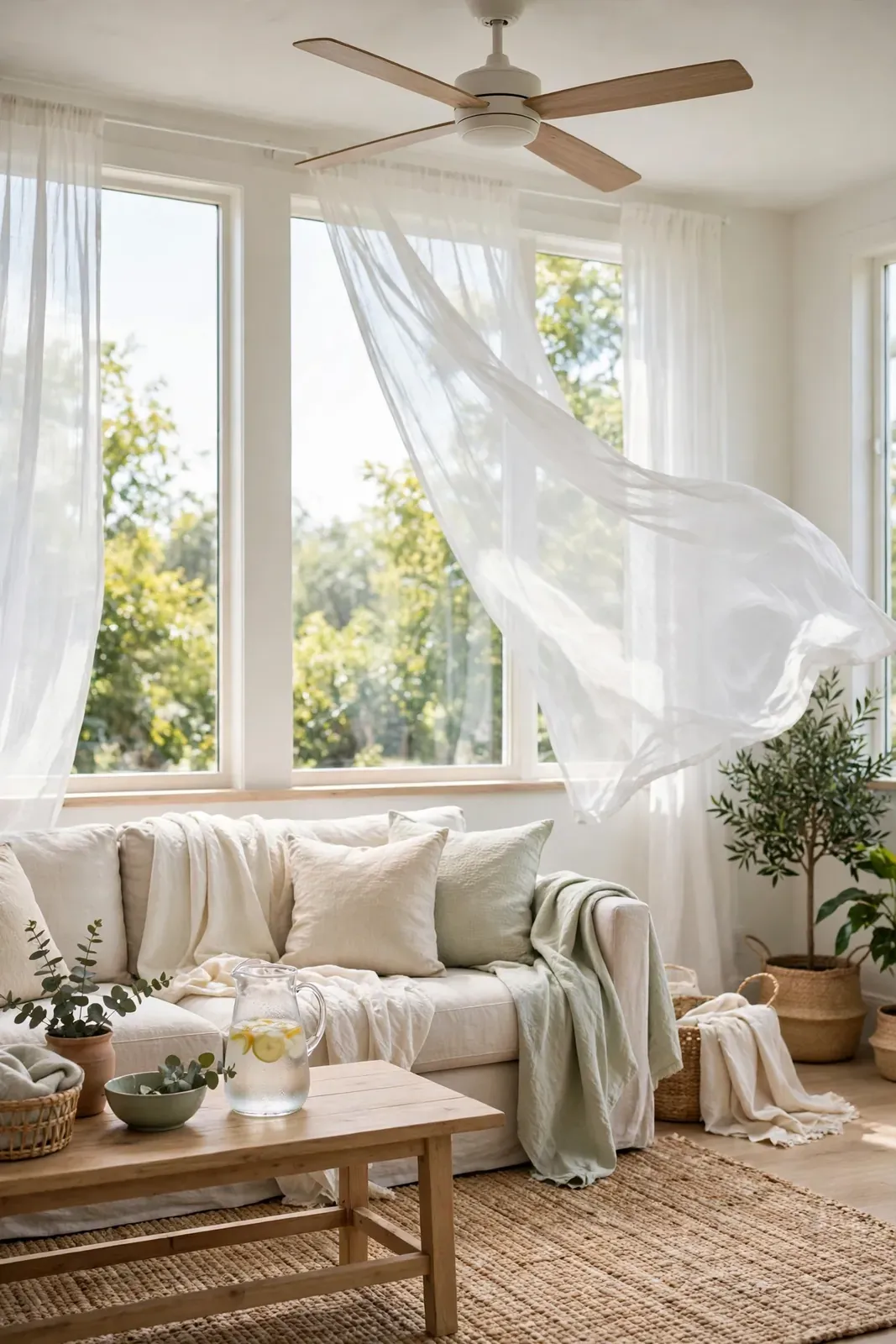
Table of Contents
Start With Fabric: The Easiest Summer Home Cooling Decor Swaps
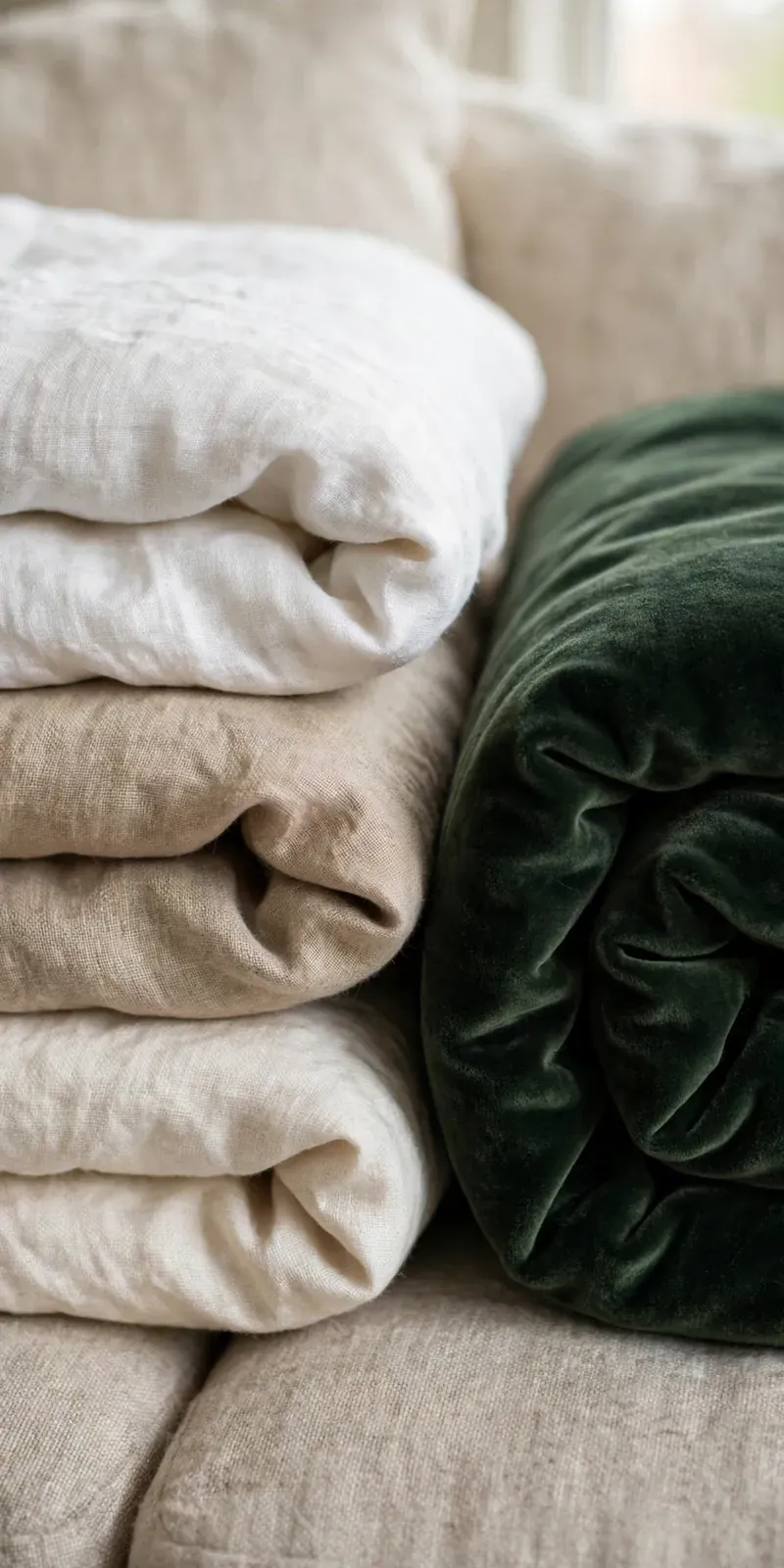
Fabric is where a room stores heat. Velvet, wool blends, fleece throws and heavy cushion covers hold warmth against your body and slow the air moving around a seat. Light natural fibres behave the opposite way. Linen, woven from flax, lets air pass through its loose weave and pulls moisture away from skin, which is why a linen cushion feels cool the moment you lean on it. Cotton does a similar job at a friendlier price, especially in a plain, open weave.
Begin with whatever touches skin most. Swap sofa cushion covers for linen or cotton ones in pale shades, replace thick throws with a single thin cotton throw per seat, and change synthetic pillowcases. Synthetic covers often look light but trap warm air, so read labels and choose natural fibres for the pieces you sit and sleep on. Store the winter covers washed and labelled in one box, and the swap back in October will take ten minutes.
Curtains: Summer Home Cooling Decor Swaps That Block Heat but Let the Light In
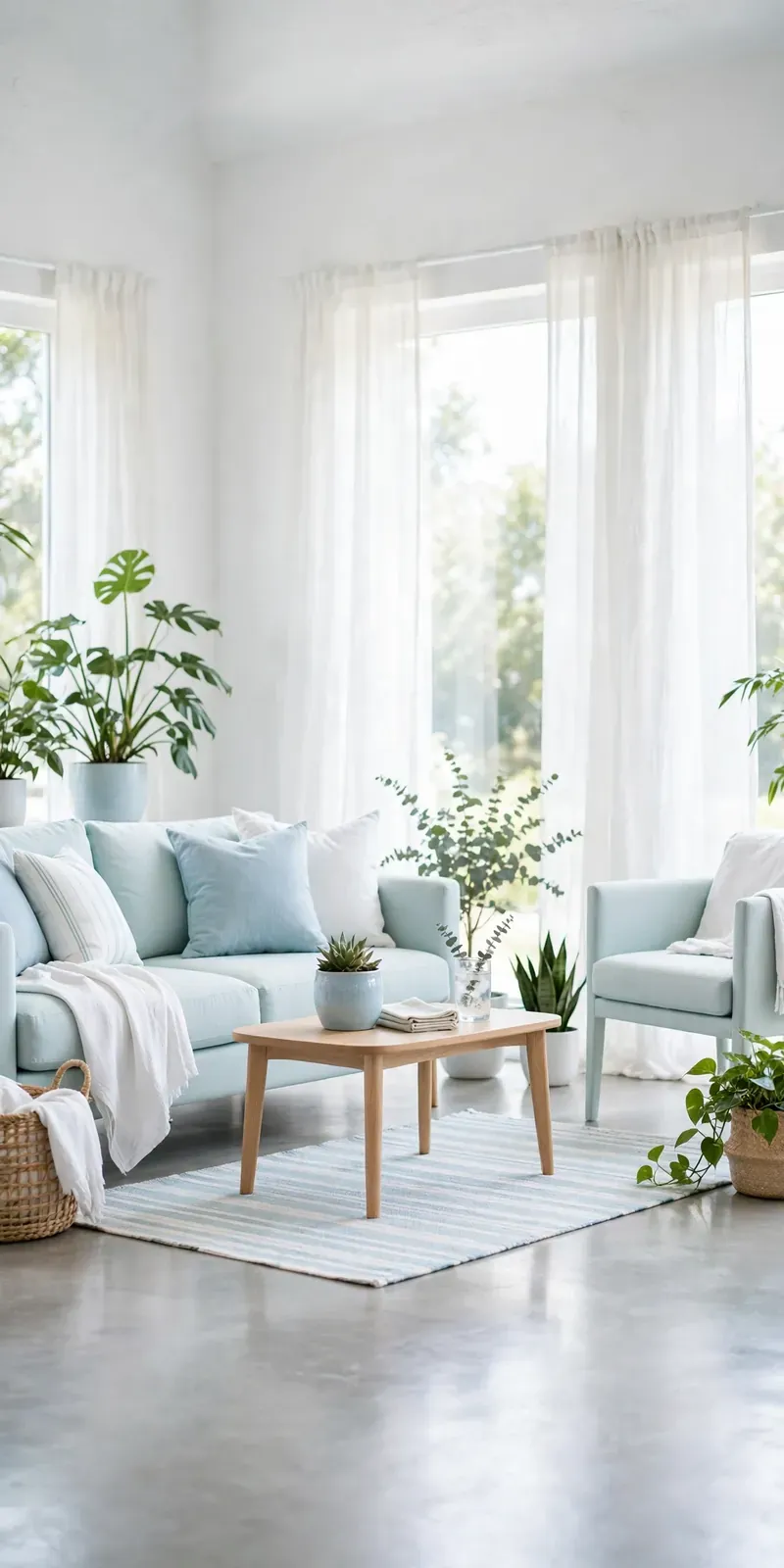
Windows are the main door heat uses to enter a room, and curtains decide how much gets through. Thick blackout drapes block sun, but they darken the room all day and make a home feel shut in. For most living spaces, a sheer curtain in white or soft ivory is the better summer answer: it softens direct sunlight, cuts the glare that heats floors and sofas, and still lets daylight and moving air pass.
Hang sheers high and let them finish just above the floor, so they do not pool and block air moving along the skirting. On west-facing windows, layer a sheer in front of a light-coloured blackout lining: sheers alone in the morning, the lining drawn only during the harshest afternoon hours. Keep the fabric pale — dark curtains absorb sunlight and radiate that warmth back into the room after sunset, while white and cream reflect much of it away.
Rugs, Layers and the Case for Bare Floors
A deep-pile rug is lovely in January and a warm blanket for your floor in July. One of the quickest summer home cooling decor swaps is to roll up the heaviest rugs and live with bare wood, tile or laminate for a few months. Cool flooring under bare feet changes how the whole body reads a room, and lets air from a fan travel further instead of dying in a thick pile.
If bare floors feel too plain, replace the winter rug with a thin flatweave in cotton or jute. Flatweaves still define a seating area, but they add almost no insulation and shake clean in minutes. Apply the same thinking to table runners and layered blankets on beds. Summer styling is mostly subtraction: every heavy layer you remove is one less thing holding yesterday’s heat. If you are rearranging furniture while the rugs are up, our guide to small living room layout ideas will help you keep walkways and seating in the right places.
Summer Home Cooling Decor Swaps That Open Up Airflow Paths
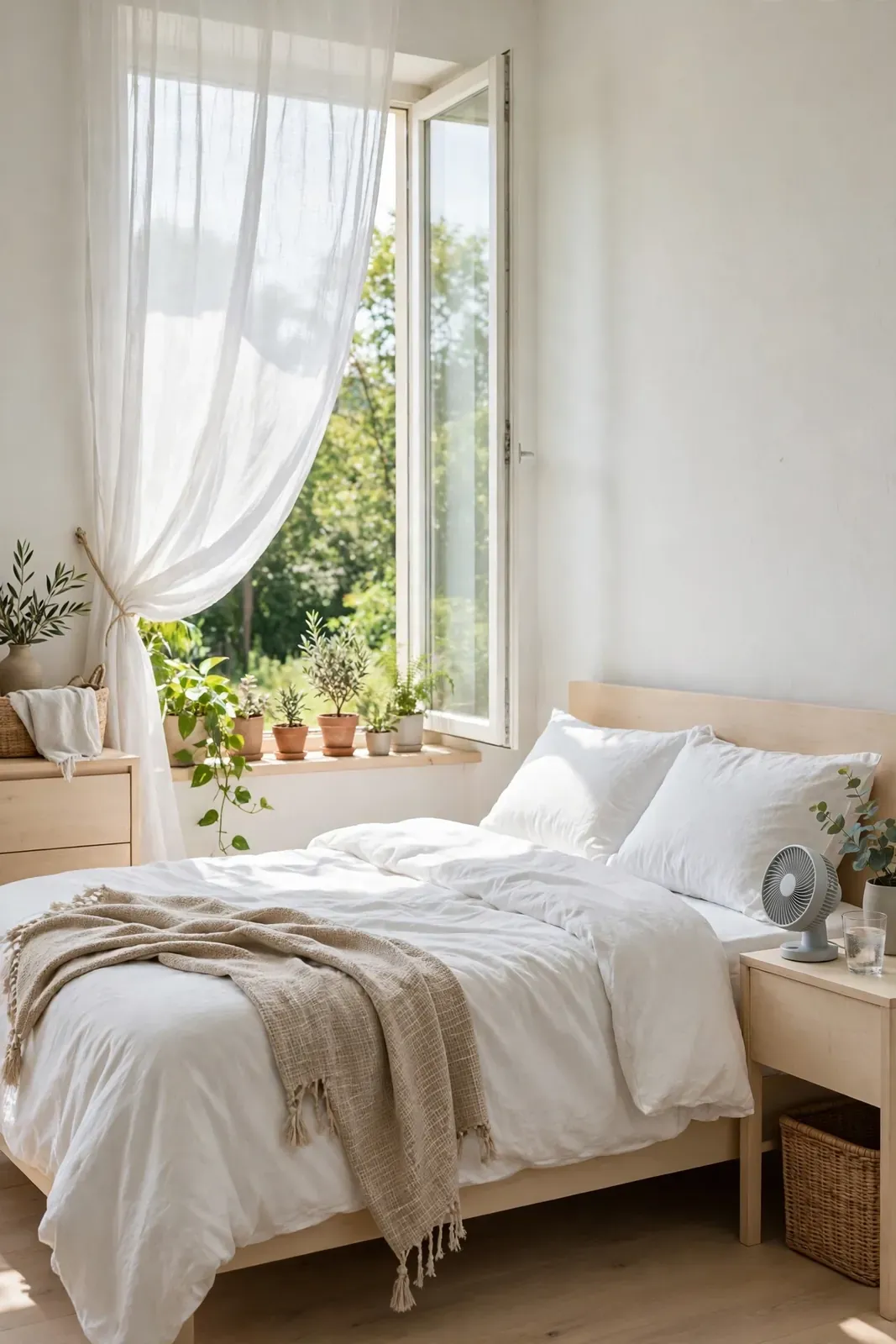
Cooling is not only about temperature; it is about movement. Stagnant air feels warmer than moving air at the same thermometer reading, which is why thermal comfort depends heavily on air speed and humidity, not just degrees. Walk through your home and look for the straight line air wants to travel, from a window on one side to a door or window on the other. Then clear that line: pull sofas a few centimetres off the wall, move the tall bookcase standing squarely in front of a window, and lift low furniture onto its legs where you can, so air passes underneath as well as around it.
Keep interior doors open during cooler parts of the day and open windows on opposite sides of the home together, even for twenty minutes in the early morning, to flush out warm air that built up overnight. A fan should push air along the paths you have cleared, not into a wall of furniture. In the bedroom, leave a gap between the bed and the wall, and avoid piling blankets at the foot of the bed where they block the breeze at ankle level — where you feel it most while sleeping.
A Paler Palette: Summer Home Cooling Decor Swaps That Actually Feel Cooler
Colour does not change the temperature of a room, but it changes how hot the room looks and how patient you feel in it. Deep rust, charcoal, burgundy and chocolate read as warm and heavy in strong summer light. Pale shades do the opposite: white, soft ivory, pale aqua, washed-out blue, light sage and blush reflect more light and give your eyes the open feeling you get standing near water or under a tree.
You do not need to repaint to get this effect. Change the largest soft surfaces first: the throw on the main sofa, the bedcover, the tablecloth and the cushion group.
Plants and Shade Where They Actually Help
Plants earn their place in a summer home for practical reasons. A leafy plant near a sunny window softens the light entering the room, and the moisture its leaves release can take the dry edge off hot air. Group two or three together rather than scattering singles. Pothos, snake plants and palms tolerate bright rooms and an occasional missed watering.
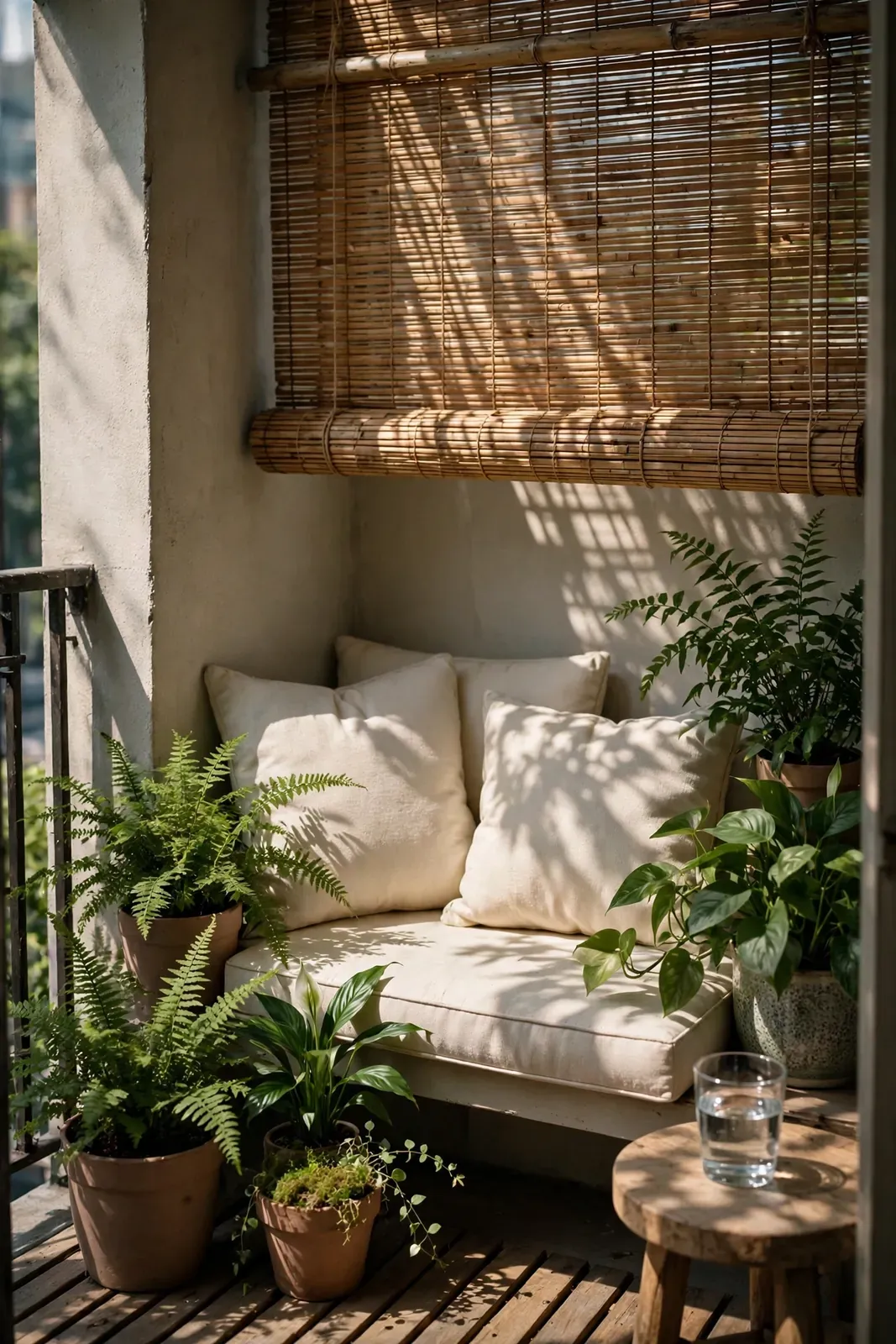
Outside the glass, shade works even harder. A bamboo roll shade, a light canvas awning or a tall plant on the balcony stops sunlight before it reaches the window, which is far more effective than any curtain inside. Build one proper balcony shade corner — a screen on the sunny side, pale outdoor cushions and a small table — and it will also keep a wall of your living room cooler all afternoon.
Your Swap Weekend: Step by Step
Step 1 — Friday evening, survey and sort. Walk room by room with a laundry basket and collect every heavy throw, velvet cushion, thick blanket and dark table runner. Wash what needs washing so storage does not trap smells.
Step 2 — Saturday morning, fabrics first. Fit the linen and cotton covers, change the bedding to light cotton — cotton bedding and throws breathe far better than synthetic sets — and put one thin throw back per room. Store the labelled winter box out of the living space.
Step 3 — Saturday afternoon, windows and floors. Take down heavy curtains, shake them outside, and hang the sheers. Roll the deep rugs and lay flatweaves only where you truly need them.
Step 4 — Sunday, airflow and finishing touches. Clear the window-to-door paths, reposition the fan, group the plants, and set up the balcony shade corner. Finish with a full morning airing, then live with the result for a week before buying anything new.
Doing Summer Home Cooling Decor Swaps on a Budget
Most of this plan costs nothing, because subtraction is free. Removing rugs, opening paths and storing heavy layers already changes how the house feels before you spend anything. When you do buy, spend in this order: sheer curtains for the hottest window first, then covers for the seat you use most, then bedding. One good set used daily beats five decorative extras.
Shop your own home before any store. A white cotton bedsheet can become a summer tablecloth, and spare pale pillowcases often fit cushions you forgot you owned. Add pieces over two or three weeks rather than buying a full matching set in one go.
Common Mistakes That Trap Heat
The most common mistake is swapping colours but not fabrics — pale velvet is still velvet, and it will still hold heat against your back. Second is closing the whole house up tightly all day; sealed rooms keep warm air prisoner, so use cooler hours to flush them. Third, people block the very windows they open, parking a sofa or a drying rack directly in the breeze. Fourth, avoid over-layering the bed with decorative cushions and throws at night; a bed that sleeps hot fails at its real job. Finally, do not chase every tip at once — three or four honest changes done properly cool a room more than fifteen small decorations.
Frequently Asked Questions
What are the best summer home cooling decor swaps to do first?
Start with fabric and curtains. Change heavy cushion covers and throws for linen or cotton, and hang sheers at the hottest windows. These swaps touch the surfaces you sit on and the places heat enters, so they change how a room feels on the very first day.
Do sheer curtains really keep a room cooler?
Sheers soften and scatter direct sunlight, reducing the hot patches that form on floors and upholstery, while still letting air and daylight through. On a west-facing window, pair them with a light-coloured blackout lining for the peak afternoon hours and use the sheers alone the rest of the day.
Should I remove all my rugs for summer?
Remove the thick ones, yes. Deep pile holds warmth and slows air near the floor. If a room feels bare without one, use a thin cotton or jute flatweave instead — it keeps the seating area defined without acting like a blanket under your feet.
Which is better for summer, linen or cotton?
Linen breathes a little better, feels cooler to the touch, and softens with every wash. Cotton is cheaper, easier to find, and nearly as comfortable in a loose weave. Most homes mix both: linen where skin rests longest, cotton everywhere else.
How can I cool a rented home without permanent changes?
Everything in this guide is reversible. Use tension rods for sheers, swap covers rather than furniture, roll rugs, and create shade with plants and freestanding balcony screens. Take photos before you start and you can return the home to its original state in an afternoon.
Summer at home does not have to mean hiding from whole rooms until sunset. A house dressed in light fabrics, open paths and pale, calm colours works with the season instead of fighting it, and most of that change is already sitting in your cupboards. Start with one room this weekend — the one your family uses most — and let the difference decide how far you take the rest.