There is a pair of jeans I keep reaching for on mornings when nothing else feels quite right. They are not my darkest denim or my smartest trousers. They are my ecru relaxed carpenter jeans, and they make almost everything else I own easier to wear. If blue jeans sometimes make an outfit look fine but a little flat, this soft cream shade is often the missing piece.
Ecru is not bright white and it is not beige. It sits in between, like unbleached cotton, with a warm, natural tone that softens an outfit without washing it out. Carpenter jeans add workwear details: a hammer loop, extra utility pockets, visible stitching, and a straight, relaxed leg that does not cling. Together, the colour and cut give you denim that feels casual and lived-in, but looks far more considered than a standard pair.
Because they are neutral, ecru relaxed carpenter jeans work with white, black, grey, navy, camel, olive, and soft pastels. Because the fit is relaxed, they balance fitted tops and slouchy knits alike. Below are nine easy ways to style them, plus honest advice on fit, care, and buying.
Why Ecru Works When Blue and White Jeans Do Not
Blue jeans bring a strong colour with them. With black they can look harsh, and with other blues they need careful shade matching. Pure white jeans feel stark, show every mark, and many people only wear them in high summer. Ecru sits in a calmer middle ground: warm enough next to skin, light enough to lift a dark top, and deep enough that a small splash is not a disaster.
The carpenter shape matters just as much. A relaxed leg gives pale denim weight, so the jeans read as an intentional workwear piece rather than white jeans that went wrong in the wash. Side pockets and the loop break up the cream fabric, which helps if you are nervous about light colours on your lower half. The looser fit and extra seams do a lot of the work for you.
Think of ecru as a base, not a statement. It will not fight a printed blouse or clash with a bright knit, and it lets your shoes and bag show — which is why one pair supports so many looks, from errands to a casual office day.
1, 2 and 3: With Simple Tops for Everyday Ease
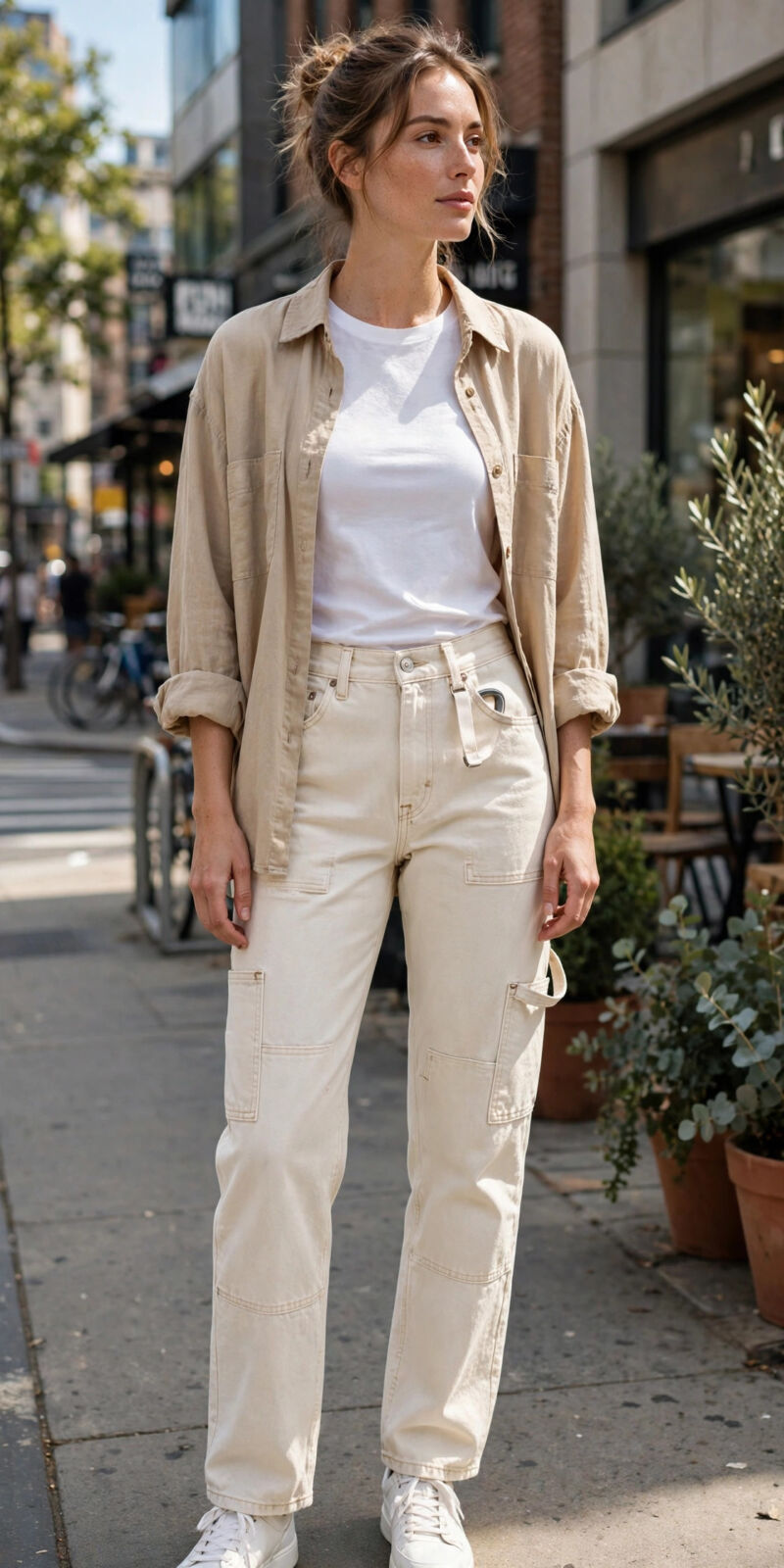
1. White tee and an open overshirt. This is the outfit in the first photo and the one I wear most. A plain white t-shirt tucked loosely into the jeans gives a soft tonal base, and an open beige or stone overshirt adds a layer without sharp contrast. It works for errands, travel, and informal workdays. Keep the tee fitted enough to show your waist, otherwise two relaxed pieces together can swamp your frame.
2. Striped Breton top and loafers. A navy and white stripe brings a little pattern to cream denim without shouting. Tuck the front in, add tan loafers, and the outfit turns quietly polished — good for lunch or a casual meeting when you still want to feel like yourself in jeans.
3. Black fitted top for clean contrast. Black against ecru is softer than black against white, and it makes carpenter jeans look a touch smarter. Try a black short-sleeve knit, a fitted tee with a French tuck, or a bodysuit for a smooth line. Small gold hoops are enough; let the contrast do the work.
4, 5 and 6: With Knits When the Weather Turns
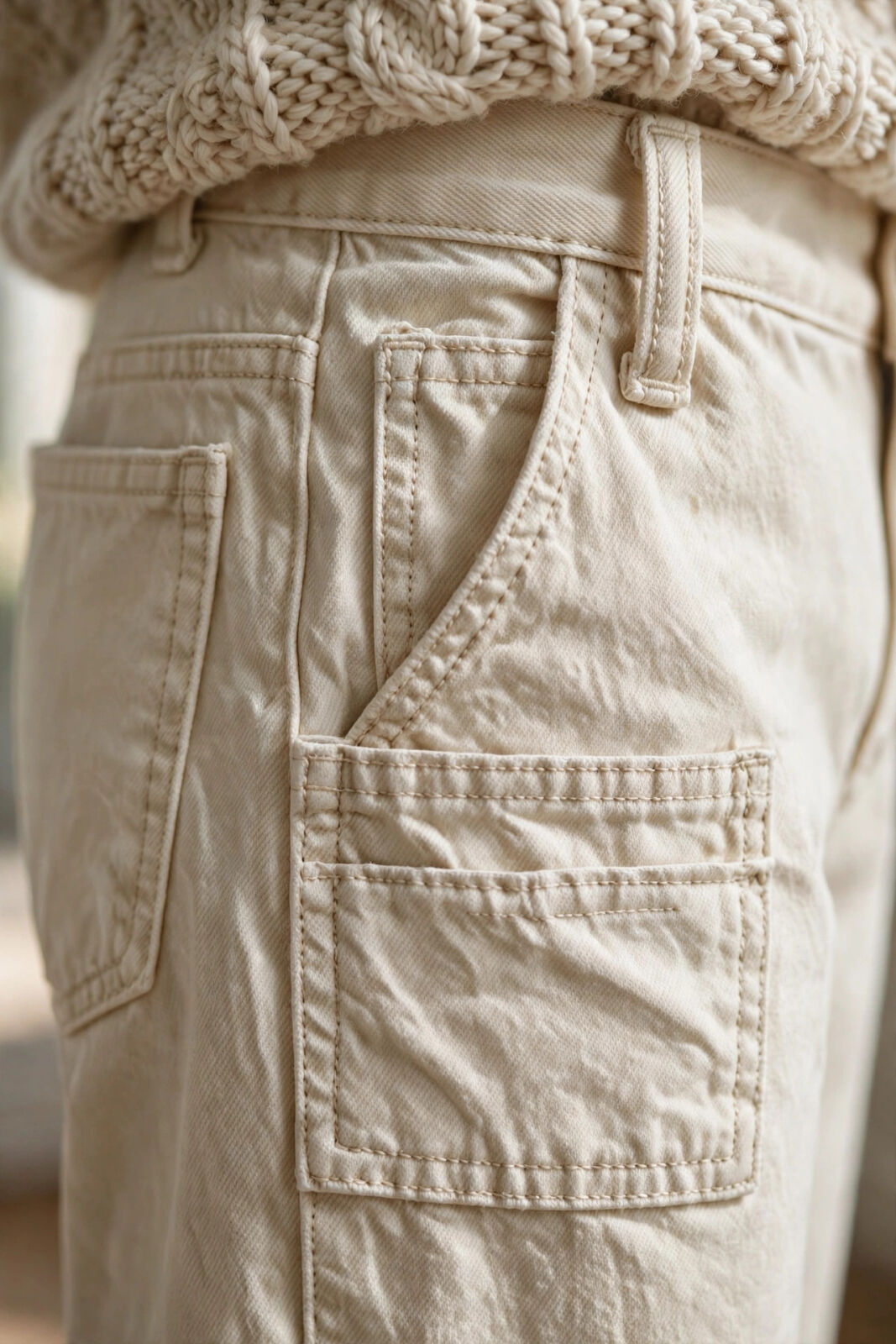
4. Chunky cream knit, worn tonal. A cream or oatmeal cable knit with ecru jeans works best when the textures differ. The close-up photo shows why: the heavy knit against smoother denim keeps a tonal outfit from looking flat. Add a small front tuck if the knit is long, and finish with ankle boots or chunky trainers. Keep top and bottom one shade apart so they do not blur into one.
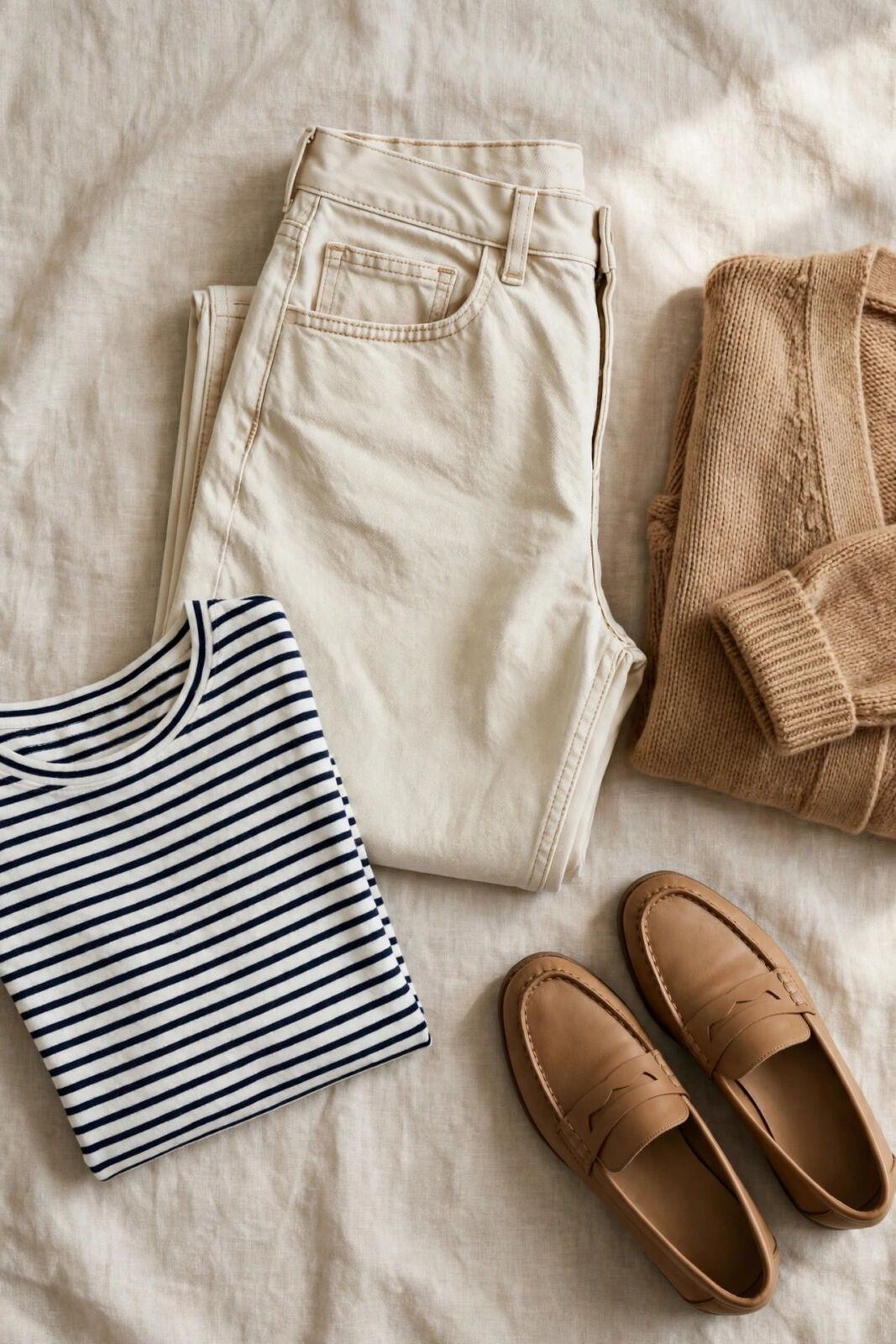
5. Camel cardigan as a soft frame. A camel cardigan over a white or striped top frames pale jeans beautifully. The flat-lay below shows this mix: striped top, camel knit, tan loafers, and the ecru jeans in the middle. It is cosy without being heavy, and the warm camel brings out the warmth in the ecru. It also comes off easily on days that turn mild.
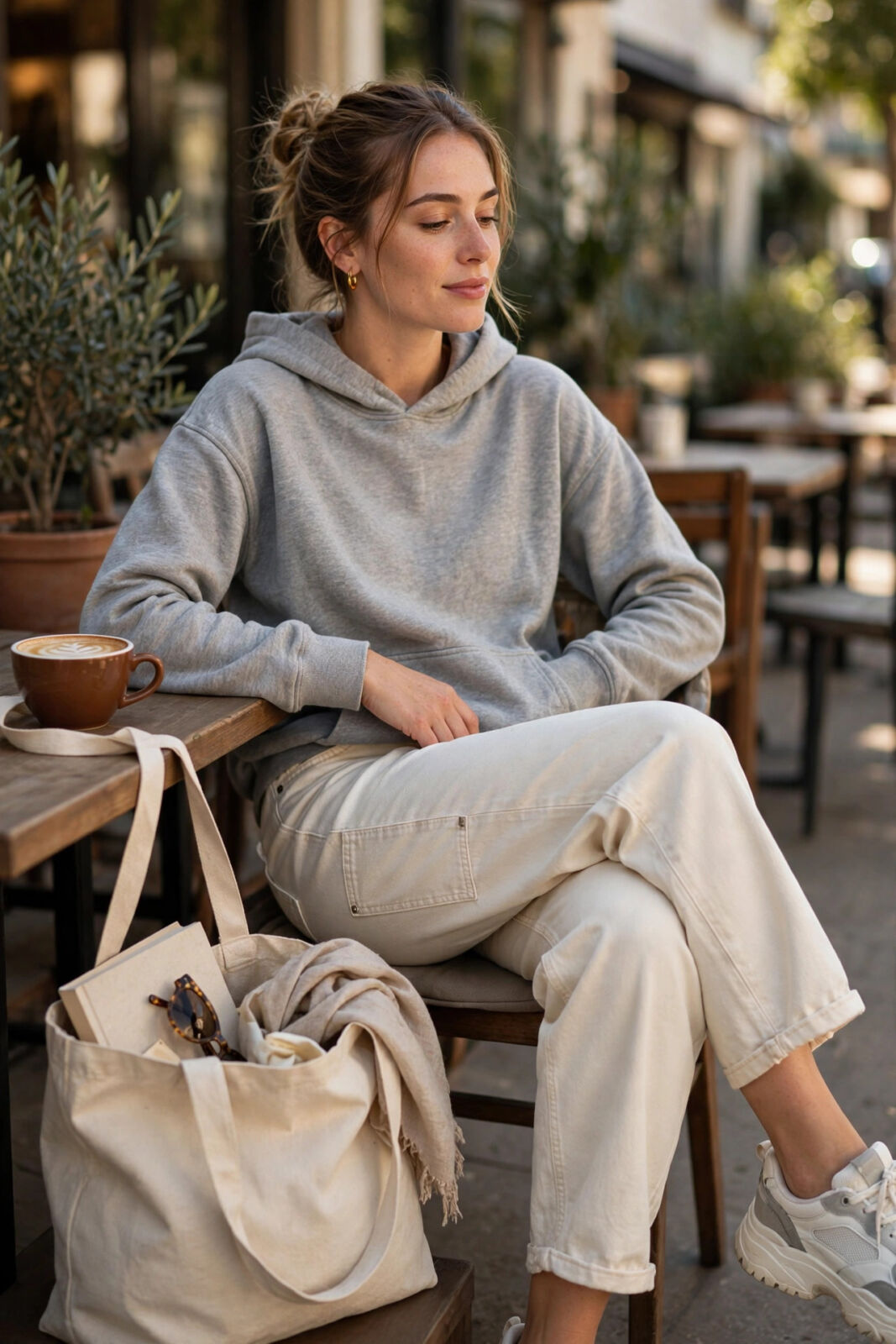
6. Grey hoodie for off-duty days. Carpenter jeans came from workwear, so they sit happily with a hoodie. A soft grey hoodie, hems rolled once, and chunky sneakers make a relaxed outfit that still looks deliberate, especially with hair up and a canvas tote. Avoid a very long, wide hoodie with relaxed jeans — go cropped or tuck the front.
7, 8 and 9: Shoes and Layers That Change the Mood
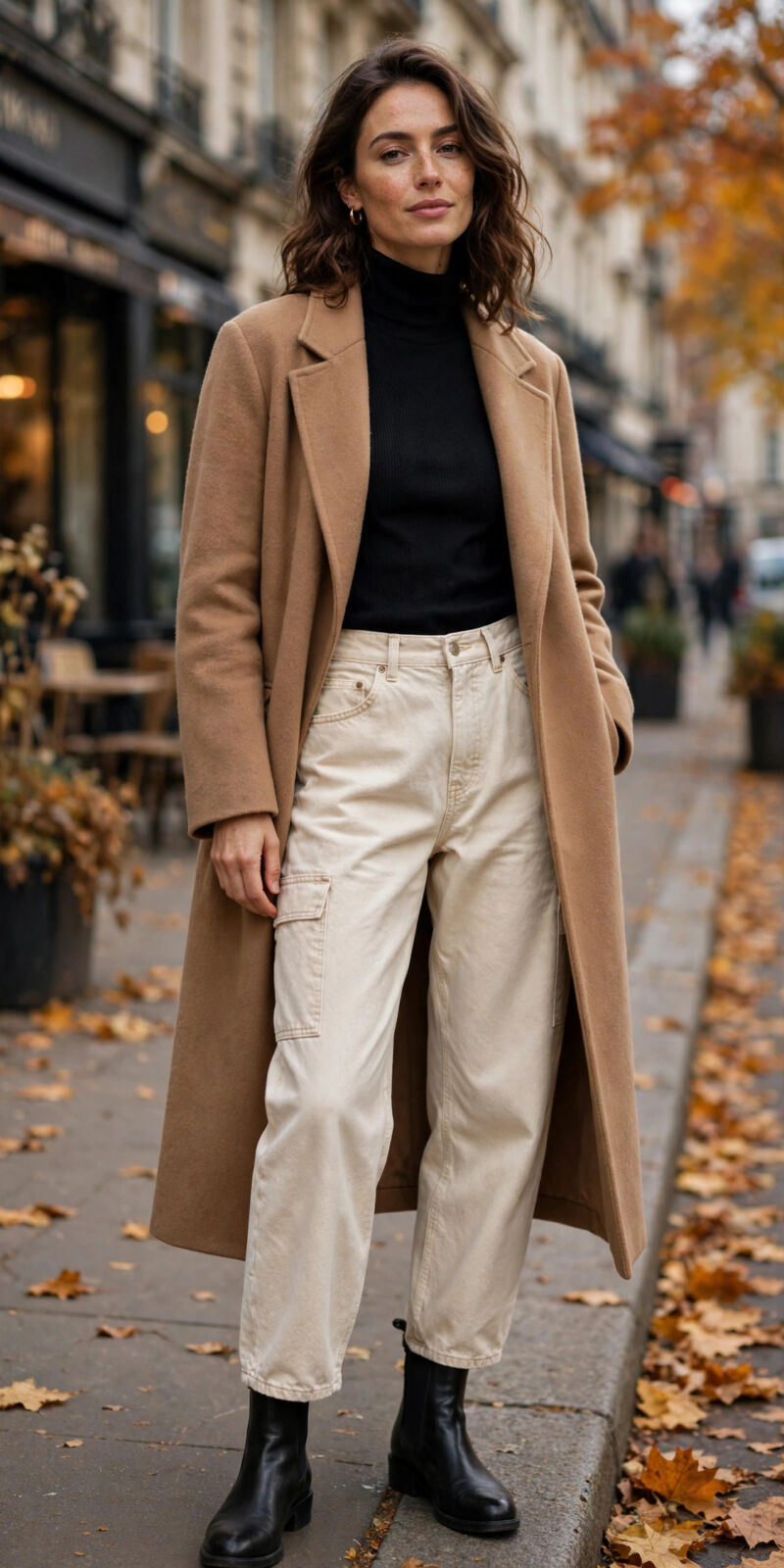
7. Camel coat and black boots for a smarter finish. The fourth photo shows the jeans with a black turtleneck, a long camel coat, and black ankle boots. The coat lengthens the silhouette and the pale jeans keep it from feeling heavy — good for a casual office or dinner. Keep the jeans clean above the boot, with no bunching.
8. White sneakers and a tote for busy days. Clean white sneakers are the most natural partner for ecru denim. They keep the outfit light and suit the workwear roots. Add a tote and you are ready for markets and long walks. Brighter white sneakers are fine — the difference looks fresh, not mismatched.
9. Loafers or ballet flats for polish without heels. Loafers make carpenter jeans look more intentional, and suede ballet flats work too. Both show a little ankle, which lightens the leg. Roll the jeans so there is a small gap above the shoe; a dragging hem looks scruffy.
How to Style Them Step by Step
When I build an outfit around these jeans, I follow the same simple order, and it rarely fails.
Step 1: Check the length. The jeans should skim your shoe or sit just above it. If they pool, roll them once or twice with a neat turn. A belt should be a style choice, not what holds them up.
Step 2: Choose one fitted piece. Add a tucked tee, a slim knit, or a belt that marks your waist. You do not need everything tight, just one clear line that gives the outfit shape.
Step 3: Pick a colour family. Go tonal with cream and camel for a soft look, contrast with black or navy for a sharper look, or add one colour such as olive, rust, or burgundy. One colour on a neutral base is enough.
Step 4: Match the shoe to the day. Sneakers for walking, loafers for polish, boots for cold weather. Let the shoe decide the hem: full length over chunky shoes, rolled over flats.
Step 5: Add one finishing touch. A tote, small hoops, a watch, or sunglasses. The jeans already have detail at the hip and leg, so keep accessories to one or two pieces, then stop.
Fit, Care, Buying and Budget Advice
Fit. Relaxed carpenter jeans should feel easy through the thigh and straight through the leg, not baggy everywhere. The waist matters most: if it gaps at the back, the pair will slide as you walk. Sit and bend when trying them on, check the side pockets lie flat, and if you are between sizes, size down — denim gives a little with wear. Allow for a simple hem if the length drags, because length shows more in a pale colour.
Care. Wash inside out on a cold, gentle cycle with similar pale colours, and avoid bleach. Treat marks quickly with a little detergent worked in by hand before washing, and dry in shade when you can, as strong sun can yellow pale cotton. Do not wash after every wear; airing them is enough unless they are actually dirty.
Buying and budget. Look at fabric first: mostly cotton denim with one or two percent elastane holds its shape without feeling stiff. Check stitching around the utility pockets and hammer loop, where stress shows first. Mid-range pairs are often excellent value, and second-hand ecru pairs are easy to find. Spend on fit and fabric, not a logo — a cheaper pair that fits perfectly looks better than an expensive pair that nearly fits.
Common Mistakes to Avoid
First, wearing everything oversized at once. A relaxed jean with a very long, wide top can hide your shape completely. Tuck, belt, crop, or choose a slimmer layer somewhere.
Second, ignoring the hem. Pale denim shows a dragging hem and picks up pavement dirt quickly. A clean roll or proper hem keeps the jeans looking fresh.
Third, washing ecru with dark denim, which dulls it in one cycle. Keep pale washes together and treat marks promptly rather than letting them set.
Fourth, overthinking shade matches. Your top and sneakers do not need to match the jeans exactly — near tones look relaxed and natural.
Finally, do not save them only for summer. With a turtleneck, boots, and a coat they work through autumn and on bright winter days, which makes them far better value.
Frequently Asked Questions
Are ecru relaxed carpenter jeans hard to keep clean?
Not really. Most everyday marks wash out on a cold cycle if treated soon, and ecru hides light dust far better than bright white. Save them for normal days, not gardening, and they stay looking good.
What colours go best with ecru jeans?
White, cream, camel, grey, black, and navy are easiest, because they let the warm tone show. Olive, burgundy, rust, and soft blue also work. Keep it to one stronger colour at a time, with the rest neutral.
Can I wear carpenter jeans to a casual office?
Yes, in most smart-casual workplaces, if the rest is tidy. Try loafers or clean ankle boots with a fitted knit or shirt and a blazer or coat. Avoid distressed pairs and check your dress code first.
How should relaxed carpenter jeans fit at the waist?
They should stay in place without a belt when you sit and walk, with no large gap at the back. A little ease is normal, but constant hitching up means the size is wrong. Sizing down once often gives the cleanest fit.
Do ecru jeans work in winter?
Yes, and they lift a wardrobe that has gone very dark. Wear them with chunky knits, a long coat, and boots on dry days. They look especially good with camel, charcoal, and black.
If your denim rotation feels stuck between the same blue and black jeans, ecru relaxed carpenter jeans are a gentle way out. They are comfortable for long days, interesting enough that a plain top looks finished, and neutral enough for most of what you already own. Start with the white tee and overshirt, try the camel coat when you want to feel smarter, and let the hoodie version carry your weekends. One good pair, styled nine ways, will quietly earn its place.