There is one accessory in my bag that gets asked about more than everything else I am wearing put together. Lately, that piece is a pair of lavender overshield visor sunglasses. I bought them on a whim, expecting them to live in my car as a spare pair. Instead, they have ended up on my face almost every day, with jeans, with a blazer, and even with a black slip dress on a warm evening.
If you have seen this shield shape on social feeds and wondered whether it only works on models, I understand the hesitation. The frame is large, the lens is one sweeping piece, and lavender is not a colour most of us reach for in eyewear. We play safe with black and then wonder why outfits feel flat. This guide explains what the frame is, why lavender is easier to wear than it looks, and nine ways to style it with casual, work, and evening clothes you already own.
What an Overshield Visor Frame Actually Is
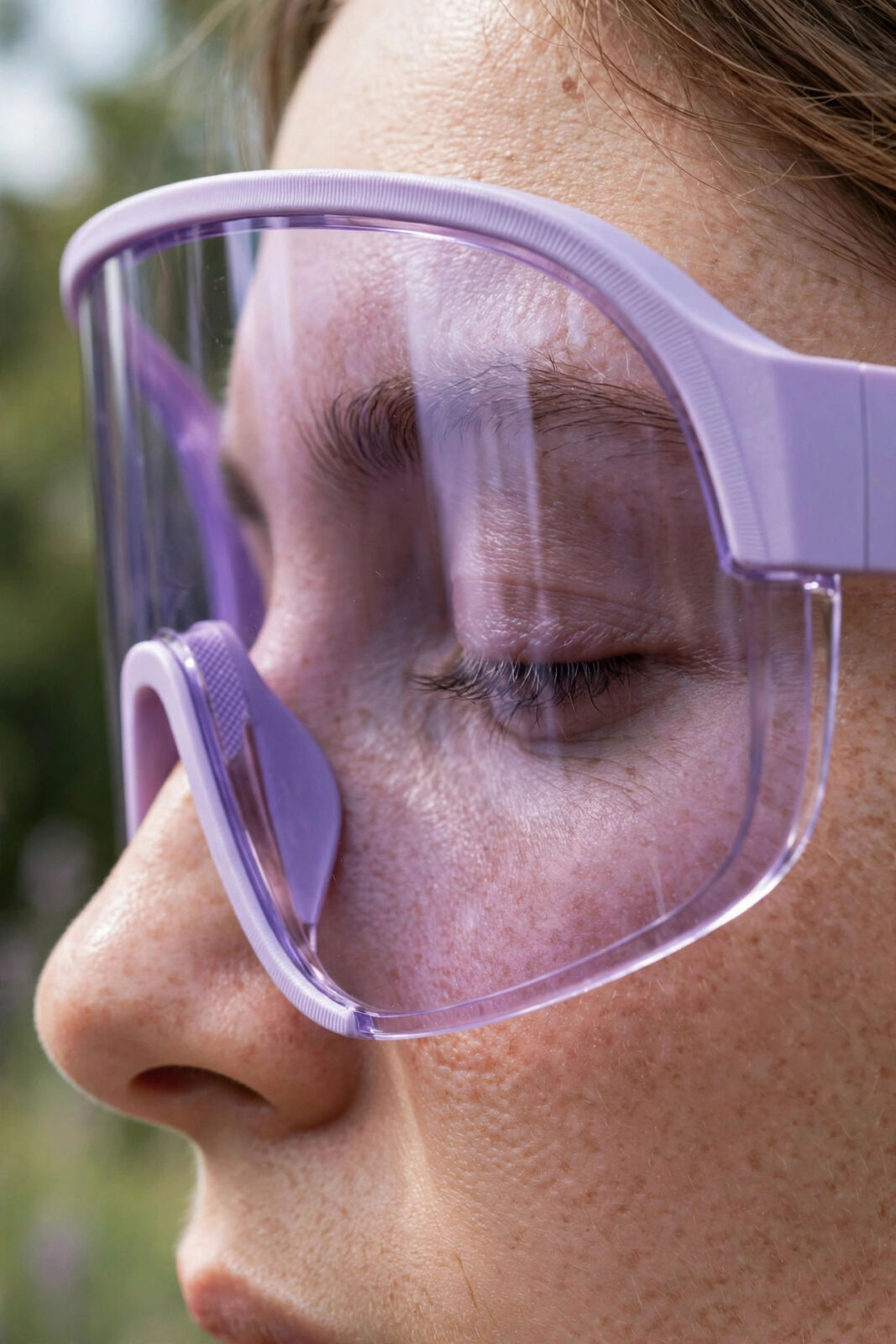
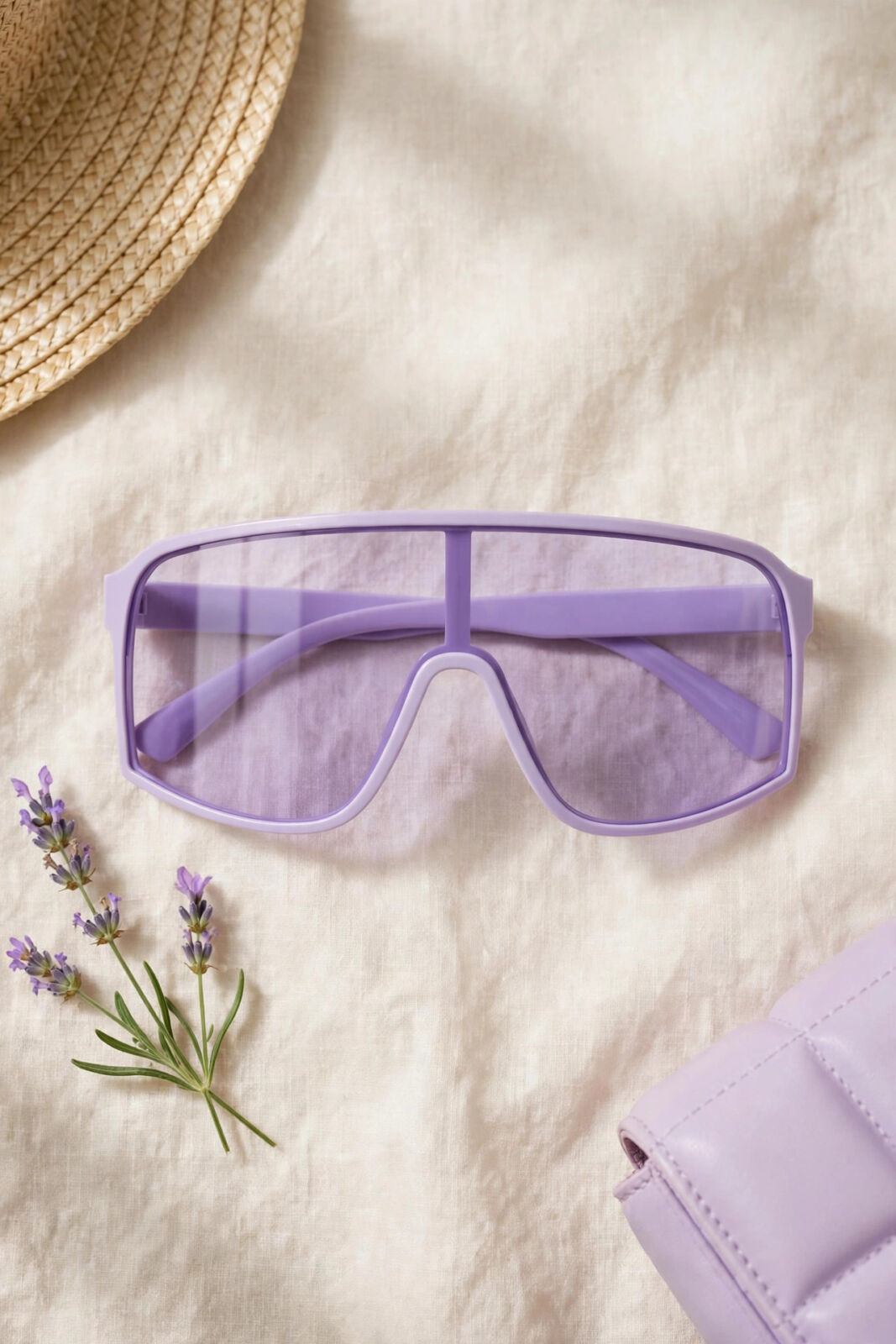
An overshield, sometimes called a shield or visor frame, uses one continuous lens across both eyes instead of two separate lenses in two rims. The result is a smooth, wrapped front that covers more of the eye area, the tops of the cheeks, and part of the temples. Think ski goggle coverage, cleaned up for everyday clothes.
That extra coverage is not just about looks. A wider shield blocks light from the sides, which helps on windy days and bright pavements. Many people also find it comfortable because weight is spread across a broader nose bridge and wider arms.
The shape suits more faces than its size suggests. On a round face, the straight top line adds definition. On a square face, the curved lens softens a strong jaw. On a longer face, the lens height balances proportions. The trick is scale: bold, but your eyebrows and cheeks should not disappear behind it.
Why Lavender Changes Everything
Colour is the whole reason this pair works so hard. Lavender is soft enough not to shout over an outfit, yet clearly a colour, so it lifts plain neutrals in a way black frames never do. Against white, cream, denim, grey, and beige it reads fresh and deliberate. Against black, it gives contrast without the harsh edge of white frames.
It also flatters many skin tones, carrying both cool blue and a touch of warm pink. On fair skin it adds colour with little makeup. On medium and deeper skin, the pale lens frames the eyes beautifully in daylight. It partners well with silver jewellery, and works with gold too, especially beside warm beige and camel clothing. A light tint is forgiving on cloudy days: people can still see your eyes.
Casual Days: Three Easy Ways to Start
1. White t-shirt, denim jacket, and straight jeans
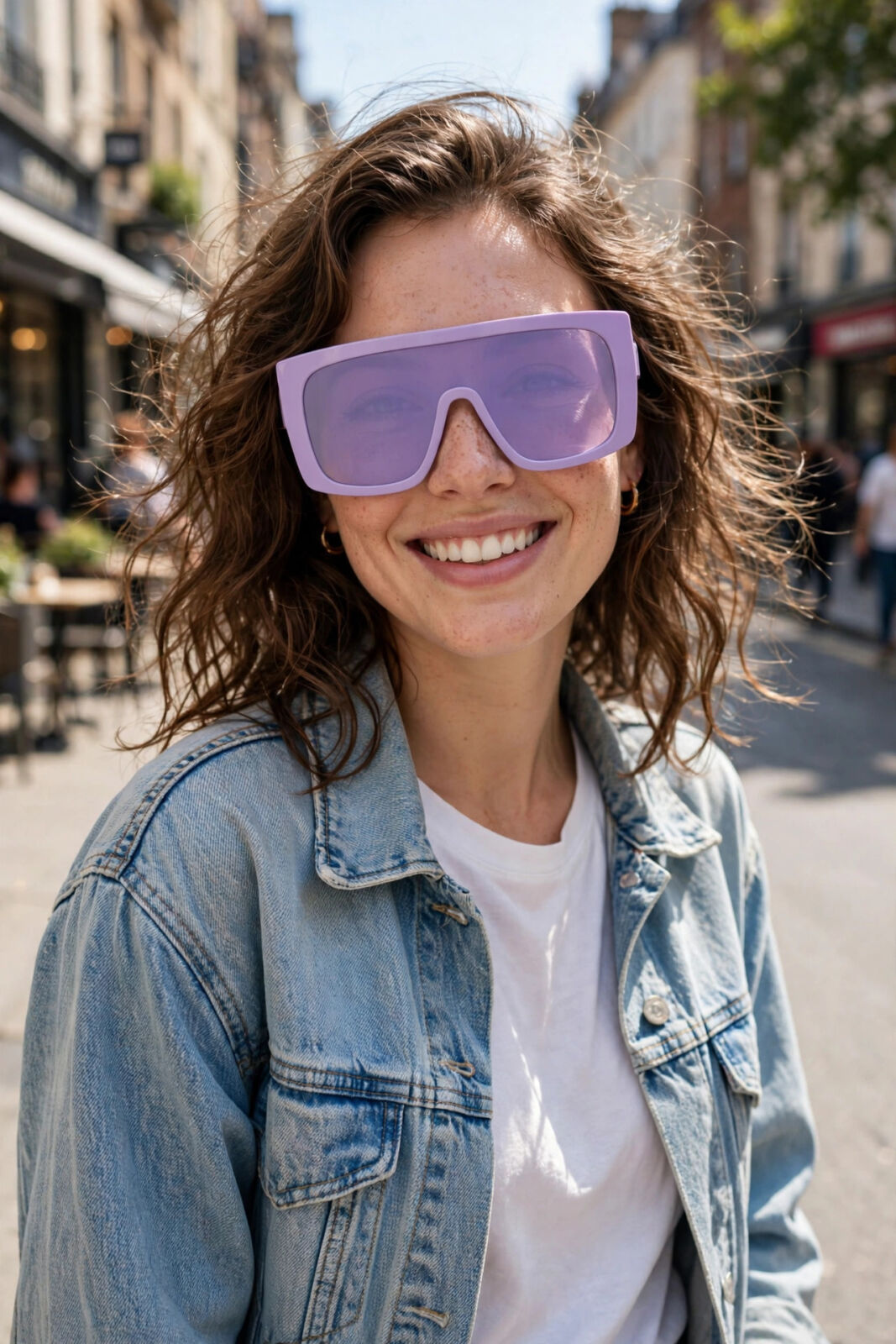
This is the outfit I reach for first, and the one in the opening photo. A plain white tee, a light wash denim jacket, and straight jeans in a slightly different blue stops the denim looking like a uniform. White trainers finish it cleanly. Because the clothes are so familiar, the frame looks intentional, not costume like, for coffee, errands, or a casual lunch.
2. Soft knit and wide leg trousers
For a slower weekend look, pair the shield with a fine knit top in cream or pale grey and wide leg trousers in stone or soft khaki. The wide trousers echo the width of the frame, so proportions feel balanced. Add flat sandals or loafers and a woven tote.
3. Summer dress and flat sandals
A shield frame with a pretty dress sounds like a clash, and that contrast is why it works. Try a white cotton dress, a floral midi, or a plain linen sundress. The dress keeps things feminine, while the sporty lens adds edge and stops the outfit feeling too sweet. Lovely for markets, garden lunches, and holiday walks.
Work Hours: Three Polished Ways
Many readers love statement eyewear but leave it at home on work days. The secret is to keep the rest of the outfit structured and quiet, so the glasses read as a considered detail on your commute and at lunch, rather than a distraction in the office.
4. Beige blazer and a crisp white shirt
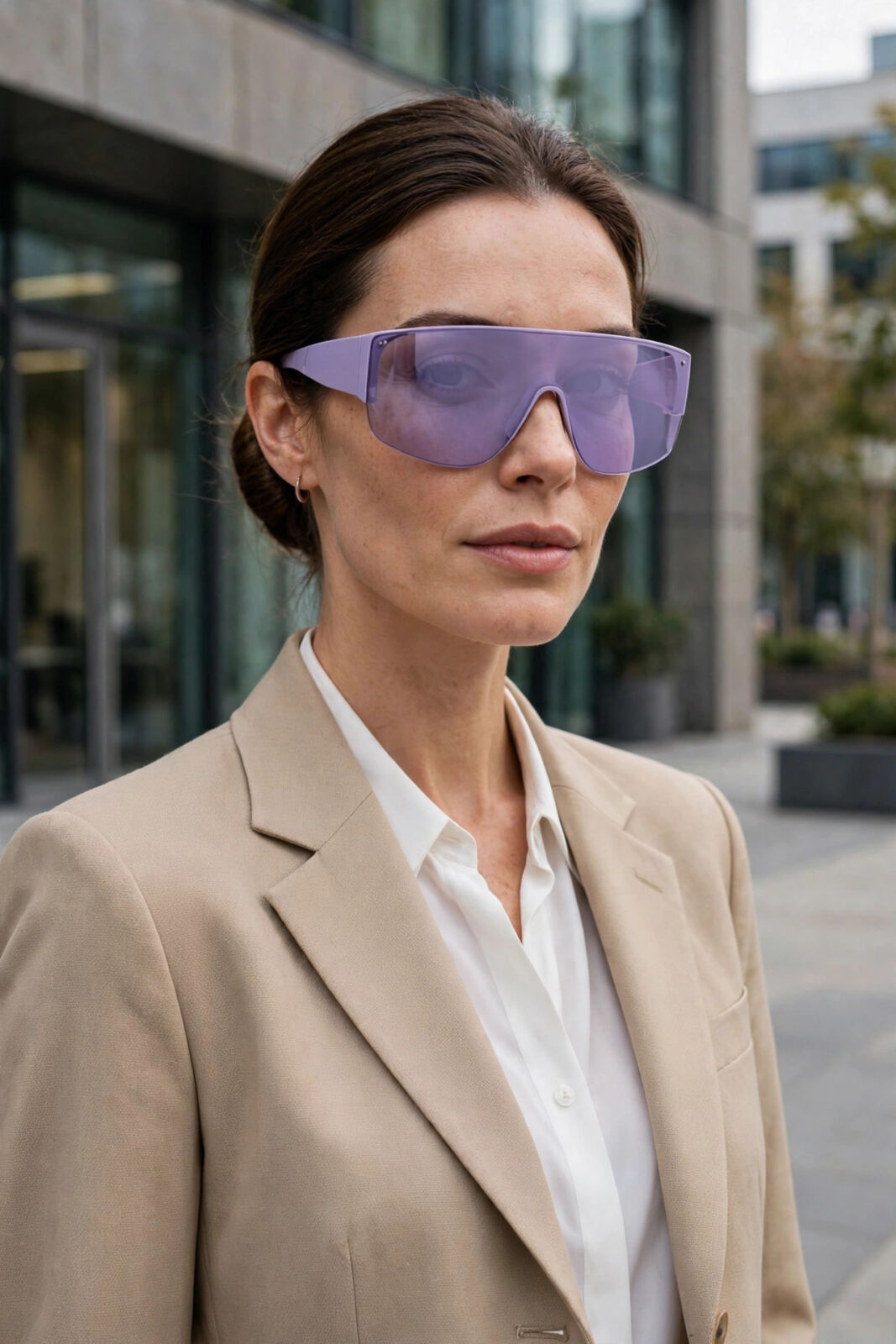
A tailored beige blazer, white shirt, and neat trousers give you a calm base that can handle a bold frame. Lavender softens the formality so you look approachable, while the neutral tailoring stops the colour feeling playful in the wrong way. Take them off for formal indoor meetings, and put them back on outside.
5. Monochrome outfit with one lavender accent repeated
Wear head to toe grey, navy, or black, then repeat lavender once in a small way, perhaps a nail colour, a scarf, or a bag detail. That single repeat makes the sunglasses look planned, and a monochrome base is forgiving on busy mornings because everything already matches.
6. Smart co-ord or tailored jumpsuit
A matching co-ord or a clean tailored jumpsuit in cream, slate, or olive works well because the outfit already has strong lines, and the shield follows them instead of fighting them. Keep jewellery small, hair tidy, and shoes polished. Good for creative workplaces and travel days.
Evening Plans: Three Bold Ways After Dark
Evening sunglasses are not for the dinner table. They are for golden hour, the walk between places, a rooftop drink at sunset, and photos while light is still kind.
7. Black slip dress and a small clutch
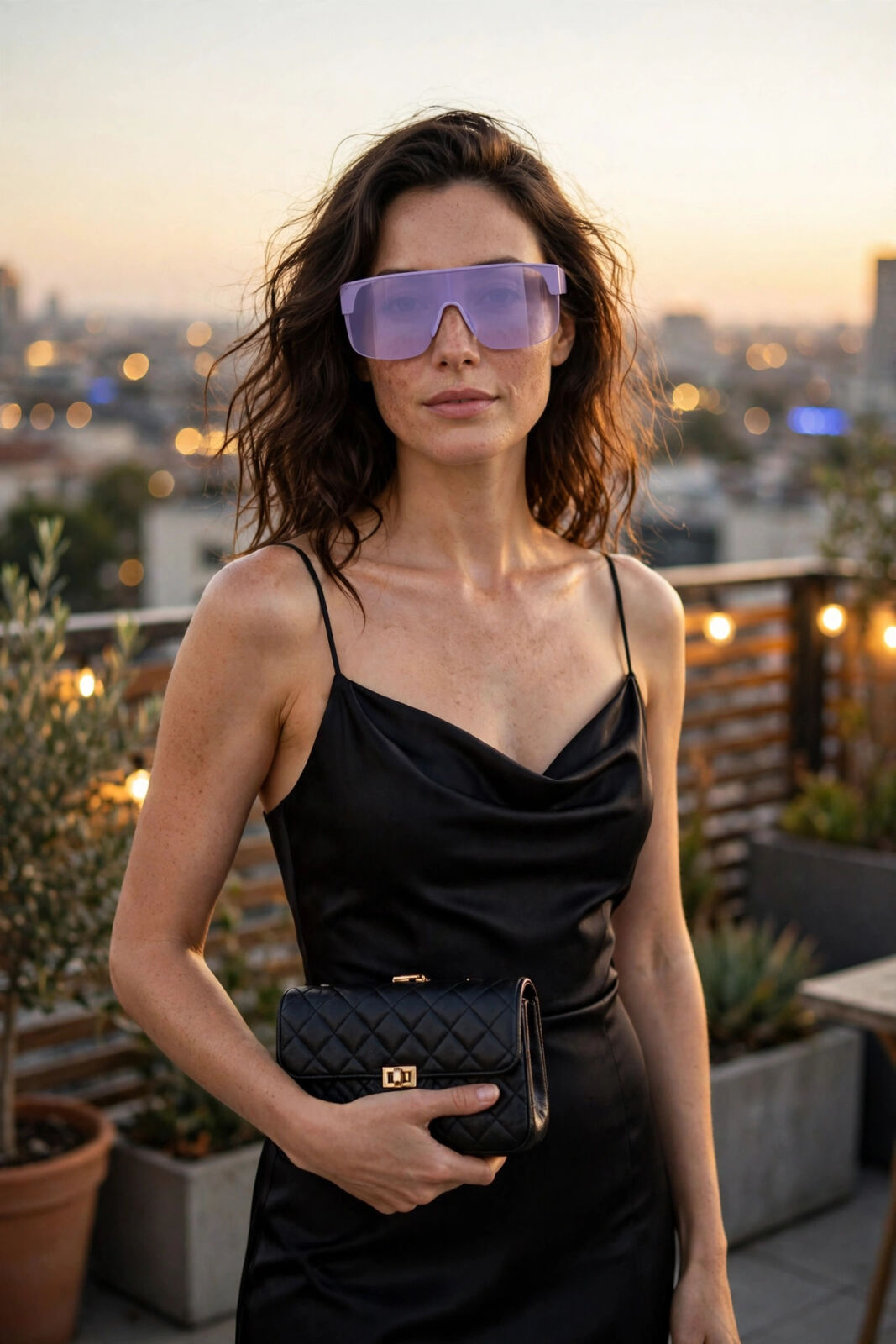
Black and lavender is a pairing I return to again and again. A simple black slip dress, neat heels, and a small clutch give you a clean background, and the pale shield catches the evening light in a way dark glasses cannot. Arrive wearing them, take them off once seated.
8. Satin shirt and tailored trousers
For dinner with friends, try a satin shirt in ivory, champagne, or deep plum with high waist trousers. The shine in the fabric picks up the sheen of the lens, so the outfit feels connected. Plum sits especially well beside lavender, sharing its colour family without matching exactly.
9. All white evening look
An all white outfit at sunset, a blazer dress, jumpsuit, or skirt and top, makes lavender look almost luminous. Add silver accessories and keep makeup fresh. This is the boldest of the nine looks and photographs best, so save it for occasions where you want to be noticed.
How to Choose and Style Yours, Step by Step
Start with fit, not colour. Check three things in a mirror. First, the top edge should sit near your brow without pressing. Second, the lower edge should clear your cheeks when you smile; if it rests heavily, try a higher nose bridge. Third, the arms should feel firm without pinching, and the glasses should stay put when you look down.
Next, check the lens. Look for labelling that states full ultraviolet protection, often written as UV400. A fashion tint alone is not protection, and a large lens with no proper filter is worse than a smaller pair that protects your eyes. If you drive a lot, ask about polarised options, which cut road and water glare.
Then think about hair and makeup. Shields sit close to the face, so foundation on the nose bridge will transfer; a little powder helps. A low bun or slick ponytail sits neatly with wide arms. Finally, plan three outfits before you buy, one casual, one work, and one smarter. If lavender works with all three, you will wear the pair constantly.
Care, Buying, and Budget Advice You Can Trust
A shield lens shows every fingerprint, so care matters more than with a small frame. Clean it with lukewarm water and a tiny drop of mild washing up liquid, rinse, and dry with a clean microfibre cloth. Avoid paper towels and shirt hems, which can scratch that broad surface. Never leave the pair on a hot car dashboard, where heat can warp the frame.
Keep them in a hard case in your bag, not loose beside keys and coins; a soft pouch will not protect a large lens from being crushed. On budget, you do not need to spend a fortune: fair priced pairs from reputable ranges often offer proper UV400 lenses and sturdy hinges. Spend on protection and fit first, branding last, and check returns before ordering online. If you wear prescription lenses, ask an optician first; strong prescriptions often cannot be made in a shield shape.
Common Mistakes to Avoid
The most common mistake is buying a frame that is too big because the photos looked dramatic. Bold should still look balanced; if the lens covers your eyebrows and touches both cheeks, go one size down. The second mistake is pairing the shield with too many statement pieces at once. A large hat, oversized earrings, a busy print, and the glasses together leave the eye nowhere to settle. Let one piece lead.
Another mistake is guessing protection from tint. A light tint is not automatically weak, and a dark lens is not automatically protective; only the stated UV rating tells you. Also remember indoor manners: take the glasses off when speaking to someone indoors. Eye contact builds trust. Wear them for the arrival and terrace, then put them safely in their case.
Frequently Asked Questions
Do lavender overshield visor sunglasses suit small faces?
They can, if you choose a narrower shield and check the fit in person. Look for a lens height that does not cover your whole cheek and arms that do not slip. Many ranges now offer the same shield idea in a smaller width.
Can I wear a lavender shield with gold jewellery?
Yes, and it often looks warmer than you might expect. Lavender has a hint of pink, which sits comfortably beside gold, especially with cream, beige, or camel clothing. Start with small gold hoops or a fine chain if you are unsure.
Are visor sunglasses good for driving?
The wide coverage helps with side glare and wind on bright days. Make sure the pair has proper UV protection, fits without slipping when you check mirrors, and is not so tinted that visibility suffers in changing light.
How do I stop the lens from slipping in heat?
A clean nose bridge, a little powder, and hair pulled back from the forehead all help. If the frame slips only when you are warm, the arms may need a gentle adjustment by an optician rather than constant pushing up, which smears the lens.
Will lavender go out of fashion quickly?
Soft purples return season after season in clothing, bags, and nails, and lavender behaves almost like a neutral. The shield shape also has roots in sport wear, giving it a longer life than a novelty shape.
A Final Word Before You Try a Pair
I did not expect a lavender shield to become the hardest working accessory I own, and that is the best reason to consider one. It protects your eyes, finishes plain outfits in seconds, and gives work clothes and evening dresses a point of view. Start with the white tee and denim look, try the blazer next, and save the black dress pairing for an evening when you feel braver. One good pair, chosen for fit and real UV protection, will earn its place in your bag quickly.