Table of Contents
The best cottagecore kitchen shelves do not look styled at all, at first. They look used. There is flour in a jar that is only half full, a stack of bowls with one chipped rim turned to the back, and a plant that has leaned a little towards the window. That gentle, lived-in feeling is exactly the point, and it is why open shelves suit this look so well: nothing is hidden behind a cupboard door, so the things you reach for every day become the decoration.
This guide walks through what makes cottagecore kitchen shelves read as cottagecore rather than simply rustic, how to arrange jars and crockery so the shelves stay calm instead of cluttered, and how to keep the whole thing practical in a kitchen where real cooking happens. Most of it can be done with what you already own.
What Makes Cottagecore Kitchen Shelves Feel Like a Cottage
Start with the idea behind the look. Cottagecore is an aesthetic centred on rural life and traditional skills such as baking and pottery, and cottagecore kitchen shelves are where that idea becomes useful rather than decorative. A cottage shelf holds the tools of those skills in plain sight: mixing bowls, a jug, jars of dry goods, a folded cloth. If an object on your shelf would never be touched, it probably does not belong there.
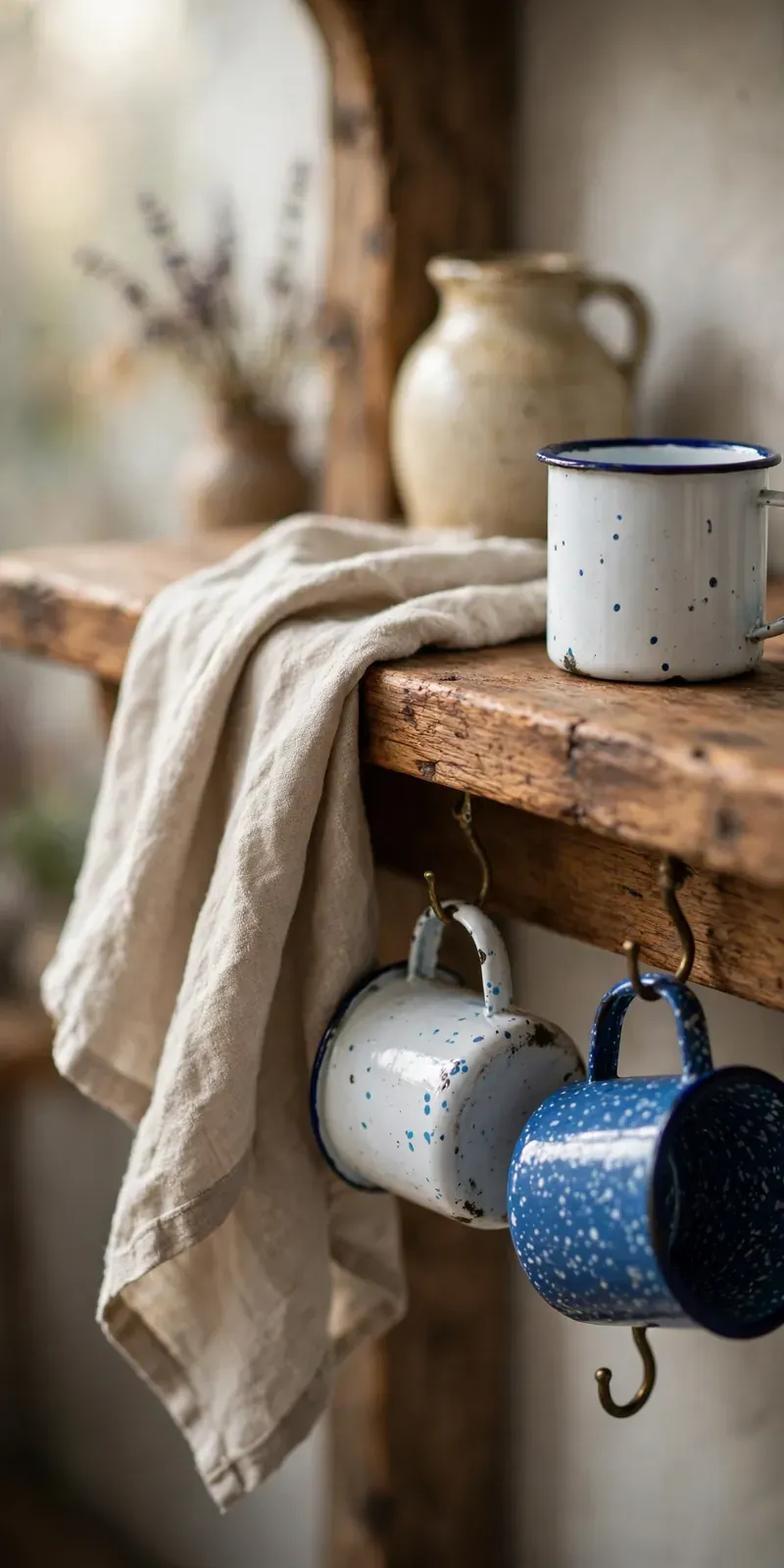
Three things carry the feeling on cottagecore kitchen shelves. The first is natural material with a bit of age in it: wood that shows grain, stoneware with a speckled glaze, enamel with the odd tiny chip. The second is softness: a linen cloth, a small basket, a trailing plant borrowed from the rest of the home. The third is a quiet colour story. Cream, warm white, sage, dusty pink and mustard sit happily together because they all look slightly faded by sun and use. Livingetc’s guide to the cottagecore trend describes the same recipe for whole rooms: florals, neutral shades and natural textures, layered slowly rather than bought in one go.
Wood Tones and Brackets: The Quiet Bones of the Shelf
For cottagecore kitchen shelves, the shelf itself matters more than anything you put on it. Warm mid-tone wood, oak, pine or reclaimed timber with visible grain, reads cottage straight away, while pale grey-washed wood and glossy white boards lean farmhouse-modern or Scandinavian. You do not need new timber. Scaffold boards, old floorboards and second-hand shelves all work, sanded smooth and finished with oil or clear wax so the grain stays visible.
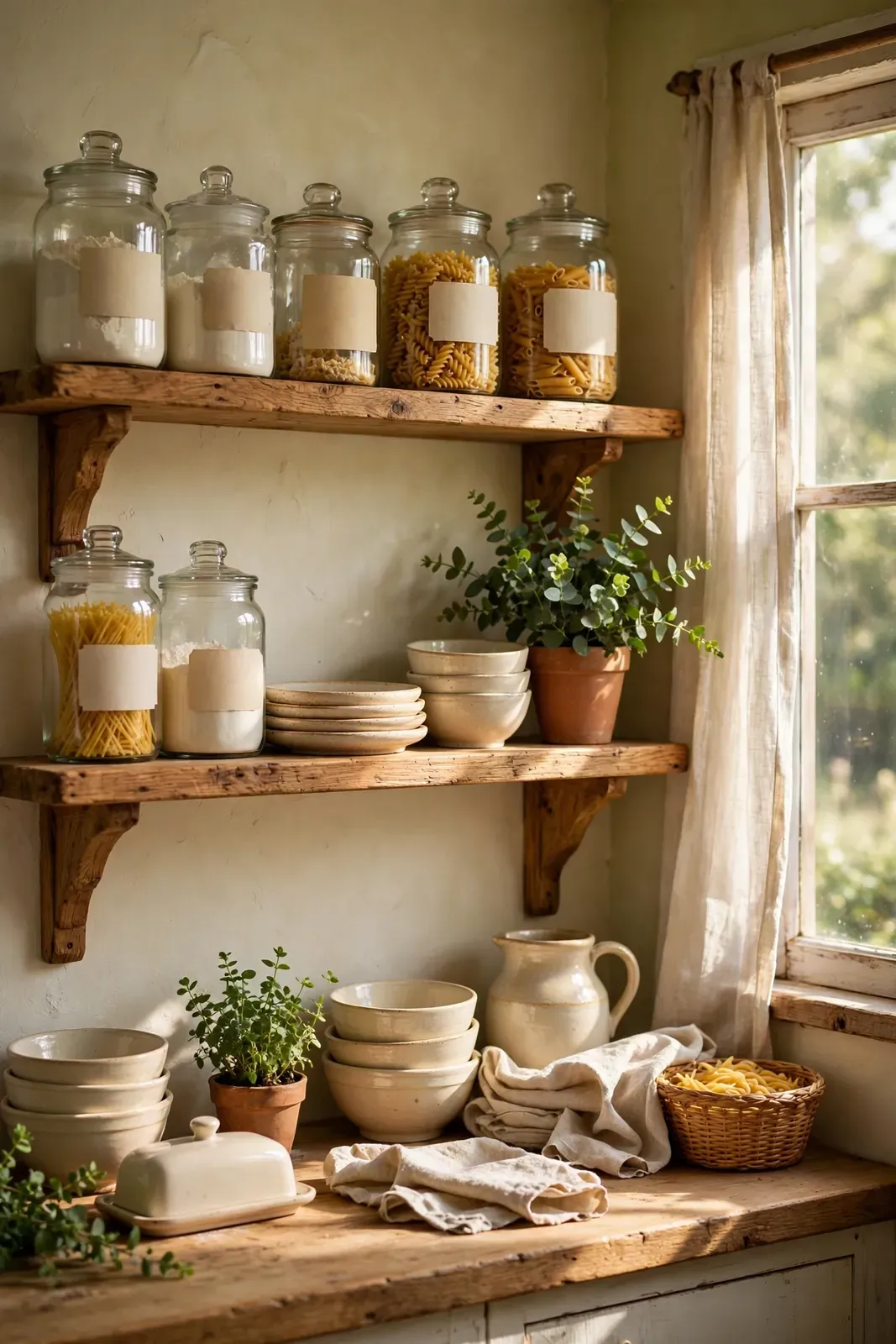
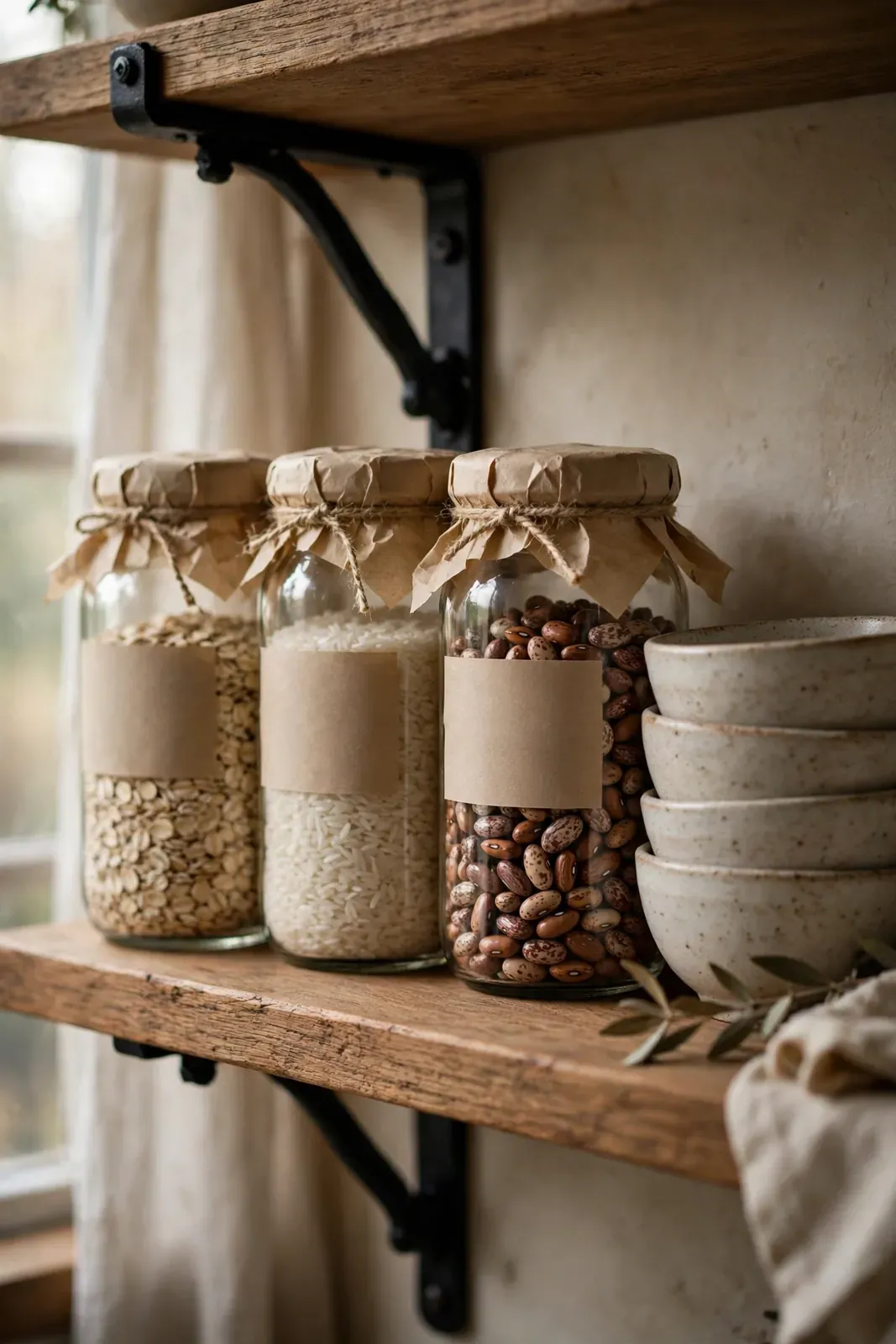
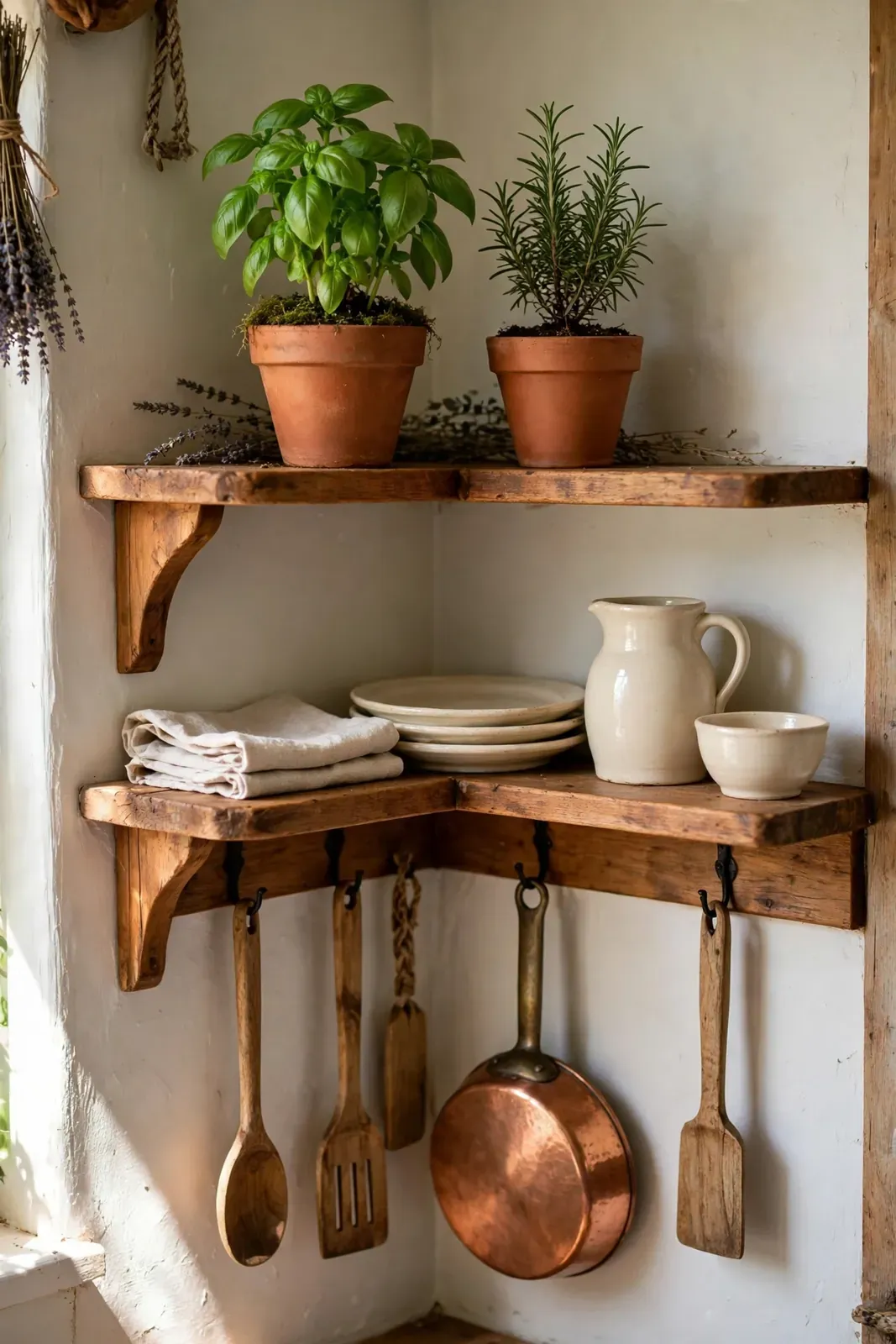
Brackets are the other half of the bones. Chunky wooden corbels, like the ones in the first photograph, give the softest, oldest look and suit wider shelves. Black iron brackets, like those in the jar close-up, are stronger for heavy crockery and read a little more kitchen-workmanlike, which is no bad thing. Keep brackets consistent along one run, space them evenly, and fix into studs or solid wall wherever you can. A shelf of stoneware and full jars is far heavier than it looks.
Glass Jars, Plain Labels and Everyday Crockery on Show
Jars are the signature of cottagecore kitchen shelves, and they earn their place by storing real food. Decant the dry goods you actually use weekly, flour, oats, rice, pasta, beans, sugar, into clear glass so the colours and textures of the food do half the styling for you. The classic shape has history behind it: the Mason jar was patented in the nineteenth century for home canning, and its screw-top descendants, along with clip-top and corked jars, are still the cheapest reliable storage you can buy.
Labels should be plain and consistent: one style of kraft or cream label, handwritten or left blank, in the same position on every jar. Matching labels stop a row of different jars looking like a jumble sale. On cottagecore kitchen shelves, crockery follows the same rule: everyday plates, bowls and mugs on show, stacked in short piles of three or four. Special occasion pieces belong in a cupboard; shelves reward things that move.
Arranging Cottagecore Kitchen Shelves by Height, Colour and Softness
Arrangement is where most cottagecore kitchen shelves succeed or fail, and a few simple habits help. Work in a loose zigzag of heights: a tall jar, then a low stack of bowls, then something medium like a jug, so the eye travels gently instead of hitting a flat line or a row of identical towers. Group in odd numbers, threes especially, and leave small gaps of empty shelf between groups. Those gaps are not wasted space; they are what make the groups read as deliberate.
Colour works best sorted loosely rather than matched exactly on cottagecore kitchen shelves. Keep creams and whites as the base, then let one or two accent colours repeat at least twice, mustard bowls echoing a mustard jug, sage echoed by plant leaves. Finally, add the soft layer: a plant in a terracotta pot, herbs if the light allows, and linen draped over a shelf edge like the detail photograph. These touches do more for the cottage feeling than any ornament.
How to Style Cottagecore Kitchen Shelves Step by Step
Step one: empty your cottagecore kitchen shelves and clean them. Open shelves collect grease and dust, so start with bare, wiped wood and honest decisions about what deserves to come back. Step two: place the anchors first, the largest jars and the biggest stack of plates, spread evenly along the run so the weight and the visual bulk are balanced. Step three: fill the middle heights with bowls, jugs and medium jars, keeping daily items between waist and shoulder height where they are easy to grab.
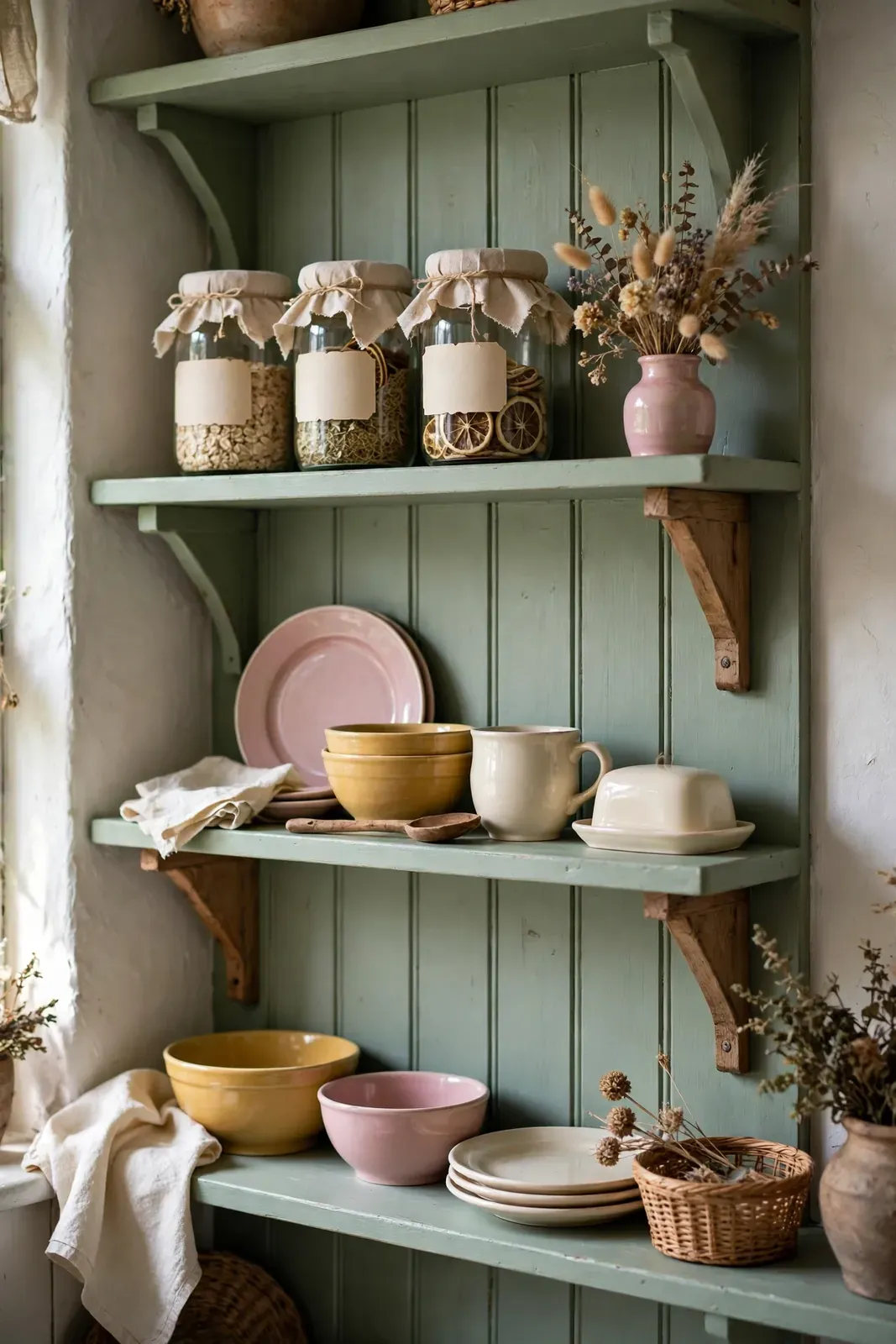
Step four: add the small and pretty layer last, the plant, the cloth, the little basket, the butter dish, tucked into the gaps rather than lined up in front. Step five: edit. Take one thing away from each shelf; cottage shelves almost always look better after something has been removed. Step six: live with it for a week and adjust by use. If you keep moving a jar to reach the one behind it, swap them. The finished shelf, like the sage-painted version in the fourth photograph, should look slightly different in a month’s time, because real shelves change with cooking, seasons and appetite.
Budget and Buying Advice: Thrifted Crockery and Honest Jar Sources
Cottagecore kitchen shelves are one of the cheapest looks to build, because it prefers old things to new ones. Charity shops, thrift stores, car boot sales and family cupboards are the best sources for crockery: stoneware bowls, cream plates and enamel mugs turn up constantly, and a mismatched set in one colour family looks intentional rather than second-best. Check rims for chips with a fingertip, and hold plates up to the light for cracks, but do not reject a piece for a small flaw on the back or base.
For jars, collect rather than buying a set in one day. Supermarket preserves, coffee and pickle jars wash up beautifully once labels are soaked off, and a few new clip-top jars for flour and sugar cost very little. Spend your money in only two places: solid brackets and fixings, and one or two anchor pieces you will see every day, a good jug or bowls you genuinely love. Everything else can arrive slowly, which suits the look anyway. The same collect-slowly approach works beautifully for the shelves in these floating shelves styling ideas.
Common Mistakes That Make Open Shelves Look Dusty, Not Charming
The first mistake with cottagecore kitchen shelves is overfilling. A shelf with no gaps reads as storage, not styling, and it makes every piece harder to lift out. The second is putting rarely used or purely decorative objects on open shelves near the cooker, where they gather a sticky film of grease and dust and quietly spoil the whole effect. Keep shelves near the hob for things washed weekly. The third mistake is ignoring the dust itself: open shelves need a quick wipe and a jar shuffle every few weeks, and pretending otherwise is how the look falls apart.
Two more mistakes are about weight and light. Overloading cottagecore kitchen shelves risks a collapse that takes your crockery with it, so spread heavy jars across shelves. And styling under warm evening bulbs can mislead you: do your final edit in morning daylight, the way the shelves will mostly be seen.
Frequently Asked Questions
Do cottagecore kitchen shelves work in a small kitchen?
Yes, and they can help. One short run of two cottagecore kitchen shelves above a worktop holds the daily crockery and jars and frees a whole cupboard. Keep the palette light, the stacks short and the gaps generous, because small shelves crowd faster. A corner shelf, like the last photograph, uses space that cupboards waste.
How do I stop open kitchen shelves getting dusty and greasy?
Only store things you use and wash often, keep purely decorative pieces away from the cooking zone, and give your cottagecore kitchen shelves a quick wipe every few weeks when you take things down for use anyway. Glass jars with proper lids protect dry goods completely. Most owners find the small routine easier than expected.
What wood is best for cottagecore shelves?
Warm mid-tone woods with visible grain, pine, oak or reclaimed timber, suit cottagecore kitchen shelves best. Finish with oil or clear wax rather than glossy varnish so the surface looks soft and can be wiped clean. Painted shelves in sage or cream, like the fourth photograph, are a good alternative in a dark kitchen.
Can I mix different crockery patterns on open shelves?
Yes, if you give the mix one unifying rule. Keep everything within one colour family, or keep shapes plain and let one pattern appear in just a few pieces. Stack by type, plates with plates and bowls with bowls, and repeat each colour at least twice so the mix reads as collected rather than random.
How deep should open kitchen shelves be?
Between 20 and 28 centimetres suits most kitchens: deep enough for dinner plates and large jars, shallow enough that nothing hides in a second row. Go shallower, around 15 centimetres, for a spice and small-jar shelf. Always check your largest plate or jar before fixing the brackets.
Jars, crockery and a shelf that earns its keep.
That is the heart of it. Cottagecore kitchen shelves are not a display to keep perfect; they are a working part of the kitchen that happens to look warm and welcoming because everything on them is used, loved and within reach. Start with one shelf, your best jars and the bowls you eat from every day, and let the rest gather slowly, the way cottage things always have.