The living room that finally feels restful rarely has more in it. It has less, chosen better. That is the promise of a japandi living calm palette: quiet colours that do not compete, furniture that sits low and leaves the floor visible, and natural materials that give your eyes something soft to land on. Nothing shouts, and yet the room does not feel empty. It feels settled, like a kitchen table after everything has been put back in its place.
This guide works through the palette colour by colour, shows why low furniture changes how a room breathes, and gives you a realistic weekend plan for rebalancing a living room you already own.
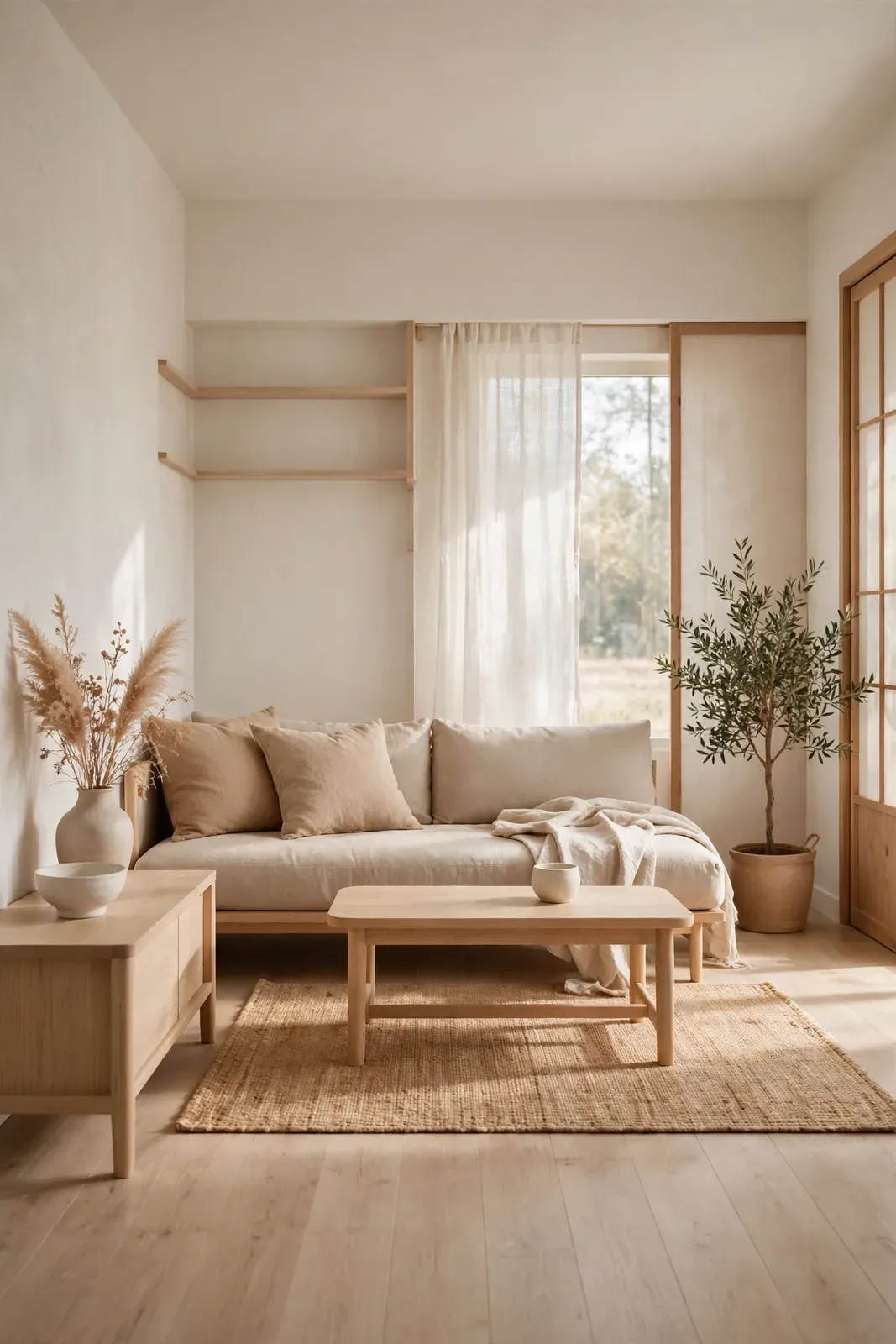
The Japandi Living Calm Palette, Colour by Colour
Start with warm white, not bright white. Pure, bluish white can make a room feel cold and clinical. A warm white, the colour of unbleached cotton or fresh plaster, keeps walls light while staying friendly with wood and skin tones. Use it for the largest areas: walls, and the biggest fabric, usually the sofa cover or curtains.
Next comes sand, the middle note that stops warm white looking washed out. Think oatmeal cushions, a wheat-coloured rug, pale woven baskets and light oak itself. Let sand appear in at least three places at different heights, low in the rug, middle in cushions, high in a lampshade or curtain, so it feels woven through the room rather than matched in a set.
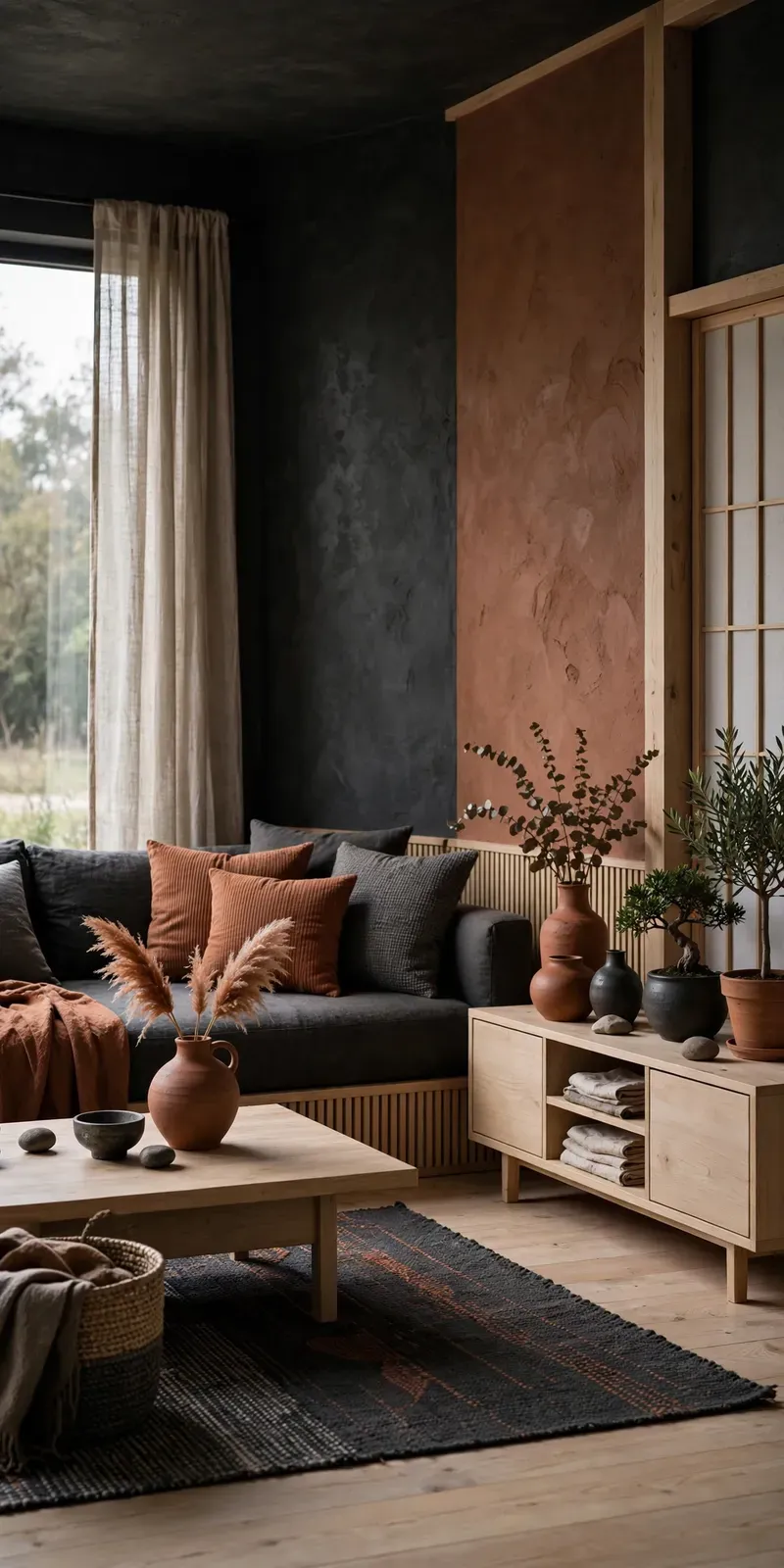
Clay brings warmth and depth: a muted, earthy terracotta, closer to a flowerpot left in the sun than to orange paint. One clay cushion, a single earthenware vase, or one clay-toned wall like the variation in the fourth photograph is usually enough. Clay is a spice, not a main dish. Finally, add soft black in small doses, a charcoal cushion, a dark ceramic bowl, a thin black frame. Two or three touches stop a pale room drifting; more than that and the calm goes.
As background, Japandi blends Japanese minimalism with Scandinavian simplicity, and its pared-back palette of off-whites, beiges and soft greys is meant to amplify natural light rather than fight it. Keep the order: white first, sand second, clay third, soft black last. Follow that order and a japandi living calm palette will hang together in any light.
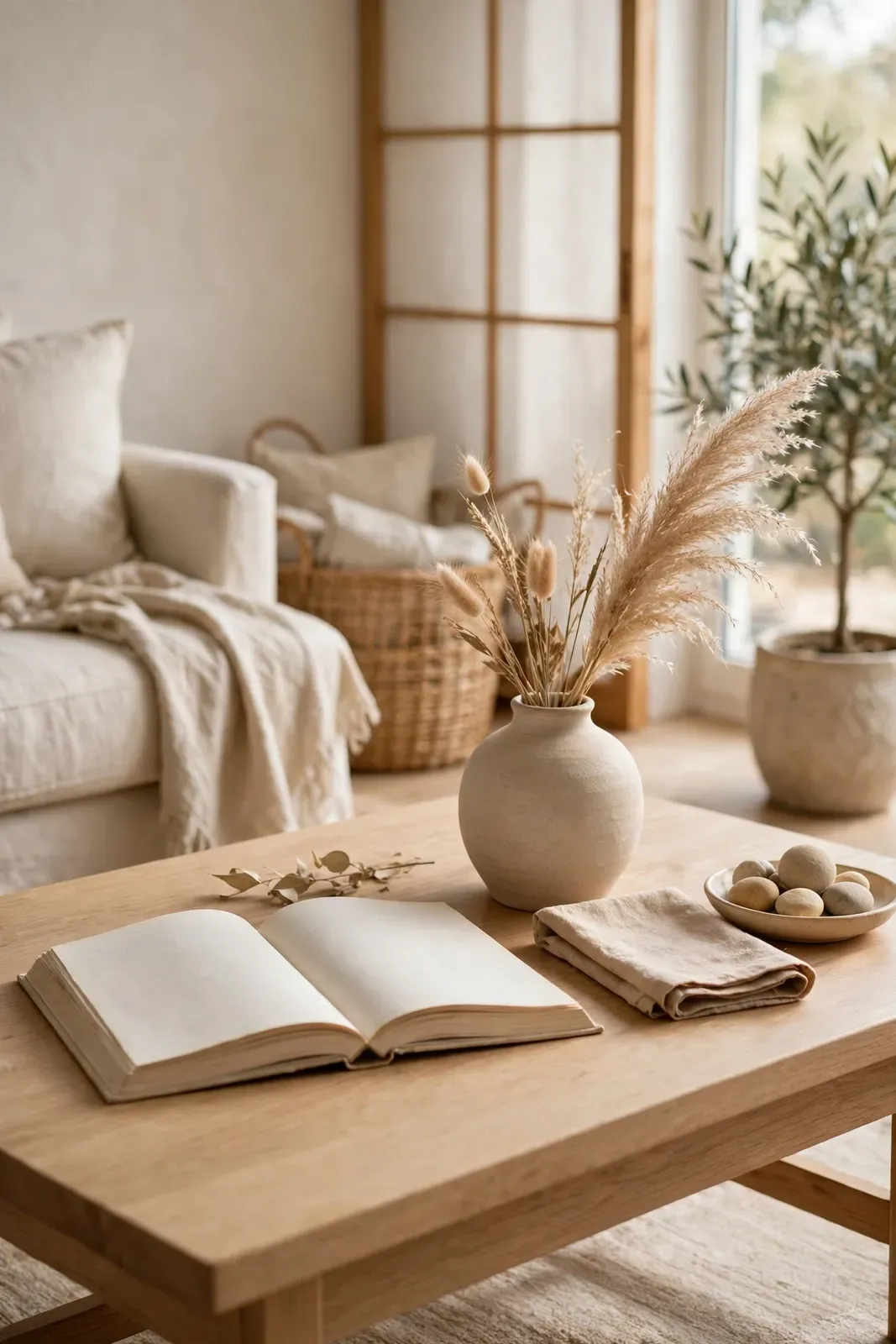
Low Furniture and Clear Floor Space
Low furniture is about sight lines. A low sofa, coffee table and media unit keep everything below the middle of the wall, so your eye travels across the room and out of the window instead of stopping at tall backs and high shelves. The room feels larger because more wall and floor stay visible.
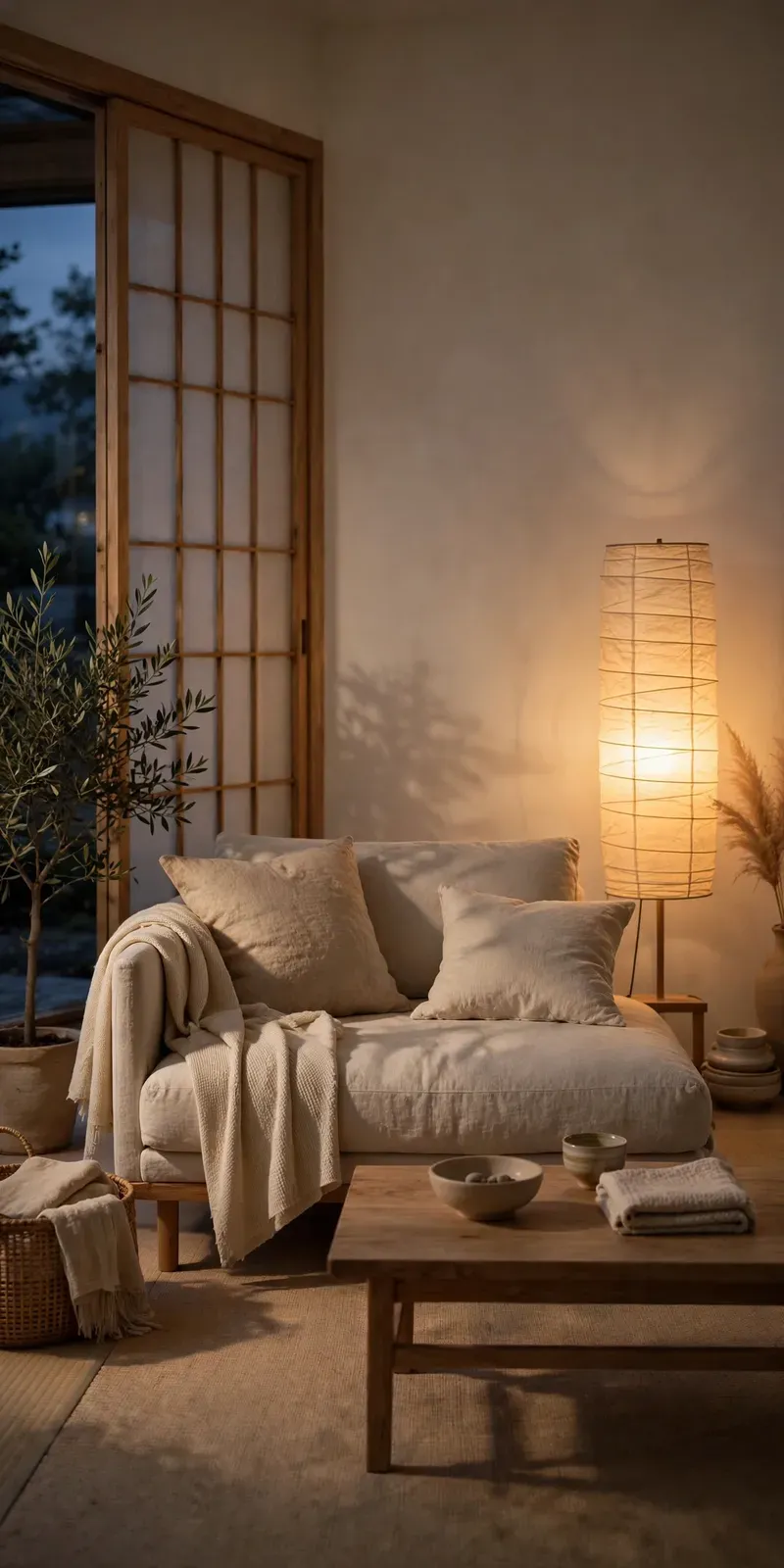
Choose a sofa with a low back and short legs, or a wooden frame close to the floor like the one in the hero photograph. Keep the coffee table simple and low. In the vignette above it holds only a vase, an open book and a folded cloth. Leave the walkway between door and seating completely clear, and keep a visible border of floor around the rug if you can. Anything tall belongs against a wall in a corner, never floating mid-wall where it cuts the room in half. A japandi living calm palette depends on that low, settled line more than on any single piece.
Natural Materials That Do the Quiet Work
In a quiet-coloured room, material does the job bright colour does elsewhere. Light wood is the backbone: oak, ash or pine with a matte finish and visible grain, for the coffee table, sofa frame and one storage piece. Do not mix five wood tones. Two close in warmth read as one calm family.
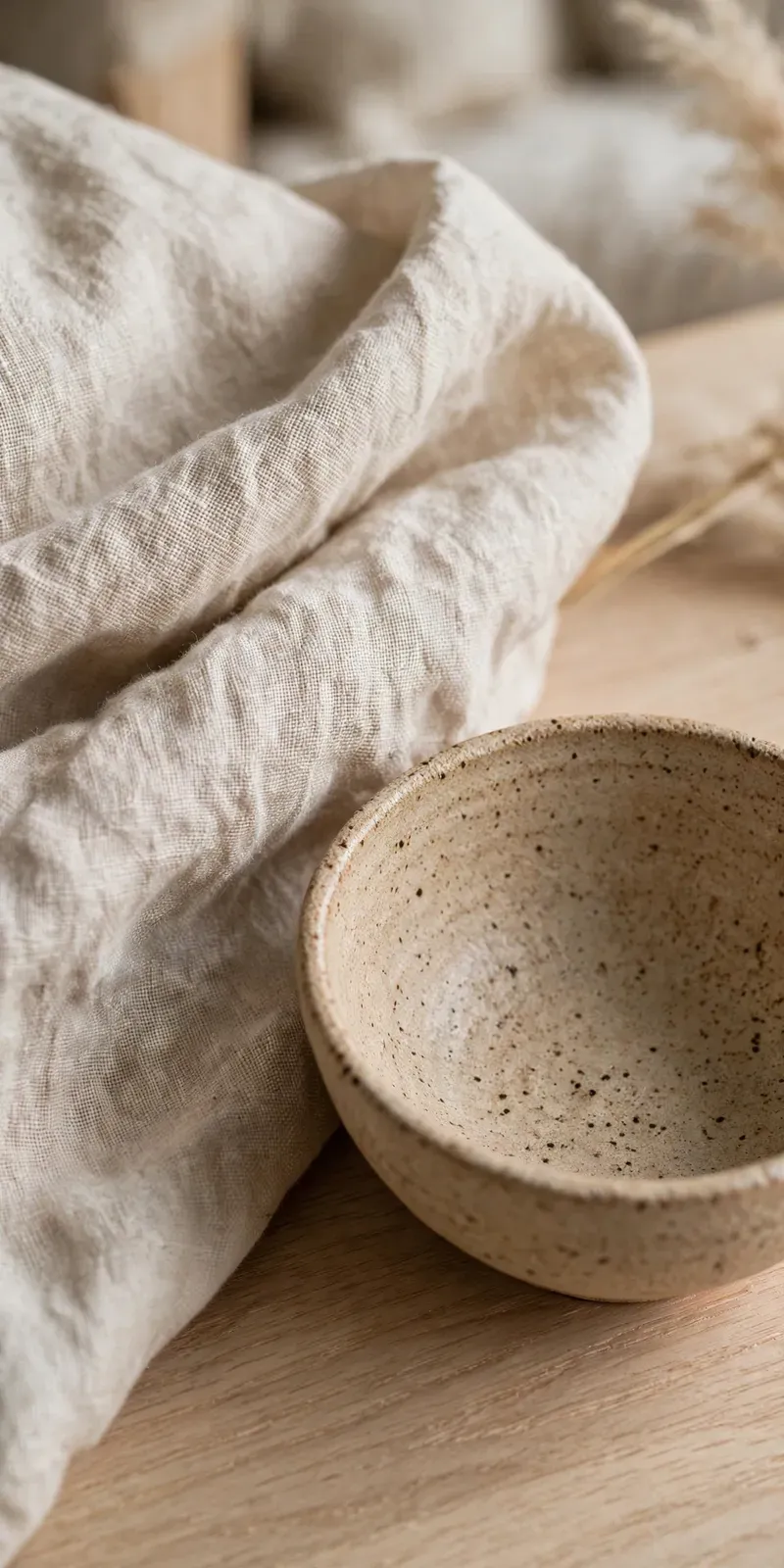
Layer honest textiles next: linen for curtains and cushion covers, cotton or wool for a throw, a flat-woven jute or wool rug underfoot. The close-up shows why this works: rumpled linen, pale wood grain and a speckled handmade bowl are nearly the same colour, yet none is boring, because each surface catches light differently. Ceramics, stone and paper finish the picture. Handmade pieces suit this style because of wabi-sabi, the Japanese appreciation of imperfection, impermanence and incomplete beauty. A slightly uneven bowl is not a flaw here; it is the one human note in a very ordered room. That contrast is what gives a japandi living calm palette its quiet depth.
Light, Shadow and Texture Over Pattern
Daylight first. Sheer linen curtains soften harsh sun without darkening the room, and keep windowsills empty. A plant on the floor beside the window, like the small olive tree in these photographs, gives you green without cluttering the glass.
For evenings, think pools of light, not one bright ceiling light. A paper floor lamp gives the softest glow and gentle shadows, as the last photograph shows. Use warm bulbs, around candlelight colour rather than office white, so sand and clay stay rich after dark. A softly shadowed corner still looks restful if the seating is well lit.
Choose texture over pattern almost every time. A print brings several colours and a lot of movement, which fights the calm palette. A woven rug, slubby linen and a ribbed vase give you plenty to look at without a single printed motif. If you love pattern, use one small cushion and let everything else stay plain. Plain surfaces keep a japandi living calm palette restful.
Storage That Hides the Clutter
Calm is mostly a storage problem solved quietly. Open shelves full of mixed objects undo a perfect palette in minutes, so give everyday clutter a closed home. A low sideboard with doors, like the one in the clay variation, holds chargers, remotes, games and paperwork out of sight, while its top carries only two or three chosen pieces.
Use baskets for things that genuinely live in the room: one for throws, one for magazines, one by the door for bits that need to leave. Inside cupboards, simple boxes stop small things spreading. Aim for surfaces at least two-thirds empty at the end of a normal day, not just after a tidy-up: coffee table, sideboard top and windowsills included. With clutter hidden, a japandi living calm palette can actually be felt.
How to Rebalance an Existing Living Room in a Weekend, Step by Step
You do not need new furniture to test this style. Work in this order. Step one, Saturday morning: take everything movable out except the sofa, main table and one storage piece. Pieces earn their way back only if they fit the palette or are genuinely loved. Step two: fix the colour order. Warm white paint is the biggest single change; if painting is impossible, a warm white or sand throw over a loud sofa changes the largest colour block in minutes.
Step three: lower the room. Remove tall, unused pieces, hang artwork just above the low furniture line, and clear the floor border around the rug. Step four: reset textiles to white, sand and one clay piece, folding the rest away for a week.
Step five, Sunday: solve storage with baskets and boxes, then return only a vase, a bowl and a book or two to the coffee table. Step six: sort the light, sheer curtains, a floor lamp beside the sofa, warm bulbs throughout. Step seven: sit in the room at the time you use it most, adjust the one thing your eye keeps catching on, then stop. For the artwork itself, these gallery wall arrangement ideas keep groupings low and calm.
Budget and Buying Advice for a Japandi Living Calm Palette
Spend in order of size, because the biggest surfaces set the calm. First wall colour and sofa fabric, even if that means a washable throw or plain slipcover rather than a new sofa. Second the rug, which anchors the low furniture. Third curtains. Those three changes alone carry most rooms. Those basics build a japandi living calm palette before any decoration is bought.
Save on small pieces. Vases, bowls and baskets are easy to find second-hand, and handmade market ceramics often cost less than factory pieces and look better here. Buy one good paper floor lamp rather than several small decorative lights. Honest pale pine in the right tone beats dark, expensive wood in the wrong tone every time. Buy slowly, keeping a note of your four tones, warm white, sand, clay and soft black, on your phone, and check any purchase against it in daylight. That one check protects a japandi living calm palette from drifting warm or cold.
Common Mistakes to Avoid
The first mistake is choosing cold, blue-toned white and grey and wondering why the room feels like a waiting room. Warmth is the point, so test paint and fabric beside your wood, in your own light. The second is going all one colour: only beige, with no clay warmth and no small dark accent, looks flat rather than calm.
The third is buying low furniture but keeping tall clutter, crammed high shelves and pictures near the ceiling, which breaks the low, settled line. The fourth is filling the calm with stuff: too many cushions, three throws, a crowded table. Edit until it feels almost too empty, then live in it for two days. The fifth is harsh lighting; one bright ceiling light flattens every texture you paid for, so layer softer lamps instead.
Frequently Asked Questions
Can a Japandi calm palette work in a small living room?
Yes, it often works best there. Low furniture and visible floor make a small room feel less crowded, and warm white and sand reflect light well. Choose a smaller low sofa, keep storage closed, and use one basket instead of several small tables.
What if my sofa is the wrong colour?
Cover it before you replace it. A warm white, sand or natural linen throw or slipcover changes the largest colour in the room for very little money. Add clay and sand cushions to tie it in, and judge it for a few weeks before spending on a new sofa.
Is a Japandi living room practical with children or pets?
It can be, with forgiving versions of the same ideas. Sand and oatmeal fabrics hide marks better than bright white, washable linen covers help, and closed storage hides toys quickly. Keep ceramics higher up and let the coffee table hold sturdy, unbreakable pieces.
How do I add colour without breaking the calm palette?
Stay in the clay family first: rust, muted terracotta and soft brown-red in one or two pieces. A green plant adds living colour without clashing. For more depth, follow the clay and charcoal variation in this guide rather than adding a bright new colour at full strength.
Do I need real wood and handmade ceramics?
No. The look depends on tone, matte finish and texture more than price or origin. Pale wood-effect furniture in the right colour works well, and simple market stoneware gives the same feel as expensive pieces. Spend on large surfaces first.
A calmer room, made from what you already have.
Start with the colour order, lower what you can, clear the floor, and let texture do the talking. A japandi living calm palette is not a shopping list. It is a quieter way of arranging a room so that, when you sit down at the end of the day, nothing in it is asking for your attention.