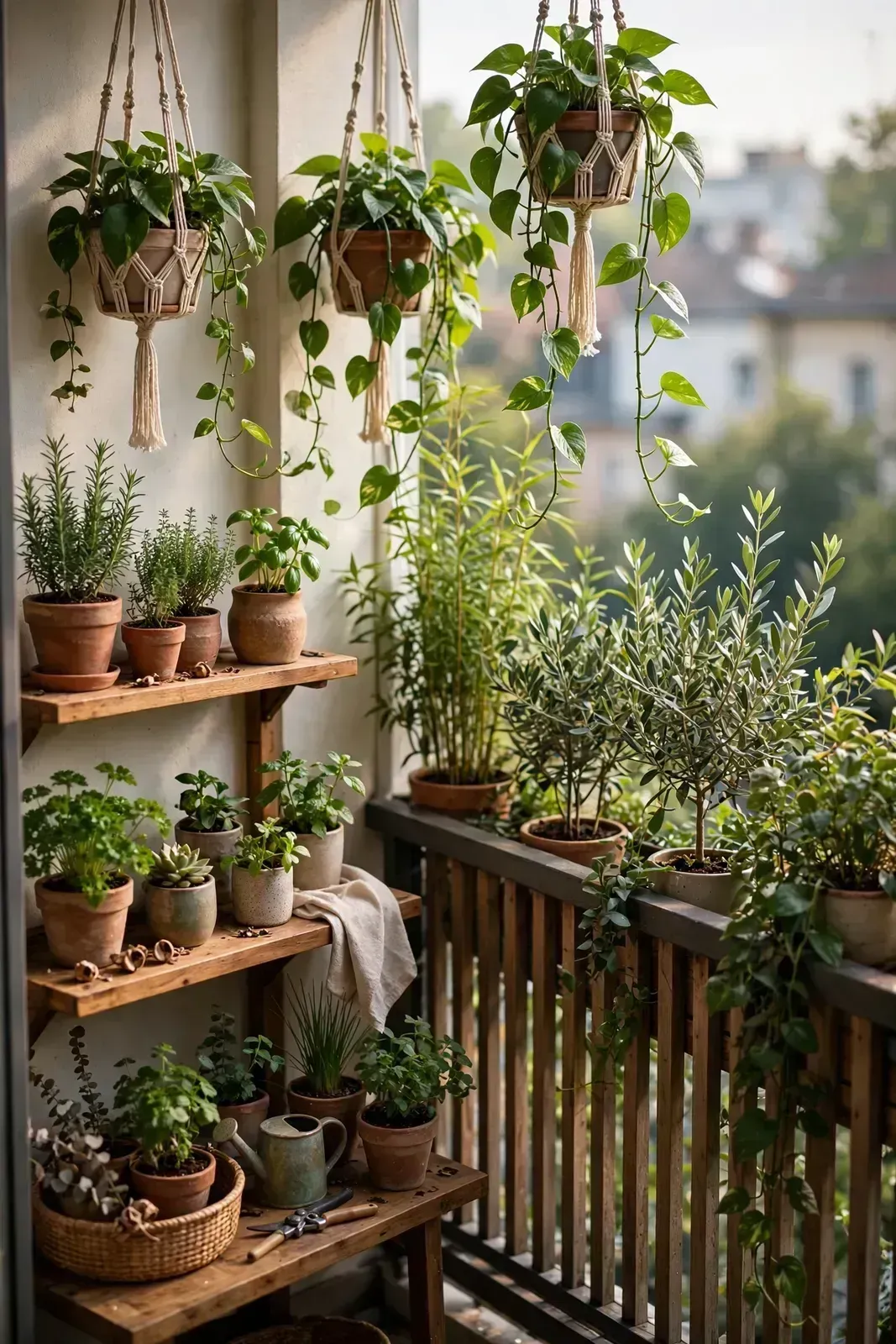
If your balcony feels overlooked by neighbours, the street, or the building across the road, balcony privacy screen plants offer a softer answer than a fabric panel or a plastic fence. A living screen filters views instead of blocking them completely, so you still get light and air, but nobody can see straight into your morning coffee spot. It also cools the space on hot afternoons and turns a plain concrete slab into a small green room you actually want to sit in.
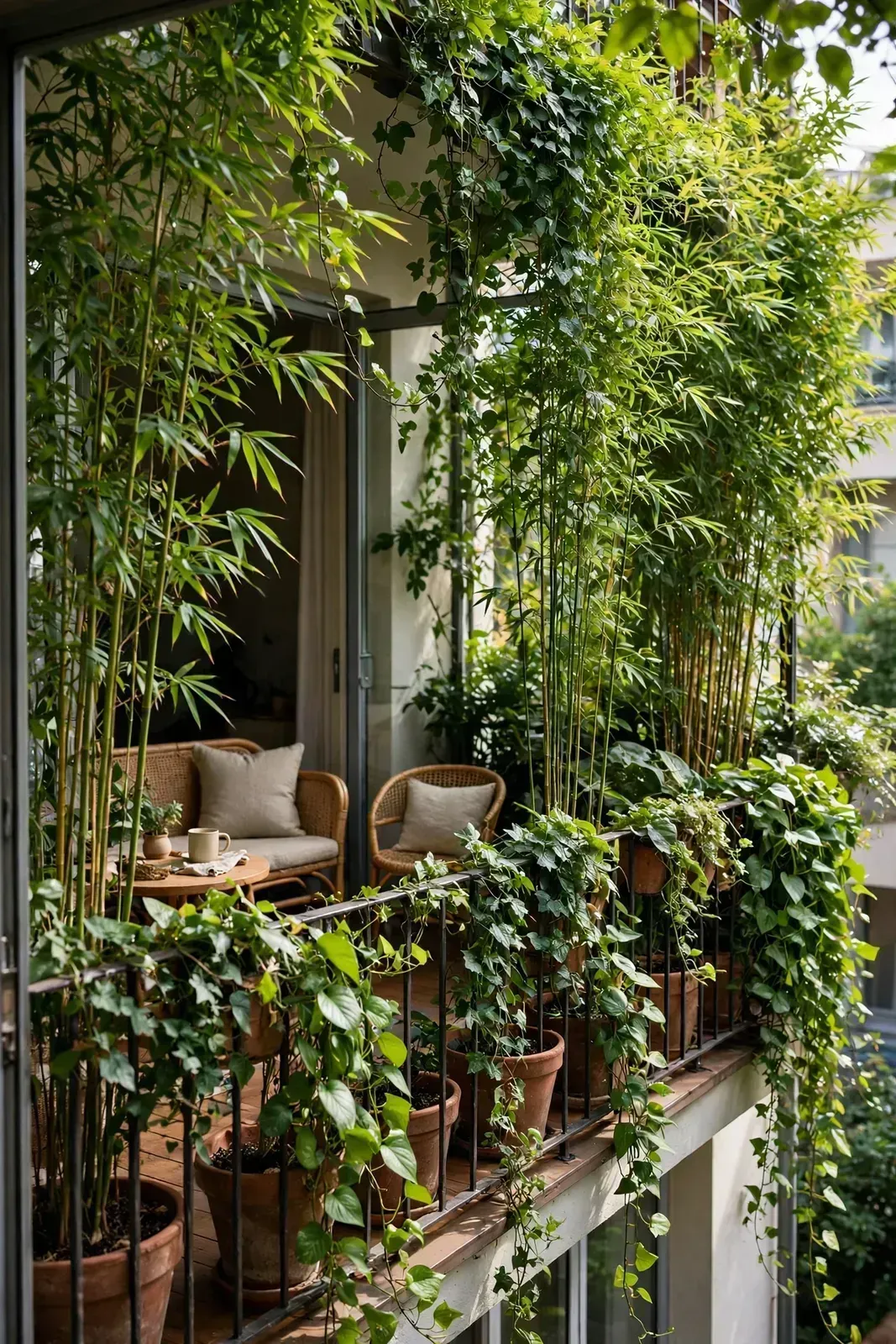
Table of Contents
You do not need a large balcony or a big budget to make this work. A few well-chosen plants in the right pots, at the right height, will close most sight lines in weeks. This guide covers the plants that screen fastest, how to match them to your sun and wind, a step-by-step setup, realistic costs, and the mistakes that leave people with gaps and dead plants by midsummer.
Why balcony privacy screen plants work better than a fabric screen
Fabric screens and reed mats do one job: they block a view. Plants do that job and several others at the same time. Leaves move, so a plant screen never looks flat, and it lets dappled light through, which keeps a small balcony from feeling like a closed box. If you are working with limited square footage inside and out, the same thinking behind smart small living room layout ideas applies here too: use the edges, build upward, and keep the middle clear.
Plants also improve the microclimate. A dense row of pots along a sunny railing can drop the felt temperature noticeably, because leaves shade the floor and release moisture. And a living screen is easy to adjust: if a neighbour adds a terrace, you simply add one taller pot. A fixed panel gives you no such flexibility.
Best balcony privacy screen plants for fast, dense cover
Start with structure plants, the ones that give height and year-round cover. Clumping bamboo is the classic choice: it grows tall quickly and stays in its pot. Choose a clumping type such as Fargesia rather than a running bamboo, which can crack pots and spread. For a narrower, formal look, tall grasses, a potted olive, or a compact laurel all give a clean green wall.
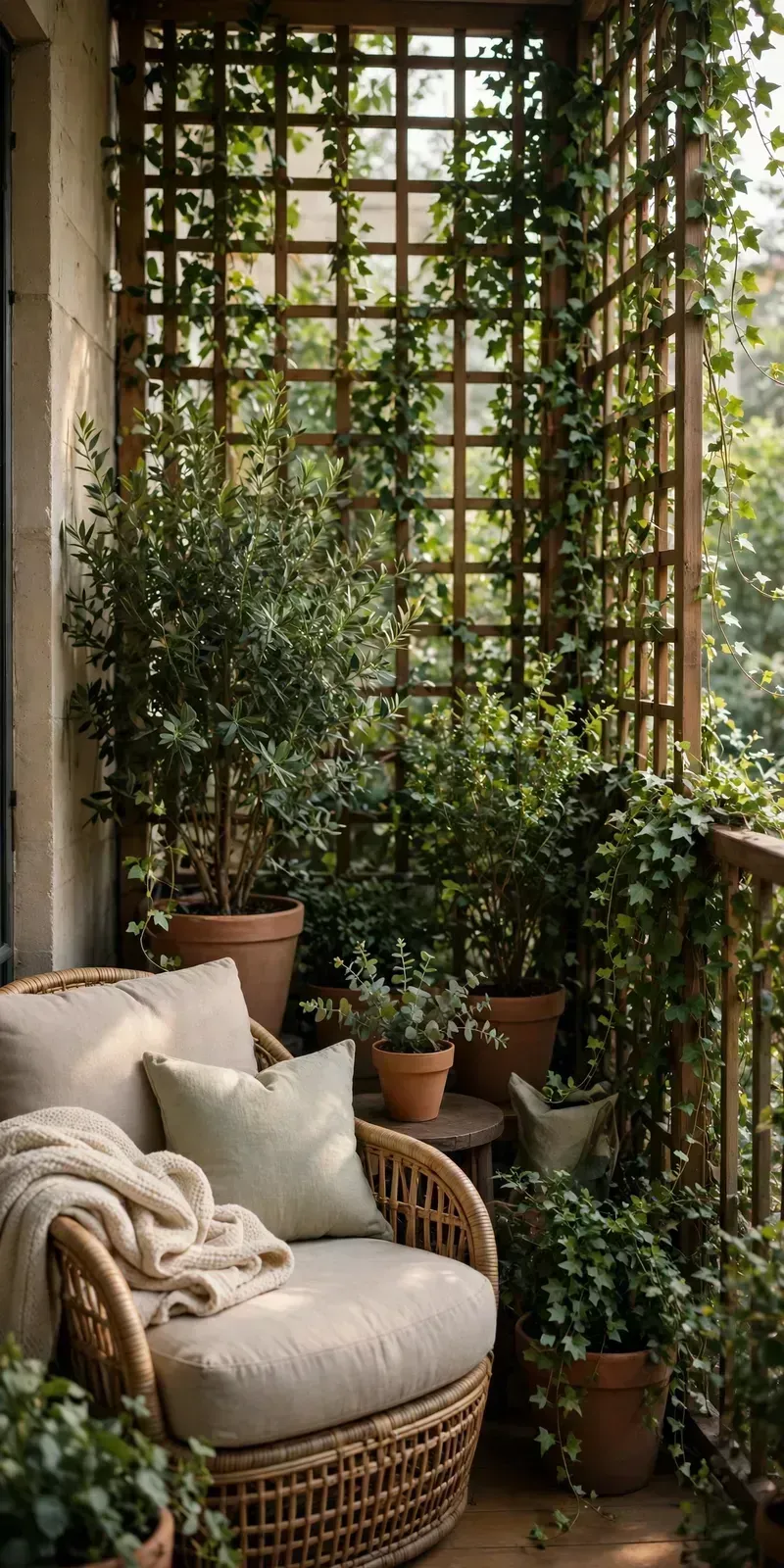
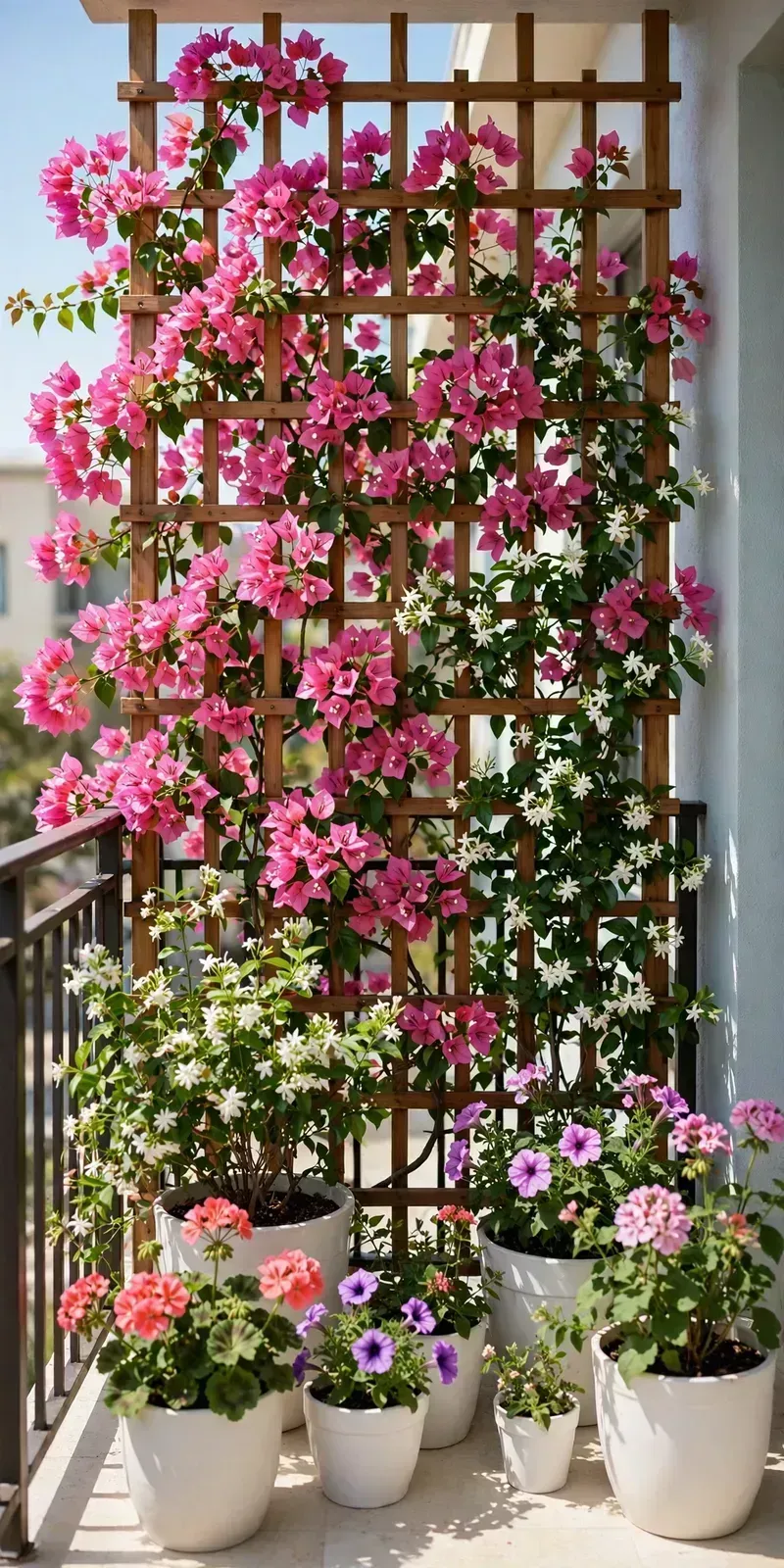
Climbers are the second layer, and they turn a railing into a true screen. Star jasmine covers a trellis with glossy leaves and scented white flowers in early summer. Common ivy, Hedera helix, is an evergreen climber that copes with shade better than most and clings or trails depending on how you train it, though it needs regular trimming to keep it tidy. Bougainvillea suits hot, sunny balconies and gives months of colour, while passion flower grows fast in a single season.
Fill the gaps at knee height with bushy plants: lavender, rosemary, ferns for shade, or compact shrubs. This layered approach, tall at the back, climbers on the support, bushy plants in front, is what makes a screen look lush instead of sparse. Gardeners working in tight spaces have used this vertical layering for a long time; the principles behind gardening in restricted spaces, including trellising and container growing, translate directly to a balcony railing.
Matching your balcony privacy screen plants to sun, shade and wind
Before you buy anything, watch your balcony for a day. Note when direct sun hits it, where wind funnels through, and which sight lines actually bother you. Most people only need to screen one side, the side facing the nearest windows, which saves money and floor space.
For a sunny, sheltered balcony, bougainvillea, jasmine, olive, and lavender thrive and flower well. For partial shade, ivy, ferns, hostas in pots, and clumping bamboo are safer bets. North-facing and high-rise balconies are hardest: wind dries pots fast and shreds large leaves. There, choose tough, narrow-leaved plants such as grasses and bamboo, use heavier pots, and avoid tall, top-heavy plants in lightweight plastic containers.
Weight deserves a quick check too. Wet soil is heavy, and a row of large pots adds up. Stay within any load guidance for your building: spread pots along the edges near the wall and railing rather than clustering them in the middle, and consider lightweight fibreglass or resin planters that look like stone.
How to build your balcony privacy screen plants, step by step
- Map the sight lines. Sit in your usual chair and check the view at seated eye level, or have someone stand where neighbours can see in. Mark only the stretches of railing that truly need screening.
- Fix your support first. Attach a trellis panel, tensioned wires, or a slim bamboo fence to the railing with cable ties or brackets. It should feel solid before any plants go in, because a loaded trellis catches wind like a sail.
- Place the tall pots. Put bamboo or tall grasses in 40 to 50 cm pots along the marked stretches, spaced so their canopies just touch. Leave small gaps for air flow; a sealed wall of foliage invites mildew.
- Add climbers at the base of the support. Plant one climber per 60 to 80 cm of trellis in its own generous pot. Loosely tie the longest stems to the support with soft garden ties, fanning them out rather than bunching them in one column.
- Layer the front row. Set medium, bushy plants in front of the tall pots to hide them and close the low gaps under the foliage.
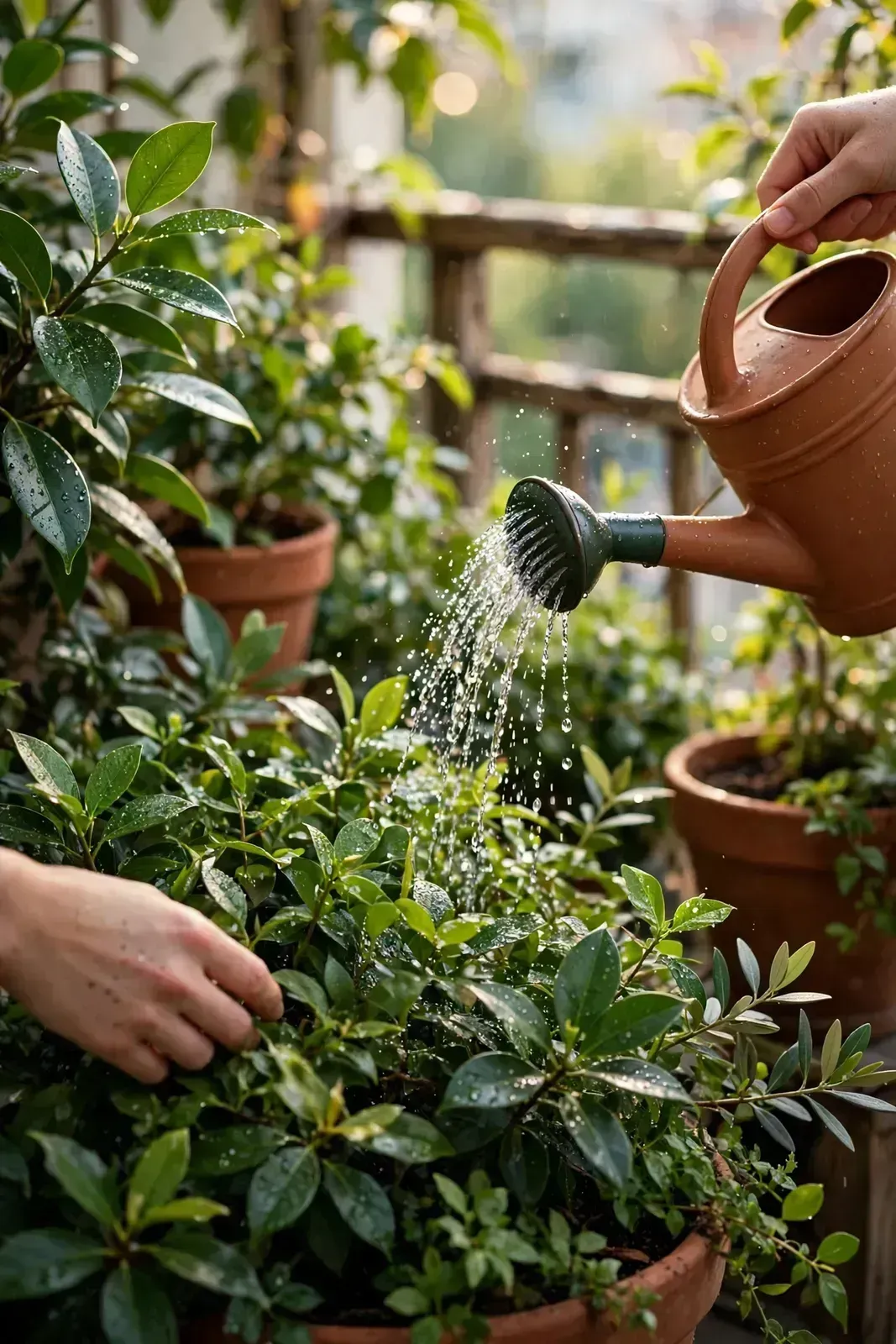
- Water deeply and mulch. Water every pot until it drains from the base, then add a layer of bark or gravel mulch. Mulch slows evaporation, which matters enormously in pots on a windy balcony.
- Train weekly for the first two months. Tuck new climber growth into bare patches and pinch out tips to encourage side shoots. Ten minutes a week now saves a season of thin, stringy coverage.
Budget and buying advice for balcony privacy screen plants that last
A convincing plant screen usually costs less than a custom-made panel. Expect to spend the most on pots and the trellis, not the plants. Three large pots, a trellis panel, compost, and five to seven plants can come together for the price of a modest dinner out, while premium planters and mature specimens can push the same project several times higher.
Buy plants in mid sizes, often sold in 2 to 3 litre pots. Small plants are cheap but take a season to screen anything, while large specimens cost a lot for a few weeks of advantage. If you need privacy this month, buy one or two larger bamboo plants for instant height and let smaller climbers fill in around them. Check plants before paying: look under leaves for pests, and choose bushy, multi-stemmed plants over tall, leggy ones.
Save money on pots with end-of-season sales, second-hand listings, and simple terracotta, which suits most balconies. Spend the savings on good peat-free compost and slow-release fertiliser, because potted plants depend entirely on what you feed them. A cheap plant in good compost beats an expensive plant starved in poor soil.
Common mistakes that ruin balcony privacy screen plants
The most common mistake is planting a running bamboo or oversized shrub in a small pot and hoping for the best. It either bursts the pot, dries out daily, or swallows the whole balcony within two seasons. Always check the plant’s eventual size and whether it is a clumping or spreading type.
The second mistake is screening every side at full height. It blocks your own light and makes the balcony feel smaller. Screen the overlooked sides, keep one open view, and check tenancy or building rules before you drill or tie anything permanent to the railing.
Watering causes the third set of problems. Pots can dry out in a single sunny day, yet constantly soggy compost rots roots just as reliably. Water in the morning, check moisture with a finger in the compost, and make sure every pot drains freely. Finally, remember winter: tender climbers that screened beautifully in August may die back in January, so anchor the design with some evergreen structure.
A simple care routine to keep balcony privacy screen plants thick
Healthy, well-fed plants are dense plants, and density is privacy. Feed container plants little and often in the growing season, with a general liquid fertiliser every two weeks, or slow-release granules once in spring. Prune lightly and often: snip long, bare stems back to a leaf joint and the plant will branch below the cut.
Once a year, in spring, top up each pot with fresh compost, check drainage holes are clear, and move any plant that has outgrown its pot up one size. Rinse dusty leaves on city balconies so plants can breathe properly. Ten to fifteen minutes a week is enough once the screen is established.
Frequently asked questions about balcony privacy screen plants
How long until balcony privacy screen plants actually block the view?
Tall bamboo and grasses in decent-sized pots give partial screening the day you place them and strong cover within one growing season. Climbers usually need one season to cover a trellis, though passion flower can do it in a single summer. Starting with mid-sized plants rather than seedlings shortens the wait.
What are the best evergreen balcony privacy screen plants for year-round privacy?
Clumping bamboo, ivy, star jasmine in mild climates, and potted laurel or olive keep their leaves through winter. A mix is safest: if one plant struggles, the others still hold the screen. In very cold areas, a sheltered position helps bamboo stay green.
Can I grow balcony privacy screen plants if I rent my home?
Usually yes, because everything sits in pots and nothing is planted in the ground. Use freestanding trellis panels or ties rather than screws, keep pots on trays to protect the floor, and check your lease for railing rules. When you move, the whole screen moves with you.
How often do balcony privacy screen plants need watering?
In summer, most pots need water every one to two days; small pots on a windy, sunny balcony may need it daily. In spring and autumn, two to three times a week is typical, and in winter rain often does the job. The finger test beats any schedule: if the top few centimetres of compost are dry, water thoroughly.
Will balcony privacy screen plants attract insects?
Flowering climbers attract bees and butterflies, which most people enjoy. Standing water in trays can attract mosquitoes, so empty trays after watering in hot weather. Aphids appear occasionally on soft new growth and usually wash off with a firm jet of water.
A balcony screened with plants is never quite finished, and that is part of its charm. It thickens and flowers with the seasons while giving you back a private corner outdoors. Start with the side that bothers you most, plant it well, and enjoy coffee behind your green wall.