Table of Contents
Every book lover knows the moment when a story gets good and the sofa suddenly feels all wrong — too shared, too bright, too close to the television. A dedicated reading chair lamp corner solves that in the simplest way: one comfortable chair, one good lamp, and a small patch of the room that is yours alone. It does not need a spare room or a big budget. A quiet corner by a window, the end of a bedroom, or an unused stretch beside a bookshelf can become your favourite place in the house.
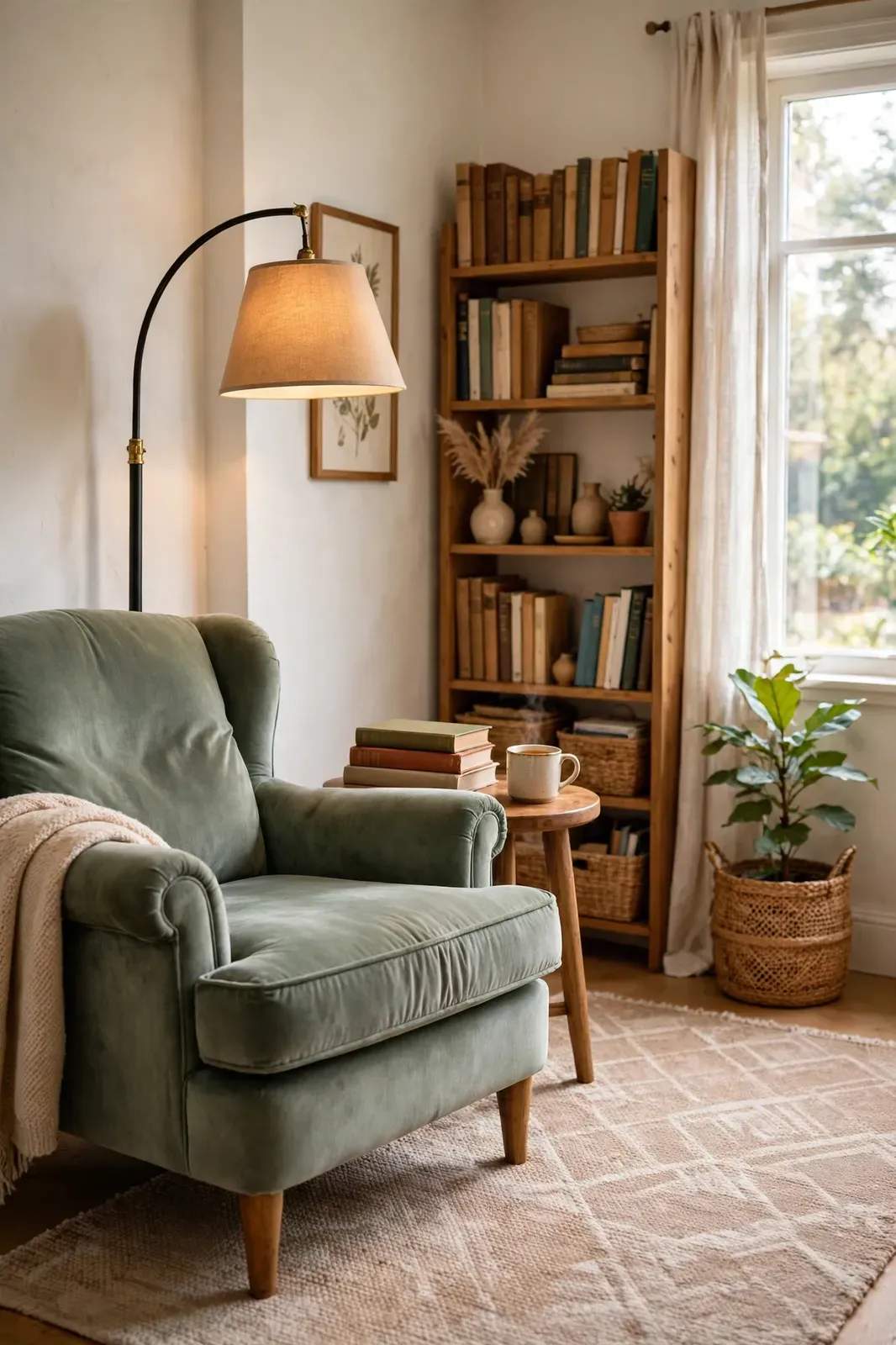
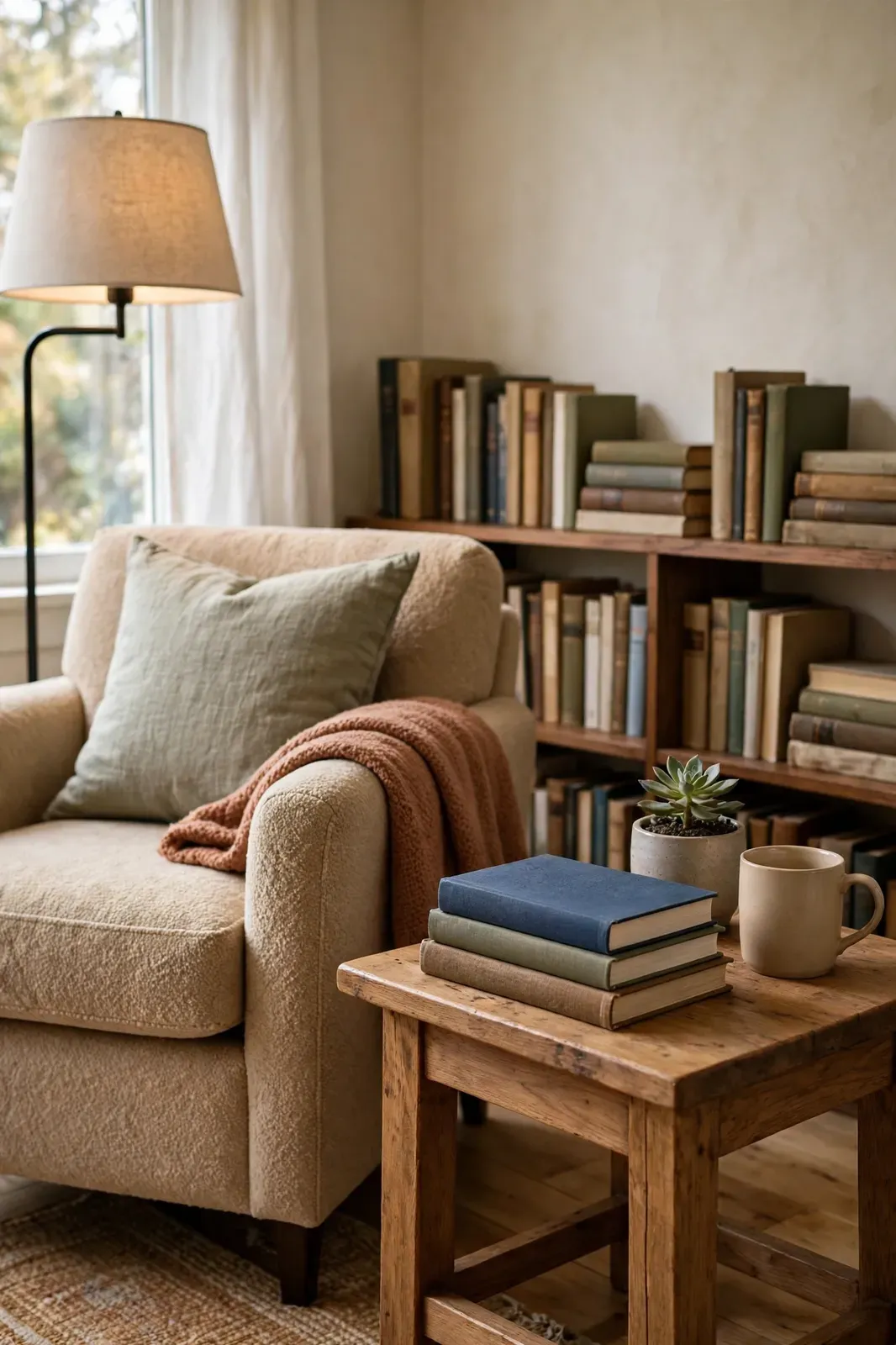
The secret is that this corner works as a small system. The chair holds your body well for an hour, not just ten minutes. The lamp puts clear light on the page without shining in your eyes. A side table keeps your book, glasses and drink within reach, so you never have to get up and break the mood. When those three pieces work together, reading stops feeling like something you squeeze in and starts feeling like a small daily ritual.
Why a Reading Chair Lamp Corner Changes How You Read
A separate reading spot changes your habits more than you might expect. When the chair is already waiting, with a book on the side table and the lamp on, you are far more likely to read for twenty minutes instead of scrolling on your phone. The corner becomes a cue, the same way a desk tells your brain it is time to work.
It also protects your comfort. Reading in bed sounds cosy, but most of us end up slumped against pillows with a stiff neck. Reading on a sofa often means sharing the light with everyone else in the room. In your own corner, you can set the chair angle, the cushion height and the lamp position exactly for your eyes and your back. If space is tight, the same thinking behind good small living room layout ideas that make every corner count applies here too — one well-planned corner can do more than a whole room of scattered furniture.
Choosing the Chair for Your Reading Chair Lamp Corner
Sit in a chair before you buy it, and sit the way you actually read — legs tucked, book held up, shoulders relaxed. A good reading chair supports your lower back, lets your feet rest flat or on a small stool, and has arms that take some weight off your hands. If the seat is too deep, your legs will ache; if too shallow, you will keep shifting.
High-backed styles have been loved by readers for centuries. The classic wing chair, with its tall back and side wings, was first made to shield the sitter from draughts, and that same enclosed shape still feels sheltered and private today. A wingback, a rolled-arm club chair or a simple boucle armchair can all work — what matters is the fit for your body, not the label. In a small home, look for a chair with slim arms and raised legs, which takes up less visual space and lets light pass underneath.
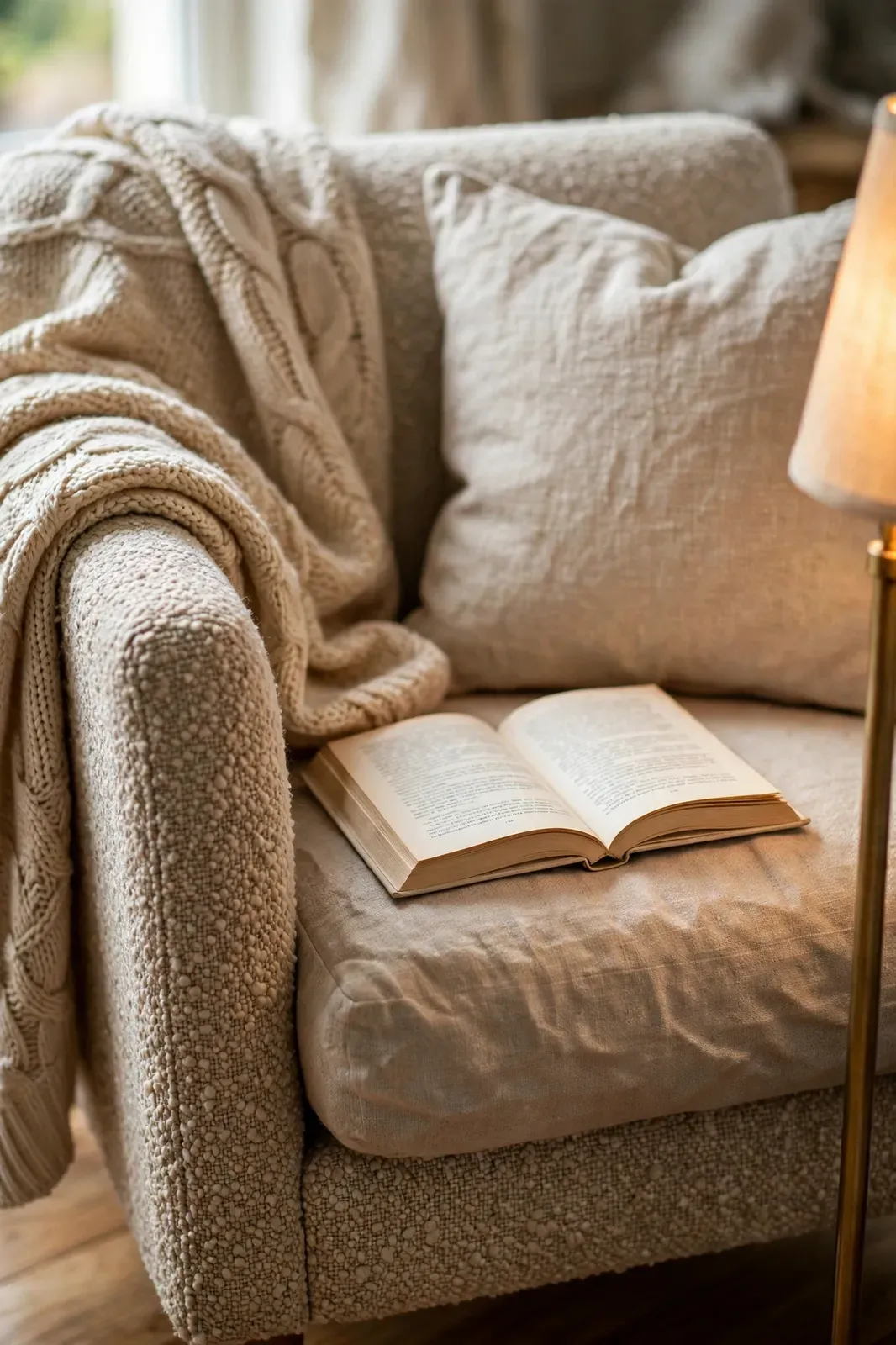
Fabric matters for long sessions. Linen and cotton blends stay cool, velvet feels warm in winter, and textured weaves hide everyday wear well. Choose a colour you will not tire of, then change the mood with cushions and throws. One firm back cushion and one soft throw are usually enough.
Getting the Lamp and Light Right in a Reading Chair Lamp Corner
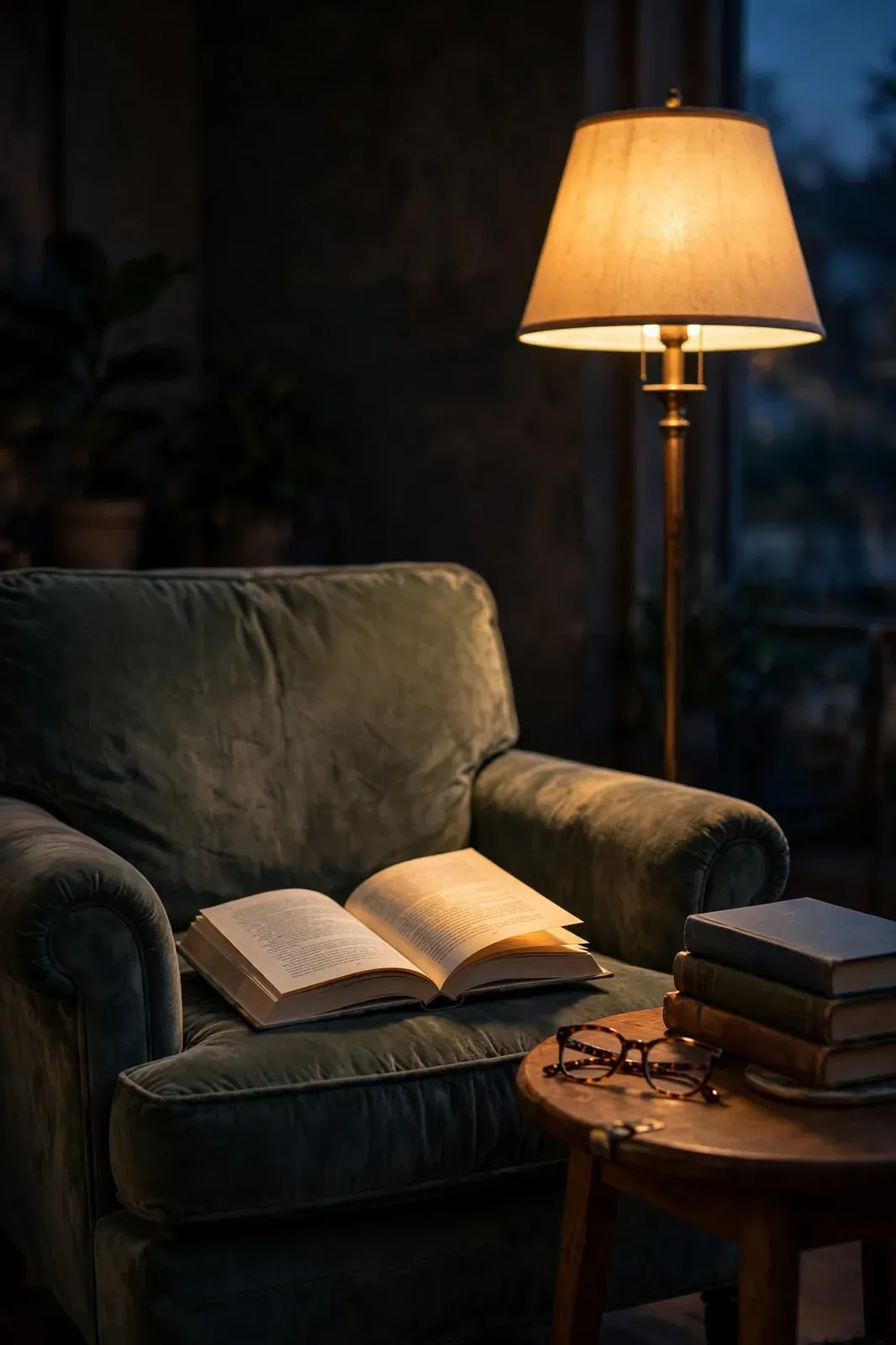
Good light is the difference between a corner you use every day and one you abandon. You want focused light on the page, not a bright bulb glaring from across the room. This is exactly what lighting designers call task lighting — focused light placed close to the activity it serves, such as reading, sewing or paperwork. A floor lamp behind or beside the chair, with the shade at roughly shoulder height when you are seated, is the easiest way to get it.
Position the lamp on the side opposite your dominant hand if shadows fall across the page, and angle an adjustable arm so the light lands on the book, not in your eyes. Arc lamps suit corners where the chair sits away from the wall, tripod lamps add shape to a plain corner, and a simple pharmacy-style lamp is a strong pick for small spaces because the head moves in almost any direction. If you prefer a table lamp, your side table must be tall enough to lift the shade to that same shoulder height.
Choose a warm white bulb, around 2700 to 3000 kelvin, for calm evening reading. A dimmer or three-way bulb is worth the small extra cost: brighter for small print, softer before bed. Keep the shade light-coloured inside, as dark shades swallow a lot of light.
How to Set Up Your Reading Chair Lamp Corner, Step by Step
You can build this corner in one afternoon, mostly with things you may already own. Work in this order, and test each step by actually sitting down with a book.
- Pick the spot. Choose the quietest corner you have, ideally near a window for daytime light but away from the main walkway through the room. Measure the space and note where the nearest power socket is before you choose a lamp.
- Place the rug first. A small rug, roughly 120 by 180 centimetres, marks the corner as its own zone and softens sound. Lay it at a slight angle if the room feels boxy.
- Set the chair at an angle. Turn the chair about 30 to 45 degrees toward the room instead of pushing it flat against the wall. This one move makes the corner feel welcoming rather than forgotten.
- Add the lamp and test it at night. Put the lamp behind or beside the chair, sit down after dark, and adjust until the page is evenly lit with no bright spot in your eyes.
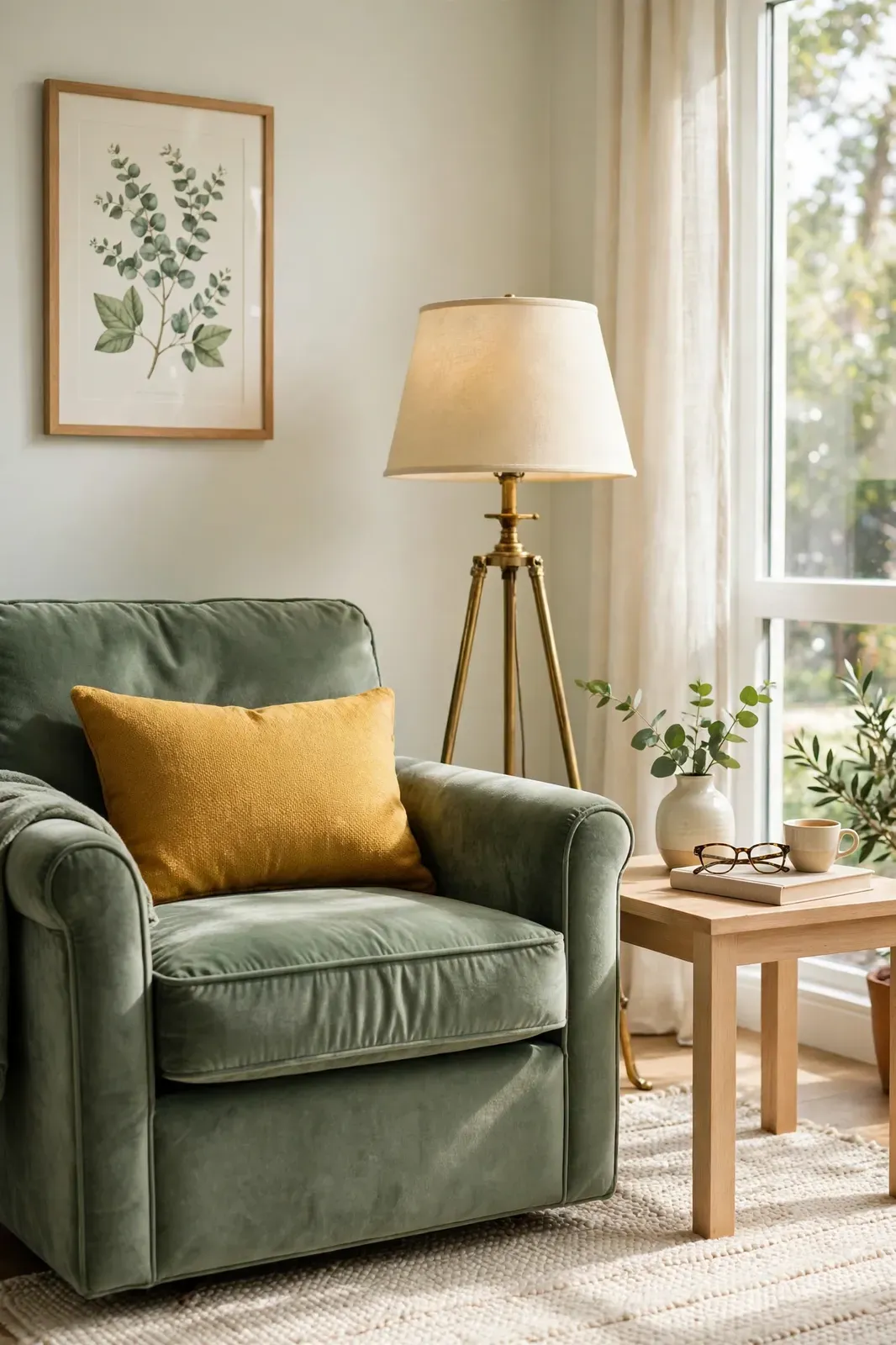
- Bring in the side table. The tabletop should sit close to the height of the chair arm. It only needs room for a book, a mug, your glasses and perhaps a small plant.
- Layer the soft pieces last. Add one back cushion, a throw, and a small basket or low shelf for your current books. Stop there for a week — you can always add more later.
After a few days, make one small adjustment at a time: move the lamp, swap the cushion, or turn the chair toward the window. Corners that grow from use end up more comfortable than corners copied from a photo.
Budget and Buying Advice for a Reading Chair Lamp Corner
Spend your money in this order: chair first, lamp second, everything else last. A chair that hurts your back is a wasted purchase no matter how cheap it was, while a rug, throw and side table can all be found second-hand, borrowed from another room, or bought slowly over time. Many of the best reading corners start with a good chair, a basic lamp and a stack of books on a stool.
For the chair, check charity shops and clearance sections for solid frames in unfashionable fabrics — a simple throw changes the look for very little money. Sit in second-hand chairs and rock gently; any wobble will only get worse. For the lamp, a mid-priced lamp with a movable arm and dimmer beats a costly designer lamp with a fixed head. Buy the bulb separately so you choose the warmth yourself.
Keep a short list while you shop: total budget, exact corner measurements, and socket position. Those three facts stop most impulse mistakes. A small footstool bought later often improves comfort more than any decorative extra.
Common Mistakes to Avoid in a Reading Chair Lamp Corner
The most common mistake is choosing the chair by looks alone. A beautiful chair with a low, sloped back may be fine for a chat, but after thirty pages your shoulders will tell you the truth.
Next is poor lamp placement. A lamp across the room, or a ceiling light alone, forces your eyes to work harder and leaves the page in shadow every time you move. Another frequent problem is a side table that is too low or too far away, so drinks end up on the floor and books end up under the chair. Keep everything you need within one easy arm’s reach.
People also overload a small corner. A chair, lamp, table, tall plant, big shelf and three cushions in one square metre feels crowded, not cosy. Leave empty space around the chair. Finally, route the lamp cord along the wall — a trailing cable across a walkway is ugly and unsafe.
Reading Chair Lamp Corner: Frequently Asked Questions
How much space do I need for a reading chair lamp corner?
About one square metre is enough for a chair, a slim floor lamp and a small side table. Angle the chair and use a compact rug to define the space. Even the end of a hallway or a bedroom corner can work if it is quiet.
What is the best lamp height for reading?
The bottom of the lampshade should sit near your shoulder height when you are seated, roughly at eye level or just below. That puts light on the page without shining straight into your eyes. Adjustable arms make this much easier to get right.
Can I create a reading chair lamp corner in a rented home?
Yes, easily, because nothing needs to be fixed to the walls. A freestanding floor lamp, a chair, a rug and a small table create the whole corner, and all of it moves with you. Use a plug-in dimmer if you want softer evening light without changing any fittings.
Which chair is best for long reading sessions?
Look for firm support in the lower back, a seat depth that lets your feet rest comfortably, and arms that support a book without lifting your shoulders. Wingback and club styles suit many readers, but the best chair is the one that still feels good after a full chapter.
How do I make the corner feel cosy without spending much?
Start with texture rather than new furniture: one knitted throw, a cushion in a warmer colour, and a small basket for books. Warm lamplight does most of the work, so choose a warm bulb before you buy anything else.
However you build it — a grand wingback by a bookshelf or a simple chair and lamp beside your bed — a reading corner earns its space every day. Start with the chair and the light, keep your book close, and let the corner grow around your habits. The best reading chair lamp corner is not the prettiest one in a photograph; it is the one you sit in tonight, and tomorrow, and the night after that.