Table of Contents
Real oak beams are beautiful, heavy, expensive and, in most modern homes, completely unnecessary. A ceiling beam faux wood installation gives you lightweight beams with a timber look, fitted in a weekend with no structural work at all. Done well, nobody can tell from floor level that the beams are hollow. Done badly, they look like exactly what they are. The difference is in the choosing, the spacing and the finish, and all three are easy to get right.

Why Ceiling Beam Faux Wood Suits Modern Homes
A traditional beam carries load; a faux beam carries nothing but appearance, which is precisely its advantage. Faux beams are hollow, usually made from high-density foam, lightweight moulded polyurethane or a thin timber veneer over a softwood core, so one person can lift a three-metre beam that would take three people and a structural engineer in solid oak. That means beams can go where the look wants them, not where the structure dictates, and they come down again if a future owner disagrees.
They also solve practical problems. A hollow beam is a perfect hiding place for speaker wire, LED strip cable and the slightly ugly junction where a pendant light was moved. In long, plain rooms, beams break the ceiling into sections and make the space feel designed rather than built, and in new-build rooms they add the character that flat white ceilings lack.
Choosing Beams for a Ceiling Beam Faux Wood Look
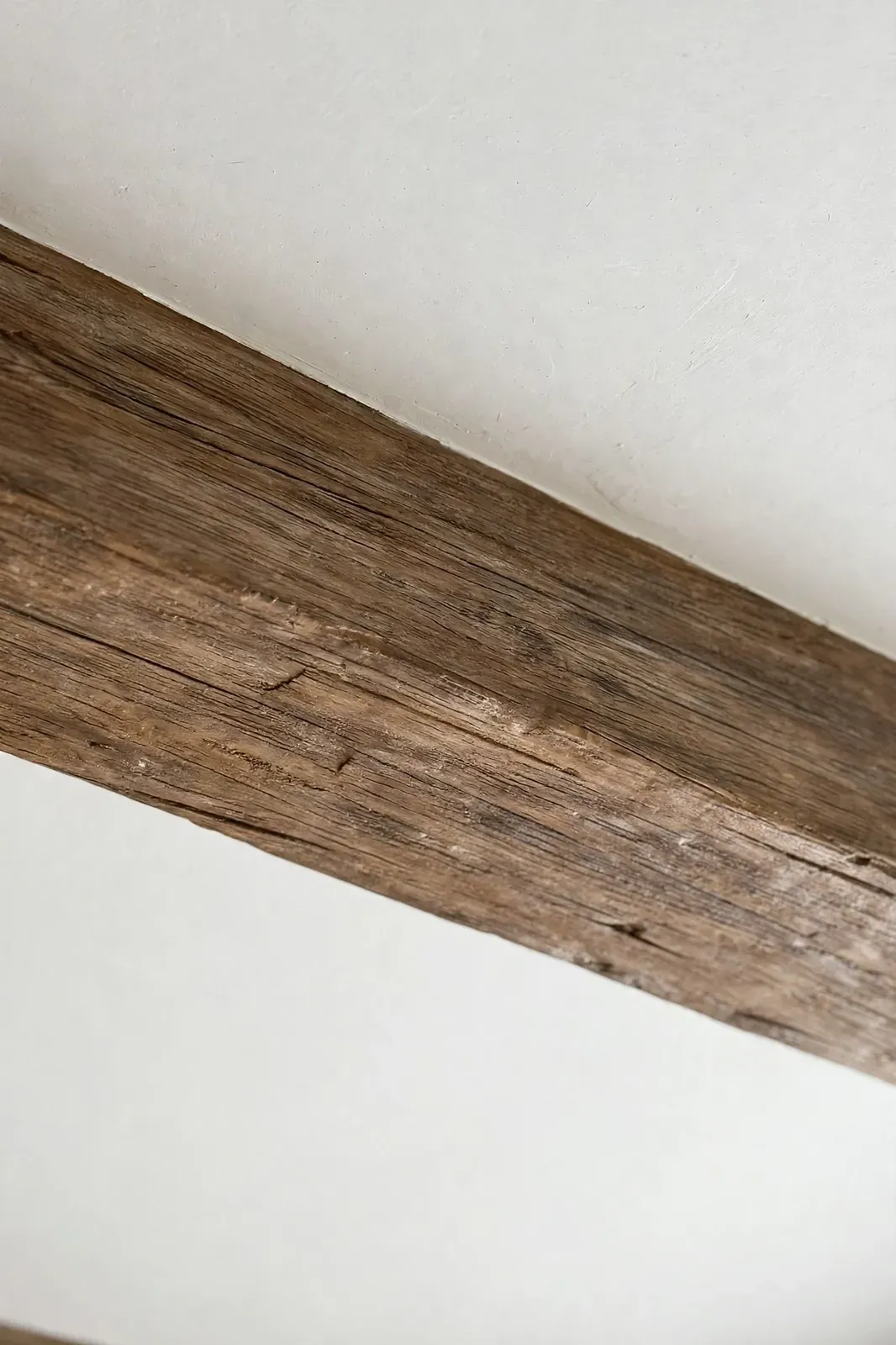
Material decides realism. Moulded polyurethane beams are cast from real timber, so the grain, knots and even saw marks repeat convincingly, and they take stain and paint well. Foam beams are the lightest and cheapest but can look soft-edged in close-up rooms. Veneered beams cost more and read as real wood even up close, because their surface is real wood. For living rooms and bedrooms, moulded beams are usually the sweet spot.
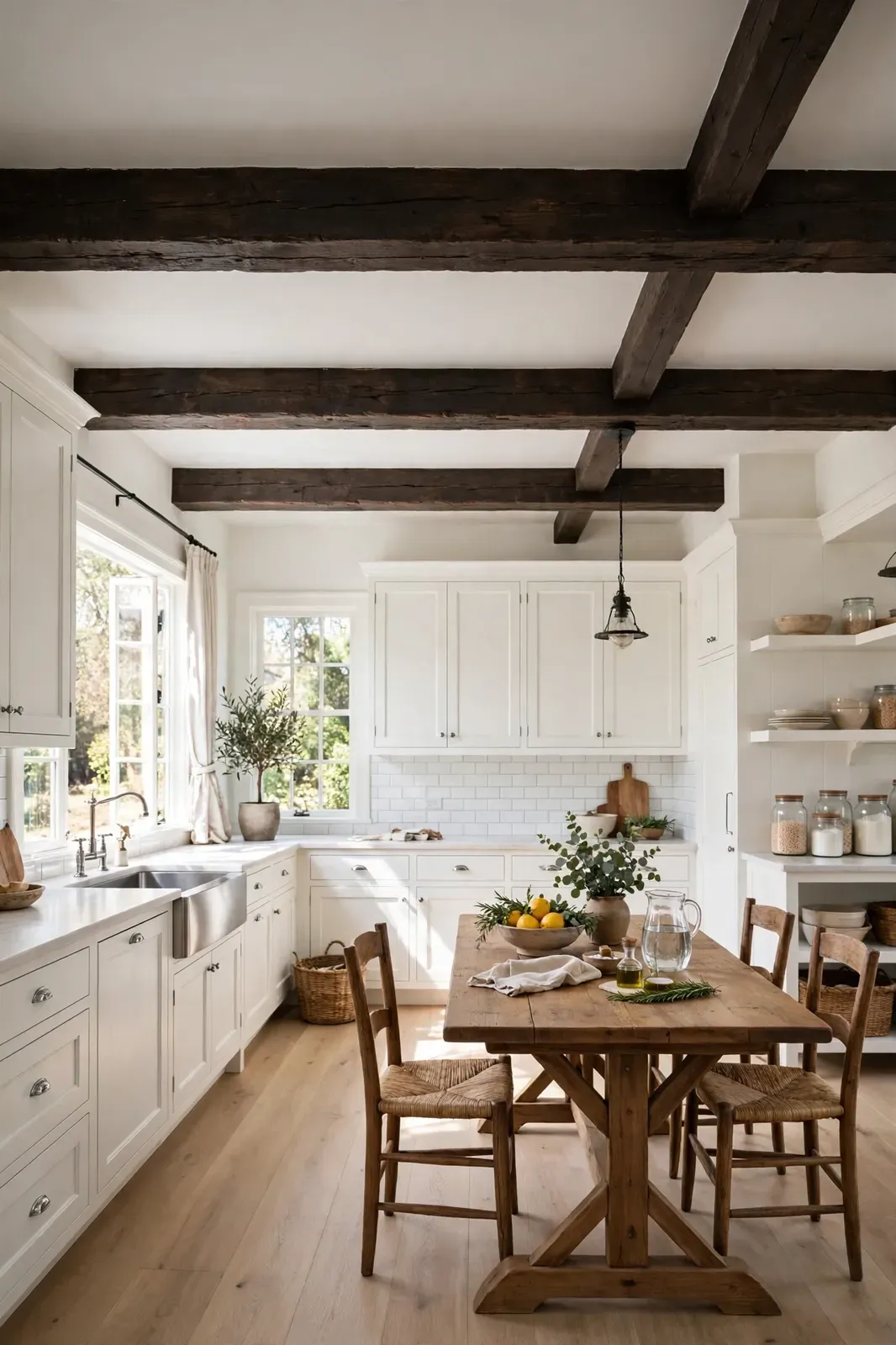
Colour matters more than grain. Match the beam tone to something else in the room, a floor, a table, a door, rather than introducing a brand-new wood colour on the ceiling. Dark beams on a white ceiling give a farmhouse and Mediterranean feel and visually lower a high ceiling; pale oak beams keep a room feeling Scandinavian and calm. Size honestly: in a standard room, beams around 15 to 20 cm deep look substantial without looming, and width should be a little less than depth.
How to Plan and Fit Ceiling Beam Faux Wood: Step by Step
Step 1: Plan the layout on paper. Beams usually run across the short direction of the room, spaced evenly between 1.2 and 2 metres apart. One beam alone in the middle of a ceiling almost always looks like a mistake; three or more read as a design.
Step 2: Mark the lines on the ceiling with painter’s tape and live with them for a day. Check the view from the sofa and the door, the two places you actually see the ceiling from. Our small living room layout ideas guide helps judge how ceiling lines interact with furniture below.
Step 3: Fix mounting blocks or a timber batten to the ceiling joists along each line. Faux beams are light, but they must fix into structure, not plasterboard alone.
Step 4: Slide or lift each hollow beam over its blocks and secure it with screws through the sides into the blocks, following the manufacturer’s method. Two people make this a calm job.
Step 5: Finish the joints. A neat bead of flexible filler where beam meets ceiling, touched in with matching paint, is the detail that sells the illusion. Gaps and shadows at the joint are what give faux beams away.
Ceiling Beam Faux Wood: Styling Rooms Around Faux Beams
Beams set the room’s rhythm, so hang pendants from beam centres rather than between them, and let beams run in the same direction as floorboards for a settled look. In kitchens, beams over the island zone with hooks or a rail underneath lean into the farmhouse feeling; keep them clear of direct cooking steam where you can. In bedrooms, pale beams with white bedding and linen curtains keep the effect soft rather than rustic.
Ceiling Beam Faux Wood Budget and Buying Advice
Price per beam varies widely by material, and the honest rule is to buy the best surface you can afford for the room where people sit closest to the ceiling. Foam is fine for a hallway; moulded or veneer belongs in the living room. Measure twice before ordering: beams are bulky to return. Factor in mounting blocks, screws, filler and a tin of touch-in paint or stain. The total still lands far below solid timber, with no structural survey, no propping and no plaster repair.

Common Mistakes to Avoid With Ceiling Beam Faux Wood
The biggest mistake is scale: skinny beams in a grand room or massive beams in a small one both break the illusion instantly. Second is spacing that ignores the room, beams landing randomly over windows or stopping short of walls; beams should always run wall to wall. Third is a colour that matches nothing below. Fourth is shiny finish; real structural timber is matte, so avoid gloss. Fifth is fitting a single beam to hide a crack or wire and expecting it to look architectural. Either commit to a rhythm of beams or use a plain cable cover instead.

Ceiling Beam Faux Wood in Different Rooms
The same beam reads differently in every room, and planning by room avoids a one-style-fits-all result. In a living room, deeper beams in a mid-oak tone anchor the seating area and give pendants or a ceiling light a natural centre line. In a kitchen, shallower beams kept clear of the hob’s steam path add farmhouse character without collecting grease where you cannot reach to clean. Bedrooms suit the palest tones and the slimmest profiles, because the ceiling is the first thing you see on waking and the effect should whisper rather than shout.
Hallways are the forgiving space where cheaper foam beams do honest work, since nobody stands close beneath them for long. Bathrooms are the one caution: choose only products rated for humid rooms, and keep beams away from the direct steam zone above a shower, because constant moisture will test any finish, real timber included.
Frequently Asked Questions About Ceiling Beam Faux Wood
Do faux wood beams look realistic? From normal viewing distance, good moulded or veneered beams are very convincing, because the moulds are taken from real timber. Cheap foam beams with printed grain are the ones that disappoint; see a sample before ordering a room’s worth.
Can faux beams go on any ceiling? They fit most ceilings as long as the mounting blocks can fix into joists or solid structure. Very low ceilings under about 2.3 metres feel lower with deep beams, so choose shallow profiles there.
How many beams does a room need? As a guide, one beam per 1.2 to 2 metres of ceiling length. A typical living room takes three to five. Even spacing matters more than the exact number.
Can I hang lights from a faux beam? Pendants can hang through a faux beam as long as the fitting itself is anchored into the joist or structure above, never into the hollow beam alone. Route the cable inside the beam for a clean finish.
Are faux beams removable? Yes. Unscrew them from their blocks, fill the small screw holes in the ceiling and repaint. That reversibility is one of their main advantages over structural timber.
A ceiling beam faux wood project succeeds when visitors stop noticing the beams and simply feel that the room has character. Choose a convincing surface, space them like you mean it, seal every joint neatly, and the timber look will carry the room for years.