Table of Contents
Most hallway mess starts at floor level. Wet boots come in, drip across the boards, leave a gritty puddle that everyone walks through in socks. A mudroom boot tray tidy stops that in one move: a tray that catches mud and water, parked exactly where boots come off. It is one of the cheapest organising tools in the house, and one of the few that works from the first rainy day you own it.
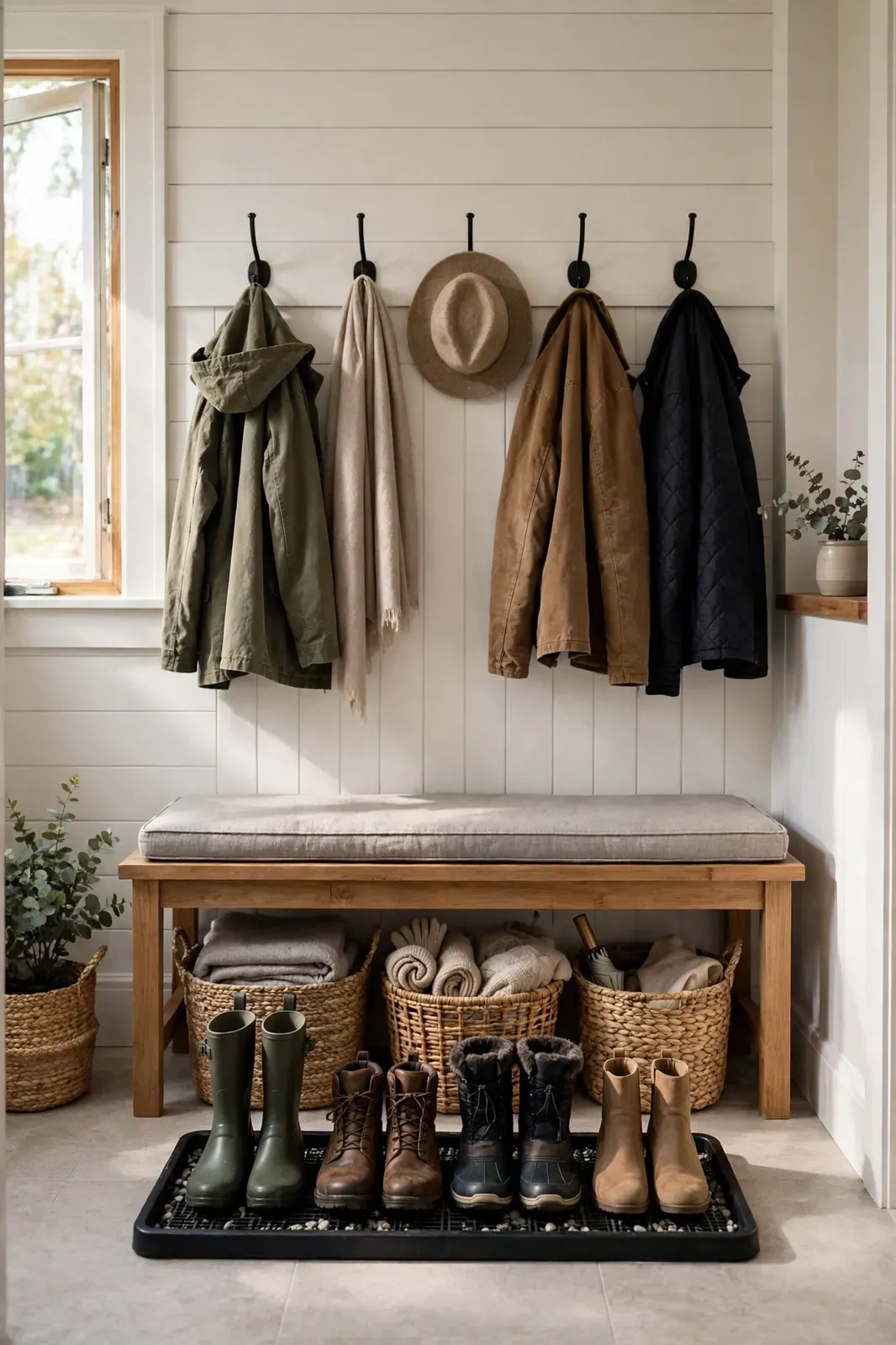
Why a Mudroom Boot Tray Tidy Works So Well
A mudroom boot tray tidy does three jobs at once. It contains water, so meltwater and rain stay in one washable place instead of soaking a mat or a floorboard seam. It contains grit, which is the stuff that actually scratches floors and travels through the house. And it marks a boundary: boots live here, not in a wandering trail by the door. The mudroom idea comes from farm and country houses where mud was a daily reality, but the principle suits a city flat’s hallway just as well.
The tidy effect spreads. Once boots have a home, gloves, umbrellas and school bags tend to gather in the same zone, and the whole entry starts behaving like a system rather than a drop zone. Visitors copy it too without being asked, because a tray of boots reads as an instruction anyone can follow.
Choosing a Tray for a Mudroom Boot Tray Tidy
Material first. Heavy recycled plastic trays are light, cheap and hose clean in seconds; they suit renters and families with heavy traffic. Galvanised metal looks handsome and lasts for years, but check for a rolled or sealed edge so it cannot rust at the rim or scratch the floor. Rubber trays grip the floor and cope with any boot size. Wooden slatted trays look warm but hold water badly unless they sit over a waterproof liner, so treat them as a fair-weather option.
Size it to your real life. Measure your largest pair of boots and your door swing, then choose a tray that fits two to four pairs in a single row; a family of four usually needs either one long tray of about 100 cm or two standard trays side by side. A raised lip of at least 3 cm matters: shallow fashion trays overflow the first time snow melts off a pair of wellingtons. Adding a layer of smooth river stones inside the tray lifts boots off the puddle, speeds drying and hides the dirty water between cleans.
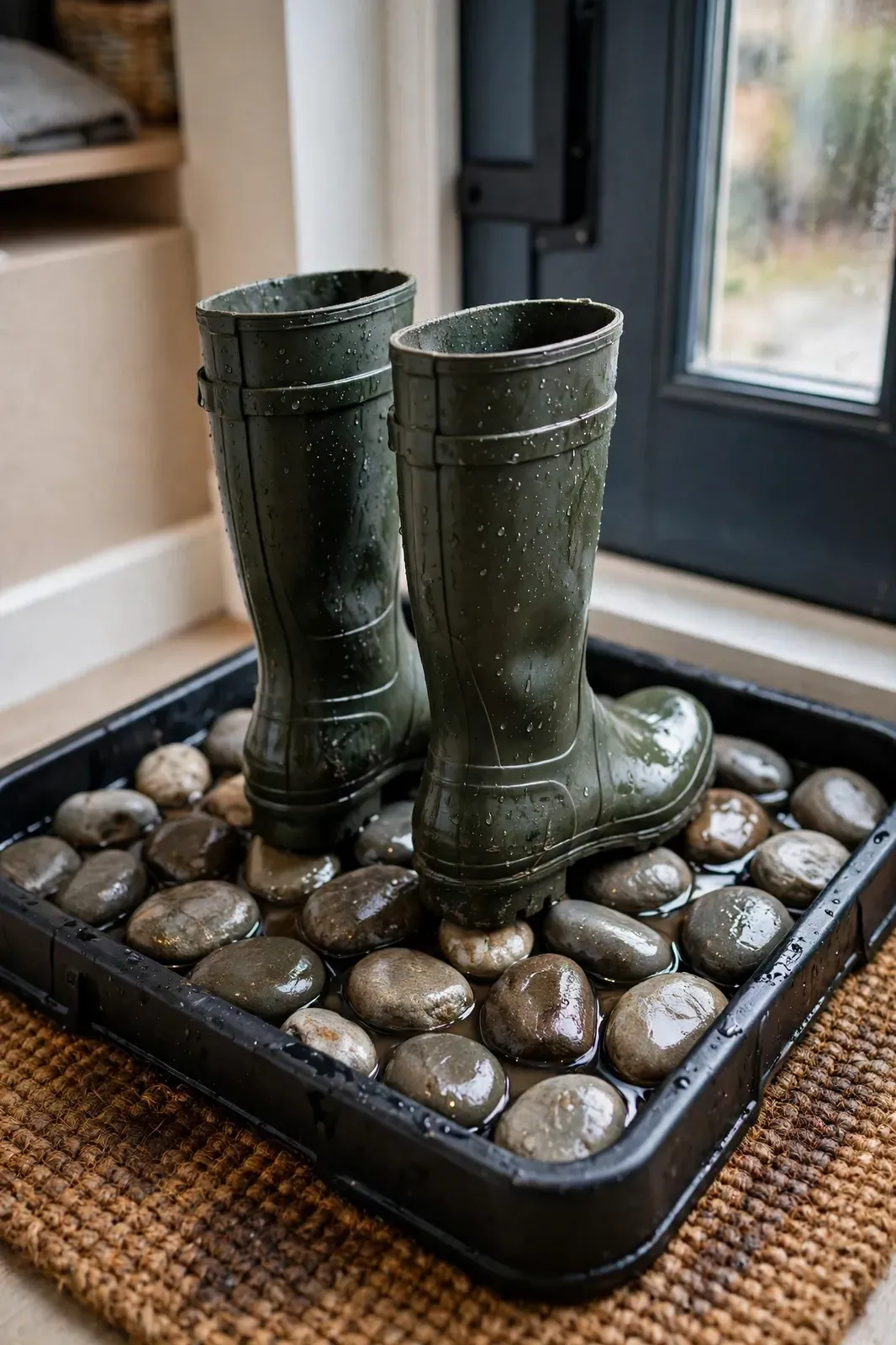
How to Set Up Your Mudroom Boot Tray Tidy: Step by Step
Step 1: Place the tray directly inside the door, on the side the door opens away from, so the first step indoors lands beside it. Keep it out of the door swing itself.
Step 2: Add a seat. A small bench, a sturdy stool or even a low shelf gives people somewhere to sit while pulling boots off, which is what makes them actually use the tray. The entry layouts in our small living room layout ideas guide show how a seat, hooks and storage combine in tight spaces.
Step 3: Put hooks or a rail above at two heights, adult and child, so coats come off in the same spot and drip over the tray, not the floor.
Step 4: Add one basket for gloves, hats and scarves, and a tall corner for umbrellas with a drip cup under it.
Step 5: Set the cleaning rhythm: shake grit out weekly, rinse the tray when you mop the floor, and let boots dry fully before they go back on feet. A tray that is emptied regularly never smells; a forgotten one does.
Mudroom Boot Tray Tidy Styling Ideas That Keep It Looking Good
A mudroom boot tray tidy does not have to look like farm equipment. Match the tray colour to your door or floor and it nearly disappears. A woven runner in front of it, a cushion on the bench in the hallway’s colour scheme, and baskets in one material, all seagrass or all wood, make the zone look planned. In a small flat, a slim tray tucked under a console table keeps the system working without giving up floor space.
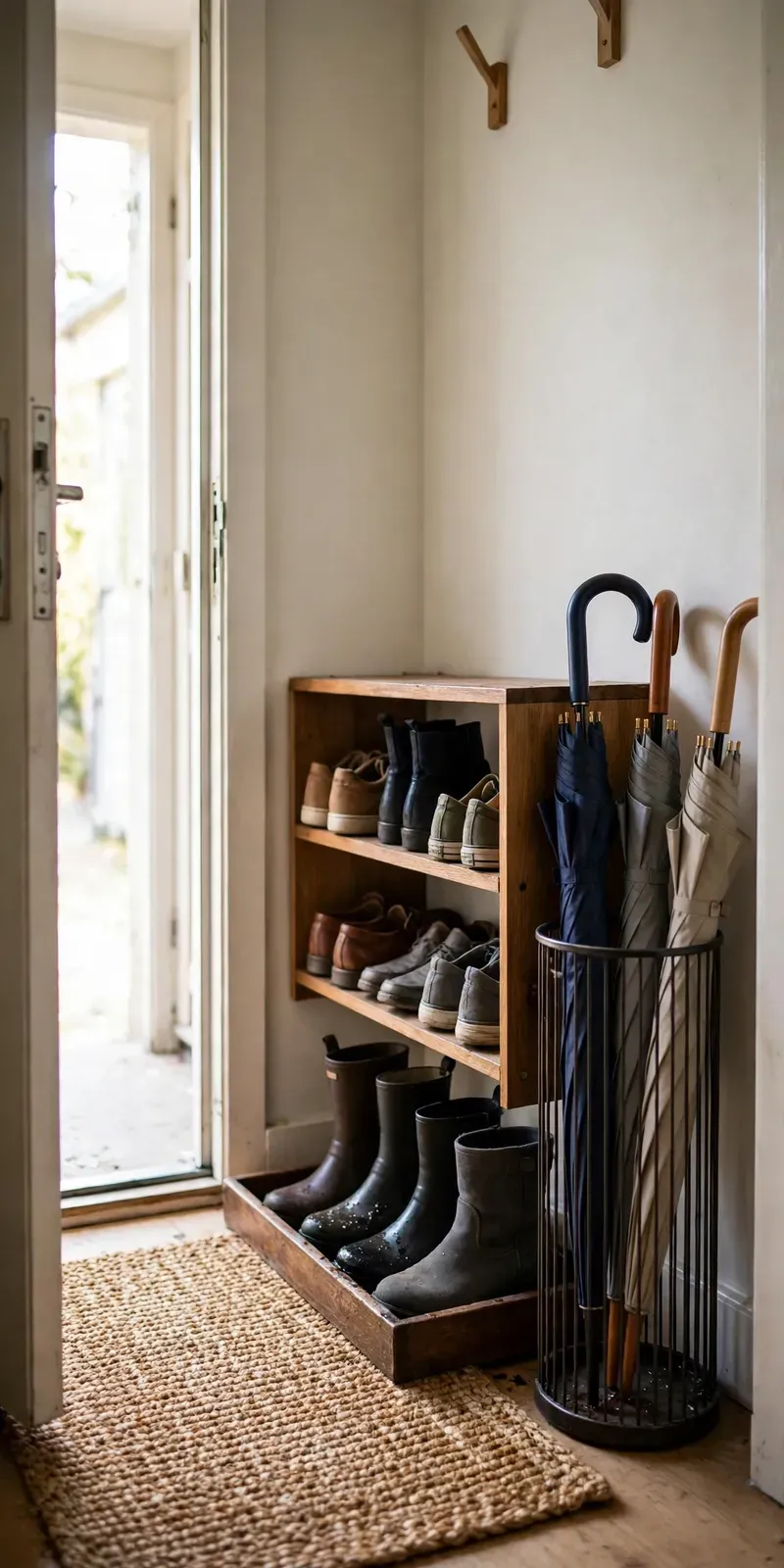
Budget and Buying Advice for a Mudroom Boot Tray Tidy
A mudroom boot tray tidy is a genuinely cheap fix. Basic plastic trays cost very little, and a bag of decorative stones to line one is a small extra that improves both looks and drying. Spend slightly more only if the tray will be on show in a smart hallway, where a metal tray earns its price in appearance and lifespan. Avoid novelty shapes and very shallow trays; they fail at the one job that matters. If money is tight, a large oven tray, a seed tray from a garden centre or a cut-down rubber car mat all work honestly as a first version.
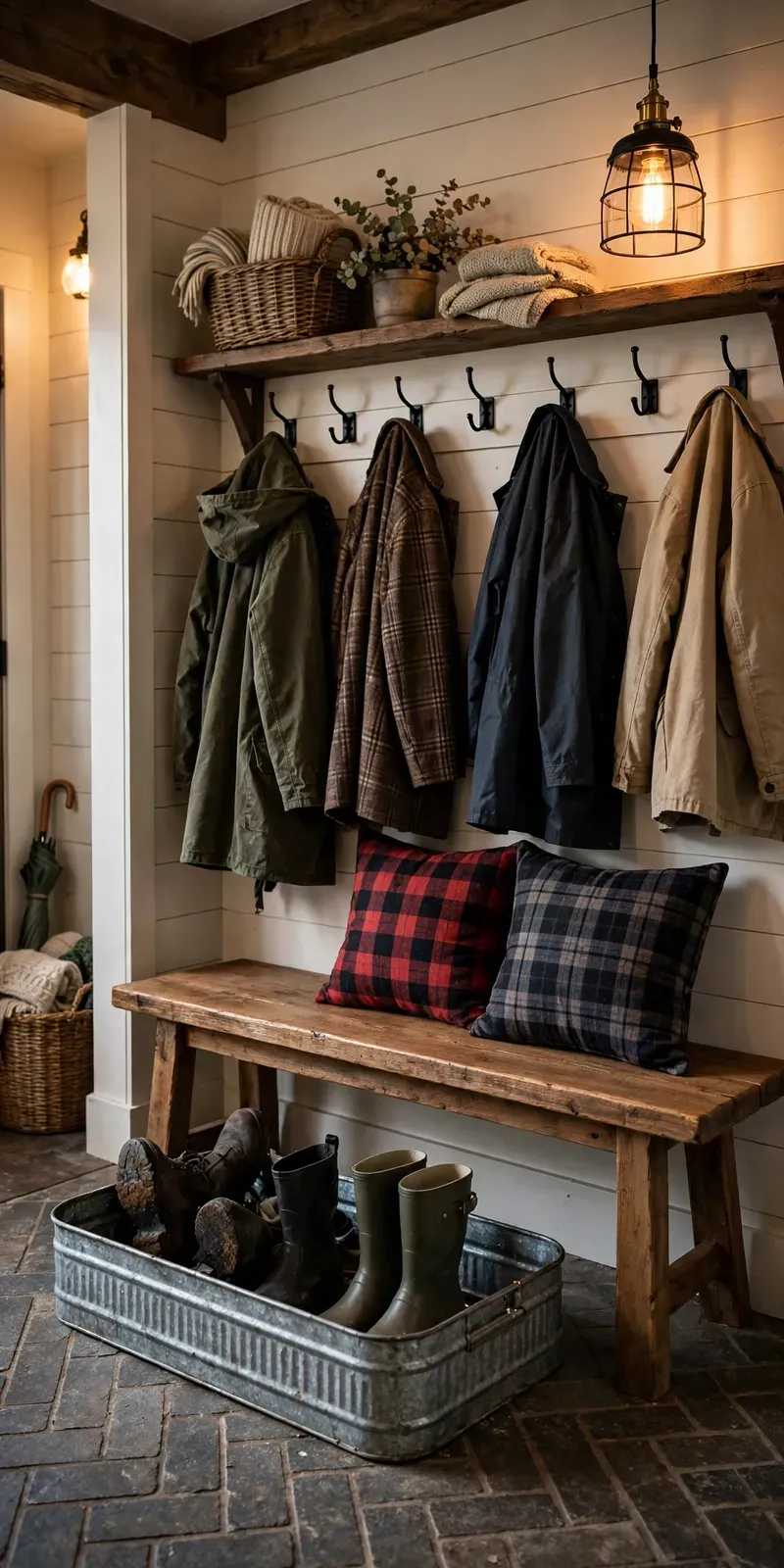
Mudroom Boot Tray Tidy: Common Mistakes to Avoid
Undersizing is the first mistake: a tray that holds two pairs in a four-pair household just moves the overflow problem. The second is placing it across a walkway rather than along a wall, so people trip and kick it. Third, putting the tray straight onto polished wood or pale tiles without checking the underside; add felt pads or a thin mat beneath metal trays.
Fourth, letting it become a permanent puddle: stones help, but the tray still needs an empty and rinse. Fifth, forgetting summer: when boots retire, the same tray corals sandals, trainers and sports shoes just as well.
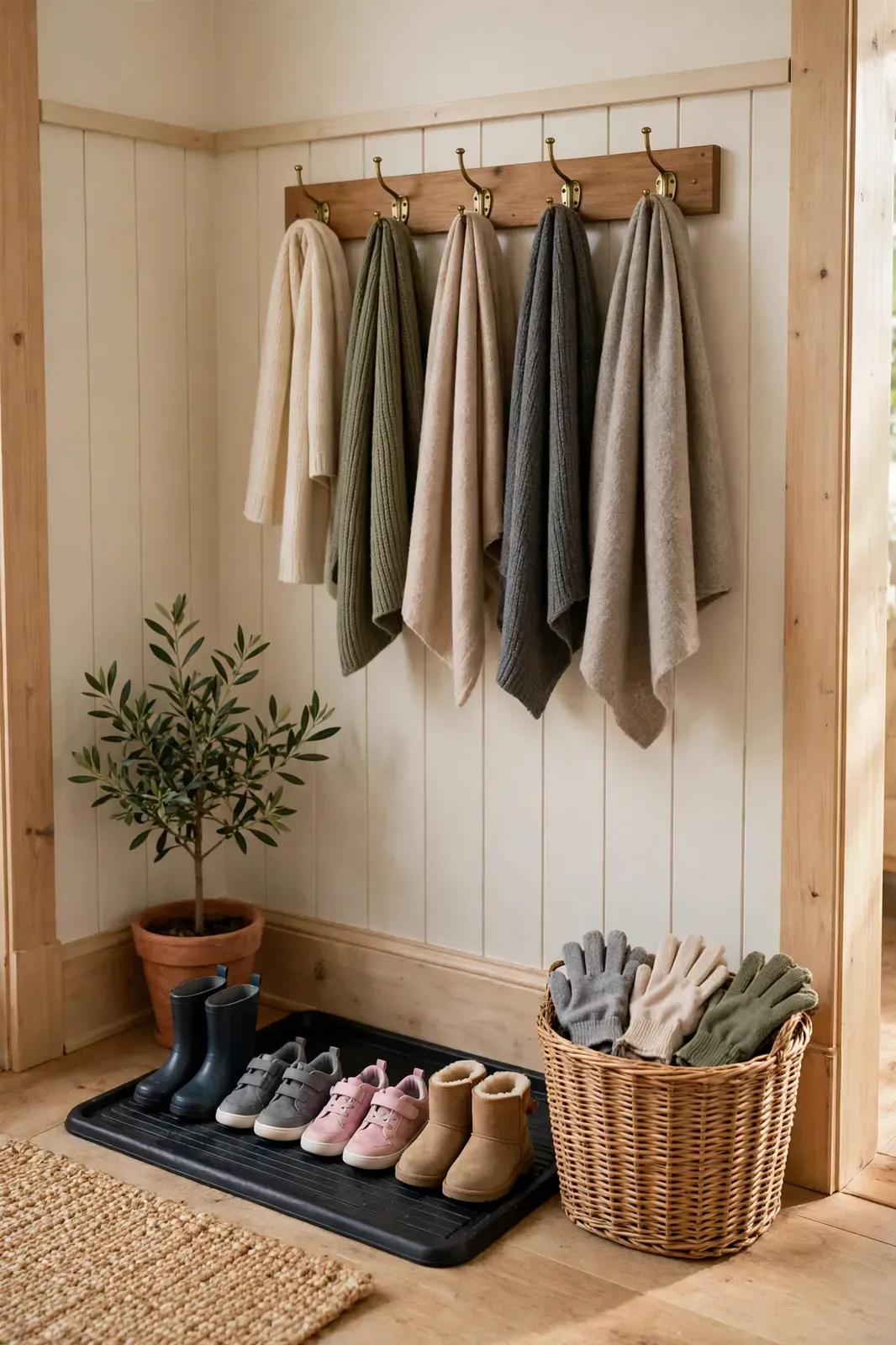
A Mudroom Boot Tray Tidy for Every Season
The tray earns its place all year, not only in the wet months. In spring it catches garden mud and football-boot grass before either reaches the kitchen. In summer it becomes the landing strip for sandals, trainers and cricket or tennis shoes, and a quick shake over the garden keeps the grit outside where it belongs.
Autumn brings the real test, leaf mould and daily rain, and that is when the stones inside the tray prove themselves, lifting soles clear of the water so shoes are dry by morning. In winter the same setup handles snow, which melts far more water off a pair of boots than most people expect, so check the tray level on heavy snow days and empty it before it brims. Keeping the tray in place through the easy months also protects the habit: a system that never moves is a system nobody has to relearn, and guests in July read the tray’s message just as clearly as guests in January.
Mudroom Boot Tray Tidy: Frequently Asked Questions
What size boot tray do I need? For a mudroom boot tray tidy, allow roughly 30 cm of tray width per pair in a single row. Two pairs fit a 60 to 75 cm tray; a family usually does best with a 100 cm tray or two trays together.
Do stones in the tray really help? Yes. Smooth stones lift boots out of the meltwater so soles dry faster, and they hide dirty water between cleans. Rinse them with the tray every few weeks.
Will a boot tray damage my floor? A mudroom boot tray tidy protects the floor far more than boots alone. To be safe, put felt pads under metal trays and never leave standing water sitting on wood floors for days; empty the tray regularly.
Can I use a boot tray in a flat with no mudroom? Absolutely. The tray is the mudroom, in miniature. Inside the front door, under a console or beside a shoe rack, it creates the same contained drop zone.
How often should it be cleaned? A shake-out weekly and a rinse whenever you mop is enough for most homes. In snowy or very muddy spells, a quick empty every few days keeps it working.
A mudroom boot tray tidy is a small, unglamorous purchase that quietly protects your floors, your socks and your temper every single wet day. Set it by the door, give people a seat and a hook beside it, and the hallway will mostly keep itself.