Table of Contents
The first properly cold morning of the season caught me off guard last week. I was halfway to the station, coat buttoned to the top, and the wind still found the one bare inch of skin at my throat. That evening I dug out my parsnip ivory cable scarf, the chunky one with the deep twisted ropes, and I have worn it every day since. A good parsnip ivory cable scarf does more than keep you warm. It finishes a plain coat, softens a dark outfit, and gives you nine different looks from a single piece, if you know how to wrap it.
Parsnip is a warm, creamy ivory with the faintest hint of pale gold, much like the inside of a freshly cut parsnip. It is softer than bright white, kinder against winter skin, and pairs with camel, navy, burgundy, charcoal and black without shouting. Add a chunky cable knit and you get texture as well as warmth, which is exactly what flat winter outfits need.

Why a Parsnip Ivory Cable Scarf Works So Hard in Winter
A parsnip ivory cable scarf adds interest as well as warmth. The raised ropes catch the light, so a simple black coat looks considered rather than thrown on, and the chunky knit traps warm air in its ridges, sealing the gap between collar and chin where most heat escapes. Ivory also shows less lint than black, and the busy pattern hides small marks better than a smooth knit.
Getting the Basics Right Before You Wrap
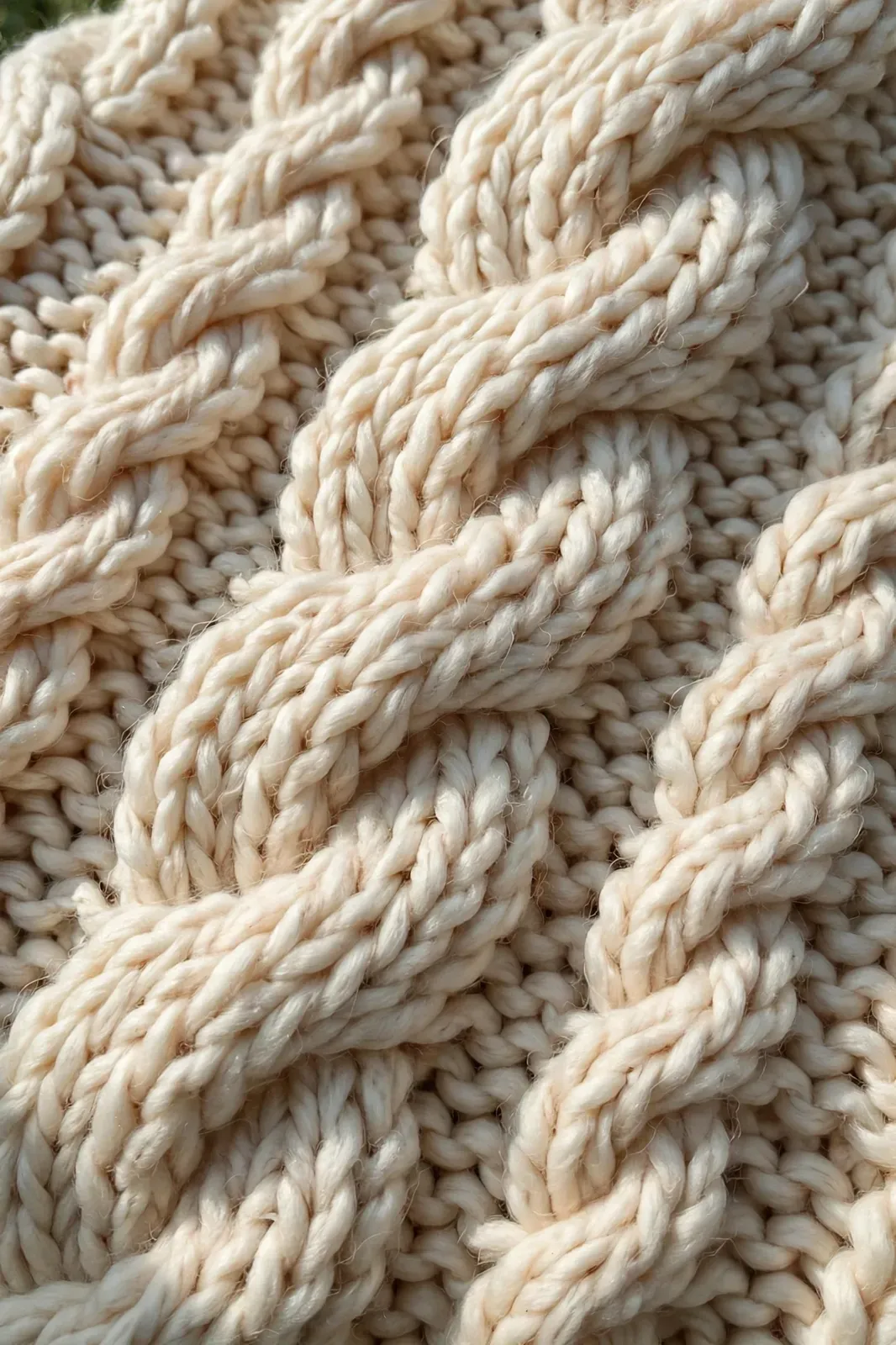
Three small habits help every wrap: find the midpoint before you start so the ends stay even, choose either an upturned collar or the parsnip ivory cable scarf rather than both, and do the final adjustment at chin height, where the cold actually gets in. A length of about 180 to 200 centimetres suits most of the wraps below. If you want more ideas, try our guide to wool scarf tying for chunky scarves.
9 Ways to Wrap Your Parsnip Ivory Cable Scarf, Step by Step
1. The classic single loop
Step 1: drape the parsnip ivory cable scarf around your neck with one end longer than the other. Step 2: wrap the long end once around your neck. Step 3: let both ends hang at the front and even them up. This is the everyday wrap for milder cold days, and it shows off the cable pattern beautifully down your front.
2. The snug double loop
Step 1: start with the midpoint at the front of your throat. Step 2: take both ends round the back, cross them, and bring them to the front. Step 3: wrap once more if the length allows, then tuck the ends into the loop. This is my choice for frosty mornings because there is no gap at the back of the neck, where scarves usually slip.
3. The Parisian pull-through
Step 1: fold the scarf in half lengthways. Step 2: drape the fold around your neck so the loop sits on one shoulder. Step 3: pull both loose ends through the loop and gently tighten. It looks neat over a smart coat and stays put on a windy platform, which is why it suits commuting so well.
4. The cosy muffler wrap
Step 1: wrap the scarf twice around your neck, keeping the loops wide. Step 2: pull the top loop up so it covers your chin and the bottom of your ears. Step 3: tuck any loose end underneath. On the coldest days this works almost like a snood, and the chunky cable knit holds its shape instead of sagging.
5. The long drape
Step 1: place the midpoint at the back of your neck. Step 2: let both ends fall straight down your front, inside an open coat. Step 3: add a belt over the coat if you want the ends held flat. This one is less about warmth and more about line: it draws the eye down and makes a simple outfit look deliberate.
6. The shoulder throw
Step 1: drape the scarf around your neck with even ends. Step 2: take one end and throw it over the opposite shoulder. Step 3: leave the other end hanging at the front. It is relaxed, a little dramatic, and perfect over a jumper when you are indoors but the room is chilly.
7. The tucked chest warmer
Step 1: wrap the scarf once around your neck. Step 2: cross the ends over your chest in an X. Step 3: tuck the ends into your coat and button the coat over them. No dangling ends, no catching on anything, and your whole chest stays warm. I use this one for cycling and for market days when I need my hands free.
8. The loose knot
Step 1: drape the scarf with one end much longer. Step 2: tie a single loose knot in the long end, about chest height. Step 3: thread the short end through the knot and slide it up to a height you like. It gives the chunky knit a focal point and works nicely over a plain crew-neck jumper.
9. The shawl wrap for evenings
Step 1: open the scarf out to its full width. Step 2: drape it over both shoulders like a shawl, with the ends at the front. Step 3: cross the ends loosely and hold them with a brooch, or let them hang. Over a dress or a fine-knit top, the cable texture does the job of a jacket on a cold evening indoors.
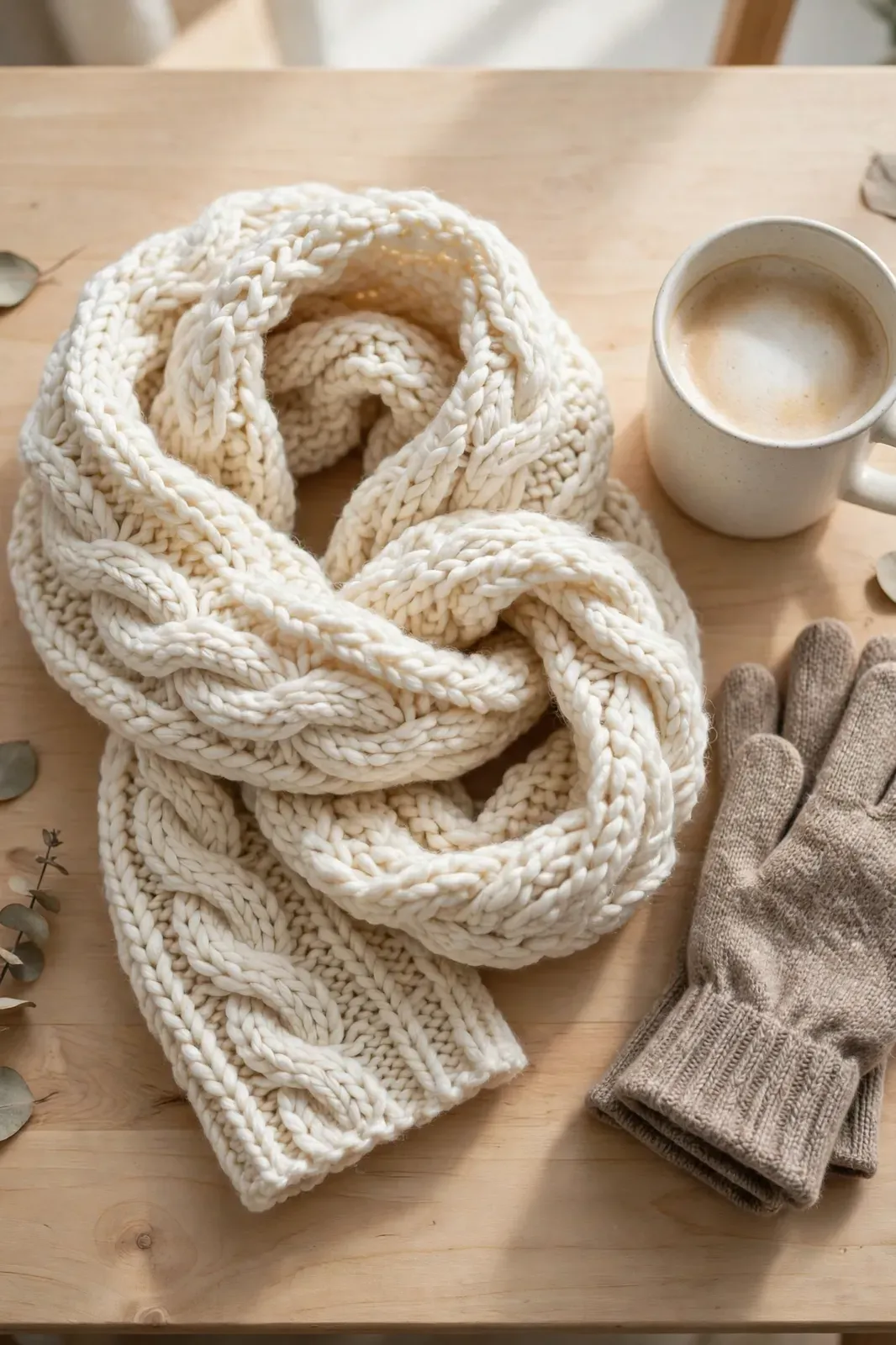
What to Wear With a Parsnip Ivory Cable Scarf
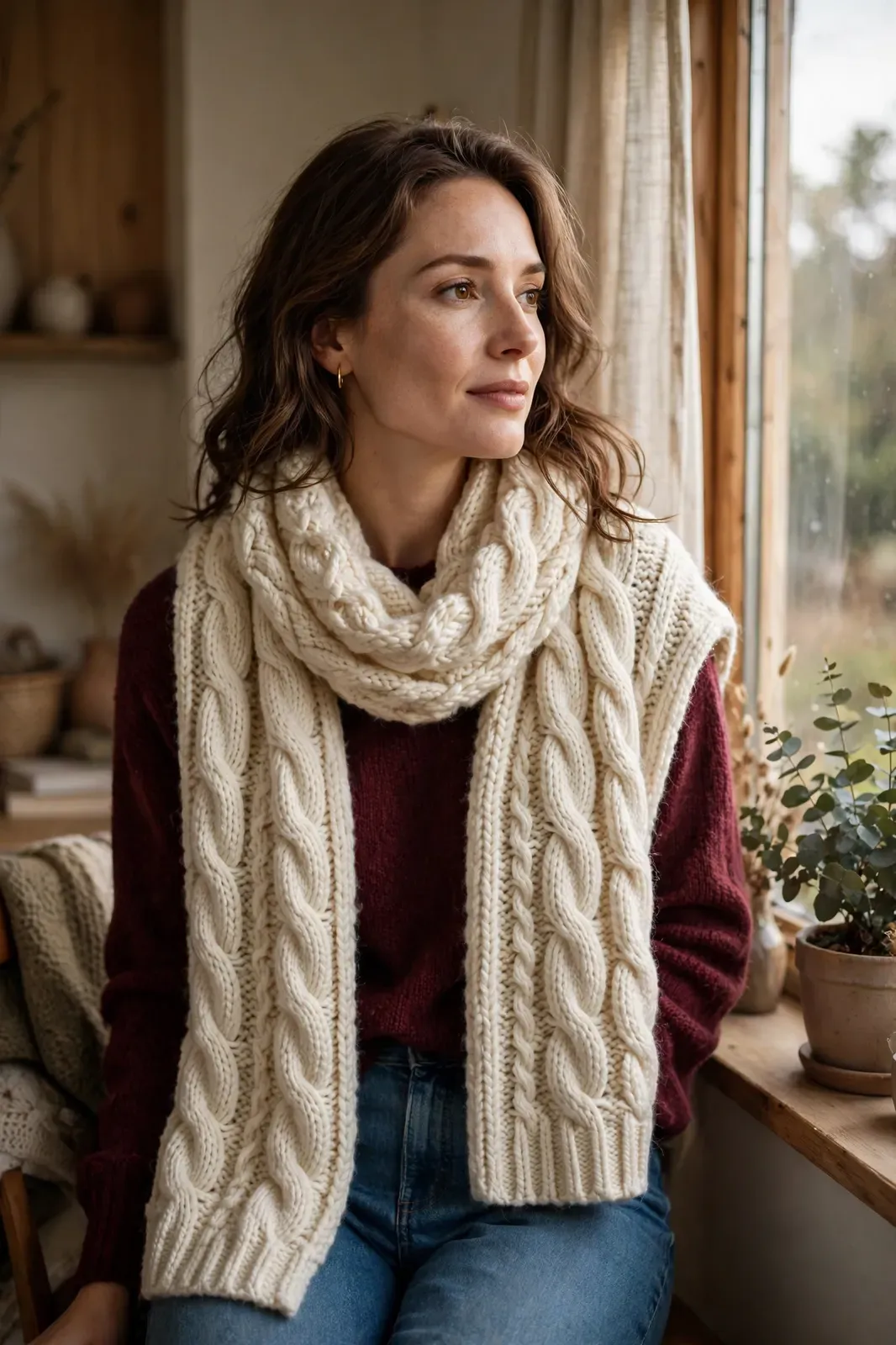
The prettiest pairing is a camel coat, dark jeans and tan boots, with the scarf as the pale layer in the middle. With navy the contrast is sharper and fresher. Burgundy and deep green are favourites too: the ivory lifts both and stops them looking heavy, as the styling shot below shows. Keep other textures simple, smooth coats, denim and leather, so the cable knit is the one textured piece near your face.
Buying One on a Budget: What Actually Matters
Fibre is the biggest price trap. Pure wool is warmest and lasts for years, but costs more and needs gentle washing. Acrylic is cheaper, lighter, and easy to wash, but it can pill and feel less warm in real wind. A wool and acrylic blend, roughly half and half, is the budget sweet spot for most people: warm enough for a cold commute, sturdy in the wash, and usually half the price of pure wool.
Whatever you choose, compare cost per winter, not cost per scarf. For background, the method behind cable knitting techniques and patterns explains why denser cables hold warmth, and the history of the scarf as warmth, fashion and uniform is a surprisingly good read. Buy in the late-January sales if you can; that is the honest way to get a better fibre for a budget price.
Looking After Wool and Acrylic: Simple Care That Works
Drying matters as much as washing. Lay the scarf flat on a towel, roll it up to press out water, then reshape it flat and dry it away from radiators. Never hang a wet chunky knit; it stretches longer and thinner. Acrylic is tougher and usually machine-washes on a gentle cool cycle in a wash bag, but keep it away from high heat, which makes it stiff. Store folded, never damp.
Most scarves are ruined in the wash, not in wear. For wool and wool blends, wash rarely; a scarf does not touch skin the way a jumper does, and fresh air on a line for an hour does more good than constant washing.
Common Mistakes That Make a Chunky Scarf Look Wrong
The first mistake is wrapping too tightly on the first loop and then having no length left, so the ends stick out at odd angles. Start looser than you think; you can always snug the final loop.
Also watch proportion: a very chunky scarf can swamp a fine, short jacket, so balance it with boots or a bag with some weight. And never leave the scarf in a damp heap by the door; chunky knits hold moisture and turn musty within days.
Frequently Asked Questions
Is a parsnip ivory cable scarf warm enough for very cold days?
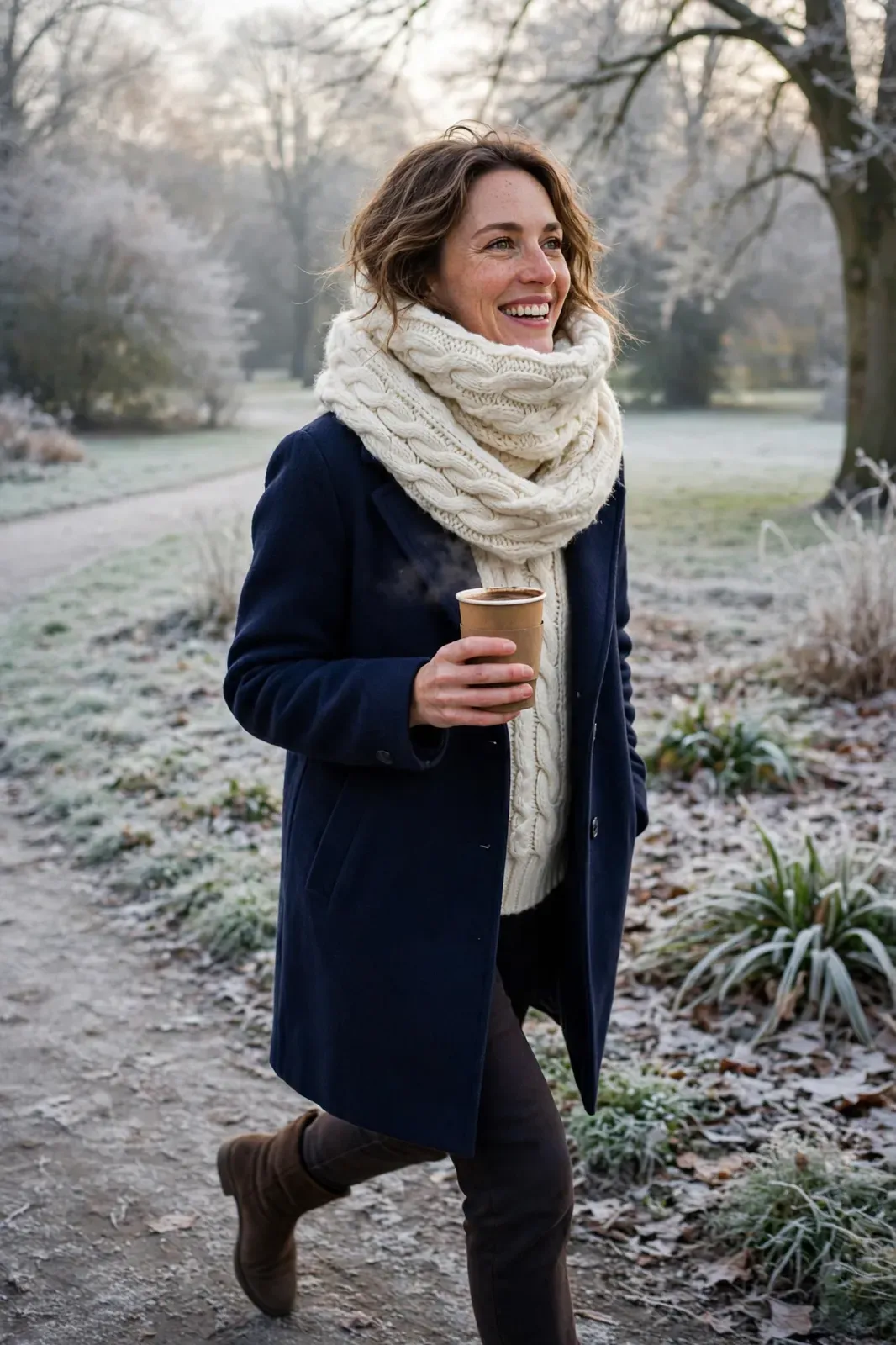
Yes, if the knit is dense and you choose the right wrap. The double loop or the muffler wrap seals the neck and chin, which is where most cold gets in. On bitter days, pair it with a hat, because a scarf alone cannot do the whole job.
Does ivory get dirty quickly?
Less quickly than you would expect, and the cable pattern hides small marks well. Most marks sit on the surface and brush off once dry. Wash only when it truly needs it, spot-clean small spots, and keep it away from makeup at the chin line by folding that edge under.
Can I wear a chunky cable scarf with a smart coat?
Absolutely; it is one of the best pairings. Use the Parisian pull-through or the tucked chest warmer so the ends stay neat, and let the texture contrast with the smooth coat. It reads as intentional styling rather than just weather protection.
How long should a scarf be for these wraps?
Around 180 to 200 centimetres suits most adults for the double loop and pull-through styles. Shorter scarves still work for the single loop and shoulder throw. If you are tall or like a dramatic drape, go longer, but expect the ends to need tucking in on busy days.
Wool or acrylic: which should I choose?
Choose wool or a wool-rich blend if warmth and long life matter most and you are happy to wash gently. Choose acrylic if you need easy machine washing and a lower price. A half-and-half blend gives most people the best balance of warmth, price and simple care.
A Warm Finish
A parsnip ivory cable scarf is not a flashy purchase, and that is exactly its strength. It goes with every coat you already own, it can be wrapped nine different ways so it never feels like the same accessory twice, and with basic care it will come out of the drawer looking good for many winters.