On the coldest mornings, my chunky wool scarf is the last thing I reach for and the first thing I am grateful for once I step outside. For years I treated it as an afterthought, looping it any old way over my coat while I rushed for the door. Then one winter I watched a friend tie hers in a neat, snug loop that stayed put all day, looked tidy in photos, and actually kept the wind off her neck. That small difference changed how I wear mine.
If you own one good chunky scarf, you already own nine different looks. It can sit soft over a jumper for a coffee run, tuck neatly inside a tailored coat for work, or wrap around your shoulders on a bitter evening. Here are nine cosy ways to tie it, with clear steps, advice on length and width, coat pairings, and simple care.
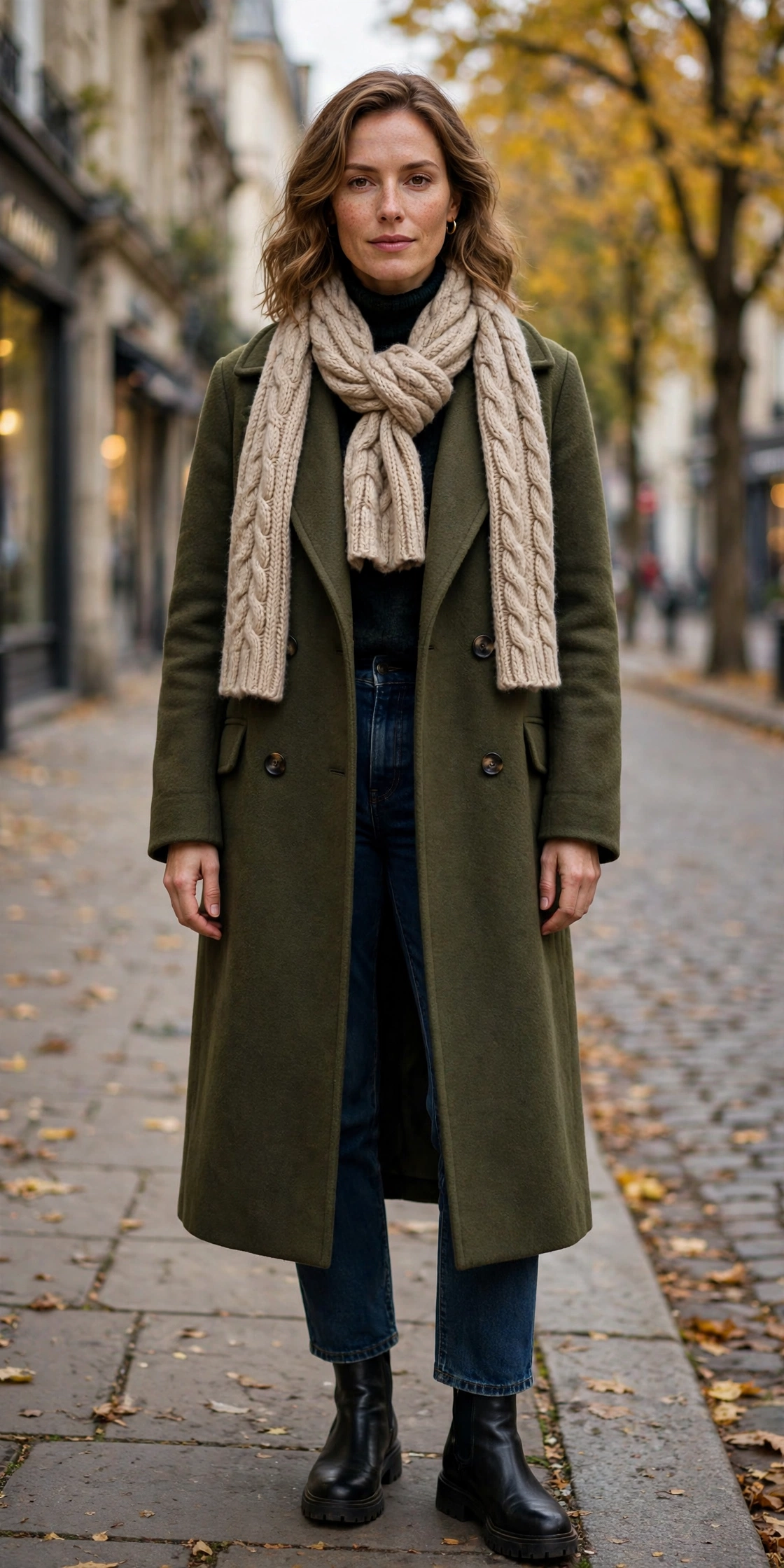
Choosing the Right Length, Width and Wool
A chunky scarf that is too short will not loop twice without pulling, and one that is too wide can bunch under your chin and make every style feel bulky. For most styles, look for a scarf around 180 to 200 centimetres long and 25 to 35 centimetres wide. That gives you enough fabric to loop, knot, or drape, while still covering your neck and chest properly. When looped once, the ends should fall between your chest and your waist.
If you are petite, a narrower scarf, around 20 to 25 centimetres wide, is easier to manage. Pure wool is warmest and holds a knot well; a wool blend is often softer and easier to wash. Run the scarf along the inside of your wrist in the shop — if it itches there, it will itch around your neck by lunchtime. Choose a colour that works with at least two coats you own; cream, camel, grey, and burgundy earn their keep.
9 Cosy Ways to Tie a Chunky Wool Scarf
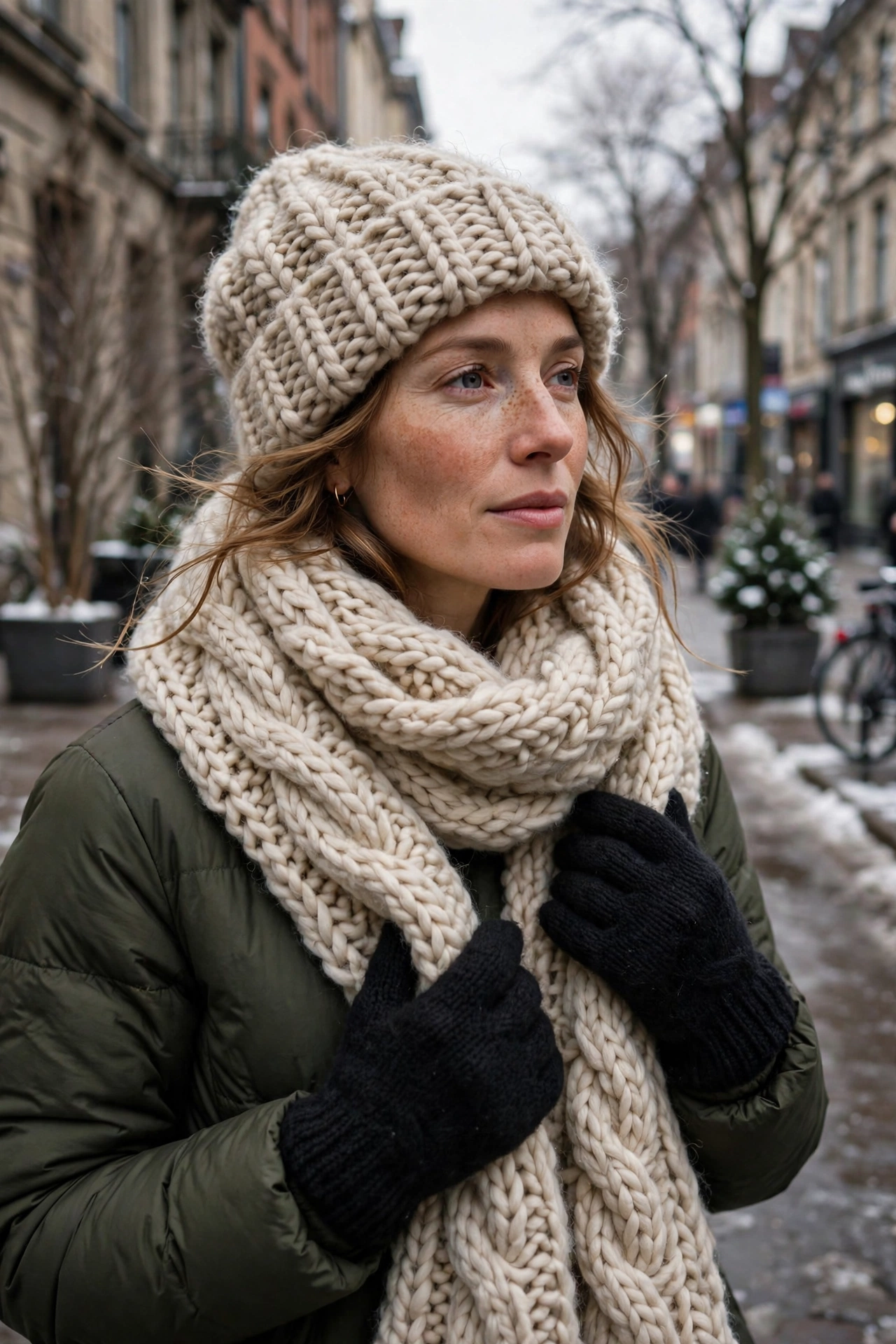
1. The classic loop. Fold the scarf in half lengthways so you have a loop at one end and two loose ends at the other. Place the fold behind your neck, pull both ends through the loop, and slide it up until it sits snugly, but not tightly, at your neck. Leave the ends over your coat for a softer look, or tuck them inside a buttoned coat on very cold days.
2. The double wrap. Drape the scarf around your neck with both ends in front, cross them over, take them behind your neck, and bring them back to the front. Loop them once more and let them rest on top. This makes a thick cushion of wool that fills the gap between coat collar and chin on the coldest days.
3. The simple drape. Sometimes the kindest thing for a lovely outfit is not to tie the scarf at all. Hang it around the back of your neck with both ends falling straight down your front, over an open coat or chunky cardigan. It shows off the knit and fringe and suits milder days and short walks.
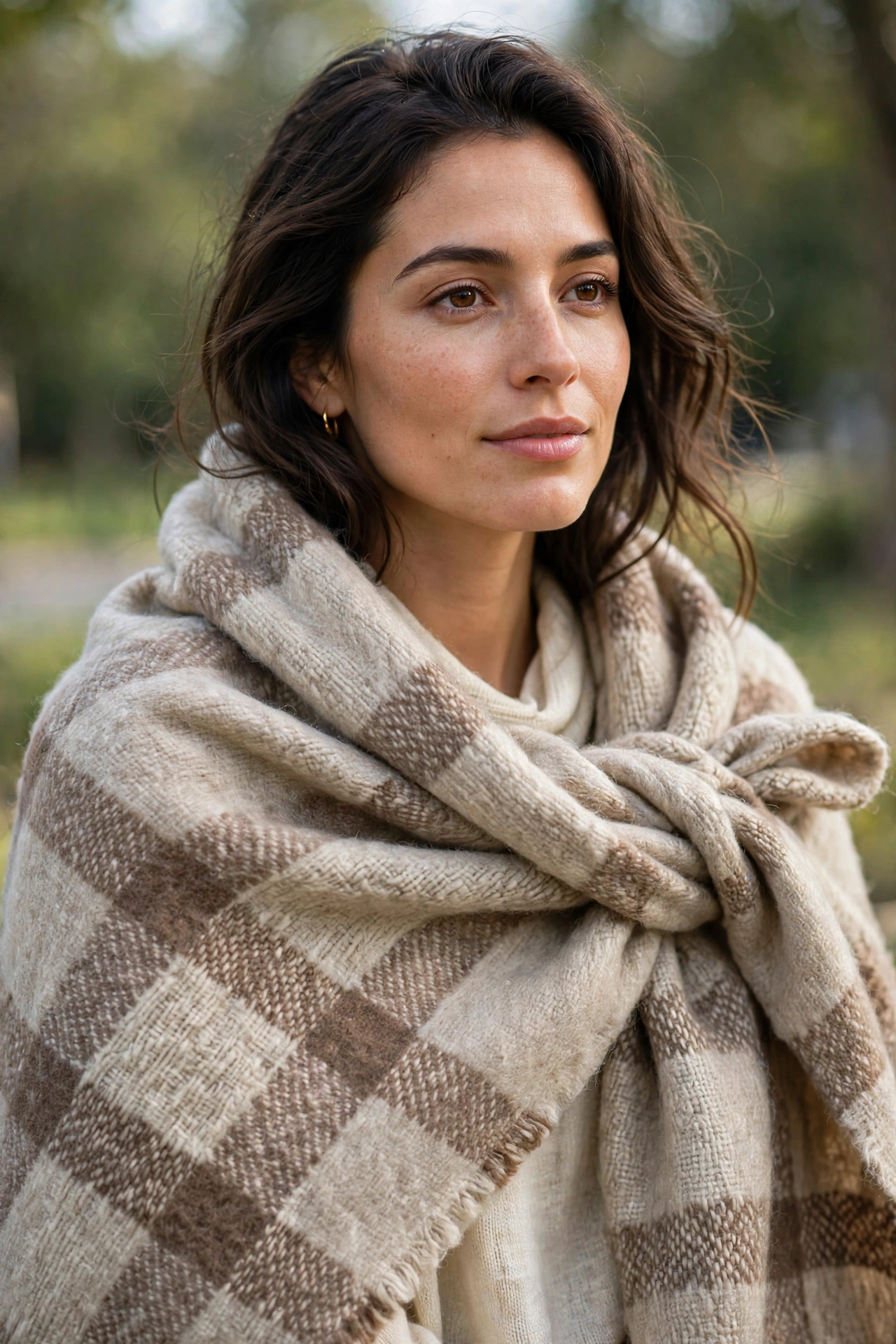
4. The blanket wrap. Open the scarf to its full width and lay it across your shoulders like a small blanket, with more fabric on one side. Take the longer corner across your body and toss it over the opposite shoulder. It is wonderful over a plain dress or fine knit when the evening turns cold.
5. The front knot. Loop the scarf once around your neck with the ends level in front, then tie one loose knot at chest height. Fluff the knot gently so it looks soft rather than pulled tight. This keeps the ends secure on a windy walk and stops them dipping into your coffee or bag.
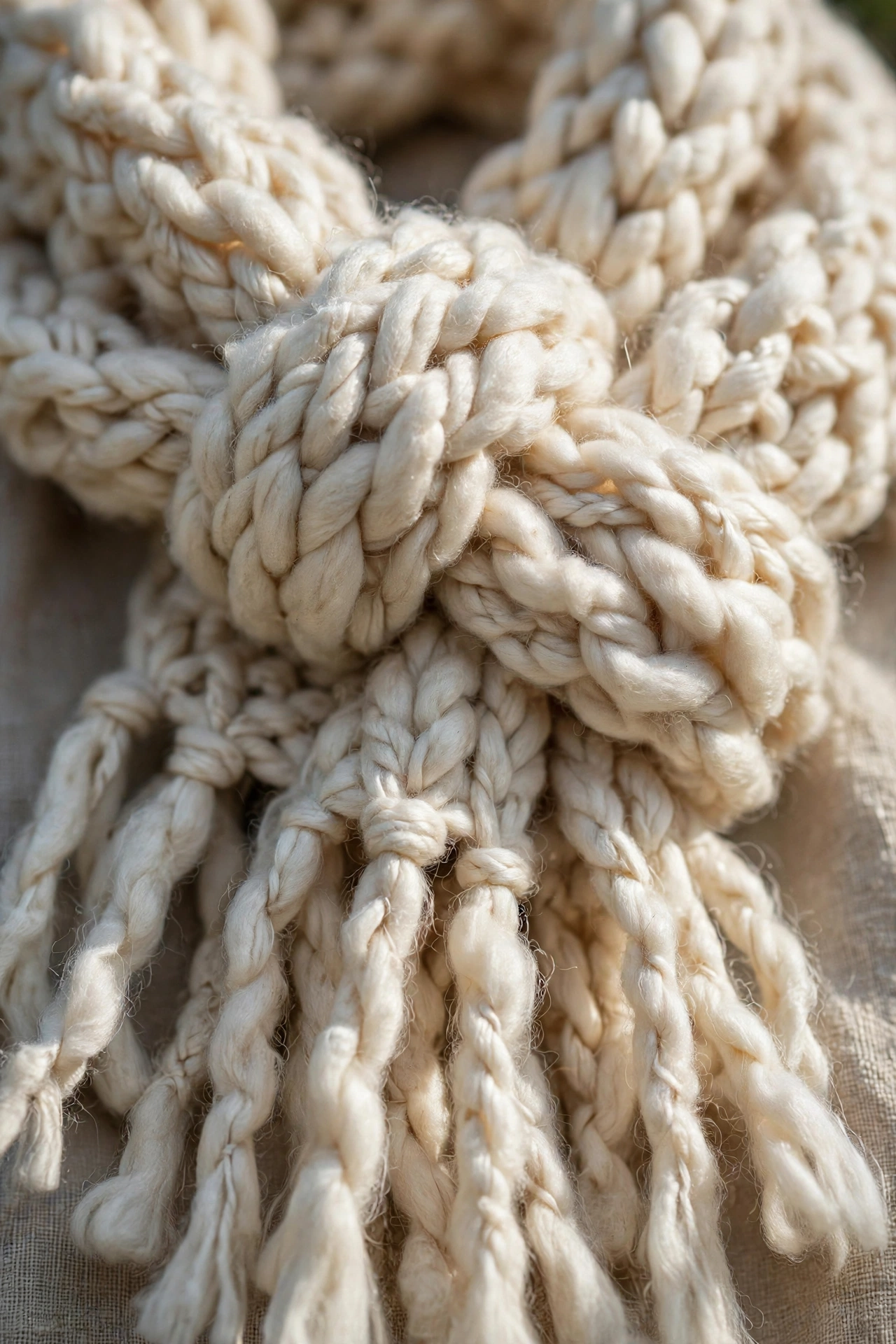
6. The tucked-in wrap. Wrap the scarf twice around your neck, then tuck both short ends down into the front of the wrap so nothing hangs loose. Spread the wool a little so the ends are hidden. The result looks neat, a bit like a snood, and is best for cycling, shopping, or a coat with a high collar.
7. The shoulder toss. Drape the scarf around your neck with one end much longer than the other, then toss the long end over the opposite shoulder so it falls down your back. It looks relaxed and elegant with a long wool coat, but it loosens as you move, so save it for meals, photos, and gentle walks.
8. The belted drape. Hang the scarf around your neck with both ends long down the front of an open coat or long cardigan, then belt the coat or cardigan over the ends at the waist. The scarf stays flat, adds a panel of colour, and cannot blow away.
9. The loose side loop. Loop the scarf once loosely, pull one end through a little further than the other, and let it sit slightly off-centre. This is the five-second fix I use most often. It keeps the warmth of a loop, feels casual, and lets a pretty fringe show on one side.
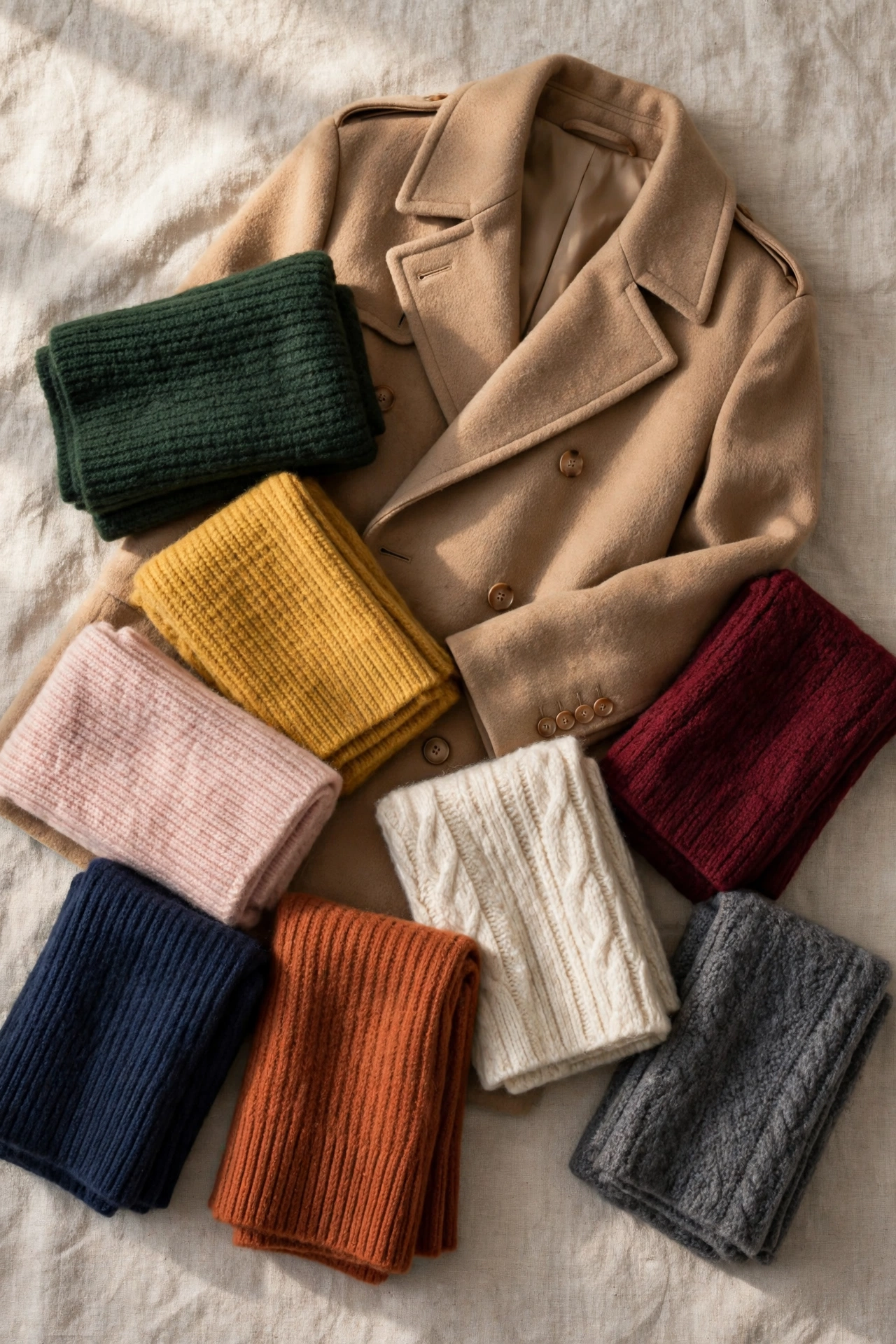
Pairing Your Scarf With Coats and Everyday Outfits
A tailored wool coat looks best with the neater styles: the classic loop, the front knot, or the tucked-in wrap. These keep the front clean and let the buttons and lapels show. A puffer coat is the opposite case, because it already has volume. Avoid the double wrap, which can make your neck disappear, and choose the simple drape or a single loose loop worn on top of the zipped coat.
With a hooded coat, wear the scarf inside the hood line, looped once and tucked, so the hood can still go up. With a leather jacket on a milder day, the blanket wrap adds the softness the jacket lacks. For colour, a cream scarf over a dark coat is a clear, cosy contrast, while camel over tan looks quiet and put together. If your coat is checked, pick a plain scarf in one of its quieter colours.
A Quick Morning Routine That Takes One Minute
Decide the knot before the outfit. Ask one question: how cold is the walk, really? If it is bitter, choose the double wrap or the tucked-in wrap and a coat you can button to the top. If it is a short hop from car to door, the simple drape or loose side loop is enough.
Then follow the same order each day. Coat on first, because a scarf tied over a jumper will shift once the coat goes over it. Scarf second, tied in front of a mirror until your hands know it by feel. Last, check that the back sits flat, both sides sit as you like, and nothing is trapped under a bag strap.
Common Mistakes to Avoid
The most common mistake is tying a chunky scarf too tightly. Wool traps warm air in its fibres, so a gentle loop is warmer than a tight one that flattens the knit. If you cannot slip two fingers between scarf and neck, loosen it. The second mistake is ends that hang unevenly by a long way when you meant them to match. A small difference looks relaxed; a hand’s length or more looks unchecked.
Do not stuff a thick scarf inside a slim coat and force it closed; you will strain the buttons and crush the wool. Wear it outside, or use the tucked-in wrap with a roomier coat. Avoid the same knot daily, too, because wool can take a set if always folded in the same place. Finally, never dry a wet scarf over a radiator — heat can make wool harsh and shrink it unevenly.
How to Care for a Wool Scarf
Wool does not need washing after every wear. A good shake outside and a few hours airing on a chair will usually freshen it, because wool resists odours naturally. Wash it only when it is visibly dirty or after many wears. Use cool water and a little gentle wool wash, press the water through without wringing, and roll the scarf in a clean towel to remove moisture.
Dry it flat on a dry towel, easing it back into shape, away from direct heat and sun. Store it folded loosely in a drawer rather than hanging, since a chunky knit can stretch under its own weight. Pick off small bobbles gently, or use a fabric comb on a flat surface.
Frequently Asked Questions
How long should a chunky wool scarf be for looping?
About 180 to 200 centimetres suits most adults for the classic loop and the double wrap. Shorter scarves can still be draped or worn with a front knot, but they will not wrap twice comfortably. If you are petite, the lower end of that range usually feels neater.
How do I stop a wool scarf feeling itchy?
Wear a thin cotton or silk layer, such as a fine polo neck, between the scarf and your skin, and choose looser styles like the simple drape. Itch often eases after the first few wears as the fibres soften. If it still bothers you, choose a wool blend next time.
Can I wear a chunky scarf with a small bag?
Yes, just keep the ends in front of the strap or tuck them in, so the strap does not drag the knot to one side. The tucked-in wrap and front knot are the most secure choices with a cross-body bag. Check once in a mirror after putting the bag on.
Should the scarf match my hat and gloves?
They do not need to match exactly. A matching set is tidy, but mixing neutrals, such as a cream scarf with grey gloves, looks natural. Keep the textures friendly, because chunky knits sit well together while a very fine glove can look lost beside a thick scarf.
How many wool scarves do I actually need?
For most wardrobes, two is plenty: one light neutral for dark coats, and one deeper colour for pale coats and plain outfits. Rotate them and vary the tying style, and two scarves can give you a different look almost every day. A third, in a colour you love, is a pleasure rather than a need.
Wrap Up Warm, Your Way
A chunky wool scarf asks for very little: the right length, a gentle hand when you wash it, and a minute of thought in the morning. In return it gives you warmth and a finished look. Start with the classic loop until your hands know it, then try the blanket wrap on a slow evening and the tucked-in wrap on your busiest day. Soon you will not be thinking about the steps at all. You will just be warm, comfortable, and glad you learned more than one way to tie it.