My grandmother kept a brass locket in the top drawer of her dresser, wrapped in a handkerchief that smelled faintly of lavender. It was not shiny or perfect. The brass had softened to a warm, honeyed brown, the edges were smooth from years of thumbs running over them, and inside were two tiny photographs, faded to sepia ghosts. When I finally bought an antique brass locket necklace of my own at a flea market years later, I did not buy it to save for special occasions. I bought it because that soft, lived-in glow seemed to belong with ordinary Tuesdays just as much as with weddings.
That is the real charm of an antique brass locket necklace. It carries a little story on the outside and a private one on the inside, yet it is sturdy enough for school runs, office days and grocery trips. Brass does not shout the way polished gold can. It sits quietly against a knit or a cotton shirt and makes a plain outfit look considered rather than thrown together. If yours is sitting in a jewellery box because you think it is too old-fashioned for daily wear, this guide is for you: nine everyday ways to layer it, the chain lengths that make layering work, what to put inside, and how to care for the brass.
Why an Antique Brass Locket Belongs in Your Everyday Rotation
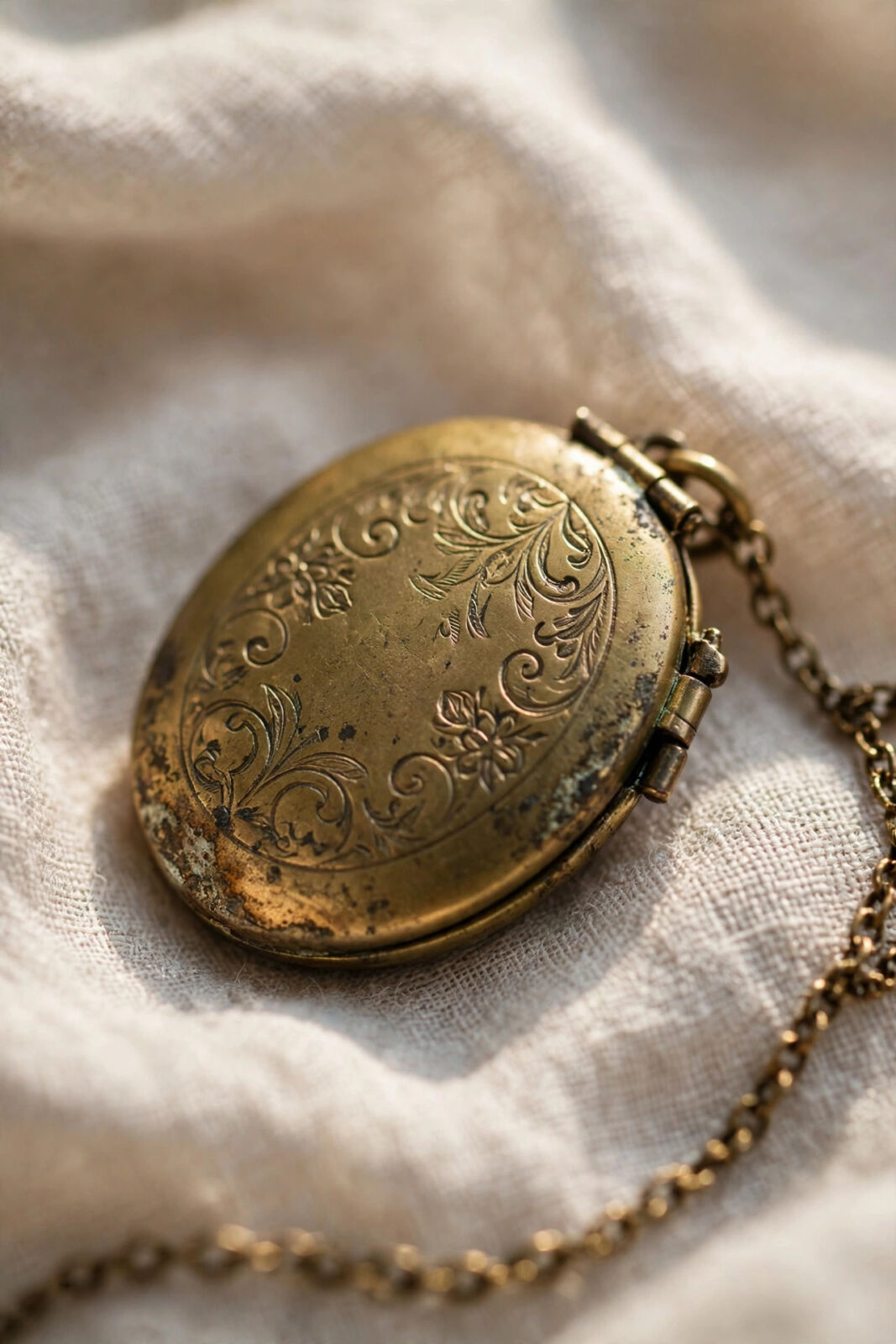
Brass is an alloy of copper and zinc, and antique brass pieces have usually been oxidised or worn long enough to lose their raw yellow shine. What remains is a deep, mellow tone that flatters almost every skin tone and sits happily beside cream, rust, olive, denim blue and black. It does not look brand new, and that is precisely why it mixes so well with the much-loved clothes most of us actually live in.
A locket also does something a plain pendant cannot: it gives a layered stack a focal point with weight and meaning. Thin chains on their own can look lost, especially over a jumper. Add one oval locket at the longest length and the whole arrangement suddenly has a centre. That small hinge holds a photograph, a pressed petal or a folded note, and wearing it daily turns a decoration into a companion.
Start With the Right Chain Lengths
Layering looks effortless only when the lengths are planned. If all your chains land at the same spot, they tangle and fight each other within the hour. A reliable stack uses three lengths spaced about two inches apart: a short chain at 16 inches at the collarbone, a middle chain at 18 to 20 inches, and your locket — the heaviest, most important piece — on the longest chain, 22 to 24 inches, so it rests at the centre of the chest.
If you only want two layers, keep it simple: a fine 16-inch chain with a tiny charm, and the locket at 22 inches. The gap between them is what makes the look read as layering rather than clutter. Many antique lockets come on chains that are too short, so do not be afraid to move yours onto a longer brass chain of your own. Matching the metal tone matters more than the exact chain style.
9 Everyday Ways to Layer Your Locket
1. Over a chunky knit
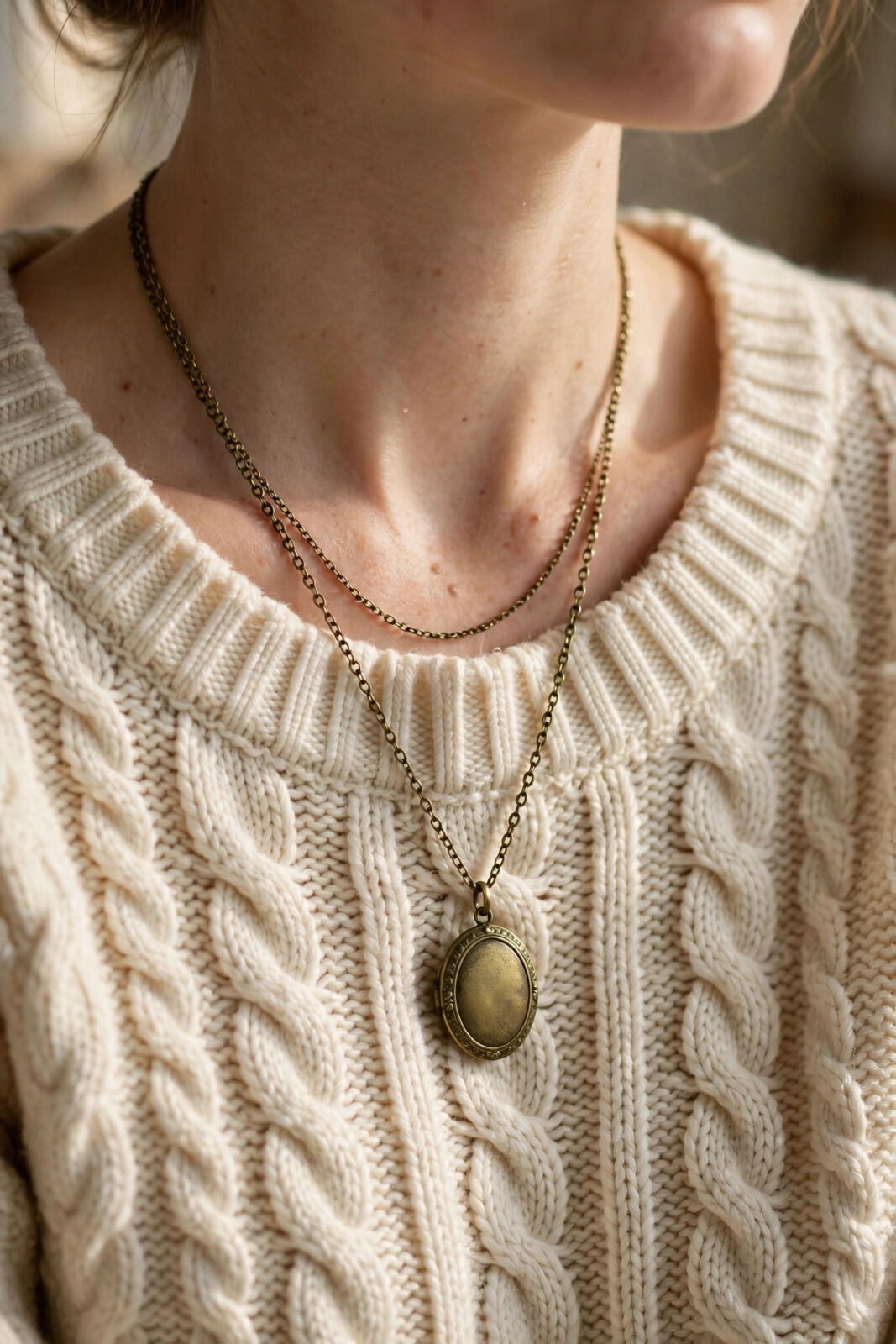
A long locket chain over a cream, oatmeal or rust cable-knit jumper, with one shorter chain visible at the neck, looks warm and intentional. Let the locket rest on the knit itself; the contrast of hard metal against soft wool is the whole point.
2. With a plain white tee and jeans
A white T-shirt is a blank page. Add the locket at 22 inches, a mid-length chain with a small coin, and a collarbone chain, and the plainest outfit in your wardrobe gains texture and a focal point.
3. Under an open shirt
Wear a checked or chambray shirt open over a vest top, and let the layers sit in the V the shirt creates. The locket peeks out as you move, which feels relaxed rather than styled within an inch of its life.
4. Over a floral midi dress
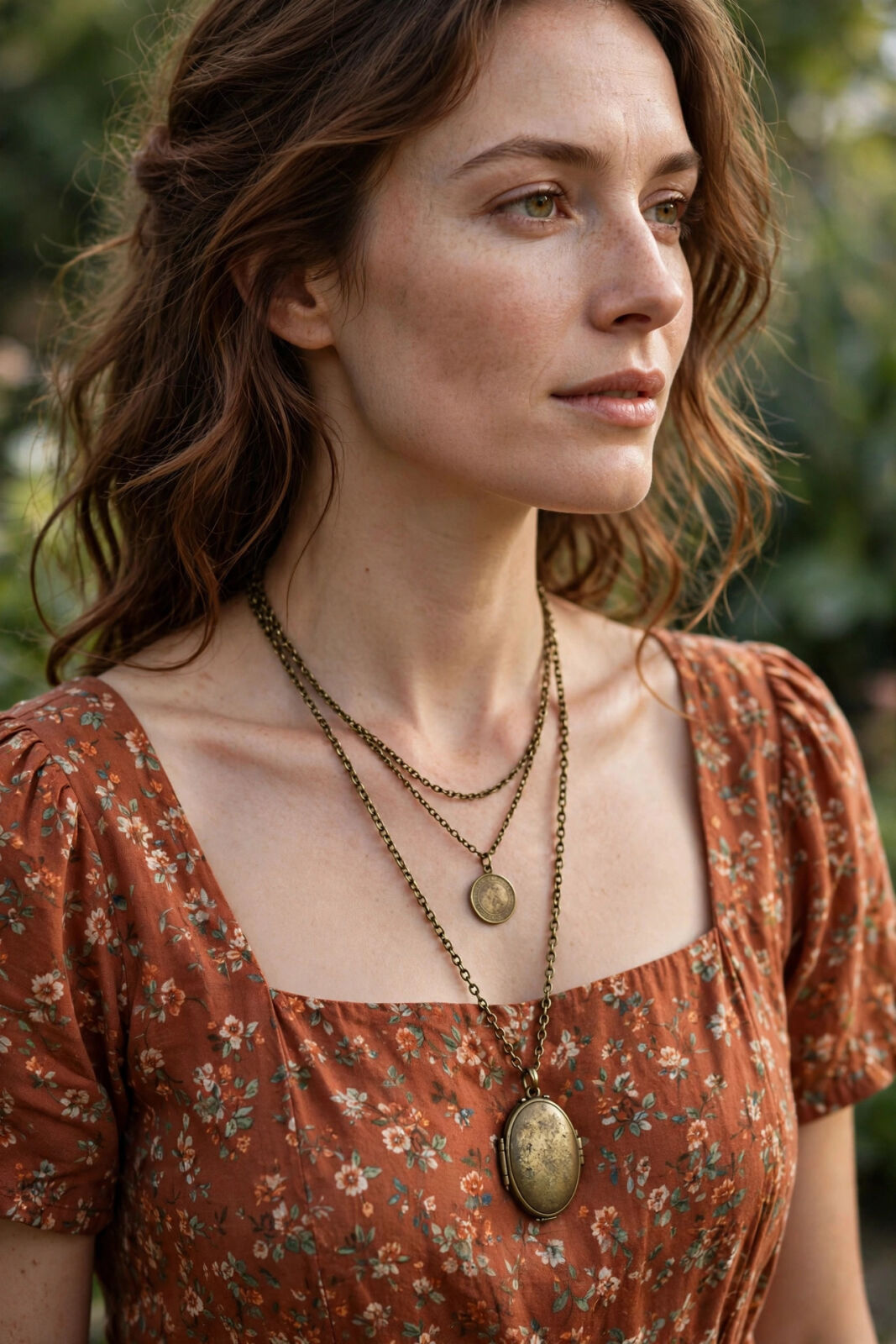
Brass loves the faded florals of a vintage-style dress. Keep the other layers delicate so the print does not compete, and let the locket hang at the longest length.
5. With a turtleneck
A black or deep green turtleneck turns a long locket chain into a clean vertical line. Skip the short chains here; they disappear against the high neck. One long locket, worn solo, is elegant and unfussy.
6. Layered with pearls
A short strand of small freshwater pearls above a brass locket sounds unlikely, but creamy pearls pick up the warm tones in aged brass beautifully. Try it with a plain blouse for family lunches.
7. With a denim jacket
Denim and brass were made for each other. Wear your stack over a simple top, throw the jacket on, and let the locket sit just above the jacket’s top button.
8. Doubled with a second locket
If you own two lockets of different sizes, wear the smaller one higher and the larger one lower. It is a lovely way to keep two generations of photographs close at once.
9. Solo, on purpose
Layering does not have to mean more. On busy-outfit days, one locket on a long chain, worn alone, reads as calm and confident.
How to Layer, Step by Step
First, put on your outfit before your jewellery, and check the neckline in a mirror. Scoop and V necks take three layers easily; crew necks and knits usually look best with layers worn over the fabric. Second, clasp the shortest chain first and settle it at your collarbone. Third, add the middle chain and check there is a clear gap between the two lines. Fourth, add the locket last, on the longest chain, and centre it. Fifth, do the movement test: bend, reach and turn your head. If chains tangle, add a two-inch extender to the locket chain, because a small length change usually fixes it. Finally, take one thing off if the stack looks crowded in the mirror.
What to Put Inside Your Locket
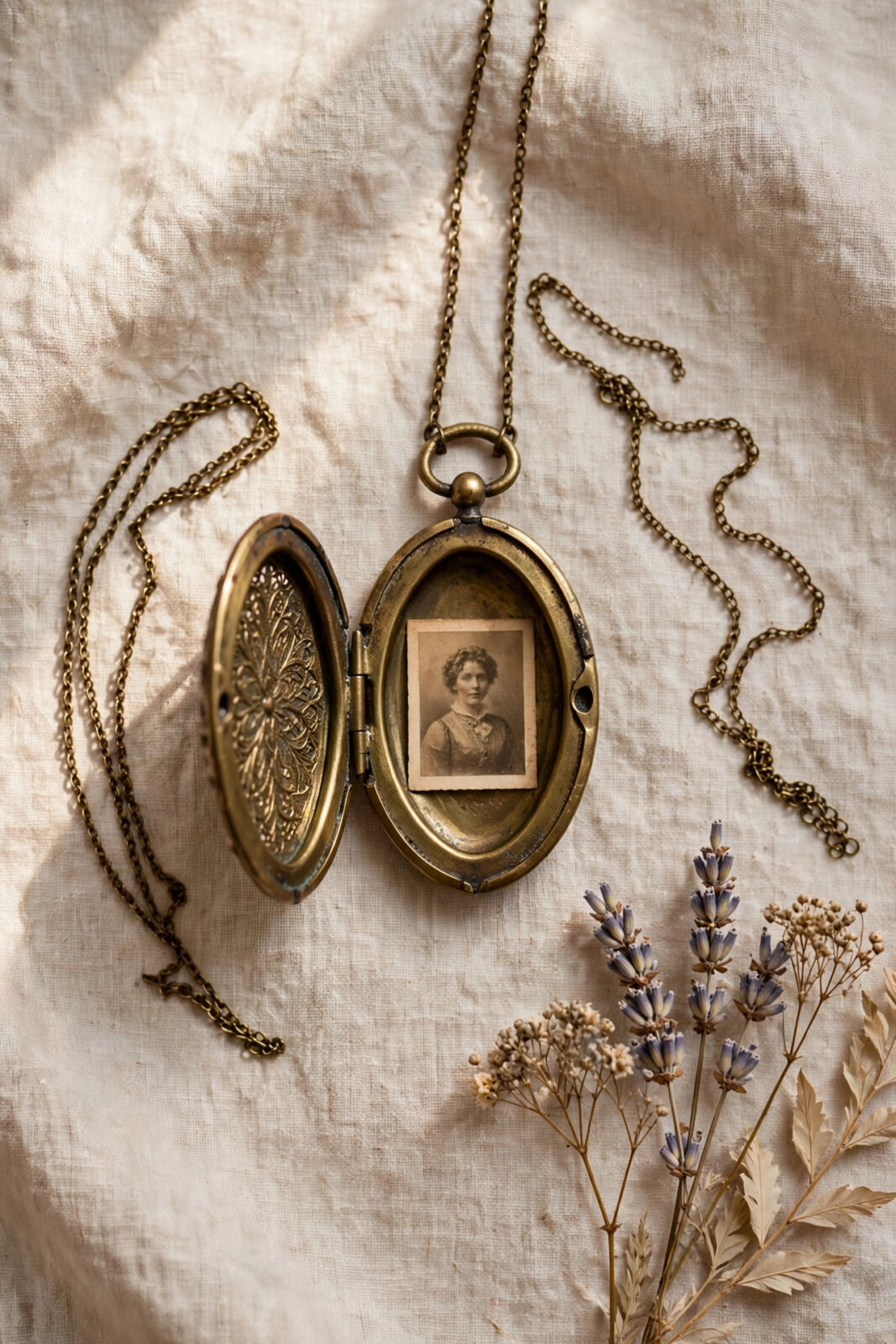
The inside is yours alone, and it does not have to hold a photograph. Classic choices are small printed portraits of children, partners or grandparents, trimmed to the oval template most lockets include. Other options: a tiny print of a pet, a miniature map of a meaningful place, a few words in small type, or a pressed flower from a garden you love. Whatever you choose, print photographs on ordinary matte paper rather than glossy, because it is thinner and lets the locket close flat, and use the clear insert if your locket has one, to protect the image from moisture.
Buying, Budget and Caring for Antique Brass
Genuine vintage lockets turn up at flea markets, estate sales, charity shops and online vintage marketplaces, often for the price of a modest lunch, because brass was never a precious metal. When buying, check the hinge closes with a gentle click, look for cracks around the bail where the chain passes through, and confirm the inner frames are present if you plan to hold photographs. Modern antique-style lockets are a sensible first piece too; look for solid brass rather than thin plated alloy if you want the colour to last.
Care is simple. Brass darkens with air and skin oils, and most wearers love that deepening patina, so do not polish it back to bright yellow every week. Wipe it with a soft dry cloth after wearing, store it in a fabric pouch away from bathroom steam, and keep it dry if it holds paper photographs. For dull patches, a paste of lemon juice and baking soda, applied gently, rinsed and dried thoroughly, will lift them. Avoid harsh chemical dips on engraved pieces, because they strip the darkening that gives the design its depth. Take the locket off before swimming, showering and spraying perfume on your neck.
Common Layering Mistakes to Avoid
The most common mistake is wearing every chain at nearly the same length, which guarantees tangles and hides the locket. The second is mixing clashing bright metals; antique brass pairs well with copper, bronze and aged gold, but a mirror-bright silver chain in the same stack usually looks like an accident. Third, do not overload a small frame with heavy pendants, because the weight strains clasps. Fourth, match the stack to the neckline instead of forcing one combination onto every outfit. And do not leave a locket unworn because it feels too sentimental for daily life. Sentiment is exactly what it is for, and brass is tough enough to take it.

Frequently Asked Questions
Can I wear an antique brass locket every day?
Yes, brass is a hard-wearing alloy and lockets were made to be worn, not stored. Take it off for swimming, showering and workouts, wipe it dry at night, and it will handle daily life happily for years.
Will brass turn my skin green?
It can leave a faint green mark on some skin, because the copper in brass reacts with sweat and moisture. This is harmless and washes off. Keeping the locket dry, and painting the inside back with clear nail polish if it happens often, usually solves it.
What size photograph fits inside a locket?
Most oval lockets hold images around 20 to 30 millimetres tall. Use the paper template inside your locket, or trace the inner frame, then trim a matte print slightly smaller than the outline so the cover closes without forcing it.
How do I stop layered chains from tangling?
Space the lengths at least two inches apart, put the heaviest pendant on the longest chain, and consider a layering clasp that holds all the chains together at the back. Storing each necklace separately in its own pouch also prevents overnight tangles.
Is antique brass a good choice for sensitive skin?
Many people wear brass comfortably, but brass sometimes contains traces of nickel in the alloy, so if you have a known nickel allergy, test a modern solid-brass locket against your wrist first or choose one sold as nickel-free.
A Small Piece With a Long Story
An antique brass locket necklace asks very little of you. No special occasion, no matching set, no perfect outfit — just a chain of the right length, a place in a simple layered stack, and something small and meaningful tucked inside. Start with the knit or the white tee, follow the length rules, and let the patina deepen as the weeks pass. Jewellery that gathers memories while it gathers compliments is rare, and that is why this humble, honeyed little locket has outlasted every trend that tried to replace it.