Blue is the colour people reach for when a room needs to feel calmer, yet a single flat shade of it can leave a space feeling chilly and unfinished. The rooms that work are almost never one blue. They are blue room schemes built in layers — a deep navy anchor, a friendly mid blue in the middle, and a wash of sky or powder blue on top — so the eye travels from dark to light the way it does looking at the sea under a pale sky. That gradient is the whole secret, and it is easier to copy than it looks.
This guide walks through how the layering works, which shade belongs on which surface, a step-by-step way to build the scheme in a real room, where to spend and where to save, and the mistakes that make blue rooms feel cold instead of calm. The colour itself has a long history in homes and art — the history and shades of blue run from lapis lazuli to modern pigments — but you only need three or four of those shades, chosen in the right order.
Table of Contents
How Blue Room Schemes Work: Dark, Middle, Light
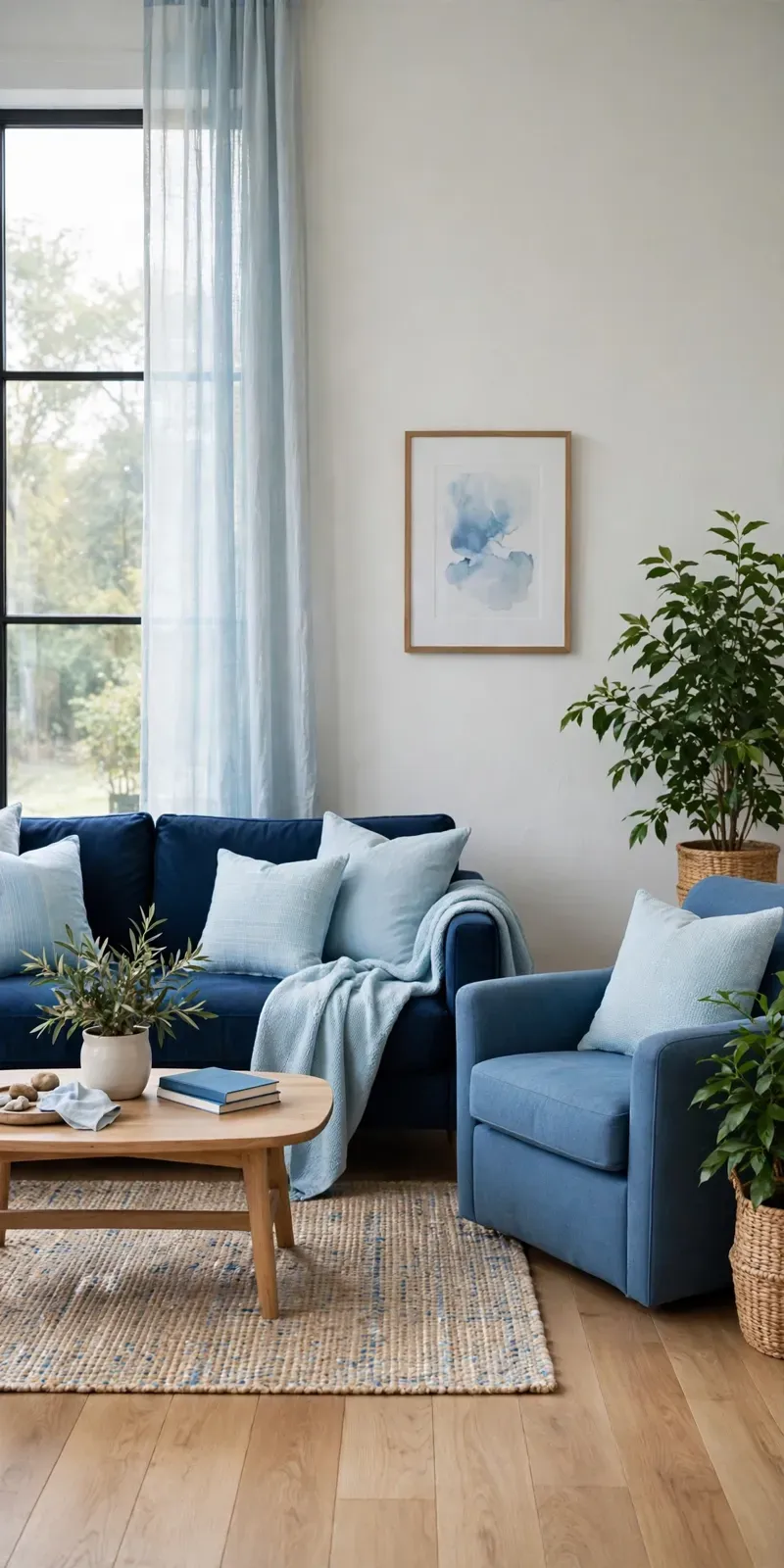
Decorators call this a monochromatic scheme: one hue, several depths. In colour scheme theory, monochromatic schemes are the most peaceful because there is no contrast of hue to argue with — everything is a tint, tone or shade of the same colour. For blue room schemes, think in three bands. The dark band (navy, ink, midnight) grounds the room and belongs on the biggest, lowest pieces: the sofa, a rug, the lower cabinets. The middle band (denim, dusty blue, cornflower) carries the middle height of the room — armchairs, curtains, bedding. The light band (sky, powder, pale aqua) goes high and light: cushions, throws, lampshades, the ceiling if you are brave.
A rough proportion keeps it balanced: about sixty per cent light and neutral, thirty per cent middle blue, ten per cent deep navy. Reverse it and the room turns into a cave; skip the navy and it floats away into pastel sweetness. The navy is doing quiet but essential work — it is the shadow in the picture, the thing that makes the pale shades look luminous instead of washed out.
Temperature matters as much as depth. Blues with a hint of green (teal-leaning) feel warmer and suit north-facing rooms poorly lit by cool daylight; violet-leaning blues feel cooler and fresher in sunny rooms. Hold paint cards against the window at midday and again under your evening lamps before committing — a navy that looks rich at noon can turn almost black under warm bulbs, which is fine, as long as you expected it. That is why blue room schemes feel layered rather than flat.
Blue Room Schemes Room by Room
In a living room, blue room schemes start with the largest piece you own. A navy or deep denim sofa is a gift: dress it with sky and cream cushions and it anchors every lighter shade around it. If your sofa is neutral, the navy can arrive as a rug, an ottoman or one painted bookcase. Keep walls pale — a very light blue-grey reads almost white in daylight but still belongs to the family, so nothing clashes.
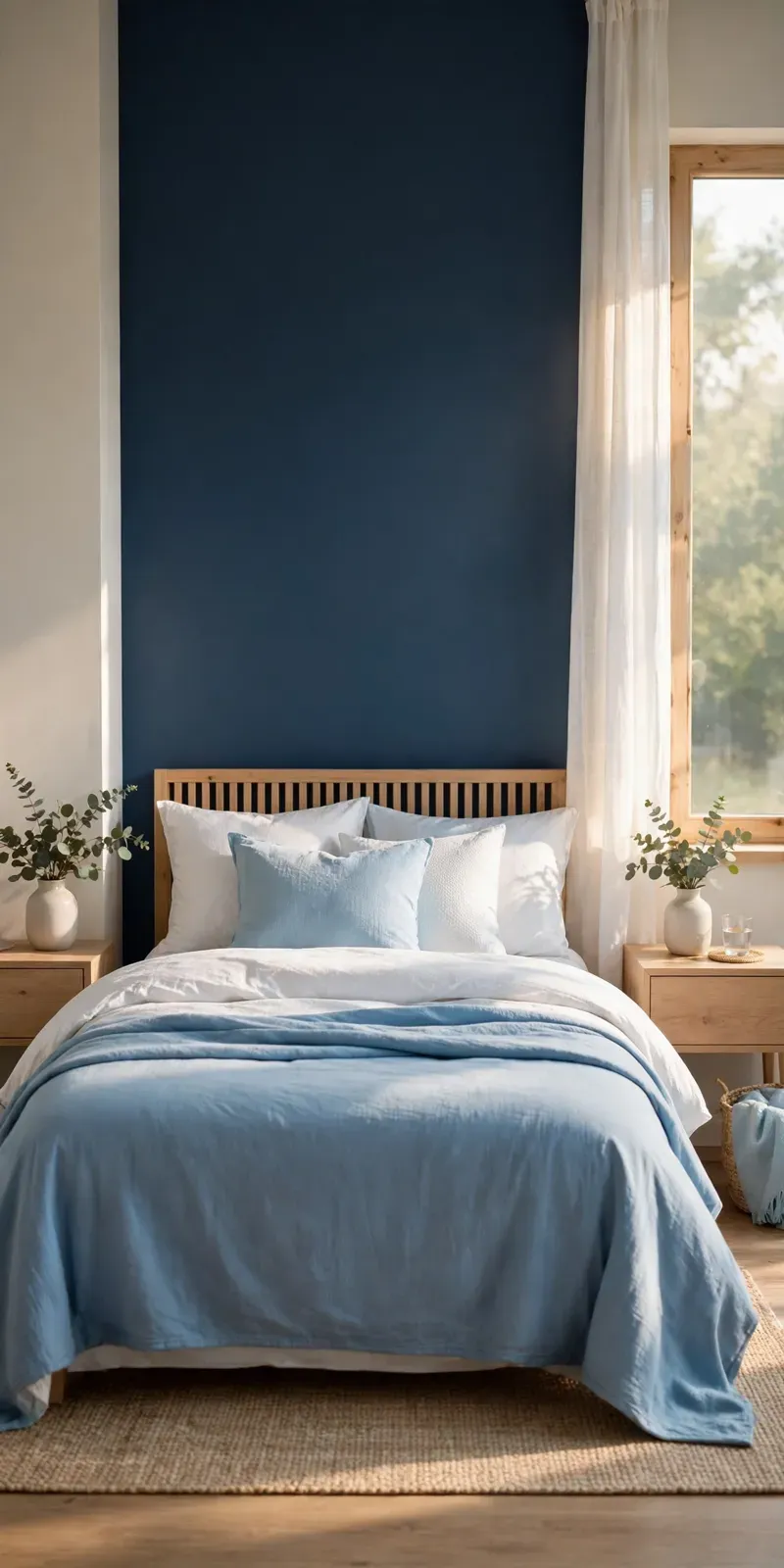
Bedrooms suit blue room schemes beautifully because the colour is linked with rest. A navy accent wall behind the bed, or navy headboard fabric, with sky-blue and white bedding layered over it gives that hotel feeling of depth behind you and freshness in front. Add one warmer note — light oak, rattan, a brass lamp — so the calm does not tip into cold.
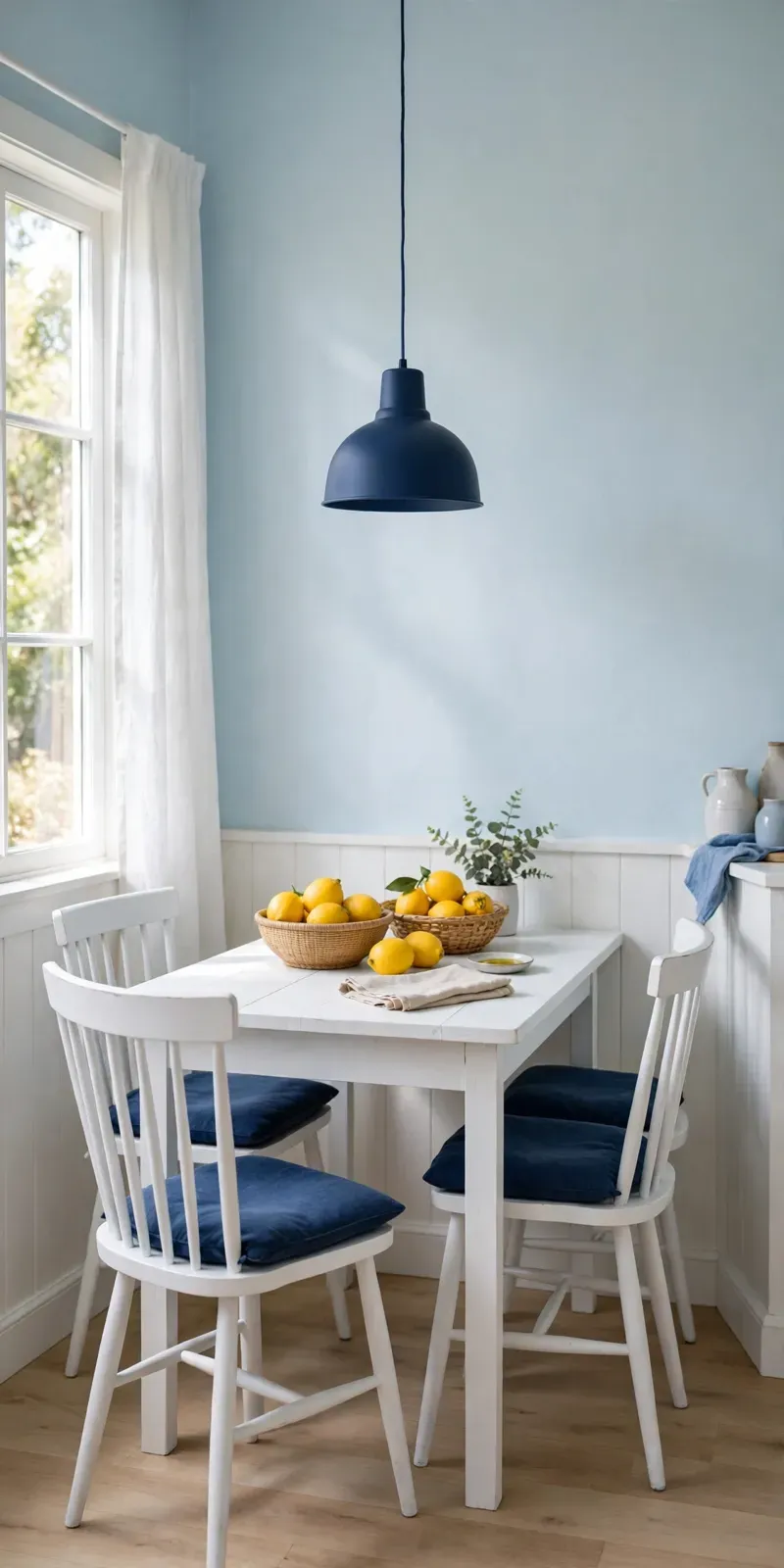
In small dining rooms and kitchens, blue room schemes suit the pale end of the family: sky or powder walls, white woodwork, and then navy used like punctuation — seat cushions, a pendant light, cabinet handles, a runner. Bathrooms are the easiest place to experiment, because tile does the layering for you: deep blue floor tiles, mid-blue wall tiles, white sanitary ware and a sky-blue towel is a complete scheme in four decisions.

Building the Scheme Step by Step
You do not need to redecorate in a weekend. Blue room schemes build in passes, and each pass is reversible.
- Pick your three blues from one paint card family or one fabric swatch book page, so they share an undertone. Photograph them together in daylight; if one jumps out as purple or green against the others, swap it.
- Place the darkest blue low and large: a rug, the sofa, a painted sideboard. This is the anchor pass and it changes the room more than any other.
- Add the middle blue at sitting height: cushions are the cheapest route, then curtains, an armchair slipcover or bedding.
- Lift the top with the lightest blue: a throw, lampshades, a painted ceiling line or pale art with blue washes.
- Break the blue deliberately with warm neutrals — cream, oatmeal, light wood, one tan leather or rattan piece. This contrast is what keeps layered blue from feeling like a showroom set.
- Live with it for a week, then adjust the proportions. Most rooms need either a little more navy or one more warm neutral, rarely both.
Renters can build the same blue room schemes without touching a wall: the anchor becomes a navy throw over the sofa back plus a dark blue rug, the middle band is cushions and a curtain swap, and the light band is bedding and a lampshade. Everything folds away at the end of the tenancy.
Budget and Buying Advice for Blue Room Schemes
Spend first on the anchor, because in blue room schemes it is the piece you will keep longest and the one your eye reads first: a good rug or sofa fabric in navy hides wear, rarely dates, and works with every lighter shade you rotate around it seasonally. Save on the light band — cushions, throws and lampshades in sky and powder blue are cheap, light to store, and exactly the pieces you may want to refresh when trends move.
Paint is the highest-impact bargain in the whole scheme. One wall in navy, or a half-wall with the pale shade above, costs a single tin and an afternoon, and tester pots of all three blues will cost less than one cushion. Buy testers generously and paint large swatches on different walls; blue changes more between walls than any other colour because it borrows so much from the light. For fabrics, order the largest swatches you can and pin them to the furniture for two days — denim blues that look identical online separate clearly in real light.
Mistakes That Make Blue Rooms Feel Cold
The first mistake in blue room schemes is choosing all three blues at the same depth. Three mid-blues together look indecisive, and three dark blues look like a den. The gradient is the scheme; if you cannot squint and see dark, middle and light, the layers need separating. The second is forgetting warmth: an all-blue room with chrome and glass will feel like an office. Wood, cream textiles, plants and one warm metal are not decoration on top of the scheme — they are half of it.
Third, in blue room schemes, matching everything exactly. Cushions, curtains and rug in the identical navy looks like a furniture package, not a home. Shades should be cousins, not twins. Fourth, testing paint only on a white card: blue deepens dramatically on a full wall, so most people end up one shade darker than they intended. Go one step lighter than your instinct for walls, and keep the true navy for furniture and fabric where it stays rich instead of heavy.
Questions About Layering Blue
How many shades of blue can one room hold?
Three main shades plus neutrals is the comfortable limit for most blue room schemes. You can add a fourth — say a teal-leaning accent — if it stays a small note like a vase or a book cloth, but once four blues compete at the same size the calm, layered feeling breaks into patchwork.
Does navy make a small room look smaller?
Not when it sits low and the walls and ceiling stay pale. A navy sofa or rug grounds a small room and can make the pale walls above it feel further away. The shrinking effect comes from dark walls on all four sides, which is a different choice entirely.
What colours warm up a blue scheme?
Cream, oatmeal, camel and light oak are the reliable warmers in blue room schemes, with brass or aged gold as the metal. One rust or terracotta cushion can also work as a deliberate spark, because orange sits opposite blue on the colour wheel — use it once, in one place, and let it glow.
Can I mix warm and cool blues together?
Yes, if one family clearly leads. A room of cool, violet-leaning blues can carry one teal cushion happily. Problems start at a fifty-fifty split, where the two families argue. Pick your lead family from the room’s light: cool daylight flatters green-leaning blues, warm evening light flatters violet-leaning ones.
Where do I start if I own no blue at all?
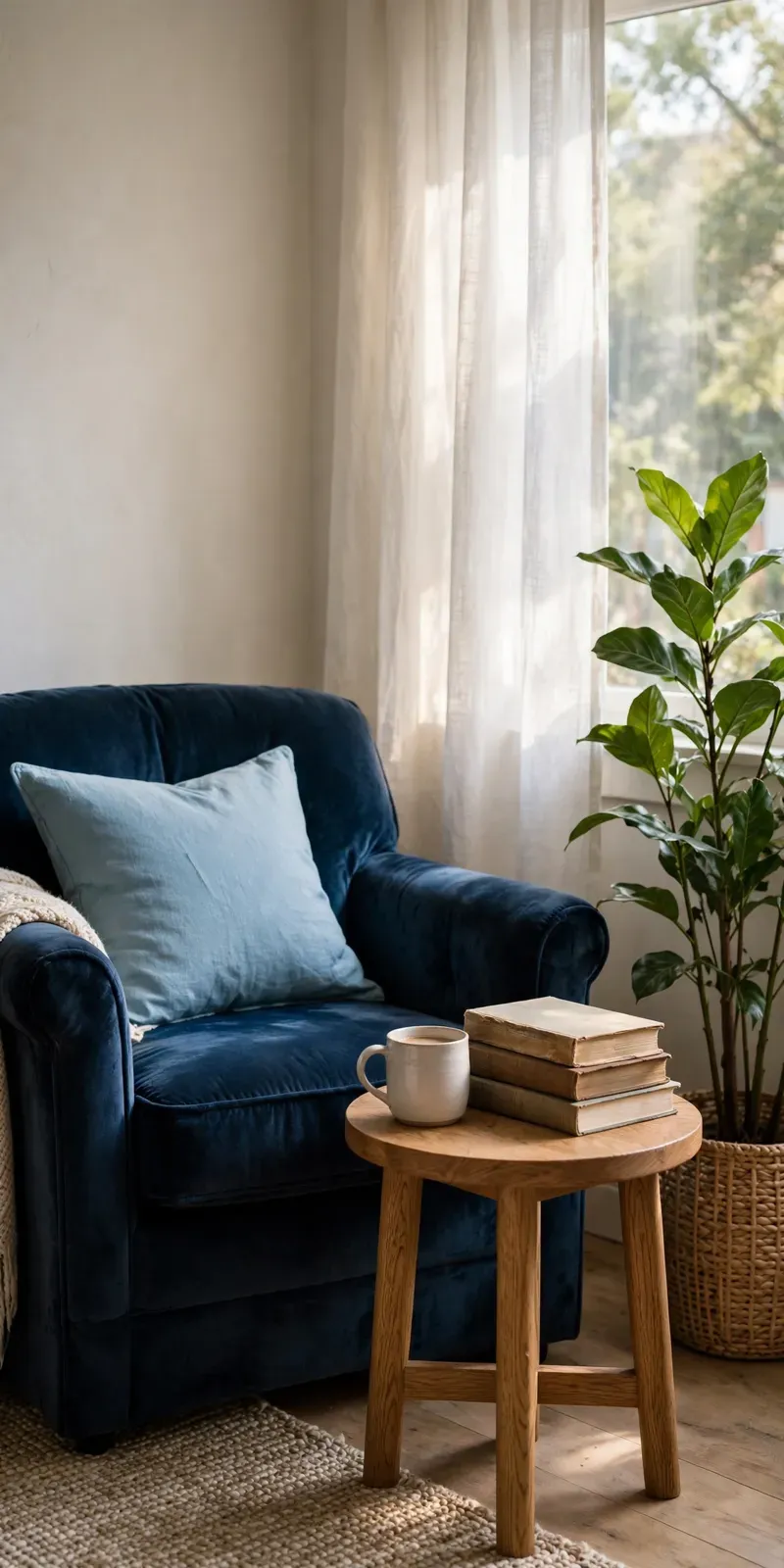
Start with the middle band, not the navy. A set of denim-blue cushions and a throw tells you within a day whether you enjoy living with the colour, and they pair with almost any neutral sofa. If the answer is yes, add the navy anchor next, then the pale layer last.
Blue room schemes reward patience: three shades, placed dark-low and light-high, with warm wood and cream running through them. Build it in passes, live with each one, and the room settles into that calm, sea-under-sky feeling that made you choose blue in the first place.