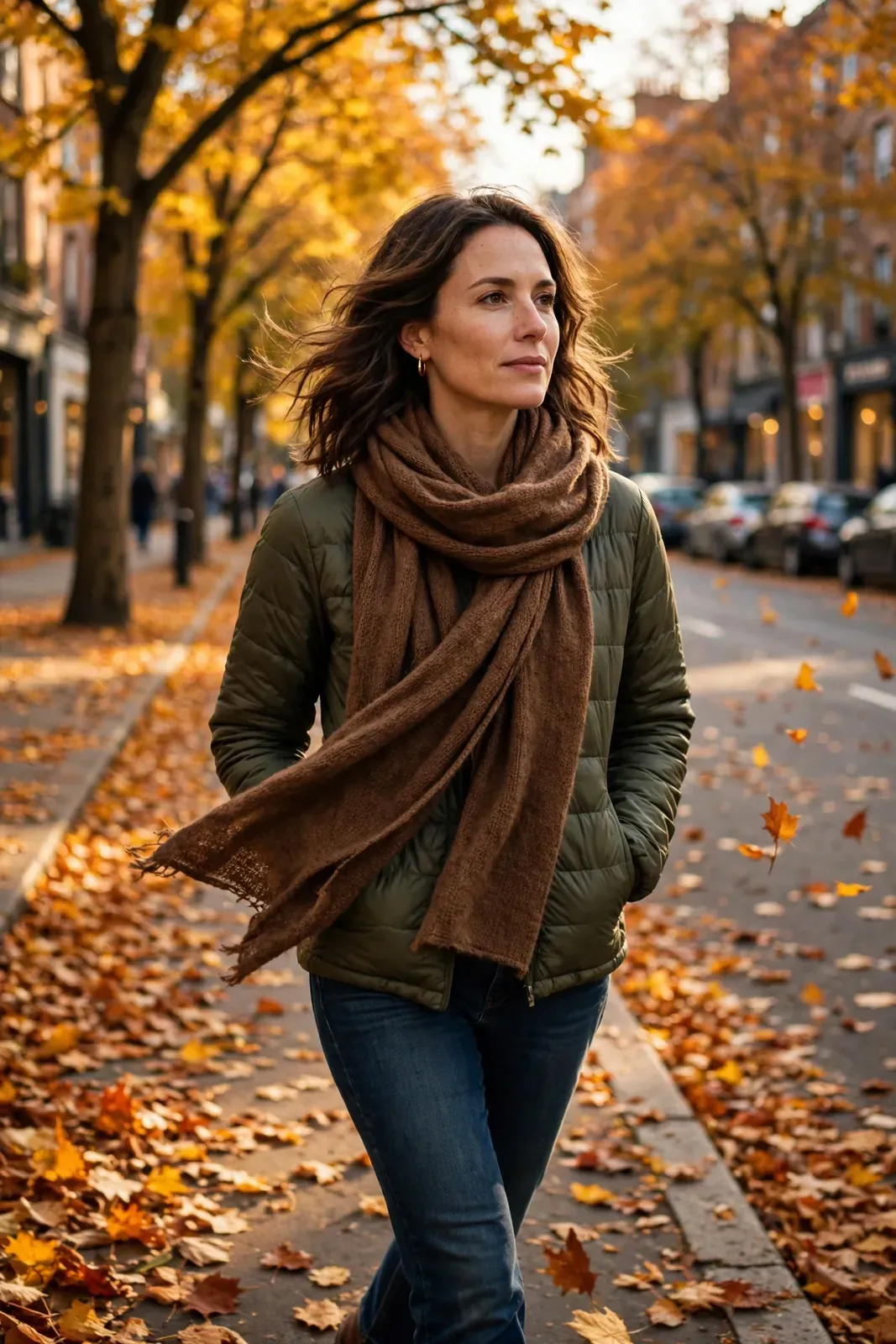
The first time I looped a cascara coffee dyed scarf over a plain cream coat, the whole outfit stopped looking plain. The brown is not one flat colour — it shifts from pale latte at one edge to deep espresso where the dye settled longer, and that gentle unevenness is exactly what makes it feel warm and real. It is the scarf I reach for on grey mornings, market runs and long walks, because it softens everything I own.
Cascara is the dried husk around the coffee cherry, usually thrown away after the beans are taken out. Brewed strong, those husks give a clear, reddish-brown dye full of natural tannins, and cloth soaked in it takes on the earthy tones in these photos. No two pieces come out identical — you pick the variation of a cascara coffee dyed scarf that suits your wardrobe, then wear it a dozen ways.
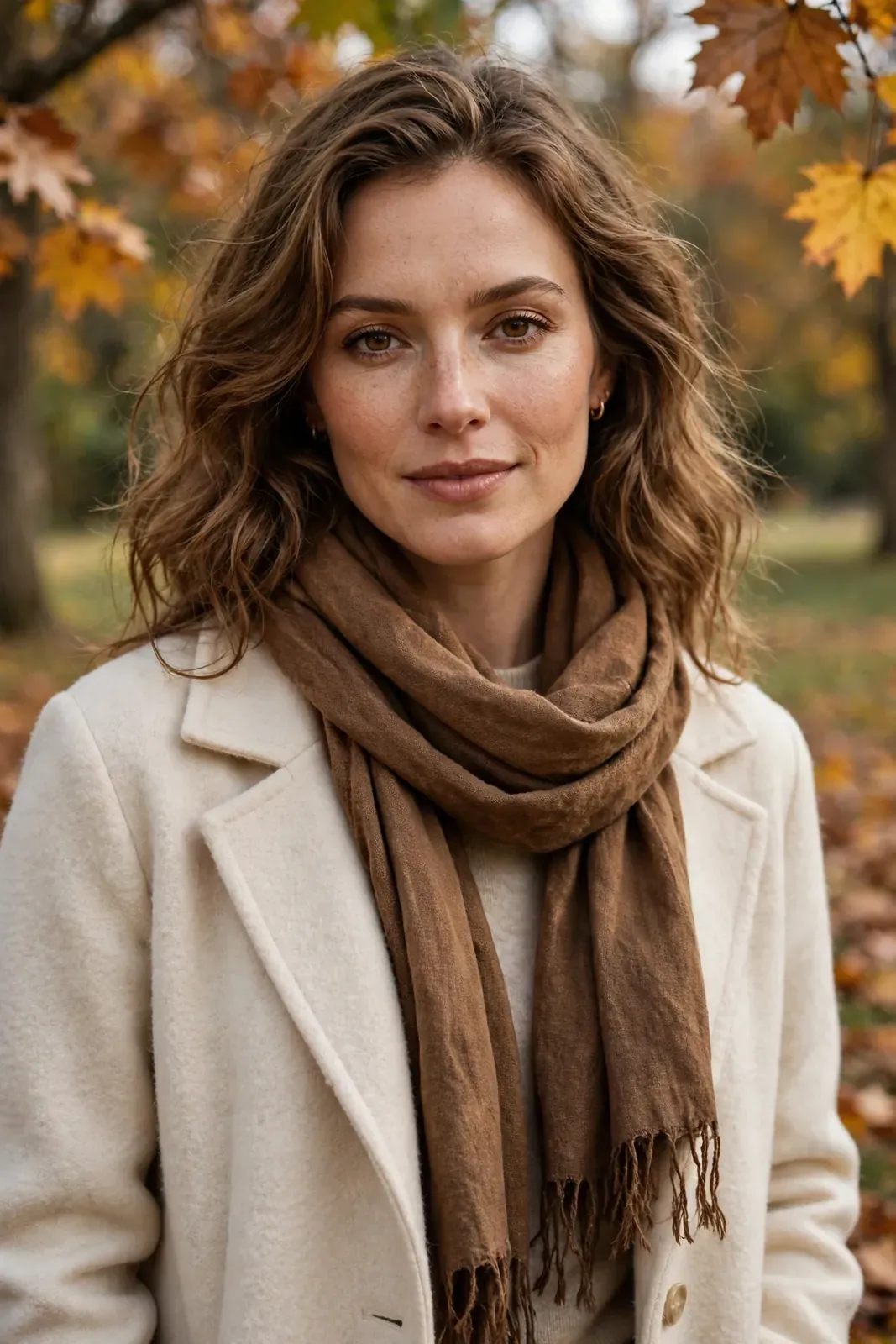
Table of Contents
9 Earthy Ways to Wear a Cascara Coffee Dyed Scarf
First, the hero look above: one simple loop of a cascara coffee dyed scarf over a cream or oatmeal coat, ends hanging uneven at the front. Pale coats are the easiest partner because the coffee brown reads rich against them. Second, the loose front drape: no knot at all, both ends hanging straight over a black dress or plain black tee, letting the tonal dye show from neck to hem. Third, the Parisian knot — fold the scarf in half, loop it round your neck and pull the ends through the fold. Neat, warm, and the best tie for windy days or tailored blazers.
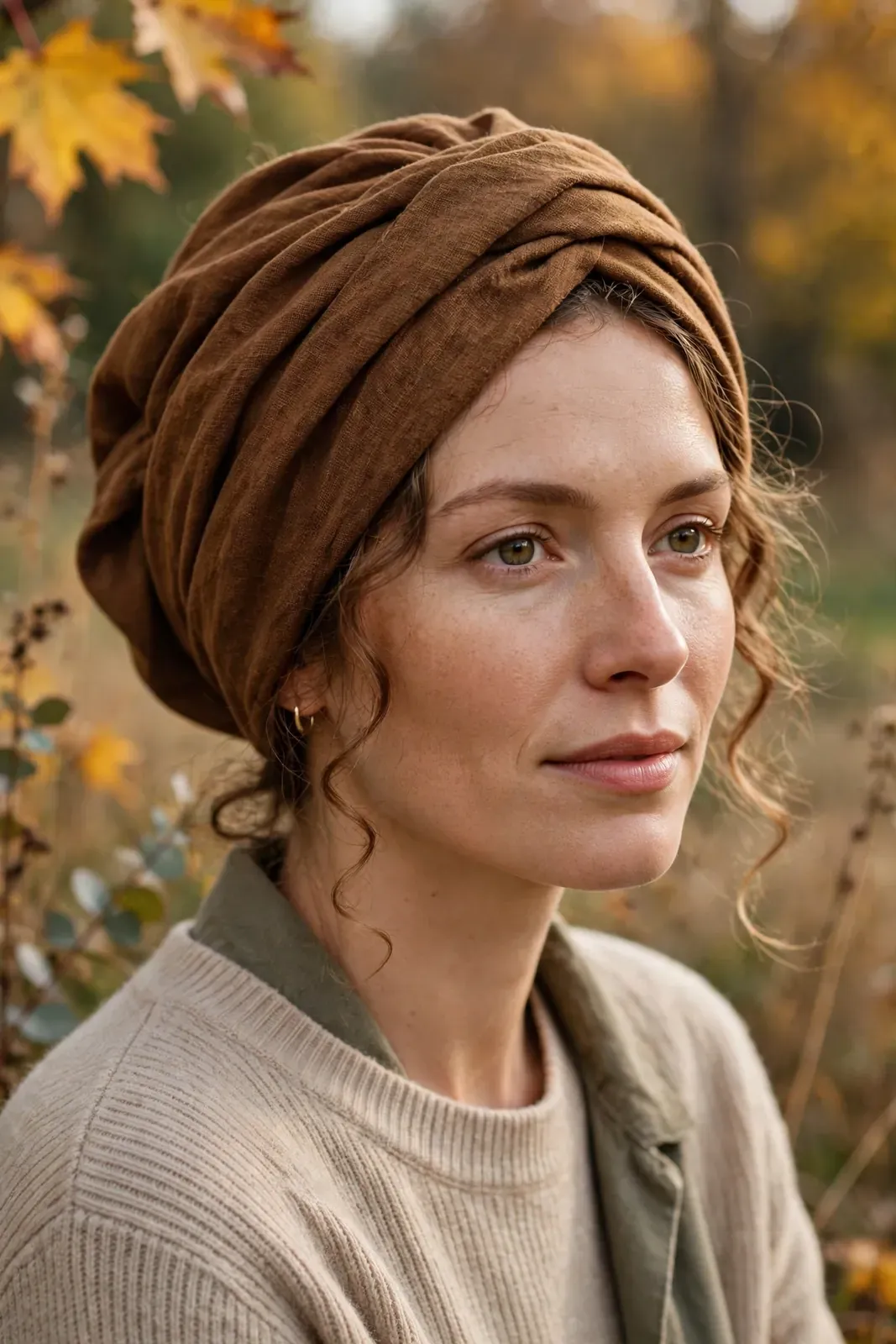
Fourth, the shoulder shawl: open a cascara coffee dyed scarf wide over both shoulders of a knit dress or fine sweater, fringe showing — the evening version, since a naturally dyed brown never shouts over other colours. Fifth, belted over a coat: drape it long at the front, then close your coat belt over its ends so it reads like a built-in panel and cannot slip. Sixth, the head wrap in the fourth photo: twist and cross it over the crown, ends tucked at the nape. It tames bad-hair days, keeps ears warm, and the matte brown looks softer than a hat.
Seventh, the bag tie: knot a narrow fold around the handle of a plain canvas or leather tote, ends left to swing, with your scarf within reach when the temperature drops. Eighth, the ponytail or wrist wrap: fold it into a band round a low ponytail, or loop it twice round a wrist — a good way to wear the colour in milder weather. Ninth, the double wrap over a turtleneck: circle it twice, tuck the ends underneath, and let the roll of the turtleneck show above — the cosiest option, and the layered browns look deliberate rather than bundled.
How a Cascara Coffee Dyed Scarf Gets Its Colour, Step by Step
It helps to know what you are wearing. Cascara is the dried skin and husk of the coffee cherry, long used as a tea-like drink in coffee-growing regions and now valued by dyers because it would otherwise go to waste. Step one: the husks are simmered in water — never boiled hard — until the pot turns a deep amber-brown, like very strong tea. The colour comes from tannins and plant pigments in the husk, the same compounds that stain a teacup.
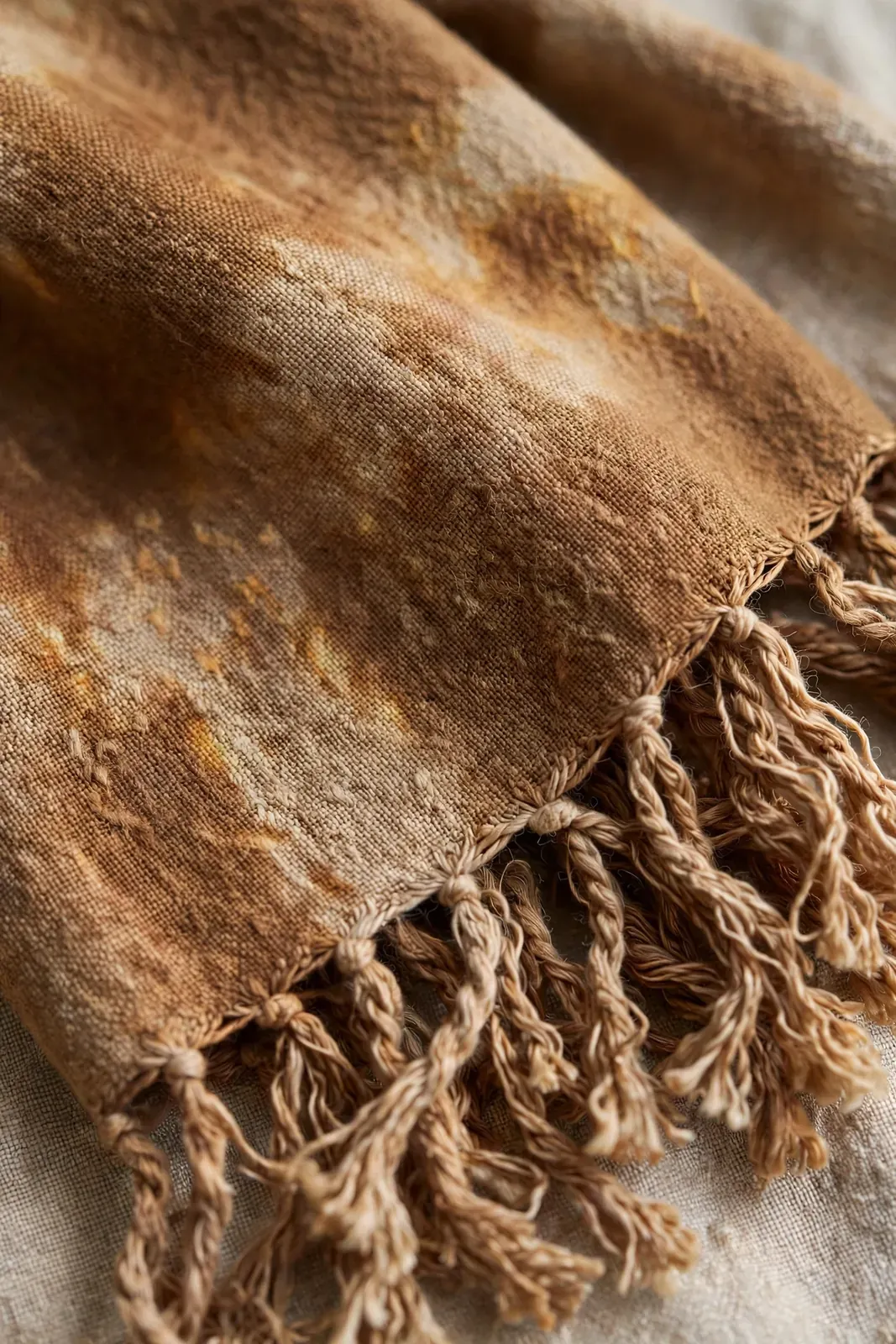
Step two: clean, wet cloth — cotton, linen, silk or wool — goes into the warm bath. Natural fibres take plant colour far better than synthetics, which is why these scarves are almost always natural fibre. This is the heart of natural dye work, where colour comes from plants and minerals rather than a factory drum. Step three: the cloth soaks for hours, sometimes overnight, stirred gently — though the colour still leaves the soft clouds and darker edges in the close-up photo. Step four: it is lifted out, rinsed until the water runs mostly clear, then dried in shade. What remains is colour bound into the fibre, not a coating on top of it.
Now the tying steps I use most. For the everyday loop: hold the middle at the front of your throat, cross the ends behind your neck, bring them forward and let them hang, one end a hand’s width lower — perfect symmetry looks stiff. For the Parisian knot: fold, loop, pull through, then fluff the fold open so it does not sit like a rope. For the head wrap: centre it at your nape, bring both sides up, cross twice over the crown, and tuck the ends under at the sides.
Colours and Outfits That Love This Warm Brown
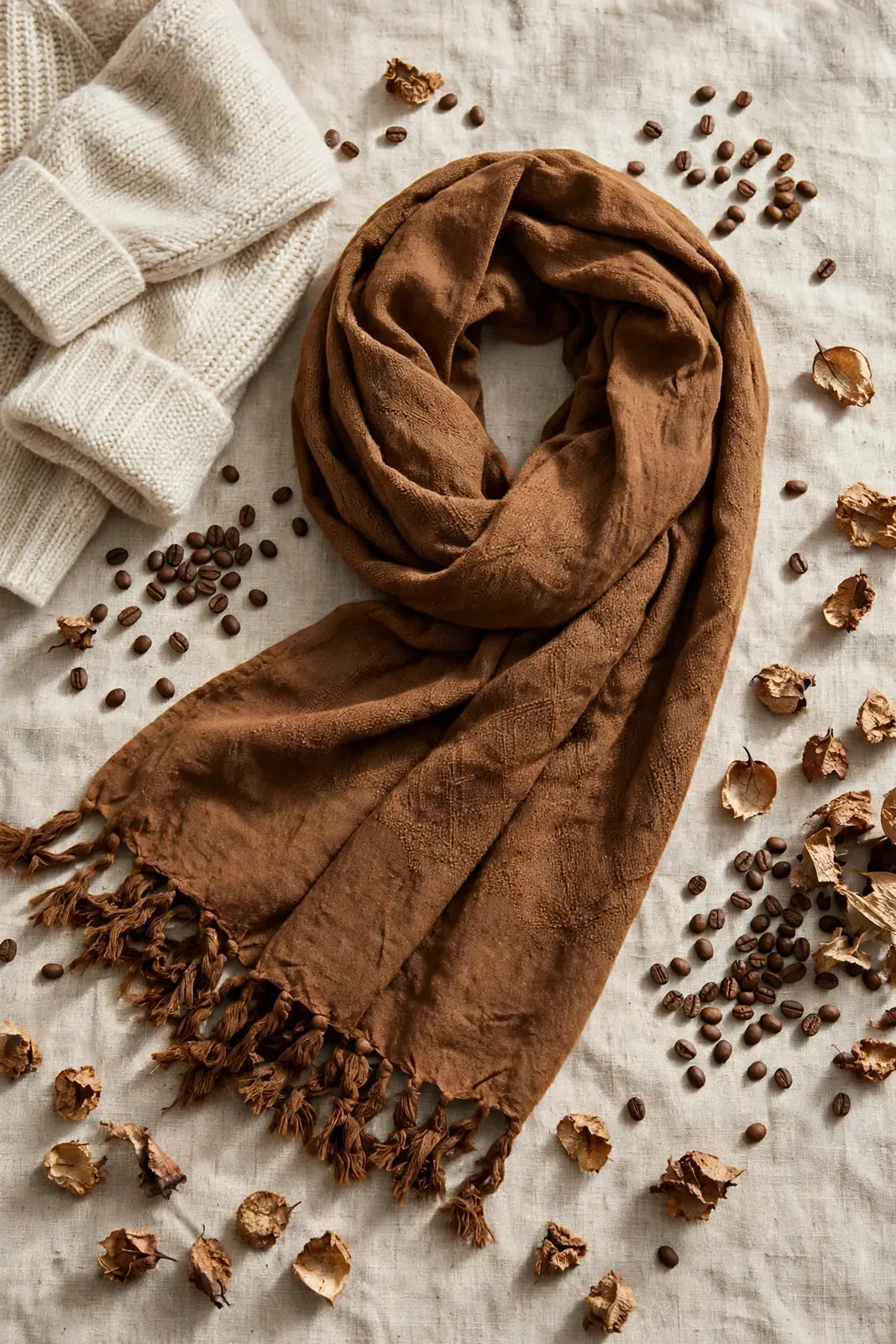
The coffee brown of a cascara coffee dyed scarf sits in the middle of the autumn palette, so it pairs in both directions. With creams, oatmeal, ivory and stone it gives the soft look in the hero photo — add tan boots and a canvas tote and you are done. With black it turns sharper, especially in the long front drape. With olive, rust, mustard and burgundy it joins the other earthy shades without matching any exactly, which makes it a useful bridge between clothes that otherwise do not meet.
Denim deserves a mention: mid-blue jeans with a white or cream top and this scarf is my most-worn weekend combination, because the brown warms the blue. Dull gold and brass echo the dye’s warmth; silver works with black or grey outfits. Avoid very bright or neon shades — the scarf’s muddy, plant-based tone looks tired next to them.
For more ways to build outfits around a scarf, see these silk scarf outfit ideas.
Buying and Care Advice for a Cascara Coffee Dyed Scarf
When you buy a cascara coffee dyed scarf, look at the fibre first. Cotton and linen versions are sturdy, matte and easy to wash — the everyday choice. Silk takes the dye with a soft sheen and deeper tone, lovely for evenings but pricier and happier with gentle handling. Wool is warmest. Then check the tone spread in daylight: gentle variation is the signature of the process, but large pale patches where the cloth was folded in the pot are a flaw worth a discount. Ask the maker two questions — was it rinsed until the water ran clear, and has it been washed once since dyeing? A scarf that has had its first wash will not surprise you.
On colour-fastness, be realistic. Well-made plant-dyed cloth holds its colour in normal wear, but the first wash or two may release a little loose dye, so wash it alone or with dark browns, in cool water with mild soap. Rub a damp white cloth over a hidden edge before its first outing with a white coat; if the cloth stays clean, you are safe. Budget honestly: a small-batch hand-dyed scarf costs more than a printed high-street one because someone simmered, stirred and rinsed it by hand — cost per wear still favours it if brown is a colour you live in.
Day-to-day care is light. Dry it in shade, never on a hot radiator — sun and heat fade plant colours faster than washing does. Store it loosely folded in a drawer away from direct light, and keep perfume for your skin, not the fabric: alcohol spots can lift natural dye. If the tone softens after a few years, that is normal — it fades the way good denim fades, gradually and honestly.
Common Mistakes to Avoid
The first mistake is expecting factory sameness. If you want every millimetre the identical brown, buy a synthetically dyed scarf; judging a plant-dyed piece by that standard only leads to disappointment with a good scarf. The second is the first wash done wrong — hot water, a drum of whites, strong detergent. One careless wash can strip the softer tones flat, and share loose dye with everything else in the machine.
The third mistake is tying it the same way daily, in a small tight knot at the throat — small knots waste a large soft scarf and can crease natural fibres into shiny lines. Vary the nine ways above and shake it out when you take it off. The fourth is storing it on a hook by the window: weeks of daylight fade the exposed fold first, leaving a pale stripe. The fifth is buying the darkest tone online without checking your wardrobe — deep espresso suits black and charcoal coats, while the mid coffee tones here are the flexible ones for cream, denim and olive.
Frequently Asked Questions
What exactly is cascara?
Cascara is the dried husk of the coffee cherry, separated from the bean during processing. It is brewed as a drink in several coffee-growing countries, and its natural tannins also make it a useful plant dye, giving warm amber to deep coffee browns.
Will a cascara coffee dyed scarf smell of coffee?
No — after rinsing and its first wash, a cascara coffee dyed scarf smells like clean cloth. The dye bath smells of dried fruit and tea while it simmers, but that scent does not stay in the finished fabric.
Does the colour fade or rub off?
A well-rinsed, well-made cascara coffee dyed scarf should not rub colour onto clothes in normal dry wear. It may release a little loose dye in its first wash or two, and over years the tone softens gradually in strong light — slow, even softening rather than sudden patchy loss.
What colours go best with a coffee brown scarf?
Cream, oatmeal, ivory and stone give the softest look; black makes it sharp; olive, rust, burgundy and mid-blue denim all sit comfortably with it. Dull gold or brass jewellery echoes its warmth best. Very bright or blue-toned shades are the hardest partners.
How do I wash it without losing the colour?
Hand-wash your cascara coffee dyed scarf or use a gentle machine cycle in cool water, on its own or with other dark browns, using a mild soap. Do not wring it hard, reshape it flat, and dry it in shade. Skip bleach and strong detergents entirely — plant dye and harsh chemicals do not get along.
Pick the tone you love, loop it loose, wash it gently.
That is the whole story of the cascara coffee dyed scarf: a coffee-farm leftover turned into the warmest brown in your wardrobe, nine ways to wear it, and a little gentle care in return. Mine has already outlasted three trend scarves, and I still reach for my cascara coffee dyed scarf first on cold mornings.