Table of Contents
In a hot climate, the ceiling fitting has the hardest job in the house. It has to move air all day, light the room all evening, and still look right over the bed or the dining table. That is why ceiling fan and light combo choices deserve more thought than a quick pick from a catalogue photo. Get the size, drop and light type right and one fitting quietly handles comfort for years. Get them wrong and you live with wobble, glare, flickering shadows and a fan that cools the ceiling better than the people under it.
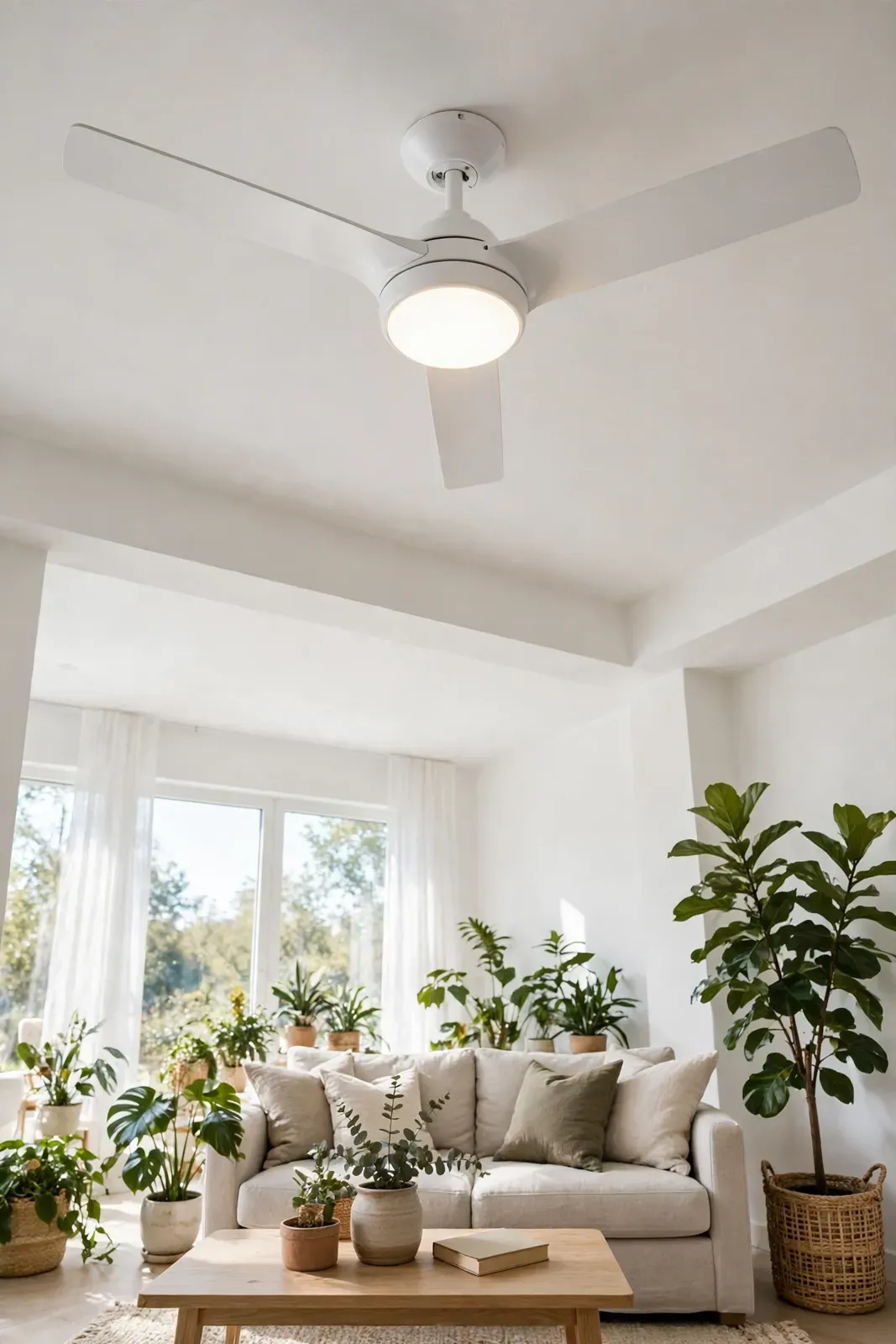
How Ceiling Fan and Light Combo Choices Affect Comfort
A ceiling fan does not cool a room the way an air conditioner does; it cools people, by moving air across skin. That simple fact shapes every good decision in ceiling fan and light combo choices. Blade sweep must match room size, the fan must hang low enough for its breeze to reach you, and the light must be strong enough for reading and dressing without turning the room into an office. When a combo unit does both jobs from the centre of the ceiling, you also free the walls and corners from extra fittings, which matters a lot in smaller Pakistani bedrooms and flats where every surface already works hard.
Combos also simplify wiring. One ceiling point, one fitting, and in modern units one remote that handles fan speed, direction and light warmth together. For rooms being refreshed without rewiring, that alone often settles the choice. For rented homes especially, ceiling fan and light combo choices keep the change simple and reversible. In practice that means one shopping trip, one fitting appointment and one set of controls to learn. It also keeps the ceiling looking uncluttered.
Sizing Your Ceiling Fan and Light Combo Choices by Room
Blade sweep is measured corner to corner. Small bedrooms up to about 100 square feet suit a 42-inch fan; most family bedrooms and living rooms need 52 inches; large lounges and open-plan spaces should look at 56 inches or fit two smaller fans instead of one giant one straining in the middle. Ceiling height matters just as much. Blades should sit roughly eight to nine feet above the floor: standard mounts suit high ceilings, while low ceilings need a flush or hugger mount so the fan stays safe and the breeze stays low where people actually sit and sleep. Get that pairing right and ceiling fan and light combo choices stop feeling like a compromise.
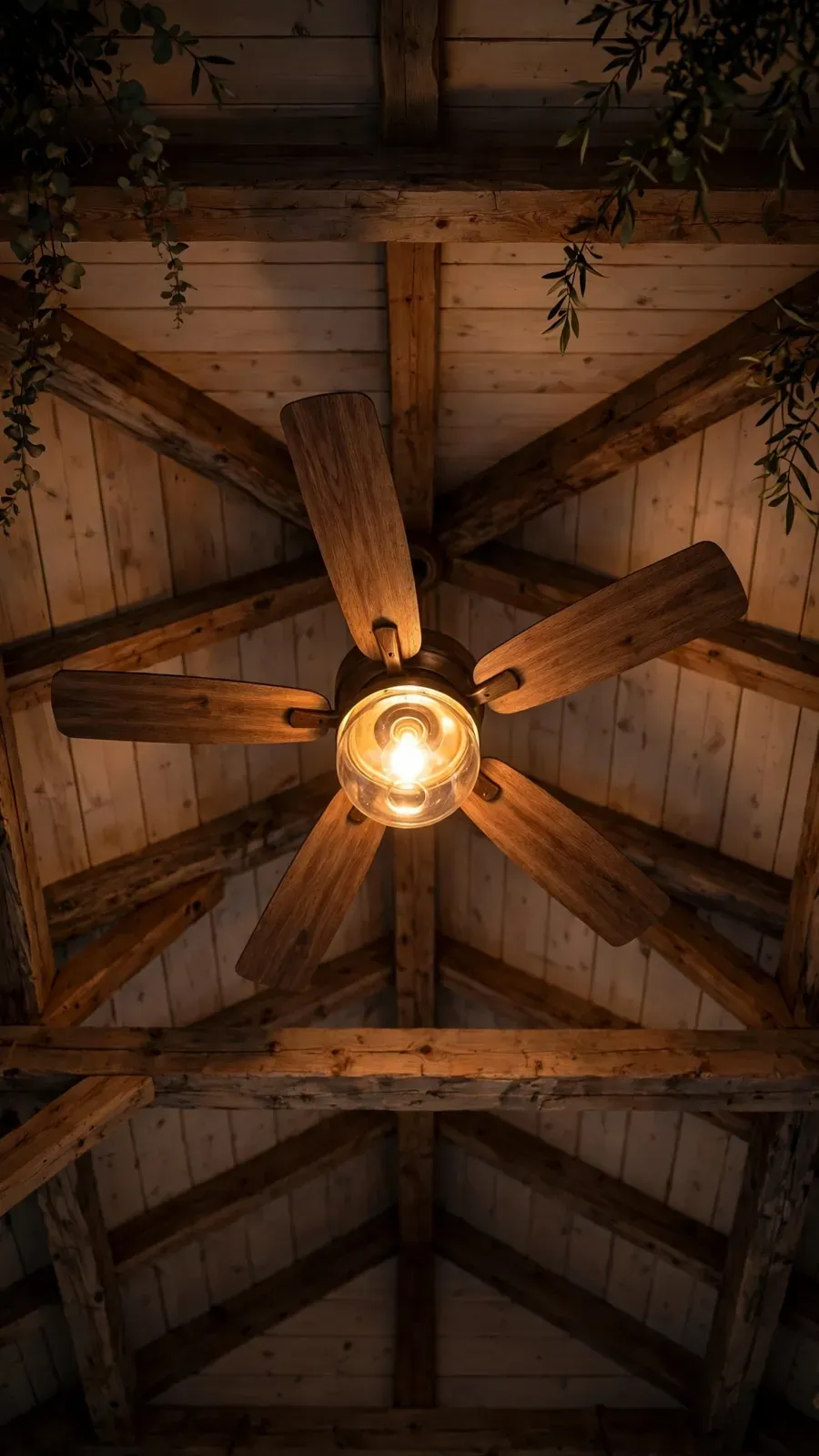
Light output is the half of the decision people forget. Look for the lumen figure, not just wattage. A bedroom combo should give soft, warm light around 2,000 to 3,000 lumens with dimming; a kitchen or study corner needs brighter, cooler light. If the unit takes a separate bulb, you keep flexibility forever. If the light is a built-in LED panel, check that replacement panels for that model are actually sold locally before you buy. When comparing ceiling fan and light combo choices, treat that lumen figure as seriously as the blade size.
Styles That Suit Real Rooms
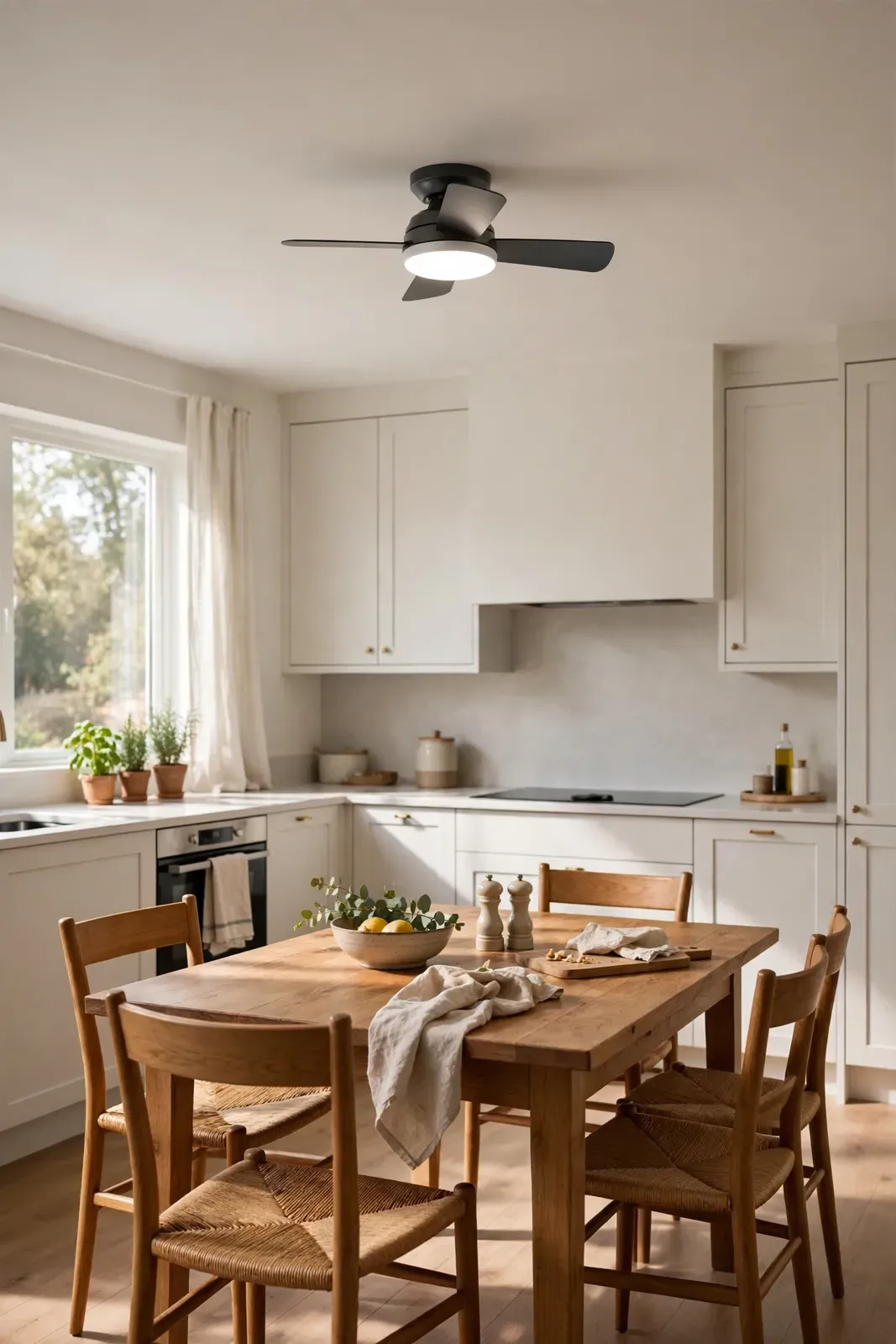
White three-blade combos disappear against white ceilings and suit rented homes and spare rooms. Wood-effect blades warm up bedrooms with wooden floors or rattan furniture, and they hide dust between cleans better than glossy white. Matte black fans have become the reliable choice for modern lounges, especially over pale sofas where they act almost like a piece of ceiling sculpture. For verandas and covered outdoor sitting areas, only choose a model rated for damp locations, with sealed motor housing and blades that will not warp in monsoon humidity. Ceiling fan and light combo choices for outdoor rooms should always carry that damp rating on the box.

Light style changes the mood as much as blade colour. Opal glass bowls give the softest, most even glow for bedrooms. Clear glass and exposed-bulb designs throw stronger light but show every speck of dust and can glare when you look up from a pillow. Retractable-blade fans, where the blades fold away when off, suit dining rooms that want a clean chandelier look at dinner and a breeze the rest of the day. If you read in bed, lean toward diffusers that hide the bulb from a lying-down angle, because a visible bulb at eye level quickly becomes the thing you notice most.
Controls, Noise and the Light Switch Question
Decide how the fan will be controlled before fitting day. It is the part of ceiling fan and light combo choices that people most often leave to chance. A wall light switch plus a separate regulator is the familiar setup and suits homes where remotes reliably get lost.
Remote and app-controlled DC motor fans are quieter, use far less electricity, and offer reverse mode for winter, but keep the manual override wired in — a flat remote battery should never mean a still, hot room. Noise ratings matter in bedrooms: a fan you can hear over conversation will annoy you every night, so in shops, always listen to display models at the speed you would actually sleep under, not just full blast.
Fitting a Ceiling Fan and Light Combo, Step by Step
Step 1 — Check the ceiling point. The fitting must hang from a proper ceiling hook or fan-rated box that can carry a moving, vibrating load. A plain light rose is not enough; if in doubt, have an electrician fit a rated hook first.
Step 2 — Power off and remove the old fitting. Switch off at the consumer unit, test, then take down the old light or fan, photographing the wiring before disconnecting anything.
Step 3 — Build the fan on the floor. Assemble blades, motor housing and light kit on a rug first, following the manual’s order. Balancing kits are included for a reason — fit the weights now if a test spin wobbles.
Step 4 — Hang, wire and test each function. Lift the unit onto the hook, connect wiring exactly as marked, then test fan speeds, reverse mode and the light’s dimming before fitting the final covers. For more ceiling-height styling that works around a central fan, see the room guides collected under corner reading nook setup ideas on this site for how a well-lit corner balances a bright centre fitting.
Step 5 — Balance and register. Run the fan for ten minutes at every speed. A small remaining wobble usually traces to one loose blade screw. Photograph the warranty card and receipt the same day.
Budget and Buying Advice
Basic AC-motor combos start low, and for a spare room they are honestly enough. DC-motor models cost more upfront but commonly use a third of the electricity, run near-silently, and pay the difference back in a hot climate within a couple of summers of daily use. Spend first on correct size and a reputable motor; decorative blade finishes are the cheapest part of the unit and the easiest to overpay for.
Buy where spare remotes, light panels and blade sets for your exact model are stocked — a fan is a ten-year purchase, and orphan models are the ones that end up replaced whole over a small failed part. Compare ceiling fan and light combo choices on motor warranty as well as price, because a long warranty usually signals a motor built to last.
Common Mistakes to Avoid
The classic mistake is an undersized fan in a big room, spinning fast and loud while barely moving air at the edges. Next comes mounting a standard-drop fan on a low ceiling, leaving blades uncomfortably close overhead. People also forget the strobe effect: a combo light placed so its beam passes through moving blades from another light source can flicker across walls, so keep other ceiling lights away from the blade circle. Finally, never judge light colour from a showroom photo — warm white at home can look yellow in pictures and perfect in person. Most ceiling fan and light combo choices go wrong on measurements taken in a hurry, not on style.

Frequently Asked Questions
What size ceiling fan do I need for a 12 by 14 foot bedroom?
A 52-inch fan is the comfortable standard for that size. A 42-inch model will feel weak at the corners of the bed, while anything larger crowds the ceiling and can look heavy over a double bed. It is the size most ceiling fan and light combo choices are built around.
Are DC motor fan and light combos worth the extra cost?
In homes where fans run eight or more hours a day, yes. They use much less electricity, offer more speed settings and a useful reverse mode, and they are noticeably quieter in bedrooms. For a rarely used guest room, a good AC model is fine. That is why DC models lead most new ceiling fan and light combo choices.
Can a combo fan replace all other lighting in a room?
It can be the main light, but rooms still feel better with one softer secondary source — a bedside or table lamp — for evenings. Choose a combo with dimming or dual warm and cool settings and it covers far more situations on its own. Good ceiling fan and light combo choices make that single-fitting setup easier, because the dimming range is designed for living spaces rather than offices.
Why does my ceiling fan wobble and how do I stop it?
Wobble usually comes from a loose blade screw, blades that are not level with each other, or a mounting that is not firmly fixed to a rated hook. Tighten everything first, then use the balancing kit weights on the blade that dips.
Can I install a fan and light combo where only a light fitting exists now?
Only if the ceiling point is replaced or reinforced with a fan-rated hook or box that can carry the moving weight. The wiring is usually sufficient, but the mechanical fixing is the part that must never be skipped. Treat it as the ground rule for all ceiling fan and light combo choices.
One Fitting, Two Jobs Done Properly
Good ceiling fan and light combo choices come down to three things: the right sweep for the room, a safe drop from the ceiling, and light you actually enjoy living under. Measure first, listen to the motor in the shop, and buy a model whose spare parts exist locally. That is the simple test every shortlist of ceiling fan and light combo choices should pass. Do that, and the hardest-working fitting in the house will also become one of the easiest to live with.