I found my first chain belt tangled around a broken watch strap in a thrift-store jewelry bin. It cost two dollars. I wore it that night over a plain black slip dress, and a friend stopped mid-sentence to ask where the dress came from. The dress was old. The belt was the whole story.
That is what a chain belt does: it takes something you already own — the dress that feels a little safe, the oversized blazer that swallows your waist — and gives it shape and shine in four seconds. Just clasp, position, and go. Here are nine looks I actually repeat, how to get the fit right, what to spend, and the mistakes worth avoiding.
Why Chain Belts Work So Well Over Dresses
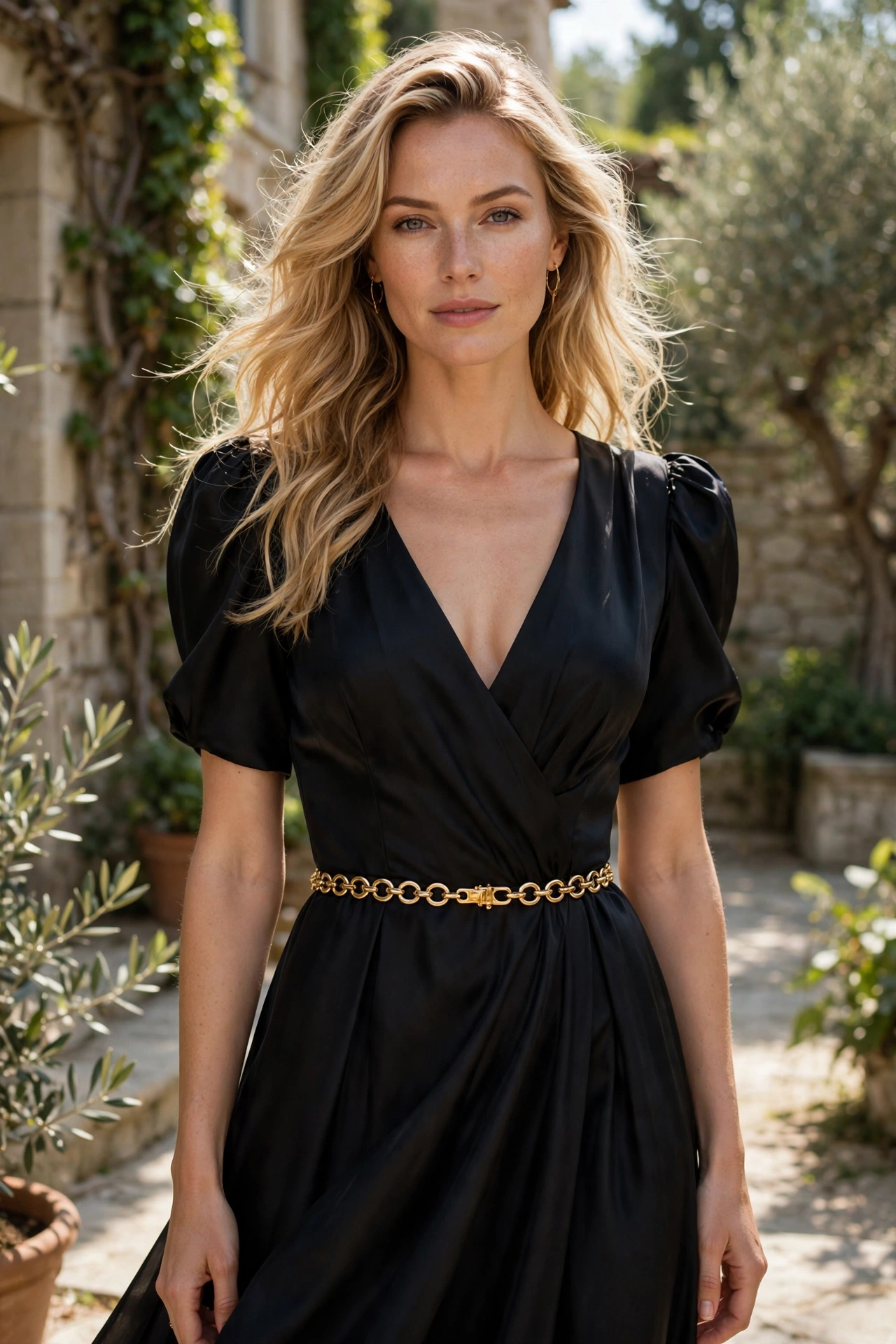
Most belts close an outfit; a chain belt opens one up. Because it is metal — gold, silver, or an antique finish — it reads as jewelry, not a functional belt. A leather belt can look office-serious; a chain looks deliberate and a little festive.
Chains also drape. A chain settles into your natural waistline and moves when you sit, eat, and dance — perfect for silk, satin, jersey, and chiffon. And one belt anchors a dozen outfits, from dresses to coats. It is the cheapest stylist you will ever hire.
The 9 Chain Belt Looks Worth Trying
1. The Classic: Chain Belt Over a Slip Dress
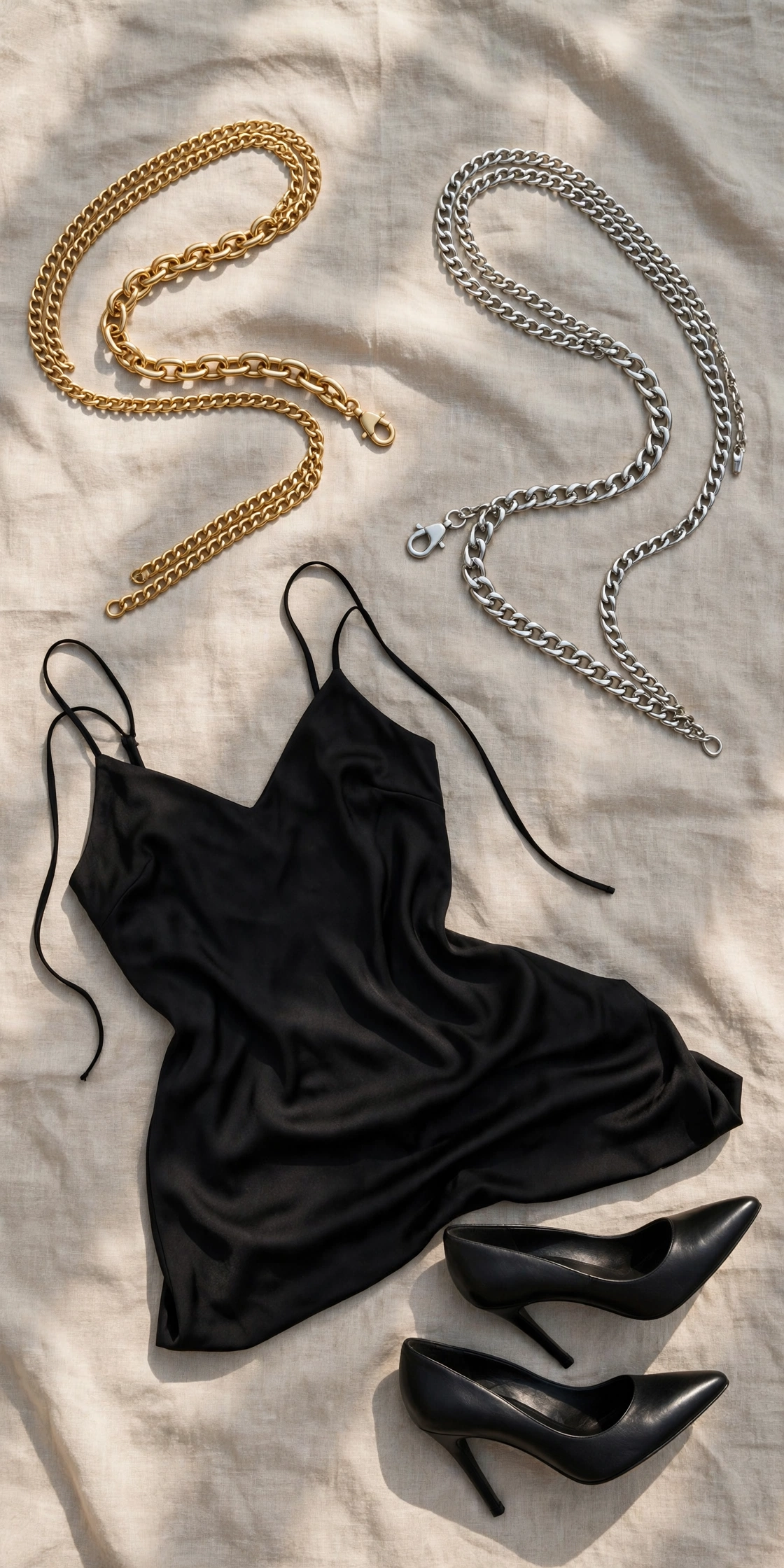
Start here. Fasten a chain at your natural waist over a simple slip dress — black, champagne, emerald. The contrast between soft, bias-cut fabric and hard metal is the whole look. Delicate chains suit narrow straps; chunkier curb chains suit wider ones. Strappy heels make it evening, sneakers make it brunch, pointed flats make it office-ready.
2. Over an Oversized Blazer
Button an oversized blazer and belt it at the waist, or leave it open and belt the dress underneath. With a long, boxy blazer, wear the belt slightly high so it does not look like a sack tied in the middle. Gold suits black, charcoal, and camel; silver suits navy and grey; bronze is gorgeous over olive.
3. The T-shirt Dress Upgrade
T-shirt dresses are easy and shapeless in equal measure, and a thin chain belt fixes that instantly — my airport standby. Keep the chain dainty; a thick chain over thin cotton looks top-heavy. One caution: jersey shifts when you sit, so check the belt afterwards. Chains with a small coin or pendant grip fabric better than smooth ones.
4. Belted Maxi for Weddings and Events
Maxi dresses can swallow a figure, especially A-line and empire styles. A chain belt carves out a waistline without adding bulk. For formal events, choose detail: a double strand, crystal accents, or a medallion clasp. One rule from a cousin’s wedding — busy print, simple chain; solid dress, let the belt be the statement.
5. Sweater Dress, Cinched
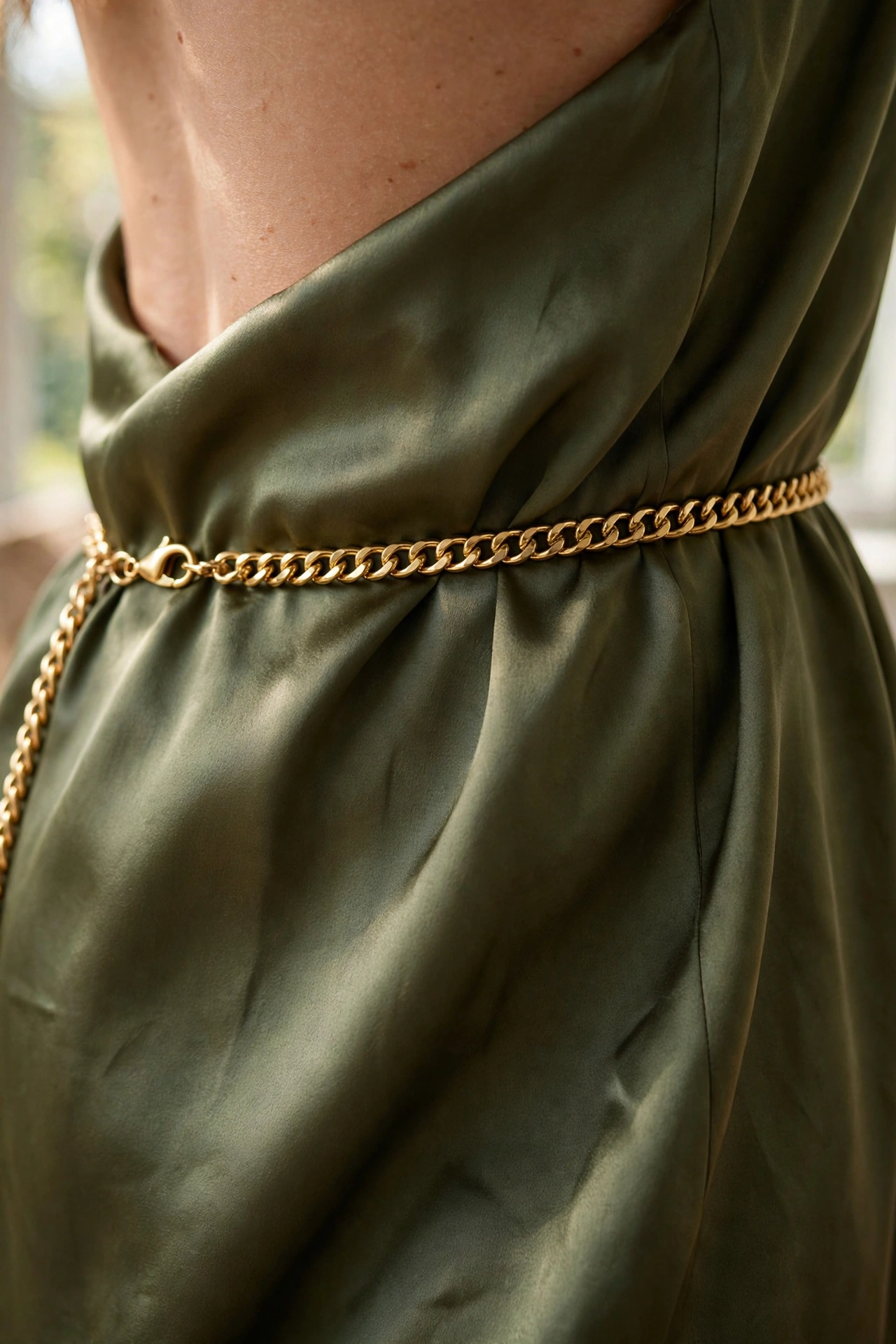
Knit dresses practically beg for chain belts. A chunky knit midi with a delicate gold chain is a favorite cold-weather combination — soft knit against cool metal always gets compliments. Choose smooth links so nothing snags. Wear it loose and low over a cardigan dress, or at the waist over a fitted ribbed style. Add boots, and you are set.
6. The Mini Dress and Chunky Chain Night-Out Look
For evenings, go bolder: thick links, maybe double or triple strands, over a short black dress. My heavy vintage chain belt, worn only after dark, makes the simplest mini look ten times more expensive. Balance is key — chunky belt, minimal other jewelry. Small hoops, nothing else.
7. Over a Wrap Dress
Wrap dresses already have a waistline, so why add a chain? Because fabric ties look lumpy in photos and under a fitted jacket, while a slim chain over the tie point smooths everything and adds shine where the eye should go. A floral sundress wants a thin chain; a solid silk wrap dress can take more.
8. The Two-Piece Illusion: Chain Belt Over a Co-ord Set
Matching sets — a knit top with a skirt, a blouse with wide-leg trousers — can look flat, like pajamas that went out. A chain belt at the join breaks the matchy-matchy effect and makes the set look intentional. It works best on monochrome sets: all black, all cream, all olive.
9. Over a Coat or Longline Blazer for Daytime Polish
The daytime power move: belt the coat itself. Closing a long coat or longline blazer with a chain instead of its fabric belt makes the outfit look styled rather than just warm. For daylight, choose brushed or matte finishes — high-shine gold reads evening. A brushed-gold chain over a camel coat is my most complimented winter look.
How to Position and Lengthen a Chain Belt: Step by Step
Chain belts are more adjustable than leather ones. Most are made longer than you need, so they can drape, wrap twice, or trail.
Step 1: Decide the placement first. The natural waist — the narrowest point, just above the navel — flatters most dresses. Low on the hips is more relaxed.
Step 2: Fasten loosely, then settle it. Clasp the chain and walk it around until the clasp or medallion sits where you want it, centered or slightly off-center. Give it a minute to find its drape.
Step 3: Adjust the length. Too long? Wrap it twice, or let the excess hang in a soft V down the front — very chic with slip dresses. Most chains have open links you can hook into to shorten them. Too short for the hips? Wear it at the waist.
Step 4: Do the sit-down test. Check the back in a mirror — chains twist and clasps migrate — then sit. If it digs in or rides up, loosen it a link or two.
Step 5: Balance the outfit. A chunky belt means simpler everything else; a delicate one lets you go bolder elsewhere. The belt sets the volume.
Buying Guide: Sizing, Budget, and Care
You do not need to spend much. The difference between a belt you wear for years and one that fades by Friday comes down to material, clasp, and length.
Material. Look for gold-tone or silver-tone plating over a brass or alloy base; it holds its color for years. Very cheap chains fade fast, starting at the clasp. Sensitive skin? Choose nickel-free listings.
Clasp. This is the failure point of every chain belt I have retired. Lobster and toggle clasps are most reliable; thin spring-ring clasps pop open at the worst moments. A jeweler can swap a weak clasp cheaply.
Length. Measure where you plan to wear it, then buy a chain 4 to 8 inches longer. The extra gives you the drape and the double-wrap option. When in doubt, size up — a short chain is a paperweight.
Budget. The sweet spot is roughly $12 to $25. Below $8, plating fails fast; above $40, you are mostly paying for a brand name. My most-worn belt cost $14.
Care. Wipe it with a soft dry cloth after wearing — sweat and perfume dull plating. Store it flat or hanging, never crumpled, since kinks weaken links. Keep it away from hairspray, water, and showers.

Common Mistakes to Avoid
Wearing it too tight. A chain belt should skim and drape, not cinch like a corset. If fabric puckers or you cannot slide two fingers underneath, loosen it. Tight chains photograph badly too.
Matching every metal. Your belt does not have to match your necklace, earrings, and bag hardware. Mixed metals are fine — the key is confidence.
Wrong weight for the fabric. A heavy chain drags down thin fabric; a whisper-thin chain disappears on a wool coat dress. Match weight to the garment: delicate for silk, medium for knits, chunky for coats.
Ignoring the back view. People see your back all day. A five-second mirror check for twists before you leave saves the whole look.
Saving it only for evenings. A thin chain over a t-shirt dress with sneakers is a daytime look; a brushed chain over a coat is a work look. Wear it in daylight and half your closet feels new.
Frequently Asked Questions
Can I wear a chain belt if I am plus-size? Absolutely. Chain belts define the waist without the bulk of a wide leather belt, which is why they flatter curvier figures so well. Choose a medium-weight chain at your natural waist over an A-line dress, and let it drape.
How do I stop a chain belt from sliding around? Three things help: wear it over textured fabric like knits or crepe, choose textured links or a coin detail that grips, and place it at your natural waist, where it settles instead of sliding.
Are chain belts still in style in 2026? Yes — they have moved from trend to staple. Finishes cycle, and brushed gold is everywhere right now, but a chain at the waist has returned every decade since the 1970s. A classic style will serve you for years.
Can I wear a chain belt to the office? Yes, styled quietly. Keep the chain thin and simple, with no dangling charms, and wear it over a sheath dress, knit midi, or blazer. In gold or silver it reads as jewelry, which suits most workplaces.
What is the difference between a chain belt and a belly chain? A chain belt is worn over clothing, as a visible part of the outfit. A belly chain sits lower, against the skin, peeking out from under clothes. A belly chain can double as a belt — just check its clasp is sturdy.

The Two-Dollar Lesson
I still have that thrift-store belt, its gold softened at the edges. It taught me my most useful styling lesson: the difference between an outfit and a look is usually one small, deliberate choice.
A chain belt costs less than lunch, takes four seconds to put on, and makes everything you own feel more considered. So dig out that plain dress and try one of these nine looks. Based on five years of evidence, someone will stop you mid-sentence to ask about it. When they do, just smile — some style secrets are worth keeping.