Some mornings you stand in front of the wardrobe and everything feels like a compromise. The soft dresses feel too soft for a big meeting, the suit feels stiff, and the separate top-and-skirt combinations never quite sit right. That is exactly the kind of morning this dress was made for. A charcoal double breasted waistcoat dress gives you the clean lines of tailoring and the ease of a one-piece outfit at the same time. You step into it, fasten the buttons, add shoes, and you are done — no tucking, no adjusting, no second-guessing in the lift mirror.
I first noticed how hard this style works when I wore one on a day that started with a client presentation, moved on to lunch with a friend, and ended with an early evening event. I did not change a single thing except my lipstick, and the dress never looked out of place. Charcoal is a big part of that magic. It is softer than black, so it feels friendly in daylight, but it still carries the same authority. It also hides the small creases and city dust that show up so quickly on lighter colours, which makes it a honest, practical choice for real life.
Why Charcoal Works Harder Than Black
Black tailoring can look wonderful, but it can also look harsh under office lighting and a little heavy in spring and early autumn. Charcoal sits in that sweet middle ground. It pairs beautifully with black shoes and bags, so you do not need a whole new set of accessories, yet it also welcomes brown, burgundy, navy and even soft cream. If your wardrobe is full of neutrals that never quite match each other, charcoal tends to bring them together.
9 Smart Ways to Wear It
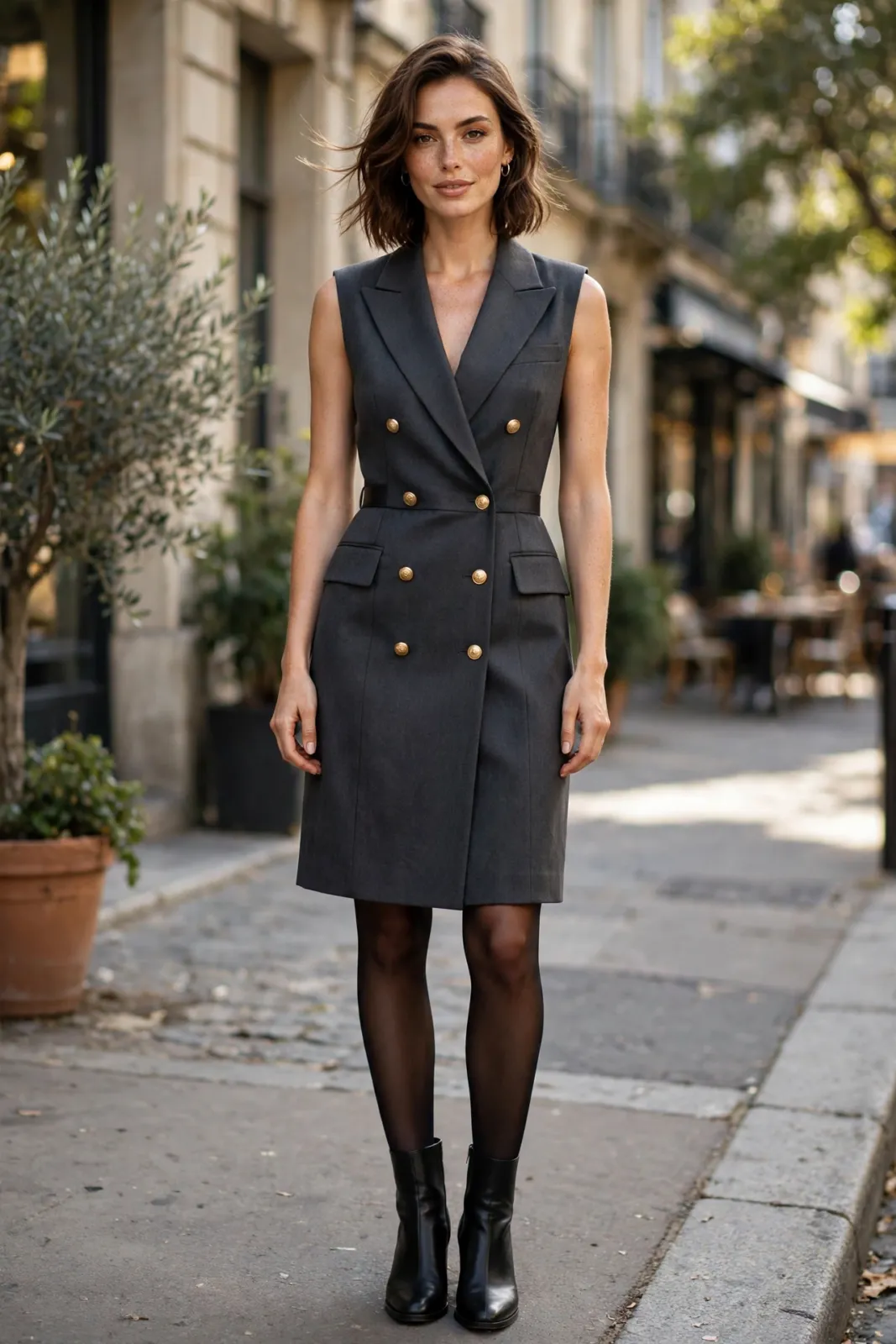
1. Bare and simple for the office. Wear the dress on its own with black tights and ankle boots or classic pumps. This is the cleanest version, and it is the one to choose for interviews, presentations and formal meetings. Keep jewellery small — a pair of hoops and a watch are plenty.
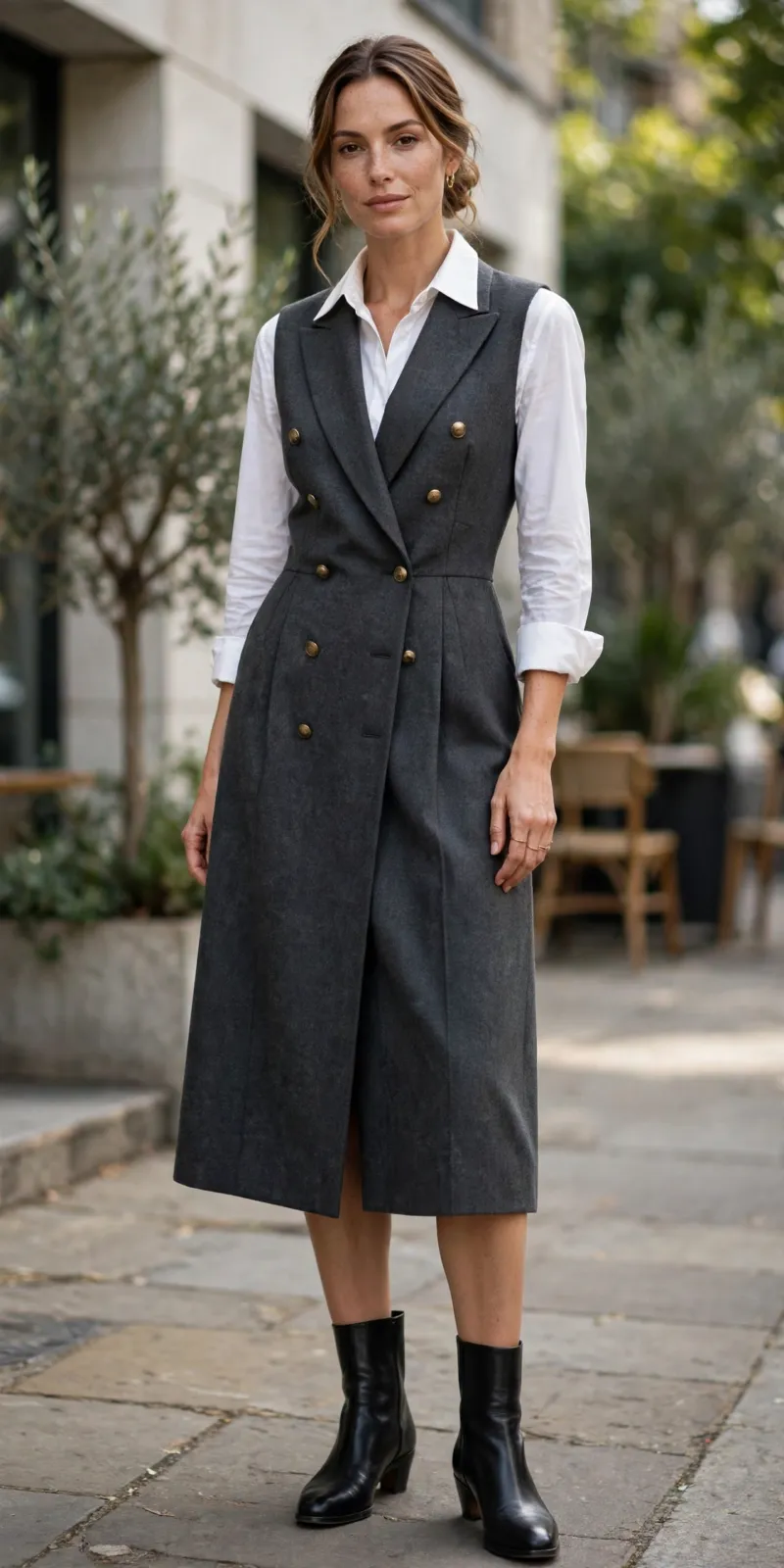
2. Over a white shirt. This is my favourite trick for cooler days and for offices where sleeveless feels too bare. A crisp white shirt underneath adds contrast at the collar and cuffs and makes the whole outfit feel intentional. Roll the shirt cuffs once so a little white shows below your wrist.
3. With a fine knit underneath. A thin black, cream or burgundy roll-neck slipped under the dress keeps you warm without bulk. It also softens the deep V of the lapels if you prefer more coverage.
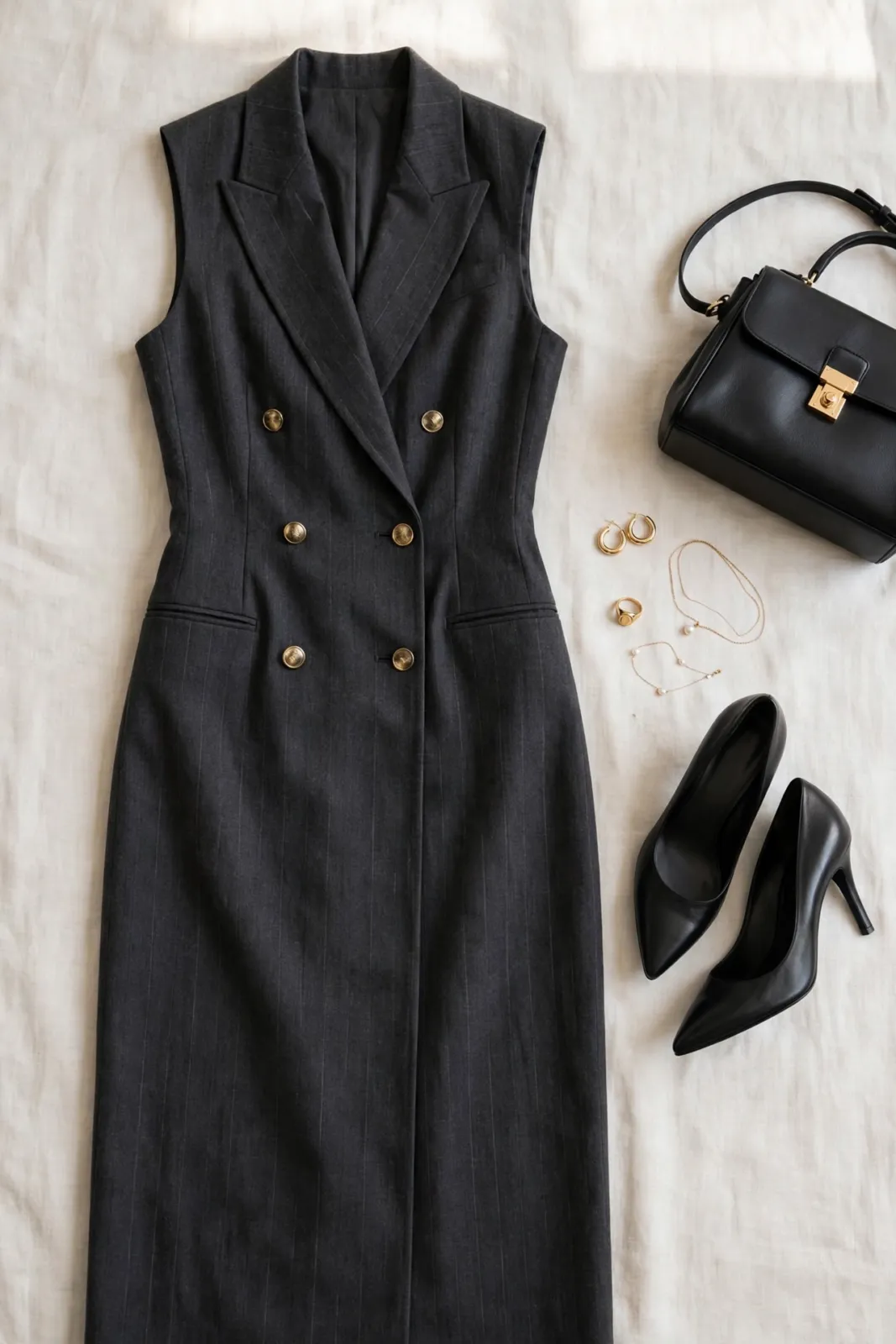
4. With heels and a structured bag for evening. Swap the boots for pointed heels, add a neat top-handle bag, and the same dress is ready for dinner. The tailoring keeps it smart while the heels shift the mood.

5. With loafers for a relaxed smart day. Chunky or classic loafers take the formality down a notch without making the outfit scruffy. This works well for creative workplaces, gallery visits and long days on your feet.
6. Belted, sometimes. Most waistcoat dresses are already shaped at the waist, but a slim black belt can help if your dress is a straighter cut or if you are between sizes. Keep the belt simple and let it sit over the closed buttons.
7. With a long coat over the top. In winter, layer a black, camel or charcoal coat over the dress. Because the dress is sleeveless and neat at the shoulders, coats sit smoothly over it with no bunching at the arms.
8. Open over trousers. On a longer midi version, try wearing the dress unbuttoned from the waist down, or fully open as a long waistcoat over a white top and straight trousers. It gives you a completely different outfit from the same piece.
9. Softened with colour. If head-to-toe grey feels too serious, add one clear colour: a burgundy bag, a red lip, or soft blush shoes. Charcoal is a calm background, so one accent is enough — you do not need three.
How to Layer It, Step by Step
Layering under a waistcoat dress sounds simple, and it is, but the order matters if you want a smooth finish. Follow these steps and you will avoid the lumps and pulling that put people off this look.
Step 1: Start with smooth underlayers. Choose a shirt or knit that fits close to the body, with no bulky pockets or thick cuffs. Step 2: Put the shirt on first and smooth it down over your hips, so the fabric lies flat where the dress will close. Step 3: Step into the dress and fasten the buttons from the waist upwards, checking in the mirror that the shirt collar sits evenly inside the lapels. Step 4: Adjust the shirt cuffs so about a centimetre shows. Step 5: Finally, check the back view. The dress should glide over the shirt with no horizontal crease at the waist — if there is one, the shirt is too thick or too loose, so swap it for a finer one.
Getting the Fit Right
Fit makes or breaks this style, because tailoring shows every little issue. The shoulders of the dress should sit exactly on your own shoulder line — if they droop past it, the whole dress will look borrowed. The buttons should close without pulling or gaping. A small amount of ease is right; if you see the fabric straining between the buttons when you sit down, try the next size up and have the waist taken in instead. That one alteration, which most tailors can do quickly, is the difference between a dress that looks bought and a dress that looks made for you.
Length matters too. A hem that ends just at or below the knee suits most workplaces and most heights. Midi lengths look elegant, especially in the layered-over-trousers version, but check that the front split or opening lets you walk comfortably. When you try the dress on, sit down, climb a few stairs if you can, and raise your arms. A good waistcoat dress should let you live your day without thinking about it.
Fabric, Buying and Budget Advice
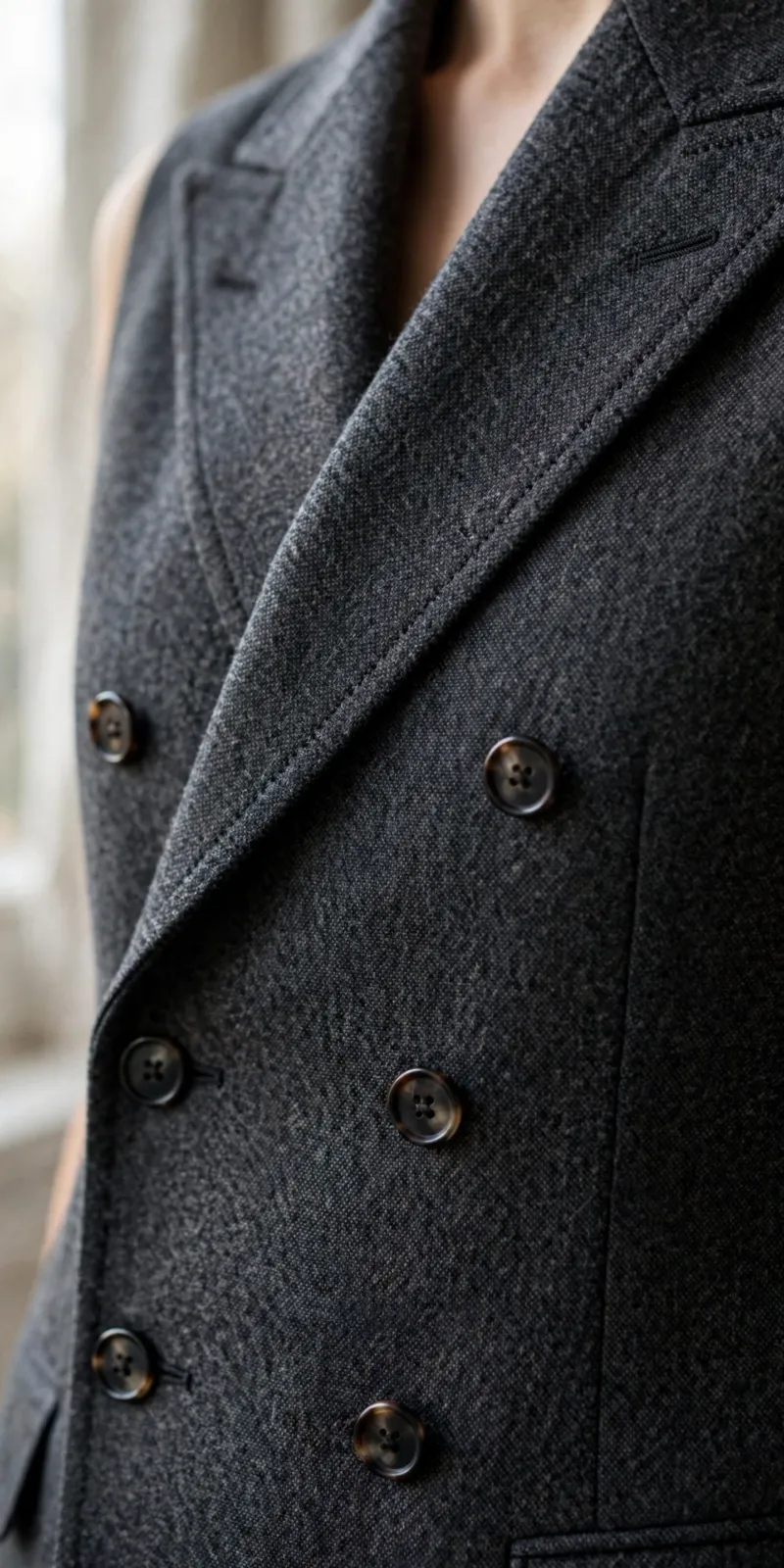
Look for a fabric with some body to it. Crepe, ponte, and wool blends hold the lapels and button front in shape, while very thin, shiny fabrics tend to collapse and show every seam. A lined bodice is a good sign — it helps the dress keep its shape through the day and makes it more comfortable against the skin. Check that the buttons are sewn on firmly and that a spare is included; double-breasted styles show a missing button immediately.
On budget, this is one of those pieces where cost per wear is genuinely low. If you wear it twice a month through autumn, winter and spring, even a mid-priced version earns its place within a season. If money is tight, spend on the dress and save on accessories — a simple bag and plain shoes look expensive next to good tailoring. Second-hand tailoring is also worth a look, because these dresses are often bought for one event and barely worn. Whatever you choose, try before you commit if you can, and be honest about the button test while sitting down.
Common Mistakes to Avoid
The most common mistake is buying it too tight because the structured shape looks so neat on the hanger. Tailoring should skim, not squeeze. The second is wearing it with fussy accessories — the buttons and lapels are already the detail, so frilly jewellery and busy prints underneath fight with them. Keep layers plain. Third, do not ignore the neckline. The deep V is flattering, but if it feels too open for your workplace, solve it with the shirt or knit layer rather than pinning it, which spoils the line. Finally, take care when you clean it. Most tailored dresses prefer a gentle wash or dry cleaning and a proper hanger that supports the shoulders; throwing one over a chair will bend the lapels out of shape over time.
Frequently Asked Questions
Can I wear a charcoal double breasted waistcoat dress to a formal office?
Yes, in most offices it is an excellent choice. The lapels, buttons and neat waist give it the same polish as a suit, while charcoal keeps it softer than black. If your office is very traditional, wear it with tights, closed shoes and the white shirt layer for the most formal finish.
What shoes work best with it?
Pointed pumps and ankle boots are the safest and smartest options, and loafers work well for a more relaxed day. Avoid very strappy sandals with the daytime version, as they clash with the tailored feel. In winter, knee-high boots under a midi length look warm and put-together.
Is charcoal suitable for all skin tones?
Charcoal flatters most people because it is a soft neutral rather than a stark one. If you feel it washes you out, the white shirt layer or a brighter lip colour adds contrast near your face. Gold and silver jewellery both work with it, so wear whichever you prefer.
How do I stop the buttons from gaping?
Gaping usually means the dress is a little small across the bust or waist, so sizing up and tailoring the waist is the lasting fix. A smooth, close-fitting layer underneath can also help the front sit flatter. Check the fit while sitting down, not just standing in front of the mirror.
Can I wear it in summer?
You can, if the fabric is light and unlined or half-lined. Wear it sleeveless with bare legs and loafers or simple heels, and choose a breathable fabric like a light crepe or linen blend. In very hot weather the layered versions will be too warm, so save those for cooler months.
A Dress That Earns Its Place
If you are building a wardrobe of pieces that genuinely work for your life, this dress deserves a place in it. It is smart without being stuffy, simple without being plain, and flexible enough to carry you from a morning meeting to an evening out with nothing more than a change of shoes. Choose the fit with care, keep your layers smooth and your accessories simple, and your charcoal double breasted waistcoat dress will be the outfit you reach for on every day when you need to feel calm, capable and ready. That, in the end, is what good clothes are for.