Checkered Knit Vest Top: 9 Cosy Ways to Layer a Checkered Vest Over Shirts
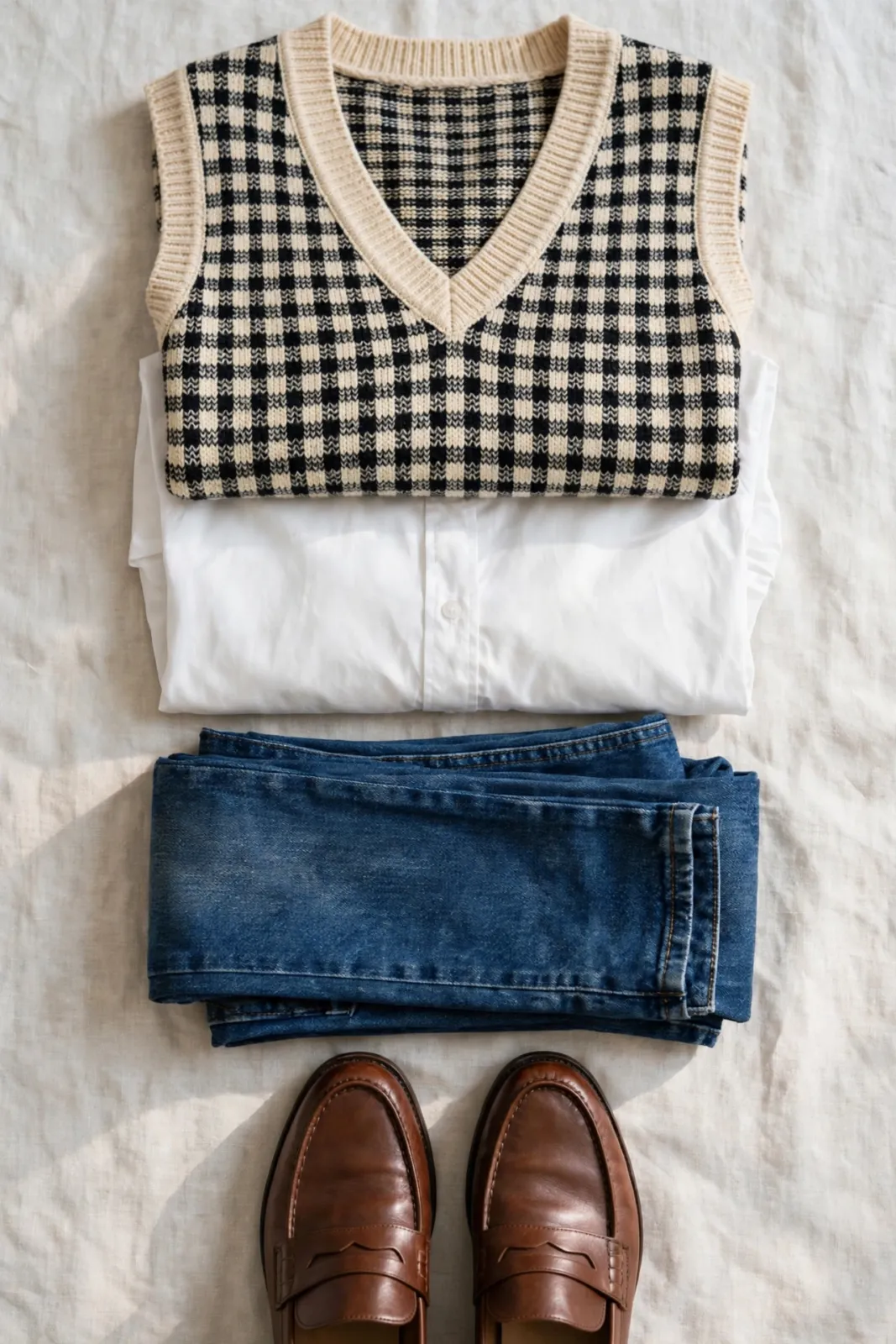
I bought my first checkered knit vest top on a chilly Saturday when I was supposed to be buying socks. It was hanging near the till, black and cream checks, soft as an old blanket, and I kept thinking about the plain white shirt in my wardrobe that never quite felt finished on its own. The next morning I wore the two together with jeans and loafers, and a neighbour asked where the outfit was from. It was just two ordinary pieces, but together they looked planned.
That is the quiet charm of this piece. A vest adds warmth without bulky sleeves, pattern without a loud print, and a neat finish to shirts you already own. It works for cafe mornings, office desks, and those in-between days when a coat feels too much and a shirt alone feels too thin. Here are nine simple ways to style it, how to layer it well, and how to choose and care for one that lasts.
Why a Checkered Knit Vest Works So Hard
A check pattern does a lot of quiet work. The squares give an outfit structure, so a soft knit still looks tidy. Because checks usually mix two or three colours, they also act like a bridge in your wardrobe. A black and cream vest will sit happily over white, cream, pale blue, soft pink, and even a faded denim shirt. You are not buying a piece for one outfit. You are buying a middle layer that ties separates together.
There is a practical side too. Your core stays warm while your arms stay free, which matters more than we admit. You can type, carry a tray, or reach for a book on a high shelf without fighting thick sleeves under a coat. On mild days the vest is the outer layer. On colder days it slips under a long coat and only the checks show, which still looks intentional when you undo the coat indoors.
Length matters too. A cropped vest suits high-rise trousers and skirts, a standard length feels classic, and a longer, looser vest reads relaxed over a shirt dress. Pick the one that matches the bottoms you wear most.
9 Cosy Ways to Layer a Checkered Vest Over Shirts
Try these in front of a mirror with pieces you already have before you buy anything new.
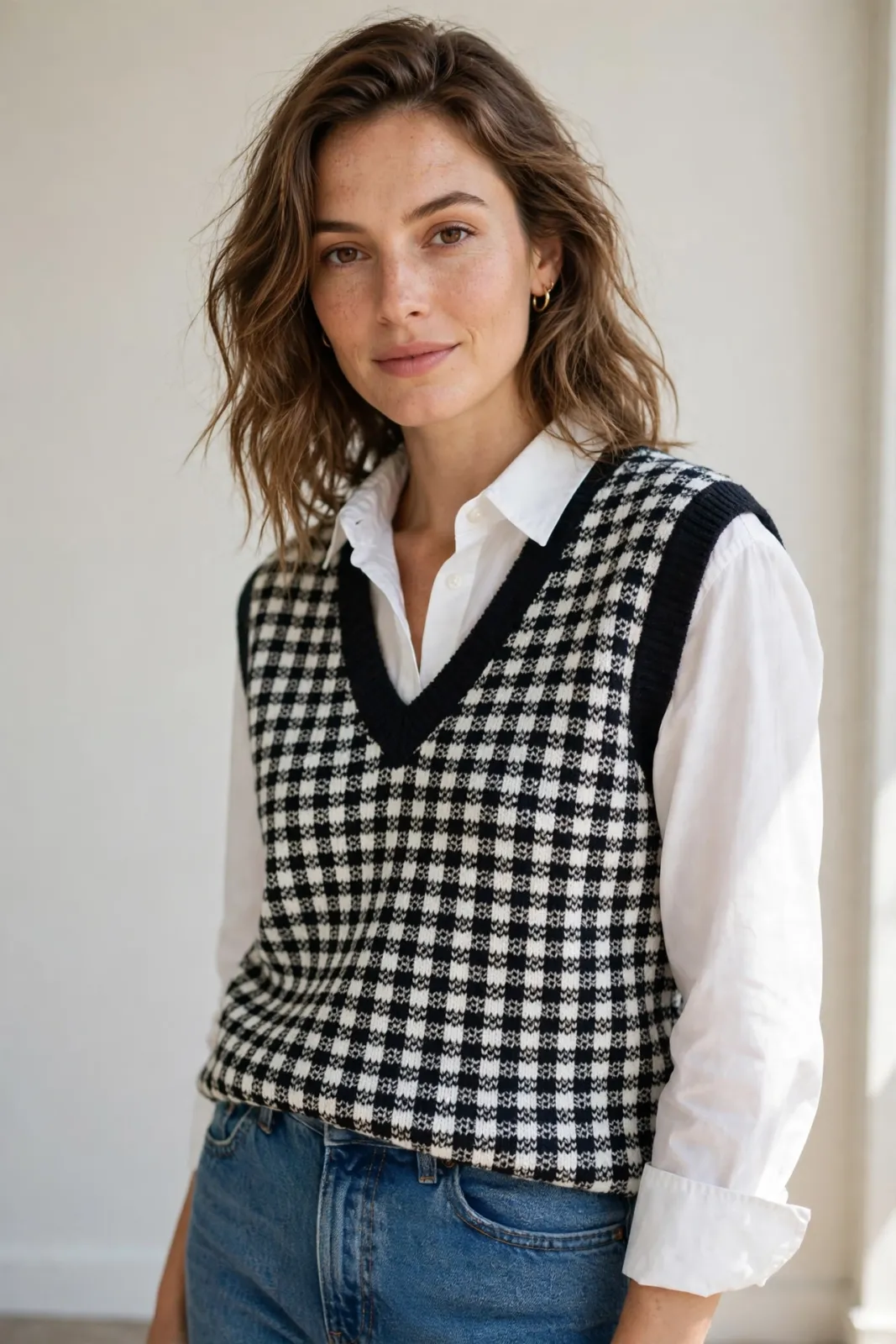
1. The classic white shirt. Crisp white cotton, collar neat, sleeves full length with the cuff turned once. Add straight jeans and loafers. This is the look in the first photo, and it rarely fails.
2. Pale blue stripes. A blue and white striped shirt under a black and cream vest sounds busy, but the stripe is thin and the checks are bold, so each pattern keeps its own space. Roll the sleeves twice for a relaxed cafe feel.
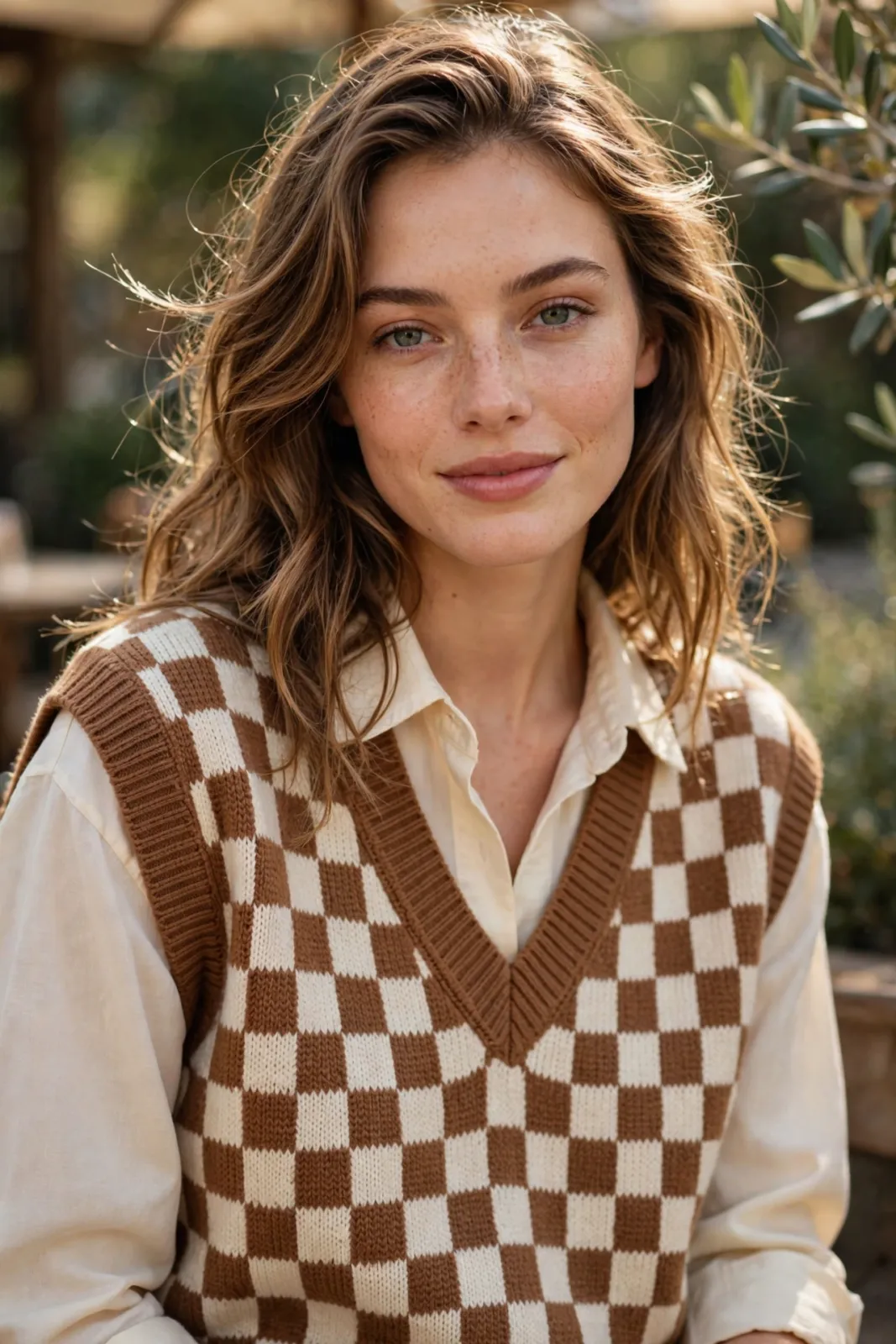
3. Soft cream on cream. A cream shirt under a brown and cream check vest gives a warm, tonal outfit. Finish with tan trousers or a camel skirt and small gold hoops.
4. Over a fitted black top. A thin black long-sleeve top under the vest sharpens the checks and is perfect when a collar feels fussy. Add a pleated skirt and ankle boots.
5. With a denim shirt. A light denim shirt under a neutral vest brings texture against texture. Keep the jeans a different wash from the shirt, or swap them for white trousers, so the outfit does not blur into one block.
6. Shirt dress base. Layer the vest over a plain shirt dress. The vest adds warmth at the chest and shortens the dress visually, while the skirt moves freely below. Knee boots finish it well.
7. Tucked and cropped. A cropped check vest over an oversized shirt, with just the front of the shirt tucked into high-waist trousers. The long shirt tails at the back keep it playful rather than prim.
8. Pastel shirt, neutral vest. A soft pink, lilac, or mint shirt wakes up a grey and white vest, especially in spring. Keep shoes and bag plain so the colour pairing stays the focus.
9. Buttoned vest, open shirt over it. Wear the checkered vest buttoned up over a plain white T-shirt, then leave a soft flannel shirt open on top as a light extra layer. Cosy, a little outdoorsy, and great for weekend errands.

How to Layer It, Step by Step
Layering looks easy when it works and slightly off when it does not, and the difference is usually order and small adjustments. Start with the thinnest layer first. Your shirt should be smooth across the shoulders and not so thick that the vest rides up. Cotton poplin, light Oxford cloth, and fine striped shirting all sit well.
Put the shirt on and do up enough buttons that the front lies flat. Leave the top button open unless you want a stricter, school-inspired look. Smooth the shirt at the sides, then add the vest. If the vest is buttoned, fasten the middle buttons first and check the mirror before doing the rest. Many of us look best with the lowest button left open, because the vest then moves when we sit instead of pulling.
Next, sort the collar. It should sit above the vest neckline, flat and even on both sides. With a V-neck vest, the collar and a small triangle of shirt front show, which is exactly the detail that makes the outfit look finished. A single neat turn of the cuff keeps things relaxed. Finally, choose the tuck: full for trousers, front-only for longer vests, none for a shirt dress base.
Choosing the Right Vest: Fit, Fabric and Budget
Fit comes first. A vest should skim, not squeeze. If the buttons strain or the checks pull into curves across the chest, go up a size. If the armholes gape widely, the cut is very relaxed, which is fine only if that slouch is the look you want. Sit down in it before you decide. Vests are worn sitting at desks and cafe tables for much of the day, and comfort while seated is the real test.
Fabric decides how long the piece will look good. Pure acrylic is cheap and light, but it can pill quickly and lose shape at the hem. Cotton-rich knits breathe well and hold checks crisply. Wool blends are warmest and often most durable. Hold the knit up to the light: a very loose, see-through weave will stretch out fast, while a firm, even knit keeps its squares square.
On budget, think in cost per wear rather than the ticket price. A mid-priced vest worn twice a week from October to April will outrun a bargain one that goes bobbly after six washes. Check the finishing before you pay: firm buttons, neat ribbing at the neck and armholes, and checks that line up at the side seams are signs of care. Second-hand, check under the arms and at the button band first, where vests wear thin.
Common Mistakes to Avoid
The most common mistake is pairing two loud patterns of the same size. A fine striped shirt is fine. A bold plaid shirt under bold checks is a fight. Let one pattern lead and keep everything else plain. The second mistake is a shirt that is too long and loose under a short vest, so bunched fabric shows at the waist. Either tuck it or choose a longer vest.
Do not ignore colour temperature either. A cool grey and white vest can look dull against a warm cream shirt, and the shirt can look yellowed in return. Hold the two together in daylight before you commit. Finally, never store a knit vest on a thin hanger for months; the shoulders will stretch into points. Fold it, and it will keep its shape for seasons.
Care Tips That Keep the Checks Looking New
Knits ask for gentle handling, and a checkered vest rewards it, because faded checks lose their crisp contrast. Wash it inside out on a cool, gentle cycle, or hand wash if the label allows, with a mild detergent. Skip hot water, which can shrink wool blends and dull colours. Reshape it while damp, smoothing the button band and hem, then dry flat on a towel away from direct heat.
Between washes, air the vest on the back of a chair overnight; knits rarely need washing after every wear. Deal with pilling early with a fabric comb, working lightly in one direction, and store the vest folded with the buttons done up. With this small amount of care, a good vest should see you through several winters.

Frequently Asked Questions
Can I wear a checkered knit vest without a shirt underneath? Yes, on milder days a buttoned vest can be worn on its own as a top, especially a thicker knit with a higher neckline. Check the armholes sit close enough to feel comfortable, and pair it with high-waist bottoms so the proportions balance.
What bottoms go best with a checkered vest? Straight or wide-leg jeans, tailored trousers, pleated midi skirts, and shirt dresses all work well. Keep the bottom half plain, because the checks are already the pattern in the outfit. A dark, simple base lets the vest stand out without effort.
Is a checkered knit vest suitable for work? In most relaxed and smart-casual offices, yes. Choose a neat fit in neutral colours, layer it over a plain collared shirt, and pair it with trousers and loafers. Avoid very oversized cuts and bright novelty checks if your workplace is formal.
How do I stop the vest looking too school-like? Roll the shirt sleeves, leave the top shirt button and the lowest vest button open, and choose grown-up shoes such as loafers or ankle boots. A watch, simple hoops, and a half-tucked shirt all move the look away from uniform territory.
Which colours are the most versatile to buy first? Black and cream is the hardest working pairing, followed by brown and cream and then grey and white. Each sits over white, cream, blue, and pastel shirts. Buy a bright or unusual colourway second, once you know you reach for the shape often.
A Small Piece That Earns Its Place
A checkered knit vest top is not a dramatic purchase, and that is its strength. It asks for shirts you already own and a minute of collar straightening, and in return it gives you outfits that look considered on ordinary days. Start with the classic white shirt combination, then try it with a skirt. Cosy, tidy, and quietly cheerful, this is a layer you will keep at the front of the drawer, ready for the next cool morning.