Some bags organise your life; a crocheted raffia carryall improves it. It is soft where other bags are stiff, light where they are heavy, and it carries the feeling of a market morning in the sun into every ordinary day. Slung over one shoulder with a sundress, it looks like you have nowhere to be but somewhere lovely.
This guide shows nine relaxed ways to carry a crocheted raffia shoulder carryall – at markets, with work blazers, on beach days and even into summer evenings – plus a clear guide to choosing a good one, buying advice on stitch quality and straps, and the simple care that keeps natural raffia strong and golden for years.
Why Crocheted Raffia Works Harder Than It Looks
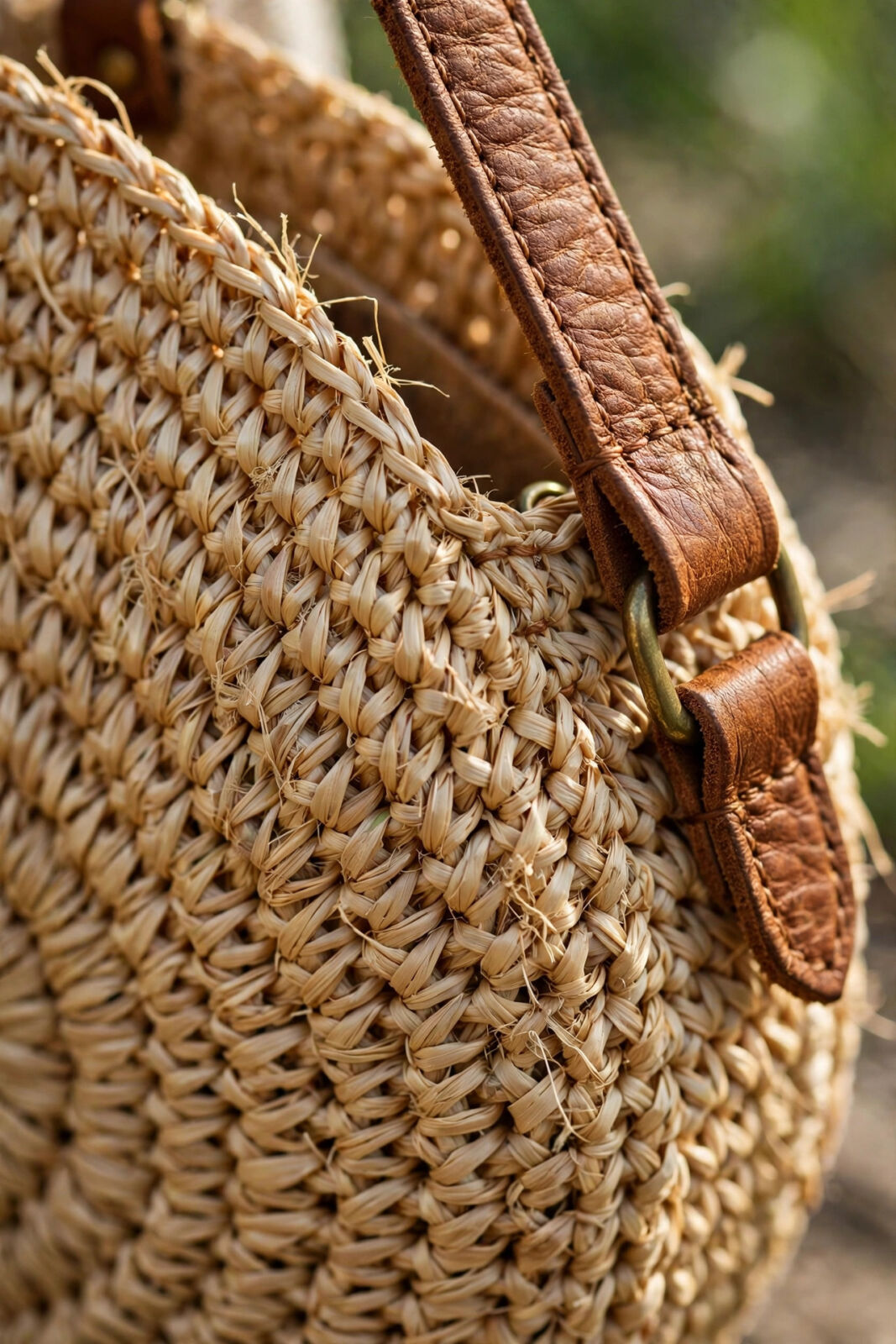
Raffia is a natural palm fibre, and crochet turns it into something quietly clever: a fabric with give, air and texture that no machine-woven straw can quite copy. The close-up photo in this guide shows the structure – row upon row of hand-worked stitches, each one slightly irregular, which is exactly the point.
The carryall shape earns its name too. It is bigger than a handbag and softer than a tote, so it swallows a book, a bottle, a light cardigan and market finds without bulging into a rectangle. The shoulder strap – leather on the best versions, as the close-up shows – spreads the weight and leaves both hands free.
1. At the Market With a White Sundress
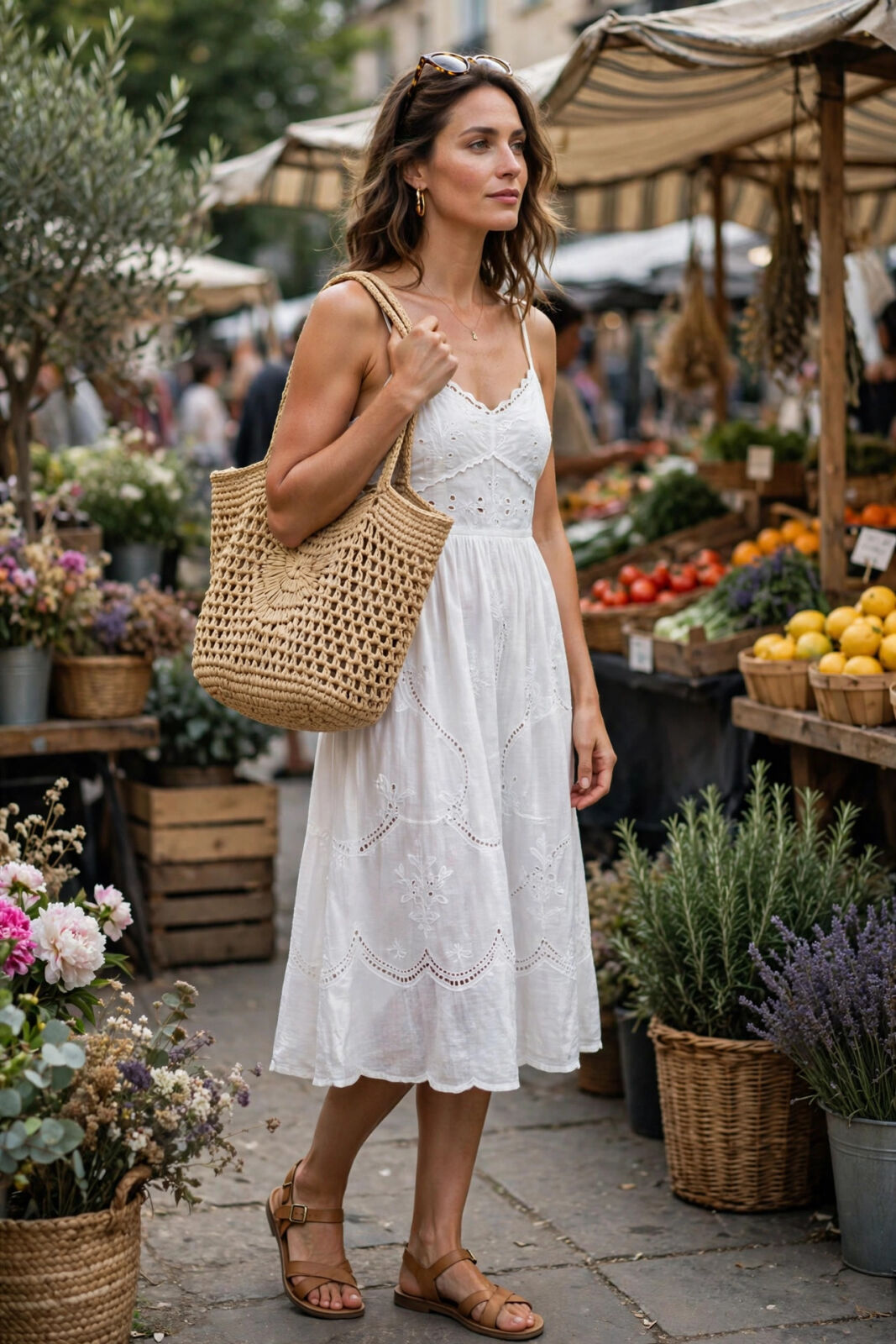
Start with the market look in the first photo, the bag’s natural home: a white sundress, flat sandals and the carryall over one shoulder, already holding flowers and greens. White and natural raffia is a combination that cannot date, and the soft bag balances the dress’s lightness with texture. Wear it on the shoulder away from the stall side so you can browse with both hands, and let it fill up as the morning goes on.
2. Reading the Close-Up: Stitch, Fibre and Strap
The close-up in this guide is your quality guide. Good crochet raffia has even, tight stitches with no gaps you can push a finger through, fibres that look straw-golden rather than plasticky, and a strap attached with reinforced stitching or hardware, not a single hopeful row. A leather strap, like the one pictured, ages beautifully against the raffia and is worth paying for if you will carry the bag often and loaded.
3. Flat Lay Logic: Hat, Sunglasses, Book, Flowers
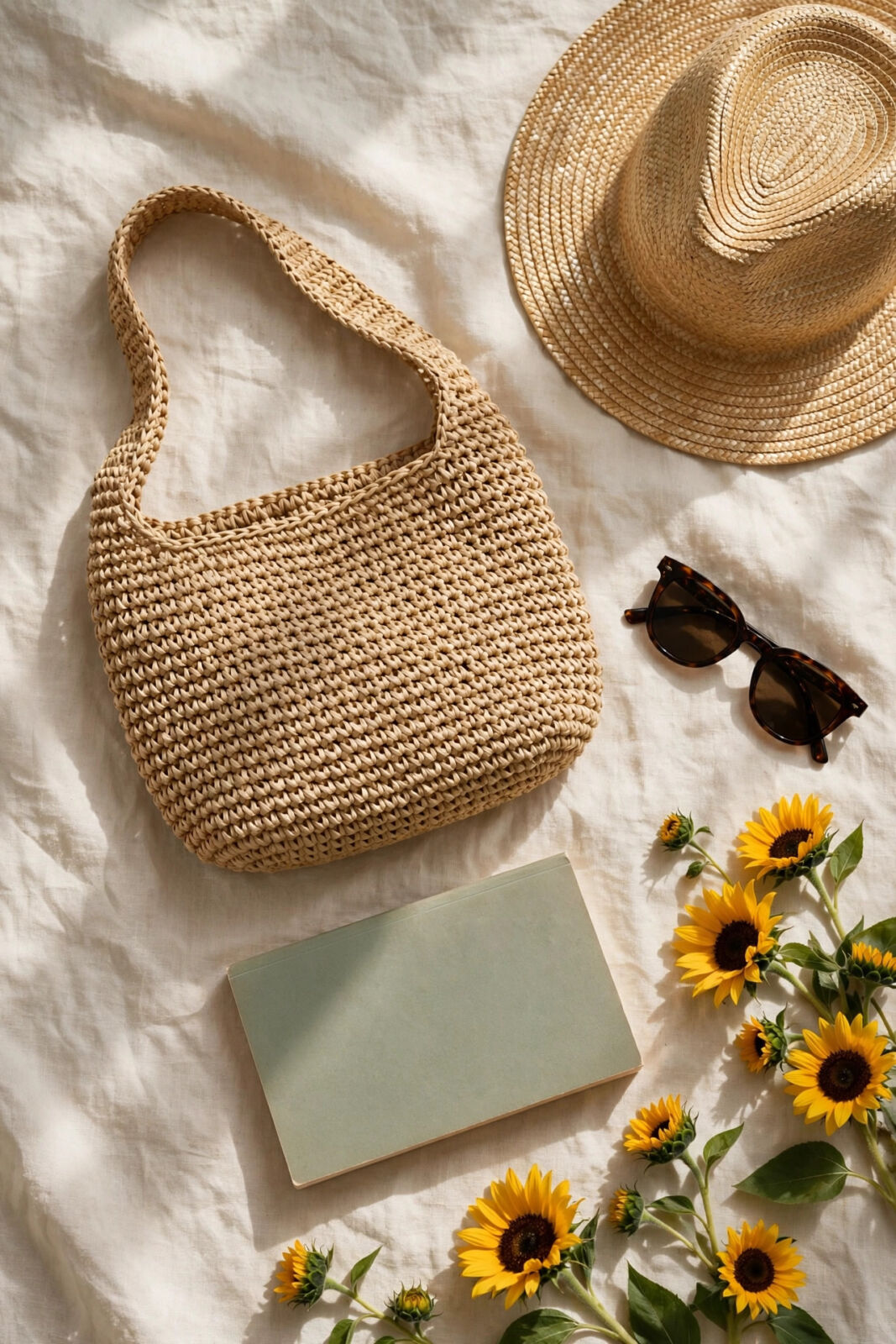
The flat lay in this guide shows what this bag is for: a straw hat, sunglasses, a paperback and sunflowers – the whole architecture of a slow day. Styling a raffia carryall is mostly about mood rather than matching: it belongs with linen, cotton, straw and leather, in whites, creams, tans and soft colours. If an outfit would look right in this flat lay, the bag will look right with it.
4. With a Blazer, for Work That Allows Softness
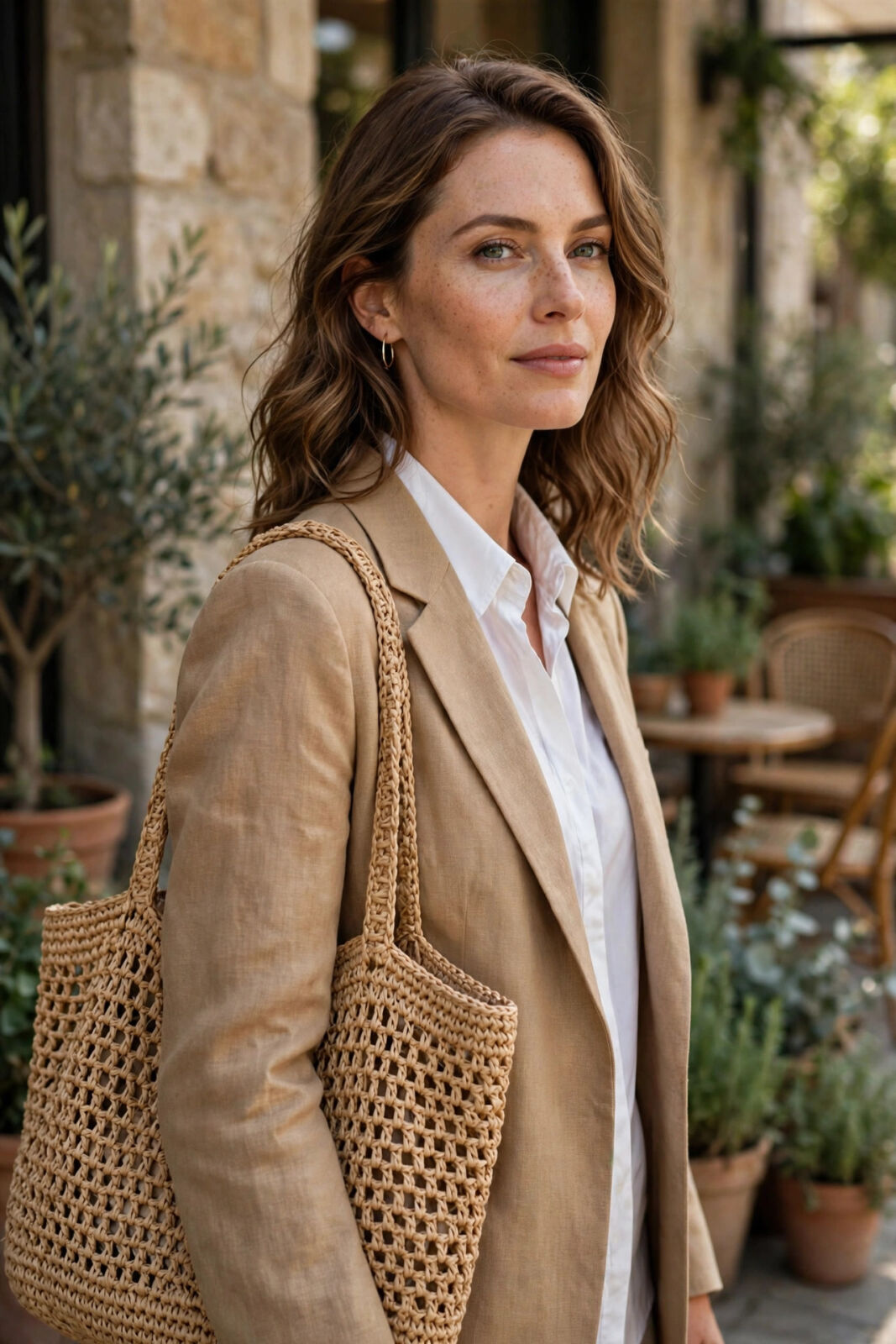
The cafe photo later in this guide is the one that surprises people: the raffia carryall worn with a tan blazer and a white shirt, looking completely deliberate. The trick is structure elsewhere – a tailored blazer, neat hair, a proper shoe – so the bag reads as a chosen texture rather than a leftover from the beach.
5. Beach Days: Towel, Flowers and No Worries
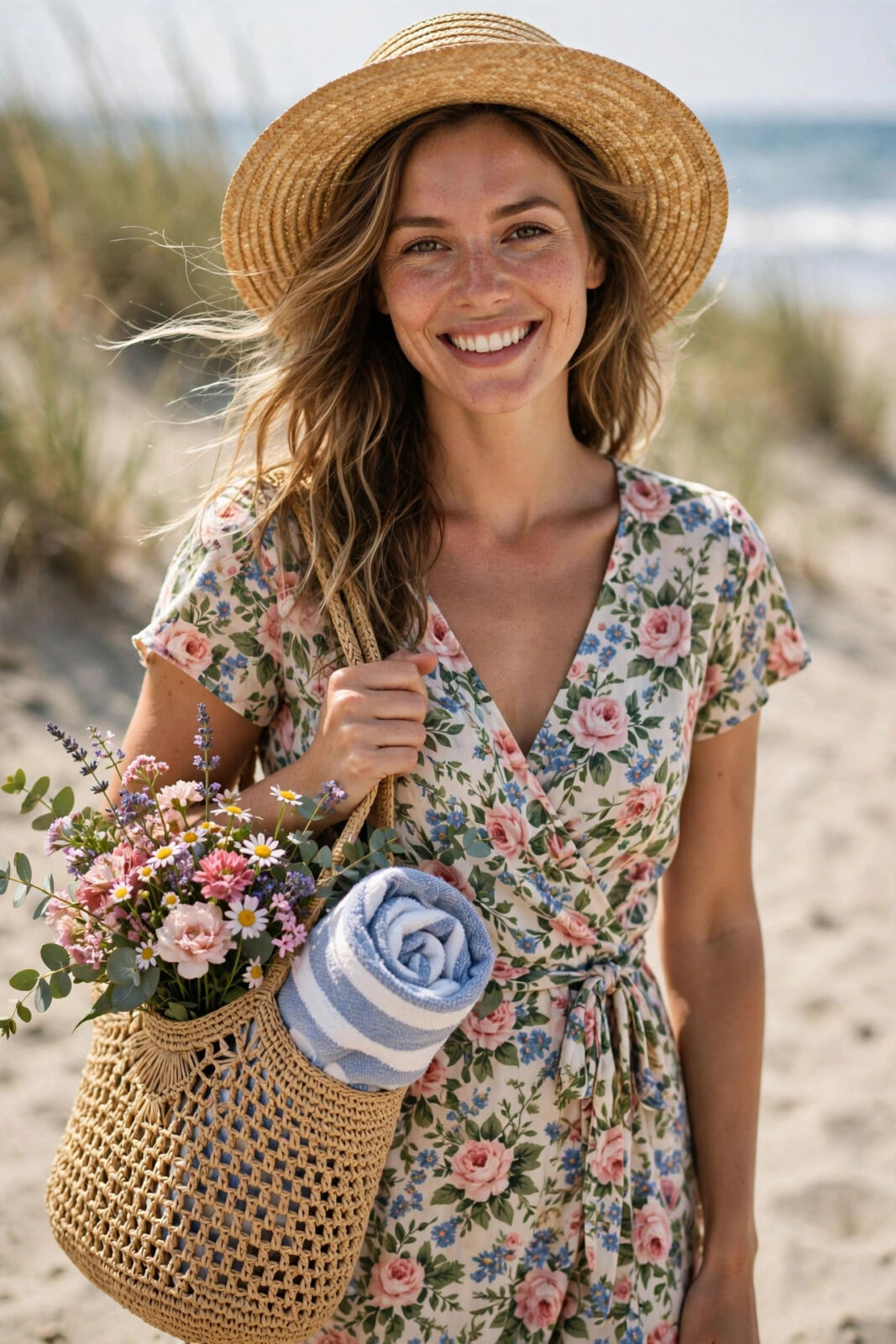
The last photo in this guide is the holiday version: floral dress, straw hat, and the carryall holding a rolled towel and a bunch of flowers. Raffia is one of the few bag materials that genuinely does not mind the beach – sand shakes out of the open weave, and a little sea air does it no harm.
6. With Denim and a White Shirt in Town
For everyday town wear, pair the carryall with blue jeans, a white shirt and loafers or flat sandals. Denim’s blue against raffia’s gold is a fresh, classic contrast, and the bag softens an outfit that could otherwise look plain. This is the version that will get the most use: school runs, errands, library trips and lunches, all with a bag that carries everything and weighs nothing.
7. Summer Evenings With a Slip Dress
A crocheted raffia bag can go out in the evening if the rest of the outfit is smooth: a satin slip dress, heeled sandals and the smaller, tidier end of the carryall family – or your carryall carried by hand, softened and half-empty rather than stuffed. The contrast of rough natural fibre against satin is genuinely chic, and it keeps summer evening outfits from looking too polished and cold. Add gold jewellery to warm it up.
8. As a Weekender’s Second Bag
On trips, the carryall folds almost flat in a suitcase and then works all holiday – market bag, beach bag, plane bag for the things you buy. That flat-packing is a real advantage over structured summer bags. Choose a version with a zip or a drawstring lining if you will use it for travel, so small things stay put in transit, and carry valuables in a small pouch inside it rather than loose in the weave.
9. Styled With a Scarf on the Strap
The easiest personal touch: tie a silk or cotton scarf around one end of the strap, letting the ends trail. It adds your colour to a neutral bag, stops the strap slipping on smooth tops by adding a little texture, and gives you a spare hair tie or shade-maker in a pinch.
How to Choose the Right Carryall, Step by Step
Step 1: Check the stitch density first. Hold the bag up to the light and look through the weave: tight, even crochet with no finger-sized gaps will hold its shape and your belongings. Loose, open crochet looks airy in the shop and sags into a net within a month. Squeeze the base – it should feel firm and spring back.
Step 2: Test the strap like you mean it. Put your usual load in the bag in the shop if you can, or press down firmly on the base. The strap attachments should not strain, creak or pull at the stitches. A leather strap with reinforced joins is the strongest choice; a raffia strap should be thick, double-worked and stitched through a reinforced band.
Step 3: Decide on lining and closure honestly. An unlined carryall is lighter and truly beach-friendly, but coins, keys and pens will find the gaps. A cotton lining with a drawstring or zip adds security and structure for town and work use. Choose by your real life: market-and-beach people can go unlined; commuters should not.
Step 4: Size it to your biggest ordinary day. Carryalls look best slightly generous, but a bag that swallows you will swing and bang against your hip. Stand it beside you in a mirror: for most people the sweet spot holds a book, bottle, purse, sunglasses and a light layer, and ends around hip level when carried. Bigger is for the beach; smaller stops being a carryall.
Step 5: Smell and feel the fibre. Real raffia smells faintly of dry grass and feels like fine straw; plastic imitations smell of nothing much and feel uniformly smooth and squeaky. Natural raffia also varies slightly in colour along a strand, which is a good sign. If the price seems too low for hand crochet, it usually is a print or a machine weave – fine if you know it, disappointing if you do not.
Buying Advice and Raffia Bag Care
When buying, spend first on stitch quality and strap construction, and only then on extras like linings and logos – a tightly crocheted bag with a leather strap will outlast several flimsy fashion versions. Expect natural raffia to soften slightly and deepen in colour with use; that mellowing is character, not damage.
Common Mistakes to Avoid
The most common mistake is overloading a soft carryall until the crochet stretches out of shape – it is a generous bag, not an endless one, and heavy books belong against the base, not swinging in the middle. Second is soaking it in water to clean it, which weakens natural fibres as they dry. Third is storing it crushed at the bottom of a wardrobe all winter, then wondering why it looks tired in spring.
Frequently Asked Questions
Is a raffia carryall strong enough for everyday use?
A tightly crocheted one with a good strap is surprisingly strong – easily equal to daily loads of books, bottles and shopping. Its limits are sharp heavy objects, which can push through the weave, and sheer overloading, which stretches the crochet. Treat it like a good canvas tote and it will serve for years.
Can a raffia bag be used in the rain?
A light shower does it no harm, but a soaking will soften the fibres and can leave water marks as it dries. If yours gets properly wet, empty it, reshape it gently, stuff it with a towel and dry it slowly in open air. For reliably wet climates, keep the raffia bag for fair days and carry a coated tote when it pours.
How do I stop things falling through the weave?
Use a small zip pouch for keys, coins, pens and lip balm, and let the big soft things – book, bottle, cardigan, shopping – ride loose. Alternatively choose a lined version, or drop a thin cotton tote inside as a removable lining. One pouch inside is the habit that makes an unlined carryall completely practical.
Will a raffia bag work in winter at all?
It can, as a deliberate texture against wool coats and knits on dry days – natural fibres against other natural fibres look cosy rather than summery. It will not love sleet or road salt, though. Most owners treat it as a spring-to-autumn bag and give it a stuffed, rested winter in the wardrobe.
How can I tell real hand-crocheted raffia from imitations?
Look for slight, human irregularity: stitches that vary a fraction, colour that shifts gently along the fibre, and a dry grassy feel and smell. Machine imitations are perfectly uniform, often slightly shiny, and the ‘stitches’ may be printed or heat-formed rather than looped. Check the inside – real crochet shows the back of real stitches.
A Last Word Before You Wear It
A crocheted raffia shoulder carryall is the bag equivalent of a deep breath: light, natural, capacious and quietly beautiful with almost everything in a summer wardrobe. Choose tight stitches and a strong strap, pouch your small things, and shake the sand out at the end of the day. Start with the white dress at the market, and let it earn its place one lovely errand at a time.